Indoor cycling trainers range from simple wheel-on stands to connected direct-drive machines, and the right choice depends on how much ride realism and app support you need. I rank the Wahoo KICKR V6 as the best overall for its connected training focus, while the Saris Fluid2 is a compelling pick for riders who want a straightforward fluid trainer and the Garmin Tacx NEO 3M suits buyers seeking a premium feature set. The main tradeoffs are smart control versus simplicity, wheel-on convenience versus direct-drive setup, and advanced features versus cost and space. Compatibility with your bike and the training apps you plan to use matters as much as resistance type. Read on for the full breakdown of all 12 options and how I distinguish their strengths.

Get sports gear delivered free with Prime
- Fast, free delivery on millions of items
- Prime Video, Amazon Music and more included
- Member-only deals all year
Complete the kit


Key Takeaways
- Smart trainers lead this comparison for connected training: the Wahoo KICKR V6, Garmin Tacx NEO 2T and NEO 3M, Saris M2, and ThinkRider X2Max are the models to compare when app-controlled resistance is a priority.
- Wheel-on designs trade simplicity for more setup sensitivity: Sportneer, VEVOR, Elite, Garmin Tacx Boost, Sunlite, and Saris Fluid2 models clamp onto the bike’s rear wheel, so tire condition and roller adjustment affect the experience.
- Fluid and magnetic resistance serve different preferences: Sportneer Fluid and Saris Fluid2 offer progressive resistance without electronic app control, while magnetic models provide manually selected resistance levels.
- Premium direct-drive choices are not automatically right for every rider: Garmin’s NEO models and Wahoo’s KICKR V6 make more sense for frequent, connected training than for occasional indoor rides.
- Fit and compatibility should narrow the list before feature comparisons: wheel size, axle type, cassette requirements, bike frame clearance, available floor space, and app connectivity can rule out a trainer before its headline features matter.
| Sportneer Fluid Bike Trainer Stand for 26–29-Inch and 700C Wheels |  | Best for Quiet, Simple Indoor Riding | Resistance mechanism: Fluid | Resistance settings: 8 | Compatible wheel sizes: 26–29 inches and 700C | VIEW LATEST PRICE | See Our Full Breakdown |
| VEVOR Smart Bike Trainer Stand, 13-Level Resistance, 26–29 in and 700C Wheels |  | Best Value Smart Wheel-On Trainer | Resistance mechanism: Magnetic | Resistance levels: 13 | Wheel compatibility: 26–29 inches and 700C | VIEW LATEST PRICE | See Our Full Breakdown |
| Sportneer Magnetic Indoor Bike Trainer Stand for 26–28-Inch and 700C Wheels |  | Best for Beginners | Resistance mechanism: Magnetic | Resistance levels: 6 | Wheel compatibility: 26–28 inches and 700C | VIEW LATEST PRICE | See Our Full Breakdown |
| Garmin Tacx NEO 2T Smart Trainer |  | Best Premium Direct-Drive Trainer | Resistance: Magnetic, 32 neodymium magnets | Design: Foldable direct-drive smart trainer | Wireless connectivity: ANT+ and Bluetooth | VIEW LATEST PRICE | See Our Full Breakdown |
| Elite Novo Force Magnetic Bike Trainer for 24–29-Inch Wheels |  | Best Compact Wheel-On Pick | Resistance mechanism: Magnetic | Resistance settings: 8 | Compatible wheel size: 24–29 inches | VIEW LATEST PRICE | See Our Full Breakdown |
| Wahoo KICKR V6 Smart Indoor Trainer |  | Best Overall Smart Trainer | Connectivity: 2.4 GHz Wi-Fi | Maximum resistance: 2,200 W | Power accuracy: ±1% | VIEW LATEST PRICE | See Our Full Breakdown |
| Saris M2 Smart Indoor Electromagnetic Bike Trainer |  | Best Wheel-On Smart Trainer | Resistance mechanism: Electromagnetic | Connectivity: ANT+ FE-C and Bluetooth | Accuracy: ±5% | VIEW LATEST PRICE | See Our Full Breakdown |
| Garmin Tacx NEO 3M Smart Trainer |  | Best Premium Ride Simulation | Maximum power: 2,200 W | Power accuracy: Within 1% | Simulated gradient: Up to 25% | VIEW LATEST PRICE | See Our Full Breakdown |
| Garmin Tacx Boost Indoor Bike Trainer |  | Best for Beginners | Resistance mechanism: Magnetic | Resistance levels: 10 | Maximum power: 1,050 W | VIEW LATEST PRICE | See Our Full Breakdown |
| Sunlite F-2 Magnetic Indoor Bicycle Trainer |  | Best Compact Budget-Style Option | Resistance mechanism: Magnetic | Compatible tire size: 26 in and larger; up to 700c | Frame material: Alloy steel | VIEW LATEST PRICE | See Our Full Breakdown |
| ThinkRider X2Max Smart Bike Trainer |  | Best Value Smart Trainer | Resistance mechanism: Electromagnetic | Maximum power: Up to 2000 W | Power accuracy: ±2% | VIEW LATEST PRICE | See Our Full Breakdown |
| Saris Fluid2 Indoor Bike Trainer |  | Best for Simple, Quiet Training | Resistance mechanism: Fluid | Compatible bike types: Hybrid, mountain, and road bikes | App compatibility: Zwift and Rouvy with a separately sold speed or cadence sensor | VIEW LATEST PRICE | See Our Full Breakdown |
| indoor cycling trainer | Resistance mechanism | Load capacity | Weight |
|---|---|---|---|
| Sportneer Fluid Bike Trainer S | Fluid | 300 pounds | — |
| VEVOR Smart Bike Trainer Stand | Magnetic | 286.6 pounds (130 kg) | 36.4 pounds |
| Sportneer Magnetic Indoor Bike | Magnetic | 300 pounds | 19.3 pounds |
| Garmin Tacx NEO 2T Smart Train | — | — | 47.4 pounds |
| Elite Novo Force Magnetic Bike | Magnetic | — | 8 kg (17.6 pounds) |
| Wahoo KICKR V6 Smart Indoor Tr | Electromagnetic | 250 kg | — |
| Saris M2 Smart Indoor Electrom | Electromagnetic | 300 lb | — |
| Garmin Tacx NEO 3M Smart Train | — | — | 52 lb |
| Garmin Tacx Boost Indoor Bike | Magnetic | — | — |
| Sunlite F-2 Magnetic Indoor Bi | Magnetic | 200 lb | — |
| ThinkRider X2Max Smart Bike Tr | Electromagnetic | 240 lb | 35.2 lb |
| Saris Fluid2 Indoor Bike Train | Fluid | — | 7.3 lb |
More Details on Our Top Picks
Sportneer Fluid Bike Trainer Stand for 26–29-Inch and 700C Wheels
The Sportneer F1 is the straightforward pick for riders who want fluid resistance without setting up a smart training system. Its resistance changes with pedaling speed, giving indoor sessions a more progressive feel than the fixed levels on the Sportneer Magnetic Indoor Bike Trainer. A wide steel base and dual locking system help keep the bike steady, while compatibility with 26–29-inch and 700C wheels covers many common bikes. It also folds for storage, though its 24.3-pound weight makes it less convenient to carry than the lighter Elite Novo Force. This trainer lacks the app connectivity and direct-drive setup of the Garmin Tacx NEO 2T, so it suits riders who value a simpler wheel-on setup over connected workouts. Check your bike’s compatibility before buying.
Pros:- Fluid resistance responds progressively to pedaling speed
- Fits 26–29-inch and 700C wheels
- Dual locking system and wide steel frame support stability
- Folds for storage when not in use
Cons:- At 24.3 pounds, it is less convenient to move than the Elite Novo Force
- No listed wireless connectivity or training-app support
- Designed for indoor riding with a compatible road bike
Best for: Road-bike owners seeking a quieter, uncomplicated wheel-on trainer for regular indoor rides without app-based workouts.
Not ideal for: Riders who want Bluetooth or ANT+ training data, or anyone who needs a lightweight trainer to carry frequently.
- Resistance mechanism:Fluid
- Resistance settings:8
- Compatible wheel sizes:26–29 inches and 700C
- Frame material:Alloy steel
- Item weight:24.3 pounds
- Load capacity:300 pounds
- Folded dimensions:24 × 7.9 × 25.2 inches
Our verdict“Choose the Sportneer F1 for stable, progressively resisted indoor rides on a compatible bike, not for connected training or frequent transport.”
VEVOR Smart Bike Trainer Stand, 13-Level Resistance, 26–29 in and 700C Wheels
The VEVOR Smart Bike Trainer brings app connectivity to a wheel-on format, pairing with phones, computers, and tablets through Bluetooth 4.0 or ANT+. That makes it a more connected choice than the fluid Sportneer F1, which focuses on resistance feel rather than app-based sessions. Its 13 magnetic resistance levels and compatibility with Zwift, TrainerRoad, and other listed apps offer room to vary workouts, but the cassette is not included, so buyers need to account for the added setup step. At 36.4 pounds, it is also heavier than the Sportneer Magnetic Indoor Bike Trainer and not an especially portable option. Unlike the direct-drive Garmin Tacx NEO 2T, this trainer keeps the rear wheel on the bike, which may appeal to riders seeking a familiar setup but not those after a direct-drive experience.
Pros:- Bluetooth 4.0 and ANT+ support app connections
- Compatible with Zwift, TrainerRoad, BKOOL, MyWhoosh, and Onelap
- Offers 13 magnetic resistance levels
- Fits 26–29-inch and 700C wheels
Cons:- Cassette is not included
- Weighs 36.4 pounds, limiting easy portability
- Wheel-on design differs from the direct-drive Garmin Tacx NEO 2T
Best for: Indoor cyclists who want app-connected workouts on a wheel-on trainer and already have, or can source, a compatible 8–11-speed cassette.
Not ideal for: Riders who want a ready-to-use setup without extra cassette selection, or those who need a light trainer to move between rooms.
- Resistance mechanism:Magnetic
- Resistance levels:13
- Wheel compatibility:26–29 inches and 700C
- Cassette compatibility:8–11 speeds
- Connectivity:Bluetooth 4.0 and ANT+
- Load capacity:286.6 pounds (130 kg)
- Weight:36.4 pounds
- Cassette included:No
Our verdict“Pick the VEVOR if app connectivity and adjustable resistance matter more than a light setup or an included cassette.”
Sportneer Magnetic Indoor Bike Trainer Stand for 26–28-Inch and 700C Wheels
For riders new to indoor training, the Sportneer Magnetic Trainer keeps the setup and workout controls simple: attach a compatible bike, then choose among six resistance levels from the handlebar-mounted remote. That remote is a practical advantage over the Elite Novo Force, whose eight magnetic levels are controlled without a listed handlebar remote. The Sportneer also includes a front wheel block and quick-release skewer, helping reduce the number of separate setup pieces to source. Its magnetic resistance is less progressive than the fluid feel of the Sportneer F1, and tire choice affects noise; slick or road tires are recommended for quieter riding. It fits many road and mountain bikes, but thru-axle users need a separate version and adapter, so axle compatibility deserves a check before purchase.
Pros:- Handlebar-mounted remote controls six resistance levels
- Includes a front wheel block and quick-release skewer
- Adjustable anti-slip feet and a wide base support stability
- Fits 26–28-inch and 700C wheels
Cons:- Tire material and tread can affect operating noise
- Thru-axle bikes require a separate non-standard version with an adapter
- Magnetic resistance does not provide the progressive feel of the Sportneer F1’s fluid mechanism
Best for: New indoor cyclists with a compatible quick-release road or mountain bike who want simple resistance changes from the handlebars.
Not ideal for: Thru-axle bike owners seeking a ready-to-fit trainer, or riders using treaded tires who are especially sensitive to wheel noise.
- Resistance mechanism:Magnetic
- Resistance levels:6
- Wheel compatibility:26–28 inches and 700C
- Compatible rear axle width:4.92–6.57 inches
- Weight:19.3 pounds
- Load capacity:300 pounds
- Included components:Trainer stand, resistance remote, front wheel block, quick-release skewer
- Warranty:1 year
Our verdict“Choose this Sportneer for accessible, handlebar-controlled workouts if your bike has a compatible axle and suitable tires.”
Garmin Tacx NEO 2T Smart Trainer
The Garmin Tacx NEO 2T is the premium choice here for riders prioritizing a quiet, responsive direct-drive setup and broad device connectivity. Its motor is designed to improve torque response and reduce slipping during hard efforts, while ANT+ and Bluetooth connect it to compatible training devices and apps. Compared with the wheel-on VEVOR Smart Bike Trainer, the NEO 2T removes the rear tire from the resistance system, a meaningful difference for riders seeking a direct-drive format. It also includes a Shimano/SRAM free hub and axle adapters, while the VEVOR requires a separate cassette. The tradeoff is substantial: at 47.4 pounds, this foldable trainer is still heavy to move, and the included Tacx Premium software lasts only one month. It makes more sense for a dedicated training space than frequent transport.
Pros:- Direct-drive design is suited to quiet, realistic indoor riding
- ANT+ and Bluetooth support compatible devices and apps
- Improved torque response is designed to reduce slipping during hard efforts
- Includes a Shimano/SRAM free hub and axle adapters
Cons:- At 47.4 pounds, it is heavy to move despite folding
- Tacx Premium software is included for only one month
- A more involved direct-drive setup than the wheel-on Sportneer models
Best for: Dedicated indoor cyclists who want a quiet direct-drive trainer, wireless connections, and support for a range of bike axles.
Not ideal for: Riders prioritizing low weight, simple portability, or an ongoing software subscription included with the trainer.
- Resistance:Magnetic, 32 neodymium magnets
- Design:Foldable direct-drive smart trainer
- Wireless connectivity:ANT+ and Bluetooth
- Compatible operating systems:iOS, Android, macOS, Windows
- Weight:47.4 pounds
- Included components:Front wheel support, quick-release skewer, Shimano/SRAM free hub, axle adapters, 1-month Tacx Premium software
- Model number:T2875.60
Our verdict“The NEO 2T suits riders building a dedicated smart-training setup who value direct drive and quiet operation over portability.”
Elite Novo Force Magnetic Bike Trainer for 24–29-Inch Wheels
The Elite Novo Force is the most portable wheel-on option in this group, weighing 17.6 pounds and folding for storage. Its 24–29-inch wheel compatibility also covers a broader range than the Sportneer magnetic model, which is listed for 26–28-inch and 700C wheels. Eight magnetic resistance levels give riders several workout settings, while the stated maximum of 690 watts at 40 km/h offers a reference for its output. App use is possible with My E-Training, Rouvy, or Kinomap, but only when paired with a separate Misuro B+ sensor; unlike the VEVOR trainer, wireless app connectivity is not listed as built in. The optional thru-axle kit adds another compatibility check. This is a sensible choice for riders who need storage flexibility, not those seeking a ready-made smart setup.
Pros:- Weighs 17.6 pounds and has a foldable frame
- Fits 24–29-inch wheels
- Compatible with road, gravel, mountain, and city bikes
- Eight magnetic resistance settings and a stated 690-watt maximum at 40 km/h
Cons:- App compatibility requires a separate Misuro B+ sensor
- Thru-axle kits are optional
- Magnetic wheel-on setup is less connected out of the box than the VEVOR Smart Bike Trainer
Best for: Cyclists with limited storage who want a lighter, foldable trainer compatible with road, gravel, mountain, or city bikes.
Not ideal for: Riders wanting built-in wireless app connectivity or those whose thru-axle bike needs a ready-to-use fit without an optional kit.
- Resistance mechanism:Magnetic
- Resistance settings:8
- Compatible wheel size:24–29 inches
- Maximum power:690 W at 40 km/h
- Weight:8 kg (17.6 pounds)
- Dimensions:32 × 8 × 32 inches
- Compatible bike types:Road, gravel, mountain, city
- App compatibility:My E-Training, Rouvy, Kinomap with Misuro B+ sensor
Our verdict“Choose the Elite Novo Force if low weight, folding storage, and broad bike-type compatibility matter more than built-in smart connectivity.”
Wahoo KICKR V6 Smart Indoor Trainer
The Wahoo KICKR V6 is my strongest all-around pick for riders who want accurate, app-connected indoor training without stepping up to the Garmin Tacx NEO 3M’s heavier, more elaborate setup. Its ±1% power accuracy, automatic calibration, and Wi-Fi data transfer support reliable workouts with less manual upkeep. The 2,200-watt ceiling and simulated grades up to 20% give strong riders room for hard intervals and virtual climbs, while the AXIS feet allow some side-to-side movement for a more natural feel. The tradeoff is a substantial 22 kg frame that is not convenient to move between rooms, and you still need a compatible bike and training space. Compared with the wheel-on Saris M2, the KICKR is the more capable, precise smart-training choice, but it demands more commitment and setup.
Pros:- ±1% power accuracy and automatic calibration support consistent training data.
- Wi-Fi connectivity transfers ride data to compatible devices.
- AXIS feet add side-to-side movement for a less rigid riding feel.
- 2,200-watt resistance and 20% simulated grade suit demanding intervals and climbs.
Cons:- At 22 kg, it is cumbersome to move and store frequently.
- Requires a compatible bike and a dedicated indoor training setup.
- Its advanced smart features may be unnecessary for riders who only want basic resistance.
Best for: Regular indoor riders who want precise app-based workouts, Wi-Fi connectivity, and a stable direct-drive-style training setup.
Not ideal for: Riders who need a lightweight trainer to store after each session or want a simple wheel-on setup without a dedicated training space.
- Connectivity:2.4 GHz Wi-Fi
- Maximum resistance:2,200 W
- Power accuracy:±1%
- Maximum simulated grade:20%
- Flywheel weight:16 lb
- Resistance mechanism:Electromagnetic
- Item weight:22 kg
- Load capacity:250 kg
Our verdict“Choose the KICKR V6 for precise, connected training and a realistic ride feel; skip it if portability or simple setup matters more.”
Saris M2 Smart Indoor Electromagnetic Bike Trainer
The Saris M2 suits riders who want app-controlled workouts but prefer to leave the rear wheel on the bike. Its wheel-on attachment avoids the cassette and wheel-removal steps associated with more involved smart-trainer setups, while ANT+ FE-C and Bluetooth support connections to compatible training apps. The Clutch knob helps set tire-to-roller contact, making setup more straightforward once the bike is mounted. Compared with the Wahoo KICKR V6, the M2 is less precise at a stated ±5% accuracy and produces 69 dB of noise at 20 mph, so it is a weaker fit for quiet rooms or closely measured training plans. It is a more practical choice for casual app rides and quick indoor sessions, but its roller contact and noise are real compromises.
Pros:- Wheel-on design lets riders train without removing the rear wheel.
- ANT+ FE-C and Bluetooth support connections to compatible cycling apps.
- Clutch knob helps maintain tire-to-roller contact.
- Includes a steel quick-release skewer.
Cons:- Specified ±5% accuracy is less precise than the Wahoo KICKR V6 and Garmin Tacx NEO 3M.
- Noise is listed at 69 dB at 20 mph, which may be disruptive indoors.
- Wheel-on roller contact can be less convenient than a direct-drive setup for sustained training.
Best for: Cyclists who want to use training apps and keep their rear wheel installed for faster setup between outdoor and indoor rides.
Not ideal for: Riders who need quiet workouts, highly precise power data, or the more realistic ride features of a premium smart trainer.
- Resistance mechanism:Electromagnetic
- Connectivity:ANT+ FE-C and Bluetooth
- Accuracy:±5%
- Noise level:69 dB at 20 mph
- Item weight:20 lb
- Dimensions:22 × 20 × 9 in
- Wheel size:Up to 29 in
- Load capacity:300 lb
Our verdict“Pick the Saris M2 for app-compatible wheel-on convenience, but choose a quieter, more precise trainer for serious structured workouts.”
Garmin Tacx NEO 3M Smart Trainer
The Garmin Tacx NEO 3M is the premium pick for riders who value a more immersive virtual ride over easy lifting and storage. Its multidirectional movement and virtual flywheel simulate road feel, while a 25% gradient ceiling exceeds the Wahoo KICKR V6’s 20% and gives virtual climbs more range. Power accuracy is within 1%, and the pre-installed 11-speed cassette helps get the trainer ready with fewer parts to source separately. It also works with apps including Tacx Training, TrainerRoad, and Zwift. The main cost is practical rather than technical: at 52 pounds, it is the heaviest option in this group, and some app features require a premium subscription. Compared with the KICKR, this is the more feature-rich simulation choice, but the Wahoo is easier to live with if moving the trainer matters.
Pros:- Multidirectional movement and a virtual flywheel add road-like feel.
- Simulates gradients up to 25%, more than the Wahoo KICKR V6.
- Power accuracy within 1% supports structured training.
- Pre-installed 11-speed cassette and no calibration requirement simplify initial setup.
Cons:- At 52 pounds, it is difficult to move and store.
- Some app features require a premium subscription.
- Its premium simulation features may be excessive for riders who only need basic indoor resistance.
Best for: Dedicated indoor cyclists who want multidirectional movement, steep virtual climbs, accurate power, and broad training-app compatibility.
Not ideal for: Riders who need to carry or stow their trainer often, or who want full app functionality without subscription costs.
- Maximum power:2,200 W
- Power accuracy:Within 1%
- Simulated gradient:Up to 25%
- Weight:52 lb
- Cassette:Pre-installed 11-speed
- Connectivity:Ethernet or Wi-Fi via smart network adapter
- Compatible apps:Tacx Training, TrainerRoad, Zwift, and others
- Warranty:1-year limited
Our verdict“Choose the Tacx NEO 3M for high-end virtual ride simulation and steep climbs if its weight and app costs fit your setup.”
Garmin Tacx Boost Indoor Bike Trainer
The Garmin Tacx Boost is a straightforward starting point for indoor riding: it sets up quickly, includes a front wheel support, and uses a handlebar lever to choose among 10 manual resistance levels. That makes it easier to begin than a smart trainer such as the Wahoo KICKR V6, which is designed around connected training and automatic calibration. The Boost’s magnetic resistance reaches a listed 1,050 watts, enough for general fitness sessions, but resistance is not app-controlled, so virtual routes will not automatically change the effort. Its closed resistance unit is intended to reduce noise, though it is not the same as a silent direct-drive system. At 8.5 kg, it is much more manageable than the 52-pound Tacx NEO 3M. This pick keeps the experience simple, but limits data-driven workouts.
Pros:- Quick setup with two clicks helps beginners get riding sooner.
- Ten manually controlled resistance levels provide simple workout adjustment.
- Front wheel support is included.
- At 8.5 kg, it is easier to move than the Garmin Tacx NEO 3M.
Cons:- Resistance changes manually rather than responding to a training app.
- The listed maximum power of 1,050 watts is below the smart trainers in this roundup.
- The product data includes an unclear load-capacity figure, so that specification cannot be relied on.
Best for: New indoor cyclists who want quick setup, adjustable manual resistance, and a more portable alternative to a connected direct-drive trainer.
Not ideal for: Riders who expect app-controlled resistance, power-based workout accuracy, or automatic changes during virtual climbs.
- Resistance mechanism:Magnetic
- Resistance levels:10
- Maximum power:1,050 W
- Flywheel weight:1.65 kg (3.64 lb)
- Item weight:8.5 kg
- Wheel size:24 in
- Frame material:Metal
- Warranty:1-year limited
Our verdict“Choose the Tacx Boost for uncomplicated manual indoor sessions, but look to the KICKR V6 or NEO 3M for app-led training.”
Sunlite F-2 Magnetic Indoor Bicycle Trainer
The Sunlite F-2 is the simplest choice here for riders who want a foldable trainer and do not need app connectivity or measured power. Its alloy-steel frame folds for storage, and the stated tire fit covers 26-inch and larger tires up to 700c, giving it broader listed wheel coverage than the Garmin Tacx Boost’s 24-inch wheel specification. Compared with the Boost, though, the F-2 provides less detail about resistance adjustment and no stated power ceiling, so it is harder to match to a particular workout style. The product data also lists a weight of just 15.04 ounces, an unusually low figure for a trainer; I would not rely on that number when planning to carry it. This is a basic storage-conscious option, not a substitute for the app-connected Saris M2 or smart trainers.
Pros:- Folding design makes storage easier than a fixed trainer setup.
- Alloy-steel frame offers a sturdy material choice.
- Listed tire compatibility spans 26-inch tires through 700c.
- Magnetic resistance provides a basic indoor training option without a smart setup.
Cons:- No app connectivity or power accuracy is specified, limiting structured training.
- Resistance levels and adjustment method are not detailed in the product data.
- The listed 15.04-ounce weight appears unusually low for a trainer and may be unreliable.
Best for: Riders with limited storage who want a foldable magnetic trainer for basic indoor sessions on a compatible 26-inch-or-larger bike.
Not ideal for: Cyclists who need app connectivity, specified power performance, detailed compatibility guidance, or dependable weight information before buying.
- Resistance mechanism:Magnetic
- Compatible tire size:26 in and larger; up to 700c
- Frame material:Alloy steel
- Dimensions:28 × 28 × 8 in
- Load capacity:200 lb
- Item weight:15.04 oz (as listed)
- Included components:Rear wheel trainer
- Warranty:Limited warranty
Our verdict“Choose the Sunlite F-2 for foldable, basic magnetic training, but skip it if you need smart features or clearer performance specifications.”
ThinkRider X2Max Smart Bike Trainer
The ThinkRider X2Max is the smart direct-drive choice here for riders who want app-controlled workouts and steep virtual climbs without stepping up to a more feature-rich model such as the Wahoo KICKR V6. Its ANT+ and BLE connections pair with Zwift and other cycling software, while the 18% gradient simulation and stated ±2% power accuracy support structured training as well as immersive rides. The stable I-beam frame is a plus for hard efforts, and its 2000 W stated power ceiling leaves room for sprint sessions. The tradeoffs are practical: the cassette is not included, so setup requires an additional part, and the 35.2 lb trainer is cumbersome to move or store. At about 58 dB at 30 km/h, it is not a silent option either.
Pros:- ANT+ and BLE connectivity support a range of cycling devices and software
- Simulates gradients up to 18% for challenging virtual climbs
- Stated power accuracy of ±2% suits data-focused training
- Stable I-beam frame supports harder efforts
Cons:- Cassette must be purchased separately
- At 35.2 lb, it is relatively cumbersome to move and store
- About 58 dB at 30 km/h may be noticeable in a shared home
Best for: Indoor riders who want ANT+/BLE smart-trainer connectivity, steep simulated climbs, and structured app workouts, and who are comfortable sourcing and fitting a cassette.
Not ideal for: Riders seeking a lightweight trainer for frequent setup and storage, or buyers who want a ready-to-ride package with the cassette included.
- Resistance mechanism:Electromagnetic
- Maximum power:Up to 2000 W
- Power accuracy:±2%
- Maximum simulated gradient:18%
- Connectivity:ANT+ and BLE
- Noise level:About 58 dB at 30 km/h
- Weight:35.2 lb
- Load capacity:240 lb
- Cassette:Not included
Our verdict“Choose the X2Max if you want a connected direct-drive trainer with steep climb simulation and can handle the separate cassette and heavier frame.”
Saris Fluid2 Indoor Bike Trainer
The Saris Fluid2 suits riders who would rather pedal than configure a smart trainer. Its fluid resistance increases as you pedal harder, giving efforts a more natural progression than the fixed resistance settings of a basic magnetic trainer such as the Elite Novo Force. The balanced flywheel is designed for smooth, quiet operation, and the foldable aluminum frame makes this a more manageable option to put away than the heavier ThinkRider X2Max. It is a wheel-on trainer, though, so app use depends on a separately purchased speed or cadence sensor; unlike the X2Max, it does not offer listed ANT+/BLE smart-trainer connectivity, power accuracy, or gradient simulation. Choose it for straightforward indoor miles, not for the most interactive or data-rich training setup.
Pros:- Fluid resistance rises with pedaling effort for a progressive ride feel
- Precision-balanced flywheel supports smooth operation
- Foldable aluminum frame helps with compact storage
- Works with Zwift and Rouvy when paired with a separately sold sensor
Cons:- Speed or cadence sensor is sold separately for app use
- Wheel-on design lacks the listed smart connectivity and gradient simulation of the ThinkRider X2Max
- Requires a compatible bike and tire-to-trainer setup
Best for: Road, hybrid, or mountain-bike riders who want a foldable wheel-on trainer for quiet, progressive indoor rides and are willing to add a sensor for app use.
Not ideal for: Cyclists who want built-in smart connectivity, measured power, or automatic gradient changes for interactive training sessions.
- Resistance mechanism:Fluid
- Compatible bike types:Hybrid, mountain, and road bikes
- App compatibility:Zwift and Rouvy with a separately sold speed or cadence sensor
- Frame material:Aluminum
- Foldable:Yes
- Weight:7.3 lb
- Dimensions:22 × 7 × 20 in
- Warranty:Limited lifetime
Our verdict“Pick the Fluid2 for a foldable, uncomplicated wheel-on setup with progressive resistance, but choose the X2Max if smart control and simulated climbs matter more.”
How We Picked
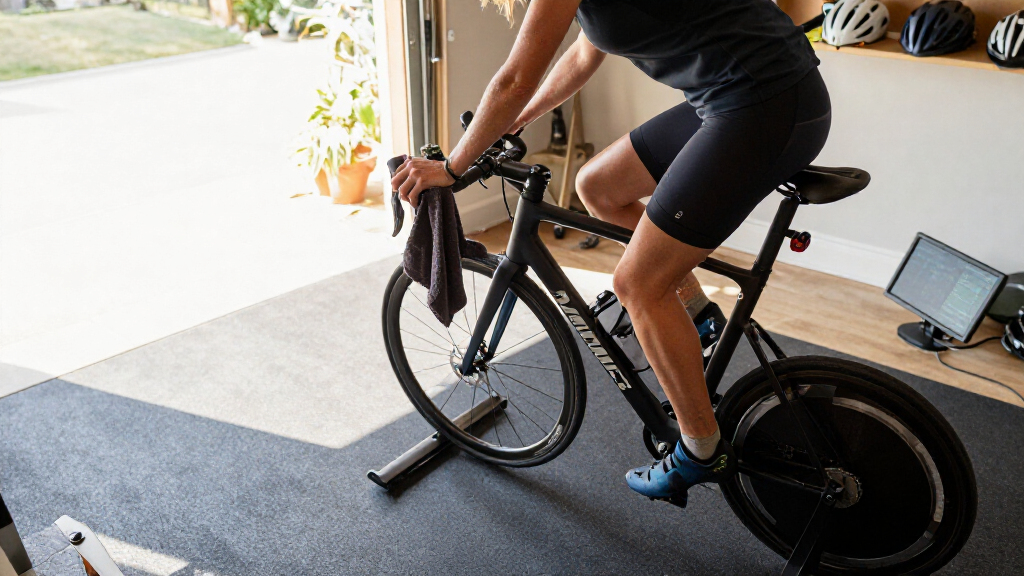
I ranked these indoor cycling trainers by how well their design matches common home-training needs: consistent resistance, useful connectivity, practical setup, bike compatibility, and the amount of maintenance the rider takes on. I also separated wheel-on trainers from direct-drive smart trainers rather than treating their features as interchangeable. A simple trainer can be a better fit for casual riding, while a connected model has more value for structured sessions and virtual riding.
The order reflects versatility and buyer fit, not a claim that every rider needs the most advanced hardware. Smart trainers with broad training utility rank ahead for riders seeking one machine for regular app-based workouts; simpler magnetic and fluid models remain strong choices when uncomplicated setup or basic resistance matters more. I weighed tradeoffs such as noise, setup demands, compatibility checks, and limited electronic control, and avoided treating a long feature list as a substitute for a good match.
| indoor cycling trainer | Resistance mechanism |
|---|---|
| Sportneer Fluid Bike Trainer S | Fluid |
| VEVOR Smart Bike Trainer Stand | Magnetic |
| Sportneer Magnetic Indoor Bike | Magnetic |
| Garmin Tacx NEO 2T Smart Train | — |
| Elite Novo Force Magnetic Bike | Magnetic |
| Wahoo KICKR V6 Smart Indoor Tr | Electromagnetic |
| Saris M2 Smart Indoor Electrom | Electromagnetic |
| Garmin Tacx NEO 3M Smart Train | — |
| Garmin Tacx Boost Indoor Bike | Magnetic |
| Sunlite F-2 Magnetic Indoor Bi | Magnetic |
| ThinkRider X2Max Smart Bike Tr | Electromagnetic |
| Saris Fluid2 Indoor Bike Train | Fluid |
Factors to Consider When Choosing Indoor Cycling Trainers
Before choosing among these indoor cycling trainers, decide how you will ride, what your bike can support, and how much setup you are willing to manage. A trainer that looks capable on paper may be a poor match if it needs an incompatible axle, cassette, or training app. These broader checks help prevent paying for features you will not use—or buying a basic unit that cannot support your training plans.
Choose Wheel-On or Direct-Drive Around Your Routine
A wheel-on trainer keeps the rear wheel in place, which can make storage and bike changes more straightforward, but the tire contacts a roller and needs correct tension. A direct-drive trainer replaces the rear wheel, so setup involves removing it and checking cassette and axle compatibility. Frequent app-based training may justify that extra preparation if you want a more integrated smart setup. For occasional spinning, the added steps and equipment may bring little practical benefit. Do not choose by trainer style alone: consider whether you will leave the bike mounted or take it on and off after every session.
Check Bike and Drivetrain Compatibility Before Comparing Features
Compatibility is a purchase gate, not a detail to sort out after delivery. Confirm wheel diameter, rear axle standard, frame clearance, and whether a direct-drive model needs a cassette that matches your drivetrain. Wheel-on models also need the trainer’s listed wheel-size range to include your bike. If more than one family member will use the trainer, check each bike separately rather than assuming one adapter or setup fits all. A short compatibility checklist can prevent a feature-rich trainer from becoming an unusable one.
Match Resistance Control to the Workouts You Actually Do
Manual magnetic resistance gives you simple control without relying on an app, while fluid resistance changes with pedaling speed and suits riders who want a more gradual effort feel. Smart resistance can follow a workout or virtual route, which is useful for structured intervals but adds a need for connectivity and software compatibility. Decide whether you value automatic changes or prefer setting effort yourself. If your sessions are mostly steady and informal, paying for app control may not change your routine. If you follow power-based plans, confirm how the trainer reports data and works with your preferred platform.
Think Through Noise, Floor Space, and Neighbor Comfort
Noise depends on more than the trainer: tire type and pressure, roller contact, bike maintenance, flooring, and cadence all play a part. A trainer mat can help manage vibration and sweat, but it will not make every setup silent. Measure the area needed for the trainer, bike, and safe mounting, then decide whether you need to fold or store the unit between rides. Riders in shared buildings should think about vibration traveling through floors as well as sound in the room. A quieter setup can require changes to the whole riding area, not only a different trainer.
Pay for Features You Will Use, Not Features You Might Use
Higher-end smart models make the most sense when regular training, app control, and detailed ride data are part of the plan. A basic wheel-on trainer can be a sensible fit for warm-ups or occasional indoor sessions, even if it offers fewer ways to vary resistance. Before paying for advanced connectivity, check that your devices and chosen apps support the trainer’s communication standards. Also factor in accessories such as a cassette, adapters, mat, or front-wheel support when comparing the complete setup. If indoor riding becomes a lasting habit, the more capable unit may earn its place; otherwise, simplicity can be the better purchase.
Frequently Asked Questions
Do I need a smart trainer to use indoor cycling apps?
No. Some apps can display a ride or workout while you use a basic trainer, but automatic resistance control requires a compatible smart trainer and supported app connection. With a non-smart model, you generally adjust effort through gears, cadence, or a manual resistance control if the trainer has one. Check whether the app needs power data or only speed and cadence before choosing. If you mainly want guided sessions on a screen, a basic trainer may be enough; if you want the trainer to respond to the workout, smart control matters.
Will my road bike work with both wheel-on and direct-drive trainers?
Not necessarily: axle and drivetrain compatibility can differ even when the wheel size appears suitable. Wheel-on trainers must support your wheel diameter and fit the bike’s rear axle, while direct-drive models need a compatible cassette or freehub arrangement and the right axle adapters. Disc-brake frames can also have clearance or adapter requirements. Check the bike manufacturer’s specifications alongside the trainer’s compatibility list. If you own multiple bikes, confirm each one rather than assuming the same setup works across the group.
Is a direct-drive trainer worth the extra setup for occasional riding?
For infrequent, casual rides, a wheel-on trainer may be easier to justify because it keeps the rear wheel on the bike and avoids cassette setup. Direct-drive models become more appealing when you train often, use structured workouts, or want smart resistance integrated into virtual riding. They do require removing the rear wheel and checking drivetrain fit, so repeated mounting can feel like extra work. Think about how often you will ride and whether app-controlled training is part of the plan. If those benefits will sit unused, direct-drive complexity may not pay off for your routine.
How can I reduce noise and vibration from an indoor trainer?
Start with a well-maintained bike, properly inflated tire for wheel-on setups, and correct roller pressure; drivetrain wear and tire contact can add noise. A mat can reduce floor vibration and protect the surface, though it cannot remove every sound. Place the trainer on a stable, level floor and check that the frame and trainer are secure before riding. In a shared home, test the setup at the cadence and effort you expect to use, since sound can carry differently under harder pedaling. If noise is a major constraint, compare the whole setup rather than relying on a trainer label alone.
Should I buy a trainer that works with multiple training apps?
App flexibility is useful if you expect to change platforms or want to compare workout libraries, but compatibility should be verified for the specific trainer and device. Check the connection standards, supported operating systems, and whether the functions you want—such as power data or resistance control—work in your chosen app. A trainer may connect for basic ride data without supporting every interactive feature. If you already have a preferred platform, confirm its requirements before buying. If you have not settled on one, broader compatibility can preserve more options later.
Conclusion
For the widest mix of connected training capability and day-to-day utility, I recommend the Wahoo KICKR V6 as best overall. Riders seeking a premium feature set should compare it with the Garmin Tacx NEO 3M, while the Saris Fluid2 is my best value-style choice for buyers who want a simpler fluid trainer without app-controlled resistance. Beginners who prefer an uncomplicated wheel-on setup can start with the Garmin Tacx Boost or a basic Sportneer option, after checking bike fit and resistance needs. For structured app-based training on a tighter feature brief, compare the Saris M2 and ThinkRider X2Max; for a no-electronics ride, the magnetic and fluid models are the better match. Choose by training habits and compatibility first, then pay for only the control, data, and convenience you expect to use.
Halloween Picks

Kalolary 12ft Halloween Witch Haunted House Inflatable Archway

HOPOCO Halloween Pumpkin Fog Machine with 12 LED Colors & 4 Light Modes

Haunted Hill Farm 2-Ft. Zombie Raccoon Halloween Animatronic
As an affiliate, we earn on qualifying purchases.