For most road racers, I’d start with the Fizik Vento Argo R1 Carbon: its short-nose shape and carbon rails suit a forward, performance-focused position. The Selle San Marco Shortfit 2.0 3D Racing stands out for riders seeking a pressure-conscious 3D surface, while the Fabric Line Race Team Shallow offers a more conventional shape and titanium rails. The main tradeoffs are saddle shape and fit, pressure relief versus uninterrupted support, and lower weight versus rail cost and durability. A minimalist saddle can reduce bulk, but it cannot correct a width or profile mismatch. Read on for the full breakdown of all 13 options and help choosing the one that fits your riding position.

Get sports gear delivered free with Prime
- Fast, free delivery on millions of items
- Prime Video, Amazon Music and more included
- Member-only deals all year
Complete the kit


Key Takeaways
- The Fizik Vento Argo R1 Carbon leads for road racing because its short-nose format is aimed at a forward riding position; its shape may not suit riders who move around the saddle often.
- The Shortfit 2.0 3D Racing is the distinct surface-design pick, while the Fizik and Selle Italia cutout models use more familiar pressure-relief approaches.
- The Fabric Line Race Team Shallow and Scoop Race Team Flat serve different postures: shallow curvature suits riders who want some contour, while the flat profile favors room to shift.
- Triathletes have a specialized option in the Fizik Transiro Aeris R5; its intended use makes it a less direct fit for riders seeking a conventional road-racing saddle.
- Minimalist does not mean universally comfortable: the lineup spans short and long profiles, multiple widths, gel and 3D surfaces, and different rail materials, so fit matters more than the leanest-looking design.
| Fizik Vento Argo R1 Carbon Road Cycling Saddle |  | Best Overall | Brand: Fizik | Bike type: Road bike | Design: Short-nose | VIEW LATEST PRICE | See Our Full Breakdown |
| Fizik Transiro Aeris Long Distance R5 Triathlon Carbon Saddle |  | Best for Long-Distance Triathlon | Brand: Fizik | Model: Transiro Aeris Long Distance R5 | Weight: 218 g | VIEW LATEST PRICE | See Our Full Breakdown |
| Selle Italia Sport Gel Flow Bike Saddle |  | Best for Comfort-Oriented Beginners | Brand: Selle Italia | Model: Sport Gel Flow | Cover: Duro-Tek | VIEW LATEST PRICE | See Our Full Breakdown |
| Fabric Line Race Team Shallow Titanium Bike Saddle |  | Best Multi-Discipline Pick | Brand: Fabric | Model: FSD-21 | Dimensions: 142 × 282 mm | VIEW LATEST PRICE | See Our Full Breakdown |
| Fizik Vento Antares Road Bike Saddle |  | Best for Riders Who Move Around | Brand: Fizik | Model: Vento Antares | Bike type: Road bike | VIEW LATEST PRICE | See Our Full Breakdown |
| Fizik Vento Argo R1 Light Road Cycling Saddle, Black, 140mm |  | Best for Aggressive Racing Positions | Brand: Fizik | Model: Vento Argo R1 Light | Width: 140 mm | VIEW LATEST PRICE | See Our Full Breakdown |
| Selle Italia SLR Advan Manganese Steel Road Bike Saddle |  | Best for Lightweight Endurance Racing | Brand: Selle Italia | Model: SLR Advan | Weight: 188 g | VIEW LATEST PRICE | See Our Full Breakdown |
| Selle Italia SLR TM Boost Superflow Saddle |  | Best Value Short-Nose Option | Brand: Selle Italia | Model: SLR TM Boost Superflow | Dimensions: 248 × 145 mm | VIEW LATEST PRICE | See Our Full Breakdown |
| Selle San Marco Shortfit 2.0 3D Racing Saddle |  | Best for Zoned Cushioning | Brand: Selle San Marco | Model: Shortfit 2.0 3D Racing | Rail material: Xsilite, 7 mm | VIEW LATEST PRICE | See Our Full Breakdown |
| Fabric Scoop Race Team Flat Titanium Rail Bike Saddle |  | Best for a Flat, Stable Race Profile | Brand: Fabric | Model: Scoop Race Team Flat Titanium | Rails: 7 mm hollow titanium | VIEW LATEST PRICE | See Our Full Breakdown |
| Fizik Arione R1 Carbon Saddle |  | Best for Flexible Riders | Brand: Fizik | Model: Arione R1 | Weight: 6.56 ounces | VIEW LATEST PRICE | See Our Full Breakdown |
| ROCKBROS 3D Printed Ventilated Bike Saddle |  | Best for Ventilation and Cushion Tuning | Brand: ROCKBROS | Weight: 177 g | Padding type: 3D printed segmented PU composite | VIEW LATEST PRICE | See Our Full Breakdown |
| Fizik Vento Arione R5 Bike Saddle |  | Best for Long Road Rides | Brand: Fizik | Model number: 75E3S00A13A22 | Dimensions: 13 x 9.5 x 5 inches | VIEW LATEST PRICE | See Our Full Breakdown |
| minimalist racing saddle | Brand | Model | Weight | Warranty |
|---|---|---|---|---|
| Fizik Vento Argo R1 Carbon Roa | Fizik | — | — | 2 years |
| Fizik Transiro Aeris Long Dist | Fizik | Transiro Aeris Long Distance R5 | 218 g | — |
| Selle Italia Sport Gel Flow Bi | Selle Italia | Sport Gel Flow | 8 oz | 2 years |
| Fabric Line Race Team Shallow | Fabric | FSD-21 | 238 g | — |
| Fizik Vento Antares Road Bike | Fizik | Vento Antares | 0.13 kg | 2 years |
| Fizik Vento Argo R1 Light Road | Fizik | Vento Argo R1 Light | — | 2 years |
| Selle Italia SLR Advan Mangane | Selle Italia | SLR Advan | 188 g | — |
| Selle Italia SLR TM Boost Supe | Selle Italia | SLR TM Boost Superflow | 208 g | 2 years |
| Selle San Marco Shortfit 2.0 3 | Selle San Marco | Shortfit 2.0 3D Racing | — | — |
| Fabric Scoop Race Team Flat Ti | Fabric | Scoop Race Team Flat Titanium | Approximately 238 g | — |
| Fizik Arione R1 Carbon Saddle | Fizik | Arione R1 | 6.56 ounces | 1 year manufacturer |
| ROCKBROS 3D Printed Ventilated | ROCKBROS | — | 177 g | 2 years |
| Fizik Vento Arione R5 Bike Sad | Fizik | — | — | 2 years manufacturer |
More Details on Our Top Picks
Fizik Vento Argo R1 Carbon Road Cycling Saddle
The Vento Argo R1 Carbon is my strongest all-around pick for riders who want a minimalist saddle shaped around a forward, stable road position. Its short nose gives the rider room to settle over the bars, while the cutout and low-profile foam keep the design focused on support rather than plushness. Compared with the Fizik Vento Antares, the Argo’s more compact nose and expressly stability-oriented shape suit a fixed aero posture better; the Antares is the more natural choice for riders who shift fore and aft. Carbon rails and a reinforced nylon shell add stiffness, but that performance focus comes with less cushioning than the Selle Italia Sport Gel Flow. I’d choose this for efficient road riding, not for an upright setup or a soft, forgiving feel.
Pros:- Short-nose profile supports a forward position and stable pedaling posture.
- Ergonomic cutout is designed to reduce pressure on soft tissue.
- Carbon rails and a reinforced nylon shell prioritize stiffness.
- Low-profile foam supports a direct, performance-oriented feel.
Cons:- Low-profile foam provides less cushioning than the Selle Italia Sport Gel Flow.
- Racing-oriented shape may not suit upright riding positions.
Best for: Road riders who hold a low, forward position and want a short-nose saddle with a pressure-relief cutout.
Not ideal for: Riders who sit upright, prefer substantial padding, or want a forgiving saddle for casual rides.
- Brand:Fizik
- Bike type:Road bike
- Design:Short-nose
- Shell:Carbon-reinforced nylon
- Rail material:Carbon
- Padding:Type 1 low-profile foam
- Dimensions:13 × 6.5 × 6.5 in
- Warranty:2 years
Our verdict“Choose the Vento Argo R1 Carbon if you want a stiff, short-nose road saddle for a forward position and can accept limited cushioning.”
Fizik Transiro Aeris Long Distance R5 Triathlon Carbon Saddle
The Transiro Aeris Long Distance R5 is the specialist choice here: its split nose is built for sustained aero riding, where front-of-saddle pressure can become a bigger concern than it is on a more varied road position. The ride-compliant shell and gel pad aim to preserve support over long efforts, while the optional bottle-cage mount can help triathletes keep hydration close. Compared with the Fizik Vento Argo R1 Carbon, this saddle is more purpose-built for aero endurance and hydration integration, but less versatile for everyday road riding. Its S-Alloy rails also make it a different kind of lightweight build than the Argo’s carbon rails. I’d skip it for a general road bike unless the rider’s position and event setup match its focused design; the hydration mount is not included as standard.
Pros:- Split-nose design is intended to reduce pressure during long aero efforts.
- Compliant carbon-reinforced nylon shell balances support with some ride give.
- Gel pad adds cushioning for extended riding.
- Optional hydration mount can support a streamlined triathlon setup.
Cons:- Specialized shape may feel poorly matched to non-aero riding positions.
- Water-bottle mount is an optional add-on, not standard equipment.
- S-Alloy rails are less premium than the carbon rails on the Fizik Vento Argo R1 Carbon.
Best for: Triathletes and time-trial riders who spend long stretches in an aero position and want a split-nose design with the option to add a bottle mount.
Not ideal for: General road riders who change position often or do not ride aero; the specialized shape and optional mount offer less value for those setups.
- Brand:Fizik
- Model:Transiro Aeris Long Distance R5
- Weight:218 g
- Shell material:Carbon-reinforced nylon
- Rail material:S-Alloy
- Pad type:Gel pad
- Maximum weight capacity:120 kg
- Color:Black
Our verdict“Pick the Transiro Aeris R5 for long aero sessions and triathlon-specific needs, rather than as a versatile everyday road saddle.”
Selle Italia Sport Gel Flow Bike Saddle
The Selle Italia Sport Gel Flow is the comfort-first option in a roundup centered on minimalist racing saddles. Its gel layer, extra padding, and anatomical cutout make it a gentler starting point for riders who want pressure relief without jumping straight to the firmer feel of the Fizik Vento models. Compared with the Fizik Vento Argo R1 Carbon, it gives up a crisp, low-profile race feel in favor of more cushioning and flexible steel-alloy rails. That tradeoff can suit newer road riders or longer recreational rides, but the added padding is at odds with the lean, direct character some racers want. The listed data also omits dimensions and fit guidance, so I’d be cautious about buying it without checking whether its shape matches the rider’s sit-bone width and position.
Pros:- Gel layer and extra padding offer more cushioning than the low-profile Fizik Vento Argo R1 Carbon.
- Anatomical Flow cutout is designed to relieve soft-tissue pressure.
- Duro-Tek cover is intended for durable everyday use.
- Flexible steel-alloy rails provide a less rigid alternative to carbon rails.
Cons:- Extra padding makes it less aligned with a firm, minimalist racing feel.
- No saddle dimensions or specific fit guidance are provided in the product data.
- Steel-alloy rails are less focused on low weight than carbon options in this roundup.
Best for: Newer road riders and comfort-seeking cyclists who want a cutout and extra padding more than a firm, race-focused feel.
Not ideal for: Racers seeking a lightweight, low-profile saddle or buyers who need clear dimensions and fit guidance before choosing.
- Brand:Selle Italia
- Model:Sport Gel Flow
- Cover:Duro-Tek
- Padding:Gel layer with extra padding
- Rail material:Carbon-iron steel alloy
- Rail diameter:7 mm
- Weight:8 oz
- Warranty:2 years
Our verdict“Choose the Sport Gel Flow if comfort and a cutout matter more to you than a minimalist, stiff racing feel.”
Fabric Line Race Team Shallow Titanium Bike Saddle
The Fabric Line Race Team Shallow Titanium stands apart from the road-focused Fizik models by being specified for road, gravel, and mountain bikes. Its 142 × 282 mm shape, shallow profile, flexible nylon base, and softer foam aim for efficient pedaling without the unusually firm feel of a fully race-oriented setup. Hollow titanium rails keep weight to a stated 238 g while offering a middle ground between heavier steel rails and the carbon construction on the Fizik Vento Argo R1 Carbon. The waterproof microfiber cover also suits riders whose bikes see mixed conditions. The compromise is a less specialized fit: its shallow profile may not satisfy riders wanting plush support, and its broad compatibility does not replace the tailored aero shape of the Fizik Transiro Aeris R5 for triathlon riding.
Pros:- Specified for road, gravel, and mountain use, making it more versatile than the road-specific Fizik Vento Argo R1 Carbon.
- Hollow titanium rails balance strength and weight.
- Waterproof microfiber cover and flexible nylon base suit varied riding conditions.
- Shallow profile supports efficient pedaling.
Cons:- Shallow shape may not provide enough cushioning for comfort-focused riders.
- Its multi-discipline design is less specialized for long aero riding than the Fizik Transiro Aeris R5.
- Listed dimensions and maximum weight capacity may not suit every rider or fit setup.
Best for: Riders who switch between road, gravel, and mountain bikes and want one shallow-profile saddle with a weather-resistant cover.
Not ideal for: Triathletes seeking a dedicated aero saddle or riders who need thick padding and a more upright, cushioned perch.
- Brand:Fabric
- Model:FSD-21
- Dimensions:142 × 282 mm
- Weight:238 g
- Rails:7 mm hollow titanium
- Base:Flexible nylon
- Cover:Waterproof microfiber
- Compatible bike types:Gravel, mountain, and road
Our verdict“Pick the Fabric Line Race Team Shallow Titanium if you want a single efficient saddle for road and off-road riding, not a dedicated aero or plush option.”
Fizik Vento Antares Road Bike Saddle
The Fizik Vento Antares is the better match for racers who shift their position during a ride rather than staying planted on a short nose. Its flatter profile and slightly wider nose give more room to move fore and aft, while the ergonomic cutout and injected EVA padding keep the package low-profile. Compared with the Fizik Vento Argo R1 Carbon, the Antares is less explicitly focused on a compact, stable aero position and more accommodating of position changes. Its full-carbon shell and rails prioritize stiffness and low weight, but that construction and thin padding make it less forgiving than the Selle Italia Sport Gel Flow. The stated 110 kg maximum capacity is also lower than the 120 kg listed for the Fabric Line Race Team Shallow Titanium, so riders should check that limit before choosing.
Pros:- Flatter profile and wider nose allow more fore-aft movement than the Fizik Vento Argo R1 Carbon.
- Full-carbon shell and rails are designed for efficient power transfer.
- Ergonomic cutout aims to reduce pressure.
- Injected EVA padding keeps the design low-profile.
Cons:- Low-profile padding offers less cushioning than the Selle Italia Sport Gel Flow.
- Maximum weight capacity is listed as 110 kg, below the Fabric Line Race Team Shallow Titanium’s 120 kg.
- Performance-focused stiffness may feel unforgiving on comfort-oriented rides.
Best for: Performance road riders who vary their fore-aft position and want a stiff, lightweight saddle with a cutout.
Not ideal for: Riders who prefer substantial padding, need a more forgiving saddle, or exceed the listed 110 kg maximum capacity.
- Brand:Fizik
- Model:Vento Antares
- Bike type:Road bike
- Material:Carbon fiber
- Padding:Injected EVA
- Weight:0.13 kg
- Maximum weight capacity:110 kg
- Warranty:2 years
Our verdict“Choose the Vento Antares if you ride fast and change position often, but look elsewhere if you need plush padding or a higher stated weight capacity.”
Fizik Vento Argo R1 Light Road Cycling Saddle, Black, 140mm
The Vento Argo R1 Light is my pick for riders who want a minimalist saddle built around a low, forward racing posture. Its short nose leaves room to rotate the pelvis, while the broad central cutout targets pressure relief during sustained efforts. Carbon rails and a carbon-reinforced nylon shell create a light, firm platform; the injected EVA padding adds some response without turning the ride plush. Compared with the Selle Italia SLR Advan, this model puts more emphasis on a stiff, low-weight feel than on integrated shock absorption. That makes it more appealing for hard efforts than rough-road comfort. Its 140 mm width and specialized shape may not suit riders who prefer a traditional saddle or a more upright position, and the lean padding can feel unforgiving on casual rides.
Pros:- Carbon rails and reinforced nylon shell keep the platform light and responsive.
- Short nose supports a forward pelvis rotation and can improve thigh clearance.
- Large central cutout targets soft-tissue pressure during longer efforts.
- Injected EVA padding offers cushioning while retaining a direct ride feel.
Cons:- Low-profile padding may feel harsh on rough roads or casual rides.
- The specialized short-nose shape may not suit riders accustomed to traditional saddles.
Best for: Road racers and fast group riders who ride in a forward, aerodynamic position and want a firm, pressure-relieving platform.
Not ideal for: Upright riders or anyone who prefers plush padding and a conventional long-nose saddle shape.
- Brand:Fizik
- Model:Vento Argo R1 Light
- Width:140 mm
- Shell:Carbon-reinforced nylon
- Rails:Carbon
- Padding:EVA
- Color:Black
- Weight capacity:350 lb
- Warranty:2 years
Our verdict“Choose the Vento Argo R1 Light if you race in a low position and value a firm, light platform over plush comfort.”
Selle Italia SLR Advan Manganese Steel Road Bike Saddle
The SLR Advan suits riders who want a compact racing shape with a little more attention to road comfort than the barest race-focused options. Its Superflow cutout reduces pressure at the center, while integrated shock absorbers are intended to soften impacts over longer rides. At 188 g, it is light for a saddle with manganese-steel rails, though the steel construction gives up some weight savings compared with the carbon-railed Fizik Vento Argo R1 Light. The trade is a more comfort-minded package rather than the Argo’s notably stiff, responsive feel. Fit is the bigger caveat: the listed S3 fit is aimed at riders with a narrower intertrochanteric distance. I’d skip it if your sit-bone fit calls for a wider platform, since the pressure-relief features cannot compensate for a mismatched shape.
Pros:- 188 g weight keeps it light for a saddle using manganese-steel rails.
- Superflow cutout helps relieve central pressure.
- Integrated shock absorbers add a comfort feature for longer rides.
- Compact silhouette suits endurance and racing positions.
Cons:- Manganese-steel rails are heavier than carbon alternatives such as the Fizik Vento Argo R1 Light.
- S3 fit is aimed at narrower intertrochanteric spacing and may not fit wider riders.
- The listed dimensions and fit details may not provide enough guidance for riders choosing by sit-bone width.
Best for: Endurance road riders with a narrow fit preference who want a lightweight saddle with a central pressure-relief channel and some impact damping.
Not ideal for: Riders who need a wider saddle or prioritize carbon-rail weight savings and a more rigid race feel.
- Brand:Selle Italia
- Model:SLR Advan
- Weight:188 g
- Rail material:Manganese steel
- Cutout:Superflow
- Pad:Waterproof
- Outer material:FLEX – LFV
- Maximum weight capacity:150 kg
- Dimensions:12 × 8 × 2 in
Our verdict“Pick the SLR Advan if you want a light, compact endurance-racing saddle and its narrow S3 fit matches your body.”
Selle Italia SLR TM Boost Superflow Saddle
The SLR TM Boost Superflow offers a straightforward route to a compact, short-nose racing shape without relying on carbon rails or elaborate cushioning. Its 248 mm length helps clear the thighs when the rider moves forward, while the Superflow design provides a central pressure-relief opening. At 208 g, it is heavier than the Selle Italia SLR Advan, but its manganese rails and waterproof pad make it a practical choice for riders who want a simpler, durable setup. Compared with the Fizik Vento Argo R1 Light, the SLR TM Boost is less focused on a particularly light, stiff carbon platform and more on an uncomplicated everyday race saddle. The compact 145 mm width will not suit every anatomy, and its short-nose shape is a specific fit choice rather than a universal upgrade.
Pros:- Short nose can improve thigh clearance when riding forward.
- Superflow design provides a central pressure-relief opening.
- Waterproof pad and technical fabric cover suit regular use in varied conditions.
- Manganese rails offer a durable alternative to more costly carbon-rail designs.
Cons:- At 208 g, it is heavier than the Selle Italia SLR Advan and carbon-railed options.
- The compact 248 × 145 mm shape may not match every rider’s fit needs.
- The listed men’s design may not suit all riders.
Best for: Road riders seeking a compact short-nose saddle with a waterproof pad and durable rails for regular training and racing.
Not ideal for: Riders who need a wider fit, prefer a traditional long-nose profile, or are minimizing weight above all else.
- Brand:Selle Italia
- Model:SLR TM Boost Superflow
- Dimensions:248 × 145 mm
- Weight:208 g
- Rail material:Manganese
- Cover material:Technical fabric
- Pad:Waterproof
- Color:Black
- Warranty:2 years
Our verdict“Choose the SLR TM Boost Superflow for a durable, compact short-nose saddle if its 145 mm fit works for you.”
Selle San Marco Shortfit 2.0 3D Racing Saddle
The Shortfit 2.0 3D Racing takes a more engineered approach to minimalist racing comfort: a short shape and large central cutout are paired with a 3D-printed cover designed to vary cushioning across zones. Its generous rear support is aimed at riders who rotate their pelvis while pedalling, giving them a broader base than the firmer, simpler feel of the Fizik Vento Argo R1 Light. Carbon-fibre-reinforced construction and Xsilite rails keep the design race-oriented, while Biofoam adds another layer of cushioning. The tradeoffs are substantial: the stated 72 kg maximum weight capacity rules it out for many riders, and its aggressive posture-focused shape is a poor match for upright cycling. I’d verify fit and the capacity limit before choosing its specialized cushioning over a simpler short-nose option.
Pros:- 3D-printed cover is designed to provide differentiated cushioning zones.
- Short length and large central cutout target pressure relief in an aggressive position.
- Generous rear support suits riders who rotate their pelvis while pedalling.
- Carbon-fibre-reinforced shell and Xsilite rails keep the design performance-focused.
Cons:- The stated 72 kg maximum weight capacity excludes many riders.
- Aggressive geometry may be uncomfortable for upright riding.
- Specialized construction and shape may be less straightforward to fit than the Selle Italia SLR TM Boost.
Best for: Lighter road racers who rotate their pelvis forward and want zoned cushioning with a supportive rear platform.
Not ideal for: Riders above the stated 72 kg capacity, or anyone riding mostly upright and seeking a more relaxed saddle shape.
- Brand:Selle San Marco
- Model:Shortfit 2.0 3D Racing
- Rail material:Xsilite, 7 mm
- Shell material:Carbon-fibre-reinforced
- Cover material:Microfell
- Padding:Biofoam
- Size:140–155 mm
- Maximum weight capacity:72 kg
- Color:Black
Our verdict“Choose the Shortfit 2.0 3D only if you fit its weight limit and want zoned cushioning for a forward racing posture.”
Fabric Scoop Race Team Flat Titanium Rail Bike Saddle
The Fabric Scoop Race Team Flat is the outlier here: rather than using a short nose and prominent cutout as its main fit cues, it pairs a flat profile with a forward-leaning position. That shape gives riders room to shift along the saddle, while hollow titanium rails help keep the 238 g build from feeling overly heavy. Its flexible nylon base and bonded waterproof microfiber cover add some give without adding a complex cushioning system. Compared with the Selle Italia SLR TM Boost Superflow, the Scoop is longer and lacks the same short-nose emphasis, so it may suit riders who want a flatter, more traditional support surface rather than extra thigh clearance. The tradeoff is clear: riders who favor a more upright posture or a sculpted, pressure-relief-focused saddle may find this profile less accommodating.
Pros:- Flat profile allows riders to shift position along the saddle.
- Hollow titanium rails balance strength and weight.
- Waterproof microfiber cover is bonded to a flexible nylon base.
- Compatible with road, gravel, and mountain bikes.
Cons:- Flat shape is designed for an aggressive posture and may not suit upright riding.
- At 238 g, it is heavier than the Selle Italia SLR Advan and carbon-railed racing options.
- Its longer profile may offer less thigh clearance than short-nose alternatives.
Best for: Road, gravel, or mountain riders who hold a forward position and prefer a flat saddle that allows movement along its length.
Not ideal for: Upright riders or those who want a short-nose design with a central cutout for targeted pressure relief.
- Brand:Fabric
- Model:Scoop Race Team Flat Titanium
- Rails:7 mm hollow titanium
- Width:142 mm
- Length:282 mm
- Weight:Approximately 238 g
- Materials:Nylon base, waterproof microfiber cover
- Maximum weight capacity:120 kg
- Compatible bike types:Gravel, mountain, and road
Our verdict“Pick the Scoop Race Team Flat if you want a flat, mobile support surface for a forward position rather than a compact cutout saddle.”
Fizik Arione R1 Carbon Saddle
The Fizik Arione R1 suits riders who can comfortably shift position and want a long, flat platform rather than a shaped perch that holds them in one spot. Its narrow nose and extended profile give you room to move fore and aft as effort or posture changes, while Wing Flex adds give where the thighs meet the saddle. At 6.56 ounces, it is the lightest clearly specified option here, though the product description lists K:ium rails rather than establishing a full-carbon rail setup. Compared with the Fizik Vento Arione R5, the R1 emphasizes light weight and a flexible shell, while the R5 foregrounds a streamlined, comfort-focused setup for longer rides. The tradeoff is fit: the flat shape is best for flexible riders, and its lightweight composite construction calls for careful handling.
Pros:- Low listed weight of 6.56 ounces
- Long, flat profile leaves room to shift position
- Wing Flex adds movement at the inner-thigh contact area
- Microtex cover and composite construction are suited to regular road use
Cons:- Flat profile is specifically aimed at flexible riding styles
- Lightweight composite materials call for careful handling
- Listed K:ium rails are not a full-carbon rail setup
Best for: Flexible road riders who change their fore-aft position during hard efforts and prioritize a low saddle weight.
Not ideal for: Riders who prefer a curved, strongly supportive saddle shape or who need a forgiving fit without much position adjustment.
- Brand:Fizik
- Model:Arione R1
- Weight:6.56 ounces
- Shell:Composite glass with co-injected nylon
- Rails:K:ium
- Cover:Black Microtex
- Maximum rider weight:120 kg
- Bike type:Road bike
- Warranty:1 year manufacturer
Our verdict“Choose the Arione R1 if you are flexible, value a very light saddle, and want freedom to move along a long, flat platform.”
ROCKBROS 3D Printed Ventilated Bike Saddle
The ROCKBROS 3D Printed Ventilated Bike Saddle takes a more structured approach to minimalist racing: its lattice surface and hollow honeycomb layout aim to move air through the saddle while segmented cushioning spreads support. That makes it a distinctive pick for riders who run hot or want a technical surface instead of conventional foam. Unlike the Fizik Arione R1, which prioritizes a long, flat shape and freedom to shift, this model puts more emphasis on ventilation and cushioning design. Its choice of rail and base materials can also let buyers match the build to their riding, but the available combinations vary by style, so the exact configuration matters. The tradeoff is that the lattice construction may not appeal to riders seeking a smooth, traditionally padded feel, and the listed weight depends on the selected build.
Pros:- Hollow lattice design promotes airflow and heat dissipation
- Segmented cushioning is designed to distribute support
- Rail and base material choices allow different build preferences
- Mounting holes and adjustment marks support setup
Cons:- Rail and base materials vary by selected style
- Weight is listed only for the product generally, not each configuration
- Lattice cushioning may feel unfamiliar compared with conventional saddle padding
Best for: Road, gravel, or cyclo-cross riders who overheat on long efforts and want a ventilated saddle with selectable material combinations.
Not ideal for: Riders who prefer a conventional smooth cover, a known fixed configuration, or a clearly stated weight for every material option.
- Brand:ROCKBROS
- Weight:177 g
- Padding type:3D printed segmented PU composite
- Rail options:12K twill carbon fiber or chromoly steel
- Base options:Nylon or carbon fiber
- Maximum weight capacity:250 kg
- Compatible bike types:Cyclo-cross, road, and triathlon
- Warranty:2 years
- Included components:Saddle body
Our verdict“Pick the ROCKBROS if airflow and configurable construction matter more to you than a conventional saddle feel or a single fixed build.”
Fizik Vento Arione R5 Bike Saddle
The Fizik Vento Arione R5 is the long-ride choice for racers who want a flat, streamlined saddle with room to move rather than a compact shape that fixes their position. Its 13-inch length supports fore-and-aft adjustments, which can help riders settle into an aerodynamic posture without being limited to one spot. Compared with the lighter Fizik Arione R1, the R5 trades weight savings and Wing Flex construction for a carbon-reinforced nylon shell and S-Alloy rails intended for everyday durability. That makes it a more practical pick for frequent road use, but not the lightest minimalist option. Its flat profile will also divide riders: those who prefer a curved or more anatomically shaped saddle may find it less accommodating, and alloy rails add weight versus full-carbon alternatives.
Pros:- Extended, flat profile gives riders room to adjust position
- Carbon-reinforced nylon shell supports pedaling efficiency
- S-Alloy rails are geared toward everyday durability
- Designed for long-distance road riding
Cons:- Alloy rails are heavier than full-carbon alternatives
- Flat profile may not suit riders who prefer a curved or ergonomic shape
- Listed dimensions include a 9.5-inch width figure that differs from the specified 135 mm width
Best for: Road riders who spend long hours in an aerodynamic position and want a durable, extended platform for frequent fore-aft movement.
Not ideal for: Weight-focused racers seeking full-carbon rails or riders who prefer a curved saddle that guides them into one position.
- Brand:Fizik
- Model number:75E3S00A13A22
- Dimensions:13 x 9.5 x 5 inches
- Specified width:135 mm
- Shell:Carbon-reinforced nylon
- Rails:S-Alloy
- Maximum rider weight:350 lbs
- Color:Black
- Warranty:2 years manufacturer
Our verdict“Choose the Vento Arione R5 for durable long-distance riding and fore-aft freedom, not for the lowest possible saddle weight.”
How We Picked
I compared these saddles by how well their intended shapes match distinct riding positions, how their profiles and pressure-relief features may affect support, and what their construction asks of the buyer. That means looking beyond low weight or a cutout: saddle length, width options, curvature, padding, rail material, and intended use all shape the real choice. I gave more weight to clear role differentiation and fit-related utility than to a feature that sounds impressive on its own.
The ranking favors versatile performance options first, then saddles with strong but more specific advantages, followed by models whose intended posture, construction, or comfort features narrow their audience. Carbon-rail designs earn attention for race-focused builds, but they are not automatic winners: fit and compatibility still matter. The Selle Italia Sport Gel Flow and ROCKBROS 3D Printed Ventilated saddle remain useful comparisons for buyers prioritizing cushioning or a different surface, though those priorities can pull away from a stripped-down racing feel.
| minimalist racing saddle | Brand |
|---|---|
| Fizik Vento Argo R1 Carbon Roa | Fizik |
| Fizik Transiro Aeris Long Dist | Fizik |
| Selle Italia Sport Gel Flow Bi | Selle Italia |
| Fabric Line Race Team Shallow | Fabric |
| Fizik Vento Antares Road Bike | Fizik |
| Fizik Vento Argo R1 Light Road | Fizik |
| Selle Italia SLR Advan Mangane | Selle Italia |
| Selle Italia SLR TM Boost Supe | Selle Italia |
| Selle San Marco Shortfit 2.0 3 | Selle San Marco |
| Fabric Scoop Race Team Flat Ti | Fabric |
| Fizik Arione R1 Carbon Saddle | Fizik |
| ROCKBROS 3D Printed Ventilated | ROCKBROS |
| Fizik Vento Arione R5 Bike Sad | Fizik |
Factors to Consider When Choosing Best Minimalist Racing Saddles
I’d use the product list to identify candidates, then check the fit and setup factors that matter across every brand. These decisions help prevent a common mistake: choosing by weight, cutout, or appearance before confirming that the saddle matches your body and riding position.
Match Saddle Width to Your Support Points
Width is a starting point for fit, not a comfort score. Your sit bones need support on the saddle’s rear platform; if that platform is too narrow, pressure can concentrate even when the nose is short or the center is open. A wider model can feel stable but may rub the inner thighs when you pedal, especially in an aggressive position. Use a reliable sit-bone measurement or a fit session as a guide, then check the manufacturer’s actual width options rather than assuming sizes correspond across brands. A 140 mm listing, for example, is only useful if that width fits your anatomy and preferred posture. Don’t buy wider simply to add padding.
Choose Shape for Your Riding Position
A saddle that works upright may feel wrong when your hips rotate forward for a race tuck. Short-nose designs can give riders room to settle forward, while longer profiles may better suit people who shift position or use the nose for support. Flat and shallow shapes also feel different: a flatter top gives more freedom to move, while a more curved profile can offer a defined place to sit. Think about how much time you spend in one position and whether you move during climbs or long rides. A posture change can alter the fit you need, so a saddle that suits a relaxed setup may not carry over to a low cockpit.
Treat Cutouts and Relief Channels as Fit Tools
A central cutout or channel can reduce pressure for some riders, but it does not guarantee comfort. If the saddle’s edges or overall width do not line up with your support points, the opening may simply shift pressure elsewhere. Cutouts can also feel less supportive to riders who need a continuous surface, while a solid saddle can work well when its shape distributes load appropriately. Compare the shape and placement of the relief feature, not just whether a product has one. If numbness is persistent, adjust the fit and consult a qualified bike fitter or clinician rather than treating a different saddle as the only answer.
Balance Rail Material Against Compatibility
Carbon rails can help reduce component weight, but they require a compatible seatpost clamp and careful installation. Check the rail dimensions and clamp instructions before purchase; a clamp built for round rails may not safely secure a different profile. Titanium or steel rails can be a more straightforward choice for riders who value broad compatibility and a less race-specialized build. Rail material also affects how much you should prioritize weight savings over replacement cost and everyday resilience. Don’t choose a carbon-rail saddle until you’ve confirmed your seatpost can hold it correctly.
Set Saddle Height and Tilt Before Judging Comfort
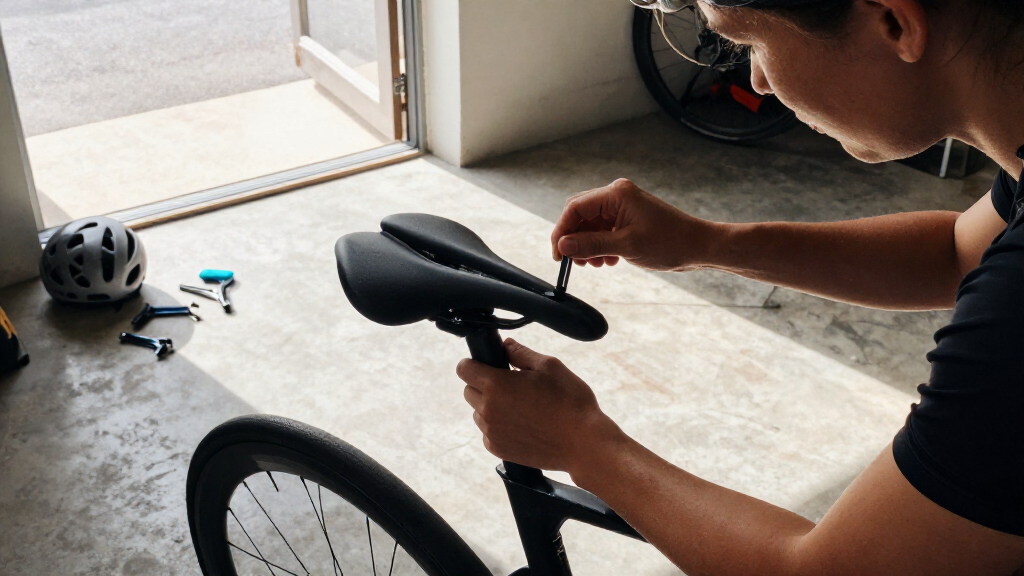
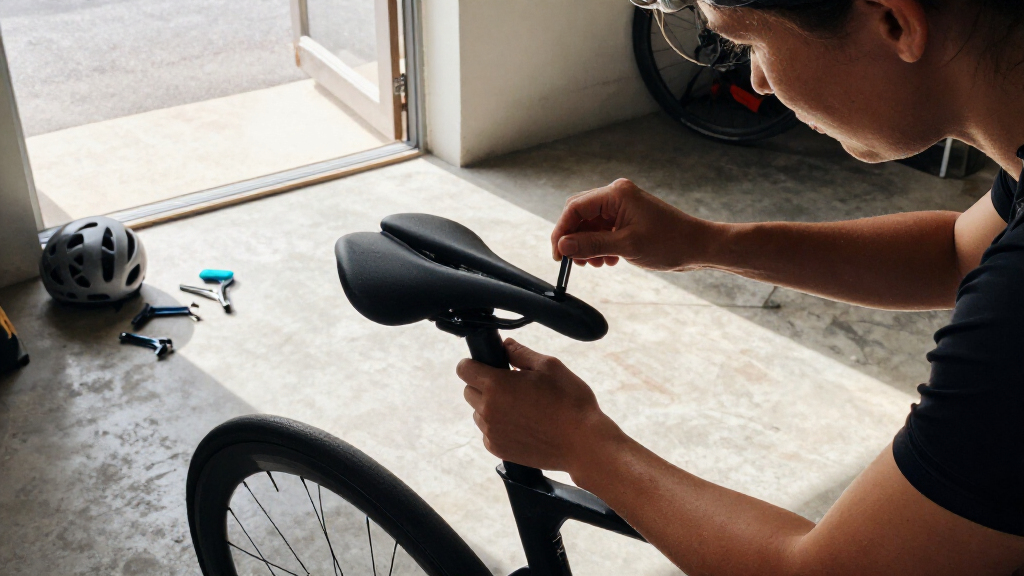
A saddle that feels uncomfortable may be poorly positioned rather than poorly designed. Small changes in tilt can shift pressure toward the nose or the rear, and a height mismatch can cause rocking, overreaching, or extra friction. Make one adjustment at a time and keep a record of the original setup so you can reverse changes. Start close to level unless the manufacturer or a fitter recommends otherwise; a steep nose-down angle can make you slide forward and load your hands. Recheck fit in your usual riding position, not just while sitting still in a workshop.
Decide How Much Padding You Actually Need
More padding is not always more comfortable over a long ride. Soft foam or gel may feel pleasant at first, yet too much compression can let the pelvis sink and increase rubbing as you pedal. A firmer racing saddle can feel unfamiliar during a short test but provide a steadier platform when its shape matches you. Consider ride duration, shorts, road surface, and how consistently you hold a race position before favoring cushioning. If you ride in varied conditions or want one saddle for training and racing, prioritize stable support over softness alone.
Frequently Asked Questions
Is a short-nose saddle the right choice for every road racer?
No. A short nose can suit a forward pelvic position and reduce interference when you ride low, but it may feel restrictive if you regularly slide forward and back or rely on the nose for support. A longer saddle may offer more room to reposition, as with the Fizik Arione options in this lineup. Your posture, hip rotation, and preferred support point matter more than the racing label. If possible, compare shapes through a saddle demo program before replacing a saddle that already fits.
Does a cutout prevent numbness on long rides?
A cutout can reduce pressure in the center for some riders, but it is not a guaranteed fix. Saddle width, tilt, height, and your position can all affect pressure, and a poorly matched cutout may concentrate contact along its edges. The Selle Italia Flow and Superflow models offer relief-oriented designs, but the right choice depends on where your body needs support. If numbness persists, stop treating it as a product-selection issue alone and seek a professional fit or medical advice.
Should I choose carbon rails for a minimalist racing build?
Choose carbon rails when reducing component weight is a priority and your seatpost clamp is approved for the rail shape. They do not automatically make a saddle more comfortable or better fitting than a titanium or steel-rail alternative. Check clamp compatibility and installation torque before buying, since an incompatible clamp can damage the rails. For a bike used across rough roads or multiple setups, the simpler compatibility of other rail materials may be the more practical tradeoff.
Are 3D-printed or ventilated saddles worth choosing over conventional padding?
They can be worth trying if you want a different pressure distribution or surface structure, but the material alone does not predict comfort. The Shortfit 2.0 3D Racing and the ROCKBROS 3D Printed Ventilated saddle represent distinct approaches; neither removes the need to match width and shape to your body. A 3D surface may feel unfamiliar compared with foam, and ventilation features matter most when they suit your climate and riding conditions. Treat these designs as fit options, not guaranteed upgrades.
Can I use a triathlon saddle for road racing?
You can, but a triathlon-focused model is shaped around a forward position that may not match typical road riding. The Fizik Transiro Aeris R5 is the lineup’s specialized choice for triathlon use, while the Vento Argo options are more directly aimed at road racing. Consider how often you ride in aero bars and whether the saddle supports your pelvis in that position. If most of your time is spent on a standard road setup, a road-oriented profile is usually the more sensible starting point.
Conclusion
For a broad road-racing starting point, I recommend the Fizik Vento Argo R1 Carbon as best overall, with the Fizik Vento Argo R1 Light as the premium-minded alternative for riders prioritizing a lighter race build. The Fizik Vento Antares is a more approachable choice for beginners who want a familiar road-saddle profile, while the Fabric Line Race Team Shallow makes the most sense as a value-oriented option for riders who prefer a conventional shape and titanium rails. For specific needs, choose the Fizik Transiro Aeris R5 for triathlon positioning or the Selle San Marco Shortfit 2.0 3D Racing if you want to explore a 3D-printed surface. I’d make the final call by confirming width, posture, and seatpost compatibility first; a model that fits those three factors is a better choice than one selected for minimal weight alone.