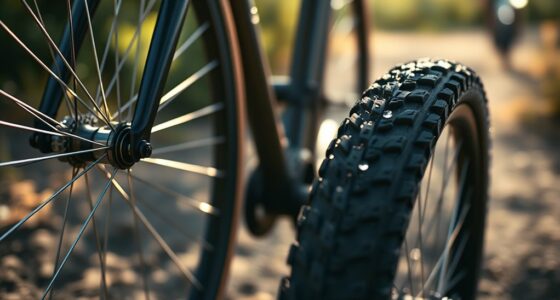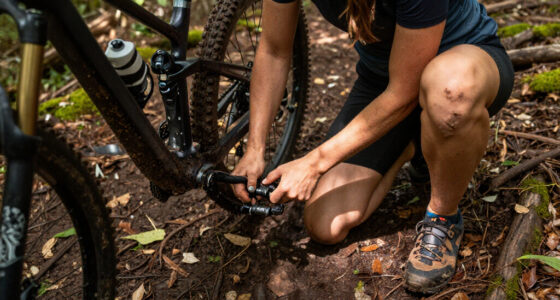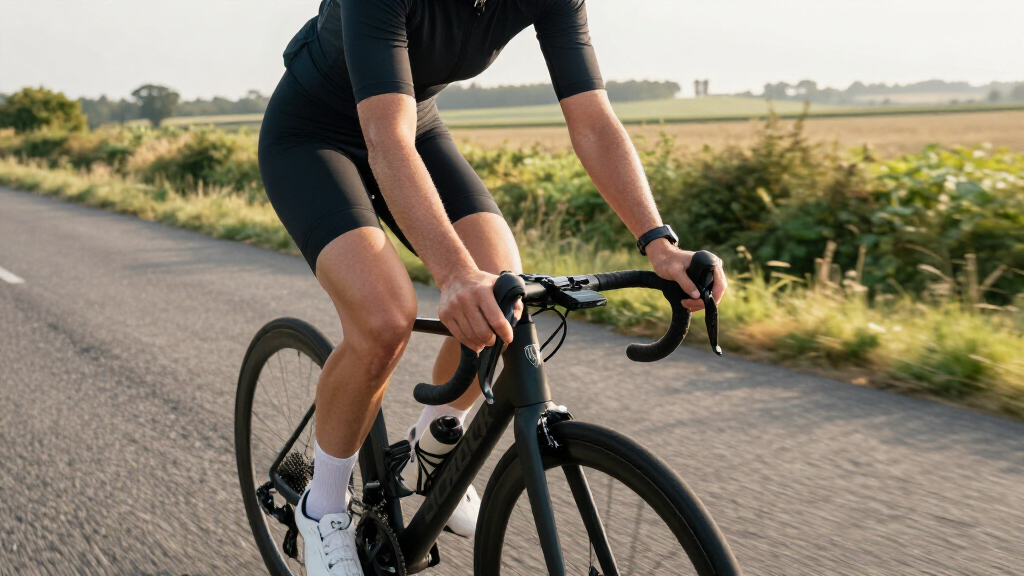

The Favero Assioma PRO RS-2 is my best overall pick among the best cycling power meters, pairing dual-sided road power measurement with a pedal format that is straightforward to move between compatible bikes. The Favero Assioma PRO MX-2 stands out for mountain bikers who want dual-sided data, while the Magene PES P505/P515 offers a crank-based alternative for riders who prefer to keep their pedals unchanged. The main tradeoffs are pedal compatibility and portability versus crank or spider fit, plus the added detail of dual-sided readings versus the simpler setup of single-sided models. I ranked the options by how well their measurement approach, installation demands, and intended riding use suit different buyers. Read on for the full breakdown and guidance on choosing the right format.

Get sports gear delivered free with Prime
- Fast, free delivery on millions of items
- Prime Video, Amazon Music and more included
- Member-only deals all year
Complete the kit


Key Takeaways
- Pedal meters dominate this lineup: Favero and Magene offer road and MTB choices that can suit riders who want to transfer a meter between compatible bikes, but pedal and cleat compatibility should come first.
- Dual-sided sensing is not automatically the best fit: The Assioma PRO RS-2 and MX-2 are strong choices for riders who want left- and right-side data; single-sided models can make more sense when simplicity matters more than side-to-side detail.
- Road and mountain pedals are different buying decisions: The Assioma PRO RS and RL models target road use, while the MX range and SRM X-Power are built around MTB pedal needs.
- Crank and spider units solve a different problem: Magene cranksets, the ThinkRider PP5, and GEOID PM500 avoid choosing a power-measuring pedal, but demand closer checks of frame, drivetrain, crank, and chainring fit.
- The lineup has clear starting points by rider: Favero Assioma Uno is a direct single-sided entry, while the dual-sided Favero models suit riders who value separate leg data and the Magene options broaden the crank-based alternatives.
| Favero Assioma PRO MX-2 Dual-Sensing MTB Power Meter Pedals |  | Best for MTB and Gravel Versatility | Compatibility: SPD; MTB and gravel | Connectivity: Bluetooth and ANT+ | Power accuracy: ±1% | VIEW LATEST PRICE | See Our Full Breakdown |
| Favero Assioma PRO RS-2 Dual-Sensing Road Cycling Power Meter Pedals |  | Best Road Pedals for Modular Flexibility | Compatibility: SPD-SL cleats | Connectivity: Bluetooth and ANT+ | Power accuracy: ±1% | VIEW LATEST PRICE | See Our Full Breakdown |
| SRM X-Power MTB Dual-Sided Power Meter Pedals |  | Best for Compact Off-Road Power Data | Power measurement: Dual-sided, left and right | Connectivity: Bluetooth and ANT+ | Battery life: Up to 30 hours per charge | VIEW LATEST PRICE | See Our Full Breakdown |
| Magene TEO P515 Road Bike Power Meter Crankset |  | Best Long-Battery Crankset | Bike type: Road bike | Crank material: HI-MOD carbon fiber | Spider material: 7075 aluminum | VIEW LATEST PRICE | See Our Full Breakdown |
| Magene P715 Dual-Sensing Side Power Meter Cycling Pedals |  | Best for Quick SPD-SL Setup | Measurement: Independent left and right leg power | Accuracy: ±1% | Compatibility: SPD-SL | VIEW LATEST PRICE | See Our Full Breakdown |
| Favero Assioma PRO MX-1 Single-Sensing MTB Power Meter Pedals | 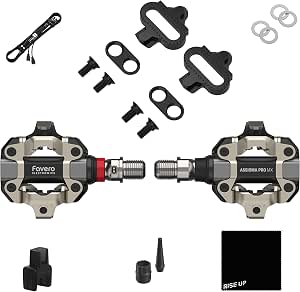 | Best for MTB and Gravel | Power sensing: Left pedal only | Cleat compatibility: SPD; 4° MTB-compatible cleats included | Connectivity: Bluetooth and ANT+ | VIEW LATEST PRICE | See Our Full Breakdown |
| Magene PES P505/P515 Cycling Power Meter Crankset |  | Best for Long Training Blocks | Power accuracy: ±1% | Weight: 625 g | Battery life: Up to 380 hours | VIEW LATEST PRICE | See Our Full Breakdown |
| Favero Assioma PRO RL-1 Single-Sensing Road Cycling Power Meter Pedal |  | Best for Look Keo Riders | Sensor configuration: Single-sensing, left pedal | Cleat compatibility: Look Keo compatible; 5° cleats included | Connectivity: Bluetooth and ANT+ | VIEW LATEST PRICE | See Our Full Breakdown |
| Magene P715 Power Meter Pedals |  | Best Dual-Sided Pedal Option | Power sensing: Dual-sided | Power accuracy: ±1% | Battery life: Up to 120 hours | VIEW LATEST PRICE | See Our Full Breakdown |
| Favero Assioma PRO MX-1 Single Sided Power Meter Pedals |  | Best for a Simple MTB Setup | Power measurement: Single-sided | Compatibility: Standard pedal systems | Model: MX-1 | VIEW LATEST PRICE | See Our Full Breakdown |
| Favero Assioma PRO RL-2 Dual-Sensing Road Cycling Power Meter Pedals |  | Best for Road Riders Who Want Detailed Pedal Metrics | Pedal compatibility: Look Keo | Connectivity: Bluetooth and ANT+ | Power accuracy: ±1% | VIEW LATEST PRICE | See Our Full Breakdown |
| ThinkRider PP5 Spider Power Meter and Crankset for Road Bikes |  | Best for Long Training Blocks | Interface compatibility: Easton-spec only | Chainring compatibility: 110 BCD, four-bolt | Measurements: Total power, left/right power, cadence, and pedaling smoothness | VIEW LATEST PRICE | See Our Full Breakdown |
| GEOID PM500 Bike Power Meter Crankset – 165mm, ±1.5% Accuracy, Lightweight 680g, 300h Battery, 110 BCD, Bluetooth & ANT+, IPX7 Waterproof |  | Best Lightweight Crankset Option | Weight: 680 g (1.5 lb) | Battery life: Up to 300 hours per charge | Power accuracy: ±1.5% | VIEW LATEST PRICE | See Our Full Breakdown |
| Favero Assioma Uno Power Meter Pedal |  | Best Simple Single-Sided Pedal Meter | Configuration: Single-sided UNO; DUO dual-sided version also available | Battery: Rechargeable | Battery life: Up to 50 hours | VIEW LATEST PRICE | See Our Full Breakdown |
| cycling power meter | Connectivity | Battery life | Power accuracy | Charging |
|---|---|---|---|---|
| Favero Assioma PRO MX-2 Dual-S | Bluetooth and ANT+ | At least 160 hours per charge | ±1% | Magnetic connectors; USB Type-C cable included |
| Favero Assioma PRO RS-2 Dual-S | Bluetooth and ANT+ | At least 160 hours per charge | ±1% | Rechargeable integrated battery; magnetic connector and USB Type-C cable |
| SRM X-Power MTB Dual-Sided Pow | Bluetooth and ANT+ | Up to 30 hours per charge | — | Rechargeable with magnetic charging system |
| Magene TEO P515 Road Bike Powe | Bluetooth and ANT+ | 380 hours | — | — |
| Magene P715 Dual-Sensing Side | Bluetooth and ANT+ | Up to 120 hours | — | — |
| Favero Assioma PRO MX-1 Single | Bluetooth and ANT+ | At least 160 hours per charge | ±1% | Integrated rechargeable battery with magnetic charging |
| Magene PES P505/P515 Cycling P | ANT+ and Bluetooth | Up to 380 hours | ±1% | — |
| Favero Assioma PRO RL-1 Single | Bluetooth and ANT+ | At least 160 hours per charge | ±1% | Magnetic system with USB Type-C cable |
| Magene P715 Power Meter Pedals | Bluetooth and ANT+ | Up to 120 hours | ±1% | — |
| Favero Assioma PRO MX-1 Single | — | — | — | — |
| Favero Assioma PRO RL-2 Dual-S | Bluetooth and ANT+ | At least 160 hours per charge | ±1% | Magnetic connectors with USB Type-C cable |
| ThinkRider PP5 Spider Power Me | BLE and ANT+ | — | — | Magnetic fast charging |
| GEOID PM500 Bike Power Meter C | Bluetooth and ANT+ | Up to 300 hours per charge | ±1.5% | — |
| Favero Assioma Uno Power Meter | Bluetooth and ANT+ | Up to 50 hours | — | — |
More Details on Our Top Picks
Favero Assioma PRO MX-2 Dual-Sensing MTB Power Meter Pedals
The MX-2 is the clearest fit here for riders who want dual-sided power on SPD-compatible pedals and may switch between mountain, gravel, and road setups. Its modular body design gives it more setup flexibility than the road-focused PRO RS-2, while Bluetooth and ANT+ make it compatible with a broad range of cycling computers and phones. Favero claims ±1% accuracy, and the rechargeable battery lasts at least 160 hours per charge, a much longer interval than the SRM X-Power MTB’s stated 30 hours. The tradeoff is that it still needs charging, and swapping pedal bodies does not make MX and RS bodies interchangeable without regard to their specific setup. I’d choose it for off-road versatility, not for riders who only need a fixed road-pedal system.
Pros:- Measures power from both sides for a fuller view of left-right output.
- SPD compatibility suits many MTB and gravel setups.
- Modular design allows pedal-body changes between compatible MX and RS setups.
- At least 160 hours of battery life per charge, with Bluetooth and ANT+ connectivity.
Cons:- The integrated battery needs periodic recharging.
- MX and RS pedal bodies are setup-specific rather than universally interchangeable.
Best for: Mountain and gravel riders using SPD cleats who want dual-sided power and the option to adapt the pedal setup for road use.
Not ideal for: Road-only riders committed to SPD-SL cleats, or riders who want a crank-based meter and do not want to charge pedals.
- Compatibility:SPD; MTB and gravel
- Connectivity:Bluetooth and ANT+
- Power accuracy:±1%
- Battery life:At least 160 hours per charge
- Operating temperature:-10°C to 55°C
- Pedal body material:6061-T6 aluminum
- Charging:Magnetic connectors; USB Type-C cable included
- Included cleats:Assioma PRO MX MTB-compatible SPD cleats, 4° float
Our verdict“Choose the MX-2 if you want dual-sided power on SPD pedals for off-road riding and value a modular setup more than a crank-based installation.”
Favero Assioma PRO RS-2 Dual-Sensing Road Cycling Power Meter Pedals
For road riders who want dual-sided pedal power without changing to a crank-based meter, the PRO RS-2 makes a strong case. It installs like a standard pedal, pairs over Bluetooth and ANT+, and uses SPD-SL cleats; the claimed accuracy is ±1%, with at least 160 hours of battery life. Compared with the MTB-oriented Assioma PRO MX-2, this is the more natural choice for a road bike already set up around SPD-SL. Its modular design also allows compatible PRO MX or RS pedal-body changes while retaining the power sensor, which can suit riders with more than one bike setup. The main limitation is cleat commitment: it is not a universal pedal solution, and riders who prefer SPD or want long battery life without charging may prefer another system.
Pros:- Dual-sided pedal measurement paired with a claimed ±1% accuracy.
- At least 160 hours of battery life per charge.
- Bluetooth and ANT+ support for computers and smartphones.
- Modular design supports compatible PRO RS and PRO MX pedal bodies.
Cons:- Requires periodic battery charging.
- Road setup depends on SPD-SL cleats, limiting compatibility for SPD users.
Best for: Road cyclists using SPD-SL who want dual-sided power, straightforward pedal installation, and the option to change compatible pedal bodies.
Not ideal for: Riders with SPD shoes, or cyclists who prefer a crank-based power meter and want to avoid recharging pedals.
- Compatibility:SPD-SL cleats
- Connectivity:Bluetooth and ANT+
- Power accuracy:±1%
- Battery life:At least 160 hours per charge
- Operating temperature:-10°C to 55°C
- Charging:Rechargeable integrated battery; magnetic connector and USB Type-C cable
- Design:Modular pedal body; compatible with PRO RS and PRO MX pedal bodies
- Included:Power-meter pedals, SPD-SL cleats, charging connectors, USB Type-C cable, washers, greasing tools kit, cleaning cloth
Our verdict“Pick the PRO RS-2 for a road bike with SPD-SL shoes when you want dual-sided pedal power and more modularity than a fixed road pedal.”
SRM X-Power MTB Dual-Sided Power Meter Pedals
The SRM X-Power MTB offers off-road riders dual-sided power, cadence, and left-right balance in a clipless pedal system. Bluetooth and ANT+ support let riders send data to compatible devices, while the reinforced steel spindle and anodized alloy body are aimed at mountain and gravel use. Its stated 10.5 mm stack height and 54 mm Q-factor give fit-focused buyers useful dimensions to compare against their existing pedals. Battery life is the clear compromise: up to 30 hours per charge is far shorter than the 160-hour minimum listed for the Favero Assioma PRO MX-2. There is also a compatibility ambiguity in the supplied details, which call the pedals SPD-compatible but list SPD-SL-compatible cleats. I’d confirm the cleat interface before buying rather than assume it matches an MTB setup.
Pros:- Tracks left and right power, cadence, and balance.
- Bluetooth and ANT+ support a range of cycling devices.
- Reinforced steel spindle and anodized alloy body are specified for off-road use.
- Published stack height and Q-factor help with fit comparisons.
Cons:- Up to 30 hours of battery life is substantially shorter than the Favero PRO MX-2’s stated minimum.
- The product details conflict on SPD compatibility versus SPD-SL-compatible included cleats.
- Requires recharging through its magnetic charging system.
Best for: Off-road riders who want dual-sided power and balance data, and who can confirm the pedal and cleat interface fits their shoes.
Not ideal for: Riders seeking long intervals between charges or anyone who cannot verify whether the included cleats match their SPD shoes.
- Power measurement:Dual-sided, left and right
- Connectivity:Bluetooth and ANT+
- Battery life:Up to 30 hours per charge
- Charging:Rechargeable with magnetic charging system
- Q-factor:54 mm
- Stack height:10.5 mm
- Materials:Anodized alloy body; reinforced steel spindle
- Item weight:250.5 g
- Warranty:2 years
Our verdict“Consider the X-Power MTB if you want off-road balance data and its fit suits your bike, but verify cleat compatibility and accept more frequent charging.”
Magene TEO P515 Road Bike Power Meter Crankset
The TEO P515 stands apart from the pedal-based Favero PRO RS-2 and Magene P715 by putting its power measurement in a road crankset with a 7075 aluminum spider. It reports power, cadence, left-right balance, and pedaling smoothness, giving riders more than a single headline power figure. The claimed ±1% accuracy, Bluetooth and ANT+ connections, and IPX7 water resistance make it suitable for riders who train in varied weather and want extensive ride data. Its 380-hour battery life is the standout practical advantage over the pedal options here, which need charging sooner. The tradeoff is fit: bottom-bracket and chainring compatibility matter, so installation is less universal than replacing standard pedals. The listed 160 mm crank size also needs to match the rider’s preferred fit.
Pros:- Up to 380 hours of battery life reduces charging interruptions compared with the pedal meters listed here.
- Measures power, cadence, left-right balance, and pedaling smoothness.
- Bluetooth and ANT+ connectivity support computers and apps.
- IPX7 water resistance is suited to wet-weather riding.
Cons:- Bottom-bracket and chainring compatibility can restrict installation.
- The listed 160 mm crank size may not suit every rider or bike fit.
- A crankset is less convenient to move between bikes than a pedal-based meter.
Best for: Road cyclists who want a crank-based system with long battery life, all-weather resistance, and left-right and pedaling-smoothness data.
Not ideal for: Riders who need a quick pedal swap between bikes or whose bottom bracket, chainrings, or preferred crank length do not match the stated setup.
- Bike type:Road bike
- Crank material:HI-MOD carbon fiber
- Spider material:7075 aluminum
- Chainring specification:110BCD, four-bolt
- Crank size:160 mm
- Accuracy:±1%
- Battery life:380 hours
- Connectivity:Bluetooth and ANT+
- Water resistance:IPX7
Our verdict“Choose the TEO P515 if its crank and drivetrain specifications fit your road bike and you value long battery life over quick pedal-based transfer.”
Magene P715 Dual-Sensing Side Power Meter Cycling Pedals
The Magene P715 is a straightforward choice for road riders who want independent left- and right-leg power in a pedal-based system. Its stated installation time of about one minute makes it more appealing for riders who want to fit a meter without replacing a crankset, unlike the Magene TEO P515. The P715 also pairs with Bluetooth and ANT+ devices and claims ±1% accuracy, while its battery lasts up to 120 hours. That is a practical interval, though shorter than the at-least-160-hour claim for both Favero PRO RS-2 and PRO MX-2. The key limitation is its SPD-SL compatibility: riders using SPD shoes or looking for an MTB pedal should choose a different option. The supplied details also give little information about dimensions or charging, making compatibility checks especially worthwhile.
Pros:- Measures left and right leg power independently.
- About one minute of stated installation time offers an easy alternative to a crankset swap.
- Bluetooth and ANT+ connectivity support common cycling devices.
- Up to 120 hours of battery life per charge.
Cons:- SPD-SL compatibility excludes riders using SPD cleats.
- Battery life is shorter than the Favero PRO RS-2 and PRO MX-2 claims.
- Available product details do not specify charging method or pedal dimensions.
Best for: Road cyclists using SPD-SL shoes who want a quick pedal installation and independent left-right power readings.
Not ideal for: MTB and gravel riders, SPD users, or buyers who need detailed fit and charging specifications before choosing a pedal meter.
- Measurement:Independent left and right leg power
- Accuracy:±1%
- Compatibility:SPD-SL
- Battery life:Up to 120 hours
- Connectivity:Bluetooth and ANT+
- Installation time:About 1 minute
- Color:Silver
Our verdict“Pick the P715 if you ride on SPD-SL and want quick-install, dual-sided pedal power without changing your crankset.”
Favero Assioma PRO MX-1 Single-Sensing MTB Power Meter Pedals
The Assioma PRO MX-1 suits riders who want power data without replacing their crankset or changing their SPD setup. Its left-pedal sensor estimates total power from one side, so it is simpler to move between compatible bikes than a crank-based option such as the Magene PES P505/P515, but it cannot directly measure each leg independently. Favero specifies ±1% accuracy and more than 160 hours per charge, a useful combination for regular training with less frequent charging. Bluetooth and ANT+ support make it easy to pair with a computer or phone, while the modular pedal body can serve compatible road and MTB setups. The tradeoff is that riders seeking true dual-sided data should look at the Magene P715 instead.
Pros:- SPD-compatible pedal format fits MTB and gravel use
- Bluetooth and ANT+ pair with computers and smartphones
- More than 160 hours of stated use per charge
- Modular pedal body can be swapped between compatible setups
Cons:- Left-side sensing estimates total power rather than measuring both legs independently
- Rechargeable battery needs periodic charging
- SPD cleat setup may not suit riders committed to another pedal system
Best for: Mountain-bike and gravel riders using SPD cleats who want transferable pedal-based power data and long battery life.
Not ideal for: Riders who need independently measured left- and right-leg power, or who do not use SPD-compatible cleats.
- Power sensing:Left pedal only
- Cleat compatibility:SPD; 4° MTB-compatible cleats included
- Connectivity:Bluetooth and ANT+
- Power accuracy:±1%
- Battery life:At least 160 hours per charge
- Charging:Integrated rechargeable battery with magnetic charging
- Pedal body material:6061-T6 aluminum
- Additional metrics:Cadence, L/R balance, PCO, power phase, pedal smoothness, torque effectiveness, and rider position
Our verdict“Choose the MX-1 for SPD-equipped off-road riding and easy bike-to-bike transfer; choose the Magene P715 if independent dual-sided measurement matters more.”
Magene PES P505/P515 Cycling Power Meter Crankset
The Magene PES P505/P515 is a crankset pick for riders who prefer a fitted power meter over pedals they move from bike to bike. Its stated battery life of up to 380 hours is the standout here, far beyond the 120-hour rating of the Magene P715 pedals and the 160-plus hours listed for Favero’s Assioma options. It also reports cadence, left-right balance, and torque effectiveness, with ANT+ and Bluetooth for head units and apps. The pre-assembled 165 mm crank and 110 BCD chainring interface make the package specific rather than universal: riders must check frame, crank, and chainring fit before buying. Unlike the pedal-based MX-1, it is not as easy to transfer between bikes. Its longer battery life comes with a more involved compatibility decision.
Pros:- Up to 380 hours of stated battery life
- Tracks cadence, left-right balance, and torque effectiveness
- ANT+ and Bluetooth connectivity
- IPX7 waterproof rating
Cons:- Compatibility depends on frame and drivetrain setup
- Crankset installation and transfer are less straightforward than moving power-meter pedals
- Battery life can vary with riding conditions
Best for: Road riders with a compatible frame and 110 BCD setup who want a crank-based meter and fewer charging interruptions.
Not ideal for: Riders who need a meter they can quickly move between bikes or whose frame and chainring setup do not match the listed dimensions.
- Power accuracy:±1%
- Weight:625 g
- Battery life:Up to 380 hours
- Chainring bolt circle diameter:110 BCD
- Connectivity:ANT+ and Bluetooth
- Crank length:165 mm
- Spindle:24 mm steel
- Water resistance:IPX7
- Warranty:2 years
Our verdict“Pick the PES P505/P515 for a compatible bike and long stretches between charges, but favor pedal meters such as the MX-1 if you need easy transfer between bikes.”
Favero Assioma PRO RL-1 Single-Sensing Road Cycling Power Meter Pedal
For road riders already using Look Keo-compatible cleats, the Assioma PRO RL-1 adds power measurement without requiring a crankset change. Like the off-road Assioma PRO MX-1, it senses from the left pedal, pairs through Bluetooth and ANT+, and is rated for ±1% accuracy. The road-specific distinction is its included 5° Look Keo-compatible cleats; that makes it a more natural fit for a Keo-equipped road bike than the MX-1’s SPD platform. Its modular pedal body can also be swapped between compatible road and MTB setups. The main limitation is shared with other single-sided models: left-leg data is used to estimate total power, not to report independent output from both legs. Riders prioritizing dual-sided readings should compare it with Favero’s PRO RL-2.
Pros:- Look Keo-compatible design includes 5° cleats
- Bluetooth and ANT+ support computers and smartphones
- At least 160 hours of stated battery use per charge
- Modular body supports compatible road and MTB setups
Cons:- Left-pedal sensing does not provide independent readings for both legs
- Requires recharging
- Cleat compatibility is specific to Look Keo
Best for: Road cyclists already using Look Keo-compatible cleats who want a rechargeable pedal meter that can move between compatible bikes.
Not ideal for: Riders seeking independently measured left- and right-leg power, or those using SPD-SL or another cleat system.
- Sensor configuration:Single-sensing, left pedal
- Cleat compatibility:Look Keo compatible; 5° cleats included
- Connectivity:Bluetooth and ANT+
- Power accuracy:±1%
- Battery life:At least 160 hours per charge
- Charging:Magnetic system with USB Type-C cable
- Operating temperature:-10°C to 55°C
- Metrics:Power, cadence, L/R balance, PCO, power phase, pedal smoothness, torque effectiveness, and rider position
Our verdict“Choose the RL-1 if your road bike uses Look Keo cleats and single-sided data is sufficient; step up to the PRO RL-2 for dual-sided sensing.”
Magene P715 Power Meter Pedals
The Magene P715 is the clearest choice in this group for riders who want pedal-based, dual-sided measurement rather than the left-only sensing in the Favero Assioma PRO RL-1 or MX-1. Independent measurement from both pedals can show how each leg contributes, while the pedal format makes it practical to move the system between compatible bikes. Magene lists ±1% accuracy, Bluetooth and ANT+, IPX7 water resistance, and up to 120 hours of battery life. That runtime is shorter than the Favero single-sided models’ stated 160-plus hours and much shorter than the PES P505/P515 crankset’s up-to-380-hour claim. The product information does not specify cleat or bike compatibility, so buyers should confirm fit before ordering rather than assume it matches their current setup.
Pros:- Dual-sided pedal measurement
- Bluetooth and ANT+ connectivity
- IPX7 waterproof rating
- Transferable pedal format with up to 120 hours of stated battery life
Cons:- Cleat and bike compatibility details are not specified in the supplied product data
- Up to 120 hours is less stated runtime than the Favero Assioma single-sided pedals
- Requires charging with the included magnetic cable
Best for: Riders who want dual-sided pedal power data and expect to transfer a meter between compatible bikes.
Not ideal for: Buyers who need clearly documented cleat compatibility or want longer stated battery life than the Favero Assioma pedals provide.
- Power sensing:Dual-sided
- Power accuracy:±1%
- Battery life:Up to 120 hours
- Weight:157 g per pedal
- Connectivity:Bluetooth and ANT+
- Water resistance:IPX7
- Included components:Two power-meter pedals, two crank washers, magnetic charging cable, and quick-start guide
- Warranty:2 years
Our verdict“Choose the P715 when dual-sided pedal measurement and bike-to-bike transfer outweigh the need for detailed compatibility information or longer battery life.”
Favero Assioma PRO MX-1 Single Sided Power Meter Pedals
This Assioma PRO MX-1 listing is aimed at riders after a straightforward single-sided MTB pedal setup, but its product details are much thinner than those provided for the other MX-1 in this roundup. The listing confirms single-sided measurement and general compatibility with standard pedal systems, yet it does not specify the connectivity, accuracy, battery life, or cleat standard supplied with the more fully documented Favero Assioma PRO MX-1 (ASIN B0HHTH1MR9). That gap makes it harder to compare confidently, especially against the dual-sided Magene P715, which explicitly lists Bluetooth, ANT+, and an accuracy claim. Its appeal is a simple pedal-based format and stated integration with computers and apps; the tradeoff is that buyers have less concrete specification data to verify before choosing it.
Pros:- Single-sided power measurement in a pedal format
- Described as compatible with standard pedal systems
- Designed to integrate with cycling computers and training apps
Cons:- The supplied specifications omit accuracy, battery life, and connectivity standards
- Single-sided measurement does not independently capture both legs
- Cleat compatibility and included components are not specified
Best for: Riders seeking a basic single-sided MTB pedal power meter who can confirm the exact pedal and sensor specifications with the seller.
Not ideal for: Buyers who need clearly stated cleat compatibility, accuracy, connectivity, or battery life before purchase, or who want dual-sided readings.
- Power measurement:Single-sided
- Compatibility:Standard pedal systems
- Model:MX-1
- Power meter format:Pedal-based
- Computer and app integration:Described as compatible; protocols not specified
- Accuracy:Not specified in supplied product data
Our verdict“Consider this listing only if its seller can confirm the missing fit and performance details; the better-documented MX-1 is easier to compare and verify.”
Favero Assioma PRO RL-2 Dual-Sensing Road Cycling Power Meter Pedals
The Assioma PRO RL-2 pairs dual-sided power measurement with a broad set of pedaling metrics, including left/right balance, power phase, and pedal smoothness. That makes it a stronger fit for riders who want more than a single training power figure. Its Look Keo compatibility keeps installation familiar for many road cyclists, and Bluetooth plus ANT+ supports connections to phones and cycling computers. Compared with the Favero Assioma Uno, this model measures both legs and offers much longer stated battery life, but it also requires compatible cleats and costs more in setup complexity. The modular pedal-body design gives it flexibility within Favero’s compatible range. The tradeoff is a rechargeable system that still needs periodic charging, even with at least 160 hours per charge.
Pros:- Measures both legs and reports a wide range of pedaling metrics
- Bluetooth and ANT+ connect to cycling computers and smartphones
- At least 160 hours of stated use per charge
- Modular design allows swaps among compatible pedal bodies
Cons:- Requires Look Keo-compatible cleats
- Rechargeable battery requires periodic charging
- Its extensive metrics may be unnecessary for riders who only need total power
Best for: Road cyclists already using Look Keo cleats who want dual-sided power and detailed pedaling metrics for structured training.
Not ideal for: Riders using a different cleat system or those who prefer a low-maintenance, single-sided meter with fewer data features.
- Pedal compatibility:Look Keo
- Connectivity:Bluetooth and ANT+
- Power accuracy:±1%
- Battery life:At least 160 hours per charge
- Charging:Magnetic connectors with USB Type-C cable
- Measured metrics:Power, cadence, left/right balance, PCO, power phase, pedal smoothness, torque effectiveness, and rider position
- Included cleats:Favero / Look Keo compatible, 5-degree
- Compatible pedal bodies:PRO MX, PRO RS, and PRO RL
Our verdict“Choose the PRO RL-2 if you ride with Look Keo cleats and want dual-sided power plus detailed pedal analysis rather than the simpler single-sided Favero Assioma Uno.”
ThinkRider PP5 Spider Power Meter and Crankset for Road Bikes
The ThinkRider PP5 is aimed at road cyclists who want dual-sided readings from a spider-based meter and fewer charging interruptions. Its stated runtime of up to 300 hours is substantially longer than the Favero Assioma PRO RL-2’s minimum 160 hours, while BLE and ANT+ let it pair with a range of cycling computers. It also reports cadence and pedaling smoothness, giving training-focused riders more context than total power alone. The main constraint is fit: the PP5 supports Easton-spec interfaces and 110 BCD, four-bolt chainrings, so it is not a flexible choice for arbitrary crank setups. Compared with the GEOID PM500, it shares the 300-hour runtime and 110 BCD format, but the supplied data gives the GEOID a stated accuracy figure and weight that are not listed for the PP5.
Pros:- Reports total and left/right power, cadence, and pedaling smoothness
- Up to 300 hours of stated battery runtime
- BLE and ANT+ support compatible cycling computers
- IPX7 water resistance suits wet-road and muddy conditions
Cons:- Easton-spec interface compatibility limits crank fit
- Requires 110 BCD, four-bolt chainrings
- Product data does not specify a power-accuracy figure
Best for: Road cyclists with an Easton-spec crank interface and 110 BCD, four-bolt chainrings who want dual-sided data and long intervals between charges.
Not ideal for: Riders with non-Easton interfaces or other chainring standards, since the listed compatibility is narrow.
- Interface compatibility:Easton-spec only
- Chainring compatibility:110 BCD, four-bolt
- Measurements:Total power, left/right power, cadence, and pedaling smoothness
- Connectivity:BLE and ANT+
- Battery runtime:Up to 300 hours
- Charging:Magnetic fast charging
- Water resistance:IPX7
- Intended use:Road bikes
Our verdict“The PP5 makes sense for riders whose Easton-spec and 110 BCD setup matches its fit requirements and who prioritize long battery runtime over broad compatibility.”
GEOID PM500 Bike Power Meter Crankset – 165mm, ±1.5% Accuracy, Lightweight 680g, 300h Battery, 110 BCD, Bluetooth & ANT+, IPX7 Waterproof
The GEOID PM500 stands out among these crank-based options for its specified 680 g weight and 165 mm crank length. Its ±1.5% accuracy, dual-sensor fusion, and temperature compensation give riders a stated basis for tracking training output across changing conditions. The 300-hour battery life and IPX7 rating also make it a practical match for frequent riding in varied weather. Compared with the ThinkRider PP5, the GEOID lists a weight and accuracy figure, while both offer 110 BCD compatibility, long runtime, and Bluetooth/ANT+ connections. Its key limitation is the same kind of drivetrain-fit constraint: it requires 110 BCD chainrings, and its 165 mm length may not suit riders who need another crank length. Check fit before choosing it over pedal-based systems such as the Favero Assioma PRO RL-2.
Pros:- Lightweight 680 g construction with aluminum crank and spider
- Specified ±1.5% accuracy with temperature compensation
- Up to 300 hours of battery life and magnetic charging
- Bluetooth and ANT+ transmit power and additional pedaling data
Cons:- Limited to 110 BCD chainrings
- 165 mm crank length may not fit every rider
- Crankset fit is less adaptable than swapping a compatible pedal-based meter
Best for: Road riders seeking a lightweight 165 mm crankset with stated accuracy, long battery life, and Shimano 12-speed or standard 110 BCD chainring compatibility.
Not ideal for: Cyclists who need another crank length, use a chainring standard outside 110 BCD, or want the simpler installation flexibility of a pedal-based meter.
- Weight:680 g (1.5 lb)
- Battery life:Up to 300 hours per charge
- Power accuracy:±1.5%
- Crank length:165 mm
- BCD:110 mm, four-bolt
- Connectivity:Bluetooth and ANT+
- Materials:6061 aluminum crank and 7075 aluminum spider
- Supported chainrings and systems:Shimano 12-speed and standard 110 BCD chainrings
- Data measured:Power, cadence (20–240 RPM), left/right balance, and pedaling smoothness
Our verdict“Pick the PM500 if its 165 mm length and 110 BCD fit your bike and you want a lightweight crank-based meter with long battery life.”
Favero Assioma Uno Power Meter Pedal
The Favero Assioma Uno is the straightforward choice here for riders who want power measurement in a pedal format without paying for dual-sided sensing. Its single-sided configuration estimates overall output from one side, which can be enough for setting training zones and tracking broad changes over time. Installation is presented as easy, and Bluetooth plus ANT+ supports both cycling computers and iOS or Android phones. Against the dual-sensing Assioma PRO RL-2, the Uno gives up left/right measurement and its battery lasts up to 50 hours rather than at least 160; in return, it keeps the setup simpler. That shorter runtime means more frequent charging than the PRO RL-2 or the 300-hour ThinkRider PP5. The supplied product data does not state cleat compatibility or power accuracy, so buyers should verify fit and data requirements before purchase.
Pros:- Easy-to-install pedal format
- Bluetooth and ANT+ connect to bike computers and smartphones
- Rechargeable battery avoids disposable batteries
- Single-sided setup keeps the measurement system straightforward
Cons:- Single-sided sensing does not provide independent left/right power readings
- Up to 50 hours of battery life is shorter than the PRO RL-2 and PP5
- Product data does not specify cleat compatibility or power accuracy
Best for: Road cyclists who want a simpler, single-sided pedal power meter for training zones and general progress tracking, with phone or bike-computer connectivity.
Not ideal for: Riders who need independent left/right power data, long intervals between charges, or a meter with clearly specified accuracy and cleat compatibility.
- Configuration:Single-sided UNO; DUO dual-sided version also available
- Battery:Rechargeable
- Battery life:Up to 50 hours
- Connectivity:Bluetooth and ANT+
- Compatible devices:Bike computers and Android or iOS smartphones
- Installation:Designed for easy installation
Our verdict“Choose the Assioma Uno if a simple single-sided pedal meter suits your training needs and you accept more frequent charging than with the Assioma PRO RL-2.”

How We Picked
I compared these 14 options by the job a power meter must do for its intended rider: provide usable training data, fit the bike and riding style, and avoid adding unnecessary setup or compatibility problems. I gave weight to measurement layout—single-sided, dual-sided, or spider/crank-based—alongside the practical impact of pedal transfer, installation, and the stated riding category. A feature only mattered when it changed the buying decision; for example, dual-sided sensing can show separate leg output, while a crank-based meter may suit a rider who wants to keep existing pedals.
The order favors broad usefulness first, then models with a clearer match to a specific need. That puts the road-focused Assioma PRO RS-2 at the top as a versatile dual-sided pedal pick, followed by the MTB MX-2 and crank-based options for buyers with different setup priorities. Single-sided and more specialized models rank lower for riders who want the widest data set, though they may be better choices for simpler needs. I also treated model distinctions carefully: similarly named products can differ by sensing arrangement or intended use, so buyers should confirm the exact version and compatibility before purchasing.
| cycling power meter | Connectivity | Power accuracy |
|---|---|---|
| Favero Assioma PRO MX-2 Dual-S | Bluetooth and ANT+ | ±1% |
| Favero Assioma PRO RS-2 Dual-S | Bluetooth and ANT+ | ±1% |
| SRM X-Power MTB Dual-Sided Pow | Bluetooth and ANT+ | — |
| Magene TEO P515 Road Bike Powe | Bluetooth and ANT+ | — |
| Magene P715 Dual-Sensing Side | Bluetooth and ANT+ | — |
| Favero Assioma PRO MX-1 Single | Bluetooth and ANT+ | ±1% |
| Magene PES P505/P515 Cycling P | ANT+ and Bluetooth | ±1% |
| Favero Assioma PRO RL-1 Single | Bluetooth and ANT+ | ±1% |
| Magene P715 Power Meter Pedals | Bluetooth and ANT+ | ±1% |
| Favero Assioma PRO MX-1 Single | — | — |
| Favero Assioma PRO RL-2 Dual-S | Bluetooth and ANT+ | ±1% |
| ThinkRider PP5 Spider Power Me | BLE and ANT+ | — |
| GEOID PM500 Bike Power Meter C | Bluetooth and ANT+ | ±1.5% |
| Favero Assioma Uno Power Meter | Bluetooth and ANT+ | — |
Factors to Consider When Choosing Best Cycling Power Meters
Power-meter choice is less about finding one universally best design and more about matching the sensor to your bike, pedals, and training goals. These checks can prevent a mismatch that no amount of data detail can fix.
Match the meter to your bike before comparing data
Start with the exact bike or bikes where you plan to use the meter. Crank and spider systems can depend on frame clearance, crank length, chainring standard, and drivetrain compatibility, while pedal meters depend on pedal thread and the cleat system you ride. A product listing may name a broad category such as road or MTB, but that does not confirm fit for every frame or component combination. Write down your crank model, chainring setup, and pedal standard before choosing. If you plan to move one meter between bikes, verify both bikes can accept it without separate parts or compromises. A fit check is more useful than choosing based on a feature that your setup cannot support.
Choose single-sided or dual-sided data for a reason
Single-sided meters estimate total power from one leg, which can be enough for pacing and tracking training changes when your left-right balance is not a key concern. Dual-sided meters measure each leg separately, giving more detail but also adding complexity to the purchase and interpretation of your data. A common mistake is to assume dual-sided readings automatically improve every workout; the extra information only helps if you will use it to guide training or monitor a meaningful change. If you compare numbers across meters, remember that different measurement locations and systems can report different results. Prioritize consistent tracking on the same setup over chasing a particular data display. For many riders, the choice comes down to whether separate leg information has a real purpose.
Decide whether portability beats a settled installation
Pedal-based meters appeal to riders who want to move a power meter between compatible bikes, and they can simplify the decision for households with multiple bikes. That convenience still depends on compatible pedal threads, cleats, and enough time to move and calibrate the system as directed. Crank and spider meters tend to stay with one bike, which can be a better arrangement for a dedicated training or race bike. Buyers sometimes focus on transferability without accounting for the tools, adjustment, or fit checks involved. Think about how often you actually switch bikes, not just whether you might do so. A permanent installation may be the easier choice if the meter will live on one bike year-round.
Treat road and MTB use as separate fit and durability needs
Road pedal meters and MTB pedal meters are designed around different riding environments and pedal systems, so one category should not be treated as a universal substitute for the other. MTB riders may prioritize a compatible off-road pedal format and a build suited to trail use, while road riders should focus on their preferred cleat and pedal interface. Check whether your rides include gravel, technical trails, or frequent pedal strikes, since those conditions affect how much exposure a pedal-mounted sensor may face. A power meter attached at the crank or spider can be preferable for some riders who do not want sensor hardware at the pedal. Do not select an MTB model solely because it says dual-sided, or a road model solely because it can transfer between bikes. Match the meter to the pedal system you are willing to ride.
Compare installation and maintenance with the data you need
Power meters differ in how much installation they ask of the buyer, from fitting pedals to replacing or configuring crank components. A simple installation can reduce friction when setting up a second bike, while a crank or spider option may call for more careful compatibility checks and mechanical work. Before buying, check charging or battery arrangements, firmware support, calibration guidance, and the maker’s instructions for ongoing care. Riders who depend on structured training should also confirm that the meter communicates with their head unit or training apps using a protocol they already use. Do not assume that two products with Bluetooth or ANT+ listings behave identically with every device. The best fit is the one whose upkeep and connections are easy to maintain in your routine.
Pay for features you will use, not every available measurement
Dual-sided data, multiple installation options, and detailed metrics can be useful, but they are not requirements for every rider who wants power-based training. A newer cyclist may get more from steady, repeatable power readings and a clear training plan than from additional metrics. A racer or coach-led rider may have a stronger reason to track separate leg output or use a particular sensor format. Consider whether the meter will serve one bike, several bikes, indoor training, outdoor rides, or all of them. Also check whether the model name refers to a single-sided or dual-sided version; small naming differences in this lineup can change what data you receive. Paying for a feature makes sense when it solves a defined training or bike-setup need.
Frequently Asked Questions
Should I choose a dual-sided meter or a single-sided one?
Choose dual-sided if you have a reason to track each leg independently, such as following left-right balance or working with a coach who uses that information. A single-sided meter can still support power-based pacing and training progression, with fewer data points to interpret. The result from a single-sided design may be less representative if your balance changes substantially with fatigue or effort. For riders who mainly want consistent power targets, that tradeoff may not matter. In this lineup, the Assioma PRO RS-2 and MX-2 are dual-sided picks, while options such as the Assioma Uno provide a single-sided route.
Can I move a pedal power meter between my road bike and mountain bike?
Only if the meter’s pedal type suits both bikes and you are comfortable using the matching pedal and cleat system. This roundup separates road-focused Assioma PRO RS and RL models from MTB-focused MX models, so do not assume one model serves both categories. Check pedal threads, cleat compatibility, crank clearance, and the manufacturer’s transfer and installation instructions for each bike. Frequent moves can be less convenient than they sound if each change requires setup checks. If the bikes use different pedal systems, a dedicated meter for each bike or a crank-based alternative may be a better fit.
When does a crankset or spider meter make more sense than power-meter pedals?
A crank or spider meter may suit you if you want to keep your current pedals, prefer a fixed installation, or need a sensor format that fits your training bike better. The Magene crankset options, ThinkRider PP5, and GEOID PM500 give this roundup alternatives beyond pedal-based measurement. Their main buying challenge is fit: crank length, chainring standard, frame clearance, and drivetrain compatibility can narrow your options. Pedal meters are often easier to think about when portability matters, but they still require pedal and cleat compatibility. Choose based on the bike setup you want to preserve, not on sensor location alone.
What should I check before buying a power meter for a bike with unusual crank or pedal standards?
Confirm the exact crank model, crank length, chainring mounting standard, frame clearance, pedal thread, and cleat system against the product documentation. Do not rely on a broad label such as road, MTB, or 110 BCD as proof that every part will fit your bike. If you are choosing a crank or spider meter, check whether you need to replace other drivetrain parts or use a particular chainring arrangement. For pedal meters, confirm your cleats and pedal interface before assuming a quick swap will work. If the manufacturer does not clearly list your setup, ask a qualified mechanic or the maker before ordering.
Will a power meter work with my cycling computer and training apps?
Check the meter’s listed communication protocols and compare them with the computer, watch, or indoor-training app you plan to use. This lineup includes products listing Bluetooth and ANT+ support, but compatibility can still depend on the receiving device and the specific data fields you want. Confirm that your device can pair with the meter and display the power information needed for your workouts. If you rely on indoor training, check the app’s supported sensor connections rather than assuming that outdoor pairing guarantees the same setup indoors. A short compatibility check before purchase can prevent a sensor that measures power but does not fit your existing training workflow.
Conclusion
For most road riders seeking broad capability in a pedal format, I would start with the Favero Assioma PRO RS-2 as my best overall pick. The best value direction is a single-sided model such as the Favero Assioma PRO RL-1 for road use or Assioma PRO MX-1 for MTB, provided its pedal system fits your bike and you do not need separate leg readings. Beginners can keep the choice straightforward with the Favero Assioma Uno, while riders who want a higher-detail road setup should look at the dual-sided RS-2. For mountain bikers who want dual-sided pedal data, the Assioma PRO MX-2 is the specific-use pick; for riders who prefer a crank or spider installation, compare the Magene, ThinkRider, and GEOID options against your bike’s fit standards. My final recommendation is to confirm compatibility first, then choose the least complicated meter that provides the data you will actually use.
NFL season / tailgating Picks
team gear
As an affiliate, we earn on qualifying purchases.