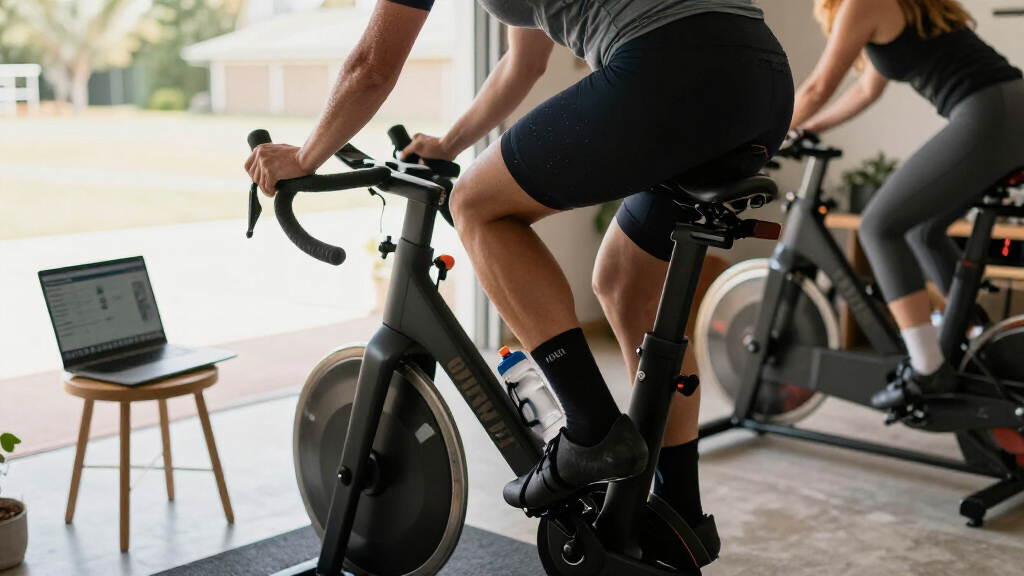

Indoor bike trainers turn the bike you already own into a winter training tool, but the gap between a basic magnetic stand and a smart direct-drive trainer is wide — in ride feel, app connectivity, and cost. For most riders who want structured training, the Wahoo KICKR V6 stands out as the best overall pick, thanks to its accurate power measurement, realistic road feel, and quiet operation. If you mainly want cheap, quiet spinning during bad weather, the Alpcour Fluid Bike Trainer keeps things simple and affordable, while the Wahoo KICKR CORE 2 hits a sweet spot for Zwift riders who don’t need flagship-level realism. The main tradeoff you’ll face is smart interactivity versus simplicity, plus whether you want to remove your rear wheel. Keep reading for the full breakdown of all 14 trainers and which one fits your setup.

Get sports gear delivered free with Prime
- Fast, free delivery on millions of items
- Prime Video, Amazon Music and more included
- Member-only deals all year
Complete the kit


Key Takeaways
- The smart direct-drive models (KICKR V6, KICKR CORE 2, ThinkRider X2Max) dominated on ride feel and app integration, but they demand a bigger budget and wheel removal — everyone else can get by fine with a friction-pad trainer.
- Fluid resistance (Fitvids, Sportneer, Alpcour) delivered noticeably smoother, quieter, and more road-like progression than the magnetic stands with manual dials, which felt choppy at higher efforts.
- Budget magnetic trainers under $150 all performed similarly — the real differentiators were foldability, stability at high wattage, and noise, not resistance specs.
- The ROCKBROS roller was the only true riding-skill option in the lineup; it builds balance but suits experienced riders, not beginners doing steady endurance work.
- Included accessories mattered more than expected: front riser blocks, thru-axle adapters, and quick-release skewers often cost extra with cheaper trainers, narrowing the value gap with mid-range smart options.
| ThinkRider X2Max Smart Bike Trainer |  | Best Smart Trainer for Serious Training | Connectivity: ANT+ and BLE | Maximum power: 2000 W | Power meter error: ±2% | VIEW LATEST PRICE | See Our Full Breakdown |
| Alpcour Foldable Magnetic Bike Trainer Stand |  | Best Portability and Storage | Resistance: 6 fixed levels | Resistance control: Handlebar-mounted cable controller | Material: Stainless steel | VIEW LATEST PRICE | See Our Full Breakdown |
| Indoor Magnetic Bicycle Trainer Stand with Five Resistance Settings |  | Best Budget Basement Pick | Type: Indoor magnetic bicycle trainer | Resistance settings: 5 | Frame material: Carbon steel | VIEW LATEST PRICE | See Our Full Breakdown |
| VEVOR Magnetic Bike Trainer for 26–29 in and 700C Wheels |  | Best for Mixed Wheel Sizes and Higher Rider Weight | Resistance levels: 6 | Resistance type: Magnetic | Compatible wheel sizes: 26–29 in and 700C | VIEW LATEST PRICE | See Our Full Breakdown |
| Saris Mag and Mag Plus Indoor Bike Trainer |  | Best Brand-Backed Magnetic Trainer | Resistance type: Magnetic | Resistance levels: 5 | Dropout spacing: 120 mm, 130 mm, and 135 mm | VIEW LATEST PRICE | See Our Full Breakdown |
| ROCKBROS Foldable Adjustable Bike Roller Trainer |  | Best for Balance and Bike-Handling Skills | Brand: ROCKBROS | Model: W5BK/1 | Trainer type: Roller trainer | VIEW LATEST PRICE | See Our Full Breakdown |
| Saris M2 Smart Indoor Electromagnetic Resistance Bike Trainer |  | Best Budget Smart Trainer | Trainer type: Wheel-on smart trainer | Resistance: Electromagnetic | Power accuracy: ±5% | VIEW LATEST PRICE | See Our Full Breakdown |
| Fitvids Steel Fluid Bike Trainer Stand with Front Wheel Riser Block |  | Best Quiet Budget Trainer | Brand: Fitvids | Material: Alloy steel | Resistance mechanism: Fluid | VIEW LATEST PRICE | See Our Full Breakdown |
| Sportneer Magnetic Indoor Bike Trainer for 26–28-Inch and 700C Wheels |  | Best Complete Starter Kit | Brand: Sportneer | Model: TY-JS007-C | Wheel compatibility: 26–28 inches or 700C | VIEW LATEST PRICE | See Our Full Breakdown |
| Magnetic Indoor Bike Trainer Stand with Adjustable Resistance |  | Best Folding Budget Trainer | Trainer type: Folding magnetic trainer | Resistance: 6 adjustable levels | Resistance control: Handlebar-mounted control | VIEW LATEST PRICE | See Our Full Breakdown |
| Sportneer Fluid Bike Trainer for 26–29-Inch and 700C Wheels |  | Best Budget Fluid Trainer | Brand: Sportneer | Resistance type: Fluid | Compatible wheel sizes: 26–29 inches and 700C | VIEW LATEST PRICE | See Our Full Breakdown |
| Alpcour Fluid Bike Trainer Stand for Indoor Riding |  | Best Complete Starter Kit | Brand: Alpcour | Model: APC-BTSFBK | Resistance type: Fluid, progressive | VIEW LATEST PRICE | See Our Full Breakdown |
| Wahoo KICKR V6 Smart Indoor Trainer |  | Best Premium Smart Trainer | Connectivity: 2.4 GHz Wi-Fi | Maximum resistance: Over 2,200 watts | Power accuracy: ±1% | VIEW LATEST PRICE | See Our Full Breakdown |
| Wahoo Fitness KICKR CORE 2 Indoor Bike Trainer with Zwift Cog and Click |  | Best Value Smart Trainer | Brand: Wahoo Fitness | Model: KICKR CORE 2 with Zwift Cog and Click | Model number: WFBKTR125-3CC | VIEW LATEST PRICE | See Our Full Breakdown |
More Details on Our Top Picks
ThinkRider X2Max Smart Bike Trainer
Among the direct-drive and smart options in this roundup, the ThinkRider X2Max is the only budget-tier model that behaves like a true interactive trainer. With ANT+ and BLE connectivity and Zwift compatibility, it adjusts resistance automatically as virtual terrain changes — something the magnetic stands from Alpcour and VEVOR simply cannot do, no matter how many resistance levels they offer. The 2000 W power ceiling and ±2% accuracy put it in the same conversation as far pricier units like the Wahoo KICKR CORE, at least on paper. The tradeoff is acoustic: at roughly 58 dB at 30 km/h, it is louder than a fluid trainer such as the Sportneer, so apartment riders should plan around it. Compared with the Saris Mag, the X2Max trades simplicity for genuine interactivity — a worthwhile swap for structured training.
Pros:- Full ANT+ and BLE connectivity with Zwift support for automatic resistance control
- 2000 W maximum power output handles sprint workouts
- Simulates climbs up to an 18% grade for realistic hill training
- I-beam triangular frame keeps the bike planted during hard efforts
Cons:- Around 58 dB of noise at 30 km/h is louder than comparable fluid trainers
- Heavier interactive setup is less convenient to store than foldable magnetic stands
Best for: Zwift and virtual-cycling enthusiasts who want app-controlled resistance and slope simulation without paying premium direct-drive prices
Not ideal for: Riders in noise-sensitive apartments or shared living spaces, since 58 dB at typical speeds is audible through thin walls
- Connectivity:ANT+ and BLE
- Maximum power:2000 W
- Power meter error:±2%
- Maximum simulated slope:18%
- Noise level:About 58 dB at 30 km/h
- Frame structure:I-beam triangular structure
- App compatibility:Zwift and cycling software
Our verdict“This is the pick for riders who want genuinely interactive, app-driven training on a budget and can tolerate moderate noise.”
Alpcour Foldable Magnetic Bike Trainer Stand
Where the Alpcour Foldable Magnetic Trainer separates itself from the VEVOR and Sportneer stands in this lineup is the complete portability package: a folding stainless steel frame, a quick lever that needs no tools, and an included carry bag. That makes it the model to beat if your trainer lives in a closet nine months of the year or travels between home and a vacation house. The six handlebar-mounted resistance levels give more granularity than the five-setting carbon steel stand later in this list, though neither approaches the automatic control of the ThinkRider X2Max. Riders should understand what they are buying: this is manual magnetic resistance, so Zwift cannot adjust your workload. The wide base and anti-slip pads do keep things stable, and the bundled front wheel riser block is an accessory some rivals leave out.
Pros:- Folds flat and ships with a carry bag for genuine transportability
- Six resistance levels controlled from a handlebar-mounted cable
- No-tools setup with a quick lever gets you riding in minutes
- Wide base, anti-slip pads, and included front wheel riser block
Cons:- Resistance is capped at six fixed levels with no automatic or app control
- Compatibility is limited to most 26–28 in and 700c wheels, excluding some setups
Best for: Seasonal riders and small-space dwellers who need a trainer that folds down, slips into a bag, and disappears between rides
Not ideal for: App-based virtual cyclists, because the fixed magnetic resistance offers no interactive control for Zwift or similar platforms
- Resistance:6 fixed levels
- Resistance control:Handlebar-mounted cable controller
- Material:Stainless steel
- Compatibility:Most 26–28 in and 700c wheels
- Included accessories:Front wheel riser block and carry bag
- Setup:Quick lever; no tools required
- Frame:Foldable
Our verdict“Buy this if portability and tidy storage matter more to you than smart features — it is the easiest trainer in the roundup to live with between rides.”
Indoor Magnetic Bicycle Trainer Stand with Five Resistance Settings
This no-name magnetic trainer stand is the bare-floor option in this roundup — the one to pick when the only goal is spinning through winter for the least money. The carbon steel frame rated to 300 pounds matches the sturdiness of the VEVOR at a lower tier of cost, and it folds for storage like the Alpcour, minus the carry bag. Five resistance settings trail the six offered by both the Alpcour and VEVOR, and there is no handlebar remote, so changing effort means reaching down mid-ride. Noise sits below 60 dB only at the lowest setting, which means harder intervals get louder — a real limitation compared with fluid models like the Sportneer Fluid or Fitvids. Still, for steady base-mile spinning in a garage, it does the core job without frills.
Pros:- Five adjustable resistance settings cover casual training needs
- Folds flat for compact storage and transport
- Carbon steel frame supports riders up to 300 pounds
- Quieter than basic wind trainers at low resistance
Cons:- Noise rises above the 60 dB figure as resistance levels increase
- No remote resistance control — adjustments require reaching to the unit mid-ride
Best for: First-time indoor riders on a tight budget who want basic resistance for casual winter spinning in a garage or basement
Not ideal for: Apartment dwellers doing high-intensity intervals, since noise climbs above 60 dB as resistance increases
- Type:Indoor magnetic bicycle trainer
- Resistance settings:5
- Frame material:Carbon steel
- Maximum supported weight:300 lbs
- Noise level:Up to 60 dB at the lowest resistance
- Storage:Foldable
Our verdict“A no-frills entry point for garage-based winter riding when budget outranks every other consideration.”
VEVOR Magnetic Bike Trainer for 26–29 in and 700C Wheels
The VEVOR magnetic trainer earns its slot through compatibility and capacity rather than clever features. It accepts 26–29 inch and 700C wheels — a wider range than the Alpcour’s 26–28 inch coverage — and its 330 lb load rating edges out the 300 lb capacity of the five-setting budget stand. That makes it the safer choice for larger riders or households with several bikes of different sizes. Like the Alpcour, it folds, includes a quick-release lever, and comes with a front wheel riser block, so the day-to-day experience is similar; VEVOR simply widens who can use it. The tradeoffs mirror every magnetic stand here: resistance is manual, there is no app integration like the ThinkRider X2Max offers, and tire-on-roller friction still generates noticeable noise — quieter than wind trainers, but no match for fluid designs.
Pros:- Fits 26–29 in and 700C wheels, covering mountain, road, and hybrid bikes
- Carbon steel frame supports up to 330 lb (150 kg)
- Six resistance levels suit warm-ups, climbing practice, and rehab work
- Folds for storage and includes a quick-release lever and front wheel riser block
Cons:- Tire-to-roller friction produces ongoing noise during rides
- No smart or app-controlled resistance — workload is fully manual
Best for: Heavier riders and multi-bike households who need broad wheel compatibility and a 330 lb capacity in a simple manual trainer
Not ideal for: Quiet-apartment training at night, because tire-to-roller friction produces persistent noise no matter the resistance setting
- Resistance levels:6
- Resistance type:Magnetic
- Compatible wheel sizes:26–29 in and 700C
- Maximum load:330 lb (150 kg)
- Frame material:Carbon steel
- Included accessories:Quick-release lever, front wheel riser block
- Foldable:Yes
Our verdict“The most accommodating manual stand in this batch for varied bikes and heavier riders, provided noise is not a dealbreaker.”
Saris Mag and Mag Plus Indoor Bike Trainer
The Saris Mag plays a different game than everything else at this price tier: it leans on brand pedigree and USA-based manufacturing rather than accessory bundles. You give up the carry bag, riser block, and six resistance levels of the Alpcour — the Saris offers five — but you gain a frame built to fit 120 mm, 130 mm, and 135 mm dropout spacings, covering both road and mountain bikes with proper frame engagement rather than generic clamps. App compatibility with Zwift is listed, though buyers should understand this is still manual magnetic resistance — unlike the ThinkRider X2Max, Zwift reads your effort rather than automatically driving it. For riders who value long-term support and a recognizable standing behind the warranty, that trade is worth it. Spec-conscious shoppers will note the fixed dropout list leaves thru-axle bikes out.
Pros:- Fits common road and mountain frames across three dropout spacings
- Compatible with Zwift and other indoor cycling apps for power-reading workouts
- Backed by Saris, an established US trainer manufacturer
- Five resistance levels cover steady-state and interval training
Cons:- Compatibility limited to specified quick-release dropout spacings
- Manual magnetic resistance — no automatic app-driven control
- Fewer bundled accessories than rival stands like the Alpcour or VEVOR
Best for: Buyers who prioritize established brand support and US manufacturing over bundled accessories and maximum features
Not ideal for: Thru-axle or disc-specific bike owners, since compatibility stops at 120/130/135 mm quick-release dropout spacing
- Resistance type:Magnetic
- Resistance levels:5
- Dropout spacing:120 mm, 130 mm, and 135 mm
- Bike compatibility:Common road and mountain bike frames
- App compatibility:Zwift and other indoor cycling apps
- Country of manufacture:USA
Our verdict“Choose the Saris Mag when brand accountability and frame fit matter more than bundled extras — skip it if you ride a thru-axle bike.”
ROCKBROS Foldable Adjustable Bike Roller Trainer
Rollers train something no stationary trainer can: your balance. Unlike the Saris M2, which locks your bike into a fixed frame, the ROCKBROS demands constant core engagement and a smooth pedal stroke, which translates directly to better outdoor bike handling. The parabolic roller shape nudges you back toward center if you drift, a genuine safety margin compared to straight cylinder rollers, and the folding aluminum frame makes it far easier to stash than most fixed trainers. Compatibility from 16 to 29-inch wheels covers folding bikes most stands ignore. The catch is obvious: there’s no resistance control at all, so it can’t replicate the interval workouts the Sportneer magnetic trainer delivers, and the learning curve is real for anyone new to rollers.
Pros:- Parabolic roller profile adds stability margin compared to straight rollers
- Folding frame and lightweight build make storage and travel practical
- Fits an unusually broad range of wheels from 16 to 29 inches, including folding bikes
- Sealed bearings deliver a smooth, consistent roll
Cons:- No adjustable resistance — workout intensity depends entirely on your gearing and effort
- Requires balance and focus to ride safely, with a steep learning curve for newcomers
Best for: Experienced riders who want to sharpen balance, pedal smoothness, and bike-handling skills during indoor sessions
Not ideal for: Beginners or anyone who wants to zone out watching TV — riding rollers requires full attention and takes practice to master
- Brand:ROCKBROS
- Model:W5BK/1
- Trainer type:Roller trainer
- Material:Aluminum alloy
- Rollers:Three parabolic rollers with sealed bearings
- Wheel compatibility:16–29 inches; mountain, 700c road, and folding bikes
- Weight:6.5 kg per pair
- Foldable:Yes
Our verdict“This is the pick for skilled cyclists who see indoor training as a chance to work on form and balance, not just fitness.”
Saris M2 Smart Indoor Electromagnetic Resistance Bike Trainer
If you want to race on Zwift without paying direct-drive money, the Saris M2 is the most sensible entry point in this lineup. As a wheel-on trainer, you clamp your bike in without removing the rear wheel — no drivetrain fuss, no cassette installation, which the Wahoo KICKR CORE 2 requires. Electromagnetic resistance responds automatically to virtual terrain, so hills actually feel like hills rather than the manual knob-twisting of the Sportneer magnetic trainer. The tradeoffs are real: ±5% power accuracy means structured training numbers are approximate compared to direct-drive units, and 69 dB at 20 mph makes it louder than fluid options like the Fitvids Steel Fluid trainer. Tire wear is another wheel-on cost over time. For app-driven riding on a budget, though, nothing else here matches its connectivity.
Pros:- Electromagnetic resistance adjusts automatically inside cycling apps for realistic virtual terrain
- ANT+ FE-C and Bluetooth connectivity with Zwift certification
- No rear wheel removal needed — quick setup with the included steel skewer
- Far more affordable path into smart training than direct-drive trainers
Cons:- ±5% power accuracy is noticeably looser than direct-drive smart trainers
- 69 dB at 20 mph is loud for apartments or early-morning sessions
- Rear tire wear adds ongoing cost inherent to wheel-on designs
Best for: Riders who want Zwift and Rouvy integration with automatic resistance on a wheel-on budget
Not ideal for: Riders doing precise structured power-based training or sharing walls with sleeping family members — accuracy and noise both fall short
- Trainer type:Wheel-on smart trainer
- Resistance:Electromagnetic
- Power accuracy:±5%
- Noise level:69 decibels at 20 mph
- Connectivity:ANT+ FE-C and Bluetooth
- App compatibility:Zwift certified; includes one-month Rouvy subscription
- Included accessory:Steel quick-release skewer
- Bike compatibility:Common road and mountain bike frames
Our verdict“The cheapest credible way into interactive smart training, as long as you accept approximate power numbers and wheel-on noise.”
Fitvids Steel Fluid Bike Trainer Stand with Front Wheel Riser Block
Fluid resistance is the quietest technology in this roundup, and the Fitvids delivers it at a price point where competitors like the Sportneer and the adjustable magnetic trainer use louder magnetic units. That makes it the pick for apartment riders who care about neighbors or sleeping housemates. The wide, low steel base with rubber feet also keeps things planted and protects floors, and the 330-pound load capacity is generous for the category. Where it falls behind: there are no resistance levels at all — fluid units ramp progressively with speed, so you can’t dial intervals from the handlebars like the Sportneer’s six-setting remote allows. And unlike the Sportneer, wheel compatibility stops at 26–28 inch and 700C, leaving 29er mountain bikes out. It trades adjustability and range for silence and stability.
Pros:- Fluid resistance delivers the smoothest, quietest ride in this price bracket
- Wide, low base with rubber feet keeps the trainer stable and protects flooring
- 330-pound load capacity accommodates larger riders comfortably
- Quick-release clamp simplifies mounting and removing the bike
Cons:- No adjustable resistance settings — intensity depends on speed and gearing only
- Limited wheel compatibility excludes 29-inch mountain bikes
- Riser block details are vague compared to rivals that fully document accessories
Best for: Apartment dwellers and shared-space riders who prioritize a quiet, stable ride over programmable workouts
Not ideal for: Riders with 29-inch wheels or those who want selectable resistance levels for interval training
- Brand:Fitvids
- Material:Alloy steel
- Resistance mechanism:Fluid
- Compatible wheel sizes:26–28 inches or 700C
- Load capacity:330 pounds
- Stability features:Wide base, low stance, rubber feet
- Included components:Bike trainer with front wheel riser block
- Warranty:2 years
Our verdict“The choice when noise is your biggest constraint and simple, steady spinning is your goal.”
Sportneer Magnetic Indoor Bike Trainer for 26–28-Inch and 700C Wheels
The Sportneer wins on what’s in the box: trainer, handlebar-mounted resistance remote, front wheel riser block, and quick-release skewer — everything a first-time indoor rider needs, where the Fitvids leaves accessory details vague and the Saris M2 skips the riser entirely. Six resistance levels adjustable mid-ride make it more versatile for structured workouts than the fixed-intensity Fitvids, though it can’t match the app-controlled automatic resistance of the Saris. Rear axle compatibility from 4.92 to 6.57 inches covers most standard frames, and the adjustable anti-slip feet help on uneven floors. The main catches: noise depends heavily on your tire — slick road tires are recommended, and knobby mountain tires will be loud — and thru-axle bikes need a separate version with an adapter, so check your frame before ordering.
Pros:- Complete bundle includes riser block, skewer, and handlebar remote — no separate accessory purchases
- Six resistance levels adjustable mid-ride for varied workout intensity
- Fits most road and mountain bikes with 26–28 inch or 700C wheels
- Adjustable anti-slip feet stabilize the trainer on uneven surfaces
Cons:- Noise varies considerably with tire type — knobby tires are noticeably loud
- Thru-axle frames require a different version plus an adapter
- No smart connectivity or power measurement for app-based training
Best for: First-time indoor riders who want a full out-of-the-box setup with adjustable resistance and no extra purchases
Not ideal for: Thru-axle mountain bike owners and anyone needing quiet operation — compatibility and noise both require checking first
- Brand:Sportneer
- Model:TY-JS007-C
- Wheel compatibility:26–28 inches or 700C
- Rear axle compatibility:4.92–6.57 inches (quick release)
- Resistance levels:6
- Resistance control:Handlebar-mounted remote
- Included components:Trainer stand, resistance remote, front wheel block, quick-release skewer
- Item weight:19.3 pounds
- Warranty:1 year
Our verdict“The easiest all-in-one entry point for casual indoor riding, provided your bike uses a standard quick-release axle.”
Magnetic Indoor Bike Trainer Stand with Adjustable Resistance
This no-name folding trainer’s strongest card is wheel range: 26 to 29 inches including 700c, which covers the 29er mountain bikes the Fitvids and Sportneer both exclude. The folding frame also collapses for storage between rides — handy if the trainer lives in a closet nine months a year — and the 330-pound capacity matches the Fitvids. Six handlebar-adjustable resistance levels give you basic interval capability, and the bundle includes skewer, riser block, and setup tools, mirroring the Sportneer’s completeness. The honest tradeoff is refinement: magnetic resistance with mountain bike tires will be loud, louder than the fluid Fitvids, and there’s no brand track record, app connectivity, or resistance sophistication to fall back on. It’s the widest-fitting, most storage-friendly budget option here, not the most polished one.
Pros:- Fits 26–29 inch and 700c wheels, covering mountain bikes other budget trainers exclude
- Folding frame simplifies storage and transport
- Six resistance levels adjustable from the handlebars
- Complete accessory bundle including skewer, riser block, and setup tools
Cons:- Mountain bike tires produce substantial noise during use
- Unbranded design with no smart features or documented accuracy
- Compatibility with specific tires and frames should be verified before buying
Best for: Mountain bike owners with 29-inch wheels and occasional riders who need a trainer that folds away between seasons
Not ideal for: Frequent riders or noise-sensitive households — magnetic resistance with knobby tires gets loud fast
- Trainer type:Folding magnetic trainer
- Resistance:6 adjustable levels
- Resistance control:Handlebar-mounted control
- Bike wheel compatibility:26–29 inches, including 700c
- Maximum load capacity:330 pounds
- Design:Folding frame
- Included accessories:Quick-release skewer, front wheel riser block, user guide, setup tools
Our verdict“A pragmatic pick for 29er riders and storage-constrained spaces who accept a basic, noisy ride for maximum fit flexibility.”
Sportneer Fluid Bike Trainer for 26–29-Inch and 700C Wheels
Fluid resistance at a budget price is what sets the Sportneer F1 apart from magnetic rivals like the VEVOR Magnetic Bike Trainer, because the resistance curve ramps up naturally as you pedal harder instead of jumping between fixed levels. Compared with the Fitvids Steel Fluid Bike Trainer, Sportneer’s dual locking system and wide stainless steel base do more to keep the bike planted during hard sprints. The tradeoff is weight: at 24.3 pounds it folds flat but is not something you’ll happily haul to a friend’s garage every week. Wheel compatibility covers 26–29 inch and 700C, so most road and mountain bikes fit, but there’s no smart connectivity — riders who want Zwift control should look at the Wahoo options instead.
Pros:- Fluid resistance ramps naturally with pedaling effort for a smoother feel than magnetic units
- Dual locking system and wide frame keep the bike stable during hard efforts
- Fits the most common wheel sizes from 26 to 29 inches and 700C
- Folds down flat for under-bed or closet storage
Cons:- At 24.3 pounds it is heavier than many budget trainers, limiting true portability
- No smart features, resistance control, or power data for training apps
Best for: Budget-conscious riders who want smooth, quiet fluid resistance without paying smart-trainer prices
Not ideal for: Virtual-riding fans — there’s no app connectivity or power measurement for platforms like Zwift
- Brand:Sportneer
- Resistance type:Fluid
- Compatible wheel sizes:26–29 inches and 700C
- Frame material:Stainless steel
- Folded dimensions:24 × 7.9 × 25.2 inches
- Item weight:24.3 pounds
- Model:F1 (Y23-86000-03)
Our verdict“This pick makes the most sense for casual riders who want quiet, progressive resistance on a budget and don’t care about connected training.”
Alpcour Fluid Bike Trainer Stand for Indoor Riding
Where the Sportneer F1 arrives as a bare trainer, the Alpcour APC-BTSFBK ships as a package: a front wheel riser block to level the bike, anti-slip pads for apartment floors, and a carrying bag that makes its foldable frame genuinely portable — something the heavier Sportneer struggles with. Its progressive fluid resistance matches the Sportneer’s natural ramp, but Alpcour sweetens the deal with a two-year warranty, which most budget magnetic stands like the Alpcour Foldable Magnetic version don’t emphasize. The catch is that compatibility stops at 26–29 inch and 700C wheels, so owners of older 24-inch or fat-bike setups are out of luck. This model is better suited to someone starting from zero who wants everything in one box rather than chasing accessories separately.
Pros:- Progressive fluid resistance scales with pedaling speed for natural effort scaling
- Bundle includes front riser block, anti-slip pads, and a carrying bag
- Dual-lock system keeps the bike secure during intense sessions
- Two-year warranty offers more protection than most budget stands
Cons:- Wheel compatibility is narrower than some competitors, excluding less common sizes
- No smart connectivity or power readings for structured training apps
Best for: First-time indoor riders who want a trainer, riser block, and carrying bag bundled together on day one
Not ideal for: Riders with 24-inch, 650b, or fat bike wheels — compatibility is limited to common 26–29 inch and 700C sizes
- Brand:Alpcour
- Model:APC-BTSFBK
- Resistance type:Fluid, progressive
- Material:Stainless steel
- Compatible wheel sizes:26–29 inches and 700C
- Included components:Bike trainer, front wheel riser block, carrying bag
- Warranty:2 years
Our verdict“This option stands out for beginners who want a complete, ready-to-ride fluid kit in a single purchase.”
Wahoo KICKR V6 Smart Indoor Trainer
This is where the roundup’s ceiling sits. The KICKR V6 delivers power accuracy within ±1% and over 2,200 watts of maximum resistance — numbers that make the ThinkRider X2Max and its 2000 W ceiling look like the mid-tier option it is. Unlike every fluid trainer here, its 2.4 GHz Wi-Fi connection keeps ride data flowing to apps without the dropouts that plague Bluetooth-only units, and automatic calibration means no manual spin-downs before intervals. The KICKR AXIS feet add side-to-side movement that eases pressure on your frame during long climbs. The obvious tradeoff is price and bulk: this is a serious investment aimed at dedicated cyclists, and it needs a dedicated corner of the room rather than a closet shelf like the folding Sportneer or Alpcour.
Pros:- ±1% power accuracy supports precise structured training and race-legal virtual results
- Over 2,200 watts of resistance handles the strongest sprinters
- Wi-Fi connectivity is more stable than Bluetooth for uninterrupted app sessions
- AXIS feet and high-inertia flywheel create a road-like ride feel
Cons:- Premium price puts it far above every fluid trainer in this lineup
- Heavy, non-collapsible frame makes storage and relocation difficult compared with folding stands
Best for: Dedicated cyclists and racers who need lab-grade power data for structured training and virtual racing
Not ideal for: Casual riders and tight budgets — the price dwarfs fluid trainers like the Sportneer F1 for features many riders will never use
- Connectivity:2.4 GHz Wi-Fi
- Maximum resistance:Over 2,200 watts
- Power accuracy:±1%
- Calibration:Automatic
- Ride movement:Side-to-side with KICKR AXIS feet
- Flywheel:High-inertia
- Trainer type:Direct-drive smart trainer
Our verdict“If you train with power, race virtually, or want the most realistic indoor ride available here, the KICKR V6 justifies its cost — everyone else should save money elsewhere.”
Wahoo Fitness KICKR CORE 2 Indoor Bike Trainer with Zwift Cog and Click
The KICKR CORE 2 is the smart move for Zwift riders who don’t need the flagship. It shares the Wi-Fi connectivity and smooth resistance of the KICKR V6 but skips the AXIS movement feet and slightly lower power ceiling, and the savings are real. Its party trick is the bundled Zwift Cog and Click, which let you shift virtually across gears without touching your bike’s drivetrain — a feature the V6 doesn’t include out of the box. Compared with the Saris M2 Smart Trainer, the CORE 2’s Wi-Fi pairing and automatic firmware updates make setup less fussy. The compromises: it’s a 13.6 kg direct-drive unit, so it’s not folding into a closet like the Alpcour, and ride feel is stable but stiffer than the V6’s articulated feet during long sessions.
Pros:- Bundled Zwift Cog and Click enable virtual shifting across a wide gear range
- Wi-Fi connectivity pairs quickly and handles automatic firmware updates
- Smooth, road-like resistance supports structured training and hard intervals
- Stable platform holds steady during out-of-the-saddle sprints
Cons:- Heavier and less road-like than the KICKR V6, with no side-to-side movement
- Requires an outlet and permanent-ish floor space, unlike foldable classic trainers
Best for: Zwift enthusiasts who want app-controlled resistance and virtual shifting without paying flagship prices
Not ideal for: Riders with limited space or budgets — it’s heavy, needs a power outlet, and costs well above basic fluid stands
- Brand:Wahoo Fitness
- Model:KICKR CORE 2 with Zwift Cog and Click
- Model number:WFBKTR125-3CC
- Weight:13.6 kg
- Connectivity:Wi-Fi
- Included components:KICKR CORE 2, AC power adapter, cassette spacer, bike adapters, Zwift Click and Cog
- Warranty:2 years
Our verdict“This pick makes the most sense for connected riders who want most of the KICKR V6 experience — plus Zwift virtual shifting — for noticeably less money.”
How We Picked
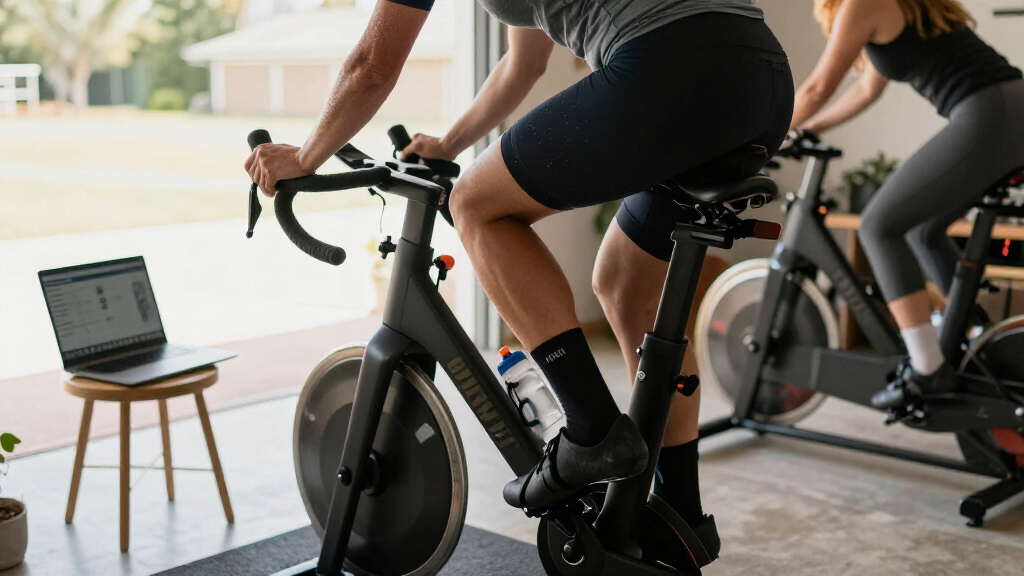
I evaluated each trainer against the factors that actually shape daily use: resistance type and realism (magnetic, fluid, or electromagnetic), noise levels at conversational and sprint efforts, frame stability under hard out-of-the-saddle pedaling, and compatibility with common wheel sizes, thru-axles, and training apps. For smart models, I weighed power accuracy claims, slope simulation ceiling, and how reliably each unit connected to ANT+ and BLE platforms like Zwift and TrainerRoad. For basic stands, the focus shifted to setup friction, foldability for storage, and how well the resistance dial actually translates to a usable training range.
The ranking logic is straightforward: trainers that combine durability, realistic resistance, and clear buyer value sit at the top, while cheaper units are ordered by how few compromises they force on the rider. A $120 magnetic stand isn’t judged against a direct-drive smart trainer — it’s judged on whether it does its one job well. That’s why a couple of inexpensive picks out-rank pricier models that overpromise.
Factors to Consider When Choosing Indoor Bike Trainers
Before settling on a trainer, it helps to understand what you’re actually paying for at each price tier — and where the marketing stops matching reality.Resistance Type: The Single Biggest Decision
Magnetic trainers use a flywheel and adjustable magnets — they’re cheap and reliable but produce a slightly notchy feel and a ramp in noise at high effort. Fluid trainers add a sealed chamber of viscous fluid, which makes resistance grow progressively with your pedaling, closely mimicking a real road, which is why fluid units like the Sportneer and Alpcour punch above their price. Electromagnetic smart trainers (KICKR, KICKR CORE, ThinkRider, Saris M2) let apps control resistance automatically, enabling structured interval workouts where the trainer does the thinking. The common mistake here is buying a basic magnetic stand expecting app-controlled workouts — that’s a category mismatch no accessory can fix.
Smart vs. Dumb: Do You Actually Need Connectivity?
If you already follow Zwift races or TrainerRoad plans, ANT+ and Bluetooth connectivity isn’t optional — it’s the entire point of indoor training. Smart trainers also broadcast power data, which can replace a separate power meter and effectively offsets some of their cost. But if your goal is casual winter pedaling while watching TV, a smart trainer adds complexity, firmware updates, and pairing headaches you’ll never benefit from. Be honest about your habits: a connected trainer only pays off if you’ll genuinely use the ecosystem. Many buyers overspend on flagship features and end up riding in free-ride mode anyway.
Direct-Drive vs. Wheel-On: Convenience Versus Accuracy
Wheel-on trainers clamp your rear wheel against a roller — quick to install, but they wear tires, introduce slippage during sprints, and their power estimates are rough. Direct-drive models replace the rear wheel entirely, which means better power accuracy, no tire wear, and far quieter running, at the cost of a heavier frame and a more involved setup. If you swap between outdoor and indoor riding daily, a wheel-on model saves minutes every session. If your bike lives on the trainer from November to March, direct drive is worth every dollar — the math changes with how often you’ll actually use it.
Noise and Your Living Situation
Trainer noise is the most underestimated dealbreaker, especially in apartments or shared households. Magnetic stands hum audibly at moderate effort; fluid units dampen that considerably; direct-drive smart trainers are near-silent, with only flywheel whir and drivetrain noise remaining. Add a quality trainer mat and a dedicated trainer tire to any wheel-on setup — both cut vibration transmitted through floors. If you train early mornings or late at night with family nearby, treat quietness as a primary spec, not a bonus.
Stability, Weight Limits, and Sprint Safety
A flexing frame ruins interval sessions and can genuinely tip during out-of-the-saddle efforts, so check the stated weight capacity against your body weight plus your bike. Heavier steel frames (like the Fitvids and Saris Mag) feel planted but are awkward to carry; lighter folding frames trade some rigidity for storage convenience. Wide, adjustable feet matter on uneven garage or basement floors. If you routinely exceed 800 watts in sprints, a rock-solid direct-drive base isn’t a luxury — it’s the difference between a workout and an accident.
Hidden Costs That Change the Value Math
Budget trainers frequently omit thru-axle adapters, steel quick-release skewers, and front riser blocks — add $40–60 if your bike needs any of these. Smart trainers sometimes require a cassette purchase separately, which adds another cost before your first ride. Wheel-on setups burn through rear tires quickly, so factor in a trainer tire every season. When comparing prices across tiers, tally the true ready-to-ride cost; the gap between a basic stand and a KICKR CORE 2 often shrinks once accessories are included.
Frequently Asked Questions
Can a cheap magnetic trainer give me a real workout, or do I need a smart trainer?
Yes, a magnetic trainer can absolutely deliver a serious workout — resistance is resistance, and your legs can’t tell whether it comes from magnets or an electromagnetic unit. What you give up is precision: magnetic dials are unmarked and inconsistent day to day, so you can’t track progress by numbers or follow structured plans that target specific wattages. If you train by feel, heart rate, or duration, a magnetic or fluid stand covers 90% of the benefit at a fraction of the price. Riders who chase measurable fitness gains, race virtually, or need ERG-mode intervals are the ones who truly need smart control.
Will an indoor trainer damage my bike or my rear tire?
On wheel-on trainers, your rear tire takes real abuse — the roller grinds rubber off over long sessions, leaving black dust and worn treads, which is why dedicated trainer tires exist. A steel quick-release skewer (often included) protects your original one from frame clamping forces. Direct-drive trainers avoid tire wear entirely but require a cassette, and repeated bike-on-bike-off swapping can accelerate freehub wear on some wheels. Frames themselves are not at risk on any reputable model, provided you respect the clamping torque and weight limits.
How loud are indoor bike trainers really — can I use one in an apartment?
It depends heavily on the type. Direct-drive smart trainers are quiet enough to hold a conversation beside, making them apartment-friendly. Fluid trainers are the next best, producing a steady whir rather than a hum. Basic magnetic trainers are the loudest of the group and get noisier as resistance climbs, which can be an issue with thin walls or downstairs neighbors. A thick trainer mat under any unit cuts vibration transmission through the floor dramatically, and a trainer tire on wheel-on models shaves a few more decibels.
Do I need to remove my rear wheel, and does that matter?
Wheel-on trainers keep your rear wheel in place — setup takes under two minutes, which suits riders alternating between indoor and outdoor riding. Direct-drive trainers require removing the rear wheel and mounting the chain onto a cassette on the trainer itself, adding a few minutes each session. That tradeoff matters less for seasonal users whose bike stays indoors for months. If you ride outside most days and only train indoors when weather forces it, the wheel-on convenience wins; for dedicated winter base miles, direct drive’s accuracy and quietness are worth the extra steps.
What apps do smart trainers work with, and does it matter which one I buy?
All the smart trainers in this lineup broadcast over ANT+ and Bluetooth, so they connect to Zwift, TrainerRoad, TrainerRoad-style ERG workouts, Rouvy, and most other major platforms — brand pairing is not a lock-in the way it once was. Wahoo’s ecosystem tends to offer smoother firmware support and better long-term compatibility, while the ThinkRider matches the core functionality at a lower price with a steeper 18% slope ceiling. What does differ is calibration stability and power accuracy consistency, which affects how trustworthy your training numbers are. Casual app users won’t notice; data-driven racers will.
Conclusion
Mapping these picks to buyer types: the Wahoo KICKR V6 is my best overall for serious riders who want the most realistic, app-connected experience money can buy. The KICKR CORE 2 is the best premium value — nearly all the flagship experience for structured Zwift training, with the bundled Zwift Cog and Click making setup easier than ever. For best budget value, the Alpcour Fluid Trainer delivers road-like progressive resistance without smart-trainer cost or complexity. Beginners should start with the Sportneer Magnetic Trainer or the VEVOR stand — cheap, stable, and enough to confirm indoor riding is for you before upgrading. Riders prioritizing quiet, smooth spinning should look at the fluid options from Sportneer and Fitvids, while skill-focused riders who want to train balance and pedal form are the only ones who should pick the ROCKBROS roller. Whatever you choose, match the trainer to your actual habits, not your aspirational ones — that’s the decision that determines whether this purchase gathers dust or logs miles.
Halloween Picks
halloween
As an affiliate, we earn on qualifying purchases.