The best 3D performance bike saddles combine a shape that suits your riding position with a lattice cushion that supports you without restricting movement. My best overall pick is the PRO Stealth 3D for its performance-oriented short-nose design, while the Fizik Vento Argo Adaptive stands out for riders who want a short-nose shape and the Selle Italia SLR Boost 3D Superflow for a compact profile with a central cutout. The main tradeoffs are fit versus padding feel, premium construction versus less-established alternatives, and ventilation versus a more continuous support surface. A 3D-printed top cannot compensate for the wrong saddle width or shape. Read on for the full breakdown of all 15 options and advice on choosing the right one for your position and riding style.

Get sports gear delivered free with Prime
- Fast, free delivery on millions of items
- Prime Video, Amazon Music and more included
- Member-only deals all year
Complete the kit


Key Takeaways
- The lineup’s strongest performance choices are established short-nose designs, including the PRO Stealth 3D and Fizik Vento Argo Adaptive; a lattice top works best when the underlying shape already suits the rider.
- Fizik’s Arione, Antares, and Aliante options have different profiles, so choosing between them is a shape decision rather than a simple comparison of 3D cushioning.
- The Selle Italia Watt 3D is the most discipline-specific option here, while the SLR Boost 3D is a more compact road saddle; neither is a universal substitute for a road-racing shape.
- The budget-oriented ROCKBROS, BUCKLOS, IMPALAPRO, CycEzreal, and unspecified carbon models offer varied construction claims, but buyers should verify fit, rail compatibility, and seller support before prioritizing weight or material labels.
- Ventilation, a central channel or cutout, and saddle width are separate factors: a breathable lattice does not guarantee pressure relief if the saddle shape or width is wrong.
| Fizik Tempo Aliante Adaptive 3D-Printed Road Cycling Saddle |  | Best for Stable Long-Ride Support | Brand: Fizik | Model number: 70F8D00A1P002 | Bike type: Road bike | VIEW LATEST PRICE | See Our Full Breakdown |
| Selle Italia Watt 3D Kit Carbon Superflow Saddle |  | Best for Triathlon Positioning | Intended use: Triathlon | Size: 255 × 133 mm | Nose width: 50 mm | VIEW LATEST PRICE | See Our Full Breakdown |
| Fizik Vento Arione R3 Adaptive Road Bike Saddle |  | Best for a Flat, Movement-Friendly Race Position | Brand: Fizik | Model number: 70G9D00A1P002 | Bike type: Road bike | VIEW LATEST PRICE | See Our Full Breakdown |
| BUCKLOS Bike Saddle 3D Printing Bike Seat – Mountain & Road Comfortable Bicycle Cushion, Fit for MTB, BMX, XC, Gravel, and Road Bikes |  | Best for Multi-Discipline Versatility | Seat size: 240 × 143 mm | Rail size: 7 × 9 mm | Seat-only weight: 204 g | VIEW LATEST PRICE | See Our Full Breakdown |
| ROCKBROS 3D Printed Bike Saddle – 145mm Carbon Road Bike Seat |  | Best Lightweight Pick for Mixed Riding | Model: 3D Printed Bike Saddle | Dimensions: 248 × 144 × 40 mm | Weight: 5.6 ounces | VIEW LATEST PRICE | See Our Full Breakdown |
| IMPALAPRO 3D-Printed T800 Carbon Bike Saddle, 250 × 140 mm |  | Best for Aggressive, Weight-Conscious Riders | Base and rail material: T800 carbon fiber | Dimensions: 250 × 140 mm | Listed weight: 152 g in item details; 190 g ±10 g in description | VIEW LATEST PRICE | See Our Full Breakdown |
| PRO Stealth 3D Performance Bicycle Saddle, Black, 142 mm |  | Best for Riders Who Need a Defined Weight Limit | Width: 142 mm (5.6 inches) | Weight: 250 g | Pad: 3D-printed | VIEW LATEST PRICE | See Our Full Breakdown |
| Fizik Vento Arione R1 Adaptive Bike Saddle |  | Best for Fore-Aft Movement in a Race Position | Brand: Fizik | Padding description: 3D-printed Adaptive zonal padding | Pad type in specs: Gel | VIEW LATEST PRICE | See Our Full Breakdown |
| ROCKBROS 3D Printed Ventilated Bike Saddle, 177 g |  | Best for Configuration Choice and Ventilation | Listed weight: 177 g | Surface: 3D-printed lattice | Cushioning: Segmented PU composite | VIEW LATEST PRICE | See Our Full Breakdown |
| Fizik Vento Antares R3 Adaptive 3D-Printed Cycling Saddle | 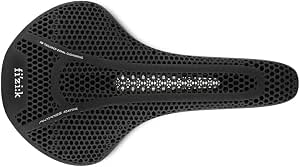 | Best for Cutout-Free Central Pressure Relief | Model: Vento Antares R3 Adaptive | Padding: 3D-printed Adaptive padding | Technology: Carbon Digital Light Synthesis | VIEW LATEST PRICE | See Our Full Breakdown |
| Rockbros 3D Printed Bike Saddle with Honeycomb Structure, Lightweight Carbon Fiber |  | Best for Ventilated All-Round Use | Dimensions: 9.6 × 5.5 × 2.4 inches | Saddle size: 245 × 140 mm | Weight capacity: 100 kg | VIEW LATEST PRICE | See Our Full Breakdown |
| Selle Italia SLR Boost 3D Superflow Bicycle Saddle |  | Best for Narrow Road-Racing Fit | Dimensions: 130 × 248 mm (S3) | Weight: 250 g | Frame material: Ti 316 | VIEW LATEST PRICE | See Our Full Breakdown |
| 3D Printed Carbon Bike Saddle |  | Best for Weight-Conscious Riders | Brand: ATWEINA | Weight: 8.5 oz (about 149 g) | Dimensions: 9.65 × 5.71 × 1.77 inches | VIEW LATEST PRICE | See Our Full Breakdown |
| CycEzreal 3D-Printed Carbon Fiber Bike Saddle |  | Best for Multi-Bike Versatility | Brand: CycEzreal | Model: 10748 | Material: Carbon fiber | VIEW LATEST PRICE | See Our Full Breakdown |
| Fizik Vento Argo Adaptive 3D-Printed Short-Nose Bike Saddle |  | Best for Aggressive Road and Gravel Positions | Brand: Fizik | Model: Vento Argo R3 Adaptive | Weight: 15.52 oz | VIEW LATEST PRICE | See Our Full Breakdown |
More Details on Our Top Picks
Fizik Tempo Aliante Adaptive 3D-Printed Road Cycling Saddle
The Tempo Aliante Adaptive is the comfort-oriented choice in this group for road riders who want a settled, supportive position rather than a flat racing platform. Its waved profile and wider platform are designed to support the sit bones, while zoned 3D-printed padding uses a softer central area to ease pressure over longer rides. Compared with the flatter, movement-friendly Fizik Vento Arione R3 Adaptive, the Aliante is better suited to riders who prefer a more guided, stable perch. That shape is also its main limitation: riders who shift position frequently or prefer a flat saddle may find the wave restrictive. It is specifically listed for road bikes, and the supplied data does not give saddle width, so fit should be checked before buying.
Pros:- Wider platform is designed to support the sit bones.
- Zoned 3D-printed padding includes a softer central area.
- Waved profile and gradual wing-to-nose shape favor a stable riding position.
- Nylon-reinforced construction and a two-year warranty are specified.
Cons:- Road-bike focus may not suit riders looking for a saddle specified for broader bike use.
- Waved shape may feel restrictive to riders who prefer a flat profile.
- Saddle width is not listed in the supplied specifications.
Best for: Road cyclists who prioritize stable sit-bone support and pressure-conscious cushioning on longer rides.
Not ideal for: Riders who want a flat saddle for frequent fore-aft movement, or cyclists seeking a clearly stated width before choosing a fit.
- Brand:Fizik
- Model number:70F8D00A1P002
- Bike type:Road bike
- Padding:3D printed
- Construction material:Nylon-reinforced
- Weight:11.2 ounces
- Maximum weight capacity:100 kg
- Warranty:2 years
Our verdict“Choose the Tempo Aliante Adaptive if stable, sit-bone-focused support matters more to you than a flat profile that encourages frequent movement.”
Selle Italia Watt 3D Kit Carbon Superflow Saddle
Among these options, the Selle Italia Watt 3D Kit Carbon Superflow is the most clearly tailored to triathlon: its compact 255 × 133 mm shape and 50 mm nose are specified for that riding use, not as an all-purpose road fit. The dual-layer 3D padding uses progressive cushioning zones, while the Superflow cut-out is intended to relieve pressure and improve airflow in a forward position. At 222 g with carbon rails, it also has a weight-focused build, unlike the broader-use ROCKBROS 3D Printed Bike Saddle. The tradeoff is fit flexibility: this model is listed in one size, so riders who need another width have no listed alternative. Its specialized geometry is less compelling for casual or upright riding, and mounting hardware is not included.
Pros:- Triathlon-specific geometry includes a 50 mm nose width.
- Dual-layer 3D padding uses progressive cushioning zones.
- Superflow cut-out is designed for pressure relief and ventilation.
- Carbon rails and a stated 222 g weight support a lightweight build.
Cons:- Only one size, U3, is specified.
- Triathlon-focused shape may be a poor match for upright or general-purpose riding.
- Integrated mounting hardware is not included.
Best for: Triathletes seeking a compact, forward-position saddle with a pressure-relief cut-out and lightweight carbon rails.
Not ideal for: Riders who need multiple width choices, an all-round saddle for varied riding positions, or included mounting hardware.
- Intended use:Triathlon
- Size:255 × 133 mm
- Nose width:50 mm
- Weight:222 g (7.9 oz)
- Rail material:Carbon
- Cut-out:Superflow
- Padding:Dual-layer 3D-printed padding
- Color:Black
Our verdict“Pick the Watt 3D if your priority is a lightweight saddle shaped for triathlon positioning and its single listed size suits your fit.”
Fizik Vento Arione R3 Adaptive Road Bike Saddle
The Vento Arione R3 Adaptive suits riders who want a long, flat-feeling platform for an aerodynamic road position and room to shift along the saddle. Its extended profile and zonal 3D padding aim to balance support without locking the rider into one spot. That contrasts with the waved Fizik Tempo Aliante Adaptive, which is the more stability-oriented pick for riders who prefer a shaped perch. The Arione’s carbon-reinforced nylon shell and hollow Kium rail pair structural support with a weight-conscious design, though no saddle weight is supplied here. Its flat racing shape will not suit everyone, especially riders who want a contoured cradle, and the missing width specification makes fit harder to judge before purchase.
Pros:- Flat, streamlined profile is designed for aerodynamic road positioning.
- Extended platform allows movement along the saddle.
- Zonal Adaptive 3D padding is designed to distribute support.
- Carbon-reinforced nylon shell and hollow Kium rail combine structural strength with a weight-conscious build.
Cons:- Flat racing profile may not suit riders who want a more contoured shape.
- Saddle width is not specified in the supplied data.
- Saddle weight is not specified in the supplied data.
Best for: Road racers who ride in an aerodynamic position and want an extended platform that permits fore-aft movement.
Not ideal for: Riders who prefer a contoured or waved saddle, or buyers who need the width and weight stated before selecting a model.
- Brand:Fizik
- Model number:70G9D00A1P002
- Bike type:Road bike
- Padding:3D-printed Adaptive padding
- Shell:Carbon-reinforced nylon
- Rail:Hollow Kium
- Maximum weight capacity:350 lbs
- Warranty:2 years
Our verdict“Choose the Arione R3 Adaptive if you want a flat road-racing platform for changing position, rather than the more guided shape of the Tempo Aliante.”
BUCKLOS Bike Saddle 3D Printing Bike Seat – Mountain & Road Comfortable Bicycle Cushion, Fit for MTB, BMX, XC, Gravel, and Road Bikes
The BUCKLOS 3D Printing Bike Saddle is the broad-compatibility choice here, with listed use across mountain, BMX, XC, gravel, and road bikes. Its 240 × 143 mm seat and carbon-fiber construction with an Arctech rail are aimed at riders who want a lightweight saddle with vibration-damping intent across different bikes. That makes it more versatile by stated bike type than the road-specific Fizik Vento Arione R3 Adaptive or the triathlon-focused Selle Italia Watt. The product description also claims tuned hardness and shock reduction, but the supplied specs identify a gel pad, so buyers should not assume a particular 3D material structure beyond the stated design. Its firmer feel may disappoint riders seeking plush cushioning, and the one-year warranty is shorter than Fizik’s listed coverage.
Pros:- Listed compatibility covers mountain, BMX, XC, gravel, and road bikes.
- Seat measures 240 × 143 mm, giving buyers a stated width to compare with fit needs.
- Carbon-fiber construction and Arctech rail are intended to limit weight and damp vibration.
- Specified maximum weight capacity is 150 kg.
Cons:- Firm feel may not suit riders who prefer a softer traditional saddle.
- One-year warranty is shorter than the two-year coverage listed for the Fizik models.
- Supplied specs list a gel pad, so the exact 3D padding construction is not fully detailed.
Best for: Riders who share a saddle style across road, gravel, XC, BMX, or mountain bikes and want a 143 mm platform.
Not ideal for: Cyclists who prefer a soft, deeply cushioned seat or want the two-year warranty listed for the Fizik road models.
- Seat size:240 × 143 mm
- Rail size:7 × 9 mm
- Seat-only weight:204 g
- Materials:Carbon fiber, polypropylene (PP), polyurethane (PU)
- Pad type:Gel pad
- Bike compatibility:Mountain, BMX, XC, gravel, road
- Weight capacity:150 kg
- Warranty:1 year
Our verdict“Choose BUCKLOS if you want one saddle listed for several riding disciplines and are comfortable with a firmer feel.”
ROCKBROS 3D Printed Bike Saddle – 145mm Carbon Road Bike Seat
The ROCKBROS 3D Printed Bike Saddle offers a stated 5.6-ounce weight and compatibility with road, gravel, mountain, and BMX bikes, making it a flexible option for riders who care about keeping saddle weight down. Its carbon-fiber shell supports that weight-focused aim, while the honeycomb resin surface is described as breathable and non-slip. Compared with the BUCKLOS Bike Saddle, ROCKBROS has a more explicit weight figure and a stated 145 mm width; BUCKLOS, in turn, lists a broader set of ride categories including XC. The key fit catch is hardware: this saddle requires a 7 × 9 mm adapter that is not included. Buyers should confirm their seatpost setup and accept that the supplied details say less about zonal cushioning than some rivals.
Pros:- Stated weight is 5.6 ounces.
- 145 mm width is specified for fit comparison.
- Carbon-fiber shell and PU pad pair a lightweight structure with cushioning.
- Listed for BMX, mountain, road, and gravel bikes.
Cons:- 7 × 9 mm adapter is required and not included.
- Supplied details provide limited information about the 3D padding zones and their support characteristics.
- The listed 440-pound capacity does not replace checking saddle and seatpost fit.
Best for: Weight-conscious riders seeking a 145 mm saddle for road, gravel, mountain, or BMX use who can confirm adapter compatibility.
Not ideal for: Riders who need included mounting hardware, have not verified a 7 × 9 mm adapter fit, or want detailed information about zoned padding.
- Model:3D Printed Bike Saddle
- Dimensions:248 × 144 × 40 mm
- Weight:5.6 ounces
- Materials:Carbon fiber shell with PU pad
- Compatible bike types:BMX, mountain bike, road bike, gravel
- Weight capacity:440 pounds
- Adapter compatibility:7 × 9 mm; adapter not included
- Color:Black
Our verdict“Pick the ROCKBROS if a stated low weight and mixed-bike compatibility suit you, provided you already have or can source the required adapter.”
IMPALAPRO 3D-Printed T800 Carbon Bike Saddle, 250 × 140 mm
The IMPALAPRO pairs a rigid T800 carbon base and oval carbon rails with a 3D-printed honeycomb surface and central cutout. That combination prioritizes low weight, firm support, and airflow over plushness, making it a more race-focused choice than the more adaptable-feeling Fizik Vento Antares R3 Adaptive, whose softer central zone offers pressure relief without a cutout. At 250 × 140 mm, it gives riders a relatively narrow platform for an aggressive position, but the firm feel and specified 3–5 ride break-in period make fit and riding shorts matter. Weight is listed inconsistently as 152 g in item details and 190 g ±10 g in the description, so I would not choose it on the lighter figure alone. Its 7 × 9 mm oval rails also need compatible clamps or adapters.
Pros:- Rigid T800 carbon base and rails are designed for efficient power transfer.
- Honeycomb surface and central cutout promote airflow and heat dissipation.
- Narrow 140 mm width suits riders seeking a compact performance platform.
- Lightweight construction, though the supplied weight figures conflict.
Cons:- Very firm shape is less forgiving for riders who prefer cushioning or an upright posture.
- May take 3–5 rides to break in and is intended for use with quality chamois shorts.
- Conflicting listed weights and 7 × 9 mm oval rails complicate selection and fit.
Best for: Riders who hold an aggressive road position, favor a firm and lightweight carbon-supported saddle, and already use well-fitting chamois shorts.
Not ideal for: Upright riders or anyone seeking immediate plush comfort; also a poor fit for seatposts without 7 × 9 mm rail compatibility or adapters.
- Base and rail material:T800 carbon fiber
- Dimensions:250 × 140 mm
- Listed weight:152 g in item details; 190 g ±10 g in description
- Rail size:7 × 9 mm oval
- Maximum installation torque:6 Nm
- Surface:3D-printed honeycomb
- Cutout:Central cutout
- Color:Black
Our verdict“Choose the IMPALAPRO if you want a firm, ventilated carbon saddle for an aggressive position and can confirm the rail fit and actual weight.”
PRO Stealth 3D Performance Bicycle Saddle, Black, 142 mm
The PRO Stealth 3D Performance takes a more conventional construction route than the all-carbon-railed IMPALAPRO: it combines a 3D-printed pad with stainless steel rails and reinforced carbon construction. That may appeal to riders who want a performance-oriented 3D surface without committing to an oval carbon-rail setup, though the supplied details do not specify rail dimensions or saddle geometry. At 142 mm wide and 250 g, it is also a less weight-focused option than the IMPALAPRO, whose listed weights are lower but inconsistent. The main buying constraint is unusually clear: its stated 80 kg maximum capacity rules it out for some riders, regardless of how suitable the width or padding seems. With no details on cutout, pad zones, or rail size, I would compare its fit carefully before choosing it over the better-described Fizik Vento Antares R3 Adaptive.
Pros:- 3D-printed pad is designed to provide riding comfort.
- Stainless steel rails avoid requiring a carbon-rail-specific clamp setup.
- Reinforced carbon construction provides a performance-focused build.
- 142 mm width offers a clearly stated fit dimension.
Cons:- Stated maximum weight capacity is limited to 80 kg.
- At 250 g, it is heavier than the listed IMPALAPRO weights.
- Product details omit rail dimensions and specific pressure-relief or padding-zone information.
Best for: Riders under the stated 80 kg limit who want a 142 mm performance saddle with 3D-printed padding and stainless steel rails.
Not ideal for: Riders over 80 kg, or buyers who need published details about saddle geometry, rail dimensions, or specific pressure-relief features before selecting a fit.
- Width:142 mm (5.6 inches)
- Weight:250 g
- Pad:3D-printed
- Rail material:Stainless steel
- Construction material:Reinforced carbon
- Maximum weight capacity:80 kg
- Color:Black
- Model number:PRSSA0410
Our verdict“Pick the PRO Stealth if you weigh no more than 80 kg and want a 142 mm 3D-padded saddle with stainless steel rails, but check fit details before buying.”
Fizik Vento Arione R1 Adaptive Bike Saddle
The Fizik Vento Arione R1 Adaptive suits riders who shift position along the saddle during hard road efforts. Its flat, extended platform supports fore-aft movement and aerodynamic positioning, while Adaptive 3D-printed padding is designed to distribute support across zones. Compared with the shorter-feeling, tapered Fizik Vento Antares R3 Adaptive, the Arione’s extended shape gives moving riders more usable length; it is less compelling for someone who settles in one position and wants a more pronounced central relief feature, such as the IMPALAPRO’s cutout. Carbon rails and a carbon-reinforced nylon shell favor a stiff, performance-oriented ride, but the listed data gives no saddle weight, making weight comparisons difficult. Its streamlined profile is a specific fit choice rather than a comfort-first shape, and the supplied pad-type field says gel despite the description emphasizing 3D-printed Adaptive padding.
Pros:- Extended platform supports fore-aft movement during changing efforts.
- Flat profile is suited to aerodynamic road positions.
- Zonal Adaptive padding is designed to distribute support.
- Carbon rail and reinforced nylon shell are built for stiffness and efficient power transfer.
Cons:- Streamlined racing geometry may not suit upright riders or those seeking a softer, more cushioned shape.
- Saddle weight is not provided, limiting weight comparisons with the IMPALAPRO and ROCKBROS.
- Product data lists gel as the pad type while the description specifies 3D-printed Adaptive padding.
Best for: Road racers who ride in an aerodynamic position and regularly move fore and aft on a flat, extended saddle platform.
Not ideal for: Riders who prefer an upright posture, a heavily cushioned shape, or a clearly specified saddle weight and padding composition.
- Brand:Fizik
- Padding description:3D-printed Adaptive zonal padding
- Pad type in specs:Gel
- Shell:Carbon-reinforced nylon
- Rail:Carbon
- Maximum weight capacity:350 lb
- Warranty:2 years
- Model number:70G9D00A0P002
Our verdict“Choose the Arione R1 Adaptive if your race position shifts along the saddle and you value a long, flat platform over a more cushioned or cutout-focused shape.”
ROCKBROS 3D Printed Ventilated Bike Saddle, 177 g
The ROCKBROS 3D Printed Ventilated stands out for its hollow honeycomb surface and segmented PU cushioning, pairing airflow with more defined support zones. Its stated 177 g weight makes it a lighter listed option than the 250 g PRO Stealth, while the PRO gives buyers a single stated rail material rather than multiple build combinations. ROCKBROS offers several rail and base choices, including carbon and chromoly steel rails and nylon or carbon fiber bases, which can help match a build but also means the headline weight may not apply to every version. Compared with the firm, fixed carbon setup of the IMPALAPRO, this saddle offers more configuration flexibility, though its rigid carbon versions may still feel less compliant than a more flexible construction. I would verify the exact materials and weight for the chosen configuration before ordering.
Pros:- Hollow honeycomb surface is designed to promote airflow and heat dissipation.
- Segmented PU cushioning is shaped to support hip pressure points.
- Carbon or chromoly steel rails and nylon or carbon fiber bases offer configuration choices.
- Listed 177 g weight is lower than the PRO Stealth’s stated 250 g.
Cons:- Eight configurations mean weight and materials can vary by version.
- Rigid carbon-fiber frame options may provide less flex than more compliant saddle designs.
- Buyers need to confirm which rail and base configuration is included.
Best for: Road, cyclo-cross, or triathlon riders who want a ventilated 3D lattice saddle and are willing to select the rail and base combination that fits their bike.
Not ideal for: Buyers who want one unambiguous specification set, or riders seeking a noticeably flexible, forgiving saddle rather than a rigid carbon-frame option.
- Listed weight:177 g
- Surface:3D-printed lattice
- Cushioning:Segmented PU composite
- Rail options:12K twill carbon fiber or chromoly steel
- Base options:Nylon or carbon fiber
- Maximum weight capacity:250 kg
- Compatible bike types:Cyclo-cross, road, and triathlon
- Warranty:2 years
Our verdict“Choose ROCKBROS if ventilation and build options matter more than having a single fixed specification, and confirm the selected version’s materials and weight.”
Fizik Vento Antares R3 Adaptive 3D-Printed Cycling Saddle
The Fizik Vento Antares R3 Adaptive is the most balanced choice here for riders who want targeted pressure relief without a traditional cutout. Its softer central zone is designed to ease pressure while the low-profile, tapered shape keeps the saddle focused on pedaling efficiency. That makes it distinct from the IMPALAPRO, which uses a central cutout and a very firm feel, and from the longer, flatter Vento Arione R1 Adaptive, which better suits riders who move fore and aft. The Antares is listed for road, gravel, and mountain bikes, giving it broader stated use than the Arione’s road-racing description. Still, its performance shape will not satisfy riders looking for a plush, upright saddle, and its 100 kg maximum capacity narrows the eligible audience. The supplied specs do not state the rail or shell materials, so I would not assume the R1’s carbon construction carries over.
Pros:- Softer central Adaptive zone is designed to relieve pressure without a traditional cutout.
- Zoned padding provides distinct cushioning and mechanical response.
- Low-profile tapered design supports pedaling across different riding positions.
- Listed for gravel, mountain, and road use.
Cons:- Maximum stated weight capacity is 100 kg.
- Low-profile performance shape may feel too firm or minimal for upright riders seeking more cushioning.
- Rail and shell materials are not specified in the supplied product details.
Best for: Road, gravel, and mountain riders under the 100 kg limit who want a low-profile saddle with zoned padding and central pressure relief without a cutout.
Not ideal for: Riders over 100 kg, those who want a plush saddle for upright riding, or buyers who need specified rail and shell materials.
- Model:Vento Antares R3 Adaptive
- Padding:3D-printed Adaptive padding
- Technology:Carbon Digital Light Synthesis
- Suitable bike types:Gravel, mountain, and road
- Maximum weight capacity:100 kg
- Dimensions:15 × 7 × 4 in
- Color:Black
- Warranty:2 years
Our verdict“Choose the Antares R3 Adaptive if you want zoned central relief without a cutout and fit within its 100 kg limit, rather than a plush or extended-profile saddle.”
Rockbros 3D Printed Bike Saddle with Honeycomb Structure, Lightweight Carbon Fiber
The Rockbros pairs a breathable honeycomb core with a center airflow vent, making it a practical pick for riders who want 3D cushioning across road and mountain routes. Its 245 × 140 mm shape gives it a little more width than the Selle Italia SLR Boost 3D Superflow’s 130 mm option, which may suit riders seeking a less narrow platform. The carbon-fiber construction keeps the design focused on low weight, while the reinforced ischial support is intended to spread pressure rather than rely on a soft, plush feel.
The tradeoff is a firm carbon-fiber feel that may take adjustment and could disappoint riders who want immediate softness. Its 100 kg weight limit is also lower than the CycEzreal’s stated 150 kg capacity. I’d shortlist it for airflow and broad bike compatibility, not for riders who need a forgiving saddle or a clearly stated rail standard.
Pros:- Honeycomb 3D-printed core and center vent promote airflow.
- 245 × 140 mm dimensions offer a moderately broad platform.
- Carbon-fiber construction keeps the saddle weight-conscious.
- Listed for both road and mountain bikes.
Cons:- Firm feel may require an adjustment period.
- 100 kg stated weight capacity is lower than the CycEzreal’s.
- Rail dimensions are not provided in the listed specifications.
Best for: Road and mountain riders who prioritize airflow, a 140 mm platform, and a lightweight carbon-fiber build.
Not ideal for: Riders who prefer plush cushioning, need a capacity above 100 kg, or want clearly specified mounting details before buying.
- Dimensions:9.6 × 5.5 × 2.4 inches
- Saddle size:245 × 140 mm
- Weight capacity:100 kg
- Materials:Carbon fiber and polyurethane (PU)
- Pad type:Polyfoam
- Compatible bike types:Road bike and mountain bike
- Color:Snowflake pattern
Our verdict“Choose the Rockbros if you want a ventilated carbon saddle for road or mountain riding and can tolerate a firm initial feel.”
Selle Italia SLR Boost 3D Superflow Bicycle Saddle
The SLR Boost 3D Superflow is the most explicitly road-focused choice here: a 130 mm-wide, 250 g saddle with a 3D-printed cover and a central pressure-relief cutout. That combination favors a compact, sporty position rather than a broad, cushioned perch. Against the 140 mm Rockbros, this Selle Italia gives up width for a narrower profile that may feel more natural to riders with narrower sit bones or a preference for a race-oriented fit. Its Ti 316 rails add a durable metal support structure rather than the carbon-rail approach used by some lightweight alternatives.
The same geometry limits its audience. Riders with wider sit bones or a more upright casual posture may find it restrictive, and the product data notes limited warranty coverage. I’d favor it over the Rockbros when road fit and soft-tissue relief matter more than extra width or broad bike-type versatility.
Pros:- Lightweight listed weight of 250 g.
- Superflow central cutout is designed to reduce soft-tissue pressure.
- 3D-printed cover provides zoned support and airflow.
- Ti 316 rails offer a durable metal frame.
Cons:- 130 mm width may not suit riders with wider sit bones.
- Sporty geometry may feel uncomfortable in an upright riding position.
- Warranty coverage is described as limited.
Best for: Road riders with narrower sit bones who prefer a compact, sporty saddle and want a central pressure-relief cutout.
Not ideal for: Riders with wider sit bones, casual upright cyclists, or buyers who want broad bike-type compatibility or stronger warranty coverage.
- Dimensions:130 × 248 mm (S3)
- Weight:250 g
- Frame material:Ti 316
- Rail diameter:7 mm
- Cover material:3D-printed synthetic
- Pad type:Waterproof
- Bike type:Road bike
- Color:Black
Our verdict“Pick the SLR Boost 3D Superflow if your fit favors a narrow road saddle and its cutout matters more than all-day casual comfort.”
3D Printed Carbon Bike Saddle
At a listed 8.5 ounces (about 149 g), the ATWEINA is the weight-focused option in this group. Its T800 carbon-fiber structure and 3D-printed lattice are meant to pair low mass with different levels of support across the saddle, while side markings can make fore-aft adjustment easier when the seatpost clamp fits. Compared with the Rockbros, it is narrower at 141 mm and its weight is specified, giving weight-conscious riders a clearer basis for comparison. It also lists city, mountain, and road use, so it is not limited to a race-only setup.
That low weight brings a firm ride tradeoff, and the 7 × 9 mm rails restrict compatibility to matching clamps. Unlike the Selle Italia SLR Boost, the product data does not list a central cutout. I’d choose it for a compatible build where weight and adjustment markings take priority over plushness or universal fit.
Pros:- Listed weight of about 149 g supports a weight-conscious build.
- T800 carbon structure combines with a 3D lattice pad.
- Side markings help with saddle-position adjustment.
- Listed for city, mountain, and road bikes.
Cons:- 7 × 9 mm rails require a compatible seatpost clamp.
- Firm carbon construction may feel too rigid for some riders.
- No central cutout is listed in the product data.
Best for: Weight-conscious road, city, or mountain riders whose seatpost clamp accepts 7 × 9 mm rails and who prefer a firm saddle.
Not ideal for: Riders with standard clamps that do not accept 7 × 9 mm rails, or anyone seeking soft cushioning and a forgiving ride.
- Brand:ATWEINA
- Weight:8.5 oz (about 149 g)
- Dimensions:9.65 × 5.71 × 1.77 inches
- Saddle size:236 × 141 mm
- Material:T800 carbon fiber
- Pad type:3D-printed lattice
- Rail size:7 × 9 mm
- Compatible bike types:City, mountain, and road
Our verdict“Choose the ATWEINA if saving saddle weight is a priority and your seatpost clamp is compatible with its 7 × 9 mm rails.”
CycEzreal 3D-Printed Carbon Fiber Bike Saddle
The CycEzreal’s strongest case is its stated range of compatible bikes: road, mountain, gravel, BMX, and XC. A ventilated, textured honeycomb top is designed to channel air and help limit slipping, while the carbon-fiber shell keeps the construction oriented toward performance rather than plush comfort. Compared with the road-specific Selle Italia SLR Boost 3D Superflow, this one is presented as a multi-discipline option and has a stated 150 kg maximum capacity. Its waterproof pad and one-year warranty add practical details missing from some of the lighter, more narrowly specified models.
The main drawback is missing fit information: no saddle dimensions or rail measurements are provided, so confirming fit may take extra work. The claim of standard seat-post compatibility does not clarify the mounting interface. I’d consider it for riders moving one saddle among several bike types, but the ATWEINA is easier to evaluate if rail size is a deciding factor.
Pros:- Compatible bike list spans road, mountain, gravel, BMX, and XC.
- Stated maximum weight capacity is 150 kg.
- Ventilated honeycomb surface is designed to channel airflow.
- Includes a one-year warranty and waterproof pad.
Cons:- Saddle dimensions are not provided.
- Rail size and specific mounting interface are unclear.
- Textured surface and firm carbon construction may not suit riders seeking plush cushioning.
Best for: Riders seeking one ventilated 3D saddle for road, mountain, gravel, BMX, or XC bikes who value a stated 150 kg capacity.
Not ideal for: Buyers who need precise saddle width, rail dimensions, or clear clamp compatibility before choosing a saddle.
- Brand:CycEzreal
- Model:10748
- Material:Carbon fiber
- Outer material:Polyurethane (PU)
- Pad type:Waterproof
- Maximum weight capacity:150 kg
- Compatible bike types:BMX, mountain, road, gravel, and XC
- Warranty:1 year
Our verdict“Choose the CycEzreal for its broad stated bike compatibility and higher listed capacity, provided you can confirm the fit and mounting details.”
Fizik Vento Argo Adaptive 3D-Printed Short-Nose Bike Saddle
The Vento Argo Adaptive is the most purpose-built racing choice in this batch. Its short-nose shape is designed to support a forward, stable position, while Carbon Digital Light Synthesis creates zonal cushioning rather than a uniform pad. That approach contrasts with the Selle Italia SLR Boost 3D Superflow’s narrower 130 mm road fit: the Fizik’s standout is its short-nose positioning and zoned support, not a stated narrow width. A carbon-reinforced nylon shell and hollow Kium rails balance structural support with weight-conscious construction, and the waterproof pad suits road and gravel use.
Its specialization is also a limit: the listed bike types are only road and gravel, unlike the CycEzreal’s wider compatibility. The listed “maximum weight capacity” of 2.6 pounds is not a useful rider-capacity figure and should not be treated as one. I’d pick this for a race-position rider who values its geometry, but not for buyers seeking a broadly compatible, clearly documented fit.
Pros:- Short-nose profile is designed for stable, forward riding positions.
- Zonal 3D-printed cushioning varies support across the saddle.
- Carbon-reinforced nylon shell and hollow Kium rails form a performance-focused structure.
- Waterproof pad is listed for road and gravel use.
Cons:- Listed compatibility is limited to road and gravel bikes.
- The stated 2.6-pound maximum capacity does not provide a useful rider weight limit.
- Listed dimensions do not clearly communicate saddle width for fit selection.
Best for: Road and gravel racers who ride in an aggressive forward position and want a short-nose saddle with zonal 3D cushioning.
Not ideal for: Upright or casual riders, cyclists seeking one saddle for several bike categories, and buyers who need a reliable rider-capacity specification.
- Brand:Fizik
- Model:Vento Argo R3 Adaptive
- Weight:15.52 oz
- Listed dimensions:15 × 9 × 2.5 inches
- Materials:Carbon-reinforced nylon shell and hollow Kium rails
- Pad type:Waterproof
- Compatible bike types:Gravel and road
- Warranty:2 years
Our verdict“Choose the Vento Argo Adaptive for aggressive road or gravel riding if its short-nose shape suits your position and you can verify fit separately.”
How We Picked
I compared the 15 saddles by fit and shape, stated use, construction, and the practical value of their 3D-printed tops. I gave more weight to identifiable performance designs with a clear riding purpose than to generic models whose names provide limited detail about fit or specifications. A saddle’s width, profile, nose shape, and pressure-relief features matter because they determine how it supports a rider; material claims alone do not establish comfort or suitability.
The ranking favors options with a recognizable role and enough product detail for a buyer to make an informed comparison. The PRO Stealth 3D leads as a road-performance all-rounder, while Fizik and Selle Italia models rank strongly when their particular shapes or use cases match the rider. Less-documented and broad-use alternatives remain in the roundup for buyers seeking different construction claims or a lower-commitment option, but they rank lower because fit information, model specificity, or performance context is less clear. I do not treat a 3D lattice as proof of better comfort, and I recommend checking dimensions, rail standards, and return terms before purchase.
Factors to Consider When Choosing Best 3D Performance Bike Saddles
Choosing among 3D performance saddles starts with your contact points and riding position, not with the most elaborate-looking lattice. These broader checks can prevent a costly mismatch, especially when comparing race-focused shapes with budget models that provide fewer fit details.
Match Saddle Shape to Your Riding Position
Your riding posture changes where your pelvis puts pressure on the saddle, so a shape that suits an upright endurance position may feel restrictive in a low, aggressive position. Short-nose models such as the Stealth and Argo families are designed around a forward, performance-oriented seating position, while longer profiles such as the Arione offer a different support pattern. Do not choose based on nose length alone: compare the width and contour where your sit bones rest. If possible, use a fit session or a brand’s saddle trial program before buying. A 3D top may change how pressure is distributed, but it cannot correct a mismatch between saddle profile and posture.
Use Width as a Fit Check, Not a Comfort Guarantee
Published saddle width is a useful first filter, but it does not tell the whole fit story. Two saddles with the same nominal width can feel different because their side profiles, wings, padding zones, and usable support areas differ. Start with a reliable sit-bone measurement or a fitter’s recommendation, then compare the model’s actual width options and shape. Avoid sizing up simply because a saddle feels firm during a brief hand press; riding position changes how your weight is supported. If a model lists only one width or gives sparse dimensions, that uncertainty is a real tradeoff rather than a minor detail.
Separate Lattice Cushioning From Pressure Relief
A 3D-printed lattice can use different densities across the saddle, but its appearance alone does not tell you where support is firm or yielding. A central cutout or channel addresses a different concern by creating space through the middle of the saddle, and not every ventilated lattice includes one. Riders who experience soft-tissue pressure should check the saddle’s relief design and the fit of the full shape rather than assuming an open-looking structure will solve the problem. Conversely, a large cutout may not suit every rider or every position. Compare the support zones and relief features as separate design choices.
Check Rails, Seatpost Compatibility, and Installation
Carbon rails and lightweight construction can reduce mass, but they may require a compatible seatpost clamp or specific adapters. Confirm the rail material and dimensions against your post before purchasing, especially for models marketed around carbon construction. Installation torque matters because overtightening can damage components, while a poorly secured saddle can shift during riding. Also check whether the saddle’s shape and rail position leave enough adjustment range for your preferred setback. A slightly heavier saddle that fits your existing hardware and adjustment needs can be the more practical performance choice.
Balance Ventilation Against Support and Durability
Open lattice designs can allow airflow, which may appeal on hot rides, but ventilation should not be your only comfort criterion. The same structure may feel different across riding shorts, temperatures, and ride durations, so a short indoor check is a weak test of long-ride suitability. Look for clear construction details and care guidance, particularly on lesser-known models where long-term material information may be limited. Dirt and sweat can collect in open structures, making cleaning access worth checking. When two options fit similarly, choose the one whose support, build details, and service information are clearer rather than relying on ventilation claims alone.
Decide When a Premium Model Is Worth It
A premium saddle makes the most sense when its specific shape, construction, and published fit options address a known need. Paying more for a familiar performance model may be worthwhile if it offers a better match to your position or more dependable product information. It is less persuasive when the reason is only a carbon label, a low claimed weight, or the promise of 3D cushioning. For a first 3D saddle, prioritize a suitable width and a return or trial option over a speculative upgrade. Budget models can be reasonable experiments, but check dimensions, rail compatibility, and seller support before treating them as direct equivalents to established race saddles.
Frequently Asked Questions
Should I choose the PRO Stealth 3D or the Fizik Vento Argo Adaptive?
Both are performance-oriented short-nose options, so the better choice depends on which profile fits your position and pelvic support needs. Compare their available widths, saddle contours, and relief features rather than choosing by brand or lattice appearance. The PRO Stealth 3D is the roundup’s strongest all-round performance pick, while the Vento Argo Adaptive suits riders specifically looking for Fizik’s short-nose design. If you have not established a preferred width, a trial or fitting recommendation should come before either model. A correct fit is more valuable than a small difference in construction claims.
Is a 3D-printed saddle a good choice for a first road saddle?
It can be, but 3D printing is not a substitute for finding the right saddle shape and width. A first-time buyer should prioritize fit information, a suitable riding profile, and the ability to exchange the saddle if it does not work. The PRO Stealth 3D offers a clear performance-oriented starting point, but a more upright rider may need a different profile from the race-focused options in this list. Avoid assuming that a softer-feeling lattice will automatically be more comfortable on long rides. If you are unsure about fit, get a sit-bone measurement or professional advice before choosing a model.
Does a central cutout matter if the saddle has a ventilated 3D lattice?
They address different design goals. A ventilated lattice can allow airflow and vary support across the saddle, while a cutout or channel creates a distinct central relief area. Some riders value that relief, while others may prefer a continuous support surface, so neither feature is automatically better. Consider where you feel pressure during rides and whether your current saddle’s shape and width are already correct. A lattice should not be treated as a replacement for a cutout if you specifically need one.
Can I fit a carbon-rail saddle to any road bike seatpost?
No. Carbon rails can have different dimensions from standard round metal rails, and some seatpost clamps need a compatible cradle or adapter. Check the exact rail specification and your seatpost manufacturer’s guidance before ordering. Also confirm that the saddle can be positioned at your required height and setback within the post’s adjustment range. Use the prescribed torque during installation to reduce the risk of damage or slippage. When a product listing is unclear about its rails, treat compatibility as an unresolved issue and ask the seller before buying.
Are the generic ROCKBROS, BUCKLOS, or carbon models suitable for serious road training?
They may suit some riders, but the product names and broad use claims alone do not establish that a saddle is race-ready or compatible with your fit. Compare actual dimensions, shape, rail details, construction information, and return support before using one for long or demanding rides. The more established performance models in this roundup provide clearer model identities and intended profiles, which makes them easier to match to a riding position. A generic model can still be a sensible choice if its specifications fit your bike and body. I would avoid making the decision on claimed weight or material wording alone.
Conclusion
For a single performance-focused recommendation, I’d start with the PRO Stealth 3D as best overall because it has a clear road-racing role. Riders who want a short-nose Fizik should compare the Vento Argo Adaptive, while the SLR Boost 3D Superflow is a strong premium contender for those who want a compact shape and central relief. For best value, look first at the ROCKBROS or BUCKLOS options, but verify dimensions, rails, and return terms rather than assuming their broad compatibility claims guarantee fit. Beginners should choose by measured width and a return-friendly purchase, not by lattice appearance; the PRO Stealth is a useful starting point only if its profile matches their riding position. For specific needs, consider the Selle Italia Watt 3D for a more specialized riding setup and the Fizik Arione or Aliante when their longer or distinct profiles better suit your position. The right pick is the one whose shape fits first and whose construction and features support the rides you actually do.