The Jasion EB5 MAX is my best overall electric mountain bike because its 2000W peak motor, 48V 15Ah battery, and fat tires offer the strongest balance of power, range, and mixed-terrain capability in this lineup. The Qlife Racer is the better value choice for riders who favor familiar bicycle handling, while the Jasion Thunder/PRO/ST stands out as the premium long-range option. The main tradeoffs are weight versus agility, advertised peak power versus usable control, and maximum range versus battery size. Several high-speed models promise far more performance, but their dirt-bike-like weight and trail-access limits make them less practical for many riders. Continue reading for the full breakdown of which electric mountain bikes best match different terrain, budgets, and experience levels.
Complete the kit


Key Takeaways
- The Jasion EB5 MAX has the best overall balance: it offers more power and battery capacity than the standard EB5 models without moving as far into electric dirt-bike territory as the 6000W options.
- More motor power did not automatically produce a higher ranking: the two 6000W dual-motor bikes sacrifice portability, natural handling, and broad trail compatibility for speed.
- The Qlife Racer is the value standout because its 21-speed drivetrain gives riders more pedaling flexibility than the many 7-speed models, even though it lacks the traction and comfort of the fat-tire picks.
- Fat tires dominate the high-power end of the roundup, but the M200 and Qlife Racer make more sense for riders who want lighter steering and a more traditional mountain-bike feel.
- Several range claims depend on pedal assist: the Jasion Thunder/PRO/ST and 110-mile dual-motor model lead on advertised distance, but their real advantage depends on battery size, assist level, rider weight, and terrain.
| Jasion EB5 Electric Bike for Adults |  | Best Budget Trail-Commuter | Motor Power: 1000W peak | Battery: 500Wh removable | Stated Range: 25-40 miles | VIEW LATEST PRICE | See Our Full Breakdown |
| M200 Electric Bike for Adults |  | Best for Speed and Gear Control | Motor Power: 1200W peak | Top Speed: 28 MPH | Battery: 48V 10.4Ah removable | VIEW LATEST PRICE | See Our Full Breakdown |
| 26-Inch 1000W Peak Electric Bike for Adults |  | Best Safety-Certified Pick | Motor Power: 500W rated, 1000W peak | Top Speed: 20 MPH | Battery: 48V 374.4Wh removable, waterproof | VIEW LATEST PRICE | See Our Full Breakdown |
| TST 1500W Peak Fat Tire Electric Bike |  | Best for High-Capacity Riders | Motor Power: 1500W peak | Battery: 48V 15Ah removable | Stated Range: Up to 60 miles in pedal-assist mode | VIEW LATEST PRICE | See Our Full Breakdown |
| ASKGO 1500W Peak Mountain E-Bike |  | Best Overall | Motor Power: 750W rated, 1500W peak | Top Speed: 25 MPH | Battery: 48V 10.4Ah removable | VIEW LATEST PRICE | See Our Full Breakdown |
| Jasion EB5 MAX Electric Bike |  | Best High-Power All-Rounder | Motor: 2000W peak | Battery: 48V 15Ah, 720Wh removable and lockable | Top Speed: 28+ mph | VIEW LATEST PRICE | See Our Full Breakdown |
| Qlife Racer Electric Bike | 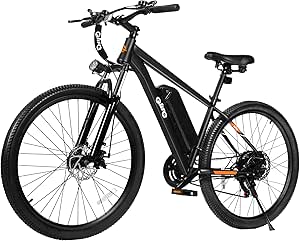 | Best for Pedal-Focused Riders | Motor: 1000W brushless | Battery: 375Wh removable and waterproof | Range: Up to 40 miles | VIEW LATEST PRICE | See Our Full Breakdown |
| 20-Inch Fat Tire Electric Mountain Bike |  | Best Compact Fat-Tire Pick | Motor: 500W brushless, 1500W peak | Battery: 48V 15Ah removable lithium | Pedal-Assist Range: 40–60 miles | VIEW LATEST PRICE | See Our Full Breakdown |
| Yozma IN10 Electric Dirt Bike |  | Best for High-Speed Off-Road Riding | Motor: 2600W | Top Speed: 40 mph | Battery: 48V 23Ah | VIEW LATEST PRICE | See Our Full Breakdown |
| Jasion EB5 Electric Bike |  | Best for Beginner Commuter Trails | Motor: 1000W peak | Battery: 360Wh removable | Range: 25–40 miles | VIEW LATEST PRICE | See Our Full Breakdown |
| Funhang 1000W Peak 26-Inch Fat Tire Electric Mountain Bike |  | Best Utility Fat-Tire Pick | Motor Power: 1000W peak | Top Speed: 20 mph | Battery: 48V 13Ah lithium-ion | VIEW LATEST PRICE | See Our Full Breakdown |
| 6000W Max Speed Dual Motor 24-Inch Fat Tire Electric Bike |  | Best Multi-Mode Power Pick | Motor Power: 6000W peak | Battery: 60V, 1200Wh removable | Maximum Range: Up to 110 miles | VIEW LATEST PRICE | See Our Full Breakdown |
| 6000W Dual Motor 24-Inch Full-Suspension Off-Road Electric Mountain Bike |  | Best Equipped Off-Road Pick | Motor Power: 6000W peak dual motors | Maximum Speed: 45 mph | Battery: 60V 20Ah lithium-ion | VIEW LATEST PRICE | See Our Full Breakdown |
| Jasion Thunder/PRO/ST 26-Inch Fat Tire Electric Bike |  | Best for Heavier Riders | Motor Power: 1800W peak | Maximum Speed: 35+ mph | Battery: 48V 18Ah | VIEW LATEST PRICE | See Our Full Breakdown |
| Funhang 1000W Peak 26-Inch Electric Mountain Bike |  | Best Entry-Level Trail Pick | Motor Power: 1000W peak | Top Speed: 20 mph | Battery: 48V 374.4Wh removable lithium-ion | VIEW LATEST PRICE | See Our Full Breakdown |
| electric mountain bike | Battery | Motor Power | Suspension | Top Speed |
|---|---|---|---|---|
| Jasion EB5 Electric Bike for A | 500Wh removable | 1000W peak | Front fork | 20 MPH |
| M200 Electric Bike for Adults | 48V 10.4Ah removable | 1200W peak | Dual front suspension | 28 MPH |
| 26-Inch 1000W Peak Electric Bi | 48V 374.4Wh removable, waterproof | 500W rated, 1000W peak | Front suspension | 20 MPH |
| TST 1500W Peak Fat Tire Electr | 48V 15Ah removable | 1500W peak | — | — |
| ASKGO 1500W Peak Mountain E-Bi | 48V 10.4Ah removable | 750W rated, 1500W peak | Front fork and suspension seat post | 25 MPH |
| Jasion EB5 MAX Electric Bike | 48V 15Ah, 720Wh removable and lockable | — | Lockable front fork | 28+ mph |
| Qlife Racer Electric Bike | 375Wh removable and waterproof | — | Front suspension | — |
| 20-Inch Fat Tire Electric Moun | 48V 15Ah removable lithium | — | Full suspension | — |
| Yozma IN10 Electric Dirt Bike | 48V 23Ah | — | — | 40 mph |
| Jasion EB5 Electric Bike | 360Wh removable | — | — | 20 mph |
| Funhang 1000W Peak 26-Inch Fat | 48V 13Ah lithium-ion | 1000W peak | Front suspension fork | 20 mph |
| 6000W Max Speed Dual Motor 24- | 60V, 1200Wh removable | 6000W peak | Full suspension with front fork shocks, rear shock, and seat springs | — |
| 6000W Dual Motor 24-Inch Full- | 60V 20Ah lithium-ion | 6000W peak dual motors | Full suspension with shock absorbers | — |
| Jasion Thunder/PRO/ST 26-Inch | 48V 18Ah | 1800W peak | — | — |
| Funhang 1000W Peak 26-Inch Ele | 48V 374.4Wh removable lithium-ion | 1000W peak | — | 20 mph |
More Details on Our Top Picks
Jasion EB5 Electric Bike for Adults
I rank the Jasion EB5 as the budget-friendly choice for riders splitting their time between paved commutes and light trails. Its 49.6-pound frame is easier to manage than the 66-pound TST, while the 26-inch tires and front suspension offer more trail capability than a basic city e-bike. The 1000W peak motor should provide useful assistance on moderate climbs, though it lacks the speed and broader 21-speed gearing of the M200. Its 500Wh removable battery is convenient for indoor charging, but the 25-to-40-mile range trails the longer claims from ASKGO and the unnamed UL-certified model. I would choose the EB5 for affordability and manageable weight, not aggressive riding: the steel frame, seven-speed drivetrain, and front-only suspension make it better suited to gravel paths and mild terrain than rough technical trails.
Pros:- 1000W peak output provides useful assistance on hills
- 500Wh battery can be removed for indoor charging
- Lighter than the 66-pound TST fat-tire model
- Front suspension and puncture-resistant 26-inch tires suit mixed surfaces
Cons:- Front-only suspension limits comfort and control on rough trails
- 25-to-40-mile stated range is shorter than several alternatives
- High-carbon steel frame still weighs nearly 50 pounds
Best for: Budget-conscious commuters who want one manageable e-bike for paved roads, gravel paths, and mild recreational trails
Not ideal for: Technical trail riders who need full suspension, higher speeds, or more than seven mechanical gears
- Motor Power:1000W peak
- Battery:500Wh removable
- Stated Range:25-40 miles
- Top Speed:20 MPH
- Wheel Size:26 inches
- Frame Material:High-carbon steel
- Weight:49.6 lbs
- Drivetrain:7-speed
- Suspension:Front fork
Our verdict“The Jasion EB5 is my budget pick for commuting and mild trails, but demanding off-road riders should buy a full-suspension model.”
M200 Electric Bike for Adults
The M200 earns its place through speed and drivetrain flexibility. Its 1200W peak motor and 28 MPH top speed put it ahead of the 20 MPH Jasion EB5 and the 25 MPH ASKGO, while 21 gears give riders finer control when battery assistance is reduced or the terrain changes. The 27.5-inch wheels also favor steady rolling over roots and ruts compared with the TST’s smaller 20-inch wheels. A claimed 55-mile range and four-hour charging time support longer mixed-surface outings, and NFC unlocking adds security convenience absent from the other four picks. I would not choose it solely for comfort, however: the supplied suspension description is less clear than the TST’s full-suspension setup, and assembly is required. Its speed-focused package makes the most sense for confident riders who value pace and gearing over fat-tire traction.
Pros:- Fastest stated top speed among these five bikes
- 21-speed drivetrain offers broad manual gear selection
- Four-hour stated charging time is relatively short
- NFC unlocking provides convenient access control
Cons:- Suspension description is less clear than the TST full-suspension specification
- Assembly is required before riding
- 55-mile claim will vary with assistance level, speed, terrain, and rider load
Best for: Confident mixed-terrain riders who want a 28 MPH ceiling and a wide mechanical gear range
Not ideal for: Buyers seeking clearly specified full suspension or a nearly ready-to-ride bike with minimal assembly
- Motor Power:1200W peak
- Top Speed:28 MPH
- Battery:48V 10.4Ah removable
- Stated Range:Up to 55 miles
- Charging Time:4 hours
- Wheel Size:27.5 inches
- Tire Size:27.5 x 2.1 inches
- Drivetrain:21-speed
- Suspension:Dual front suspension
Our verdict“I favor the M200 for riders who prioritize speed and gear choice, provided they do not need fat tires or an unambiguous full-suspension design.”
26-Inch 1000W Peak Electric Bike for Adults
I give this 26-inch electric bike the safety-focused role because it lists both UL 2849 system certification and UL 2271 battery certification, information not supplied for the other four models. Its 500W rated motor, 20 MPH top speed, and front suspension create a more restrained package than the faster M200 or more powerful TST. That restraint can suit newer riders who want predictable assistance rather than maximum pace. The claimed 50-mile pedal-assist range exceeds the Jasion EB5’s 40-mile ceiling, although its 374.4Wh battery means riding conditions and assistance level will heavily shape that result. An LCD, removable waterproof battery, and seven speeds cover everyday needs. The tradeoff is incomplete product detail: no bike weight is given, and 85% pre-assembly still leaves setup work before the first ride.
Pros:- Lists UL 2849 system and UL 2271 battery certifications
- Removable waterproof battery supports flexible charging
- LCD provides useful ride and assistance information
- Claimed 50-mile pedal-assist range exceeds the Jasion EB5 claim
Cons:- 20 MPH top speed is lower than the M200 and ASKGO
- Bike weight is not specified
- Front-only suspension and partial assembly limit its appeal for demanding riders
Best for: Safety-conscious newer riders who want documented UL certifications for commuting and nontechnical trail use
Not ideal for: Performance-focused riders who want speeds above 20 MPH, full suspension, or a clearly stated bike weight
- Motor Power:500W rated, 1000W peak
- Top Speed:20 MPH
- Battery:48V 374.4Wh removable, waterproof
- Stated Range:Up to 50 miles
- Charging Time:4-5 hours
- Wheel Size:26 inches
- Drivetrain:7-speed
- Suspension:Front suspension
- Certifications:UL 2849 and UL 2271
Our verdict“This is my pick for certification-minded beginners who value a controlled 20 MPH ride more than high-speed trail performance.”
TST 1500W Peak Fat Tire Electric Bike
The TST fat-tire e-bike stands apart through its 450-pound load rating, 20-by-4-inch tires, and full suspension. I see it as the strongest match for larger riders or buyers carrying substantial gear across loose, uneven ground. Compared with the narrower-tire Jasion EB5, its fat tires and full suspension should provide more flotation and bump absorption; compared with the ASKGO, its smaller wheels favor a lower, more compact stance. A 1500W peak motor and 48V 15Ah battery also supply more battery capacity than the M200’s 10.4Ah pack. Those advantages carry a major penalty: at 66 pounds, the TST is difficult to lift, transport, or pedal without assistance. Its six-to-seven-hour charge is the slowest stated time here, while the 60-mile figure applies to pedal-assist use. This is a capability-first choice, not a lightweight commuter.
Pros:- 450-pound maximum load rating supports heavier riders and cargo
- 20-by-4-inch tires add traction and flotation on loose surfaces
- Full suspension improves comfort over front-suspension-only alternatives
- 48V 15Ah removable battery has greater capacity than the M200 pack
Cons:- 66-pound weight makes lifting and transport difficult
- Six-to-seven-hour stated charging time is comparatively slow
- Small fat tires favor stability over the rollover ability of larger 26- or 27.5-inch wheels
Best for: Larger riders and gear-heavy users who need a 450-pound capacity, fat-tire traction, and full suspension
Not ideal for: Apartment residents or multimodal commuters who must regularly lift a 66-pound bike
- Motor Power:1500W peak
- Battery:48V 15Ah removable
- Stated Range:Up to 60 miles in pedal-assist mode
- Tire Size:20 x 4 inches
- Weight:66 lbs
- Maximum Load:450 lbs
- Charging Time:6-7 hours
- Drivetrain:7-speed
- Riding Modes:3
Our verdict“I recommend the TST for riders who need high load capacity and rough-surface stability and can accept substantial weight.”
ASKGO 1500W Peak Mountain E-Bike
I place the ASKGO mountain e-bike first because it offers the most balanced mix of trail-oriented hardware, range, speed, and ownership support in this group. Its 750W rated motor reaches a 1500W peak, while the stated 65-mile range is the longest of these five. Unlike the front-suspension-only Jasion EB5, ASKGO pairs a suspension fork with a suspension seat post, helping isolate both the handlebar and saddle from broken surfaces. It also combines 26-inch wheels, dual disc brakes, a 400-lumen headlight, and a 36-month warranty. The M200 remains faster at 28 MPH and provides 21 gears rather than ASKGO’s seven, so speed-focused riders have a better option. ASKGO may also be awkward to carry, and battery removal can take effort. Even with those compromises, its well-rounded 25 MPH setup covers commuting and moderate trails better than the more specialized alternatives.
Pros:- Longest stated range among these five products
- 1500W peak output supports hills and mixed-terrain riding
- Fork and suspension seat post improve comfort at both contact points
- 36-month warranty is longer than any coverage stated for the other four
Cons:- Seven-speed drivetrain offers less gear choice than the M200
- 25 MPH top speed falls short of the M200’s 28 MPH
- Potentially awkward carrying and battery removal reduce everyday convenience
Best for: Mixed-use riders seeking one 26-inch e-bike for commuting, moderate trails, longer assisted rides, and after-sale warranty coverage
Not ideal for: Riders who need the M200’s 28 MPH speed and 21-speed drivetrain or a light bike for frequent carrying
- Motor Power:750W rated, 1500W peak
- Top Speed:25 MPH
- Battery:48V 10.4Ah removable
- Stated Range:Up to 65 miles
- Charging Time:4-5 hours
- Wheel Size:26 inches
- Suspension:Front fork and suspension seat post
- Brakes:Dual disc brakes
- Warranty:36 months
Our verdict“The ASKGO is my best overall choice for buyers who want balanced commuting and trail ability without chasing the highest speed.”
Jasion EB5 MAX Electric Bike
I rank the Jasion EB5 MAX highest among these five for riders who split their time between rough trails and longer paved journeys. Its 720Wh removable battery offers more riding headroom than the 360Wh Jasion EB5 or 375Wh Qlife Racer, while 26-inch fat tires provide better loose-surface grip than either model’s narrower tires. The 2000W peak motor also supplies more climbing and acceleration potential, yet its 28-plus-mph ceiling is less extreme than the Yozma IN10’s 40 mph. That balance gives the MAX broader appeal. I would still weigh its substantial bulk carefully: fat tires, a rack, fenders, and a large battery make carrying or tight storage awkward. The suspension fork is useful, but it cannot match the comfort and control of a full-suspension bike on repeated impacts.
Pros:- Large 720Wh battery supports longer rides between charges
- 2000W peak motor provides strong assistance on hills
- 26-inch fat tires add grip on sand, snow, and loose dirt
- Rear rack, fenders, lights, and cruise control improve everyday utility
Cons:- Fat-tire build and added equipment make the bike cumbersome
- Suspension fork offers less impact control than a full-suspension setup
- High motor output and speed demand careful handling and a check of local rules
Best for: Mixed-terrain riders who want strong climbing support, long pedal-assist range, and practical commuting equipment
Not ideal for: Apartment residents who must carry their bike upstairs or riders seeking full-suspension control on highly technical trails
- Motor:2000W peak
- Battery:48V 15Ah, 720Wh removable and lockable
- Top Speed:28+ mph
- Assisted Range:Up to 65 miles
- Throttle Range:Up to 35 miles
- Tires:26 × 4.0-inch fat tires
- Brakes:180mm dual disc brakes
- Suspension:Lockable front fork
- Display:Color display with real-time ride data
Our verdict“I recommend the Jasion EB5 MAX to riders who want the strongest blend of range, trail grip, and daily utility in this group.”
Qlife Racer Electric Bike
The Qlife Racer earns its place through a 21-speed drivetrain that gives riders more control over pedaling effort than the seven-speed Jasion EB5 and 20-Inch Fat Tire Dirt E-Bike. I see that as a real advantage for rolling routes where battery assistance changes frequently or for riders who still want the feel of a conventional mountain bike. Its 48.1-pound weight is also slightly lower than the Jasion EB5’s 49.6 pounds, though neither is pleasant to carry far. A 1000W motor supplies ample assistance, but the 375Wh battery is modest beside the Jasion EB5 MAX’s 720Wh pack, making its advertised 40-mile maximum more dependent on light assistance and favorable terrain. Narrower 26-by-2.1-inch tires roll more efficiently than fat tires, but sacrifice flotation and grip on sand, snow, or deeply loose ground.
Pros:- 21-speed drivetrain provides finer control on changing gradients
- 1000W brushless motor supplies capable climbing assistance
- Removable waterproof battery can be charged away from the bike
- Walking-assist mode helps when pushing on steep sections
Cons:- 375Wh battery offers less reserve than larger-pack alternatives
- Narrower tires provide less flotation on soft terrain
- Final assembly requires more effort than a fully assembled bike
Best for: Active riders who want broad gearing for hilly paths and plan to contribute meaningful pedal effort
Not ideal for: Riders tackling deep sand, snow, or long throttle-heavy outings that call for fat tires and a larger battery
- Motor:1000W brushless
- Battery:375Wh removable and waterproof
- Range:Up to 40 miles
- Gears:21-speed
- Tires:26 × 2.1 inches
- Weight:48.1 pounds
- Charging Time:About 4 hours
- Suspension:Front suspension
Our verdict“I favor the Qlife Racer for riders who value gearing range and pedal involvement more than fat-tire traction or maximum battery capacity.”
20-Inch Fat Tire Electric Mountain Bike
I place this 20-Inch Fat Tire Electric Mountain Bike in the compact all-terrain slot because its smaller wheels make the chassis easier to maneuver than the 26-inch Jasion EB5 MAX, while four-inch tires retain grip and cushioning on loose ground. Its full-suspension layout is another advantage over both Jasion models, especially on broken paths with frequent bumps. The 500W continuous motor, rated at 1500W peak, is less forceful than the MAX’s 2000W peak system but better aligned with riders who value manageable dimensions over raw output. A 48V 15Ah battery supplies a useful 40-to-60-mile assisted range. I would not mistake compact wheels for low weight, though: fat tires, dual suspension, and the battery create a heavy package. The five-to-six-hour recharge also trails the Qlife Racer’s roughly four-hour charging time.
Pros:- 20-inch wheels provide agile handling in confined spaces
- Full suspension reduces harshness on uneven trails
- Four-inch fat tires improve stability on loose surfaces
- 48V 15Ah battery supports up to 60 miles with pedal assistance
Cons:- Fat tires and full suspension produce a heavy build
- Five-to-six-hour charging time limits quick reuse
- Smaller wheels roll less smoothly over large obstacles than 26-inch alternatives
Best for: Shorter riders and mixed-use buyers who want compact handling, fat-tire grip, and full-suspension comfort
Not ideal for: Riders who frequently lift their bike or need rapid turnaround between two long rides in one day
- Motor:500W brushless, 1500W peak
- Battery:48V 15Ah removable lithium
- Pedal-Assist Range:40–60 miles
- Electric Range:25–28 miles
- Tires:20 × 4-inch fat tires
- Suspension:Full suspension
- Gears:7-speed
- Charging Time:5–6 hours
- Brakes:Front and rear disc brakes
Our verdict“I recommend this model to riders who prioritize compact maneuverability and trail comfort over low weight and large-wheel rollover.”
Yozma IN10 Electric Dirt Bike
The Yozma IN10 sits in a separate performance class from the pedal-oriented bikes here. Its 2600W motor and 40-mph maximum make it much faster than the 28-plus-mph Jasion EB5 MAX, while hydraulic disc brakes with EABS provide braking hardware better matched to that pace. Full hydraulic suspension, including a nitrogen rear shock, also makes the IN10 better suited to repeated off-road impacts than any front-suspension-only pick. I rank it below the more versatile MAX because this is closer to an electric dirt bike than an everyday mountain bicycle. The 48V 23Ah battery offers up to 53 miles, but the machine’s speed, likely mass, and setup demands narrow its audience. Buyers must install the wheels and brakes correctly, use serious protective equipment, and confirm where a 40-mph off-road bike may legally be ridden.
Pros:- 2600W motor delivers the strongest output among these five picks
- 40-mph maximum suits experienced riders on permitted off-road ground
- Full hydraulic suspension manages repeated impacts
- Hydraulic disc brakes with EABS provide stronger speed control
Cons:- High speed increases rider risk and limits where the bike can be used legally
- Brake and wheel installation must be completed correctly before riding
- Powerful dirt-bike format may be too heavy and demanding for younger or inexperienced riders
Best for: Experienced adult riders seeking dirt-bike speed, hydraulic control, and private-land or designated off-road use
Not ideal for: New riders, younger teens, public-road commuters, or anyone wanting a light pedal-style mountain bike
- Motor:2600W
- Top Speed:40 mph
- Battery:48V 23Ah
- Range:Up to 53 miles
- Front Suspension:Hydraulic fork
- Rear Suspension:Hydraulic nitrogen shock
- Brakes:Hydraulic disc brakes with EABS
Our verdict“I reserve the Yozma IN10 for experienced off-road riders who can use its speed legally and handle its setup and safety demands.”
Jasion EB5 Electric Bike
I see the Jasion EB5 as the approachable choice for paved commutes, park paths, and mild dirt rather than demanding mountain routes. Its 20-mph maximum is easier for a new e-bike rider to manage than the Jasion EB5 MAX’s 28-plus mph or the Yozma IN10’s 40 mph. The 26-inch puncture-resistant tires and front fork smooth ordinary surface damage without adding the rolling resistance of four-inch fat tires. A removable 360Wh battery also simplifies indoor charging. The limits become clear on steeper or rougher terrain: seven gears offer far less ratio choice than the Qlife Racer’s 21-speed drivetrain, and mechanical disc brakes lack the stronger modulation of the Yozma’s hydraulic system. At 49.6 pounds, the bike is not truly light for carrying, while its 25-to-40-mile range leaves less reserve than larger-battery options.
Pros:- 20-mph maximum provides manageable assistance for newer riders
- Removable battery supports convenient indoor charging
- Front suspension and puncture-resistant tires suit mixed urban surfaces
- Pedal-assist, throttle, and manual modes allow flexible everyday use
Cons:- 360Wh battery provides less range reserve than higher-capacity models
- Seven-speed gearing limits cadence choices on varied gradients
- Mechanical disc brakes offer less modulation than hydraulic brakes
Best for: First-time e-bike buyers commuting on pavement and riding occasional smooth gravel or mild woodland paths
Not ideal for: Technical-trail riders or long-distance buyers who need full suspension, broad gearing, or a high-capacity battery
- Motor:1000W peak
- Battery:360Wh removable
- Range:25–40 miles
- Top Speed:20 mph
- Tires:26-inch puncture-resistant
- Weight:49.6 pounds
- Gears:7-speed
- Brakes:Mechanical disc brakes
- Charging Time:5–6 hours
Our verdict“I suggest the Jasion EB5 for newer riders who want a restrained commuter-trail hybrid and can accept modest range and trail capability.”
Funhang 1000W Peak 26-Inch Fat Tire Electric Mountain Bike
I rank the Funhang Fat Tire Electric Bike as the utility-focused choice because its 330-pound capacity, rear rack, and 26-inch fat tires suit mixed weeks of errands and recreational riding. Its 48V 13Ah battery offers up to 60 assisted miles, exceeding the 50-mile claim of the slimmer Funhang 26-inch model. Fat tires also provide more grip on loose ground, though they contribute to the substantial 70-pound weight. Compared with the Jasion Thunder, this bike is slower and carries less weight, but its 20 mph ceiling is more approachable for riders who do not need extreme performance. I would choose it for versatility rather than agility: front suspension and dual disc brakes support moderate trails, while the weight, 6.5-hour charge, and assembly requirement reduce convenience.
Pros:- 26-inch fat tires provide added traction across loose dirt, gravel, and rough pavement
- 48V 13Ah battery supports up to 60 assisted miles
- Rear rack and 330-pound load rating improve everyday utility
- Headlight, taillight, turn signals, and dual disc brakes support visibility and control
Cons:- The 70-pound weight makes transport and storage difficult
- Front-only suspension offers less rough-trail comfort than full-suspension models
- A 6.5-hour charge and required final assembly add inconvenience
Best for: Mixed-use riders who want fat-tire traction, a rear cargo rack, and enough assisted range for long errands or moderate trail outings
Not ideal for: Apartment residents who must carry their bike upstairs, since the 70-pound build is difficult to lift
- Motor Power:1000W peak
- Top Speed:20 mph
- Battery:48V 13Ah lithium-ion
- Assisted Range:Up to 60 miles
- Tires:26-inch fat tires
- Weight:70 pounds
- Maximum Load:330 pounds
- Suspension:Front suspension fork
Our verdict“I recommend this model to utility-minded riders who value fat-tire stability and cargo capacity more than low weight or full-suspension control.”
6000W Max Speed Dual Motor 24-Inch Fat Tire Electric Bike
I give the 6000W Max Speed Dual Motor Electric Bike this role because its six riding modes provide more ways to manage its high-output system than the Funhang models. Throttle, pedal assist, manual riding, walking assistance, and cruise control let a rider tailor effort and power delivery to changing terrain. The 60V 1200Wh battery carries an ambitious range claim of up to 110 miles, while full suspension and 24-inch fat tires target rough, extended routes. The 6000W Dual Motor Off-Road model matches its headline speed and range, but adds a named aluminum frame and more listed accessories. This pick instead makes sense for riders prioritizing mode flexibility and 90% assembly. Its considerable weight, steep learning curve, and sparse accessory details keep it from being the easiest recommendation.
Pros:- 6000W peak output is suited to steep grades and demanding terrain
- Six riding modes offer broad control over assistance and rider effort
- Full suspension and fat tires help isolate bumps on rough surfaces
- The 1200Wh removable battery supports a claimed range of up to 110 miles
Cons:- High-capacity components create a heavy bike that may be hard to transport
- The number of modes and high output introduce a steeper learning curve
- Included accessories and several basic dimensions are not clearly listed
Best for: Experienced riders who want multiple power-management modes for steep climbs, rough routes, and long-distance outings
Not ideal for: New riders or anyone seeking a light, straightforward bicycle, because the power system and six modes demand more familiarity
- Motor Power:6000W peak
- Battery:60V, 1200Wh removable
- Maximum Range:Up to 110 miles
- Tires:24-inch fat tires
- Suspension:Full suspension with front fork shocks, rear shock, and seat springs
- Brakes:Dual hydraulic disc brakes
- Riding Modes:6 modes
- Assembly:90% pre-assembled
Our verdict“I would choose this bike for configurable high-power riding, provided weight and a more involved control system are acceptable.”
6000W Dual Motor 24-Inch Full-Suspension Off-Road Electric Mountain Bike
I place the 6000W Dual Motor Off-Road Electric Mountain Bike ahead of the other 6000W model for riders who want a more fully specified trail package. Both claim 45 mph, up to 110 miles, hydraulic brakes, and full suspension, but this version identifies a 6061 aluminum frame and includes a rack, turn signals, USB port, color display, and seven-speed gearing. Those additions make it easier to adapt the bike for long recreational routes without immediately shopping for basic equipment. Its 24-by-4-inch tires favor traction and cushioning over quick steering, while the extreme output calls for a confident rider. I see the biggest compromises in weight and controllability: this is far less portable and approachable than either Funhang bike, and no charging time is supplied for planning between long rides.
Pros:- Dual-motor 6000W peak output supports demanding climbs and rough terrain
- Full suspension and 24-by-4-inch tires provide traction and bump absorption
- 6061 aluminum frame gives the construction a clearly stated foundation
- Rack, turn signals, USB port, lights, and color display form a strong equipment package
Cons:- Heavy high-output hardware can make low-speed handling and transport difficult
- A 45 mph maximum speed demands disciplined operation
- Charging time is not provided, making turnaround planning harder
Best for: Confident off-road riders seeking high output, full suspension, hydraulic braking, and useful touring accessories in one package
Not ideal for: Casual riders who mainly use mellow paths, since the 45 mph capability, fat tires, and heavy hardware add complexity they may not need
- Motor Power:6000W peak dual motors
- Maximum Speed:45 mph
- Battery:60V 20Ah lithium-ion
- Maximum Range:Up to 110 miles
- Tires:24 x 4.0 inches
- Frame:6061 aluminum
- Suspension:Full suspension with shock absorbers
- Brakes:Dual hydraulic brakes
- Gear System:7-speed
Our verdict“I recommend this model to experienced trail riders who want the most complete high-power equipment package in this group.”
Jasion Thunder/PRO/ST 26-Inch Fat Tire Electric Bike
I select the Jasion Thunder/PRO/ST for riders who need extra carrying headroom because its 400-pound limit leads this batch, topping the Funhang fat-tire model by 70 pounds. Its 1800W peak motor, 35-plus-mph speed, and 48V 18Ah battery also occupy a useful middle ground: stronger and faster than either 1000W Funhang, yet less extreme than the 45 mph dual-motor bikes. That balance makes it a practical fit for larger riders who still want long-range trail capability. The 26-by-4-inch tires and hydraulic brakes support grip and controlled stopping, while the claimed range reaches 80 miles. I rank it below the 6000W Off-Road model for severe terrain because suspension details are absent. High weight and speed remain genuine barriers, and separately shipped accessories can complicate setup.
Pros:- A 400-pound load capacity accommodates heavier riders and additional cargo
- 1800W peak motor offers more performance than the 1000W Funhang models
- Up to 80 miles of claimed range supports longer rides
- Hydraulic disc brakes and integrated lighting suit its higher speed capability
Cons:- The robust fat-tire build is likely difficult to lift or transport
- A 35-plus-mph maximum speed may feel excessive for less confident riders
- Suspension details are missing, and some accessories may arrive separately
Best for: Larger adult riders or cargo-carrying users who need a 400-pound capacity without moving to the most extreme dual-motor option
Not ideal for: Riders who need a portable bike or clearly documented full suspension for highly technical trails
- Motor Power:1800W peak
- Maximum Speed:35+ mph
- Battery:48V 18Ah
- Maximum Range:80 miles
- Tires:26 x 4 inches
- Load Capacity:400 pounds
- Brakes:Dual hydraulic disc brakes
- Warranty:24 months on motor, battery, and controller
Our verdict“I favor the Jasion Thunder for riders who need exceptional load capacity and strong range without stepping up to a 6000W dual-motor bike.”
Funhang 1000W Peak 26-Inch Electric Mountain Bike
I rank the Funhang 26-Inch Electric Mountain Bike as the approachable trail option because its 20 mph ceiling, front suspension, and multiple assist levels offer useful capability without the intimidating output of the 6000W bikes. Compared with the Funhang fat-tire model, it has a smaller 374.4Wh removable battery and a shorter 40-to-50-mile assisted range, but charging takes a more manageable four to five hours. The removable, lockable design also suits riders who need to charge indoors. This bike fits riders between 5 feet 3 inches and 6 feet 1 inch, giving buyers a clearer sizing reference than several rivals. I would not choose it for deep loose terrain or maximum-distance trips: front-only suspension and a 300-pound limit narrow its remit, and real range drops to 25–30 miles under electric power.
Pros:- A removable, lockable battery can be charged away from the bike
- 20 mph maximum speed is more approachable than the high-output models
- Multiple riding modes and assist levels let riders manage effort
- UL 2849 and UL 2271 certifications provide stated electrical-system credentials
Cons:- Electric-only range falls to 25–30 miles
- Front-only suspension is less capable on rough trails than full suspension
- The 300-pound limit is the lowest stated capacity in this batch
Best for: Newer e-bike riders of the stated height range who want moderate trail ability, indoor battery charging, and a controlled 20 mph maximum speed
Not ideal for: Heavier riders, long-range throttle users, or people tackling rough terrain that calls for fat tires and full suspension
- Motor Power:1000W peak
- Top Speed:20 mph
- Battery:48V 374.4Wh removable lithium-ion
- Electric Range:25–30 miles
- Pedal-Assist Range:40–50 miles
- Wheel Size:26 inches
- Rider Height:5 feet 3 inches to 6 feet 1 inch
- Maximum Rider Weight:300 pounds
- Charging Time:4–5 hours
Our verdict“I recommend this Funhang to newer riders who favor manageable speed and removable-battery convenience over fat-tire grip or extreme range.”

How We Picked
I ranked these electric mountain bikes by how well their specifications support controlled off-road riding, not by advertised wattage or speed alone. My main criteria were motor output, battery capacity, braking equipment, suspension design, tire format, drivetrain range, rider fit, and the usefulness of the removable battery. I also weighed handling and usability against raw performance, which kept the 6000W models below more balanced bikes despite their higher speed claims. Models with vague specifications, unusually optimistic range figures, or dirt-bike-like performance lost ground because they ask buyers to accept more uncertainty.
My ordering also reflects value and ownership practicality. I gave extra credit to features that affect daily use, including UL 2849 certification, hydraulic brakes on very fast models, rear-rack utility, and commonly sized wheels and tires. The Jasion EB5 MAX rises to the top because it spans commuting, loose surfaces, and recreational trails more convincingly than the narrower specialists. The Qlife Racer and standard Jasion EB5 rank well for budget-conscious or newer riders, while the Jasion Thunder/PRO/ST earns its premium role through greater range and load capacity rather than speed alone.
Factors to Consider When Choosing Electric Mountain Bikes
I would choose an electric mountain bike by matching its weight, power delivery, wheel format, and battery size to the routes I expect to ride most often. Advertised speed and range can be useful comparison points, but they reveal less about control, comfort, serviceability, and trail access. The factors below show where paying more helps and where a simpler bike may produce a better ownership experience.
Match Motor Output to Your Actual Terrain
A 1000W to 1500W peak rating is enough for many gravel roads, moderate hills, and recreational trails, especially when the rider contributes through the pedals. Higher peak numbers can help with acceleration or short, steep climbs, but they do not reveal the motor’s sustained output or heat management. I would favor predictable low-speed control over extreme speed on narrow or loose trails. Dual-motor bikes add traction and climbing force, yet they also consume battery faster and place more weight over the wheels. Riders using shared paths may find a lower-powered model easier to register, transport, and ride within local limits. A buyer focused on private-land riding can justify more power, while a mixed-use rider will usually gain more from balanced gearing and manageable weight.
Read Range Claims Through Battery Capacity
Advertised mileage often reflects a light rider using low pedal assistance on level ground, so I treat it as a comparison tool rather than a promise. Battery voltage and amp-hours provide a better starting point because multiplying them gives watt-hours, a useful measure of stored energy. Hills, soft tires, cold weather, heavy loads, and throttle use can cut the listed range sharply. I would plan around roughly 50 to 70 percent of the maximum claim when the route includes climbing or loose terrain. A removable battery helps apartment dwellers and riders who cannot park near an outlet, but its weight may make frequent carrying awkward. Paying for a larger pack makes sense for remote rides; commuters with reliable charging may get better value from a smaller, lighter battery.
Choose Tire Size for Handling, Not Appearance
Fat tires provide flotation on sand, snow, and broken surfaces, and their extra air volume can soften small impacts. They also create more rolling resistance and slower steering than conventional mountain-bike tires. A 27.5-inch setup, such as the M200’s, gives a more familiar balance of rollover ability and responsive direction changes. The 20-inch fat-tire model is easier to fit into limited storage, but its smaller wheels can feel busier over repeated roots and rocks. I would pick standard-width 26-inch or 27.5-inch tires for pedaling efficiency and winding trails, then choose fat tires for loose ground, comfort, or year-round traction. Buyers should also check replacement-tire availability because unusual 20-inch and 24-inch fat sizes may offer fewer local choices.
Scale Brakes and Suspension to Speed
Motor output only helps when the bike can control it, making braking equipment a major dividing line in this group. Mechanical disc brakes can serve a 20 mph recreational bike, but heavier machines and 35 to 45 mph claims call for stronger hydraulic systems and larger rotors. Full suspension improves wheel contact on rough ground, though inexpensive rear shocks may add weight without providing refined control. I would rather buy a well-matched front-suspension bike for moderate trails than a poorly specified full-suspension model chosen for appearance. Riders tackling repeated rocks, drops, or washboard surfaces gain more from controlled damping and hydraulic brakes. Suspension parts, brake pads, and rotors also need periodic service, so local shop support matters more as speed and complexity rise.
Account for Access, Assembly, and Long-Term Support
Some of these products are closer to electric dirt bikes than conventional pedal-assist mountain bikes, particularly the 2600W and 6000W models. Their speed may restrict them from bicycle paths and public mountain-bike trails, even when pedals are fitted. I would check local power, throttle, and speed limits before choosing a model built around a 35 to 45 mph claim. Online bikes may also arrive partly assembled, leaving brake alignment, wheel installation, and fastener checks to the owner or a paid mechanic. UL 2849 certification, clear warranty terms, available batteries, and responsive parts support can be more valuable than another few miles of claimed range. A low purchase price loses its appeal if proprietary electronics or uncommon components make the bike difficult to repair.
Frequently Asked Questions
Is Peak Motor Wattage a Reliable Way to Compare Electric Mountain Bikes?
Peak wattage shows short-term output, not necessarily the power a motor can sustain during a long climb. Brands may calculate or present peak figures differently, which makes direct comparisons less precise than they appear. I would compare nominal output, controller current, battery voltage, total bike weight, and gearing when those details are available. A well-controlled 1000W peak system may feel better on a technical trail than a heavier 2000W setup with abrupt assistance. For most buyers, usable torque and smooth delivery matter more than the largest number in the product title.
Should I Choose Fat Tires or a Conventional Mountain-Bike Wheel Setup?
I would choose fat tires for sand, snow, loose gravel, and comfort, especially when motor assistance offsets their rolling resistance. Conventional 26-inch or 27.5-inch mountain-bike tires steer more quickly and usually feel less cumbersome on firm trails. They are also easier to pedal after the battery runs low. Fat-tire bikes tend to be heavier, wider, and harder to place on standard vehicle racks. The right choice depends on whether traction and flotation matter more than agility and transport convenience.
How Much Real-World Range Should I Expect From These Bikes?
I would not plan a remote ride around the maximum advertised figure because most claims rely on light pedal assistance and favorable conditions. Throttle use, steep climbing, low tire pressure, cold temperatures, and a heavier rider can reduce mileage quickly. A practical planning estimate is often 50 to 70 percent of the headline number, with an added reserve for unexpected detours. Larger batteries such as the 48V 23Ah pack on the Yozma or the 1200Wh packs on the dual-motor bikes provide more energy, but their powerful motors can consume it rapidly. Watt-hours and expected riding style give a more useful range estimate than mileage claims alone.
Can a 35 to 45 MPH Electric Mountain Bike Be Used on Public Trails?
Access depends on local laws and the land manager’s rules, and many public trails limit e-bikes by motor class, power, or assisted speed. A model capable of 35 to 45 mph may fall outside ordinary bicycle classifications even if it includes pedals. I would verify the rules for each planned route before buying one of the 2000W, 2600W, or 6000W options. These machines make more sense on private property or locations that explicitly permit high-powered electric vehicles. Riders seeking broad access are usually better served by a lower-speed pedal-assist model with configurable assistance.
Is Full Suspension Worth Paying More for on an Electric Mountain Bike?
Full suspension earns its cost on rough, repeated terrain where the rear wheel needs to track rocks, roots, and braking bumps. It can also reduce fatigue on a heavy fat-tire bike, which helps explain the appeal of the TST and high-powered dual-motor models. For smoother trails, gravel, and commuting, a front fork paired with suitable tire pressure may provide enough comfort with less weight and maintenance. Suspension quality matters more than the presence of a rear shock, and vague component details should make buyers cautious. I would direct extra budget toward better brakes, a dependable battery, and service support before paying for basic full suspension.
Conclusion
The Jasion EB5 MAX is my best overall recommendation for riders who want fat-tire traction, a larger battery, and stronger performance without moving all the way to a 6000W machine. For value, I would choose the Qlife Racer, whose 21-speed drivetrain and conventional mountain-bike format favor practical pedaling over oversized components. Beginners should start with the standard Jasion EB5 because its 20 mph speed, front suspension, and simpler 7-speed setup are less demanding than the faster models. The Jasion Thunder/PRO/ST is my premium pick for buyers who prioritize long advertised range, higher load capacity, and all-terrain capability. Riders seeking rough-surface comfort should favor the TST full-suspension fat-tire bike, while cargo-minded commuters get more utility from the Funhang model with a rear rack. For private-land speed, the Yozma IN10 or a 6000W dual-motor bike fits the brief, but I would skip those choices if portability, natural trail handling, or public access matters.