GPS bike computers have split into two clear camps: full-featured navigation units from Garmin and Wahoo, and budget-friendly alternatives from iGPSPORT, COOSPO, and GEOID that cover the basics for far less money. The Garmin Edge 840 takes my best overall spot for balancing turn-by-turn mapping, long battery life, and training analytics in a compact body, while the Wahoo ELEMNT BOLT V3 wins on ease of use with its phone-driven setup, and the Garmin Edge 1050 stands as the premium pick if you want a large touchscreen and speaker-guided routing. The main tradeoff you’ll face is screen and navigation sophistication versus price, plus whether you need offline maps or just breadcrumb-style route following. Budget models like the iGPSPORT BSC200S handle ride tracking well but cut corners on mapping detail and software polish. Read on for the full breakdown of all 15 models.

Get sports gear delivered free with Prime
- Fast, free delivery on millions of items
- Prime Video, Amazon Music and more included
- Member-only deals all year
Complete the kit


Key Takeaways
- The Garmin Edge 840 earns best overall because it’s the only mid-priced model combining full color mapping, multi-day battery, and structured training features without the Edge 1050’s premium price.
- Budget models under the iGPSPORT, GEOID, and COOSPO banners proved that basic GPS tracking and route following now cost very little, but touchscreen responsiveness and app reliability remain their weakest points.
- Offline map navigation is the single biggest dividing line in this lineup: models like the iGPSPORT BSC300T and GEOID CC700 Pro offer it at budget prices, while Garmin and Wahoo charge noticeably more for the same capability.
- Wahoo’s ELEMNT BOLT V3 is the easiest path from unboxing to riding, thanks to phone-app configuration — a real advantage over Garmin‘s denser menu system for less tech-inclined riders.
- Battery life ranged from roughly 20 hours on touchscreen-heavy units to 30+ hours on button-only models, so riders planning full-day or multi-day routes should weigh screen type against endurance.
| COOSPO CS600 Color Touchscreen GPS Bike Computer |  | Best Value Pick | Display: 2.4-inch color touchscreen with auto-backlight | GPS: GPS + GLONASS | Connectivity: Bluetooth / ANT+ | VIEW LATEST PRICE | See Our Full Breakdown |
| Wahoo ELEMNT BOLT V3 GPS Cycling Computer, Black |  | Best for Turn-by-Turn Navigation | Product Type: GPS cycling computer | Color: Black | Navigation: On-device turn-by-turn directions | VIEW LATEST PRICE | See Our Full Breakdown |
| Garmin Edge 840 Compact GPS Cycling Computer |  | Best Overall | Display: Touchscreen with button controls | GPS: Multi-band GNSS | Battery Life: Up to 26 hours demanding use; up to 32 hours battery saver | VIEW LATEST PRICE | See Our Full Breakdown |
| Garmin Edge 1050 Premium Cycling Computer |  | Best Premium Pick | Display: Color touchscreen | Battery Life: Up to 20 hours demanding use; up to 60 hours battery saver | Connectivity: Compatible smartphone and Garmin Connect app | VIEW LATEST PRICE | See Our Full Breakdown |
| iGPSPORT BSC500 GPS Bike Computer with 3.3″ Touchscreen, Map Navigation & Voice Alerts |  | Best Big-Screen Navigation | Screen Size: 3.3 inches | Screen Type: Touchscreen with button operation | Data Points Per Page: Up to 12 | VIEW LATEST PRICE | See Our Full Breakdown |
| Garmin Edge 540 GPS Cycling Computer | 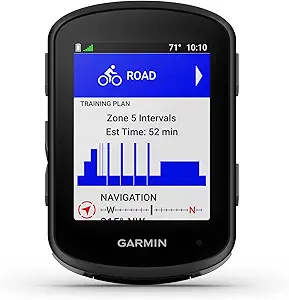 | Best Training Platform | Controls: Button controls | Battery life: Up to 26 hours demanding use; 42 hours battery saver | Positioning: Multi-band GNSS | VIEW LATEST PRICE | See Our Full Breakdown |
| GEOID CC700 2.8″ Color Screen Wireless Bike Computer |  | Best Value Navigation | Display: 2.8-inch color screen with Asahi glass | Connectivity: ANT+, Bluetooth, WiFi | Satellite systems: GPS, BEIDOU, GLONASS, QZSS, GALILEO + AGNSS | VIEW LATEST PRICE | See Our Full Breakdown |
| iGPSPORT BSC200S GPS Bike Computer |  | Best Battery-to-Price Ratio | Screen: 2.4-inch semi-transparent, semi-reflective color | Connectivity: Bluetooth, ANT+ | Battery life: Up to 25 hours (600mAh) | VIEW LATEST PRICE | See Our Full Breakdown |
| iGPSPORT BSC300T GPS Bike Computer with Touchscreen and Offline Navigation |  | Best for Off-Road and E-Bikes | Screen: 2.4-inch touchscreen plus 6 buttons | Satellite systems: GPS, BeiDou, GLONASS, Galileo, QZSS | Connectivity: ANT+ and Bluetooth 5.0 | VIEW LATEST PRICE | See Our Full Breakdown |
| GEOID CC700 Pro 2.8″ Color Touchscreen GPS Bike Computer |  | Best Value Touchscreen | Screen: 2.8-inch color touchscreen plus 3 buttons | Storage: 4GB | Satellite systems: GPS, BEIDOU, GLONASS, QZSS, GALILEO + AGNSS | VIEW LATEST PRICE | See Our Full Breakdown |
| iGPSPORT BSC100S Wireless GPS Bike Computer |  | Best Battery Life on a Budget | Display: 2.6-inch anti-glare LCD | Satellite systems: GPS, BeiDou, GLONASS, Galileo, QZSS | Riding data: More than 40 metrics | VIEW LATEST PRICE | See Our Full Breakdown |
| GEOID CC600 Wireless GPS Bike Computer with Color Screen and Route Navigation |  | Best Budget Navigation | Screen: 2.4-inch color screen with Asahi glass | Controls: Three buttons | Navigation: GPX upload, turn reminders, automatic rerouting | VIEW LATEST PRICE | See Our Full Breakdown |
| BKVTOP Wireless GPS Bike Computer |  | Best Simple Pick-and-Go | Weight: 50 g | Display: 2.4-inch LCD with automatic backlight | GPS: Built-in, no wheel sensor or magnet required | VIEW LATEST PRICE | See Our Full Breakdown |
| GPS Bike Computer with 2.4-Inch Screen, Altitude, Gradient, IPX7 Waterproofing, and 28-Hour Battery |  | Best for Climbers on a Budget | Display: 2.4-inch LCD with automatic backlight | Battery: 650mAh rechargeable, up to 28 hours | GPS: Built-in, sensor and magnet free | VIEW LATEST PRICE | See Our Full Breakdown |
| Wireless GPS Bike Computer with 2.4″ Screen, 650mAh Battery, IPX7 Waterproof |  | Best Basic Commuter | Screen: 2.4-inch LCD with automatic backlight | Battery: 650mAh rechargeable, up to 28 hours | Charging: USB-C | VIEW LATEST PRICE | See Our Full Breakdown |
| gps bike computer | Connectivity |
|---|---|
| COOSPO CS600 Color Touchscreen | Bluetooth / ANT+ |
| Wahoo ELEMNT BOLT V3 GPS Cycli | Bluetooth, ANT+ |
| Garmin Edge 840 Compact GPS Cy | Compatible with ANT+ sensors and Garmin Connect |
| Garmin Edge 1050 Premium Cycli | Compatible smartphone and Garmin Connect app |
| iGPSPORT BSC500 GPS Bike Compu | — |
| Garmin Edge 540 GPS Cycling Co | — |
| GEOID CC700 2.8" Color Screen | ANT+, Bluetooth, WiFi |
| iGPSPORT BSC200S GPS Bike Comp | Bluetooth, ANT+ |
| iGPSPORT BSC300T GPS Bike Comp | ANT+ and Bluetooth 5.0 |
| GEOID CC700 Pro 2.8" Color Tou | ANT+, Bluetooth, WiFi |
| iGPSPORT BSC100S Wireless GPS | Bluetooth 5.0 and ANT+ |
| GEOID CC600 Wireless GPS Bike | Wi-Fi, Bluetooth, ANT+ |
| BKVTOP Wireless GPS Bike Compu | None — no app or sensor support |
| GPS Bike Computer with 2.4-Inc | — |
| Wireless GPS Bike Computer wit | — |
More Details on Our Top Picks
COOSPO CS600 Color Touchscreen GPS Bike Computer
Buyers on a budget usually face a choice between dumb speedometers and genuinely useful GPS navigation, and the CS600 lands firmly in the second camp. Its breadcrumb route navigation is less polished than the full map display on the iGPSPORT BSC500, but it still keeps you on course without paying flagship money. Compared with the stripped-down generic 2.4-inch computers elsewhere in this roundup, the CS600’s real advantage is ecosystem support: it pairs with radar tail lights, smart lights, e-bikes, and trainers, which most entry-level units simply cannot do.
The tradeoffs are real, though. The 2.4-inch screen is the smallest in this batch of five, no sensors or extension mounts come in the box, and there is no on-device route building like you get on the Garmin Edge 1050.
Pros:- 36-hour battery life supports multi-day touring without charging
- Color touchscreen with auto-adjusting backlight for day and night riding
- Breadcrumb navigation prevents wrong turns on unfamiliar routes
- Pairs with radar, smart lights, e-bikes, and trainers
- Syncs with Strava and TrainingPeaks
Cons:- No cadence, heart rate, or power sensors or mounts included
- 2.4-inch screen is smaller than competing models like the BSC500
- Breadcrumb trails are less detailed than full map navigation
Best for: Riders who want genuine GPS navigation and ANT+ sensor pairing on a tight budget, especially commuters and gravel riders doing multi-day trips
Not ideal for: Riders who want a large map display or a complete out-of-the-box package with sensors and mounts included
- Display:2.4-inch color touchscreen with auto-backlight
- GPS:GPS + GLONASS
- Connectivity:Bluetooth / ANT+
- Battery Life:36 hours
- Charging:Type-C, 2 hours
- Waterproofing:IPX7
- App Compatibility:COOSPORIDE, Strava, TrainingPeaks
- Data Metrics:150+ data insights
Our verdict“The smartest entry point for riders who want real navigation and sensor support without flagship pricing.”
Wahoo ELEMNT BOLT V3 GPS Cycling Computer, Black
Where the COOSPO CS600 offers breadcrumb guidance, the BOLT V3 delivers genuine turn-by-turn directions with LED and audible cues, which changes how a computer feels on the road. This model makes the most sense for riders who plan routes in Strava, Ride With GPS, or Komoot and want them to sync automatically — no cables, no manual uploads. It can even generate a route to any destination from the device or the companion app, something the CS600 cannot match.
Compared with the Garmin Edge 840, Wahoo’s philosophy is simpler setup and fewer menus, at the cost of Garmin’s deeper training analytics and adaptive coaching. The catches: smart notifications and live tracking both require a tethered phone, and radar alerts need a compatible ANT+ unit bought separately.
Pros:- Turn-by-turn prompts with LED and audible cues
- Automatic wireless route sync and ride uploads
- On-demand route generation to any destination
- Live tracking and radar alerts for commuting safety
Cons:- Notifications and live tracking require a connected smartphone
- Radar alerts and some features depend on separately purchased accessories
Best for: Navigation-focused road riders and bikepackers who build routes in Ride With GPS, Strava, or Komoot and want them synced wirelessly
Not ideal for: Data-driven athletes who want deep coaching analytics — the Edge 840 offers far more in that area
- Product Type:GPS cycling computer
- Color:Black
- Navigation:On-device turn-by-turn directions
- Supported Route Formats:GPX, TCX
- Connectivity:Bluetooth, ANT+
- Compatible Services:Strava, Ride With GPS, Best Bike Split, Komoot, MTB Project, SingleTracks
- Smartphone Notifications:Calls, texts, emails, supported messaging apps
- Live Tracking:Via ELEMNT Companion App
Our verdict“The pick for riders who care most about following routes effortlessly rather than crunching training data.”
Garmin Edge 840 Compact GPS Cycling Computer
This is the pick I would point most serious riders toward, because it gets the fundamentals right where others cut corners. The dual touchscreen and button controls mean it works with gloves in rain or freezing conditions — a genuine advantage over the touch-only COOSPO CS600 and iGPSPORT BSC500. Its multi-band GNSS holds a lock in dense forest and urban canyons better than the single-band CS600, which matters most exactly when navigation matters most.
The Edge 840 also carries Garmin’s adaptive coaching, stamina insights, and ClimbPro ascent planning, making it a training tool rather than just a map on your bars. The tradeoffs: those training features only unlock with a compatible power meter and heart rate monitor, and the compact screen shows less map than the larger BSC500.
Pros:- Touchscreen plus buttons work with gloves and in any weather
- Multi-band GNSS maintains accuracy in difficult terrain
- Adaptive coaching and stamina insights with compatible sensors
- ClimbPro plans ascents ahead of time
Cons:- Advanced training features require a compatible power meter and heart rate monitor
- Compact screen limits map visibility compared with larger units
Best for: Serious road and mountain riders who want race-level training analytics, accurate positioning, and all-weather controls in one compact unit
Not ideal for: Casual riders who won’t add sensors — much of the Edge 840’s value stays locked without a power meter and heart rate strap
- Display:Touchscreen with button controls
- GPS:Multi-band GNSS
- Battery Life:Up to 26 hours demanding use; up to 32 hours battery saver
- Navigation:Turn-by-turn with ride type-specific maps
- Training Features:Adaptive coaching, stamina insights, power guide, ClimbPro
- Connectivity:Compatible with ANT+ sensors and Garmin Connect
Our verdict“The best-balanced choice for committed riders who train with data and ride in all conditions.”
Garmin Edge 1050 Premium Cycling Computer
The Edge 1050 is what happens when a manufacturer stops asking what a bike computer needs and starts asking what it could do. Beyond the vivid color touchscreen with on-device course creation, it folds in a built-in speaker with spoken workout and navigation prompts, a bike bell, group ride connectivity, and Garmin Pay — small conveniences that add up on long days in the saddle. Its 60-hour battery saver runtime outlasts even the COOSPO CS600’s 36 hours, making it the strongest option here for ultra-distance events.
Compared with the Edge 840, you are paying for the bigger display and the extras, not better positioning or coaching. And several headline features carry strings attached: Garmin Pay needs a supported bank, and notifications, live features, and training tools depend on a phone, app, or added sensors.
Pros:- Up to 60 hours of runtime in battery saver mode
- On-device course creation on a vivid color touchscreen
- Built-in speaker with navigation prompts and bike bell
- Group ride features and contactless payments
Cons:- Several features require a smartphone, app, or additional sensors
- Garmin Pay only works with supported banks
Best for: Ultra-endurance riders and gadget-loving cyclists who want the largest display, longest battery, and every convenience feature available
Not ideal for: Riders whose bank doesn’t support Garmin Pay or who just need core navigation — the Edge 840 covers that for less
- Display:Color touchscreen
- Battery Life:Up to 20 hours demanding use; up to 60 hours battery saver
- Connectivity:Compatible smartphone and Garmin Connect app
- Audio:Built-in speaker with workout/navigation prompts and bike bell
- Payments:Garmin Pay contactless with supported bank
- Features:Training, climbing, and power guidance; group ride connectivity
Our verdict“A splurge pick that earns its price for ultra-distance riders and anyone who wants every convenience Garmin offers.”
iGPSPORT BSC500 GPS Bike Computer with 3.3″ Touchscreen, Map Navigation & Voice Alerts
Screen size is the BSC500’s whole argument, and it is a convincing one. At 3.3 inches, its map display dwarfs the COOSPO CS600’s 2.4-inch panel and shows up to 12 data points per page, so you can keep speed, power, gradient, and heart rate visible at once without endless scrolling. The dual-band L1/L5 positioning across five satellite systems puts it technically ahead of the CS600 and on par with the Garmin Edge 840 for signal resilience.
The voice navigation and speed-adaptive turn reminders are a genuine safety plus — your eyes stay on the road. But there are gaps: route planning happens in the companion app rather than on the device, and the absence of published battery life and waterproofing details means buyers planning multi-day tours are taking a chance compared with the CS600’s stated 36 hours and IPX7 rating.
Pros:- Large 3.3-inch touchscreen shows up to 12 data fields per page
- Dual-band five-satellite positioning for interference-resistant accuracy
- Voice navigation and speed-adaptive turn reminders keep eyes on the road
- Automatic rerouting and resume-ride features with iClimb 2.0 hill preview
Cons:- Route planning depends entirely on the companion app
- No published battery life or waterproofing specifications
Best for: Riders over 40, bikepackers, and anyone who prioritizes a big readable map and voice prompts over deep training analytics
Not ideal for: Multi-day tourers who need a guaranteed long battery life and waterproof rating before trusting a device remotely
- Screen Size:3.3 inches
- Screen Type:Touchscreen with button operation
- Data Points Per Page:Up to 12
- Positioning:Dual-band L1/L5; GPS, Beidou, GLONASS, Galileo, QZSS
- Navigation:Map navigation, voice navigation, turn reminders, auto rerouting
- App Compatibility:iGPSPORT App, Strava, Komoot
- Training Features:Training plan, training effect analysis, iClimb 2.0
- In the Box:BSC500 computer, rubber pad, 2 rubber bands, user manual
Our verdict“The best choice when a big, readable map and spoken directions matter more than training depth or proven battery claims.”
Garmin Edge 540 GPS Cycling Computer
Garmin’s Edge 540 stands out for riders whose priority is structured training and coaching rather than a big flashy screen. Suggested workouts, stamina insights, and the ClimbPro ascent planner give it a depth of performance analysis that the GEOID CC700 and iGPSPORT BSC200S simply don’t match — those models track rides, but the 540 helps you train with intent. The multi-band GNSS also gives it an edge in positioning accuracy under tree cover and in urban canyons, where single-frequency units like the BSC200S can wander.
The tradeoff is largely financial and ergonomic. Compared with the Garmin Edge 840 elsewhere in this roundup, you give up the touchscreen and pay nearly the same for the training engine, and unlocking the full feature set requires a compatible power meter and heart rate monitor — without sensors, you’re leaving much of what you paid for on the table.
Pros:- Up to 26 hours of battery in demanding use, extending to 42 hours in battery saver mode for multi-day rides
- Multi-band GNSS delivers noticeably more accurate tracking in canyons, forests, and cities
- ClimbPro ascent planner shows gradient and remaining climb in real time on known routes
- Deep training guidance with suggested workouts, stamina insights, and power guidance
Cons:- Core performance features require an external power meter and heart rate monitor to be useful
- Button-only interface feels slower to operate than the touchscreens on the Edge 840 or GEOID CC700 Pro
Best for: Structured-training riders and climbers who already own (or plan to buy) a power meter and heart rate monitor
Not ideal for: Casual riders who just want turn-by-turn directions and ride stats — the training features will go unused and cheaper units like the GEOID CC700 cover navigation just as well
- Controls:Button controls
- Battery life:Up to 26 hours demanding use; 42 hours battery saver
- Positioning:Multi-band GNSS
- Training features:Suggested workouts, coaching, stamina insights, power guide
- Navigation:ClimbPro ascent planner, cycling maps, searchable POIs
Our verdict“This pick makes the most sense for data-driven riders who want Garmin’s coaching ecosystem and accuracy, provided they’re willing to buy sensors to unlock it.”
GEOID CC700 2.8″ Color Screen Wireless Bike Computer
The GEOID CC700 proves you don’t need Garmin money to get serious route navigation. Its 2.8-inch color display is larger than the 2.4-inch screens on both iGPSPORT models here, and it pairs that real estate with color route guidance, turn reminders, automatic re-routing, and GPX upload — the navigation fundamentals most budget units skip. Five-satellite positioning with AGNSS locks on in about five seconds, which is faster than many units at several times the complexity.
Where it trails the Garmin Edge 540 is analysis: there’s no coaching or stamina engine here, just ride tracking done well. The interface is button-driven, which some riders will prefer in gloves or rain but feels less fluid than the GEOID CC700 Pro‘s touchscreen sibling. Also note that the AGNSS assist data expires every 14 days, so you’ll want a periodic WiFi sync to keep that fast lock intact.
Pros:- Fast 5-second GPS positioning across five satellite systems with AGNSS
- Color route navigation with turn reminders, automatic re-routing, and GPX upload
- WiFi auto-sync speeds up ride uploads and firmware updates
- Highly customizable data screens with up to 10 pages and 108 data items
Cons:- AGNSS data must be re-synced every 14 days to maintain fastest positioning
- Button-only interface feels less modern than touchscreen rivals like the CC700 Pro
Best for: Value-focused riders and bikepackers who want big-screen GPX navigation and Strava auto-sync without a premium price
Not ideal for: Athletes who want structured coaching and training load analysis — this tracks rides, it doesn’t train you
- Display:2.8-inch color screen with Asahi glass
- Connectivity:ANT+, Bluetooth, WiFi
- Satellite systems:GPS, BEIDOU, GLONASS, QZSS, GALILEO + AGNSS
- Positioning time:Approximately 5 seconds
- Sensor support:Speed, cadence, heart rate; up to 9 device types
- Weight:0.21 kg
- Languages:11
Our verdict“The strongest choice for riders who want full-featured color navigation on a budget and don’t care about coaching tools.”
iGPSPORT BSC200S GPS Bike Computer
The iGPSPORT BSC200S earns its spot through sheer endurance efficiency: 25 hours of ride time from a 600mAh battery that fully recharges in 90 minutes over USB-C. That quick-turnaround charging means long tours with a power bank are painless, something the larger Garmin Edge 540 can’t match on charge speed. The semi-reflective color screen is genuinely sunlight-readable — a practical advantage over conventional color displays that wash out in direct light.
Route handling is where its budget roots show. It supports route import from Strava, Ride with GPS, and Komoot, but unlike the iGPSPORT BSC300T in this roundup, there are no offline maps — you’re following a line, not a map. Full configuration runs through the iGPSPORT app, and smart notifications are limited to calls, texts, and select alerts. For riders who mostly know where they’re going and want reliable data capture, those limits are easy to live with.
Pros:- 25-hour battery life with a fast 1.5-hour USB-C recharge
- Route creation and import from Strava, Ride with GPS, and Komoot
- Sunlight-readable semi-reflective color display
- IPX7 waterproofing and compatibility with iGPSPORT radar lights for vehicle alerts
Cons:- No offline maps — navigation is breadcrumb-line only
- Full feature set depends on the iGPSPORT app, with limited smart notifications
Best for: Distance riders and commuters who want long battery life, fast charging, and reliable tracking on a tight budget
Not ideal for: Riders exploring unfamiliar regions who need full offline maps — the BSC300T or GEOID CC700 Pro handle that better
- Screen:2.4-inch semi-transparent, semi-reflective color
- Connectivity:Bluetooth, ANT+
- Battery life:Up to 25 hours (600mAh)
- Charging:USB Type-C, 1.5-hour charge time
- Waterproofing:IPX7
- Data storage:Up to 400 hours of riding data
- Data metrics:100+
Our verdict“A smart buy for endurance-minded riders who value battery life and sunlight readability over full map navigation.”
iGPSPORT BSC300T GPS Bike Computer with Touchscreen and Offline Navigation
The iGPSPORT BSC300T is the rare budget unit that offers offline maps with turn prompts and off-course alerts — the feature that separates it from its sibling, the BSC200S, which offers line-only navigation. That makes it the stronger pick for mountain bikers who ride unmarked trails and e-bike riders covering unfamiliar ground. The hybrid control scheme of a 2.4-inch touchscreen plus six physical buttons is genuinely thoughtful: you get touch convenience for menus and button precision with gloves or wet hands, something the fully touch-driven GEOID CC700 Pro can’t claim.
Tracking breadth is generous at over 130 metrics across five satellite systems, though many of those numbers only populate with compatible sensors attached. The 2.4-inch screen also limits map detail compared with the CC700 Pro’s larger 2.8-inch display, so riders who live inside the map screen during navigation may prefer GEOID’s panel. For everyone else, this is a balanced middle path.
Pros:- Offline maps with route preview, turn prompts, and off-course alerts
- Hybrid touchscreen plus 6-button control works with gloves and in rain
- 130+ riding metrics across five satellite systems with ANT+ and Bluetooth 5.0 sensors
- Explicit support for road, mountain, and e-bike setups
Cons:- Smaller 2.4-inch screen limits map readability on complex routes
- Many metrics and features only function with compatible sensors or the app
Best for: Mountain bikers, e-bike riders, and explorers who need offline maps and off-course alerts without paying premium prices
Not ideal for: Riders who want maximum map detail on screen — the 2.4-inch display shows less than the GEOID CC700 Pro’s 2.8-inch panel
- Screen:2.4-inch touchscreen plus 6 buttons
- Satellite systems:GPS, BeiDou, GLONASS, Galileo, QZSS
- Connectivity:ANT+ and Bluetooth 5.0
- Navigation:Offline maps, route preview, turn prompts, off-course alerts
- Riding data:130+ metrics
- Bike compatibility:Road, mountain, e-bikes
- App support:iGPSPORT app; Strava and Komoot
Our verdict“The best budget choice for off-road and e-bike riders who need real offline maps and rugged, glove-friendly controls.”
GEOID CC700 Pro 2.8″ Color Touchscreen GPS Bike Computer
The GEOID CC700 Pro delivers the experience usually reserved for flagships: a 2.8-inch color touchscreen with offline maps, automatic re-routing, and 4GB of onboard route storage. Its dual-control design — touch plus three physical buttons — gives it an ergonomic edge over touch-only rivals, letting you pinch through menus at a café but fall back on buttons mid-ride. The DJI Action camera integration is a genuinely differentiating trick: controlling an Action 4 or Action 5 Pro from the head unit keeps footage triggers hands-free, a feature none of the Garmin, Wahoo, or iGPSPORT options here offer.
Compared with the Garmin Edge 540, you trade away deep coaching analytics for a bigger screen and offline maps at a friendlier price — a trade many navigation-first riders will happily make. The catches are real, though: re-routing requires a persistent connection to the companion app, and AGNSS assist data expires every 14 days without a WiFi sync, slightly undercutting its standalone credentials.
Pros:- Large 2.8-inch color touchscreen with dual touch-plus-button control
- Offline maps with re-routing and 4GB storage for multiple routes
- Fast 5-second positioning across five satellite systems with AGNSS
- Unique DJI Action 4/5 Pro camera control plus smart trainer support and WiFi auto-sync
Cons:- Re-route planning depends on a persistent connection to the companion app
- AGNSS data expires every 14 days and needs periodic WiFi syncing
- Camera control works only with two specific DJI models
Best for: Content-creating riders and navigators who want a large touchscreen, offline maps, and DJI camera control without flagship pricing
Not ideal for: Riders who want a fully standalone unit — app-dependent re-routing and 14-day AGNSS refreshes demand regular phone and WiFi access
- Screen:2.8-inch color touchscreen plus 3 buttons
- Storage:4GB
- Satellite systems:GPS, BEIDOU, GLONASS, QZSS, GALILEO + AGNSS
- Positioning time:5 seconds
- Connectivity:ANT+, Bluetooth, WiFi
- App compatibility:STRAVA, TrainingPeaks
- Camera control:DJI Action 4 and Action 5 Pro
- Languages:11
Our verdict“A compelling near-flagship experience for navigation-focused riders and filmmakers, provided you don’t mind keeping the companion app within reach.”
iGPSPORT BSC100S Wireless GPS Bike Computer
The iGPSPORT BSC100S stands out for its 40-hour battery life, which comfortably outlasts the Garmin Edge 540’s quoted runtime in GPS-only mode and doubles what the BKVTOP or similar sensor-free units offer. For multi-day touring or long endurance rides where charging opportunities are scarce, that endurance matters more than a color screen. The 2.6-inch anti-glare LCD is also slightly larger than the 2.4-inch panels on the budget models here, and it reads well in bright sun where color displays like the GEOID CC600 can wash out. With five satellite systems, ANT+ and Bluetooth 5.0, plus Strava and Komoot sharing through the iGPSPORT app, it covers connected training at a fraction of premium pricing. The tradeoff is no route navigation — unlike the GEOID CC600, it displays data rather than guiding you along a course, and some metrics require paired sensors you must buy separately.
Pros:- Up to 40 hours of battery life outlasts most competitors in this roundup
- Five-satellite positioning for faster, more reliable GPS lock
- ANT+ and Bluetooth 5.0 connectivity with Strava and Komoot sharing
- Larger 2.6-inch anti-glare screen that stays readable in direct sun
Cons:- No route navigation or on-screen mapping of any kind
- Many of the 40+ metrics require purchasing compatible sensors separately
Best for: Distance riders and bikepackers who need long battery life and app-connected data logging without paying Garmin prices
Not ideal for: Riders who want turn-by-turn navigation on preloaded routes — this unit is a data head, not a navigator
- Display:2.6-inch anti-glare LCD
- Satellite systems:GPS, BeiDou, GLONASS, Galileo, QZSS
- Riding data:More than 40 metrics
- Battery life:Up to 40 hours (600 mAh)
- Water resistance:IPX7
- Connectivity:Bluetooth 5.0 and ANT+
- Charging:USB Type-C
- App support:iGPSPORT app; Strava and Komoot sharing
Our verdict“This is the pick if battery endurance and connected ride tracking are your priorities and you can live without navigation.”
GEOID CC600 Wireless GPS Bike Computer with Color Screen and Route Navigation
Route navigation at this price point is rare, and that’s what separates the GEOID CC600 from data-only units like the iGPSPORT BSC100S. Upload a GPX file and you get turn reminders and automatic rerouting — features normally associated with the Garmin Edge line. The 2.4-inch color screen with Asahi glass supports up to 10 customizable pages and 108 data items, giving serious structure to training layouts, and Wi-Fi auto-sync means rides upload without touching your phone. It even handles indoor smart-trainer workouts with adjustable power and gradient targets, something no other budget model in this roundup attempts. Compared with its sibling, the GEOID CC700, the CC600 trades away the larger 2.8-inch panel and touchscreen for a lower cost. The honest caveat: battery life and water resistance are unspecified, which makes it a gamble for wet-weather or all-day rides.
Pros:- Full route navigation with turn alerts and automatic rerouting
- Wi-Fi, Bluetooth, and ANT+ connectivity with automatic ride syncing
- Smart-trainer support with customizable power, resistance, and gradient targets
- FIT file export to Strava and TrainingPeaks
Cons:- Battery life is not specified, making endurance planning difficult
- No stated water-resistance rating for wet-weather riding
- Fast positioning and syncing depend on Wi-Fi and current AGNSS data
Best for: Value-focused riders who want GPX route guidance, trainer support, and deep data customization without buying a Garmin
Not ideal for: All-weather commuters and ultra-distance riders — the absent water-resistance rating and unlisted battery life are real risks
- Screen:2.4-inch color screen with Asahi glass
- Controls:Three buttons
- Navigation:GPX upload, turn reminders, automatic rerouting
- Connectivity:Wi-Fi, Bluetooth, ANT+
- Satellite systems:GPS, BeiDou, GLONASS, QZSS, Galileo
- Storage:Up to 100 hours of ride data
- Data pages:Up to 10 pages, 10 items per page, 108 total items
- Indoor training:Smart-trainer support with power, resistance, and gradient targets
Our verdict“The cheapest credible path to guided routes and structured training, provided you can accept the unknowns around weatherproofing and runtime.”
BKVTOP Wireless GPS Bike Computer
There’s a real audience for a computer you mount and ride, and the BKVTOP serves it better than anything else in this batch. At 50 grams with no app pairing, no sensor pairing, and no spoke magnet, setup takes minutes. It still captures the metrics casual riders actually look at — speed, distance, elevation, gradient, and accumulated ascent — with auto start/stop handling ride recording for you. Compared with the iGPSPORT BSC100S, you give up app connectivity, sensor support, and 12 hours of battery, but you also give up the entire setup-and-pairing workflow. The IPX7 rating and 28-hour runtime cover rain and long day rides comfortably. What you don’t get matters if your ambitions grow: no way to export or review rides anywhere — the data lives and dies on the device. That makes it a dead end for anyone who logs training on Strava.
Pros:- Fully sensor-free setup with no wheel magnet or spoke hardware
- Automatic backlight and auto start/stop recording
- Featherweight 50 g build with a complete mounting kit included
- IPX7 water resistance handles wet-weather riding
Cons:- No app connection, no data export, and no external sensor support
- Battery life trails connected rivals like the iGPSPORT BSC100S by a wide margin
Best for: Casual and recreational riders who want speed, distance, and elevation data with zero setup and no interest in apps
Not ideal for: Anyone who wants to save, analyze, or share ride history — there is no app connection or data export at all
- Weight:50 g
- Display:2.4-inch LCD with automatic backlight
- GPS:Built-in, no wheel sensor or magnet required
- Battery runtime:Up to 28 hours, rechargeable
- Tracked data:Speed, distance, ride time, mileage, temperature, elevation, gradient, ascent
- Water resistance:IPX7
- Units:MPH and KMH
- Connectivity:None — no app or sensor support
Our verdict“The right choice if you want honest ride numbers with zero fuss, and the wrong one the moment you care about keeping them.”
GPS Bike Computer with 2.4-Inch Screen, Altitude, Gradient, IPX7 Waterproofing, and 28-Hour Battery
Where this unit earns its place is elevation data. Altitude, gradient, and accumulated ascent are tracked in full, which puts it in the same climbing-data territory as the BKVTOP while matching its 28-hour battery and IPX7 rating. The auto start/stop and sleep mode mean you never burn battery on forgotten rides — though the 7-minute sleep threshold is a double-edged sword: pause at a café too long mid-ride and your session handling gets clumsy compared with units like the iGPSPORT BSC100S that stay awake through longer stops. Like the other basic models here, it works with no wheel sensor or spoke magnet, which keeps installation painless, but it also lives in the no-connectivity camp — no Strava, no sensors, no navigation. If your rides are defined by climbs and you just want to see how much vertical you covered, this covers that job well.
Pros:- Full elevation suite: altitude, gradient, and accumulated ascent
- Auto start/stop and sleep mode conserve battery on forgotten sessions
- IPX7 waterproofing for consistent wet-weather use
- 28-hour runtime on a 650mAh rechargeable battery
Cons:- No connectivity of any kind — no apps, sensors, or data export
- 7-minute sleep timer can interrupt long mid-ride stops
Best for: Hilly-terrain riders who track climbing metrics and want automatic recording with a long-lasting battery
Not ideal for: Structured trainers and data-driven cyclists — there’s no connectivity for sensors, apps, or ride export
- Display:2.4-inch LCD with automatic backlight
- Battery:650mAh rechargeable, up to 28 hours
- GPS:Built-in, sensor and magnet free
- Tracked data:Speed, distance, ride time, mileage, temperature, altitude, gradient, accumulated ascent
- Recording:Auto start/stop; sleep after 7 minutes of inactivity
- Waterproofing:IPX7
Our verdict“A solid no-frills choice for riders whose main question is how much they climbed, and a poor fit for anyone chasing connectable training data.”
Wireless GPS Bike Computer with 2.4″ Screen, 650mAh Battery, IPX7 Waterproof
For everyday riding across road, mountain, and commute duties, this computer keeps things appropriately simple. The sensor-free setup — no magnets, no cables — makes it painless to move between bikes, and the automatic backlight is genuinely useful for dark morning commutes, switching on without a button press. Its 28-hour battery and IPX7 rating match the other basic models in this batch, so rain and a week of commuting between charges are non-issues. Set against the GEOID CC600, the gap is stark: no color screen, no routes, no trainer mode, no ride export. But the CC600 also asks more of its owner in setup and cost, and plenty of commuters just want speed, distance, and time visible at a glance. The 2.4-inch LCD is the main hardware limitation — smaller than the iGPSPORT BSC100S’s 2.6-inch panel and harder to read in direct sun than any color display here.
Pros:- Magnet- and cable-free GPS setup swaps easily between bikes
- Automatic backlight handles early-morning and evening rides
- IPX7 waterproofing with USB-C charging
- 28-hour battery suits a full week of commuting
Cons:- 2.4-inch monochrome LCD is harder to read than larger or color displays
- No app, sensor, or navigation connectivity
Best for: Commuters and multi-discipline casual riders who want a magnet-free computer they can swap between bikes and read at night
Not ideal for: Riders who ride in strong midday sun or want any connected features — the small monochrome screen and lack of connectivity limit both
- Screen:2.4-inch LCD with automatic backlight
- Battery:650mAh rechargeable, up to 28 hours
- Charging:USB-C
- GPS:Built-in, no magnets or cables
- Tracked data:Speed, distance, ride time, altitude, gradient, and more
- Water resistance:IPX7
- Mount:Standard handlebar mount
Our verdict“A dependable set-and-forget computer for commuting and casual mixed riding, as long as connected features and a big display aren’t on your list.”

How We Picked
I evaluated each unit against the criteria that actually shape a buying decision: GPS accuracy and lock-on speed, navigation capability (breadcrumb lines versus true offline maps with turn-by-turn prompts), screen readability in direct sunlight, sensor connectivity via ANT+ and Bluetooth, battery endurance at typical backlight settings, and software and app reliability. Build quality and waterproofing mattered too, since a computer that fails in rain negates every other feature. I also weighed how well each companion app syncs rides, configures pages, and handles firmware updates.
The ranking logic favors versatility and dependability at the top: Garmin’s Edge 840 and Wahoo’s BOLT V3 lead because they deliver proven navigation and training tools with fewer compromises. Mid-tier spots go to units like the Garmin Edge 540 and touchscreen budget models that get most of the way there for less money. The bottom of the list isn’t bad — the most affordable units here still track rides accurately — but they demand more patience with clunky apps, dimmer screens, and limited mapping, which is why they sit lower despite the value they offer.
Factors to Consider When Choosing Gps Bike Computers
Before settling on a specific model, it helps to understand what separates a satisfying GPS computer from one that ends up in a drawer. These are the factors that shaped this ranking and the mistakes I see buyers make most often.Mapping Depth: Breadcrumb Versus Full Offline Maps
The most common mistake is assuming every GPS computer actually navigates. Many budget units only draw a line of your pre-planned route — fine for familiar roads, frustrating when you miss a turn and the device can’t recalculate. True offline map navigation, like that on the Garmin Edge models and newer GEOID and iGPSPORT touchscreen units, shows actual streets, points of interest, and reroutes when you deviate. If you ride new routes, commute in unfamiliar areas, or bikepack, this difference justifies spending more. If you mostly retrace known loops and just want distance and speed, breadcrumb navigation saves you real money.
Screen Technology and Sunlight Readability
A bright, colorful screen looks great in product photos but can become a liability at noon on an open road. Transflective non-touchscreen displays, like those on the Garmin Edge 540 and Wahoo BOLT, stay readable in direct sun while sipping battery. Touchscreen models such as the COOSPO CS600 and iGPSPORT BSC500 are easier to pan and zoom on maps, but budget touch panels sometimes lag or struggle with wet gloves. Consider when and how you ride: winter riders in gloves and summer riders in harsh sun often prefer buttons, while urban explorers who poke at maps tend to prefer touch.
Battery Life Matched to Your Ride Style
Manufacturer battery claims assume dim screens and disabled sensors, so shave 20 to 30 percent off advertised numbers for realistic expectations. A commuter charging weekly needs far less capacity than an ultra-distance rider or bikepacker. Button-only units like the Garmin Edge 540 stretch well past a full day of riding, while large touchscreen units drain faster, especially with constant map rendering. Also check whether the unit charges while riding — some budget models lock out buttons during charging, an annoyance mid-century-ride.
App Ecosystem and Sensor Compatibility
The head unit is only half the system; the companion app determines how easily rides upload to Strava, routes transfer to the device, and firmware updates install. Garmin Connect and the Wahoo app are mature and dependable, while smaller brands vary widely — some sync flawlessly, others require manual reconnects. Confirm ANT+ and Bluetooth dual connectivity if you use a heart rate strap, cadence sensor, or smart trainer, and verify compatibility with any power meter you already own. Buying a head unit that can’t talk to your existing sensors is an expensive and avoidable mistake.
Training Features: Analytics or Just the Basics?
If you follow structured workouts, care about VO2 max estimates, or want climb-projection features, you need a mid-tier-or-above unit with built-in training logic — the Edge 540 and 840 excel here. Budget computers record the same raw GPS data but leave the analysis to third-party apps afterward. Be honest about whether you’ll use these tools; paying for training analytics you ignore is wasted money, but serious racers will quickly hit the ceiling of a basic tracker.
Weatherproofing and Mount Ecosystem
IPX7 waterproofing is the practical standard and covers every model worth buying, but sealing quality at the charging port varies — a common failure point on cheaper units after a season of wet rides. Also look at the out-front mount options and whether the brand includes one in the box; Garmin and Wahoo have vast third-party mount ecosystems, while smaller brands may lock you into a single plastic bracket. Riders with multiple bikes should confirm extra mounts are affordable and available.
Frequently Asked Questions
Is a budget GPS bike computer under $100 accurate enough for serious training?
For distance, speed, and route recording, yes — GPS chips in units like the iGPSPORT BSC100S and GEOID CC600 are accurate within a few percent of premium brands on clear roads. Where the gap shows up is under heavy tree cover or in urban canyons, where cheaper chipsets lose signal more often and produce ragged traces. You also give up polished training analytics, structured workout execution, and dependable rerouting. If you follow a training plan with intervals and targets, that software layer matters more than raw GPS accuracy, and a mid-tier unit pays off.
Should I choose the Garmin Edge 840 or the Wahoo ELEMNT BOLT V3?
Both are excellent, and the decision comes down to software philosophy. Garmin’s Edge 840 offers deeper training metrics, climb analysis, and more customization, but its menu system takes time to learn. Wahoo’s BOLT V3 is configured almost entirely through your phone, so pages, routes, and sensors set up in minutes — many riders never open a manual. If you love tinkering with data fields and want the richest analytics, pick Garmin; if you want to ride rather than configure, Wahoo is the smoother ownership experience.
Do I need a touchscreen on a bike computer?
Touchscreens shine for map panning and quick page swipes, and they’re nearly essential if you plan to explore routes on the fly. Their weaknesses appear with wet fingers, thick gloves, and sweat-smudged screens, all common on bikes. Button-based units work reliably in every condition and generally extend battery life. Many riders actually prefer the hybrid approach — buttons for core controls with a secondary touch layer — which is where models like the Edge 840 land. Match the interface to your climate and riding gear before deciding.
Can a bike computer replace my phone for navigation on long rides?
Increasingly, yes, provided the unit has true offline maps rather than breadcrumb tracing — otherwise you’re stuck when you leave your planned route. Units with onboard map storage let you load regions in advance and get turn-by-turn prompts without any cell signal, which phones can’t guarantee in remote areas. A dedicated computer also runs 20-plus hours on a charge versus a phone’s screen-on drain, and it survives rain better. If you ride anywhere with spotty coverage, an offline-mapping computer is genuinely more dependable than a phone.
What’s the real difference between the Garmin Edge 540 and Edge 840?
The core tracking, sensor support, and training features are nearly identical — the 540 is not a lesser computer in terms of ride data. The 840 adds a touchscreen over its buttons, more advanced training guidance that adapts to your form, and slightly refined climb features. If you’re purely a button user who follows their own plans, the 540 delivers roughly the same experience for meaningfully less money. Riders who want map interaction and adaptive coaching will feel the 840’s extras every ride.
Conclusion
Matching the right GPS bike computer to your riding comes down to how you use it. For best overall, the Garmin Edge 840 hits the sweet spot of mapping, battery, and training tools. The Wahoo ELEMNT BOLT V3 is my pick for easiest ownership and a strong runner-up overall. For best premium, the Garmin Edge 1050 justifies its cost with a large touchscreen, speaker guidance, and the most complete feature set here. Best value goes to the iGPSPORT BSC200S and GEOID CC600, which cover tracking and route following on a budget, while the COOSPO CS600 and iGPSPORT BSC500 offer touchscreen navigation without premium pricing. Beginners should start with the iGPSPORT BSC100S or the no-name 2.4-inch units at the bottom of the list to confirm they’ll use a computer at all before upgrading. Bikepackers and explorers should prioritize offline-map models like the Edge 540 or iGPSPORT BSC300T. Whatever you choose, buy for the rides you actually take, not the features you imagine needing.