
The ChargePoint Home Flex is my best overall home EV charger because it combines flexible power settings, dependable smart controls, and broad J1772 compatibility. The EMPORIA 48 Amp Charger offers better value for buyers who want fast charging without paying for a premium ecosystem, while the Autel MaxiCharger 80 Amp is my high-power pick for suitable vehicles and electrical systems. The main choices are plug-in versus hardwired installation, J1772 versus NACS compatibility, and whether advanced energy controls justify a higher price. Cable reach, outdoor durability, certification, and the capacity of the home’s electrical panel can matter more than the maximum advertised amperage. Continue reading for the full breakdown of the 15 best home EV chargers and the buyer each one serves best.
Complete the kit


Key Takeaways
- ChargePoint Home Flex ranks first because its adjustable output, established app, and wide vehicle compatibility create the strongest all-around package rather than merely the highest power figure.
- EMPORIA’s standard 48 Amp model is the value leader; it delivers much of the charging speed and scheduling functionality of costlier units, while EMPORIA Pro is better for households that will use its deeper energy-management features.
- Autel MaxiCharger 80 Amp is the premium performance choice, but its extra capacity only pays off when both the vehicle and a professionally planned electrical installation can accept more than 48 or 50 amps.
- Connector type creates the clearest split: EVIQO NACS and Autel NACS suit Tesla-style ports, while ChargePoint, EMPORIA, WOLFBOX, and the other J1772 models serve vehicles with that inlet or an appropriate adapter.
- EVDANCE is the easiest entry point for renters, occasional drivers, and buyers who need Level 1 and Level 2 flexibility, though its portable design gives up the speed and integrated smart controls of the leading wall-mounted chargers.
| Aimiler Level 2 EV Charger 32A |  | Best Portable Value | Adjustable Amperage: 16A-32A | Voltage: 220V-240V | Maximum Charging Power: 7.68 kW | VIEW LATEST PRICE | See Our Full Breakdown |
| Autel MaxiCharger AC Home 50A Hardwired |  | Best High-Power Hardwired Charger | Maximum Amperage: 50A | Voltage: 240V | Maximum Power: 12 kW | VIEW LATEST PRICE | See Our Full Breakdown |
| EVIQO NACS Charger for Tesla 40A |  | Best Plug-In Charger for Tesla | Maximum Output: 40A | Voltage: 240V | Vehicle Connector: NACS | VIEW LATEST PRICE | See Our Full Breakdown |
| ChargePoint HomeFlex J1772 | 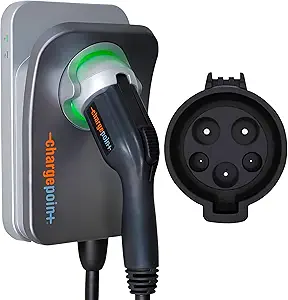 | Best App Ecosystem | Charging Speed: Up to 45 miles of range per hour | Vehicle Connector: J1772 | Circuit Range: 20A-80A | VIEW LATEST PRICE | See Our Full Breakdown |
| EMPORIA Level 2 EV Charger 48A |  | Best Overall | Maximum Amperage: 48A | Voltage: 240V | Charging Speed: Up to 46 miles of range per hour | VIEW LATEST PRICE | See Our Full Breakdown |
| Autel MaxiCharger Level 2 EV Charger |  | Best for Maximum Charging Power | Charging Power: Up to 80A / 19.2kW | Estimated Range Added: Approximately 70 miles per hour | Cable Length: 25 ft | VIEW LATEST PRICE | See Our Full Breakdown |
| AIMILER Level 2 EV Charger with WiFi App |  | Best for Adjustable Charging | Charging Speed: Up to 46 miles per hour | Amperage Range: 24A to 48A | Voltage: 240V | VIEW LATEST PRICE | See Our Full Breakdown |
| EMPORIA Pro Level 2 EV Charger with PowerSmart |  | Best for Load Management | Charging Current: Up to 48A | Input Voltage: 240V AC | Output Voltage: 240V AC | VIEW LATEST PRICE | See Our Full Breakdown |
| Autel Level 2 Home Smart EV Charger NACS |  | Best for Tesla Owners | Charging Power: 12kW | Amperage: Up to 50A | Voltage: 240V | VIEW LATEST PRICE | See Our Full Breakdown |
| Autel Level 2 EV Charger 40 Amp Home Smart AI |  | Best Plug-In Setup | Maximum Amperage: 40A | Adjustable Current: 16A to 40A | Plug Type: NEMA 14-50 | VIEW LATEST PRICE | See Our Full Breakdown |
| IYILO 48A Smart Level 2 EV Charger |  | Best for Shared Access | Charging power: 11.5kW | Maximum current: 48A | Voltage: 240V | VIEW LATEST PRICE | See Our Full Breakdown |
| WOLFBOX 40A Level 2 EV Charger |  | Best Smart-Home Pick | Maximum current: 40A | Voltage: 240V | Input plug: NEMA 14-50 | VIEW LATEST PRICE | See Our Full Breakdown |
| EVIQO 48A Level 2 EV Charger |  | Best for Outdoor Installation | Maximum current: 48A | Power output: 11.5kW | Voltage: 240V | VIEW LATEST PRICE | See Our Full Breakdown |
| EVDANCE Level 1 & 2 Portable EV Charger |  | Best Portable Pick | Charging levels: Level 1 and Level 2 | Voltage: 120V/240V | Current: 12A/16A | VIEW LATEST PRICE | See Our Full Breakdown |
| 48A WiFi Level 2 EV Charger | 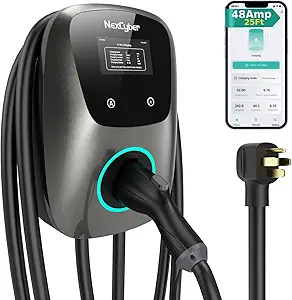 | Best Installation Flexibility | Maximum current: 48A hardwired | Plug-in current: Up to 40A via NEMA 14-50 | Voltage: 240V | VIEW LATEST PRICE | See Our Full Breakdown |
| home EV charger | Cable Length | Voltage | Connector |
|---|---|---|---|
| Aimiler Level 2 EV Charger 32A | 25 feet | 220V-240V | — |
| Autel MaxiCharger AC Home 50A | 25 feet | 240V | — |
| EVIQO NACS Charger for Tesla 4 | 25 feet | 240V | — |
| ChargePoint HomeFlex J1772 | — | — | — |
| EMPORIA Level 2 EV Charger 48A | 25 feet | 240V | — |
| Autel MaxiCharger Level 2 EV C | 25 ft | — | J1772 |
| AIMILER Level 2 EV Charger wit | 25 ft | 240V | J1772 |
| EMPORIA Pro Level 2 EV Charger | — | — | J1772 |
| Autel Level 2 Home Smart EV Ch | 25 ft | 240V | NACS |
| Autel Level 2 EV Charger 40 Am | 25 ft | — | — |
| IYILO 48A Smart Level 2 EV Cha | 25ft | 240V | SAE J1772 |
| WOLFBOX 40A Level 2 EV Charger | 25ft | 240V | J1772 |
| EVIQO 48A Level 2 EV Charger | 25ft | 240V | J1772 |
| EVDANCE Level 1 & 2 Portable E | 25ft | 120V/240V | — |
| 48A WiFi Level 2 EV Charger | 25ft | 240V | J1772 |
More Details on Our Top Picks
Aimiler Level 2 EV Charger 32A
I place the Aimiler 32A here as the strongest portable value because it combines app scheduling, adjustable 16A-to-32A output, and a long cable without demanding a permanent wall installation. Its NEMA 14-50 plug also makes relocation easier for renters or households expecting to move. Compared with the EMPORIA 48A, however, its 7.68kW ceiling means longer charging sessions for EVs that accept higher AC rates. The app adds useful remote monitoring, but setup may frustrate buyers with weak garage Wi-Fi. I also see its 25-foot IP66 cable as a practical advantage for outdoor parking, while the J1772 connector leaves Tesla owners dependent on an adapter. It ranks below the faster wall units because portability and price matter more here than maximum overnight charging speed.
Pros:- Adjustable 16A-to-32A output works with several compatible circuit sizes
- Portable NEMA 14-50 design avoids a permanent hardwired installation
- Wi-Fi app supports scheduling, remote start, and charging monitoring
- 25-foot IP66 cable provides broad reach for garages and driveways
Cons:- Slower maximum output than the 40A, 48A, and 50A alternatives in this group
- Tesla vehicles require a separate J1772 adapter
- App setup and remote features rely on dependable Wi-Fi
Best for: Renters and cost-conscious J1772 owners who have a NEMA 14-50 outlet and may need to move the charger between locations
Not ideal for: Tesla owners without an adapter or drivers with large batteries who want 40A-to-50A home charging
- Adjustable Amperage:16A-32A
- Voltage:220V-240V
- Maximum Charging Power:7.68 kW
- Cable Length:25 feet
- Plug Type:NEMA 14-50P
- Vehicle Connector:J1772
- Certification:ETL
- Weather Protection:NEMA Type 4 / IP66
- Connectivity:Wi-Fi app control
Our verdict“I recommend this model for buyers who favor portability, cable reach, and smart controls over the fastest available charging rate.”
Autel MaxiCharger AC Home 50A Hardwired
I rank the Autel MaxiCharger AC Home as the best high-power hardwired choice in this group. Its 50A, 12kW output edges past the EMPORIA 48A and gives compatible vehicles more energy during short parking windows. A hardwired connection also suits a permanent outdoor installation better than a plug-in portable unit such as the Aimiler 32A. That performance brings added cost: installation calls for an electrician, suitable panel capacity, and a circuit sized for the selected output. The smart app handles scheduling and charging management, while the NEMA 4 enclosure and flexible 25-foot lead support exposed parking areas. I would choose it over ChargePoint HomeFlex when maximum stated amperage is the priority, but ChargePoint has the more established public-charging ecosystem. Its 50A ceiling also leaves the separate Autel 80A model as the faster specialist option.
Pros:- 50A and 12kW output is the highest stated power among these five models
- NEMA 4 enclosure supports indoor or outdoor placement
- 25-foot flexible cable reaches vehicles parked farther from the wall
- Smart app provides remote scheduling and charging management
Cons:- Hardwired design requires professional installation
- Higher output may require an expensive panel or circuit upgrade
- Costs more than lower-power plug-in chargers
Best for: Homeowners with sufficient electrical-panel capacity who want a permanent 50A charger for a high-acceptance-rate EV
Not ideal for: Renters, frequent movers, or homes where electrical upgrades would make a hardwired 50A installation too costly
- Maximum Amperage:50A
- Voltage:240V
- Maximum Power:12 kW
- Cable Length:25 feet
- Installation:Hardwired
- Weather Rating:NEMA 4
- Safety Certification:CSA certified
- Placement:Indoor or outdoor
Our verdict“I favor the Autel for homeowners who can support a 50A circuit and want maximum hardwired speed without stepping up to an 80A unit.”
EVIQO NACS Charger for Tesla 40A
For a Tesla-focused household, I give the EVIQO NACS 40A a distinct advantage: its native connector removes the daily adapter routine required by J1772 models such as ChargePoint HomeFlex and the EMPORIA 48A. The plug-in NEMA 14-50 format is also simpler to relocate than Autel’s hardwired 50A unit, while 40A charging is ample for most overnight schedules. It does not match the Autel or EMPORIA for peak output, and non-Tesla drivers must buy their own adapter. Outdoor readiness is a major reason it makes my list; the IP66/NEMA 4 housing, 25-foot cable, and fluorescent holster suit dark driveways and exposed mounting positions. Wi-Fi control supports monitoring and remote commands, though those features weaken when the garage network is unreliable. I rank it as a connector-specific specialist, not the broadest household choice.
Pros:- Native NACS connector provides adapter-free charging for compatible Tesla vehicles
- 40A plug-in design balances strong overnight speed with easier relocation
- IP66 and NEMA 4 ratings suit exposed outdoor installations
- 25-foot cable and fluorescent holster improve driveway usability
Cons:- Non-Tesla vehicles require an adapter that is not included
- Lower maximum output than the Autel 50A and EMPORIA 48A
- Smart controls depend on stable 2.4GHz Wi-Fi
Best for: Tesla owners with a properly installed NEMA 14-50 outlet who want native NACS charging without committing to hardwiring
Not ideal for: J1772 vehicle owners who would need to purchase and manage a separate NACS adapter
- Maximum Output:40A
- Voltage:240V
- Vehicle Connector:NACS
- Cable Length:25 feet
- Required Outlet:NEMA 14-50
- Weather Protection:IP66 / NEMA 4
- Connectivity:2.4GHz Wi-Fi
- Certifications:UL, ETL, FCC, ENERGY STAR
- Warranty:3 years
Our verdict“I would pick the EVIQO for a Tesla household that wants native NACS convenience and outdoor durability in a movable plug-in format.”
ChargePoint HomeFlex J1772
I select the ChargePoint HomeFlex for buyers who value a polished charging ecosystem as much as raw output. Its app brings home charging controls into the same ChargePoint account used at compatible public stations, a convenience the Aimiler 32A cannot match at the same scale. Rated for up to 45 miles of range per hour, it is much quicker than a basic portable charger, though actual range added varies by vehicle efficiency and circuit configuration. The cold-resistant cable and indoor/outdoor design make it suitable for harsher climates. Its drawbacks are less subtle: full functionality needs Wi-Fi, Tesla drivers need an adapter, and higher-output installation may call for electrical work. I rank the EMPORIA 48A ahead on value and explicit output, while HomeFlex earns its place through app integration and brand network rather than the lowest price.
Pros:- ChargePoint app links compatible home and public charging activity
- Adds up to 45 miles of range per hour under supported conditions
- Cold-resistant cable is better suited to low-temperature handling
- UL-certified design supports indoor and outdoor installation
Cons:- Wi-Fi is required for the full set of connected features
- Tesla vehicles need a separate J1772 adapter
- Higher-power configurations may require professional electrical work
Best for: J1772 drivers who regularly use ChargePoint public stations and want home and public charging activity managed through one app
Not ideal for: Tesla owners seeking native NACS charging or buyers whose garage lacks dependable Wi-Fi coverage
- Charging Speed:Up to 45 miles of range per hour
- Vehicle Connector:J1772
- Circuit Range:20A-80A
- Connectivity:Wi-Fi
- Cable:Cold-resistant
- Safety Certification:UL certified
- Placement:Indoor or outdoor
Our verdict“I recommend HomeFlex to J1772 owners who will benefit from ChargePoint’s connected ecosystem more than they would from a cheaper standalone charger.”
EMPORIA Level 2 EV Charger 48A
I rank the EMPORIA 48A first because it strikes the most useful balance of speed, installation flexibility, cable reach, and smart control. Hardwired at full output, it can add up to 46 miles of range per hour; buyers can also use its NEMA 14-50 option when a removable installation makes more sense. That flexibility gives it broader appeal than the hardwired-only Autel 50A, even though Autel offers a small power advantage. Compared with ChargePoint HomeFlex, EMPORIA emphasizes 48A performance and energy management over access to a large public-charging network. The compromises are real: professional installation is sensible, maximum output requires hardwiring and suitable electrical capacity, and connected features rely on Wi-Fi. Its J1772 connector also means Tesla owners need an adapter. For most non-Tesla households, the 25-foot cable and dual installation paths make it the easiest model here to fit around changing needs.
Pros:- 48A output supports up to 46 miles of added range per hour
- NEMA 14-50 and hardwired installation options provide long-term flexibility
- 25-foot cable accommodates varied garage and driveway layouts
- Wi-Fi controls support remote management and scheduled charging
Cons:- Full 48A output requires hardwiring and adequate circuit capacity
- Smart functions depend on reliable Wi-Fi
- Tesla vehicles require a J1772 adapter
Best for: Non-Tesla homeowners who want near-maximum Level 2 speed plus the choice between a NEMA 14-50 connection and a future hardwired setup
Not ideal for: Tesla-only households wanting native NACS or homes without the panel capacity needed to benefit from 48A charging
- Maximum Amperage:48A
- Voltage:240V
- Charging Speed:Up to 46 miles of range per hour
- Vehicle Connector:SAE J1772
- Cable Length:25 feet
- Installation Options:NEMA 14-50 or hardwired
- Connectivity:Wi-Fi
- Safety Listing:UL listed
- Efficiency Certification:ENERGY STAR certified
Our verdict“I rate the EMPORIA as the best all-around choice for J1772 households seeking fast charging, smart management, and flexible installation.”
Autel MaxiCharger Level 2 EV Charger
I rank the Autel MaxiCharger as the performance pick because its 80A, 19.2kW ceiling is far above the 48A output of the EMPORIA Pro and AIMILER chargers. That extra capacity can add about 70 miles of range per hour, which suits households with high-mileage EVs, short overnight windows, or more than one vehicle sharing a charger. Its five-year warranty, remote controls, and theft protection also make it more convincing for demanding installations. The catch is that 80A charging requires a hardwired 100A circuit, so many homes will need costly electrical work before gaining any speed advantage. I would skip it for vehicles with lower onboard charging limits, since they cannot use the full output. Tesla owners also need to supply their own NACS adapter.
Pros:- Up to 80A and 19.2kW supports exceptionally fast home AC charging
- Approximately 70 miles of added range per hour under suitable conditions
- App-based scheduling and remote management
- Five-year warranty plus built-in safety and theft protection
Cons:- A 100A circuit may require a major electrical-service upgrade
- Hardwired installation calls for professional labor
- Tesla vehicles require a separately purchased NACS adapter
Best for: High-mileage households with an EV capable of accepting high AC charging rates and electrical service that can support a 100A circuit
Not ideal for: Drivers with lower-rate onboard chargers or limited electrical capacity, since the 80A hardware may deliver no practical benefit without an expensive upgrade
- Charging Power:Up to 80A / 19.2kW
- Estimated Range Added:Approximately 70 miles per hour
- Cable Length:25 ft
- Connector:J1772
- Vehicle Compatibility:J1772 EVs; Tesla vehicles with NACS adapter
- Installation:Hardwired; 100A circuit recommended
- Connectivity:Wi-Fi and Wi-SUN
- Certifications:UL and CSA certified
- Warranty:5 years
Our verdict“I recommend this model when maximum home charging speed justifies the heavier installation cost.”
AIMILER Level 2 EV Charger with WiFi App
I see the AIMILER Level 2 EV Charger as the flexible choice for households that want to tune charging current between 24A and 48A. That range can accommodate changing power needs, while the app adds scheduling and remote monitoring. Compared with the fixed 40A ceiling of the Autel 40 Amp charger, AIMILER offers more advertised charging headroom and a similarly useful 25-foot cable. Its NEMA 14-50 plug may also be more convenient than the hardwired Autel MaxiCharger, provided the correct outlet and circuit are already present. Buyers should confirm the permitted current with an electrician, because plug-in circuit limits may restrict full output. It also lacks native NACS support, and its setup is less attractive for anyone seeking a simple charger without Wi-Fi configuration or amperage decisions.
Pros:- Adjustable 24A-to-48A output supports different charging and circuit needs
- Wi-Fi app provides remote monitoring and control
- 25-foot cable reaches across larger garages and driveways
- ETL certification and NEMA Type 4 enclosure support home installation
Cons:- Full advertised output may be limited by plug and circuit configuration
- Tesla vehicles require an adapter
- Safe setup may still require professional electrical work
Best for: J1772 drivers who want adjustable current, app scheduling, and a long cable for a garage with an existing compatible 240V outlet
Not ideal for: Tesla owners or renters without a suitable NEMA 14-50 circuit, since an adapter and electrical work may be required
- Charging Speed:Up to 46 miles per hour
- Amperage Range:24A to 48A
- Voltage:240V
- Plug Type:NEMA 14-50P
- Connector:J1772
- Cable Length:25 ft
- Enclosure Rating:NEMA Type 4
- Certification:ETL
- Compatibility:Most North American EVs and PHEVs; Tesla requires adapter
Our verdict“I favor the AIMILER for J1772 households that value adjustable output more than native Tesla compatibility or a hardwired high-power setup.”
EMPORIA Pro Level 2 EV Charger with PowerSmart
The EMPORIA Pro earns its place through PowerSmart load balancing, which can reduce charging demand when the home is using more electricity elsewhere. I find that more useful for capacity-constrained homes than chasing the Autel MaxiCharger’s 80A output, which may trigger a costly service upgrade. EMPORIA still offers up to 48A charging, plus scheduling and energy tracking that help owners shift sessions to cheaper rate periods. Compared with the AIMILER charger, its main advantage is active household load management rather than amperage adjustment alone. It is not the simplest plug-and-charge choice: PowerSmart needs correct installation and setup, and Wi-Fi-dependent features add configuration work. The J1772 connector also means Tesla drivers need an adapter. Buyers with ample panel capacity may find the added load-management focus unnecessary.
Pros:- PowerSmart load balancing helps manage charging around household demand
- Up to 48A output supports fast overnight charging
- App tracks energy use and supports scheduled sessions
- Wi-Fi and Bluetooth provide flexible setup connectivity
Cons:- Load management requires proper installation and configuration
- Tesla vehicles need a J1772 adapter
- App-dependent functions may not appeal to buyers seeking simple offline operation
Best for: Homeowners with constrained electrical capacity, variable household loads, or time-of-use electricity rates who want fast charging without an automatic service upgrade
Not ideal for: Drivers with abundant panel capacity who want a basic offline charger, since PowerSmart setup and app features may add complexity without much benefit
- Charging Current:Up to 48A
- Input Voltage:240V AC
- Output Voltage:240V AC
- Connector:J1772
- Ports:1
- Installation Options:NEMA 14-50 or compatible fixed installation
- Load Management:PowerSmart
- Connectivity:Wi-Fi and Bluetooth
- Vehicle Compatibility:J1772 EVs; Tesla vehicles with adapter
Our verdict“I recommend the EMPORIA Pro when managing limited household electrical capacity matters as much as charging speed.”
Autel Level 2 Home Smart EV Charger NACS
I place the Autel NACS Home Smart EV Charger ahead of the J1772 models for Tesla households because it connects directly without the adapter required by the EMPORIA Pro or AIMILER. Its 50A, 12kW output can add up to 48 miles of range per hour, while the 25-foot cable offers more parking flexibility than a short wall connector. A NEMA 4X enclosure also makes it a stronger outdoor candidate than chargers with less protective housings. Yet its native NACS design is less versatile for households that own J1772 vehicles, and hardwiring makes relocation harder than with the plug-in Autel 40 Amp model. The supplied circuit guidance is unusually broad, so I would have an electrician match the breaker, wiring, and configured current. Installation costs remain the main tradeoff despite the convenient Tesla connection.
Pros:- Native NACS connector avoids an adapter for compatible Tesla vehicles
- Up to 50A and 12kW supports fast home charging
- NEMA 4X enclosure suits exposed indoor or outdoor locations
- 25-foot cable and app scheduling add daily convenience
Cons:- J1772 vehicles require an adapter
- Hardwired installation reduces portability and adds labor cost
- Circuit requirements must be matched carefully to the configured amperage
Best for: Tesla and other NACS-vehicle owners who want a weatherproof, app-connected charger with more output than a typical 40A unit
Not ideal for: Mixed-connector households or renters, because J1772 vehicles need an adapter and the hardwired unit is difficult to relocate
- Charging Power:12kW
- Amperage:Up to 50A
- Voltage:240V
- Estimated Range Added:Up to 48 miles per hour
- Connector:NACS
- Cable Length:25 ft
- Installation:Hardwired
- Enclosure Rating:NEMA 4X
- Certification:CSA
Our verdict“I would choose this Autel for a Tesla-focused household that wants 50A charging and outdoor durability in a hardwired package.”
Autel Level 2 EV Charger 40 Amp Home Smart AI
I recommend the Autel 40 Amp Home Smart Charger for buyers who already have a suitable NEMA 14-50 outlet and want to avoid a permanent hardwired installation. Its plug-in format is easier to replace or move than the Autel 50A NACS model, while adjustable 16A-to-40A output gives owners some room to match charging to their circuit. The NEMA 4X enclosure and 25-foot cable make it practical for outdoor parking as well as garages. Compared with the AIMILER’s advertised 48A maximum, this Autel sacrifices peak speed for a clearer 40A plug-in proposition and native Wi-Fi plus Bluetooth control. It still is not a true no-work solution: adding the outlet can be expensive, and the 40A ceiling is slower than the 48A, 50A, and 80A picks. The three-year warranty also trails the MaxiCharger’s five-year coverage.
Pros:- NEMA 14-50 plug simplifies setup where a compatible outlet already exists
- Adjustable 16A-to-40A output can match different circuit limits
- NEMA 4X weather resistance supports outdoor placement
- Wi-Fi, Bluetooth, and app controls support remote management
Cons:- 40A maximum is slower than several higher-output chargers in the lineup
- Installing a NEMA 14-50 outlet may require substantial electrical work
- Three-year warranty is shorter than the Autel MaxiCharger warranty
Best for: Homeowners with an existing NEMA 14-50 outlet who want adjustable smart charging without committing to a hardwired wall unit
Not ideal for: High-mileage drivers seeking the fastest possible charging or homes without a compatible 240V outlet, since output tops out at 40A and outlet installation can be costly
- Maximum Amperage:40A
- Adjustable Current:16A to 40A
- Plug Type:NEMA 14-50
- Cable Length:25 ft
- Installation:Plug-in
- Enclosure Rating:NEMA 4X
- Connectivity:Wi-Fi and Bluetooth
- Use Location:Indoor or outdoor
- Warranty:3 years
Our verdict“I favor this Autel when plug-in convenience, adjustable power, and weather resistance matter more than attaining the lineup’s highest charging rate.”
IYILO 48A Smart Level 2 EV Charger
I rank the IYILO 48A Smart Level 2 EV Charger as the strongest choice for households that want controlled access as well as fast charging. Its RFID authorization and app scheduling suit shared driveways, rental properties, or homes where several drivers use one station. The 11.5kW output can add up to 46 miles of range per hour, matching the EVIQO 48A charger while adding dual temperature sensors for another layer of heat monitoring. It is less flexible than the plug-in WOLFBOX, though, because hardwired installation requires an electrician. The NEMA 4 enclosure supports outdoor placement, but EVIQO’s IP66 rating offers a clearer weather-resistance advantage. I would also skip it for a Tesla unless buying a separate adapter is acceptable.
Pros:- RFID control can limit charging access in shared parking areas
- 48A, 11.5kW output supports rapid overnight charging
- App provides scheduling and energy tracking
- Dual temperature sensors and multiple safety certifications strengthen heat protection
Cons:- Hardwired installation adds electrician cost and limits portability
- Smart controls support only 2.4GHz Wi-Fi
- Tesla vehicles require a separately purchased adapter
Best for: Multi-driver households and rental-property owners who want RFID access control, scheduling, and 48A charging
Not ideal for: Renters and Tesla owners seeking a charger they can install or use without added electrical work and accessories
- Charging power:11.5kW
- Maximum current:48A
- Voltage:240V
- Connector:SAE J1772
- Cable length:25ft
- Wi-Fi:2.4GHz
- Enclosure rating:NEMA 4
- Certifications:UL, ETL, Energy Star
- Dimensions:9.8 x 8.7 x 4.4 inches
Our verdict“I recommend the IYILO for shared households that value access control as much as 48A charging speed.”
WOLFBOX 40A Level 2 EV Charger
The WOLFBOX 40A Level 2 EV Charger earns its place through smart-home convenience rather than maximum output. Alexa and Google Assistant support make it more appealing for connected homes than the EVIQO 48A or EVDANCE portable charger, while the app handles remote management. Its NEMA 14-50 plug also allows easier replacement or relocation than a hardwired IYILO, provided a suitable 50A circuit already exists. The tradeoff is speed: its claimed 38 miles of range per hour trails the 46-mile estimates attached to the 48A models. I like the NEMA 4X enclosure and 25-foot cable for exposed or awkward parking spaces, although complex setup instructions may dilute the convenience. Tesla drivers still need an adapter, and homes without a 14-50 outlet face electrical work anyway.
Pros:- Alexa and Google Assistant integration adds useful voice control
- NEMA 14-50 plug makes the unit easier to replace or relocate
- NEMA 4X housing is well suited to indoor or outdoor mounting
- 25ft cable provides broad parking-position flexibility
Cons:- 40A output is slower than the 48A IYILO and EVIQO chargers
- Full output requires a correctly installed 50A circuit
- Setup instructions may be challenging for less technical owners
Best for: Smart-home users with an existing 50A circuit and NEMA 14-50 outlet who want app and voice control
Not ideal for: Drivers chasing the fastest 48A charging or households that lack a properly rated 14-50 circuit
- Maximum current:40A
- Voltage:240V
- Input plug:NEMA 14-50
- Connector:J1772
- Cable length:25ft
- Enclosure rating:NEMA 4X
- Certification:CSA certified
- Smart controls:Wi-Fi, app, Alexa, Google Assistant
- Dimensions:12.68 x 7.43 x 4.72 inches
Our verdict“I would choose the WOLFBOX for a connected home with an existing 14-50 outlet, not for the highest available charging rate.”
EVIQO 48A Level 2 EV Charger
I place the EVIQO 48A Level 2 EV Charger ahead of the other hardwired choices for exposed installation because its IP66 and NEMA 4 ratings provide a strong weather-protection combination. Its 11.5kW output and 25-foot cable match the IYILO on the numbers that shape daily charging, while app scheduling can move charging into lower-rate hours. Compared with IYILO, however, EVIQO lacks the stated RFID access controls and dual temperature sensors, so it is less tailored to shared parking. It is also a permanent installation: an electrician is required, and moving home is less convenient than with the plug-in WOLFBOX. The three-year warranty and U.S. support add reassurance, but smart functions depend on 2.4GHz Wi-Fi. Tesla owners must budget for an adapter.
Pros:- IP66 and NEMA 4 ratings support demanding outdoor installations
- 48A, 11.5kW output can handle fast overnight charging
- 25ft cable reaches vehicles across wide or two-car parking areas
- Three-year warranty includes U.S.-based support
Cons:- Licensed-electrician installation raises the initial cost
- App functions rely on a 2.4GHz Wi-Fi connection
- No Tesla adapter is included
Best for: Homeowners mounting a fast J1772 charger outdoors where strong weather sealing and a long cable matter
Not ideal for: Renters, weak-Wi-Fi locations, and Tesla households wanting native connector compatibility
- Maximum current:48A
- Power output:11.5kW
- Voltage:240V
- Connector:J1772
- Cable length:25ft
- Weather protection:IP66, NEMA 4
- Installation:Hardwired
- Certifications:UL, ETL
- Warranty:3 years
Our verdict“I favor the EVIQO for homeowners who need a weather-ready 48A charger and accept a permanent hardwired setup.”
EVDANCE Level 1 & 2 Portable EV Charger
The EVDANCE Level 1 & 2 Portable EV Charger serves a different buyer from every wall-mounted model here. It can charge from 120V or 240V outlets, making it useful as a travel cable, a backup unit, or a practical choice for renters who cannot install an EVSE. Compared with the WOLFBOX, its 12A/16A output is far slower; even at 240V, 3.68kW is only a fraction of the 11.5kW available from EVIQO. That speed gap makes it a poor primary charger for high-mileage battery-electric vehicles but a sensible match for plug-in hybrids and light commutes. I value the 25-foot reach and IP66 housing, yet there is no app, scheduling, or energy reporting. Some outlet configurations need another adapter, and the one-year warranty is shorter than the three-year coverage on the hardwired picks.
Pros:- Supports both Level 1 and Level 2 charging
- Portable format works for travel, rentals, and emergency backup
- 25ft cable provides useful reach from varied outlet locations
- IP66 housing and ETL listing support dependable outdoor use
Cons:- Maximum 3.68kW output is much slower than 40A and 48A wall chargers
- No Wi-Fi app, scheduling, or energy monitoring
- Certain outlets and Tesla vehicles require separately purchased adapters
Best for: Renters, plug-in hybrid owners, and road-trippers who need one portable cable for 120V and 240V outlets
Not ideal for: High-mileage EV drivers who need fast nightly charging, app scheduling, or detailed energy monitoring
- Charging levels:Level 1 and Level 2
- Voltage:120V/240V
- Current:12A/16A
- Power:1.44kW at 120V; 3.68kW at 240V
- Plug types:NEMA 5-15 and 6-20
- Cable length:25ft
- Housing rating:IP66
- Certifications:ETL, FCC, CE
- Fire rating:UL 94 V-0
Our verdict“I recommend the EVDANCE as a flexible portable or backup charger, especially for a plug-in hybrid, rather than as a fast primary EV station.”
48A WiFi Level 2 EV Charger
I see the 48A WiFi Level 2 EV Charger as the middle ground for buyers choosing between a removable plug and maximum hardwired speed. It can reportedly add up to 38 miles of range per hour through its NEMA 14-50 connection, while a hardwired configuration raises output to 48A and up to 46 miles per hour. That makes it more adaptable than the hardwired-only EVIQO, although switching configurations still calls for proper electrical work. The 25-foot military-grade cable and Wi-Fi controls support everyday convenience, and the three-year warranty matches EVIQO’s coverage. Its main weakness is placement: the NEMA 3 enclosure and guidance against direct rain or sunlight make it less convincing outdoors than EVIQO or WOLFBOX. I would treat professional installation and sheltered mounting as part of the purchase cost, while Tesla drivers need an adapter.
Pros:- Supports plug-in installation or higher-output hardwiring
- Wi-Fi app enables remote monitoring and control
- 25ft military-grade cable offers reach and added durability
- ETL, FCC, and Energy Star certifications cover safety and efficiency
Cons:- 48A output requires hardwiring rather than ordinary plug-in use
- NEMA 3 housing and placement guidance limit exposed outdoor mounting
- Tesla compatibility requires a separate adapter
Best for: Homeowners who want NEMA 14-50 convenience now with the option of faster 48A hardwired charging later
Not ideal for: Buyers with uncovered outdoor parking or anyone expecting 48A output from a standard NEMA 14-50 connection
- Maximum current:48A hardwired
- Plug-in current:Up to 40A via NEMA 14-50
- Voltage:240V
- Connector:J1772
- Cable length:25ft
- Enclosure rating:NEMA Type 3
- Number of ports:1
- Certifications:ETL, FCC, Energy Star
- Warranty:3 years
Our verdict“I would pick this model for a sheltered garage where plug-in convenience and a future 48A hardwired upgrade both carry value.”

How We Picked
I ranked these chargers by the outcomes that matter after installation: usable charging speed, connector compatibility, safety certification, cable reach, weather resistance, app reliability, and control over schedules or current limits. I gave more weight to power that typical vehicles and residential circuits can use than to oversized headline ratings. A 48-amp charger with clear controls and broad compatibility can rank above an 80-amp model that demands expensive electrical work. I also compared plug-in portability with the cleaner installation and higher sustained output available from hardwired units.
The order reflects overall ownership value, not price alone. ChargePoint leads for balance, EMPORIA rises on price-to-performance, and Autel’s 80-amp model earns a premium role rather than first place because fewer homes can exploit its full output. I ranked NACS models by how well they serve compatible vehicles, while portable chargers received credit for flexibility without being treated as direct substitutes for permanent high-output stations. Models with vague branding or less-established software rank lower when similarly specified alternatives offer clearer certification, support, or ecosystem value.
Factors to Consider When Choosing Best Home EV Chargers
I would choose a home EV charger by working backward from the vehicle, parking location, and electrical service rather than buying the unit with the largest amp rating. The right match is the charger that replenishes the required daily mileage within the available parking window, fits the home’s wiring, and remains convenient in poor weather. The factors below explain where paying more changes daily ownership and where it merely adds unused capacity.
Match Charging Power to the Car and Daily Mileage
I would start with the vehicle’s maximum AC charging rate, since the car—not the wall unit—sets the final speed limit. An 80-amp charger provides no speed advantage when the onboard charger accepts only 32 or 48 amps. Daily mileage matters just as much: a driver replacing 30 miles overnight may gain little from upgrading beyond a moderate Level 2 setup. Higher output becomes more useful for long commutes, short overnight parking windows, or two EVs sharing one station. I also check whether a future vehicle is likely to accept more power before paying for extra capacity today. The best target is enough overnight recovery with reasonable headroom, not the highest number on the box.
Choose Between Plug-In and Hardwired Installation
A NEMA 14-50 plug-in charger is easier to remove, replace, or take to another home, which makes it attractive for renters and buyers expecting to move. Hardwiring can support higher current, removes a weather-exposed plug connection, and often produces a tidier permanent installation. A common mistake is treating an existing receptacle as automatically ready for hours of continuous EV charging; its circuit rating, wiring, condition, and installation quality still need review. Plug-in units on a 50-amp circuit are normally limited to a lower continuous load than many 48-amp hardwired models. I would include the receptacle, circuit work, permit, and electrician’s labor when comparing total prices. Installation cost can outweigh the charger price difference, especially when the panel is far from the parking space.
Pick the Right Connector Without Losing Flexibility
I would match the charger to the vehicle’s native inlet while checking which connector a likely future EV may use. NACS chargers reduce adapter handling for compatible Tesla and newer NACS-equipped vehicles, while J1772 remains useful across many existing non-Tesla EVs and plug-in hybrids. An adapter can bridge some combinations, but it adds another component to store, connect, and protect from weather. Households with two connector types may benefit from choosing the plug used most often and keeping a reputable adapter for the second car. Connector choice does not raise the car’s AC charging limit, so changing plugs alone will not make charging faster. I favor native everyday compatibility over trying to predict every future vehicle standard.
Check the Panel Before Paying for More Amperage
High-output charging places a sustained load on the home’s electrical system, so I would have the available capacity checked before selecting a 48-, 50-, or 80-amp unit. A panel upgrade can turn an appealing premium charger into a much larger project. Adjustable current settings help a charger fit the circuit available today and leave room for later electrical work. Energy-management or load-sharing equipment may also let some homes add EV charging without increasing service capacity. Buyers planning a second EV should ask whether two chargers can coordinate their draw rather than sizing two independent circuits at full output. The better long-term investment may be load management rather than raw amperage.
Separate Useful Smart Features From App Clutter
I find scheduled charging and current adjustment genuinely useful because they can align charging with off-peak electricity rates and household power limits. Session history helps track consumption, though utility or vehicle apps may already provide similar data. Wi-Fi is less valuable when basic charging becomes difficult during an outage or account problem, so local controls and reliable automatic charging still matter. RFID access can help when a charger is mounted where neighbors or visitors could reach it, but it adds little inside a private garage. Solar integration and whole-home monitoring suit buyers who actively manage energy use; they are harder to justify for someone who only wants the car ready each morning. I would pay extra for controls tied to a real billing or energy need, not a longer feature list.
Plan Cable Reach, Storage, and Outdoor Exposure
A 25-foot cable appears across much of this lineup because it gives drivers room to reach different charge-port positions without parking with perfect precision. I would measure the route from the mounting point to the inlet on both forward and reverse parking orientations. Extra reach is useful, but loose cable on the floor becomes a trip and tire hazard, making a good holster or reel part of the buying decision. Outdoor installations need weather-rated hardware and protected connections, not simply a water-resistant charger body. Cold climates also expose differences in cable flexibility, while direct sun can heat dark housings and connectors. A slightly slower unit with better placement and cable management may be easier to live with than a faster charger mounted in the wrong spot.
Frequently Asked Questions
Is a 48-amp home EV charger worth buying over a 40-amp model?
I would pay for 48 amps when the vehicle can accept about 11.5 kW, the electrical system supports a 60-amp circuit, and shorter charging windows matter. The difference from 40 amps is useful but rarely dramatic for routine overnight charging. A car with a lower AC limit will charge at the same rate on both units. The EMPORIA 48 Amp and EVIQO 48 Amp make sense for compatible vehicles, while a 40-amp WOLFBOX or Autel plug-in model may cover the same daily mileage at a lower installation burden. I would compare total installed cost per hour saved before choosing the higher rating.
Should I buy a J1772 or NACS home charger?
I would choose the connector that fits the current vehicle without an adapter, particularly when it will be attached every day. The EVIQO NACS and Autel NACS models are direct choices for compatible Tesla-style ports, while ChargePoint Home Flex J1772 and EMPORIA J1772 fit many existing non-Tesla vehicles. An adapter remains practical for occasional use by a second vehicle with a different inlet. Buyers expecting to replace their car soon should check the announced connector on the exact future model rather than relying on brand-wide assumptions. Convenience today should carry more weight than uncertain compatibility years away.
Can I install a Level 2 charger on an existing NEMA 14-50 outlet?
Possibly, but I would not assume every NEMA 14-50 outlet is suitable for repeated, hours-long EV charging. The circuit breaker, wire size, receptacle quality, grounding, outlet condition, and local rules all affect whether the setup is appropriate. A plug-in charger’s current must stay within the circuit’s continuous-load limit. If the outlet is outdoors, the enclosure and connection also need proper weather protection. I would ask a licensed electrician to review the circuit, especially when its installation history is unknown. A verified existing circuit can save money, while an inadequate one can overheat or trip repeatedly.
Do I need Wi-Fi and an app if my EV already schedules charging?
No; the vehicle’s scheduler may cover the basic goal of charging during cheaper hours. A charger app adds value when I need remote current control, household energy data, access management, or utility integration. It can also make schedule changes easier when more than one vehicle uses the station. Duplicate scheduling in both the car and charger can cause missed sessions, so I would let one system control the timing. ChargePoint, EMPORIA, Autel, EVIQO, AIMILER, and WOLFBOX offer connected features, but the best ecosystem depends on which data the buyer will actually use. Reliable automatic charging remains more valuable than elaborate app screens.
When does a portable Level 1 and Level 2 charger make more sense than a wall unit?
A portable dual-voltage unit such as the EVDANCE Level 1 and 2 charger makes sense for renters, infrequent drivers, emergency backup, and trips where different outlets may be available. It also lets a new EV owner begin charging before committing to permanent electrical work. Compared with ChargePoint Home Flex or the 48-amp EMPORIA models, it usually offers lower output, fewer smart controls, and less convenient cable storage. Frequent high-mileage drivers may find those compromises frustrating. I view a portable model as the flexibility pick rather than the performance pick, and it can remain useful as a travel backup after a wall charger is installed.
Conclusion
For most buyers, I recommend the ChargePoint Home Flex as the best overall choice because its adjustable output, mature connected features, and broad J1772 usefulness create the strongest balance. The EMPORIA 48 Amp is my best-value recommendation for drivers who want fast Level 2 charging and useful scheduling at a more restrained price, while EMPORIA Pro better suits households focused on power management. Buyers seeking maximum performance should choose the Autel MaxiCharger 80 Amp only after confirming that the car and electrical service can use its capacity. For beginners, renters, or backup charging, the EVDANCE Level 1 and 2 model offers the easiest path with fewer installation commitments. I would steer Tesla and other NACS drivers toward the EVIQO NACS 40 Amp, outdoor users toward a certified weatherproof EVIQO, Autel, or WOLFBOX model, and buyers wanting RFID access toward WOLFBOX or the listed 48-amp smart wall charger. The final choice should follow the vehicle’s AC limit, connector, circuit capacity, and daily mileage—not the largest amperage claim.