
The best virtual cycling components depend on whether you need a complete smart trainer, a more immersive ride, or accurate power data from your own bike. My best overall pick is the Wahoo KICKR CORE 2 with Zwift Cog and Click Shifting, which pairs direct-drive training with virtual shifting in one focused setup. The Elite Avanti stands out for riders who value broad connectivity and high stated power capacity, while the Wahoo KICKR BIKE PRO is the premium choice for an adjustable, bike-free training station. The main tradeoffs are setup simplicity versus flexibility, a complete indoor bike versus using your own, and trainer-based power versus pedal-based measurement. Read on for the full breakdown and guidance on matching components to your bike, training apps, and budget.

Get sports gear delivered free with Prime
- Fast, free delivery on millions of items
- Prime Video, Amazon Music and more included
- Member-only deals all year
Complete the kit



Key Takeaways
- The KICKR CORE 2 with Zwift Cog and Click Shifting is my best overall choice because it combines direct-drive training with virtual shifting without requiring a dedicated indoor bike.
- The Avanti’s stated ±1% power accuracy and Wi-Fi support set it apart for riders who want a capable trainer with multiple connection options.
- The KICKR BIKE PRO is a different kind of purchase: it replaces the bicycle on the trainer, favoring fit adjustment and ride simulation over using an existing bike.
- The lineup’s pedals solve a different problem than its trainers: Favero’s road and MTB power-meter models measure power on compatible outdoor bikes, while smart trainers provide the indoor resistance platform.
- Compatibility matters as much as headline power or gradient figures; cassette, virtual-shifting, app, frame, and pedal-cleat requirements can shape the setup more than peak specifications.
| Wahoo KICKR CORE 2 Smart Bike Trainer with 11-Speed Cassette |  | Best Value Direct-Drive Trainer | Resistance: Magnetic | Maximum power: 1,800 W | Power accuracy: ±2% | VIEW LATEST PRICE | See Our Full Breakdown |
| Elite Avanti Smart Trainer – Direct Drive Bike Trainer, ±1% Power Accuracy, WiFi & Bluetooth, 2100W, 18% Gradient |  | Best for Precise Training Data | Power accuracy: ±1% | Maximum power: 2,100 W | Maximum simulated gradient: 18% | VIEW LATEST PRICE | See Our Full Breakdown |
| Elite Rivo Direct Drive Smart Bike Trainer with Zwift Cog and Click |  | Best for Easy Storage | Trainer type: Direct-drive | Power accuracy: ±2.5% | Maximum power: 2,100 W | VIEW LATEST PRICE | See Our Full Breakdown |
| Garmin Tacx Alpine Gradient Simulator for Indoor Training |  | Best Gradient Add-On | Product type: Indoor cycling gradient simulator | Simulated uphill grade: Up to 25% | Simulated downhill grade: Down to −10% | VIEW LATEST PRICE | See Our Full Breakdown |
| Wahoo KICKR V6 Smart Bike Trainer with Zwift Cog and Click |  | Best Premium Trainer | Maximum resistance: 2,200 W | Power accuracy: ±1% | Maximum simulated grade: 20% | VIEW LATEST PRICE | See Our Full Breakdown |
| Wahoo KICKR CORE 2 Smart Bike Trainer with Zwift Cog and Click Shifting |  | Best Overall Smart Trainer | Trainer Type: Direct Drive | Maximum Power: 1800 W | Connectivity: Wi-Fi, ANT+, Bluetooth | VIEW LATEST PRICE | See Our Full Breakdown |
| Saris M2 Smart Indoor Electromagnetic Bike Trainer |  | Best Value Wheel-On Trainer | Trainer Type: Wheel-On | Resistance Mechanism: Electromagnetic | Accuracy: ±5% | VIEW LATEST PRICE | See Our Full Breakdown |
| Garmin Tacx Nēra Indoor Smart Trainer with Zwift Cog and Click |  | Best for Realistic Ride Feel | Trainer Type: Direct Drive with Motion | Power Accuracy: ±1% | Connectivity: Wi-Fi, ANT+, Bluetooth | VIEW LATEST PRICE | See Our Full Breakdown |
| Wahoo KICKR BIKE PRO Smart Indoor Bike with Tilting Grade Simulation |  | Best Premium Complete System | Type: Indoor Smart Bike | Max Power: 2500 W | Grade Simulation: +20% / -15% | VIEW LATEST PRICE | See Our Full Breakdown |
| ThinkRider XXPRO Smart Bike Trainer, 2500W, 25% Gradient, ANT+ and Bluetooth |  | Best High-Performance Value | Trainer Type: Direct Drive | Max Power: 2500 W | Max Gradient: 25% | VIEW LATEST PRICE | See Our Full Breakdown |
| CYCPLUS R200 Smart Bike Trainer |  | Best High-Value Direct Drive Trainer | Peak Power: 2200W | Power Accuracy: ±1% | Gradient Simulation: Up to 19% | VIEW LATEST PRICE | See Our Full Breakdown |
| Favero Assioma PRO RS-2 Dual-Sided Road Cycling Power Meter Pedals |  | Best Road Power Meter Pedals | Measurement Type: Dual-sided Power | Accuracy: ±1% | Cleat Compatibility: SPD-SL (Shimano SM-SH10/11/12) | VIEW LATEST PRICE | See Our Full Breakdown |
| Favero Assioma PRO MX-2 Dual-Sensing MTB Power Meter Pedals |  | Best MTB Power Meter Pedals | Measurement Type: Dual-sensing Power | Cleat Compatibility: SPD (MTB and Gravel) | Accuracy: ±1% | VIEW LATEST PRICE | See Our Full Breakdown |
| Garmin Tacx Nēra Indoor Smart Trainer |  | Best Premium Trainer with Motion | Motion System: Multidirectional | Power Accuracy: Within 1% | Connectivity: Built-in Wi-Fi | VIEW LATEST PRICE | See Our Full Breakdown |
| ThinkRider VS200 Virtual Transmission Controller and Cassette |  | Best Virtual Shifting Accessory | Resistance Levels: 60 | Weight: 8 g | Compatibility: ThinkRider X2Max and XXPRO | VIEW LATEST PRICE | See Our Full Breakdown |
| virtual cycling component | Connectivity | Power accuracy | Weight |
|---|---|---|---|
| Wahoo KICKR CORE 2 Smart Bike | Built-in Wi-Fi | ±2% | — |
| Elite Avanti Smart Trainer | Wi-Fi, Bluetooth Smart, ANT+ FE-C | ±1% | — |
| Elite Rivo Direct Drive Smart | 2.4 GHz Wi-Fi and dual Bluetooth | ±2.5% | — |
| Garmin Tacx Alpine Gradient Si | Bluetooth | — | 24 lb |
| Wahoo KICKR V6 Smart Bike Trai | 2.4 GHz Wi-Fi | ±1% | — |
| Wahoo KICKR CORE 2 Smart Bike | Wi-Fi, ANT+, Bluetooth | — | 13.6 kg |
| Saris M2 Smart Indoor Electrom | ANT+ FE-C and Bluetooth | — | 20 lbs |
| Garmin Tacx Nēra Indoor Smart | Wi-Fi, ANT+, Bluetooth | ±1% | 54.5 lbs |
| Wahoo KICKR BIKE PRO Smart Ind | Wi-Fi, Bluetooth, ANT+ | ±1% | 42 kg |
| ThinkRider XXPRO Smart Bike Tr | ANT+ and Bluetooth | ±1% | Not specified (Compact) |
| CYCPLUS R200 Smart Bike Traine | BLE and ANT+ | ±1% | — |
| Favero Assioma PRO RS-2 Dual-S | Bluetooth and ANT+ | — | — |
| Favero Assioma PRO MX-2 Dual-S | Bluetooth and ANT+ | — | — |
| Garmin Tacx Nēra Indoor Smart | Built-in Wi-Fi | Within 1% | 54.5 lbs |
| ThinkRider VS200 Virtual Trans | — | — | 8 g |
More Details on Our Top Picks
Wahoo KICKR CORE 2 Smart Bike Trainer with 11-Speed Cassette
The Wahoo KICKR CORE 2 suits riders who want a direct-drive setup for structured indoor sessions without moving to the more feature-heavy KICKR V6. Its 1,800-watt resistance and simulated grades up to 16% cover everyday workouts and moderate climbing sessions, while built-in Wi-Fi supports pairing and automatic updates. An 11-speed cassette is included, so setup is more straightforward for a matching drivetrain, and compatibility across 8- to 13-speed setups gives it flexibility if the cassette is changed.
Compared with the Elite Avanti, this model has lower stated power accuracy and less climbing range, but its simpler package may fit riders who do not need virtual shifting or a wider set of wireless protocols. The main catch is that the included cassette may not match your bike, and this is still a trainer for riders who already have a compatible bicycle.
Pros:- Direct-drive design provides smooth resistance without a tire-on-roller setup.
- Built-in Wi-Fi supports pairing and automatic updates.
- Includes an 11-speed cassette and a cassette spacer.
- Supports compatible 8- to 13-speed setups.
Cons:- The included 11-speed cassette may not match the bike’s drivetrain.
- Power accuracy of ±2% and a 16% maximum grade are more modest than the Elite Avanti’s specifications.
- Requires a compatible bicycle rather than providing a dedicated indoor riding position.
Best for: Road, hybrid, or mountain-bike owners who want a direct-drive trainer for regular app-based workouts and have an 11-speed drivetrain or plan to fit a compatible cassette.
Not ideal for: Riders seeking built-in virtual gears, higher power accuracy, or a complete bike replacement; the included 11-speed cassette may also mean extra setup for other drivetrains.
- Resistance:Magnetic
- Maximum power:1,800 W
- Power accuracy:±2%
- Maximum simulated grade:16%
- Connectivity:Built-in Wi-Fi
- Cassette compatibility:8 to 13 speeds
- Included cassette:11-speed
- Maximum load capacity:250 lb
Our verdict“Choose the KICKR CORE 2 for a straightforward direct-drive training setup, but pick the Elite Avanti if you need tighter stated accuracy and steeper simulated climbs.”
Elite Avanti Smart Trainer – Direct Drive Bike Trainer, ±1% Power Accuracy, WiFi & Bluetooth, 2100W, 18% Gradient
The Elite Avanti is the data-focused choice in this group: its ±1% power accuracy gives structured workouts and progress tracking a tighter stated measurement margin than the KICKR CORE 2 or Elite Rivo. It also reaches 2,100 W and simulates gradients up to 18%, giving stronger climbing and sprint capacity than the CORE 2. The included Zwift Cog and Click supply 24 virtual gears, so riders can shift in Zwift without matching a physical cassette to the trainer.
Connectivity is a standout difference: Wi-Fi, Bluetooth, and ANT+ FE-C make it adaptable to multiple apps and devices. The KICKR V6 offers higher maximum resistance and a steeper grade, but the Avanti’s broad connections and included virtual shifting make a compelling training-focused combination. Its 13 kg weight is less convenient to move, and standalone resistance control is limited without power or an app.
Pros:- ±1% power accuracy supports closely tracked training sessions.
- Zwift Cog and Click provide 24 virtual gears without a cassette swap.
- Wi-Fi, Bluetooth, and ANT+ FE-C support a broad range of devices and apps.
- Simulates gradients up to 18% and provides up to 2,100 W of resistance.
Cons:- At 13 kg, it is less convenient to transport than a lighter setup.
- Standalone mode offers limited resistance control.
- Its 18% gradient and 2,100 W maximum are below the Wahoo KICKR V6’s listed 20% and 2,200 W.
Best for: Structured-training riders who prioritize close power measurements, use multiple cycling apps or devices, and want Zwift virtual shifting included.
Not ideal for: Riders who frequently carry or store their trainer, or who need full resistance control when disconnected from power and apps.
- Power accuracy:±1%
- Maximum power:2,100 W
- Maximum simulated gradient:18%
- Connectivity:Wi-Fi, Bluetooth Smart, ANT+ FE-C
- Virtual gears:24 with Zwift Cog and Click
- Flywheel weight:4 kg
- Trainer weight:13 kg
- Axle compatibility:130–135 mm QR; 142 × 12 mm thru-axle
Our verdict“Pick the Avanti if training-data accuracy and multi-protocol connectivity matter more than easy storage or the KICKR V6’s higher resistance ceiling.”
Elite Rivo Direct Drive Smart Bike Trainer with Zwift Cog and Click
The Elite Rivo is the practical pick for riders who need a direct-drive trainer that is easier to put away between sessions. Its foldable legs and carry handle address storage and transport more directly than the heavier Wahoo KICKR V6, while automatic resistance and gradients up to 18% still support app-controlled climbing workouts. The included Zwift Cog and Click add 24 virtual gears, avoiding derailleur adjustments for Zwift shifting.
It shares the Avanti’s 2,100-watt ceiling and 18% simulated grade, but its ±2.5% power accuracy is less precise than the Avanti’s ±1% and the KICKR V6’s ±1%. Wi-Fi and dual Bluetooth provide flexible connections, though drivetrain compatibility is listed as 8–12 speed, narrower than the KICKR CORE 2’s 8–13-speed range. Its 110 kg maximum load is another limit for some riders.
Pros:- Foldable legs and an integrated carry handle make storage and repositioning easier.
- Zwift Cog and Click provide 24 virtual gears without derailleur adjustments.
- Wi-Fi and dual Bluetooth connect with compatible cycling apps and devices.
- Automatic resistance simulates gradients up to 18%.
Cons:- ±2.5% power accuracy is less precise than the Elite Avanti and Wahoo KICKR V6.
- Listed drivetrain compatibility is limited to 8–12 speeds.
- Maximum load capacity is 110 kg.
Best for: Apartment riders and indoor cyclists who need a foldable direct-drive trainer with virtual shifting and broad app connectivity.
Not ideal for: Riders who need power accuracy near ±1%, have a 13-speed drivetrain, or exceed the listed 110 kg maximum load.
- Trainer type:Direct-drive
- Power accuracy:±2.5%
- Maximum power:2,100 W
- Maximum simulated gradient:18%
- Connectivity:2.4 GHz Wi-Fi and dual Bluetooth
- Drivetrain compatibility:8–12 speed
- Axle compatibility:130–135 mm quick-release; 142 × 12 mm thru-axle
- Maximum load capacity:110 kg
Our verdict“Choose the Rivo if foldable storage and included virtual shifting matter more than the tighter power accuracy of the Avanti or KICKR V6.”
Garmin Tacx Alpine Gradient Simulator for Indoor Training
The Garmin Tacx Alpine is not a standalone trainer; it is a motion component for riders who already own a compatible Tacx NEO 3M or 2T. Its distinct advantage over the KICKR CORE 2 and Elite Avanti is physical front-end movement: it raises the bicycle for climbs up to 25% and lowers it for descents down to −10%. That changes riding position as the virtual terrain changes, adding a different kind of feedback from a trainer that only adjusts resistance.
The motion base and app-compatible steering make it a specialist upgrade for interactive indoor riding, including seated and out-of-saddle climbing. However, its narrow compatibility is the main buying constraint: owners of other trainers, including the Wahoo KICKR V6, cannot use it as described. At 24 lb and nearly 30 inches long, it also requires dedicated floor space, and steering needs a compatible app.
Pros:- Raises and lowers the bike to simulate grades from 25% uphill to −10% downhill.
- Motion base provides responsive front-end movement.
- Interactive steering works with compatible apps.
- Supports seated and out-of-saddle climbing.
Cons:- Compatible only with Tacx NEO 3M and 2T smart trainers.
- Interactive steering depends on a compatible app.
- Its 24 lb weight and 29.6-inch length call for dedicated storage space.
Best for: Tacx NEO 3M or 2T owners who want their bike’s front end to move with virtual climbs and descents.
Not ideal for: Riders without a compatible Tacx NEO trainer, or anyone seeking a complete smart trainer rather than a gradient add-on.
- Product type:Indoor cycling gradient simulator
- Simulated uphill grade:Up to 25%
- Simulated downhill grade:Down to −10%
- Compatible trainers:Tacx NEO 3M and 2T
- Connectivity:Bluetooth
- Control:Buttons and compatible app
- Dimensions:12.4 × 18.7 × 29.6 in
- Weight:24 lb
Our verdict“Buy the Tacx Alpine only if you own a compatible NEO trainer and want physical gradient movement rather than another standalone resistance trainer.”
Wahoo KICKR V6 Smart Bike Trainer with Zwift Cog and Click
The Wahoo KICKR V6 is the most capable all-around trainer in this group for riders who want high resistance, accurate power data, and virtual shifting in one setup. Its 2,200-watt maximum and 20% simulated grade exceed the Elite Avanti and Rivo’s listed ceilings, while ±1% power accuracy matches the Avanti. The pre-installed Zwift Cog and Click make virtual shifting ready to use, and compatibility with most 8–12-speed bikes reduces the need to change a bike’s drivetrain for Zwift.
Compared with the KICKR CORE 2, the V6 adds a higher performance ceiling, automatic calibration, and AXIS feet for side-to-side movement. Those upgrades come with a substantial 18 kg listed weight, so it is less appealing if the trainer must be moved often. It also requires a compatible bicycle, unlike a dedicated indoor bike, and its stated Wi-Fi is 2.4 GHz.
Pros:- ±1% power accuracy supports closely tracked training.
- 2,200 W maximum resistance and 20% simulated grade exceed the listed limits of the Elite Avanti and Rivo.
- Zwift Cog and Click are included for virtual shifting.
- Automatic calibration and AXIS feet add convenience and side-to-side movement.
Cons:- At 18 kg, it is cumbersome to carry or store frequently.
- Requires a compatible bicycle for use.
- Listed bike compatibility covers most 8–12-speed bikes, not every drivetrain.
Best for: Frequent indoor riders who want a premium direct-drive setup with virtual shifting, accurate power readings, and a high ceiling for hard efforts and steep climbs.
Not ideal for: Riders who need a lightweight, frequently portable trainer, want a complete indoor bike, or use a drivetrain outside the listed 8–12-speed compatibility.
- Maximum resistance:2,200 W
- Power accuracy:±1%
- Maximum simulated grade:20%
- Connectivity:2.4 GHz Wi-Fi
- Bike compatibility:Most 8–12-speed bikes
- Resistance mechanism:Electromagnetic
- Item weight:18 kg
- Included virtual shifting:Zwift Cog and Click
Our verdict“Choose the KICKR V6 for the broadest performance headroom and included virtual shifting, provided its weight and bike-dependent setup suit your space.”
Wahoo KICKR CORE 2 Smart Bike Trainer with Zwift Cog and Click Shifting
This unit stands out as the most balanced option for riders who want a seamless entry into virtual cycling. Unlike the Saris M2, which uses a wheel-on design, the KICKR CORE 2 is a direct-drive trainer, eliminating tire wear and offering significantly smoother resistance. The inclusion of the Zwift Cog and Click system is a major differentiator; it allows for virtual shifting without needing a mechanical rear derailleur, simplifying setup for riders with older drivetrains or those who prefer a clean look. However, this convenience comes with a dependency on Wi-Fi connectivity for automatic updates and faster pairing, which can be a hurdle in areas with poor signal. Compared to the premium Wahoo KICKR BIKE PRO, the CORE 2 lacks physical grade simulation, but it delivers 90% of the riding feel at a fraction of the footprint. It is the go-to choice for riders prioritizing reliability and ecosystem integration over niche features like motion or tilting.
Pros:- Direct-drive mechanism provides smooth, road-like resistance without tire slippage
- Includes Zwift Cog and Click shifter for easy virtual gear changes
- Broad compatibility with 8- to 13-speed bikes reduces setup friction
- Wi-Fi connectivity enables automatic firmware updates and faster device pairing
Cons:- Requires an active Wi-Fi network for full functionality and updates
- Lacks the physical grade simulation found in higher-end Wahoo models
Best for: Riders seeking a reliable, direct-drive trainer with integrated virtual shifting for Zwift and structured training apps.
Not ideal for: Users without a stable Wi-Fi network, as the trainer relies on it for updates and optimal pairing performance.
- Trainer Type:Direct Drive
- Maximum Power:1800 W
- Connectivity:Wi-Fi, ANT+, Bluetooth
- Bike Compatibility:8- to 13-speed bikes
- Included Shifting:Zwift Cog and Click
- Weight:13.6 kg
- Warranty:2 years
Our verdict“The KICKR CORE 2 is the definitive choice for most cyclists wanting a smart, direct-drive trainer with minimal setup hassle.”
Saris M2 Smart Indoor Electromagnetic Bike Trainer
The Saris M2 occupies a unique niche by offering smart control in a traditional wheel-on format. This design is ideal for riders who want to keep their bike ready for outdoor use without the hassle of swapping cassettes or removing wheels. While it lacks the refined ride feel of the Wahoo KICKR CORE 2, its electromagnetic resistance provides consistent, app-controlled workouts that are far superior to basic magnetic trainers. The primary tradeoff is noise; at 69 decibels, it is significantly louder than direct-drive alternatives, making it less suitable for shared living spaces or early morning sessions where silence is golden. Additionally, wheel-on trainers inherently suffer from lower accuracy compared to direct-drive units, with power data fluctuating within a wider margin. This model makes sense for budget-conscious cyclists or those with specific tire constraints, offering a functional entry into smart training without the premium price tag of direct-drive systems.
Pros:- Wheel-on design allows for quick setup without removing the rear wheel
- Electromagnetic resistance offers more consistency than basic magnetic trainers
- Broad connectivity with ANT+ FE-C and Bluetooth supports major apps
- Lighter weight than direct-drive units makes it easier to store
Cons:- 69-decibel noise level at 20 mph is disruptive in quiet homes
- Lower power accuracy compared to direct-drive competitors
- Limited to specific wheel sizes and tire types, reducing flexibility
Best for: Budget-conscious riders or those who want to avoid removing their bike’s rear wheel for indoor training.
Not ideal for: Quiet environments or serious racers, as the 69-decibel noise and lower accuracy hinder immersive, competitive training.
- Trainer Type:Wheel-On
- Resistance Mechanism:Electromagnetic
- Accuracy:±5%
- Noise Level:69 dB at 20 mph
- Connectivity:ANT+ FE-C and Bluetooth
- Weight:20 lbs
- Load Capacity:300 lbs
Our verdict“Choose the Saris M2 if you prioritize ease of use and low cost over silence and precise power data.”
Garmin Tacx Nēra Indoor Smart Trainer with Zwift Cog and Click
The Tacx Nēra distinguishes itself through multidirectional motion, which mimics the subtle lateral and vertical movements of outdoor riding. This feature sets it apart from the stationary Wahoo KICKR CORE 2, offering a more immersive experience that can reduce physical fatigue during long sessions. Like the Wahoo, it includes the Zwift Cog and Click system, ensuring compatibility with virtual shifting platforms. However, the Nēra is substantially heavier at 54.5 pounds, making it difficult to move or store compared to lighter direct-drive options. While the 1% power accuracy rivals top-tier trainers, the requirement for an active Zwift or ROUVY membership to unlock certain features adds ongoing cost complexity. This trainer is best suited for riders who value physical realism and have a dedicated space, rather than those who need to pack away their equipment daily.
Pros:- Multidirectional motion system simulates natural riding dynamics
- High-precision power and cadence data within 1% accuracy
- Includes Zwift Cog and Click for seamless virtual shifting
- Foldable legs and carry handle improve storage despite the weight
Cons:- Heavy at 54.5 pounds, making it cumbersome to transport
- Advanced virtual shifting features require a paid Zwift or ROUVY subscription
Best for: Serious indoor cyclists who prioritize a realistic, moving ride feel and have a dedicated training space.
Not ideal for: Users with limited storage space or those who need to move the trainer frequently, given its 54.5-pound weight.
- Trainer Type:Direct Drive with Motion
- Power Accuracy:±1%
- Connectivity:Wi-Fi, ANT+, Bluetooth
- Weight:54.5 lbs
- Bike Compatibility:8- to 13-speed
- Included Components:Zwift Cog and Click
- Warranty:1 year
Our verdict“The Nēra is the ideal choice for riders seeking the most lifelike indoor riding sensation among direct-drive trainers.”
Wahoo KICKR BIKE PRO Smart Indoor Bike with Tilting Grade Simulation
This is not just a trainer; it is a complete indoor cycling ecosystem. The KICKR BIKE PRO integrates the frame, drivetrain, and smart trainer into a single unit, removing the variable of your outdoor bike. Its standout feature is physical grade simulation, which tilts the entire bike up to 20% uphill and 15% downhill, providing a visceral connection to terrain that the Wahoo KICKR CORE 2 cannot match. The 2500W power capacity and ±1% accuracy ensure professional-grade data reliability. However, this sophistication comes with strict limits: the rider height range is capped at 6 ft 4 in, excluding taller athletes, and the 42 kg weight makes it a permanent fixture in your home. It is a massive investment in both space and money, designed for those who want the ultimate, all-in-one virtual cycling experience without the wear and tear on their primary bicycle.
Pros:- Integrated motor physically tilts the bike to simulate climbs and descents
- All-in-one design protects your outdoor bike from indoor wear
- High power output of 2500W with ±1% accuracy
- Virtual shifting allows for custom gear mapping and precise control
Cons:- Rider height is limited to 6 ft 4 in, excluding taller cyclists
- Significant footprint and weight (42 kg) require a dedicated permanent space
Best for: Elite riders and enthusiasts who want a dedicated, high-fidelity indoor bike with physical grade simulation.
Not ideal for: Riders taller than 6 ft 4 in or those with limited space, as the bike is large, heavy, and height-restricted.
- Type:Indoor Smart Bike
- Max Power:2500 W
- Grade Simulation:+20% / -15%
- Power Accuracy:±1%
- Rider Height Range:5 ft to 6 ft 4 in
- Weight:42 kg
- Connectivity:Wi-Fi, Bluetooth, ANT+
Our verdict“The KICKR BIKE PRO is the ultimate status symbol for indoor training, offering unmatched realism for those who can accommodate its size.”
ThinkRider XXPRO Smart Bike Trainer, 2500W, 25% Gradient, ANT+ and Bluetooth
The ThinkRider XXPRO challenges the dominance of established brands by offering 2500W power and 25% gradient simulation at a competitive price point. Its self-generating power system is a clever engineering feat, allowing it to operate without a wall adapter during rides, which reduces cable clutter and enhances portability. Compared to the Wahoo KICKR CORE 2, the XXPRO matches the power specs but lacks the seamless, app-integrated ecosystem and the polished user interface that Wahoo is known for. The build quality feels robust but industrial, and the software experience may not be as refined. This trainer is perfect for tech-savvy riders who prioritize raw performance metrics over brand prestige and are comfortable managing a less streamlined setup. It delivers high-end specs without the high-end markup, making it a compelling option for data-driven cyclists.
Pros:- Self-generating power eliminates the need for a power adapter during use
- High 2500W output and 25% gradient simulation match premium competitors
- ±1% data accuracy with no calibration required
- Compact footprint compared to larger direct-drive trainers
Cons:- Software and app integration are less refined than Wahoo or Garmin
- Limited compatibility information for specific wheel sizes may cause setup confusion
Best for: Performance-focused riders who want high power and gradient specs without paying for a premium brand name.
Not ideal for: Users who value a polished, integrated software experience or brand-name support, as the ecosystem is less mature.
- Trainer Type:Direct Drive
- Max Power:2500 W
- Max Gradient:25%
- Power Accuracy:±1%
- Power Source:Self-Generating
- Connectivity:ANT+ and Bluetooth
- Weight:Not specified (Compact)
Our verdict“The XXPRO is the smart pick for budget-conscious athletes who demand top-tier power and gradient capabilities.”
CYCPLUS R200 Smart Bike Trainer
The CYCPLUS R200 stands out for delivering 2200W peak power at a price point significantly lower than premium competitors like the Wahoo KICKR V6. Its ±1% power accuracy ensures that your training metrics remain reliable, which is critical for structured workouts. However, this value comes with a tradeoff: the virtual shifting system is sold separately and does not work in ERG mode, limiting its utility for certain simulation styles. Unlike the Garmin Tacx Nēra, which includes a cassette, the R200 requires you to purchase and install one separately. This makes it an excellent choice for budget-conscious cyclists who are comfortable with basic setup tasks but want high-end power output without the brand-name markup.
Pros:- Delivers 2200W peak power, surpassing many mid-range competitors.
- Maintains high ±1% power accuracy for reliable training data.
- Simulates steep gradients up to 19% for realistic hill climbs.
- Includes a built-in cooling fan to prevent overheating during long sessions.
Cons:- Virtual shifting requires a separately sold BC2 Shifter.
- Virtual shifting is incompatible with ERG mode.
- Cassette is not included in the box.
- Assembly and setup are more involved than premium units.
Best for: Budget-conscious cyclists who want high wattage output and are willing to buy a cassette and shifter accessories separately.
Not ideal for: Users who want a plug-and-play experience with integrated virtual shifting and no extra accessory costs.
- Peak Power:2200W
- Power Accuracy:±1%
- Gradient Simulation:Up to 19%
- Connectivity:BLE and ANT+
- Virtual Shifting:Requires separate BC2 Shifter (not ERG compatible)
- Cassette Included:No
- Max Load Capacity:250 lbs
- Warranty:2 years
Our verdict“The CYCPLUS R200 offers exceptional power-to-cost ratio for cyclists who don’t mind buying extra accessories.”
Favero Assioma PRO RS-2 Dual-Sided Road Cycling Power Meter Pedals
The Favero Assioma PRO RS-2 is designed for road cyclists who prioritize dual-sided power accuracy and ease of transfer between bikes. Unlike the Favero Assioma PRO MX-2, which uses SPD cleats, the RS-2 uses SPD-SL, making it the direct choice for road-specific setups. The ±1% accuracy is industry-leading, and the 160-hour battery life means you rarely need to charge it. Its modular design allows you to move the sensors between bikes quickly, a feature that saves time compared to crank-based meters. However, it is strictly road-focused; if you ride mountain bikes, you need the MX variant. This pedal is ideal for those who want precise left-right balance data without the hassle of complex installation.
Pros:- Dual-sided power measurement with ±1% accuracy.
- Easy installation and transfer between bikes using standard tools.
- Long battery life of at least 160 hours per charge.
- Provides advanced metrics like left/right balance and pedal smoothness.
Cons:- Requires SPD-SL compatible cleats.
- Not compatible with mountain bike setups without swapping pedal bodies.
Best for: Road cyclists using SPD-SL cleats who want accurate dual-sided power and easy bike transfer.
Not ideal for: Mountain bikers or gravel riders who use SPD cleats, as this model is specific to road systems.
- Measurement Type:Dual-sided Power
- Accuracy:±1%
- Cleat Compatibility:SPD-SL (Shimano SM-SH10/11/12)
- Battery Life:At least 160 hours
- Connectivity:Bluetooth and ANT+
- Operating Temperature:-10°C to 55°C
- Included Metrics:Power, Cadence, L/R Balance, PCO, Torque Effectiveness
Our verdict“The Assioma PRO RS-2 is the definitive choice for road cyclists seeking precise, portable power data.”
Favero Assioma PRO MX-2 Dual-Sensing MTB Power Meter Pedals
For mountain bikers, the Favero Assioma PRO MX-2 offers the same ±1% accuracy as its road counterpart but with an SPD-compatible design. This makes it far more practical for off-road use than the Assioma PRO RS-2, which requires road cleats. The 6061-T6 aluminum body is built to withstand trail impacts, addressing the durability concerns often associated with power pedals. While the Garmin Tacx Nēra is a trainer, these pedals bring that level of data fidelity to the trail. The modular design allows swapping between MTB and road bodies, but you must purchase the correct body for your discipline. It is the best option for riders who want consistent power data across all terrains without carrying multiple bikes.
Pros:- SPD compatibility makes it ideal for off-road and gravel riding.
- Robust aluminum construction withstands trail abuse.
- Dual-sensing provides accurate left/right power distribution.
- Modular design allows switching between MTB and road pedal bodies.
Cons:- Requires SPD cleats, which are not compatible with standard road shoes.
- Switching between road and MTB requires a compatible pedal body swap.
Best for: Mountain bikers and gravel riders who use SPD cleats and need durable, accurate power data.
Not ideal for: Road cyclists using SPD-SL cleats, who should choose the RS-2 model instead.
- Measurement Type:Dual-sensing Power
- Cleat Compatibility:SPD (MTB and Gravel)
- Accuracy:±1%
- Battery Life:At least 160 hours
- Pedal Body Material:6061-T6 Aluminum
- Connectivity:Bluetooth and ANT+
- Operating Temperature:-10°C to 55°C
Our verdict“The Assioma PRO MX-2 brings laboratory-grade power accuracy to the rugged demands of mountain biking.”
Garmin Tacx Nēra Indoor Smart Trainer
The Garmin Tacx Nēra differentiates itself from static trainers like the CYCPLUS R200 by offering multidirectional motion. This feature adds a layer of realism that mimics the handling of an outdoor ride, making it feel less like a stationary exercise and more like actual cycling. It includes a pre-installed cassette, removing the setup friction found in the R200. However, at 54.5 lbs, it is heavy and less portable than lighter options. While the Wahoo KICKR CORE 2 is lighter and simpler, the Nēra’s motion system justifies its bulk for riders who value immersion. It connects via built-in Wi-Fi, ensuring stable data transmission without relying solely on Bluetooth. This is a premium choice for those who want the closest possible indoor simulation to outdoor riding.
Pros:- Multidirectional motion provides a highly realistic ride feel.
- Pre-installed cassette simplifies setup compared to competitors.
- Built-in Wi-Fi ensures stable connectivity for training apps.
- High power and cadence accuracy within 1%.
Cons:- Heavy at 54.5 lbs, making it difficult to move frequently.
- Zwift Ready features may be region-restricted.
Best for: Cyclists who prioritize ride realism and motion simulation over portability and lower cost.
Not ideal for: Users with limited storage space or those who need a lightweight, easily transportable trainer.
- Motion System:Multidirectional
- Power Accuracy:Within 1%
- Connectivity:Built-in Wi-Fi
- Weight:54.5 lbs
- Cassette Included:Yes (Pre-installed)
- Storage:Foldable legs and carrying handle
- Warranty:1-year limited
Our verdict“The Tacx Nēra is the top choice for riders who want the most immersive, motion-rich indoor cycling experience.”
ThinkRider VS200 Virtual Transmission Controller and Cassette
The ThinkRider VS200 is not a standalone trainer but a critical component for ThinkRider X2Max and XXPRO owners. It enables virtual shifting with 60 resistance levels, allowing riders to simulate gear changes without a physical derailleur. Unlike the CYCPLUS R200, which requires a separate shifter that doesn’t work in ERG mode, the VS200 integrates deeply with the ThinkRider ecosystem for a seamless experience. It is incredibly lightweight at 8g and features an auto-sleep function to save battery. However, it is useless without a compatible ThinkRider trainer. This accessory is essential for ThinkRider owners who want to replicate the tactile feedback of shifting gears during virtual rides, enhancing the overall simulation fidelity.
Pros:- Provides 60 distinct resistance levels for realistic shifting.
- Ultra-lightweight design at only 8 grams.
- Auto-sleep feature preserves battery life during inactivity.
- Integrates seamlessly with ThinkRider training apps.
Cons:- Only compatible with ThinkRider X2Max and XXPRO trainers.
- Requires configuration via the ThinkRider Tools app.
Best for: Owners of ThinkRider X2Max or XXPRO trainers who want to add virtual shifting capability.
Not ideal for: Cyclists using trainers from other brands like Wahoo, Garmin, or CYCPLUS, as it is brand-specific.
- Resistance Levels:60
- Weight:8 g
- Compatibility:ThinkRider X2Max and XXPRO
- Battery Feature:Auto-sleep after 30 minutes
- Included Components:Virtual cassette and virtual shifter
- Dimensions:3.55 x 3.55 x 1.6 inches
- Material:Plastic
Our verdict“The VS200 is a mandatory upgrade for ThinkRider owners seeking a complete virtual shifting experience.”
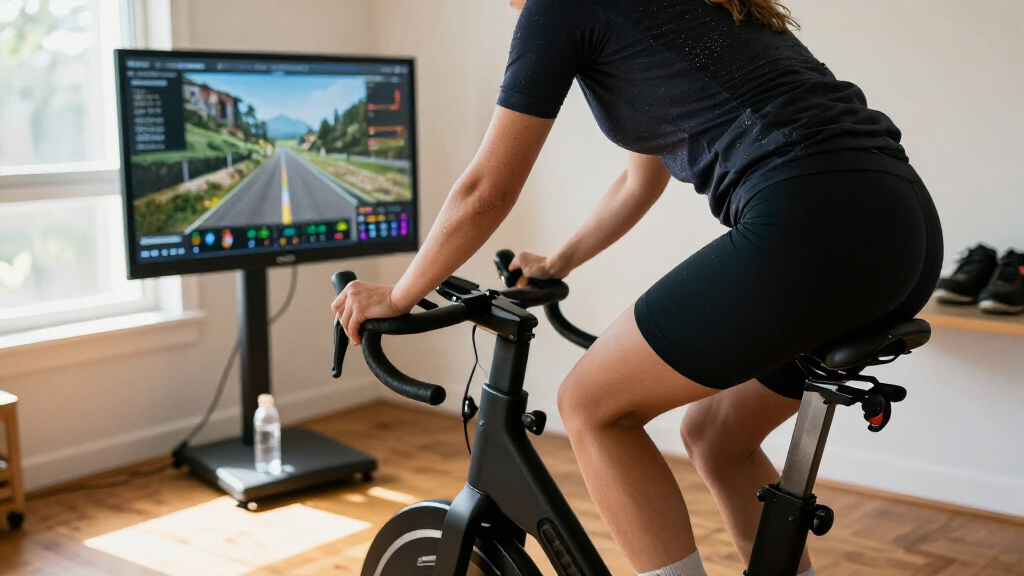
How We Picked
I ranked these options by how well they serve distinct virtual-cycling needs: starting with the trainer or component’s core role, then weighing stated power accuracy and capacity, connectivity, resistance and gradient features, setup demands, and compatibility. A direct-drive trainer with virtual shifting can make a strong everyday indoor foundation, while pedals can be a better fit for riders who want power data beyond indoor sessions. I also separated complete indoor bikes and gradient simulators from conventional trainers rather than treating every product as interchangeable.
The order reflects practical versatility and the clarity of the product’s role, not simply the largest power or gradient number. Products with multiple versions—such as trainers sold with or without a Zwift Cog and Click—are assessed as distinct configurations, since those choices affect shifting and setup. Where the listing does not provide details such as fit range or supported cassettes, I avoid assuming them; buyers should check the maker’s compatibility information before choosing.
Factors to Consider When Choosing Best Virtual Cycling Components
Virtual cycling setups are built from components that do different jobs, so I’d start with the system you want rather than the most impressive single specification. These checks can help prevent buying a trainer, pedal set, or controller that does not suit your bike or indoor-training routine.
Choose Between a Smart Trainer and an Indoor Bike
A smart trainer uses your bike as the riding position and usually makes the most sense if you want to keep your familiar saddle, handlebars, and fit. A dedicated indoor bike such as the KICKR BIKE PRO trades that swap-in convenience for an all-in-one station and simulated tilting. Before choosing, think about how often you would mount and remove your bike, and whether other household riders need different fit settings. A trainer may be easier to share if each rider already owns a compatible bike, but repeated changes can add setup friction. An indoor bike can reduce that friction while taking up space and requiring you to adapt to its fit system. Don’t pay for a separate indoor bike if preserving your existing riding position is the main goal.
Check the Drivetrain and Virtual-Shifting Fit
Trainer listings that include a cassette and those that include a Zwift Cog and Click are not identical packages. A cassette-based setup follows conventional gearing, while a virtual-shifting setup depends on compatible controls and software. Confirm which drivetrain configuration your bike uses and what the trainer package actually includes before ordering. Riders with multiple bikes should check whether the chosen system makes swaps straightforward or creates repeated cassette and adjustment work. A controller or virtual-transmission component is only useful if it works with the specific trainer and app in your setup. Treat compatibility as a checklist item, not an assumption based on a product’s name.
Read Power and Gradient Numbers in Context
Power capacity, power accuracy, and simulated gradient describe different aspects of a trainer; a large maximum wattage does not automatically mean better training data. Accuracy is more relevant if you use power targets to structure workouts, while resistance capacity may matter more for hard sprints or steep virtual climbs. Gradient simulation can make changes in terrain feel more pronounced, but the experience also depends on the app and the rest of the setup. Compare published specifications only when they describe the same function and use similar conditions. If your sessions are mostly steady endurance rides, paying extra for extreme peak figures may bring little practical benefit. Prioritize the metric that matches how you actually ride.
Decide Where You Need Power Measurement
Trainer-based power measures indoor sessions through the trainer, while power-meter pedals can provide readings when riding outdoors on a compatible bike. Dual-sided pedals can also distinguish left- and right-leg data, but that feature is useful only if you plan to interpret or train with those measurements. Road and MTB pedal models also differ in intended riding and cleat compatibility, so check your shoes and preferred pedal system before selecting either Favero option. Avoid buying pedals solely as a way to improve a smart trainer’s virtual resistance; they serve a measurement role, not the trainer’s resistance-control role. If indoor training is your only priority, a suitable smart trainer may be the more direct component choice.
Plan Connectivity, Power, and App Compatibility
ANT+, Bluetooth, and Wi-Fi support can shape how easily a trainer connects to your computer, phone, or cycling app. A connection that works well with one device may not match the devices you already use, so check the app’s supported connection methods and how many sensors you plan to pair. Wi-Fi can be useful in a fixed indoor setup, while Bluetooth or ANT+ may better match a particular phone, tablet, or bike computer. Also check whether the component needs a separate control, power source, or app feature for its advertised functions. The simplest setup is often the one that fits your existing devices, not the one with the longest connectivity list.
Budget for the Whole Setup, Not One Component
A trainer is only one part of an indoor station: the bike, cassette or shifting system, mat, display, and app access can all affect the final setup. A product that appears ready to ride may still require a compatible cassette, tools, or a software arrangement that is not included. On the other hand, a bundled cog and controller can reduce separate purchasing and simplify setup for riders using the supported virtual-shifting system. Think about storage, noise tolerance, bike handling, and how often you will set the equipment up or pack it away. Spending more makes sense when the added function solves a specific problem, such as easier sharing or a dedicated fit-adjustable station. Skip upgrades that add features your training routine will not use.
Frequently Asked Questions
Should I choose a trainer with a cassette or one with a Zwift Cog and Click?
Choose based on how you want to shift and which bikes you plan to use. A cassette-based trainer suits riders who want conventional gearing and should be checked against the bike’s drivetrain compatibility. A Zwift Cog and Click setup is aimed at virtual shifting and depends on compatible software and controls. If several riders use different bikes, compare how much drivetrain adjustment each approach may require between swaps. Check the exact package contents and supported app features before deciding.
Can I use Favero power-meter pedals instead of buying a smart trainer?
Power-meter pedals and smart trainers do different jobs: the pedals measure power, while the trainer supplies controllable indoor resistance. Pedals alone do not create a virtual-cycling setup with app-controlled climbs or trainer resistance. They can be a strong addition if you want power readings on outdoor rides as well as indoor sessions, but you still need an indoor riding platform for structured virtual training. Check cleat compatibility and the bike you intend to use. If indoor resistance control is your priority, start with a trainer.
Is a dedicated indoor bike worth choosing over a direct-drive trainer?
A dedicated indoor bike makes sense if you want a permanent station, adjustable fit for multiple riders, or features such as simulated tilting without mounting your outdoor bike. A direct-drive trainer is generally the more natural fit if you want to ride your own bicycle and preserve its familiar contact points. Space, storage, and how often you share the setup can matter more than a single trainer specification. Check the indoor bike’s adjustment range against each rider’s fit needs. If you already have a suitable bike and prefer its fit, a trainer may avoid unnecessary duplication.
Do I need Wi-Fi on a smart trainer for virtual cycling?
No; Wi-Fi is one possible connection method, not a requirement for every rider or app. Bluetooth or ANT+ may be enough, depending on the trainer, device, and software you use. Wi-Fi support can suit a fixed indoor setup, especially if it matches your home network and chosen app. Before buying, check the app’s current connection requirements and whether your phone, tablet, or computer can pair with the trainer as intended. Choosing around your existing devices can prevent extra adapters or connection work.
Which upgrade should I buy first: a gradient simulator, power-meter pedals, or a better trainer?
Start with the part that addresses the biggest gap in your current setup. If you lack controllable indoor resistance, a compatible smart trainer is the foundation; a gradient simulator cannot replace it. Power-meter pedals make more sense when you want consistent power measurement across indoor and outdoor bikes and have verified cleat fit. A gradient simulator is a more specialized choice for riders seeking additional physical movement with a compatible trainer. Check compatibility with your exact equipment before buying any add-on, since not every component works across the lineup.
Conclusion
For most riders building an indoor setup around an existing bike, my best overall pick is the Wahoo KICKR CORE 2 with Zwift Cog and Click Shifting. The Elite Avanti is my best value-oriented alternative for buyers drawn to its stated accuracy and connectivity, while the Wahoo KICKR BIKE PRO is the best premium choice for a dedicated, adjustable indoor station. Beginners should start by confirming bike and app compatibility; the CORE 2 cassette version may suit riders who prefer conventional gearing, while the Cog and Click version fits those seeking virtual shifting. For specific needs, choose the Favero Assioma PRO RS-2 for road power measurement, the PRO MX-2 for MTB use, or the Tacx Alpine if your compatible setup calls for a gradient simulator. Match the component to the job you need done, then verify the full system’s fit before choosing.