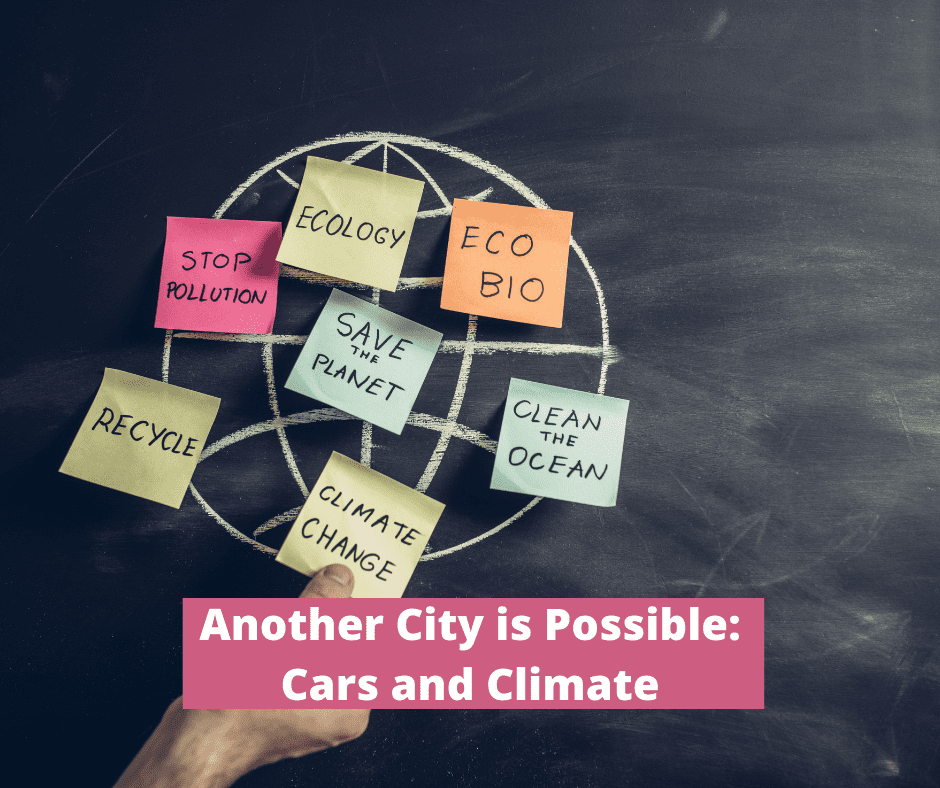

Automobiles play a significant role in accelerating climate change. In the United States, the transportation sector is responsible for almost a third of all emissions of greenhouse gases. Despite an increase in the number of electric vehicles on the roads, they constitute less than 2 percent of the total vehicle population. However, the encouraging aspect is that there are strategies we can employ to lessen our reliance on automobiles and contribute to the fight against climate change. A key approach is to encourage the use of public transit and biking.

Get sports gear delivered free with Prime
- Fast, free delivery on millions of items
- Prime Video, Amazon Music and more included
- Member-only deals all year
We can significantly reduce emissions by encouraging people to take the bus or train instead of driving. We can also encourage walking and biking by investing in infrastructures like sidewalks and bike lanes. And finally, we can work to make our cities more compact and walkable, so that people don’t have to rely on cars as much. By making these changes, we can create a more sustainable future for our cities and for our planet.

Amory Lovins’ carbon-fiber hypercars could run on clean, green unicorn farts, and they’d still be a sustainability disaster. The real problems that come from cars are the land-use patterns they demand, and the fact that streets and cities built for cars are intrinsically hostile to human beings. In combination, sprawling, low-density land use, and unlivable, dangerous streets functionally preclude the use of transit, walking, and biking as mainstream transportation options. In a city built for cars, you have no choice but to drive.
Tailpipe emissions are just the tip of the iceberg — the vast majority of the sustainability problems that cars create have nothing to do with what fuel they use, or how efficiently they use it. The land-use patterns they demand are unsustainable, and streets and cities built for cars are unsafe and unsuitable for human habitation. We need to rethink our relationship with cars and build sustainable cities that are livable for all.
Complimentary Parking Is Not Free
Whenever you see a “free parking” sign, you probably think you’ve hit the jackpot. After all, who doesn’t love free stuff? But the truth is, there’s no such thing as free parking.
Someone always has to pay for it, whether it’s the businesses who build and maintain parking lots or the taxpayers who subsidize public parking. And that’s not even taking into account the hidden costs of car ownership, like insurance, gas, and repairs. In reality, parking is far from free. So next time you see a “free parking” sign, remember that nothing in life is truly free. There’s always a catch.
Halloween Picks
halloween
As an affiliate, we earn on qualifying purchases.