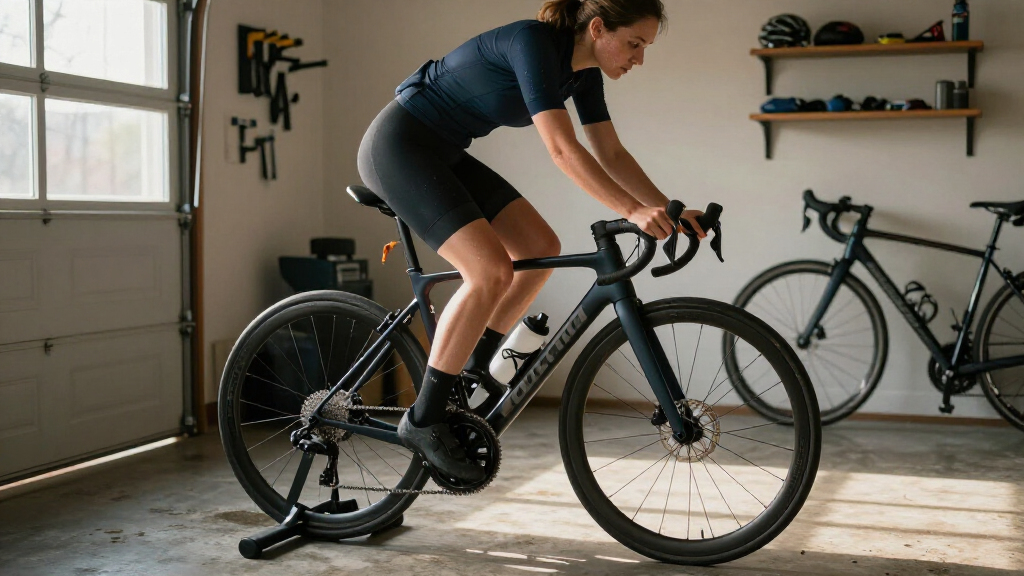

Indoor bike trainers let you ride your own bicycle at home, but the right choice depends on whether you value smart workout control, a smoother ride, or simple portability. I rank the Saris Fluid2 as the best overall for its fluid resistance and straightforward setup; the ThinkRider X2Max stands out for connected training and simulated climbs, while the Alpcour foldable magnetic trainer suits riders who need a stand they can store between sessions. Magnetic trainers trade a simpler setup for a less road-like resistance feel, while fluid and smart models can bring different demands around noise, space, and compatibility. Read on for the full breakdown, the key buying factors, and a recommendation by rider type.

Get sports gear delivered free with Prime
- Fast, free delivery on millions of items
- Prime Video, Amazon Music and more included
- Member-only deals all year
Complete the kit


Key Takeaways
- The Saris Fluid2 is the most balanced pick in this group: it offers fluid resistance without requiring the connected features of the ThinkRider.
- The ThinkRider X2Max is the clear smart-training choice for riders who want ANT+ and BLE connections and simulated gradients, but those features matter less for basic indoor spins.
- Magnetic trainers prioritize straightforward resistance and portability; the foldable Alpcour and Sportneer are more practical choices when storage or a simple setup comes first.
- The two Alpcour models serve different needs: the foldable magnetic stand favors pack-away convenience, while its fluid trainer is aimed at riders who prefer fluid resistance.
- Wheel and bicycle compatibility deserve a check before buying; listed wheel-size support varies, and a trainer’s resistance style alone does not confirm that it fits a particular bike.
| Bike Trainer Magnetic Bicycle Stationary Stand for Indoor Exercise Riding |  | Best Value for Simple, Adjustable Training | Maximum load capacity: 330 lbs | Wheel compatibility: 26–29 inches, including 700c | Resistance levels: 6 | VIEW LATEST PRICE | See Our Full Breakdown |
| ThinkRider X2Max Smart Bike Trainer, 2000W, Simulates 18% Slope, ANT+ & BLE |  | Best for App-Controlled Climbing Workouts | Model: X2Max | Power output: 2000 W | Power accuracy: ±2% | VIEW LATEST PRICE | See Our Full Breakdown |
| Alpcour Bike Trainer Stand for Indoor Riding – Portable Foldable Magnetic Stainless Steel Indoor Trainer, Noise Reduction, 6 Resistance Settings & Bag |  | Best Magnetic Trainer with a Carrying Bag | Resistance mechanism: Magnetic | Resistance levels: 6 | Wheel compatibility: 26–28 inches and 700c | VIEW LATEST PRICE | See Our Full Breakdown |
| Saris Fluid2 Indoor Bike Trainer |  | Best for a Smooth, Road-Like Ride | Model: Fluid2 Indoor Trainer | Resistance mechanism: Fluid | Bike compatibility: Hybrid, mountain, and road bikes | VIEW LATEST PRICE | See Our Full Breakdown |
| Alpcour Fluid Bike Trainer Stand for Indoor Riding |  | Best Fluid Trainer for Higher Load Capacity | Model: APC-BTSFBK | Resistance mechanism: Fluid | Resistance settings: 1 | VIEW LATEST PRICE | See Our Full Breakdown |
| Sportneer Magnetic Indoor Bike Trainer Stand for 26–28-Inch and 700C Wheels |  | Best for Simple, Remote-Controlled Resistance | Resistance mechanism: Magnetic | Resistance levels: 6 | Wheel compatibility: 26–28 inches and 700C | VIEW LATEST PRICE | See Our Full Breakdown |
| indoor bike trainer | Resistance mechanism | Material | Dimensions | Wheel compatibility |
|---|---|---|---|---|
| Bike Trainer Magnetic Bicycle | — | — | — | 26–29 inches, including 700c |
| ThinkRider X2Max Smart Bike Tr | Electromagnetic | — | — | — |
| Alpcour Bike Trainer Stand for | Magnetic | Stainless steel | 21.5 × 19 × 16.5 inches | 26–28 inches and 700c |
| Saris Fluid2 Indoor Bike Train | Fluid | Aluminum | 22 × 7 × 20 inches | — |
| Alpcour Fluid Bike Trainer Sta | Fluid | Stainless steel | 19 × 19 × 18 inches | — |
| Sportneer Magnetic Indoor Bike | Magnetic | Alloy steel | 22 × 22 × 15.5 inches | 26–28 inches and 700C |
More Details on Our Top Picks
Bike Trainer Magnetic Bicycle Stationary Stand for Indoor Exercise Riding
This trainer suits riders who want controllable indoor resistance without buying a smart system. Its six magnetic levels adjust from the handlebars, so I can change effort without stopping to reach the frame. The 330-pound maximum load is higher than the ThinkRider X2Max’s stated 240-pound limit, though that comparison does not make this a connected or app-controlled trainer. Its tool-free folding design also makes it easier to put away than the heavier Alpcour magnetic stand, which weighs 20.7 kg according to its listed specs. The tradeoff is a more basic ride: there is no app connectivity or automatic grade simulation, and rough or knobby tires can be noisy. I would choose this for straightforward workouts, not immersive virtual rides.
Pros:- Six resistance levels can be changed with a handlebar control.
- Supports a stated maximum load of 330 pounds.
- Folds without tools for easier storage and transport.
- Compatible with 26- to 29-inch wheels, including 700c.
Cons:- No smart connectivity or automatic resistance control is listed.
- Rough or knobby tires can create noticeable noise.
- Limited to the specified wheel-size range.
Best for: Riders who want adjustable resistance and a fold-away trainer for a compatible road bike or smooth-tire bike, without app features.
Not ideal for: Riders seeking app-controlled workouts or quiet sessions on a mountain bike with rough tires; tire noise may be noticeable, and wheel size must fit the listed range.
- Maximum load capacity:330 lbs
- Wheel compatibility:26–29 inches, including 700c
- Resistance levels:6
- Resistance control:Handlebar control
- Foldable design:Yes
- Installation tools required:None
Our verdict“Choose this for basic, adjustable indoor riding and a high stated load capacity, but skip it if you need connected training or quiet use with knobby tires.”
ThinkRider X2Max Smart Bike Trainer, 2000W, Simulates 18% Slope, ANT+ & BLE
The ThinkRider X2Max is the clear choice here for riders who want a connected, automatically controlled workout rather than a simple wheel-on stand. Paired with cycling apps, its electromagnetic resistance can simulate grades up to 18%, while its stated ±2% power accuracy gives structured training more useful feedback than the non-connected Saris Fluid2 or Alpcour magnetic trainer can provide on their own. It also offers ANT+ and BLE connections and a stated 2000 W output. That capability comes with practical costs: at 35.2 pounds, it is less convenient to move than a foldable magnetic stand, and the cassette is not included. The listed wheel compatibility specifies 26 inches, so I would check fit carefully before buying for another wheel size.
Pros:- Electromagnetic resistance can simulate grades up to 18% with compatible apps.
- Lists 2000 W power output and ±2% power-meter accuracy.
- ANT+ and BLE support enable connections to compatible devices and apps.
- Stated operating noise is about 58 dB at 30 km/h.
Cons:- Cassette is not included.
- At 35.2 pounds, it is relatively cumbersome to move.
- Listed wheel-size compatibility is limited to 26 inches.
Best for: Indoor cyclists who use ANT+ or BLE training apps and want automatic grade changes, power data, and structured workouts.
Not ideal for: Riders who need a lightweight trainer to move often, want a complete setup without sourcing a cassette, or have a bike that does not match the listed 26-inch wheel compatibility.
- Model:X2Max
- Power output:2000 W
- Power accuracy:±2%
- Resistance mechanism:Electromagnetic
- Simulated slope:Up to 18%
- Connectivity:BLE and ANT+
- Noise level:About 58 dB at 30 km/h
- Load capacity:240 lbs
- Weight:35.2 lbs
Our verdict“Pick the X2Max for app-driven training and automatic climbing resistance, provided its wheel fit and separate cassette requirement work for your setup.”
Alpcour Bike Trainer Stand for Indoor Riding – Portable Foldable Magnetic Stainless Steel Indoor Trainer, Noise Reduction, 6 Resistance Settings & Bag
The Alpcour magnetic stand makes the most sense for riders who want a conventional trainer that is easier to carry between storage and workout space. Its foldable frame and included carrying bag give it a portability advantage over the heavier ThinkRider X2Max, though the Alpcour itself is listed at 20.7 kg, so the bag does not make it lightweight. Like the Bike Trainer Magnetic Bicycle Stationary Stand, it provides six magnetic resistance levels rather than app-controlled changes. That keeps the setup simple, but means workouts lack the X2Max’s connected power feedback and simulated climbs. Wheel fit is listed for 26–28 inches and 700c, narrower than the Bike Trainer’s 26–29-inch range. I would favor it when a bag matters; riders who want digital tracking should choose a smart trainer instead.
Pros:- Six magnetic resistance levels offer adjustable workout effort.
- Foldable design and included carrying bag help with storage and transport.
- Listed for mountain and road bikes.
- Stainless-steel construction.
Cons:- Listed weight of 20.7 kg may make frequent carrying difficult.
- No digital tracking or connectivity features are listed.
- Wheel compatibility is limited to 26–28 inches and 700c.
Best for: Riders who want a foldable magnetic trainer with a carrying bag for seasonal storage or occasional transport, and whose bike fits the listed wheel sizes.
Not ideal for: Cyclists who need app connectivity, digital workout tracking, or a lightweight stand to carry frequently; the listed weight is 20.7 kg.
- Resistance mechanism:Magnetic
- Resistance levels:6
- Wheel compatibility:26–28 inches and 700c
- Bike type:Mountain and road bikes
- Material:Stainless steel
- Weight:20.7 kg
- Dimensions:21.5 × 19 × 16.5 inches
- Connectivity:Not listed
Our verdict“Choose this if you want a bag-equipped magnetic trainer and do not need smart features, but compare its weight and wheel fit with the simpler Bike Trainer stand.”
Saris Fluid2 Indoor Bike Trainer
The Saris Fluid2 is a good fit for riders who prioritize a progressive pedaling feel over multiple manual resistance settings. Its fluid resistance increases as you pedal faster, creating a more natural-feeling change in effort than the fixed steps on the Bike Trainer Magnetic Bicycle Stationary Stand. A balanced flywheel is also intended to support smooth, quiet riding. The Fluid2 is a wheel-on trainer for road, mountain, and hybrid bikes, and can work with Zwift or Rouvy when paired with a separately sold speed or cadence sensor. That app compatibility is more limited than the ThinkRider X2Max’s built-in ANT+ and BLE smart features: the Saris listing does not describe automatic app-controlled resistance. Its foldable frame and stated 7.3-pound weight make it easier to handle than the Alpcour fluid model, but sensor setup adds another purchase and step.
Pros:- Fluid resistance rises with pedaling speed for a progressive ride feel.
- Balanced flywheel is designed for smooth, quiet operation.
- Foldable frame and stated 7.3-pound weight aid storage and handling.
- Can work with Zwift and Rouvy when paired with a separate speed or cadence sensor.
Cons:- Speed or cadence sensor is sold separately.
- App compatibility does not include the automatic resistance features listed for the ThinkRider X2Max.
- The product listing does not specify compatible wheel-size ranges.
Best for: Road, hybrid, or mountain-bike riders who want progressive fluid resistance and a foldable wheel-on trainer for steady indoor sessions.
Not ideal for: Riders who want automatic resistance changes or built-in smart power data, or who need app compatibility without buying an additional sensor.
- Model:Fluid2 Indoor Trainer
- Resistance mechanism:Fluid
- Bike compatibility:Hybrid, mountain, and road bikes
- Training app compatibility:Zwift and Rouvy with a separately sold speed or cadence sensor
- Weight:7.3 lbs
- Dimensions:22 × 7 × 20 inches
- Material:Aluminum
- Warranty:Limited lifetime
Our verdict“Choose the Fluid2 for a foldable, progressive wheel-on ride, but select the ThinkRider X2Max if app-controlled resistance and power data matter more.”
Alpcour Fluid Bike Trainer Stand for Indoor Riding
This Alpcour fluid trainer is aimed at riders who want resistance that responds naturally to pedaling speed, plus a more complete storage and setup kit. Its 300-pound load capacity is higher than the Saris Fluid2 listing provides no load figure for, and the included front-wheel riser block, anti-slip pads, dual-lock system, and carrying bag help cover common wheel-on setup needs. Unlike the Bike Trainer Magnetic Bicycle Stationary Stand, it has one fluid resistance mode rather than six selectable levels; effort changes with speed, not a handlebar control. The stated 26–29-inch and 700c compatibility suits a broad range of road and mountain bikes. I would pick it over the Saris when the included accessories and load rating are priorities, but not for measured noise or smart training: neither is specified here.
Pros:- Fluid resistance increases as pedaling speed rises.
- Stated load capacity is 300 pounds.
- Includes a front-wheel riser block, anti-slip pads, dual-lock system, and carrying bag.
- Fits listed wheel sizes from 26–29 inches and 700c.
Cons:- Only one resistance mode is listed, with no selectable settings.
- No measured noise level or smart connectivity is specified.
- The listing describes a foldable frame but gives no product weight for judging portability.
Best for: Road and mountain-bike riders seeking a fluid wheel-on trainer with a stated 300-pound capacity and included riser block and carrying bag.
Not ideal for: Riders who want selectable resistance settings, app connectivity, or a documented noise level; the listing provides none of those details.
- Model:APC-BTSFBK
- Resistance mechanism:Fluid
- Resistance settings:1
- Compatible wheel sizes:26–29 inches and 700c
- Load capacity:300 lbs
- Material:Stainless steel
- Dimensions:19 × 19 × 18 inches
- Included components:Bike trainer, front-wheel riser block, carrying bag
- Warranty:2 years
Our verdict“Choose this Alpcour if you want fluid resistance, a 300-pound stated capacity, and included setup accessories; choose the Saris Fluid2 if its stated low weight and app-sensor compatibility better suit your needs.”
Sportneer Magnetic Indoor Bike Trainer Stand for 26–28-Inch and 700C Wheels
I’d choose the Sportneer TY-JS007-C for riders who want adjustable indoor resistance without moving to a smart trainer. Its six magnetic resistance levels can be changed from the handlebar remote, so you can vary effort without stopping to adjust the stand. The included quick-release skewer and front wheel block also cover two common setup needs. Compared with the ThinkRider X2Max, this is a simpler, non-smart option: it lacks the listed power and gradient simulation features, but avoids making those features the focus of the purchase. The tradeoff is tire-dependent noise; slick road tires are recommended, and tread can make rides louder. Check your rear axle fit before buying, since thru-axle bikes need a separate version with an adapter.
Pros:- Six magnetic resistance levels adjust from a handlebar remote.
- Fits listed 26–28-inch and 700C wheel sizes.
- Includes a quick-release skewer and front wheel riser block.
- Wide base and adjustable anti-slip feet support a stable setup.
Cons:- Noise can vary with tire material and tread; slick or road tires are recommended.
- Thru-axle bikes require a separate non-standard version with an adapter.
- Does not list smart connectivity, power measurement, or simulated gradients like the ThinkRider X2Max.
Best for: Road or mountain bike owners with compatible quick-release rear axles who want basic indoor training and handlebar-controlled resistance.
Not ideal for: Thru-axle bike owners without the required separate version and adapter, or riders seeking smart-training features or a quiet setup with knobby tires.
- Resistance mechanism:Magnetic
- Resistance levels:6
- Wheel compatibility:26–28 inches and 700C
- Compatible rear axle width:4.92–6.57 inches
- Item weight:19.3 pounds
- Dimensions:22 × 22 × 15.5 inches
- Load capacity:300 pounds
- Material:Alloy steel
- Included components:Trainer stand, resistance remote, front wheel block, quick-release skewer
Our verdict“Choose the Sportneer if your bike fits its axle and wheel requirements and you want straightforward magnetic resistance controlled from the handlebars.”
How We Picked
I compared these six indoor bike trainers on the factors that change day-to-day use: resistance type and ride control, setup and storage demands, listed bike and wheel compatibility, and whether smart connectivity adds useful training options. I also weighed practical ownership questions such as noise claims, included accessories, and the simplicity of the stand, without treating any single feature as a substitute for a good fit.
The Saris Fluid2 ranks first because it offers a broadly useful fluid-trainer experience without the added connectivity requirements of the ThinkRider X2Max. The ThinkRider ranks higher for structured, connected sessions, while the magnetic Alpcour and Sportneer models make more sense for simpler indoor riding and storage needs. The remaining options are placed according to how clearly their listed features serve a distinct buyer; I have not inferred unlisted performance specifications or treated similar product names as proof of identical designs.
| indoor bike trainer | Model | Resistance mechanism | Material |
|---|---|---|---|
| Bike Trainer Magnetic Bicycle | — | — | — |
| ThinkRider X2Max Smart Bike Tr | X2Max | Electromagnetic | — |
| Alpcour Bike Trainer Stand for | — | Magnetic | Stainless steel |
| Saris Fluid2 Indoor Bike Train | Fluid2 Indoor Trainer | Fluid | Aluminum |
| Alpcour Fluid Bike Trainer Sta | APC-BTSFBK | Fluid | Stainless steel |
| Sportneer Magnetic Indoor Bike | — | Magnetic | Alloy steel |
Factors to Consider When Choosing Indoor Bike Trainers
Before choosing an indoor trainer, match the setup to the riding you will actually do. A trainer suited to casual spins may be a poor fit for app-led interval sessions, and a feature-rich model can be wasted if your bike or room is incompatible. These broader checks help prevent a purchase based on a single headline specification.
Choose resistance for the workout you want
Magnetic resistance is a straightforward route for steady riding and basic workouts, while a fluid trainer uses a different resistance system that many buyers prefer for a more progressive feel as effort rises. A smart trainer adds connected control and training data, but those functions only help if you plan to use compatible apps or devices. Do not assume that every trainer labeled smart automatically reproduces the same ride feel or workout control. Think about whether you need selectable resistance, app-controlled sessions, or simply a reliable place to pedal. Paying for features you will not use can matter less than choosing a stable setup that fits your routine.
Check bike fit and axle requirements before ordering
Wheel diameter is only one part of compatibility; the bike’s axle type, frame geometry, tire, and the trainer’s attachment system can also affect fit. Product listings may state a wheel-size range without answering every bike-specific question, so check the maker’s compatibility guidance before purchase. A common mistake is to focus on a 700C or 26–28-inch listing and assume any bicycle in that range will mount correctly. Also check whether the trainer expects a particular rear axle or a trainer-specific skewer. If your bike has an uncommon axle, unusual tire, or limited clearance, confirm those details first rather than relying on a broad size label.
Set realistic expectations for noise and household use
Noise depends on the whole setup, not just a product’s noise-reduction claim. Tire type and pressure, drivetrain condition, floor construction, and cadence can all affect what people in nearby rooms hear. A wheel-on trainer can also transmit vibration through the floor, so a mat may help with movement and floor protection but cannot promise silence. If early or late sessions are part of your routine, ask how much noise your household can tolerate before choosing a model. Keep the bike clean and the drivetrain maintained; a poorly adjusted chain can make a quiet-enough trainer sound rough. For shared living spaces, prioritize placement and vibration control alongside the trainer itself.
Measure the storage footprint, not just the folded frame
Foldability helps only if the complete setup is easy to put away. Check the trainer’s folded dimensions and weight, but also account for the bicycle, any power supply or accessories, and where the trainer will sit during a ride. A stand that folds may still be awkward to carry or store if it is heavy or requires repeated adjustments. If you will leave it set up, footprint and stability matter more than a compact storage claim. For occasional use in a small home, prioritize a quick setup and a realistic storage spot. Before buying, measure the floor area and storage location rather than estimating from product photos.
Pay extra only for features that change your training
Smart connectivity is useful when it supports a real training plan, such as app-guided workouts or sessions that use the trainer’s resistance controls. Check which connection standards your phone, tablet, computer, or cycling device supports, and whether the trainer’s features require extra equipment. ANT+ and BLE can broaden connection options, but the labels alone do not guarantee that your preferred app will work with every function. If you ride without apps, a simpler magnetic or fluid model may be a better match. If you want structured workouts, compare the control and compatibility details, not just the wattage or simulated slope headline. This helps keep the decision tied to actual use instead of a long feature list.
Include setup and ongoing care in your decision
A trainer should fit your tolerance for adjustments as well as your budget and workout style. Wheel-on designs require the bike to be secured and aligned, and setup can influence tire wear, noise, and how consistently resistance feels. Check what is included, such as a carry bag or any required mounting parts, rather than assuming every accessory shown is in the box. Consider how often you are willing to attach and remove your bike; a more portable stand may be handy but still needs setup each session. Routine checks of fasteners, tire condition, and the drivetrain help keep indoor riding predictable. If frequent setup sounds frustrating, give ease of mounting more weight than a feature you may rarely use.
Frequently Asked Questions
Should I choose a smart trainer or a magnetic trainer?
Choose a smart trainer if you plan to connect to compatible training software and want connected workout features such as simulated gradients. A magnetic trainer is a more direct fit for basic spins, manual resistance changes, or riders who do not want app-led sessions. Check whether your devices and preferred app support the trainer’s connection standards before deciding. Smart features can add setup steps and may not improve a ride if you never use them. The right choice is the one that matches how you intend to train, not simply the one with more technology.
Will an indoor trainer fit my road bike?
Do not rely on wheel size alone to answer this. Check the trainer’s supported wheel range, axle or skewer requirements, and any frame or tire restrictions against your specific bicycle. The product information should make clear whether extra mounting parts are needed; if it does not, confirm compatibility with the manufacturer before buying. A bike can have a common wheel size and still use an axle setup the trainer does not support. Keep your bike’s make, model, wheel size, and axle details handy when checking.
Can I use a wheel-on trainer in an apartment without disturbing others?
No wheel-on trainer can guarantee a quiet ride in every apartment. Noise and vibration vary with the trainer, tire, floor, drivetrain, riding effort, and the construction of the building. A floor mat and a well-maintained bike may reduce some noise or vibration, but they will not remove every sound. If you share walls or floors, ask other household members when riding is acceptable and test the setup at a considerate time. A model’s noise-reduction description is useful context, not a promise of silence.
Do I need a smart trainer for structured indoor workouts?
Not always: structured workouts can be followed on a basic trainer if you are willing to manage effort and resistance yourself. A smart model is more useful when you want compatible software to connect to the trainer and control or guide the session. Before paying for that capability, check app support, device connections, and which features work with your chosen setup. If your workouts are mostly steady endurance rides, the added connectivity may not change much. For interval sessions that depend on precise changes, connected control can make following the plan easier.
What should I check before buying a trainer for a second bike?
Compare both bikes against the trainer’s fit requirements, including wheel sizes, axle types, and any required mounting hardware. A trainer that fits one bike may not accept the second, even if their wheels appear similar. Also consider how often you will switch bikes: repeated mounting and adjustment can make a quick-to-set-up design more valuable than a feature used only occasionally. Check whether each bike’s tire is suitable for the trainer and whether any bike-specific parts are needed. Confirm these points in the product documentation before relying on one trainer for two bicycles.
Conclusion
For most riders seeking a balanced wheel-on option, I recommend the Saris Fluid2 as the best overall. The best value for simple, portable riding is the Alpcour foldable magnetic stand, while the ThinkRider X2Max is my best premium-style pick for connected training among these options. Beginners who want a less feature-heavy entry point can start with the Sportneer magnetic stand, after checking that their bike and wheel size are supported. If you specifically want fluid resistance, compare the Saris Fluid2 with the Alpcour fluid trainer and check each listing’s fit and setup details. Choose the ThinkRider for app-connected sessions, a foldable magnetic stand for storage needs, or a fluid model for a simpler non-smart resistance setup.
Fall Picks
fall essentials
As an affiliate, we earn on qualifying purchases.