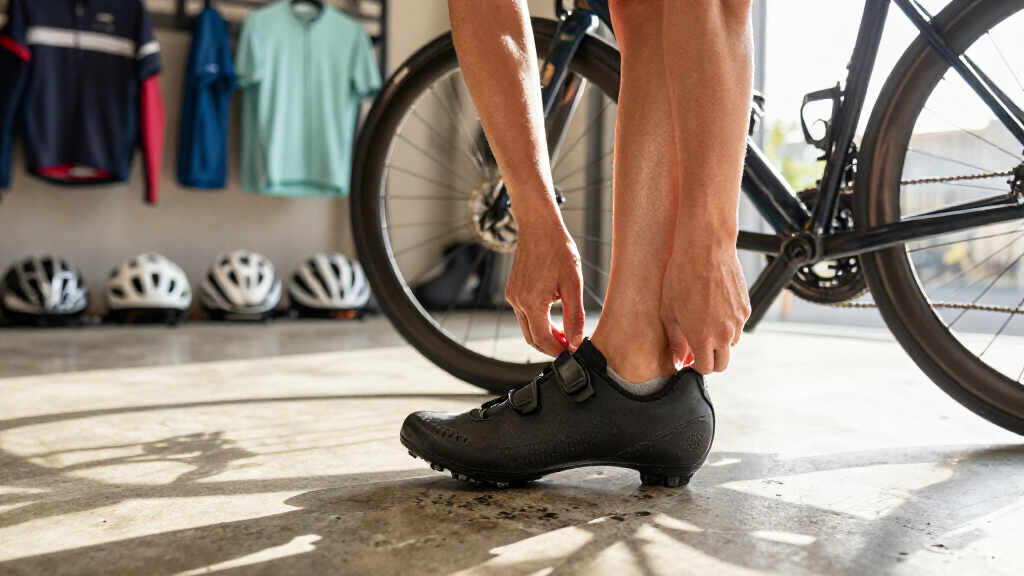
The best wide cycling shoes balance room for broader feet with a secure hold, without forcing you to size up and lose control. My best overall pick is the Lake CX146, a fit-focused option for riders who want a dedicated wide shoe; the Shimano SH-RX600 stands out for gravel versatility, while the Kyedoo is aimed at indoor riders seeking a budget-friendly Peloton-compatible setup. The main tradeoffs are how much width and adjustability you need, whether you ride road or gravel, and how stiff or walkable you want the shoe to feel. A wide label alone does not guarantee a comfortable fit, since toe-box shape and midfoot volume vary between models. Read on for the full comparison and guidance on matching a shoe to your feet and riding.

Get sports gear delivered free with Prime
- Fast, free delivery on millions of items
- Prime Video, Amazon Music and more included
- Member-only deals all year
Complete the kit


Key Takeaways
- Lake CX146 leads for riders prioritizing a purpose-built wide fit, while the CX178 offers another Lake option for shoppers comparing fit and style.
- Shimano SH-RX600 is the gravel-oriented choice; its off-road design makes more sense for mixed surfaces than the road-focused RC503 or Fizik Tempo Overcurve R4.
- Kyedoo addresses indoor-bike compatibility and beginner needs, but it is less directly comparable to the performance-focused road and gravel shoes.
- Road riders should compare the Shimano RC503 Wide and Fizik Tempo Overcurve R4 Wide by fit shape and closure preference, not by the wide label alone.
- A wider shoe is not automatically the right shoe: toe shape, instep volume, cleat setup, and intended walking all affect comfort and control.
| Shimano SH-RX600 Men’s Versatile Gravel Cycling Shoe |  | Best for Bikepacking and Mixed Terrain | Intended use: Gravel and bikepacking | Closure system: L6 BOA dial | Sole material: Nylon | VIEW LATEST PRICE | See Our Full Breakdown |
| Lake Cycling CX146 Shoes |  | Best for Cool, Wet Rides | Insulation: Thinsulate 200 g | Weather protection: Waterproof membrane | Closure system: M4 BOA dial | VIEW LATEST PRICE | See Our Full Breakdown |
| Kyedoo Men’s Wide Cycling Shoes – Compatible with Peloton Bike |  | Best for Peloton and Delta-Pedal Beginners | Pedal compatibility: 3-bolt Delta | Cleats: Delta cleats included | Closure type: Buckle | VIEW LATEST PRICE | See Our Full Breakdown |
| Shimano RC503 Wide Road Shoes EU 45 |  | Best for Riders Seeking a Specific Wide Size | Manufacturer: Shimano | Model number: ESHRC503MGL01E45000 | Size: EU 45 (one size listed) | VIEW LATEST PRICE | See Our Full Breakdown |
| Fizik Tempo Overcurve R4 Wide Road Cycling Shoes |  | Best for All-Round Road Riding | Intended use: Road riding, training, and granfondos | Closure system: BOA IP1-B dial | Stiffness index: 7 | VIEW LATEST PRICE | See Our Full Breakdown |
| Lake CX178 Wide Cycling Shoe – White/Black |  | Best for Endurance Comfort | Model: Lake CX178 Wide | Color: White/Black | Sole material: Nylon composite | VIEW LATEST PRICE | See Our Full Breakdown |
| wide cycling shoe | Sole material | Outer material | Inner material | Closure system |
|---|---|---|---|---|
| Shimano SH-RX600 Men’s Versati | Nylon | Faux leather | Synthetic | L6 BOA dial |
| Lake Cycling CX146 Shoes | Supergrip enduro rubber and fiberglass-injected nylon | Thinsulate insulation | Thinsulate | M4 BOA dial |
| Kyedoo Men’s Wide Cycling Shoe | Nylon | Synthetic | — | — |
| Shimano RC503 Wide Road Shoes | — | — | — | — |
| Fizik Tempo Overcurve R4 Wide | Rubber | Mesh | Mesh and foam | BOA IP1-B dial |
| Lake CX178 Wide Cycling Shoe | Nylon composite | Leather | Microfiber | — |
More Details on Our Top Picks
Shimano SH-RX600 Men’s Versatile Gravel Cycling Shoe
The SH-RX600 suits riders who need one shoe for pedaling and walking, rather than a road shoe built mainly for smooth pavement. Its carbon-reinforced outsole supports efficient power transfer, while the wider platform adds steadiness when walking or pushing a loaded bike. The L6 BOA dial also makes quick fit adjustments easier on changing terrain. Compared with the Fizik Tempo Overcurve R4 Wide, this Shimano gives more attention to off-bike stability and SPD gravel use; the Fizik is the more road-focused option. The tradeoff is that this shoe’s faux leather upper may be less durable in wet conditions, and its synthetic lining could feel warm on long rides. I’d choose it for gravel versatility, not as a dedicated road-racing shoe.
Pros:- SPD-compatible design suits gravel and bikepacking setups.
- Carbon reinforcement supports efficient power transfer.
- Wider outsole improves stability when walking or pushing the bike.
- L6 BOA dial allows quick fit adjustments.
Cons:- Faux leather upper may be less durable in wet conditions.
- Synthetic inner lining may retain heat on long rides.
- Off-road walkability and stability take priority over a road-race-specific design.
Best for: Bikepackers and gravel riders who use SPD pedals and want a stable shoe for occasional walking or pushing their bike.
Not ideal for: Road racers seeking a highly rigid, pavement-focused shoe, or riders who prioritize a water-resistant upper for persistently wet conditions.
- Intended use:Gravel and bikepacking
- Closure system:L6 BOA dial
- Sole material:Nylon
- Outsole reinforcement:Carbon
- Outer material:Faux leather
- Inner material:Synthetic
- Pedal compatibility:SPD-compatible
Our verdict“Choose the SH-RX600 if your wide-fit riding includes gravel, SPD pedals, and regular stops off the bike.”
Lake Cycling CX146 Shoes
The CX146 is the cold-weather specialist in this group: 200 g Thinsulate insulation and a waterproof membrane target riders who would rather protect their feet from chill and damp than save bulk. Its Supergrip enduro rubber sole and Ice Lock inserts add traction when walking on slick surfaces, a different priority from the road-focused Fizik Tempo Overcurve R4 Wide. The M4 BOA dial makes fit adjustment straightforward without needing to remove gloves. That weather protection has a cost: the insulated build is bulkier than a race-oriented shoe, and the supplied details caution that it may not be warm enough for extreme cold. I’d pick the CX146 for cool, wet road rides, but not as an all-season shoe for warm conditions.
Pros:- 200 g Thinsulate insulation adds warmth for cool-weather rides.
- Waterproof membrane and Clarino microfiber help keep feet dry.
- M4 BOA dial allows on-the-fly fit adjustments.
- Supergrip enduro rubber sole and Ice Lock inserts support traction on wet surfaces.
Cons:- Insulation makes the shoe bulkier than race-specific alternatives.
- May not provide enough warmth for extremely cold conditions.
- Less suited to warm-weather riding than the ventilated Fizik Tempo Overcurve R4 Wide.
Best for: Wide-fit road riders who regularly ride in cool, damp weather and want insulation, water resistance, and grip when off the bike.
Not ideal for: Riders in warm climates, racers seeking a lightweight and streamlined shoe, or cyclists facing extreme cold who need more insulation.
- Insulation:Thinsulate 200 g
- Weather protection:Waterproof membrane
- Closure system:M4 BOA dial
- Sole material:Supergrip enduro rubber and fiberglass-injected nylon
- Outsole features:Ice Lock inserts
- Outer material:Thinsulate insulation
- Inner material:Thinsulate
Our verdict“Choose the CX146 if damp, cool rides matter more to you than a lightweight feel or year-round ventilation.”
Kyedoo Men’s Wide Cycling Shoes – Compatible with Peloton Bike
For riders setting up a Peloton or another Delta-pedal bike, the Kyedoo stands out for its wide toe box and included Delta cleats: the essentials for getting started come together in one package. Its perforated upper offers airflow, while the carbon-nylon outsole aims to balance durability with power transfer. Compared with the Shimano SH-RX600, this is a more specific indoor and Delta-system choice; the Shimano is built around SPD use and gravel walking. That narrower compatibility is the main catch: these shoes are designed for 3-bolt Delta pedals, not every cycling cleat standard. They are also not water resistant, so I would keep them for indoor sessions and dry conditions rather than wet outdoor rides.
Pros:- Wide toe box allows more natural forefoot spread.
- Includes Delta cleats for compatible pedals.
- Carbon-nylon outsole is designed for power transfer and durability.
- Perforated upper supports airflow.
Cons:- Designed for 3-bolt Delta systems, limiting compatibility with other pedal standards.
- Not water resistant, making it a poor choice for wet rides.
- Buckle closure offers less on-the-fly adjustment than the BOA systems on the Shimano SH-RX600 and Fizik Tempo Overcurve R4 Wide.
Best for: New Peloton riders with broader forefeet who use Delta pedals and want cleats included with their shoes.
Not ideal for: Cyclists using SPD or other non-Delta pedal systems, and outdoor riders who need water resistance for wet conditions.
- Pedal compatibility:3-bolt Delta
- Cleats:Delta cleats included
- Closure type:Buckle
- Sole material:Nylon
- Outsole:Carbon-nylon
- Outer material:Synthetic
- Water resistance:Not water resistant
Our verdict“Choose the Kyedoo if you have wide feet, ride a Delta-pedal Peloton, and want a shoe that includes cleats.”
Shimano RC503 Wide Road Shoes EU 45
The RC503 earns a distinct place here for riders who already know they need a wide road shoe in EU 45. Its listed 0.32-ounce weight points to a lightweight design, though the product data gives no closure or outsole details to weigh against models such as the Fizik Tempo Overcurve R4 Wide, which has a BOA dial and carbon-injected sole specified. That makes the RC503 a harder choice for anyone comparing ride feel or fit adjustments from the available information. Its biggest limitation is straightforward: only EU 45 wide is listed, leaving riders in other sizes without an option. I’d treat it as a size-specific pick, not a broadly adaptable recommendation for wide-footed cyclists.
Pros:- Wide fit is intended to add room for broader feet.
- Listed weight is lightweight at 0.32 ounces.
- Simple solid design suits everyday road cycling.
Cons:- Only EU 45 wide is listed, sharply limiting fit options.
- Product data does not specify the closure system or outsole construction.
- Less documented for comparison than the Fizik Tempo Overcurve R4 Wide, which specifies its BOA dial and carbon-injected outsole.
Best for: Road cyclists who need a wide fit in EU 45 and want a lightweight shoe for everyday riding.
Not ideal for: Riders outside EU 45, or buyers who need confirmed closure, outsole, or cleat-compatibility details before choosing.
- Manufacturer:Shimano
- Model number:ESHRC503MGL01E45000
- Size:EU 45 (one size listed)
- Fit:Wide
- Item weight:0.32 ounces (as listed)
- Material:Plastic
- Pattern:Solid
- Color:Klar
Our verdict“Choose the RC503 only if EU 45 is your size and its listed wide fit meets your needs.”
Fizik Tempo Overcurve R4 Wide Road Cycling Shoes
The Tempo Overcurve R4 Wide is the most balanced road pick here: its R4 carbon-injected outsole offers a blend of pedaling efficiency and comfort suited to training, group rides, and longer events. The asymmetrical Overcurve construction is shaped around the foot, while a BOA IP1-B dial allows precise fit adjustments. Compared with the Shimano SH-RX600, the Fizik is more focused on road riding than gravel walking; compared with the Lake CX146, it favors ventilation over insulation and waterproofing. Its stiffness index of 7 signals a moderate rather than maximum-rigidity feel, so riders chasing a race-specific, very stiff shoe may want another direction. And although the wide fit helps broader feet, it is a poor match for narrow-footed riders.
Pros:- Wide fit accommodates broader feet.
- R4 carbon-injected outsole balances power transfer with comfort.
- Asymmetrical Overcurve construction follows the foot’s shape.
- BOA IP1-B dial supports precise fit adjustments.
Cons:- Moderate stiffness may not satisfy riders seeking maximum rigidity for racing.
- Wide fit may feel unsuitable for narrow-footed cyclists.
- Mesh construction prioritizes ventilation over the weather protection offered by the Lake Cycling CX146.
Best for: Wide-footed road cyclists who want one ventilated shoe for weekend rides, daily training, and longer events.
Not ideal for: Racers who want maximum outsole rigidity, narrow-footed riders, or cyclists prioritizing insulation and wet-weather protection.
- Intended use:Road riding, training, and granfondos
- Closure system:BOA IP1-B dial
- Stiffness index:7
- Outsole:R4 carbon injected
- Sole material:Rubber
- Outer material:Mesh
- Inner material:Mesh and foam
Our verdict“Choose the Fizik Tempo Overcurve R4 Wide if you want a versatile, ventilated road shoe with a wide fit and moderate stiffness.”
Lake CX178 Wide Cycling Shoe – White/Black
The Lake CX178 Wide suits riders who want room for natural foot splay without giving up a supportive pedaling platform. Its wide anatomical last can help reduce pressure as feet swell on longer rides, while the nylon composite sole balances power transfer with more flex than a very stiff road-focused setup. A BOA L6 dial makes small fit adjustments straightforward during a ride, and ventilation ports help move air through the microfiber upper.
Compared with the Shimano RC503 Wide, this pick puts more emphasis on endurance comfort and a forgiving sole feel than on a race-oriented fit. The tradeoff is that the leather outer material may need a break-in period, and the product details do not specify cleat compatibility or weight. I’d choose it for steady training and long outings, not for riders seeking a confirmed race setup straight from the box.
Pros:- Wide anatomical last gives toes more room to spread and may ease pressure on longer rides.
- BOA L6 dial allows quick, fine fit adjustments.
- Ventilation ports support airflow through the microfiber upper.
- Nylon composite sole balances pedaling support with comfortable flex.
Cons:- Leather outer material may require a break-in period.
- The product details do not specify cleat compatibility.
- No shoe weight is provided, making weight comparisons difficult.
Best for: Riders with wide feet who prioritize comfort and adjustable fit for endurance rides or regular training.
Not ideal for: Racers who want a very stiff, race-focused shoe or buyers who need confirmed cleat compatibility and weight details before choosing.
- Model:Lake CX178 Wide
- Color:White/Black
- Sole material:Nylon composite
- Outer material:Leather
- Inner material:Microfiber
- Closure:BOA L6 dial
- Fit:Wide anatomical last
- Origin:Made in the USA or imported
Our verdict“Choose the CX178 Wide for roomy, adjustable comfort on long training rides; skip it if race stiffness or specified cleat compatibility is your priority.”
How We Picked
I ranked these six shoes by how directly they address wide-foot fit, then by how well their design suits the riding each one targets. Fit considerations included whether the model is explicitly offered in a wide version, how useful its closure system is for adjusting pressure, and whether its intended shape and construction are appropriate for road, gravel, or indoor cycling. I also weighed sole and outsole characteristics against the buyer’s likely needs, since a shoe for frequent off-bike walking has a different job from a road shoe focused on pedaling.
The ranking favors options with a clear fit or use-case advantage rather than treating every wide-labeled shoe as interchangeable. Lake CX146 takes the lead for its wide-fit focus; the Shimano SH-RX600 follows for riders who need a more versatile gravel shoe. The road models are grouped by their fit and riding emphasis, while Kyedoo earns a distinct place for indoor-bike beginners. Before buying, confirm the manufacturer’s size chart, width designation, cleat compatibility, and return terms; model names alone cannot predict how a shoe will fit your foot.
| wide cycling shoe | Closure system | Sole material | Outer material | Inner material |
|---|---|---|---|---|
| Shimano SH-RX600 Men’s Versati | L6 BOA dial | Nylon | Faux leather | Synthetic |
| Lake Cycling CX146 Shoes | M4 BOA dial | Supergrip enduro rubber and fiberglass-injected nylon | Thinsulate insulation | Thinsulate |
| Kyedoo Men’s Wide Cycling Shoe | — | Nylon | Synthetic | — |
| Shimano RC503 Wide Road Shoes | — | — | — | — |
| Fizik Tempo Overcurve R4 Wide | BOA IP1-B dial | Rubber | Mesh | Mesh and foam |
| Lake CX178 Wide Cycling Shoe | — | Nylon composite | Leather | Microfiber |
Factors to Consider When Choosing Best Wide Cycling Shoes
Wide cycling shoes are not a single fit category: two shoes marked wide can differ in toe-box shape, instep room, and heel hold. I would start by matching the shoe to your foot and riding routine, then compare closures, sole feel, and how easy it is to confirm sizing before purchase.
Match the Shoe to Your Foot Shape, Not Just Its Width Label
Measure both feet late in the day, when they may be slightly larger, and use the larger foot to guide sizing. Width at the forefoot is only part of fit: a high instep can feel pinched even when the toe area has room, while a broad forefoot paired with a narrow heel may need a different shape. Check the brand’s own chart and look for guidance about wide sizing rather than assuming a standard size increase will solve pressure. Sizing up can add length without adding the right kind of width, leaving the foot less stable over the pedals. If your toes still feel compressed while standing in the shoe, that discomfort is unlikely to improve on a long ride.
Choose Road, Gravel, or Indoor Use Before Comparing Features
Road shoes are generally built around efficient pedaling and road cleat systems, while gravel shoes often use recessed cleats and tread that makes short walks more manageable. Indoor cycling can simplify the outsole decision, but it does not remove the need to confirm which cleat system your bike or pedals accept. A common mistake is choosing a shoe for its wide fit and discovering afterward that its cleat interface does not match the pedals. Think about where you will walk, too: a stiff road sole can feel awkward off the bike, while a grippier outsole can add bulk that a road-focused rider may not need. Pick the riding category first, then compare the options within it.
Use Closures to Manage Pressure, Not to Mask a Bad Fit
Dial-style closures and straps can help spread pressure across the foot and make small adjustments during a ride. They cannot create extra shoe volume where the upper is already too tight, and tightening a shoe to control heel movement may worsen forefoot discomfort. Check whether the closures let you adjust the forefoot and instep separately, especially if your foot is broad in one area but not another. A shoe that feels secure with moderate tension is usually a better match than one that needs to be cinched hard. If you have numbness or hot spots, loosen the closure and reassess fit before assuming the shoe simply needs to be broken in.
Balance Sole Stiffness With Walking and Comfort Needs
A stiff sole can support a direct pedaling feel, but it may be less comfortable when you stand or walk. Riders who stop for cafes, commute, or tackle gravel routes with hike-a-bike sections should give outsole grip and walkability more weight than a rider who stays clipped in on smooth roads. Conversely, choosing a more flexible shoe solely for comfort may not suit someone seeking a firm platform for hard efforts. Consider the whole ride, not just the time spent pedaling. If your routine includes frequent stops, a modest tradeoff in road-specific feel may make the shoe easier to live with.
Confirm Cleat Compatibility and Fit Before Committing
Check whether the shoe accepts the cleat pattern used by your pedals, and verify whether the cleats are included or sold separately. Road and two-bolt off-road systems are not interchangeable without the appropriate shoe and pedal setup. When the shoes arrive, try them with your usual cycling socks and confirm that your toes can spread without the heel lifting excessively. Leave room for minor foot swelling, but avoid extra length that lets your foot slide forward under load. A clear return policy matters because width labels and size charts cannot account for every foot shape.
Spend More Only for a Fit or Feature You Will Use
A higher-end shoe is worthwhile when its fit options, closure control, or construction address a specific problem you have on the bike. It is a poor trade if the premium features do not solve your fit issue or match your riding style. Beginners may get more value from compatibility, straightforward adjustment, and an easy-to-confirm fit than from a highly specialized sole. Riders with recurring pressure points should prioritize a shoe shape that accommodates their feet, even if it means choosing a less race-oriented model. Decide which discomfort or limitation you are trying to fix before paying for features that sound appealing but may not change your ride.
Frequently Asked Questions
Should I buy a wide cycling shoe or size up in a regular shoe?
I would look for a wide version first if the shoe is tight across the forefoot, because sizing up adds length as well as room and can make your foot slide. Extra movement can affect comfort and control, especially when pedaling hard. A longer size may work if your feet are both too short and too narrow for the standard fit, but it is not a reliable fix for width alone. Compare the size chart and try shoes with your normal cycling socks. If the heel lifts or your toes reach too far forward, the added size is probably not the right solution.
Are wide road cycling shoes suitable for gravel riding?
They can work for gravel if the shoe’s cleat interface matches your pedals and the outsole suits the amount of walking you expect. A road shoe may feel efficient while pedaling but can be awkward on loose ground or during hike-a-bike sections. The Shimano SH-RX600 is the more gravel-oriented option in this roundup, while the RC503 Wide and Fizik Tempo Overcurve R4 Wide are road-focused choices. Check the outsole and cleat recess rather than relying on the word wide. For regular off-bike walking, favor a shoe designed for that use.
How can I tell whether the shoe is wide enough without riding in it?
Try it on with cycling socks and check whether your toes can spread naturally while the shoe remains secure at the heel. The upper should not press painfully into the sides of your forefoot, and you should not need to overtighten the closures to stop your foot moving. Check the fit while standing as well as seated, since pressure can feel different when your weight shifts. A short indoor fit check cannot predict every hot spot, so review the seller’s return conditions before ordering. If possible, compare the shoe’s shape and measurements with a pair that already fits well.
Which shoe type makes the most sense for a new indoor cycling rider?
A beginner should start with pedal and cleat compatibility, then choose a shoe that feels secure without complicated adjustment. The Kyedoo is the roundup’s indoor-focused pick for riders looking for Peloton compatibility, but you should still verify the exact pedal and cleat setup for your bike. A road shoe may also work indoors if its cleat system matches, though a stiff outsole can feel less convenient when walking around. Avoid buying based on indoor branding alone; confirm the size chart and fit shape as well. A comfortable, stable fit matters more than race-oriented features when you are building a routine.
Is a premium wide cycling shoe worth it if I have persistent foot pressure?
It can be worth paying more when a different shoe shape or more precise closure adjustment addresses the source of pressure. A premium label by itself will not guarantee a wider fit, and it cannot compensate for the wrong size or cleat position. First identify whether the discomfort is at the toes, instep, arch, or heel, since each points to a different fit issue. If pressure persists across several rides or comes with numbness, stop tightening the shoe and review your fit and setup. A shoe with the right shape is a better investment than extra features that leave the same pressure point.
Conclusion
For the broadest fit-focused recommendation, I would start with the Lake CX146 as best overall. The Shimano SH-RX600 is my pick for gravel riders who need a more off-road-oriented shoe, while the Lake CX178 is another Lake wide option for shoppers comparing fit and appearance. For road riding, compare the Shimano RC503 Wide and Fizik Tempo Overcurve R4 Wide by how their shapes and closures suit your feet. The Kyedoo makes the most sense for beginners and indoor riders who want a Peloton-compatible option, subject to checking the exact pedal setup. My best-value recommendation is the Kyedoo for that specific indoor use; my premium recommendation is a Lake model when its fit is the reason to spend more. Choose by foot shape and riding surface first, then confirm sizing and cleat compatibility before ordering.