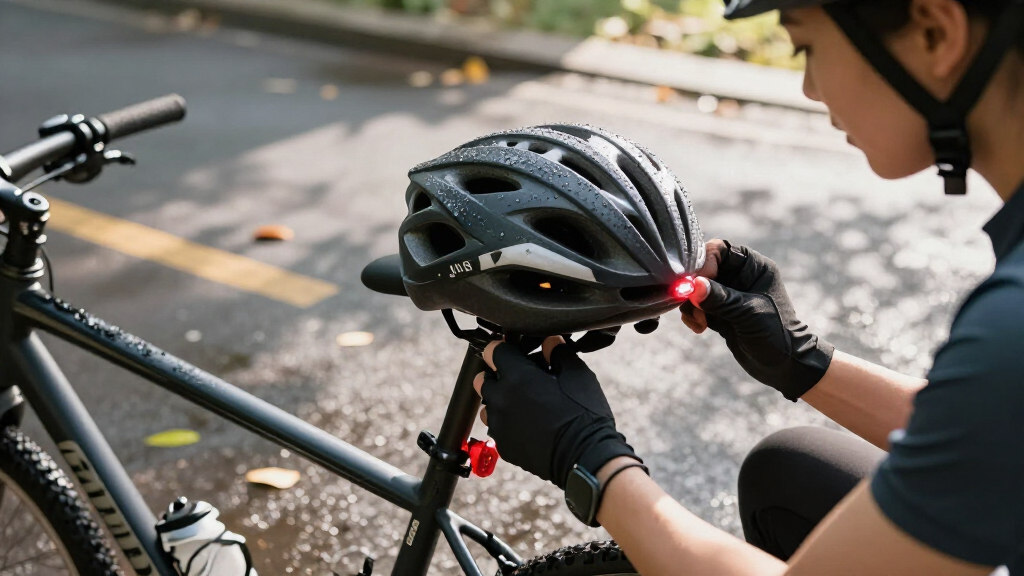

The best bike helmet lights add visibility where a handlebar light cannot, but the right choice depends on whether you need to be seen, see the road, or do both. I rank the Brightside Bike Helmet Light best overall for its front-and-rear setup, 360-degree visibility, and stated 43-hour runtime. The BrightRoad 850-lumen light stands out for riders who need a brighter forward beam, while the 2-in-1 rechargeable light with bracket mount offers flexible aiming and multiple warning modes. The main tradeoffs are brightness versus runtime, a compact rear warning light versus a true forward beam, and secure helmet fit versus easy removal. Read on for how all nine options compare and which type of rider each one suits.

Get sports gear delivered free with Prime
- Fast, free delivery on millions of items
- Prime Video, Amazon Music and more included
- Member-only deals all year
Complete the kit


Key Takeaways
- Brightside takes the overall lead because its front-and-rear arrangement covers more directions than rear-only warning lights, with a stated 43-hour runtime.
- BrightRoad is the clearest choice for forward illumination among these picks, with a stated 850-lumen output; that makes it more suited to seeing the route than a red rear marker.
- The 2-in-1 bracket-mounted model offers the most aiming flexibility through its 360-degree rotation, but that feature is useful only if the mount sits securely on your helmet.
- Several options are primarily visibility aids, not substitutes for a headlight. The rear-focused LED and strobe models are better for alerting others than lighting dark roads ahead.
- Product details vary in how much they disclose. Runtime, weather protection, and mounting information are clearer for some picks than others, so buyers should verify fit and charging details before choosing.


| bike helmet light | Water resistance | Weight | Material | Mounting |
|---|---|---|---|---|
| Bicycle Helmet Light | Water resistant | 22.68 g | Plastic | Helmet mount and seat mount |
| Rechargeable Bike Helmet Light | IPX6 | 0.06 kg | Aluminum alloy | Helmet or handlebar; listed mounting type is handlebar mount |
| Tujoe 2 Set Motorcycle Bike LE | Waterproof | 3.36 oz | Acrylonitrile butadiene styrene (ABS) | — |
| Motorcycle Bike Helmet Light | — | 27 g | — | — |
| Brightside Bike Helmet Light | IPX6 | 68 g | — | Helmet |
| 2-in-1 Rechargeable Helmet Lig | IP66 | 75 g (description); 2 ounces (listed spec) | Plastic | — |
| LED Motorcycle Helmet Light | — | 5.7 g | ABS | Adhesive/stick-on |
| LED Helmet Light | Waterproof; rating not specified | — | ABS | Velcro |
| BrightRoad Bike Helmet Light 8 | IPX1 | — | Aluminum | Adjustable helmet mount with anti-slip pad |
More Details on Our Top Picks
Bicycle Helmet Light – Motion Activated Bright Flashing LED Strobe for Safety and Visibility
Motion-activated operation is the defining advantage here: the red LEDs are designed to flash when movement is detected, reducing the need to switch the light on and off manually. It can attach to a helmet or seat, so it offers more placement flexibility than the Tujoe 2 Set Motorcycle Bike LED Rear Helmet Light, which is described as a rear helmet light with adhesive mounting. The claimed visibility of up to half a mile suits riders looking to be noticed, rather than to light their route. The tradeoff is sparse battery information: the source does not specify runtime or charging, and this model requires replaceable batteries. Its front-position specification also makes it a poor substitute for a dedicated rear light, despite the red LEDs.
Pros:- Motion activation can reduce manual switching during rides.
- Red LEDs are aimed at making the rider more noticeable.
- Helmet- and seat-mount options allow flexible placement.
- Weather-resistant construction suits changeable riding conditions.
Cons:- Battery runtime and replacement interval are not specified.
- Requires batteries rather than offering described USB recharging.
- Front-position specification limits its usefulness as a rear warning light.
Best for: Casual commuters and family riders who want a simple motion-activated warning light that can move between a helmet and a seat.
Not ideal for: Riders planning long night rides who need known battery runtime, rechargeable power, or a beam that illuminates the road.
- Power source:Battery powered
- Water resistance:Water resistant
- Mounting:Helmet mount and seat mount
- Settings:2
- Position:Front
- Weight:22.68 g
- Color:Red
- Material:Plastic
Our verdict“Choose this for automatic, basic visibility on short rides, but skip it if rechargeable power or clearly stated runtime matters.”
Rechargeable Bike Helmet Light – Night Riding Bicycle Light
With six steady and flashing settings, this light gives riders more ways to tailor visibility than the two-setting Bicycle Helmet Light – Motion Activated Bright Flashing LED Strobe. Its reported runtime of up to 22 hours also offers a clearer planning baseline than that battery-powered option, though actual runtime depends on mode. The light is described as rechargeable, waterproof to IPX6, and suitable for helmet or handlebar use, making it adaptable across different setups. That flexibility comes with a usability cost: riders who want a simple automatic light may find six modes more fiddly than necessary. The available dimensions and aluminum-alloy construction suggest a compact unit, but the listed weight is 0.06 kg, heavier than the 22.68 g motion-activated model.
Pros:- Six modes offer a choice of steady and flashing visibility.
- Rechargeable design avoids routine disposable battery replacement.
- IPX6 water-resistance rating is suited to wet-weather riding.
- Can be mounted on a helmet or handlebar.
Cons:- Multiple modes may make operation less straightforward than a simpler light.
- The listed maximum runtime may not cover very long rides between charges.
- At 0.06 kg, it is heavier than the 22.68 g motion-activated option.
Best for: Commuters and recreational riders who want rechargeable lighting with several flashing and steady options for both helmet and handlebar setups.
Not ideal for: Riders who prefer automatic, one-action operation or need a light with specified runtime beyond the stated maximum of 22 hours.
- Power source:Battery powered; rechargeable
- Water resistance:IPX6
- Mounting:Helmet or handlebar; listed mounting type is handlebar mount
- Settings:6
- Maximum stated runtime:Up to 22 hours
- Weight:0.06 kg
- Dimensions:2.5 × 1.2 × 0.8 in
- Material:Aluminum alloy
Our verdict“Pick this if you want rechargeable, mode-rich visibility and can accept more controls and periodic charging.”
Tujoe 2 Set Motorcycle Bike LED Rear Helmet Light
The clearest reason to choose the Tujoe two-set package is getting two rechargeable rear lights, useful for riders who want a spare or plan to outfit more than one helmet. Its three lighting modes and waterproof construction make it a more weather-ready rear-focused choice than the Bicycle Helmet Light – Motion Activated Bright Flashing LED Strobe, whose battery runtime is not stated. Adhesive tape installation is simple, but it is less versatile than the Velcro mounting on the Motorcycle Bike Helmet Light, which can also attach to a backpack or motorcycle. These are rear warning lights, not a complete helmet-lighting setup: no front light is included, and the product data gives no specific runtime. USB charging also means keeping track of charge matters before a ride.
Pros:- Two lights provide a spare or allow use across two helmets.
- Three modes let riders vary rear warning signals.
- Waterproof construction is suited to riding in wet weather.
- Adhesive tape mounting supports straightforward installation and removal.
Cons:- Rear-only lighting leaves the front of the rider unlit.
- Specific runtime is not provided, and battery life can vary by use.
- USB charging requires advance charging and access to a charging cable.
Best for: Riders who want two rechargeable rear helmet lights for separate helmets, a spare, or added rear visibility in wet conditions.
Not ideal for: Cyclists seeking a single all-direction helmet light, a front beam, or a specified battery runtime.
- Included lights:2
- Power source:Battery powered; rechargeable
- Water resistance:Waterproof
- Settings:3
- Position:Rear
- Weight:3.36 oz
- Color:Red and black
- Material:Acrylonitrile butadiene styrene (ABS)
Our verdict“Choose this set for rechargeable rear visibility across two helmets, but pair it with a separate front light for broader coverage.”
Motorcycle Bike Helmet Light, Safety Warning LED Tail Light
Velcro mounting gives this red tail light a useful advantage for riders who want to move one light between a helmet, backpack, or motorcycle. That makes it more adaptable than the adhesive-mounted Tujoe 2 Set Motorcycle Bike LED Rear Helmet Light, though the Tujoe package includes two lights and this is a single unit. Three modes and a stated 8–10-hour runtime make planning easier than with the motion-activated model, whose battery life is unspecified. The 27 g body is lightweight, but its 200 mAh battery puts a limit on how much endurance riders should expect; runtime also varies by mode. This is a rear warning light, not a forward road-illumination lamp, and the source lists scooter compatibility rather than detailing fit for every helmet shape.
Pros:- Velcro attachment makes it easy to reposition without tools.
- Helmet, backpack, and motorcycle mounting broaden its uses.
- Three modes provide more choice than a basic single-mode warning light.
- Stated 8–10-hour runtime gives a useful charging reference.
Cons:- The 200 mAh battery may require frequent charging for extended use.
- Rear warning light does not illuminate the road ahead.
- Compatibility details do not specify fit across different helmet shapes.
Best for: Riders who want one rechargeable red warning light that can be moved between a helmet, backpack, and compatible scooter or motorcycle.
Not ideal for: Cyclists who need front-facing illumination, a multi-light kit, or long intervals between charges.
- Light source:LED
- Compatible vehicle type:Scooter
- Mounting method:Velcro
- Settings:3
- Battery capacity:200 mAh
- Runtime:8–10 hours
- Weight:27 g
- Dimensions:3.46 × 1.46 × 0.71 in
- Lens color:Red
Our verdict“Choose this for a lightweight, rechargeable rear light you can reposition, not as a complete lighting system for dark roads.”
Brightside Bike Helmet Light – 360 Degree 3-in-1 Safety Light for Cyclists, Dual Front & Rear, Waterproof, Rechargeable, 43 Hour Runtime
Among these five options, the Brightside’s front-and-rear LEDs make it the strongest single-unit choice for being seen from multiple directions. Unlike the rear-only Tujoe 2 Set Motorcycle Bike LED Rear Helmet Light and the red tail-light option from Motorcycle Bike Helmet Light, Safety Warning LED Tail Light, it combines front and rear visibility on one helmet-mounted device. Its IPX6 water resistance, seven settings, and stated runtime of up to 43 hours suit riders who want one rechargeable unit for regular visibility-focused rides. The tradeoff is weight: at 68 g, it is substantially heavier than the other listed single lights. Its 100-lumen output is intended for visibility rather than lighting a dark route, and runtime varies by mode, so it cannot replace a dedicated high-output headlight.
Pros:- Front and rear LEDs provide broader visibility than rear-only options.
- Up to 43 hours of stated runtime can reduce charging frequency in some modes.
- Seven settings offer flexibility for different visibility conditions.
- IPX6 water resistance supports use in wet weather.
Cons:- At 68 g, it is heavier than the other listed single lights.
- Its 100-lumen output is for visibility, not illuminating dark roads or trails.
- Actual runtime varies by mode.
Best for: Commuters and road riders who want one rechargeable helmet-mounted unit with front-and-rear visibility for being seen in traffic.
Not ideal for: Trail riders or cyclists on unlit roads who need a powerful beam to illuminate hazards ahead, or riders prioritizing the lightest helmet setup.
- Power source:Battery powered; rechargeable
- Water resistance:IPX6
- Mounting:Helmet
- Settings:7
- Light positions:Front and rear; 360-degree visibility
- Maximum stated runtime:Up to 43 hours
- Output:100 lumens
- Weight:68 g
- Dimensions:3 × 1.4 × 1.4 in
Our verdict“Choose the Brightside for long-running, all-around visibility from one helmet light, but add a dedicated headlight for riding in darkness.”
2-in-1 Rechargeable Helmet Light with Bracket Mount – Night Bike Light with 5 Warning Modes, IP66 Waterproof, 360° Rotatable Front and Rear Lights
This is the most balanced pick here for riders who want to be seen from both ends without attaching separate lights. Its independently controlled front and rear lamps provide warning visibility, while the 360° rotation helps direct the beams around a helmet. At up to 200 lumens, it is better suited to being noticed than lighting a dark road; the BrightRoad, by comparison, offers 850 lumens for stronger forward illumination. The IP66 waterproof rating is a clear advantage for wet-weather use, and tool-free installation plus a 75-gram weight keep setup simple. The tradeoff is limited long-distance lighting and potentially shorter battery life on brighter modes, so riders who need a powerful headlight should choose a different style.
Pros:- Front and rear lights with independent controls offer visibility in both directions.
- 360° rotation lets riders aim the lights around the helmet.
- IP66 waterproof rating suits rainy rides.
- Tool-free installation and 75-gram listed weight make it easy to handle.
Cons:- Maximum 200-lumen output is aimed more at visibility than illuminating a long stretch of road.
- Battery life can be limited when using higher-brightness modes.
Best for: Commuters who want one lightweight, rechargeable setup for front-and-rear visibility in varied weather.
Not ideal for: Riders on unlit roads who need a strong forward beam for spotting hazards at a distance.
- Maximum output:200 lumens
- Lighting settings:5
- Water resistance:IP66
- Power:Rechargeable via USB
- Light arrangement:Front and rear lights with independent controls
- Rotation:360°
- Weight:75 g (description); 2 ounces (listed spec)
- Material:Plastic
Our verdict“Choose this for compact front-and-rear warning visibility and strong weather protection, not for a high-powered road beam.”
LED Motorcycle Helmet Light – Rear Red Safety Light with USB Rechargeable Battery
At a listed 5.7 grams, this is the least burdensome way in this group to add a rear warning light. Its four red LED light sources and steady, intermittent, and blinking modes focus on making a rider visible rather than lighting the route. That makes it a simpler, lighter choice than the 14-LED B09LZ6WND1, which offers a stated runtime of up to 12 hours but adds a larger light and fastening setup. The adhesive mounting avoids tools, though a stick-on mount may be less convenient to reposition than Velcro. This model has no front light, and the supplied information does not specify battery runtime, so I would treat it as a rear visibility add-on rather than a complete helmet-light system.
Pros:- Very low listed weight of 5.7 grams adds little burden to a helmet.
- Multiple steady and flashing modes give options for different visibility needs.
- Adhesive mounting allows installation without tools.
- Rechargeable lithium-polymer battery is included.
Cons:- Rear red light only, with no forward illumination.
- Battery runtime is not specified in the supplied product details.
- Adhesive fit may not suit every helmet shape or riders who want easy repositioning.
Best for: Weight-conscious commuters who want a small rechargeable red marker on the back of a helmet.
Not ideal for: Riders seeking front illumination, a stated long runtime, or a light they can frequently reposition.
- Light source:LED
- Number of light sources:4
- Modes:Always on, intermittent, and blinking
- Battery:1 included lithium-polymer battery
- Mounting:Adhesive/stick-on
- Weight:5.7 g
- Material:ABS
- Dimensions:6.29 × 3.54 × 0.78 inches
Our verdict“Pick this as a minimal-weight rear marker, but pair it with a separate front light for riding in darkness.”
LED Helmet Light, Rechargeable Bike Bicycle Rear Safety Light with 14 LEDs and Multiple Modes
The appeal here is the combination of a 14-LED rear array and a stated runtime of up to 12 hours, making it a stronger fit for longer rides than the compact B092RJV1NG, whose battery runtime is not specified. Velcro mounting also makes removal and reattachment straightforward when a helmet is shared or stored separately. The rechargeable 650mAh battery and Type-C port provide useful charging details, while the listed 700-lux figure gives a brightness measure rather than a front-facing beam output. Like the other rear-only options, this is a visibility light, not a headlight; it will not help riders see obstacles ahead. Runtime can vary with mode, and the light needs charging before use.
Pros:- Fourteen LEDs create a broad rear-facing marker.
- Stated runtime is up to 12 hours.
- Velcro mounting makes removal and reattachment convenient.
- Type-C charging and a 650mAh battery capacity are specified.
Cons:- Rear safety light only, so it cannot illuminate the path ahead.
- Actual runtime varies with use and lighting mode.
- Requires charging before first use.
Best for: Riders who want a rechargeable rear helmet light with a stated long maximum runtime and removable mounting.
Not ideal for: Cyclists who need forward illumination or want a light ready to use without first charging it.
- LEDs:14
- Illuminance:700 lux
- Battery capacity:650 mAh
- Charging port:Type-C
- Maximum stated runtime:Up to 12 hours
- Mounting:Velcro
- Material:ABS
- Water resistance:Waterproof; rating not specified
Our verdict“Choose this over the smaller B092RJV1NG when a stated extended runtime and removable Velcro mount matter more than minimal size.”
BrightRoad Bike Helmet Light 850 Lumens, 5 Modes, Rechargeable, Mountable for Night Riding
With a stated 850 lumens and 650-foot range, this is the lineup’s strongest choice for riders who need a helmet-mounted beam to help reveal the road ahead. It has a different job from the 200-lumen B0BQJFL55P: BrightRoad prioritizes forward illumination, while that model adds rear warning visibility and a higher water-resistance rating. Five modes, a battery indicator, and a stated runtime of up to 18 hours give riders useful control and charge information, though runtime depends on the selected mode. The aluminum body and adjustable mount support a secure helmet setup, but the listed IPX1 protection is limited for wet rides compared with the IP66 option. This is a front light, so it does not replace a rear marker.
Pros:- 850-lumen maximum output and a stated 650-foot range suit dark routes.
- Five modes let riders adjust output to conditions.
- Battery indicator provides a visible charge-status cue.
- Adjustable helmet mount includes an anti-slip pad.
Cons:- IPX1 water resistance may be inadequate for heavy rain.
- A powerful forward light does not provide rear visibility.
- Runtime varies by mode, so the longest stated runtime may not match high-output use.
Best for: Night riders on darker routes who want a high-output forward beam and a battery indicator on the helmet.
Not ideal for: Cyclists who ride regularly in heavy rain or want front and rear warning lights in one unit.
- Maximum output:850 lumens
- Stated range:650 feet
- Lighting settings:5
- Maximum stated runtime:Up to 18 hours
- Water resistance:IPX1
- Power:Rechargeable; battery powered
- Mounting:Adjustable helmet mount with anti-slip pad
- Material:Aluminum
Our verdict“Pick BrightRoad for a bright forward beam on dark routes, and add a rear light if you also need visibility from behind.”
How We Picked
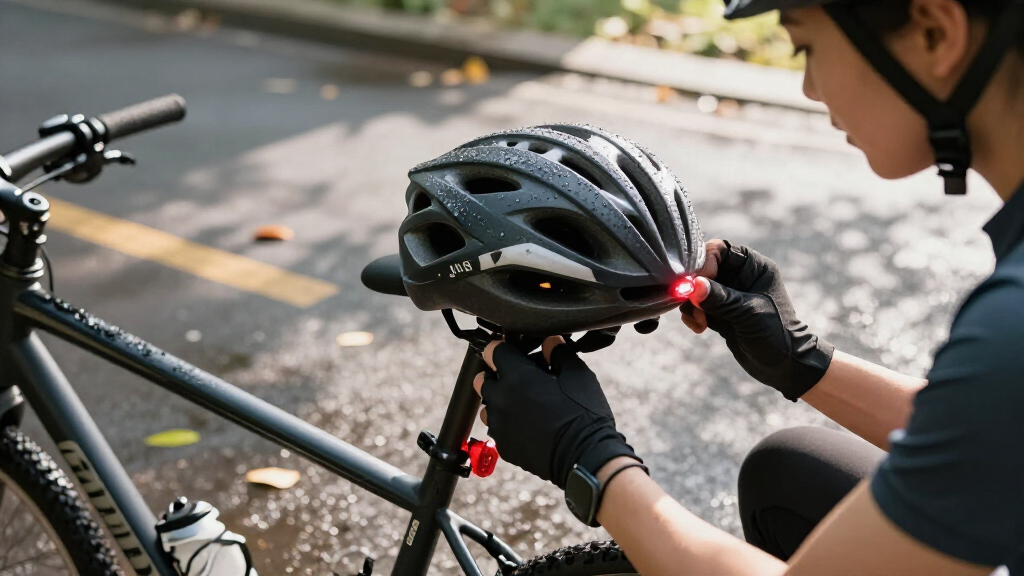
I compared these bike helmet lights by the jobs they can realistically do: help a rider be seen from behind, provide light ahead, or combine both roles. I gave more weight to clearly stated practical details—such as the Brightside light’s front-and-rear design and 43-hour runtime, BrightRoad’s stated 850-lumen output, and the 2-in-1 model’s IP66 rating and adjustable mount—than to broad safety claims. I also considered mode selection, rechargeability, weather protection, mounting flexibility, and whether the available information makes the intended use clear.
The ranking favors versatility and decision-ready information over a single headline specification. Brightside ranks first because its dual-direction setup and stated runtime suit a wider range of everyday rides; BrightRoad ranks higher for riders who specifically need a brighter forward light. The remaining products fill narrower roles, including rear warning, basic flashing visibility, or multi-unit use. Where runtime, beam performance, or mounting details are not stated, I treat that uncertainty as a drawback rather than assuming the light matches better-documented options.
| bike helmet light | Water resistance | Mounting | Material |
|---|---|---|---|
| Bicycle Helmet Light | Water resistant | Helmet mount and seat mount | Plastic |
| Rechargeable Bike Helmet Light | IPX6 | Helmet or handlebar; listed mounting type is handlebar mount | Aluminum alloy |
| Tujoe 2 Set Motorcycle Bike LE | Waterproof | — | Acrylonitrile butadiene styrene (ABS) |
| Motorcycle Bike Helmet Light | — | — | — |
| Brightside Bike Helmet Light | IPX6 | Helmet | — |
| 2-in-1 Rechargeable Helmet Lig | IP66 | — | Plastic |
| LED Motorcycle Helmet Light | — | Adhesive/stick-on | ABS |
| LED Helmet Light | Waterproof; rating not specified | Velcro | ABS |
| BrightRoad Bike Helmet Light 8 | IPX1 | Adjustable helmet mount with anti-slip pad | Aluminum |
Factors to Consider When Choosing Bike Helmet Lights
Before choosing a helmet light, decide what problem you need it to solve. A small rear LED can make you easier to spot without lighting your path, while a forward-facing light needs enough output and a useful beam to help you see hazards. The following checks help separate those roles and avoid buying a light that does not suit your route or helmet.
Decide Whether You Need to See or Be Seen
Start by separating visibility lights from road-illuminating lights. A red rear lamp or flashing strobe alerts traffic to your presence, but it should not be expected to reveal potholes or turns ahead. For unlit roads, look for a forward beam with a stated output and pair it with a rear light rather than relying on one helmet-mounted unit. Riders on lit streets may value a small rear marker more than a powerful front beam. A common mistake is treating a high lumen figure as proof that a light covers every safety role. Match the light to the route, and check local rules for required bicycle lighting before riding.
Treat Runtime as a Ride-Planning Detail
Battery life affects whether a light remains useful through a commute, an evening ride, or several days between charges. Compare runtime claims with the mode you expect to use: a maximum figure may not apply to the brightest or most visible setting. If the manufacturer does not state runtime clearly, plan for more frequent charging rather than assuming it will last a full week. A rechargeable design can reduce battery replacement, but it also means remembering to charge before a ride. Buyers who ride irregularly may prefer a simple charge indicator or an easy-to-remove lamp they can bring indoors. Choose runtime around your longest typical ride, not just your usual short trip.
Check Helmet Fit and Mount Stability
A light is only useful when its mount holds position and does not interfere with the helmet’s vents, straps, or adjustment system. Helmet shapes vary, so a bracket that fits one shell may sit awkwardly on another. A rotatable mount can help point a beam where you need it, but extra hardware can add bulk or create another point that may loosen. Before buying, check whether the product uses a clip, adhesive, strap, or dedicated bracket and whether that method suits your helmet material and shape. Avoid attaching anything in a way that alters the helmet’s structure or blocks its fit system. If you share a helmet or remove the light often, quick removal may matter more than a permanent-feeling mount.
Read Weather Claims Carefully
Rain protection matters for year-round riding, but terms such as waterproof can describe different levels of protection. A stated rating like IP66 gives more specific information than an unqualified weather claim, though it does not mean every charging port or mount can be submerged. Check whether the port has a cover and whether the maker describes the light as suitable for rain or only splashes. Mud and road spray can also reach a helmet-mounted light, especially at the rear. Riders who store gear outdoors or ride in persistent wet weather should prioritize explicit protection details. For occasional fair-weather use, a lighter or simpler design may be a better fit than paying for protection you will rarely need.
Choose Modes for the Riding Environment
Multiple modes can make a light more adaptable, but more settings are not automatically better. A steady beam can help with forward visibility, while a flashing rear mode may draw attention in traffic; some riders may prefer a steady setting in a group. Check how easily you can switch modes with gloves on and whether the light returns to your preferred setting after power-off. Strobe patterns can attract notice, but a bright or fast flash may distract nearby riders and drivers. Prioritize a few usable modes over a long list that is hard to control while moving. Test the controls while stationary before relying on them during a ride.
Consider Helmet Lights Alongside Bike Lights
A helmet light follows your head, which can help direct attention toward a side street or make your presence more noticeable at intersections. That movement can also send a beam toward another person’s eyes, so aim forward lights down toward the riding surface rather than level with traffic. Helmet lights usually do not replace a stable handlebar beam, since head movement can make illumination shift as you scan. For dark routes, a coordinated setup—a forward bike light, rear bike light, and helmet light where appropriate—offers clearer coverage than asking one small lamp to do everything. If you already have strong bike lights, a helmet-mounted rear marker or supplementary beam may be the more useful addition. Choose based on what your current setup leaves uncovered.
Frequently Asked Questions
Can a helmet light replace my handlebar headlight?
Usually, no—especially on unlit roads. A helmet light moves with your head, which is useful when looking around, but that motion can make the beam wander and can direct light into other people’s eyes. A handlebar light provides a steadier view of the road ahead, while a helmet light can supplement it or improve visibility. Some listed options focus mainly on rear warning rather than forward illumination at all. For dark routes, use a suitable forward bicycle light and treat a helmet light as an additional tool.
Is a rear helmet light enough for commuting after dark?
A rear helmet light can make you easier to notice from behind, but it does not illuminate your route or provide complete visibility around the bicycle. It may be a useful addition on lit streets, particularly if your bike’s rear light is partly blocked by bags or clothing. For darker commutes, add a forward-facing light and consider side visibility as well. Check that the rear lamp remains visible with your helmet position and outerwear. Think of it as one part of a lighting setup, not a complete replacement for bike lights.
Should I choose a flashing light or a steady beam?
The best mode depends on the light’s role and where you ride. Flashing rear modes can attract attention, while a steady forward beam is generally more useful for seeing the road surface. Some lights offer both, letting you choose based on traffic, ambient light, and whether you ride with others. A strong or rapid flash can distract nearby riders, so use a pattern that remains comfortable for people around you. Check how easy the controls are to operate before setting off, rather than changing modes while moving.
How much should I rely on a stated lumen figure?
A lumen figure helps compare stated light output, but it does not explain beam shape, distance, glare, or how long that output lasts. The BrightRoad option lists 850 lumens, making it the clearest high-output choice in this group, yet buyers still need to judge whether its beam suits their route. A rear marker with no lumen claim may be intended to signal presence rather than light the road. Look for runtime at the mode you plan to use and consider how the beam is aimed. For dark roads, a well-directed beam matters alongside the headline output.
What should I check before ordering a helmet light online?
Check the mounting method, compatibility with your helmet shape, charging connection, and whether the product gives clear runtime and weather-protection details. These points are not equally specified across this roundup, so avoid assuming that every rechargeable light has the same battery life or rain tolerance. Confirm whether the listing describes a front beam, rear warning light, or both; product titles can make those roles easy to confuse. If you need a particular fit or light position, look for clear mounting instructions or measurements. A little verification can prevent buying a light that technically works but does not suit your helmet or ride.
Conclusion
For most riders seeking one versatile addition, I recommend the Brightside Bike Helmet Light as the best overall: its front-and-rear arrangement and stated 43-hour runtime give it the broadest everyday role in this lineup. The best pick for a forward-light priority is the BrightRoad 850-lumen model, while the 2-in-1 bracket-mounted light suits riders who want adjustable aiming and multiple warning modes. For beginners, a straightforward rechargeable rear light such as the 14-LED model is an approachable way to add visibility, though it should not be mistaken for a road-illuminating headlight. The best value depends on your needs: a basic rear warning light makes more sense than paying for a dual-light system if you already have a strong front beam. If you want the most adaptable setup, choose Brightside; if you ride dark roads, prioritize a forward beam and pair it with separate rear visibility.
Halloween Picks
halloween
As an affiliate, we earn on qualifying purchases.