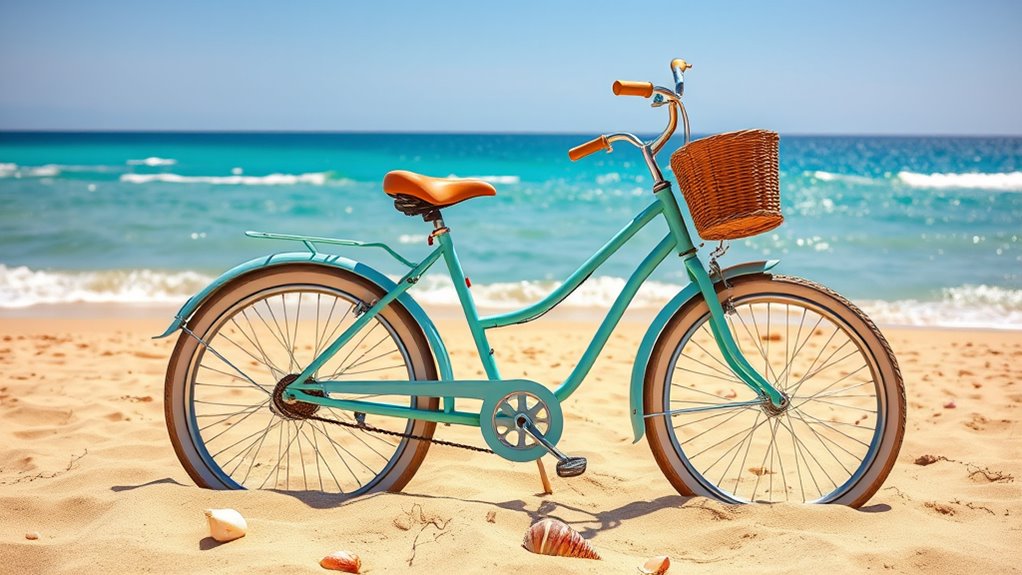

To achieve a comfortable beach cruiser fit, start by adjusting the saddle height so your heel rests on the pedal at its lowest point with your leg nearly straight. Make sure the handlebar position allows you to grip comfortably without overreaching or feeling cramped, keeping your back straight and shoulders relaxed. Fine-tuning these adjustments will give you better control, reduce fatigue, and enhance your ride. Keep these basics in mind as you explore ways to improve your cycling comfort.
Key Takeaways
- Adjust saddle height so your heel rests on the pedal at its lowest point with your leg nearly straight.
- Ensure handlebars are positioned to allow a comfortable, upright posture without overreaching or hunching.
- Keep a slight bend in your elbows for better control and to reduce strain during rides.
- Regularly fine-tune saddle and handlebar positions for optimal comfort and to prevent fatigue.
- Choose a fit that promotes stability, reduces strain, and allows relaxed hand placement for enjoyable cruising.
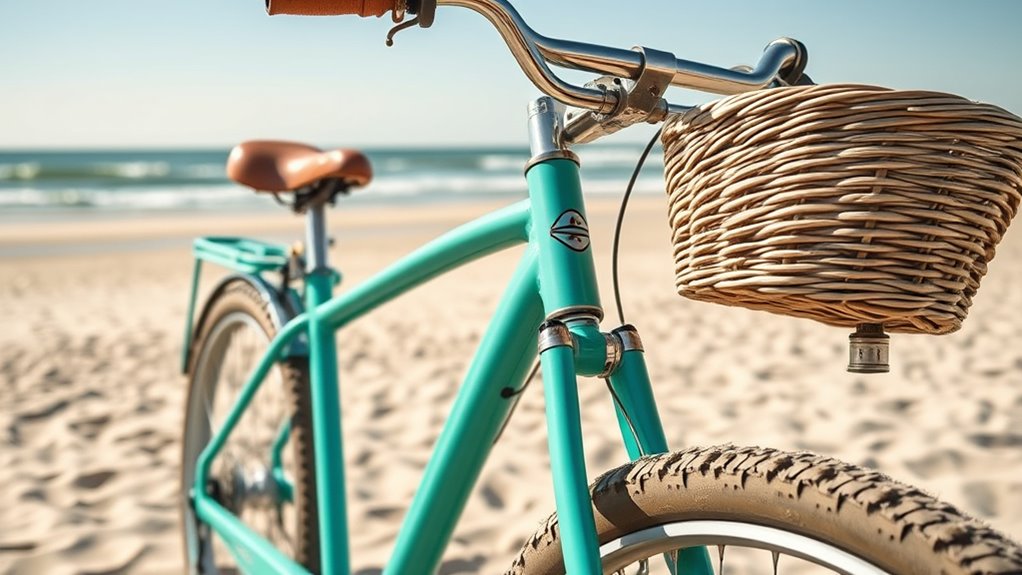
Getting the right fit on a beach cruiser is essential for comfort and control, especially if you plan to ride for longer periods or explore different terrains. One of the most important adjustments you can make is to your saddle height. When your saddle is set correctly, you should be able to sit comfortably with your heel resting on the pedal at the lowest point of the pedal stroke. From there, your leg should be almost fully extended, with a slight bend in your knee when you’re pedaling normally. If your saddle is too low, you’ll feel cramped and may struggle to generate power efficiently; too high, and you risk losing control or putting unnecessary strain on your hips and knees. Adjusting saddle height isn’t just about comfort—it affects your riding efficiency and helps prevent injury over time. Take a moment to fine-tune this setting, and test it on a short ride to ensure it feels natural and sustainable.
Next, consider the handlebar position. The handlebars should be positioned so you’re comfortable holding onto them without reaching too far or feeling cramped. If you find yourself stretching forward or hunching your shoulders, the handlebar might be too low or too far away. Conversely, if your arms are bent excessively or you’re leaning back uncomfortably, the handlebar could be too high or too close. Proper handlebar position keeps your back straight and shoulders relaxed, reducing fatigue and improving your overall balance. Many beach cruisers have adjustable handlebars or stem options, so take advantage of these features to find a posture that feels natural. When riding, your hands should rest comfortably on the grips, with your elbows slightly bent, allowing for good control and reducing strain.
Achieving a balanced setup involves a combination of saddle height and handlebar position. When both are adjusted correctly, you’ll notice better stability, less fatigue, and a more enjoyable ride. Remember, these settings are personal; what works for someone else might not work for you. Small tweaks can make a significant difference in how your cruiser feels on the road or trail. Take your time to experiment, and don’t be afraid to revisit and readjust as needed. Proper fit isn’t a one-time task—it’s an ongoing process that ensures your rides remain comfortable and safe, whether you’re cruising along the beach promenade or exploring new paths. Additionally, adjusting your bike’s components regularly can help maintain optimal comfort and prevent long-term discomfort or injury.
Frequently Asked Questions
How Often Should I Adjust My Beach Cruiser Fit?
You should adjust your beach cruiser fit whenever you notice discomfort or after several rides to maintain ideal cycling posture. Check your saddle height regularly—ideally, it should allow a slight bend in your knee at the bottom of the pedal stroke. Adjustments ensure your posture remains comfortable and efficient, preventing strain. Keep an eye on how you feel during rides, and don’t hesitate to make tweaks for a smoother, more enjoyable cycling experience.
What Clothing Is Best for Riding a Beach Cruiser?
You should wear lightweight, breathable cycling apparel that keeps you comfortable on your beach cruiser rides. Consider weather conditions—opt for moisture-wicking fabrics on hot days or layered clothing if it’s cooler. A helmet, sunglasses, and sunscreen are essential for sun protection. Avoid tight or restrictive clothing that might hinder movement. Proper cycling apparel not only enhances comfort but also keeps you safe and prepared for changing weather during your ride.
Can I Modify a Beach Cruiser for Taller Riders?
Yes, you can modify a beach cruiser for taller riders by making bike frame modifications and saddle height adjustments. To accommodate increased height, consider replacing the seat post with a longer one and adjusting the saddle height for comfort. You might also upgrade the handlebars and crankset for better reach. These tweaks guarantee a comfortable ride, helping taller riders enjoy their beach cruiser without strain or discomfort.
What’s the Ideal Tire Pressure for Beach Cruiser Comfort?
You should aim for a tire pressure between 60 to 70 PSI for peak riding comfort on your beach cruiser. Adjust tire pressure based on your weight and riding conditions; lower pressure offers a softer ride on sand or rough terrain, while higher pressure reduces rolling resistance on smooth surfaces. Regular tire pressure adjustments help guarantee a smoother, more comfortable ride and prevent flats, enhancing your overall beach cruising experience.
How Do I Prevent Saddle Soreness on Long Rides?
Think of saddle soreness as a storm you can navigate around. You prevent it by choosing a seat with ample saddle padding and adjusting your riding posture to distribute your weight evenly. Keep your sit bones aligned and avoid leaning too far forward, which adds unnecessary pressure. Regularly shift your position and take breaks to let your muscles breathe, turning long rides into smooth sailing rather than choppy waters.
Conclusion
Now that you know the basics, your beach cruiser is ready to become an extension of you—like a trusted steed ready to carry you along sun-kissed shores and breezy paths. When your fit feels just right, every pedal stroke becomes a dance with the ocean breeze, turning ordinary rides into adventures. So, gear up, fine-tune your setup, and let your cruiser carry you to endless seaside escapades under the warm, welcoming sun.