E‑cargo solutions, like electric cargo bikes and modular delivery units, are transforming last-mile delivery in crowded urban areas. They’re more maneuverable than traditional trucks, easily accessing narrow streets and off-limits zones, which speeds up deliveries and reduces congestion. These eco-friendly options also cut emissions and operational costs. Plus, they enable better route planning and flexible fleet management. To discover how these innovations are shaping urban logistics further, keep exploring these smart delivery options.
Key Takeaways
- E-cargo vehicles offer a flexible, eco-friendly solution for navigating congested urban areas during last-mile deliveries.
- Modular e-cargo units adapt to varying delivery volumes, improving efficiency and reducing delivery times.
- Integration with real-time routing optimizes trip planning and minimizes traffic-related delays.
- Electric cargo bikes and small vehicles access restricted zones, speeding up deliveries in dense city centers.
- Implementing e-cargo systems enhances sustainability, reduces emissions, and supports worker well-being in urban logistics.
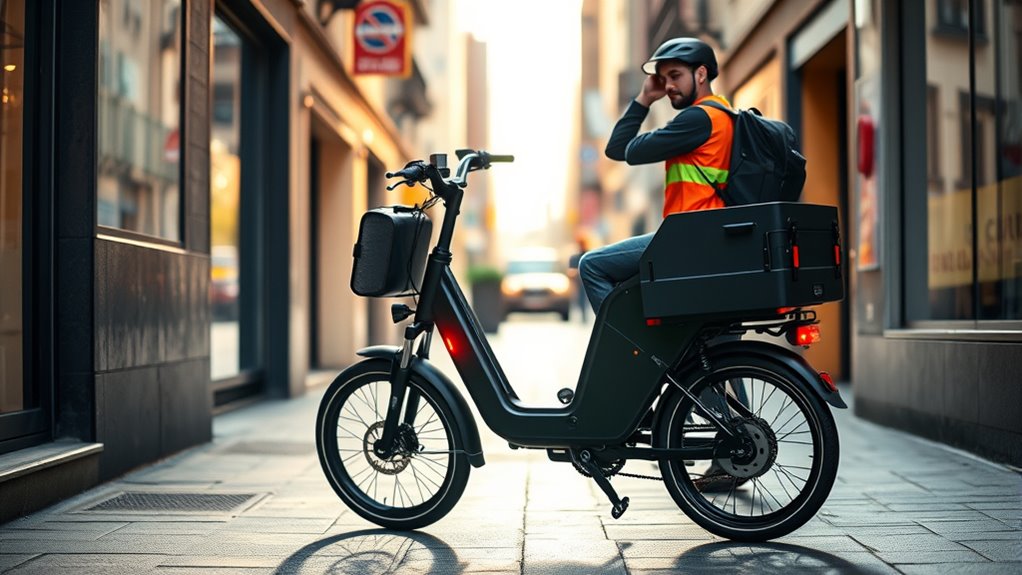
As last-mile delivery becomes increasingly complex and demanding, e‑cargo solutions are emerging as a game-changer. You’re likely aware that urban logistics faces unique challenges: traffic congestion, limited parking, narrow streets, and strict delivery windows. These hurdles make delivering packages efficiently a constant puzzle. E‑cargo systems aim to solve this puzzle by transforming how goods move through city landscapes. With electric cargo bikes, small electric vehicles, and modular delivery units, you can navigate crowded streets more easily than traditional vans or trucks. This not only speeds up delivery times but also reduces congestion and emissions, aligning with sustainable urban logistics goals.
Delivery optimization is at the core of e‑cargo innovations. Instead of relying on large, fuel-dependent vehicles that struggle in tight city spaces, you can utilize smaller, nimble e‑cargo units that are tailor-made for dense environments. These vehicles can access areas that are off-limits to bigger trucks, ensuring that your deliveries reach customers faster. By integrating real-time data and route management software, you optimize each trip, cutting down unnecessary mileage and avoiding traffic bottlenecks. This precise planning increases efficiency, saving you time and costs while improving customer satisfaction through timely deliveries.
E‑cargo solutions also streamline the entire delivery process. You can set up dedicated pick-up and drop-off points that are easily accessible, reducing the need for repeated stops or long waits. These stations can be strategically placed in high-demand neighborhoods, making it easier for you to coordinate multiple deliveries in a single trip. The modular nature of many e‑cargo units means you can customize your fleet based on the volume and type of goods, further enhancing delivery optimization. Plus, electric powertrains lower operational costs over time and contribute to cleaner urban environments, addressing the growing pressure to make logistics more sustainable. Incorporating holistic health benefits such as reduced stress and physical activity into delivery routines can also improve overall worker well-being, leading to more sustainable operations.

VEVOR Bike Cargo Trailer, 160 lbs Load Capacity, Heavy-Duty Bicycle Wagon Cart, Foldable Compact Storage & Quick Release with Universal Hitch, 16" Wheels, Safe Reflectors, Fits 22"-28" Bike Wheels
160 lbs High Load Capacity: Our bike cargo trailer is your ultimate travel companion, providing a sturdy build…
As an affiliate, we earn on qualifying purchases.
As an affiliate, we earn on qualifying purchases.
Frequently Asked Questions
How Secure Are E‑Cargo Systems Against Cyber Threats?
E-cargo systems are fairly secure when you implement strong cybersecurity protocols and data encryption. You should regularly update your security measures, monitor for threats, and train staff on best practices. While no system is completely invulnerable, following these steps makes it harder for cybercriminals to access sensitive information or disrupt operations. Staying proactive and vigilant helps make certain your e-cargo system remains protected against cyber threats.
What Are the Cost Implications for Implementing E‑Cargo?
Implementing e-cargo involves significant cost implications, primarily from infrastructure investment and ongoing maintenance. You should conduct a thorough cost analysis to understand expenses related to deploying charging stations, upgrading delivery vehicles, and training staff. While these upfront costs may seem high, they can lead to savings over time through improved efficiency and reduced fuel costs. Planning carefully guarantees you balance initial investments with long-term benefits.
How Do E‑Cargo Vehicles Integrate With Existing Delivery Fleets?
You can integrate e-cargo vehicles into your existing fleet through autonomous integration systems, allowing seamless operation alongside traditional vehicles. These systems facilitate fleet coordination by sharing real-time data on routes, deliveries, and vehicle status. This integration improves efficiency, reduces manual oversight, and helps optimize delivery schedules. By adopting autonomous integration, you streamline your last-mile delivery process, making it more sustainable and cost-effective while maintaining smooth coordination across your entire fleet.
What Maintenance Is Required for E‑Cargo Units?
You need to regularly check the battery longevity of your e-cargo units to guarantee peak performance. Keep an eye on battery health and plan for replacements as needed. Additionally, stay current with software updates to enhance efficiency and security. Routine inspections of brakes, tires, and electrical systems are also essential. Proper maintenance helps your e-cargo units operate smoothly, extend their lifespan, and reduce unexpected downtime.
Are There Regulatory Challenges for Deploying E‑Cargo Solutions?
You may face regulatory challenges when deploying e-cargo solutions, mainly due to regulatory compliance and licensing hurdles. Authorities often impose strict rules on electric vehicles, especially for commercial use, to ensure safety and environmental standards. Managing these regulations requires obtaining the necessary licenses and adhering to local laws. Staying updated on evolving policies helps you avoid delays and ensures smooth deployment of your e-cargo units in last-mile delivery.

20FT Shipping Container (New) – Heavy-Duty Industrial Steel Container for Secure Storage, Transport & Modular Construction Projects
TRANSPORTATION NOTICE – SELECT STATES: If the delivery location is in Utah, Montana, North Dakota, Wyoming, South Dakota,…
As an affiliate, we earn on qualifying purchases.
As an affiliate, we earn on qualifying purchases.
Conclusion
As you’ve seen, e-cargo solutions are transforming last-mile delivery by making it faster, greener, and more efficient. Embracing these advancements helps you stay ahead in a competitive world. Remember, “a journey of a thousand miles begins with a single step,” so adopting e-cargo now sets you on the path to smarter logistics. Keep innovating, and you’ll turn challenges into opportunities—because in this game, adaptation is everything.
![Express Schedule Free Employee Scheduling Software [PC/Mac Download]](https://m.media-amazon.com/images/I/41yvuCFIVfS._SL500_.jpg)
Express Schedule Free Employee Scheduling Software [PC/Mac Download]
Simple shift planning via an easy drag & drop interface
As an affiliate, we earn on qualifying purchases.
As an affiliate, we earn on qualifying purchases.

Massimo MVR Cargo Max Electric Utility Vehicle – 5000W Motor, 1100 lbs Capacity, 45 Mile Range (Red)
Powerful Motor: Equipped with a 5000W motor for impressive power and performance.
As an affiliate, we earn on qualifying purchases.
As an affiliate, we earn on qualifying purchases.