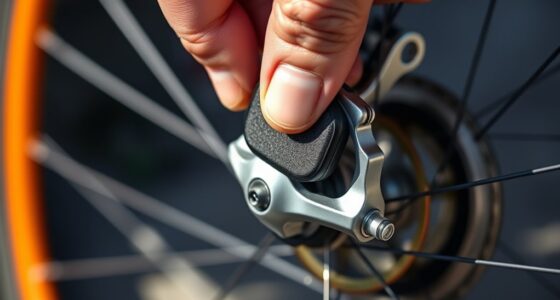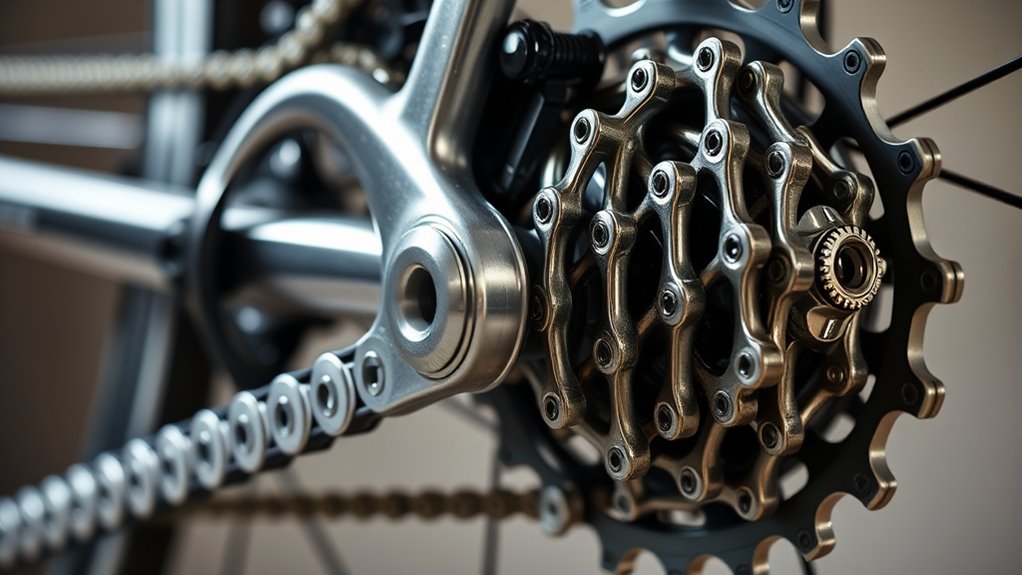
To clean your drivetrain right, start by shifting to the smallest gears and removing the chain if possible. Apply a dedicated degreaser or mild soap, then scrub the chain, cassette, and chainrings thoroughly using a brush or cloth. Rinse with water and dry all parts completely to prevent rust. Reapply lubricant after cleaning to keep everything smooth. Proper cleaning boosts shifting, performance, and the lifespan of your components—stick around to discover more tips.
Key Takeaways
- Use a dedicated degreaser or mild soap to thoroughly clean the chain, cassette, and chainrings after removing dirt and grime.
- Rinse all components with clean water and dry them completely to prevent rust and corrosion.
- Apply a high-quality lubricant evenly to all chain links and rollers, then wipe off excess to avoid dirt buildup.
- Regularly inspect and clean derailleur pulleys and cables to maintain smooth shifting performance.
- Perform cleaning after muddy or wet rides to prolong drivetrain lifespan and ensure optimal shifting efficiency.

Ever wondered why your bike performs smoothly? The secret often lies in how well you maintain your drivetrain. A clean, properly lubricated drivetrain not only boosts performance but also extends the lifespan of your components. To achieve this, mastering lubrication tips and gear maintenance is essential. When you pay attention to these details, your rides become more efficient, effortless, and enjoyable.
Start by understanding that lubrication tips are the foundation of a well-functioning drivetrain. After cleaning your chain, apply lubrication evenly, making sure to reach every link and roller. Use a high-quality bike lubricant suited for your riding conditions—wet lubes for rainy days, dry lubes for dusty trails. Avoid over-lubricating, as excess oil can attract dirt and grime, creating a gritty build-up that hampers smooth shifting and pedaling. Wipe off any excess after applying to prevent this problem. Regularly checking and reapplying lubrication keeps the chain running quietly and reduces wear on gears and sprockets.
Proper lubrication after cleaning keeps your chain quiet and reduces gear wear.
Gear maintenance is equally important. When your gears shift poorly or feel stiff, it’s a sign that your drivetrain needs attention. Adjust the derailleur if necessary, aligning it properly with the cassette and chain. Proper gear indexing ensures smooth shifts and minimizes stress on your components. Make sure the derailleur hanger is straight and that the cables are clean and lubricated. Dirty or corroded cables can cause shifting issues, so replace or lubricate them when needed. Also, inspect the chain for any signs of damage or excessive wear; a worn chain can damage sprockets and compromise gear performance. Replacing a worn chain in time prevents costly repairs and keeps your drivetrain running seamlessly.
Routine maintenance is key to keeping your bike in top shape. Clean your drivetrain regularly, especially after muddy or wet rides, to remove dirt and grime that can wear out parts prematurely. Use a dedicated degreaser or a mild soap solution to scrub the chain, cassette, and chainrings thoroughly. After cleaning, dry everything carefully before applying lubrication. This prevents rust and ensures your lubrication tips are effective. Remember, consistent gear maintenance not only improves shifting performance but also reduces the risk of breakdown during rides.
Frequently Asked Questions
How Often Should I Clean My Drivetrain?
You should clean your drivetrain every 100-200 miles or after riding in muddy, wet conditions. Regular chain maintenance helps prevent grime buildup, which can cause premature wear and reduce drivetrain longevity. By keeping your chain and components spotless, you guarantee smoother shifts and extend the life of your drivetrain. Don’t wait for it to get overly dirty—routine cleaning keeps everything running efficiently and saves you money in the long run.
Can I Use Household Products to Clean My Drivetrain?
You might think household solutions are safe for cleaning your drivetrain, but they often pose chemical risks that can damage components. It’s tempting to use these products, but they may contain harsh chemicals that cause corrosion or degrade parts over time. Instead, invest in specialized bike cleaners, which are designed to clean effectively without risking your drivetrain’s longevity. Protect your bike by avoiding risky household solutions.
What Are the Signs of a Dirty or Worn Drivetrain?
If your chain shows excessive wear or you notice gear slipping, your drivetrain is likely dirty or worn. You might see rust, dirt buildup, or stiff links, which hinder smooth shifting. Chain wear can cause it to stretch, making it less effective. Gear slipping happens when the chain can’t grip the gears properly, often due to dirt or worn components. Regular cleaning and maintenance help prevent these issues.
Is It Necessary to Lubricate After Cleaning?
Yes, you should lubricate after cleaning your drivetrain. The lubrication frequency depends on your riding conditions, but generally, you want to reapply lubricant once the chain is dry and free of dirt. Use appropriate cleaning tools to remove debris first, then apply a suitable lubricant evenly. This guarantees smooth shifting and prolongs the lifespan of your drivetrain components. Remember, over-lubrication can attract dirt, so apply sparingly.
Can I Clean My Drivetrain Without Removing the Wheels?
Did you know that keeping your drivetrain clean can extend its lifespan by up to 30%? Yes, you can clean your drivetrain without removing the wheels. Focus on the bike frame and chain, using a brush and degreaser. This method helps you spot issues early, like chain wear that might require chain replacement later. Just be gentle around the derailleur and cassette to avoid damage.
Conclusion
So there you have it—just a little soap and elbow grease, and your drivetrain will shine brighter than your neighbor’s ego. Ignore it, and prepare for a symphony of squeaks, sluggish rides, and those mysterious grinding noises that make you question your life choices. Who knew that neglecting your bike’s guts could transform a smooth ride into a relentless quest for sanity? So get scrubbing—your bike, and your patience, will thank you.