To achieve tidy cable and hose routing, plan your paths carefully and use organizational tools like clips, sleeves, and conduits to secure and protect them. Keep cables away from heat, sharp edges, and moving parts, and label them for easy identification. Bundling wires along walls or ceilings prevents clutter and hazards, making future maintenance easier. Maintaining proper routing not only enhances safety and equipment longevity but also boosts workspace efficiency—discover more tips to keep everything neat and safe.

Get sports gear delivered free with Prime
- Fast, free delivery on millions of items
- Prime Video, Amazon Music and more included
- Member-only deals all year
Key Takeaways
- Plan routing paths to prevent tension, stretching, and interference with equipment or moveable parts.
- Use cable ties, clips, and sleeves to secure and organize cables along walls or ceilings.
- Incorporate protective conduits or barriers in hazardous areas to prevent abrasion and damage.
- Label cables and hoses for easy identification during maintenance and troubleshooting.
- Regularly inspect and update cable management systems to maintain safety and efficiency.
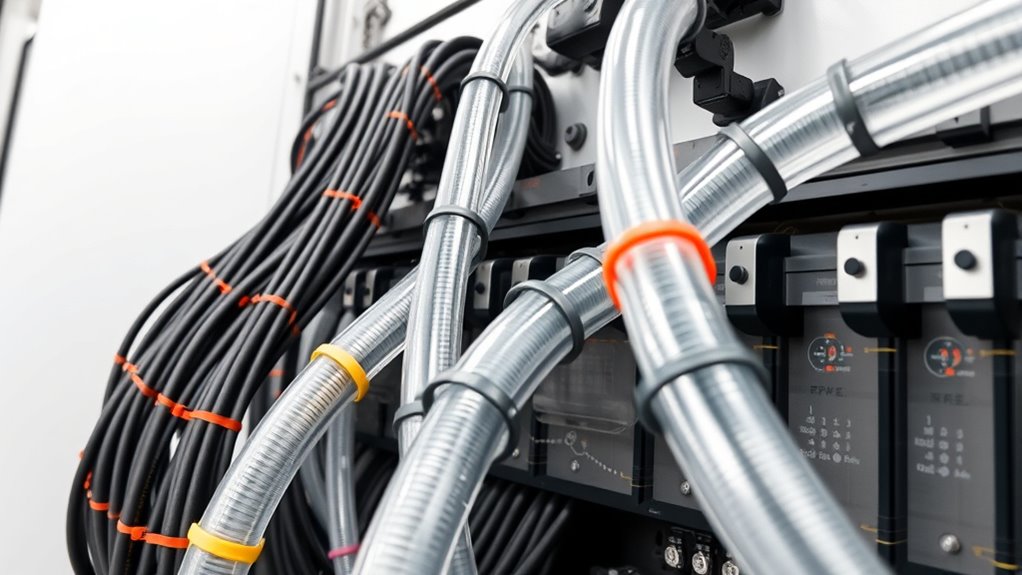
Keeping your cables and hoses neatly routed can considerably improve both the safety and performance of your equipment. Proper wire management isn’t just about making your workspace look organized; it’s about preventing accidents, reducing equipment downtime, and ensuring everything operates smoothly. When cables and hoses are tangled or sprawled across your workspace, they can pose tripping hazards, increase wear and tear, and even cause electrical shorts or damage. By implementing effective routing strategies, you create a safer environment for yourself and anyone else around you, while also extending the lifespan of your equipment.
One of the key aspects of effective wire management is understanding safety considerations. You should always prioritize securing loose cables to prevent them from becoming trip hazards. Use cable ties, clips, or sleeves to bundle and anchor cables along walls, ceilings, or designated channels. Avoid running cables across walkways or high-traffic areas where they can easily be tripped over or pulled loose. Additionally, keep power cords away from heat sources, sharp edges, or moving parts that could damage the insulation. Proper insulation and grounding are essential to prevent electrical faults, which can be dangerous or even catastrophic. Regularly inspect your cables for signs of wear, cracks, or fraying, and replace damaged ones immediately. Remember that good wire management isn’t just about aesthetics; it’s about reducing the risk of electrical fires, shocks, and equipment failure.
Another safety consideration involves planning your routing paths carefully. You want to ensure that cables and hoses are not under tension or stretched tightly, which can cause premature failure. Use flexible conduits or protective sleeves in areas where movement or abrasion might occur. When routing hoses and cables through potentially hazardous zones, consider adding protective barriers or guards. Avoid overloading power strips and ensure that cables are not plugged into outlets that are already heavily used. Proper labeling of cables can also help quickly identify and troubleshoot issues, reducing the risk of accidental disconnections or incorrect connections, which might lead to equipment damage or safety hazards. Incorporating wall organization systems can help keep cables tidy and accessible, further enhancing safety and efficiency.
Finally, maintaining an organized routing system makes future upgrades, maintenance, or troubleshooting more straightforward. When cables are neatly managed, you can easily identify which cable serves what purpose, minimizing confusion and reducing the chance of accidental disconnections. Keep your wiring diagrams updated and document any changes you make. This proactive approach to wire management and safety considerations not only enhances the overall safety of your workspace but also improves operational efficiency. By taking the time to route cables and hoses carefully, you protect your investment and create a safer, more reliable environment for your equipment to perform at its best.
Products Worth Considering

Therabody Theragun Relief Massage Gun, 3-Speed, Black

Therabody Theragun Prime 6th Gen Deep Tissue Massage Gun – Black

TheraGun Therabody Relief Massage Gun – 3 Speed, Navy
As an affiliate, we earn on qualifying purchases.
Frequently Asked Questions
How Often Should Cable and Hose Routes Be Inspected for Wear?
You should inspect cable and hose routes regularly, ideally following your inspection schedule, to catch wear early. Check wear indicators during each inspection and look for signs of abrasion, cracking, or damage. How often you do this depends on your operating environment, but a monthly inspection is a good rule of thumb. Prompt attention to wear indicators helps prevent failures and maintains safe, reliable operation of your equipment.
What Tools Are Best for Securing Cables and Hoses Neatly?
You should use cable clips and hose clamps to secure cables and hoses neatly. Cable clips are great for keeping wires organized along surfaces, preventing tangling, while hose clamps provide a firm hold around hoses, reducing movement and wear. Choose adjustable clips and clamps for flexibility. Secure them at regular intervals to maintain a tidy routing, making inspections easier and ensuring the longevity of your cables and hoses.
Can Tidy Routing Improve Equipment Lifespan and Performance?
Yes, tidy routing can considerably boost your equipment’s lifespan and performance. When you organize wiring efficiently, you prevent unnecessary wear and tear, reducing risk of damage. Proper hose protection keeps hoses safe from abrasion and environmental stressors. This careful curation curbs costly breakdowns, creates clear clutter, and cultivates consistent, confident operation. Ultimately, organized wiring and hose protection promote prolonged equipment life and peak performance, powering productivity and peace of mind.
Are There Industry Standards for Cable and Hose Management?
Yes, there are industry standards for cable and hose management. You should follow industry compliance and routing guidelines to guarantee safety, reliability, and ease of maintenance. These standards specify proper routing practices, secure fastening, and separation from moving parts or heat sources. By adhering to these guidelines, you reduce the risk of damage and assure peak performance, prolonging equipment lifespan and maintaining safety standards across your operations.
How Do Environmental Factors Affect Cable and Hose Routing Choices?
Environmental factors can really make or break your cable and hose routing choices. You need to contemplate corrosion resistance and weatherproofing measures to protect your setup from elements like moisture, dust, and temperature swings. If you ignore these, you’ll be fighting an uphill battle against wear and tear. Think of it as preparing for a storm—you want your cables and hoses to withstand harsh conditions and keep functioning smoothly.
Conclusion
By tidying your cables and hoses, you’ll turn chaos into an unstoppable fortress of order. Imagine your workspace transforming into a sleek, lightning-fast machine, where every wire is perfectly aligned like soldiers in formation. No more tangles or accidents—just smooth, effortless operation that makes even the busiest workshop look like a well-oiled masterpiece. Get everything in its right place, and watch your setup become a whirlwind of efficiency and brilliance—so tidy, it’s practically legendary.