
To care for your seatpost, regularly clean and lubricate it with grease or anti-seize to prevent seizing, corrosion, and guarantee smooth adjustments. Always use a torque wrench to tighten the seatpost clamp to the manufacturer’s specifications—tighten gradually in small increments to avoid damage or slipping. Properly maintaining and torquing your seatpost not only prolongs its life but also keeps your rides safe and comfortable. Keep going, and you’ll discover more tips to keep your bike in top shape.
Key Takeaways
- Regularly clean and lubricate the seatpost and seat tube to prevent seizing and corrosion.
- Use a torque wrench to tighten the seatpost clamp to manufacturer-recommended specifications.
- Apply a thin layer of grease or anti-seize compound before inserting the seatpost.
- Check for signs of wear, corrosion, or slipping, and replace the seatpost if necessary.
- Proper torque application ensures safe, secure fit and prolongs seatpost and frame lifespan.
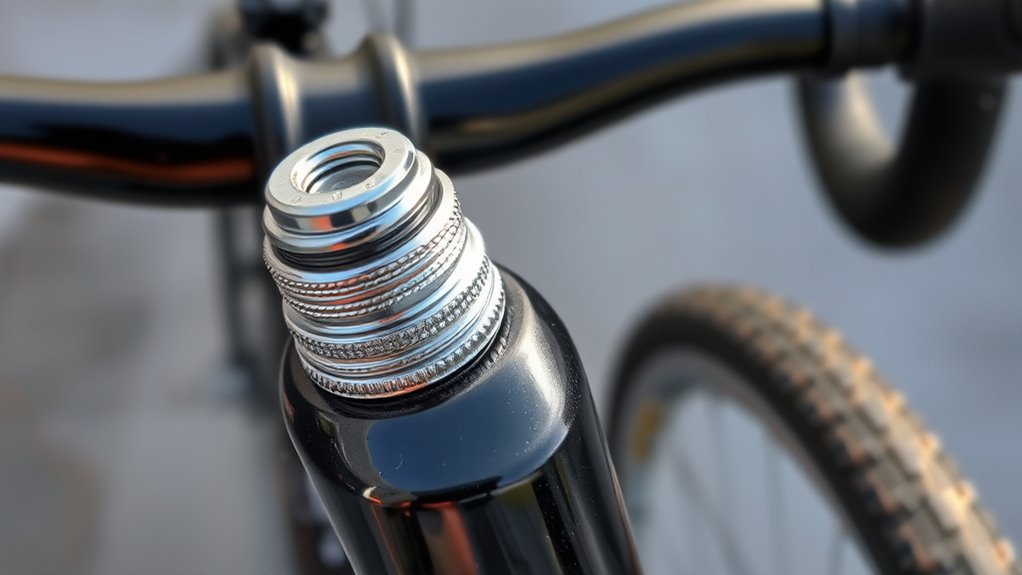
Ever wondered how to keep your bike’s seatpost in top shape and prevent costly damage? The key lies in proper maintenance and understanding the importance of seatpost care and torque. One of the first steps is to regularly perform seatpost lubrication. Over time, dirt, moisture, and grime can cause the seatpost to seize inside the frame, making adjustments difficult and increasing the risk of damage when you try to reposition it. Applying a thin layer of grease or anti-seize compound to the seatpost before insertion creates a smooth surface that resists corrosion and makes future adjustments easier. Be sure to clean the seatpost and inside the seat tube thoroughly before applying lubricant. This simple step can extend the life of your seatpost and prevent unnecessary wear or even the need for seatpost replacement down the line. Additionally, choosing the appropriate seatpost material based on your riding style and conditions can significantly impact durability and performance.
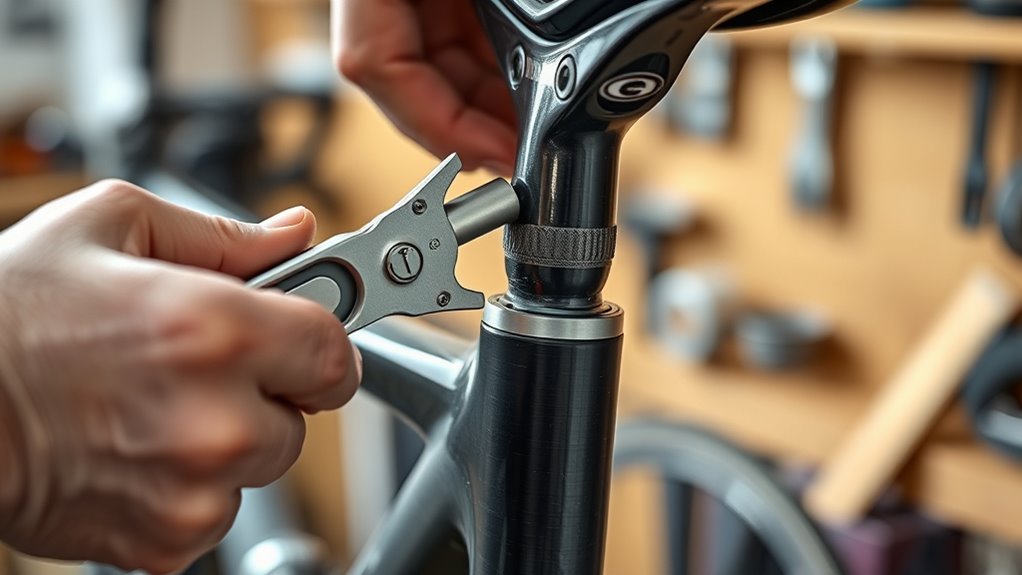
When you’re adjusting your seat height or replacing a worn-out seatpost, pay close attention to torque specifications. Using a torque wrench ensures you tighten the seatpost clamp to the manufacturer’s recommended torque. Over-tightening can crush the seatpost, damage the frame, or cause stress fractures, while under-tightening risks the seatpost slipping or shifting during rides. Proper torque application provides a secure fit without risking damage. Many frames specify torque values in the owner’s manual or on the frame itself, so always check before tightening. Remember, tightening gradually in small increments helps achieve an even, secure grip.
If you notice persistent creaking, slipping, or difficulty adjusting your seatpost, it may be time for seatpost replacement. Sometimes, despite lubrication and correct torque, the seatpost can become damaged or corroded beyond repair. In such cases, removing the old seatpost carefully and inspecting the inside of the seat tube can reveal if corrosion or deformation is the culprit. When replacing, ensure you select a seatpost that matches your bike’s specifications in diameter and material. Applying fresh lubrication during installation is essential for a smooth fit and future adjustments. After installing, double-check the torque and test the setup before hitting the road.
Maintaining your seatpost with proper lubrication, correct torque, and timely replacement when necessary keeps your riding smooth and safe. Neglecting these details can lead to unnecessary wear, damage, or even accidents. By paying attention to these aspects, you ensure your bike remains comfortable, reliable, and ready for any adventure. Regular maintenance might seem minor, but it’s the best way to protect your investment and enjoy a trouble-free ride every time.

LEXIVON Bike Torque Wrench 1/4-Inch Dr. 15-Piece Kit | 72-Tooth Gear, Dual-Direction Click Type 2~26 Nm / 17.7~230.1 in-lb (LX-191)
- Complete Bike Torque Wrench Kit: 15-piece set with various bits and extension
- Precise Torque Measurement: 2~26 Nm with micro-adjustments to 0.2 Nm
- High-Quality Gear Mechanism: 72-tooth, heat-treated chrome-molybdenum ratchet
As an affiliate, we earn on qualifying purchases.
As an affiliate, we earn on qualifying purchases.
Frequently Asked Questions
How Often Should I Check My Seatpost Torque?
You should check your seatpost torque at least once a month to guarantee safe riding. Regular seatpost maintenance helps prevent slipping or damage, especially after rough rides or adjustments. Always verify the torque using a torque wrench, following the manufacturer’s recommended settings. Incorporate safety checks into your routine to catch any issues early, maintaining peak performance and avoiding accidents caused by loose or improperly secured seatposts.
Can I Use Any Lubricant on My Seatpost?
You shouldn’t use any lubricant on your seatpost unless it’s specifically designed for bike components. Using incompatible lubricants can harm the seatpost’s material and lead to seatpost corrosion. Always check lubricant compatibility before applying, and opt for a carbon assembly paste or light grease recommended by your bike’s manufacturer. Proper lubrication helps prevent seizing and ensures smooth adjustments, extending your seatpost’s lifespan and maintaining safety.
What Signs Indicate My Seatpost Needs Replacement?
Your seatpost’s telling you it’s time for a replacement when it’s riddled with corrosion that refuses to budge, like a stubborn rusted lock. If you struggle to keep your saddle at the right height despite adjustments, it’s a sign the internal mechanisms are failing. When your seatpost no longer holds its position or shows visible damage, don’t wait—it’s time for a new one to keep your ride smooth and safe.
Is There a Difference Between Carbon and Aluminum Seatpost Torque?
Yes, there’s a difference between carbon and aluminum seatpost torque. You need to adhere to the torque specifications carefully because material compatibility matters—carbon seatposts are more delicate and require lower torque, typically around 5-8Nm, to prevent damage. Aluminum seatposts can handle slightly higher torque, usually around 8-10Nm. Always check your manufacturer’s guidelines to confirm you’re applying the right torque and protecting your seatpost from unnecessary stress or damage.
Can I Over-Tighten My Seatpost and Cause Damage?
Yes, you can over-tighten your seatpost, turning it into a tightrope walker risking a fall. Over-tightening can crush the seatpost, cause seatpost corrosion, or misalign it, leading to a shaky ride. Always follow torque specifications, gently tighten, and check for proper seatpost alignment. Ignoring this balance invites damage, so treat your bike with care—tighten just enough to keep it steady, not strained.
Conclusion
By caring for your seatpost and tightening it to the right torque, you guarantee safety, comfort, and performance. When you pay attention to detail, you protect your bike, extend its lifespan, and enjoy smoother rides. By maintaining your seatpost, you preserve your confidence, your joy, and your adventure. Remember, proper care isn’t just about mechanics — it’s about getting the most out of every ride, every mile, and every moment on your bike.