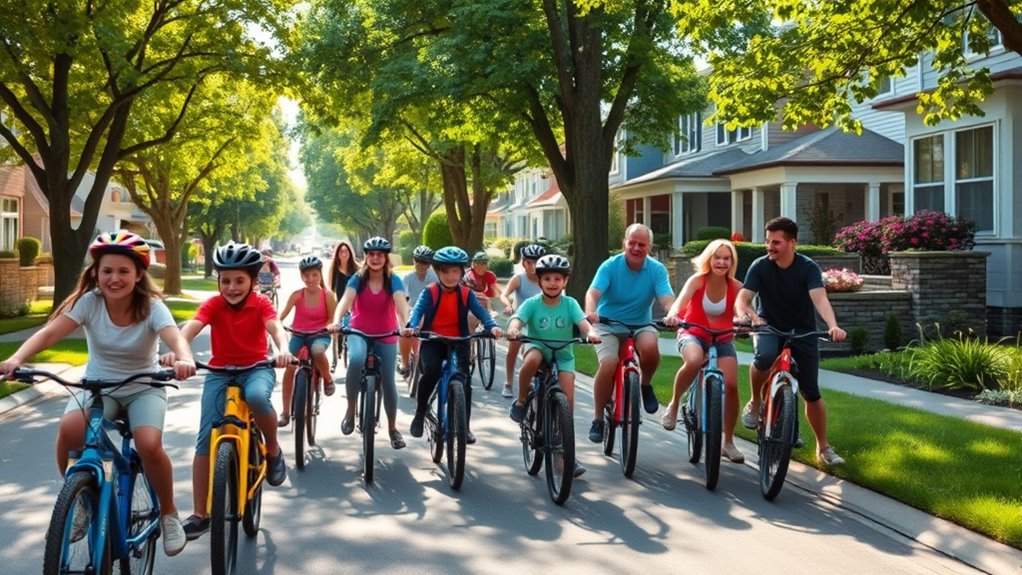

To start a neighborhood bike club, gather neighbors interested in cycling and set a regular meeting time. Plan safe routes, promote helmet use, and organize safety workshops to encourage responsible riding. Host community events like bike decorating contests or themed rides to make it fun and inclusive for all ages. Involve residents in planning and feedback so your club stays active and engaging. Keep exploring ways to strengthen your bike community and maximize its benefits.
Key Takeaways
- Organize safety briefings, route planning, and bike checks to ensure a secure riding environment for members.
- Promote community engagement through social events, themed rides, and local partnerships to build camaraderie.
- Create a calendar of activities, including safety fairs and inclusive rides, to encourage participation of all ages and skill levels.
- Incorporate fun elements like bike decorating contests and skill challenges to make events welcoming and enjoyable.
- Involve neighbors in planning, gather feedback, and foster shared ownership to keep the club active and relevant.
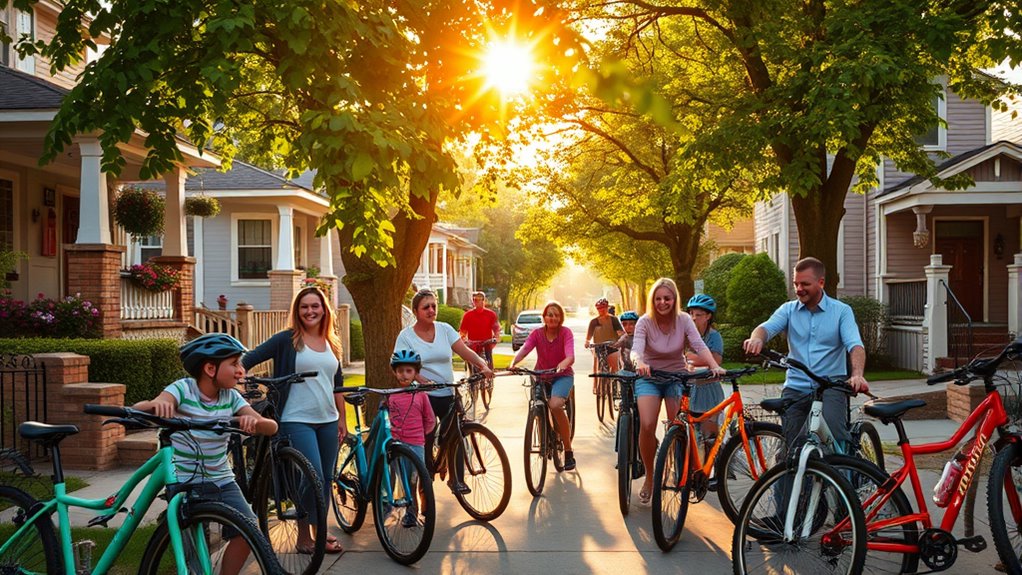
Starting a neighborhood bike club is a great way to bring neighbors together, promote fitness, and enjoy your local streets. But before you hit the pavement, prioritizing cycling safety is essential. You want everyone to have fun without risking injuries or accidents. First, organize a safety briefing for all members, covering basics like wearing helmets, obeying traffic laws, and using hand signals. Encourage riders to check their bikes beforehand to ensure brakes, tires, and lights are in good condition. Establish clear routes that avoid busy roads or dangerous intersections, emphasizing areas with good visibility and low traffic. As your group grows, consider hosting safety workshops or inviting local cycling experts to share tips, which can boost confidence and awareness among members.
Creating opportunities for community events can really help your bike club thrive. Think beyond just rides—organize regular social gatherings, such as picnics or coffee meetups, where neighbors can connect and share cycling stories. Community events also serve as excellent platforms to promote cycling safety and awareness. You could plan themed rides, like a holiday parade or a charity event, which encourage participation from all age groups and experience levels. These gatherings not only foster camaraderie but also highlight the benefits of biking as a sustainable transportation option. Make sure to advertise these events through flyers, neighborhood social media pages, or local bulletin boards to maximize turnout.
As you organize rides, consider creating a calendar of community events that your bike club can participate in or host. Partnering with local businesses or schools can amplify your reach and create more engaging activities. For instance, hosting a bike safety fair during a community festival can draw families and promote safe cycling habits for everyone. When planning events, keep accessibility in mind, ensuring routes are suitable for children and less experienced riders. Incorporating seasonal variations and natural scenery can make outings more enjoyable and memorable. Incorporate fun activities, like bike decorating contests or skill challenges, to make community events more inviting and inclusive. These gatherings help build a sense of belonging and encourage more residents to hop on their bikes.
Involving neighbors in planning and decision-making makes your bike club more dynamic and responsive to everyone’s needs. Whether it’s choosing routes, selecting event themes, or setting safety reminders, engaging your community ensures your club remains vibrant and relevant. By focusing on cycling safety and hosting engaging community events, your neighborhood bike club can become a cornerstone of local life—an enjoyable, safe, and active way to connect with neighbors on your streets.

OutdoorMaster Skateboard Cycling Helmet – Two Removable Liners Ventilation Multi-Sport Scooter Roller Skate Inline Skating for Kids, Youth & Adults
Durable: Built for both comfort and impact resistance with reinforced ABS shell & thickened shock-absorbing EPS core
As an affiliate, we earn on qualifying purchases.
As an affiliate, we earn on qualifying purchases.
Frequently Asked Questions
What Safety Gear Should Members Wear During Rides?
You should wear a helmet for safety during rides to protect your head in case of falls or accidents. Reflective gear is essential, especially during early mornings or evenings, to stay visible to drivers and other cyclists. Consider adding lights to your bike as well. Always check your safety gear before riding to guarantee everything fits properly and is in good condition, so you stay safe and confident on every ride.
How Do I Handle Conflicts Within the Bike Club?
A stitch in time saves nine, so address conflicts early. You should use effective communication strategies, like active listening and clear, respectful dialogue, to resolve disputes within your bike club. Encourage members to share their perspectives calmly, and mediate when needed. Remember, conflict resolution is about finding common ground. By fostering open communication, you’ll create a positive riding environment where everyone feels valued and heard.
What Is the Ideal Group Size for New Clubs?
For new bike clubs, a group size of 8 to 12 riders works best. This size fosters good rider dynamics, allowing everyone to stay connected and communicate easily. Smaller groups might lack energy, while larger ones can become chaotic. Keep the group manageable so you can plan routes, guarantee safety, and build camaraderie. As your club grows, you can consider splitting into smaller subgroups for different rides.
How Do I Find Funding or Sponsorship Opportunities?
Finding funding or sponsorships can seem like searching for a needle in a haystack, but it’s totally doable. You should reach out to local businesses and community organizations because they often love supporting neighborhood initiatives. Look into grant opportunities from local government or nonprofits that promote health or outdoor activities. Craft a compelling proposal highlighting your bike club’s positive community impact, and you’ll attract sponsors enthusiastic to join your ride to success!
What Are the Best Routes for Beginner Cyclists?
You should look for beginner-friendly routes with smooth, flat terrain and minimal traffic. Stick to local parks, dedicated bike paths, or quiet residential streets. Remember to practice good cycling etiquette by signaling your turns and maintaining a safe distance. Keep your bike well-maintained, checking brakes and tires before rides. Starting on easy routes helps you build confidence and skills, making your cycling experience enjoyable and safe.

Bike Front and Rear Reflectors Kit, Bicycle Wheel Spoke Reflectors Kit, Bike Cycling Safety Warning Reflectors for Handlebar and Seatpost, Bike Road Safety Reflection Kit, Red and White/8 Pcs
Superb Material: The bike reflectors for adult bikes are made of premium plastic material, which is sturdy, not…
As an affiliate, we earn on qualifying purchases.
As an affiliate, we earn on qualifying purchases.
Conclusion
Starting a neighborhood bike club is a fantastic way to stay active, connect with neighbors, and enjoy your local streets. Did you know that cyclists are 41% more likely to meet new friends than non-cyclists? So, gather your neighbors, plan regular rides, and have fun exploring together. Not only will you boost your health, but you’ll also build a stronger community. Get rolling today and experience the joy of biking with friends right in your neighborhood!

Bicycle Repair Bag With Tire Pump, Portable Tool Kit for Camping Travel – Bike Glueless Patches, Maintenance Essentials All in One Safety Kit
Bicycle Repair Kit: include mini bicycle pump + bike multitool + crank extractor and wrench + bone wrench…
As an affiliate, we earn on qualifying purchases.
As an affiliate, we earn on qualifying purchases.

OWMOSYX 180 Pieces Bike Wheel Spoke Beads Plastic Clip Beads Spoke Colorful Bicycle Bike Spoke Decorations for Kids Bike Accessories Girls Boys
Safety and environmental protection: Made of non-toxic and odorless PP plastic, the bike spoke beads are durable, resistant…
As an affiliate, we earn on qualifying purchases.
As an affiliate, we earn on qualifying purchases.