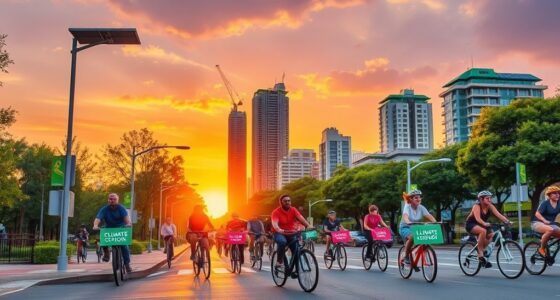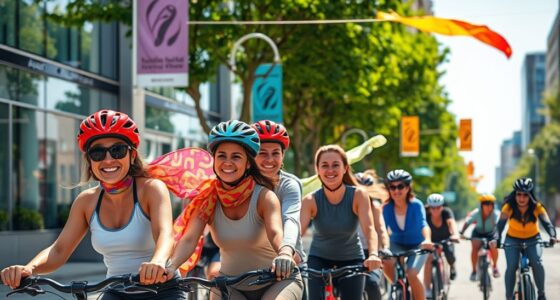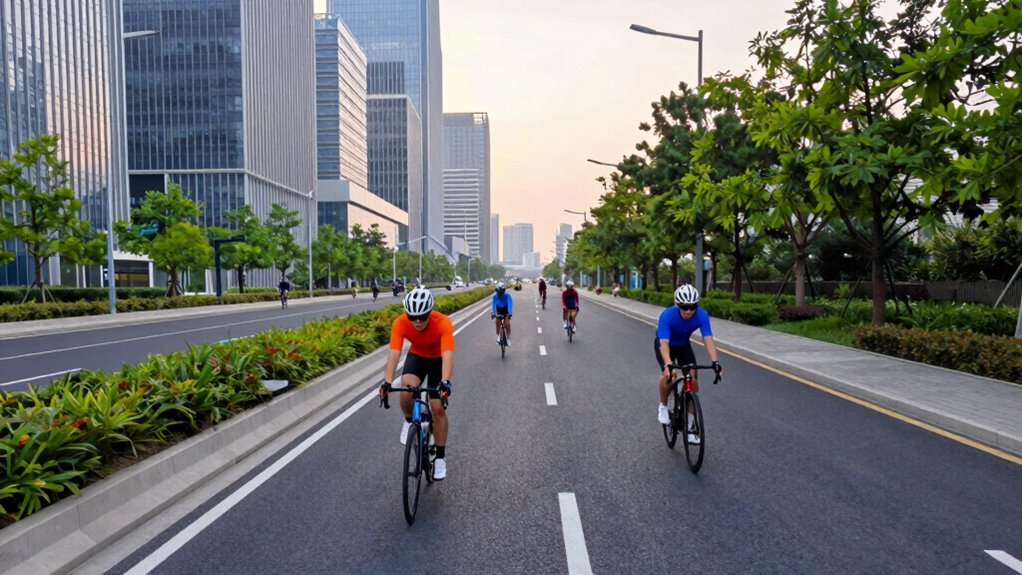

Cycling superhighways transform your daily commute by offering faster, safer routes that cut through city landscapes, reducing travel time and environmental impact. They provide dedicated lanes that lower accident risks and boost confidence for riders. Cities redesign infrastructure to support these corridors, promoting active transportation and better urban mobility. These changes connect neighborhoods and commercial areas, increase property values, and encourage sustainable, eco-friendly lifestyles. Keep exploring to discover how these innovations could reshape your commute even further.

Get sports gear delivered free — and shop member deals
- Fast, free delivery on millions of items
- Access to Prime Big Deal Days deals on October 6–7
- Prime Video, Amazon Music and more included
Key Takeaways
- Provide faster, safer, and more reliable routes, reducing commute times and increasing confidence for daily cyclists.
- Redesign urban infrastructure to prioritize cycling, integrating dedicated lanes into broader transportation networks.
- Decrease vehicle emissions and traffic congestion, promoting eco-friendly and sustainable urban mobility.
- Connect key neighborhoods and commercial areas, enhancing accessibility and boosting local economic activity.
- Foster a culture of active transportation, supporting resilient, livable, and environmentally friendly cities.
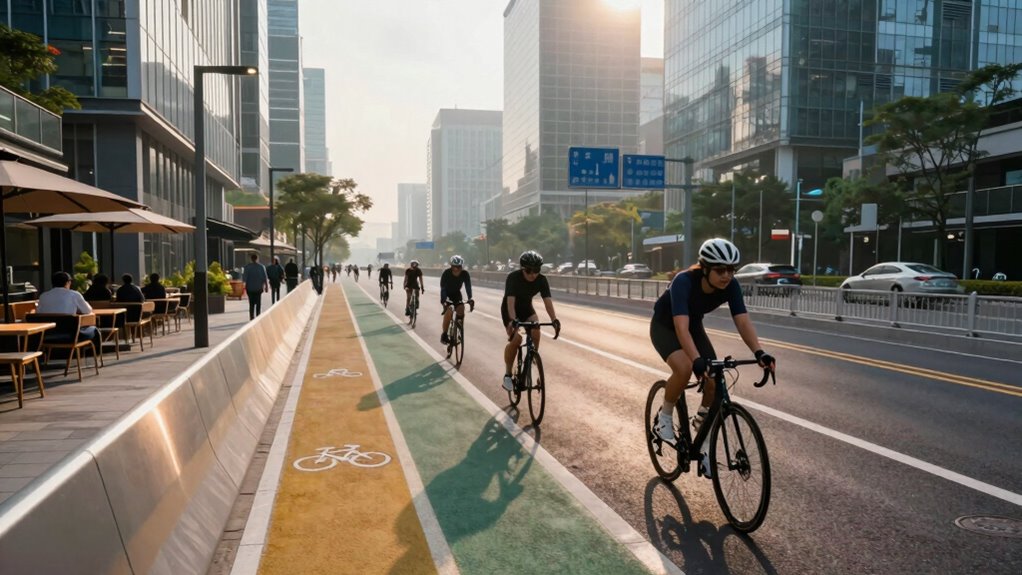
Cycling superhighways are transforming the way people commute by offering a faster, safer, and more reliable alternative to driving or public transit. These dedicated routes cut through city landscapes, allowing you to move swiftly and smoothly without the usual delays faced by cars or buses. As urban planning adapts to support these modern corridors, cities are redesigning their infrastructure to prioritize cycling, making it easier and more attractive to choose a bike over other modes of transportation. With dedicated lanes separated from motor traffic, you can enjoy a safer ride, reducing the risk of accidents and fostering confidence for daily commuters. This shift isn’t just about convenience; it’s also about reshaping how cities think about mobility and land use. Cycling infrastructure plays a crucial role in supporting these changes by encouraging more residents to embrace active transportation. Additionally, the development of these routes often involves urban planning strategies that integrate cycling into broader transportation networks, helping to create more cohesive and efficient cities. Furthermore, these improvements often involve community engagement, ensuring that local residents’ needs and feedback are incorporated into the planning process. Incorporating innovative design principles can further enhance the safety and accessibility of cycling superhighways for diverse user groups.
The environmental impact of cycling superhighways plays a significant role in their appeal. Since bikes produce zero emissions, they contribute to cleaner air and a healthier environment. When you opt for a bike, you’re helping to reduce greenhouse gases and decrease dependence on fossil fuels. Urban areas often struggle with air pollution and congestion, and cycling superhighways act as a powerful tool to combat these issues. By encouraging more people to ride, cities can lower traffic volume, decrease noise pollution, and improve overall urban air quality. This sustainable approach aligns well with long-term urban planning goals, which aim to create more livable, eco-friendly cities. The presence of these routes also promotes a culture of active transportation, inspiring communities to prioritize health, sustainability, and quality of life.
In addition to environmental benefits, cycling superhighways influence urban planning in ways that foster social and economic growth. These routes often connect key neighborhoods, commercial districts, and recreational areas, making it easier for you to access different parts of the city efficiently. As cities invest in cycling infrastructure, property values around these routes tend to rise, and local businesses benefit from increased foot traffic. Urban planning that integrates cycling superhighways encourages compact, mixed-use development, reducing urban sprawl and making cities more sustainable over time. It also promotes equitable access, giving more residents affordable and reliable transportation options regardless of income or car ownership. As a result, cycling superhighways don’t just change how you commute—they influence city design, economic vitality, and environmental health, creating a more integrated and resilient urban landscape.
As an affiliate, we earn on qualifying purchases.
Frequently Asked Questions
How Do Cycling Superhighways Impact Local Businesses?
Cycling superhighways boost local business revitalization by increasing foot traffic and making neighborhoods more attractive. As more cyclists pass through, shops and cafes see higher patronage, leading to economic growth. You might notice increased sales and new customers, which encourages entrepreneurs to invest or expand. Overall, these superhighways create a vibrant, accessible environment that benefits local businesses and stimulates economic activity in the area.
Are Cycling Superhighways Suitable for All Age Groups?
Cycling superhighways can be suitable for all age groups if designed with age inclusivity and infrastructure adaptability in mind. You’ll find safe, smooth paths that accommodate children, seniors, and everyone in between. Proper signage, gentle gradients, and rest stops make riding comfortable and accessible. When cities prioritize these features, cycling superhighways become an inclusive transportation option, encouraging active lifestyles across diverse age groups and making commutes safer and more enjoyable for everyone.
What Maintenance Challenges Do Cycling Superhighways Face?
Think of cycling superhighways as a living garden needing constant care. You face maintenance challenges like guaranteeing surface durability, preventing cracks and potholes that threaten smooth rides. Vegetation management becomes crucial to keep pathways clear and prevent overgrowth from encroaching. Regular inspections and prompt repairs are your tools, helping the network stay resilient and welcoming for cyclists, much like tending a garden ensures its beauty and vitality endure.
How Do Superhighways Integrate With Public Transportation Systems?
You’ll find that superhighways integrate with public transportation through strategic urban planning, creating seamless connections between cycling routes and transit hubs. This integration encourages multi-modal commutes, making it easier for you to switch from bike to bus or train. By promoting such systems, cities boost environmental benefits, reduce congestion, and support healthier lifestyles. Your commute becomes more efficient and eco-friendly as these networks work together to reshape urban mobility.
What Safety Measures Are in Place Along Cycling Superhighways?
Safety is no accident—especially on cycling superhighways. You’ll find traffic safety measures like dedicated lanes, barriers, and clear signage to guide you safely. Signage clarity guarantees you understand rules quickly, reducing confusion and accidents. Crossings are well-marked, and lighting is ample for night rides. These features work together to keep you safe, proving that when safety measures are in place, everyone can enjoy a smoother, more secure cycling experience.
Conclusion
So, as you pedal along these superhighways, you might think you’re just avoiding traffic, but really, you’re joining a revolution—one that promises faster commutes yet somehow makes your journey feel more personal. Ironically, in a world obsessed with speed, these bike lanes remind us that sometimes, slowing down and taking the scenic route can be the ultimate form of progress. Who knew that a simple ride could reshape more than just your commute?
NFL season / tailgating Picks
team gear
As an affiliate, we earn on qualifying purchases.