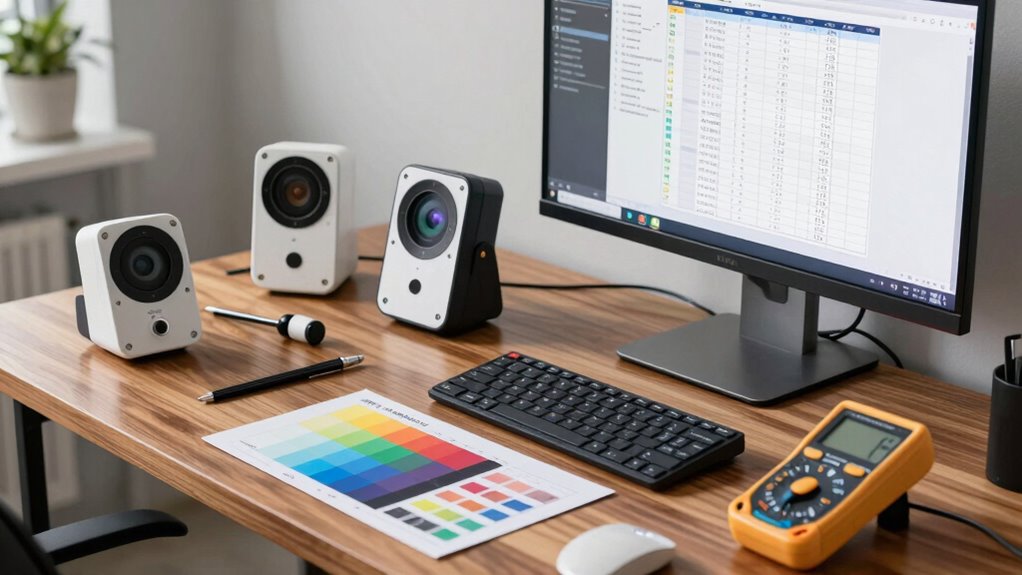

To keep your indoor data trustworthy, you need to develop a regular calibration habit. This means scheduling consistent calibration sessions, following manufacturer guidelines, and using certified standards to verify sensors stay accurate. By regularly checking and adjusting your devices, you prevent sensor drift and maintain consistency across all sensors. Keeping detailed records of each calibration helps spot patterns and improve long-term performance. Continue exploring how to establish an effective calibration routine that safeguards your data quality.
Key Takeaways
- Establish a consistent calibration schedule aligned with manufacturer recommendations and device usage patterns.
- Use certified standards and proper procedures during calibration to ensure accuracy.
- Regularly document calibration sessions to monitor sensor performance and detect drift trends.
- Perform routine self-diagnostics to identify when recalibration is necessary.
- Maintain and review calibration records to ensure ongoing data reliability and system integrity.
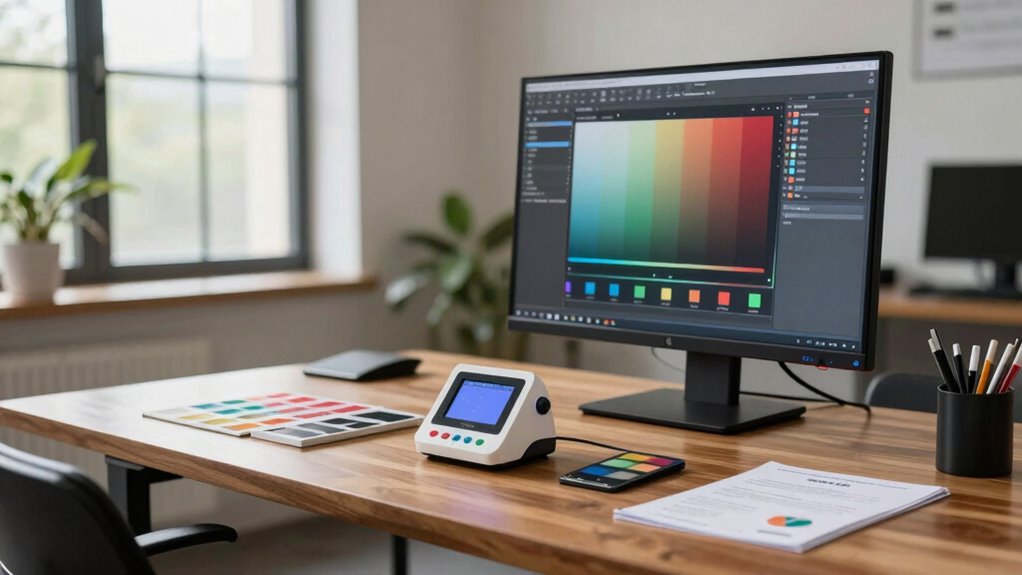
Developing the calibration habit means regularly checking and adjusting your tools, mindset, and processes to stay aligned with your goals. When it comes to indoor data collection, this habit is essential for maintaining reliable sensor accuracy and device consistency. You want to trust the data you’re gathering, whether it’s for climate control, security, or health monitoring, and calibration is the key to guaranteeing that trust.
First, you need to understand that sensors can drift over time. Small variances in temperature, humidity, or even dust buildup can cause inaccurate readings if you don’t calibrate regularly. This drift impacts your sensor accuracy, leading to unreliable data that could skew your decisions or system responses. Regular calibration ensures your sensors stay within their ideal range, providing precise measurements that reflect real-world conditions. Without it, you risk making decisions based on faulty data, which can have serious consequences, especially in critical environments.
Sensors can drift over time, causing inaccurate readings and unreliable data if not regularly calibrated.
Device consistency is equally important. When you use multiple sensors or devices, inconsistencies can creep in due to manufacturing variations or environmental influences. Calibration helps align all your devices to a common standard, so their outputs are comparable and dependable. This consistency means you’re not just relying on one accurate sensor, but on a network of devices working harmoniously. It minimizes blind spots and prevents false alarms or missed detections caused by sensor discrepancies.
To develop a strong calibration habit, you should set a regular schedule. Depending on the device and its usage, calibration might be needed weekly, monthly, or quarterly. Use manufacturer guidelines as a starting point, but also pay attention to sensor performance indicators. Many modern sensors include self-diagnostic tools that can alert you when calibration is overdue, making it easier to stay proactive. When calibrating, follow precise procedures—using certified calibration standards whenever possible—to guarantee your adjustments are accurate.
In addition, keep detailed records of each calibration session. Tracking adjustments over time helps you identify patterns or recurring issues, allowing you to refine your maintenance routines. This documentation also proves invaluable if you need to troubleshoot or verify data integrity later on. Remember, calibration isn’t just a one-time task; it’s an ongoing process that sustains the reliability of your indoor data.
A key aspect of maintaining calibration is understanding sensor drift, which is a common challenge in indoor data collection.

APERA INSTRUMENTS AI209-T Value Series PH20 pH Tester Combo Kit, including the Maintenance Set, and a CalPod Solution Holder for Easy Calibration
The top-rated pH tester now comes with a complete CALIBRATION and PROBE CARE Combo Kit, ensuring reliable test…
As an affiliate, we earn on qualifying purchases.
As an affiliate, we earn on qualifying purchases.
Frequently Asked Questions
How Often Should Indoor Sensors Be Calibrated?
You should calibrate your indoor sensors regularly, ideally every three to six months, depending on usage and manufacturer recommendations. Consistent sensor maintenance and calibration frequency guarantee accurate readings over time. If you notice inconsistent data or environmental changes, recalibrate sooner. Regular calibration helps maintain data trustworthiness, preventing drift and ensuring your sensors provide reliable information for decision-making and system performance.
What Are the Signs of Inaccurate Indoor Data?
You’ll notice inaccurate indoor data when sensors show signs of drift or when readings don’t match environmental conditions. Sensor drift occurs when measurements gradually become unreliable, while environmental interference from temperature, humidity, or nearby electronics can skew data. If you observe inconsistent or unexpected readings, it’s a clear sign you need to recalibrate your sensors. Regular checks help detect these issues early, ensuring your data remains trustworthy and accurate.
Which Calibration Tools Are Most Reliable?
Think of calibration tools as the compass guiding your indoor data ship. Reliable tools like calibration standards from reputable brands guarantee sensor accuracy and consistent results. You might recall calibrating a humidity sensor that, after using industry-grade calibration kits, provided readings within 1% of actual humidity. Using trusted calibration tools keeps your data trustworthy, preventing drift and ensuring your indoor environment remains accurately monitored and maintained.
Can Calibration Improve All Types of Indoor Sensors?
Calibration can improve all types of indoor sensors by enhancing sensor accuracy and ensuring reliable data. Regular calibration frequency is essential because sensors can drift over time, affecting precision. By consistently calibrating your sensors, you maintain consistent measurements, reduce errors, and improve overall data quality. Whether for temperature, humidity, or air quality sensors, calibration is a vital habit that keeps your indoor data trustworthy and actionable.
What Are Common Calibration Mistakes to Avoid?
You should avoid neglecting calibration frequency, which can lead to sensor drift and inaccurate readings. Don’t calibrate too often, risking unnecessary wear, or too infrequently, risking data loss in accuracy. Also, verify you’re using proper calibration procedures and reference standards. Skipping detailed checks or rushing through calibration can introduce errors. Regularly reviewing calibration protocols helps maintain sensor reliability and keeps your indoor data trustworthy.

TRACEABLE – AO-90080-06 Traceable Thermometer with Clock, Humidity Monitor, and Calibration
Available with a NIST-traceable or A2LA accredited (1750.01) calibration certificate depending on model
As an affiliate, we earn on qualifying purchases.
As an affiliate, we earn on qualifying purchases.
Conclusion
By now, you realize that regularly calibrating your indoor sensors isn’t just a routine—it’s the secret to trustworthy data. Think of calibration as a health check for your devices, ensuring they stay accurate and reliable. But here’s the twist: some believe that sensors self-correct over time, making calibration optional. Don’t buy into that myth. Stay proactive, question assumptions, and keep your indoor data trustworthy. The habit of calibration isn’t just a practice; it’s your safeguard against deception.
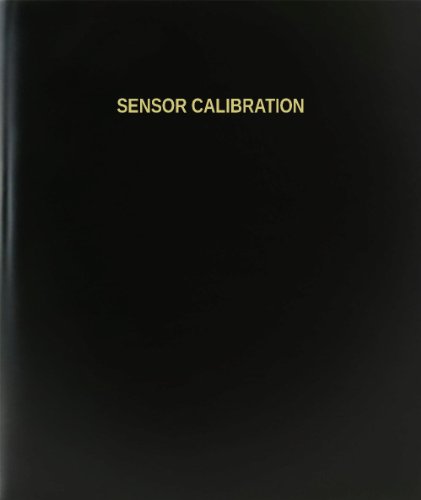
BookFactory Sensor Calibration Log Book/Journal/Logbook – 120 Page, 8.5''x11'', Black Hardbound (XLog-120-7CS-A-L-Black(Sensor Calibration Log Book))
Hard Bound Book with Reinforced Imitation Leather Cover, and Placeholder Ribbon
As an affiliate, we earn on qualifying purchases.
As an affiliate, we earn on qualifying purchases.

ADAS Calibration Dynamic Angle Leveling Tool for Eyeball Sensor Unit Acc Radar Sensor Positioning Tool for Vehicle Safety Systems – Enhance Precision and Accuracy
1.Application: For Eyeball radar unit,not for planar radar unit one,compatible with Benz Land Rover Tesla Ford Chevrolet Jeep…
As an affiliate, we earn on qualifying purchases.
As an affiliate, we earn on qualifying purchases.