
To protect steel frames during humid summers, you should apply protective coatings like high-quality sealants to create a moisture barrier, and regularly inspect them for damage. Keep the environment dry by ensuring good drainage, minimizing standing water, and promoting proper ventilation. Elevate the frames where possible, and maintain routine cleaning to remove dirt and debris. Address any coating issues immediately to prevent rust. Continuing with these strategies helps extend the lifespan of your steel structures effectively.
Key Takeaways
- Apply high-quality, weather-resistant coatings and touch up immediately to maintain a moisture barrier.
- Ensure proper drainage and elevate steel frames to prevent water accumulation and ground contact.
- Conduct regular inspections for early rust signs and promptly address any coating damage.
- Keep steel surfaces clean, dry, and free of debris to reduce moisture retention.
- Use rust inhibitors and ensure protective coatings remain continuous and intact.
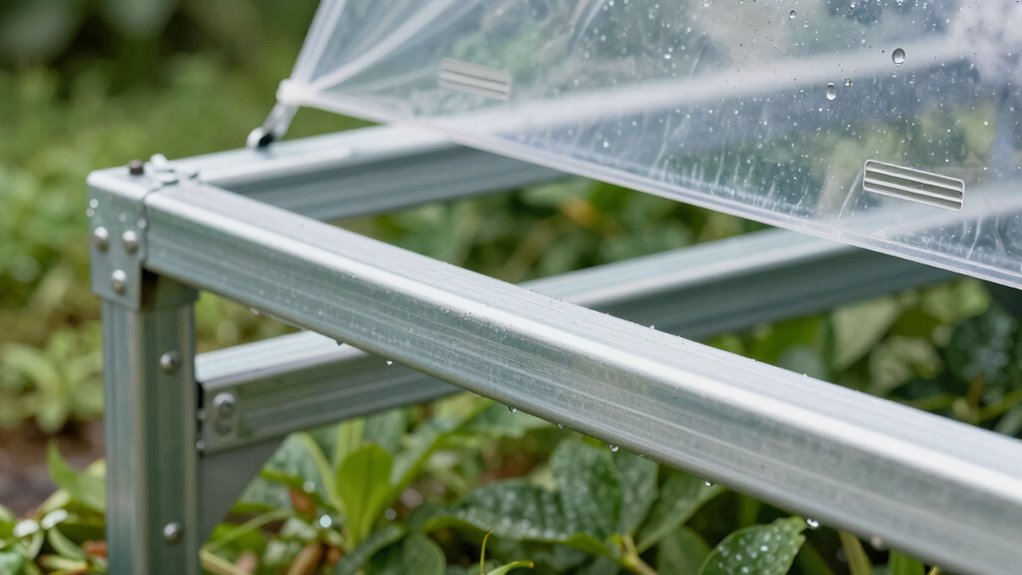
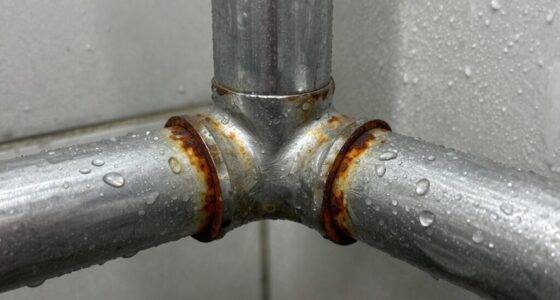
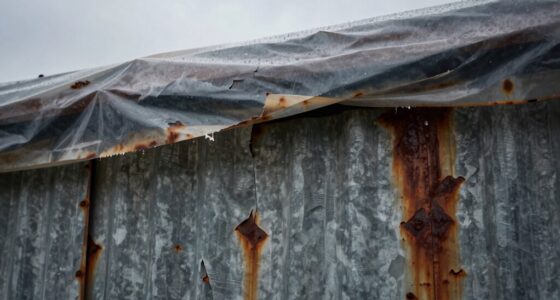
Humid summers can pose a serious threat to steel frames, causing rust and corrosion that weaken their structural integrity. When moisture levels rise, steel is vulnerable to oxidation, which can compromise its strength over time. To combat this, you need to focus on rust prevention strategies that keep your steel safe and durable through the humidity. One of the most effective methods is applying protective coatings. These coatings serve as a barrier, preventing moisture from making direct contact with the steel surface. By choosing high-quality, weather-resistant paints or sealants, you can substantially reduce the risk of rust forming. Regular inspection of these coatings is vital; over time, they can wear or chip, exposing the steel to moisture. When you notice any damage, touch up the protective layers immediately to maintain a continuous defense against corrosion.
Apply weather-resistant coatings and inspect regularly to protect steel from rust during humid summers.
In addition to coatings, consider treating your steel with rust inhibitors before applying protective layers. Rust inhibitors chemically form a protective film that inhibits oxidation, providing an extra layer of defense. Applying these inhibitors properly ensures they penetrate into tiny surface imperfections, preventing moisture from settling into crevices. You should also pay attention to the environment where your steel is installed. Good drainage and proper ventilation reduce moisture accumulation around the frames, limiting the conditions that foster rust. If possible, elevate the steel frames above ground level or away from areas prone to flooding, as standing water accelerates corrosion. Proper environmental management plays a crucial role in preventing rust buildup. Understanding steel corrosion processes can help you identify vulnerabilities early and implement targeted protection measures. Regularly monitoring the environment and adjusting maintenance routines accordingly can further enhance the longevity of your steel structures. Also, ensuring proper maintenance routines are followed can help detect early signs of corrosion before they become severe. Incorporating preventive measures into your routine maintenance can significantly extend the lifespan of your steel frames.
Another practical step is to keep the steel clean and dry. Dirt, debris, and standing water can trap moisture against the surface, hastening rust development. Regularly washing the steel with water and mild detergent helps remove corrosive contaminants. After cleaning, make sure the surface is thoroughly dried before applying any protective coatings or rust inhibitors. Moisture trapped underneath coatings can cause peeling or bubbling, exposing the steel to new risks. Employing appropriate cleaning techniques ensures the removal of corrosive substances without damaging the protective coatings. Consistent maintenance not only preserves the appearance but also significantly extends the lifespan of your steel frames.
Ultimately, safeguarding your steel frames during humid summers requires consistent maintenance and proactive measures. Protective coatings are your first line of defense, but they work best when complemented by rust prevention practices such as environmental control, regular inspections, and cleaning routines. Stay vigilant, and you’ll extend the lifespan of your steel structures despite the challenges posed by humid weather. Properly protected, your steel frames will remain robust and secure, ready to withstand the season’s moisture without succumbing to rust and corrosion.

Surface Lock Ceramic Coating for Stainless Steel Appliances — Home Ceramic Spray That Shines, Seals & Protects, Repels Water & Stains, Fingerprint Protector for Kitchen Countertops & Bathroom, USA
SHINES, SEALS & PROTECTS ALL HOME SURFACES — Surface Lock ceramic coating creates an invisible protective layer on…
As an affiliate, we earn on qualifying purchases.
As an affiliate, we earn on qualifying purchases.
Frequently Asked Questions
Can Saltwater Exposure Affect Steel Frame Corrosion?
Yes, saltwater exposure greatly accelerates steel frame corrosion because saltwater effects promote rust formation. When your steel frames come into contact with saltwater, it creates a conductive environment that speeds up oxidation. To prevent this, you should apply corrosion prevention treatments like protective coatings or sealants, and guarantee regular maintenance. These measures help minimize saltwater effects, extending the lifespan and integrity of your steel structures in humid, salty environments.
Are There Eco-Friendly Protective Coatings for Steel Frames?
Imagine shielding your steel frame like wrapping a treasure chest with eco-friendly coatings—sustainable protection that guards against corrosion without harming the environment. Yes, there are eco-friendly coatings designed specifically for this purpose. They form a durable, protective layer that’s safe for the planet while extending your steel’s lifespan. By choosing eco-friendly coatings, you’re not only preserving your structure but also contributing to a greener, more sustainable future.
How Often Should Protective Treatments Be Reapplied?
You should reapply protective sealants every 1 to 3 years, depending on your maintenance schedule and environmental conditions. Regular inspections help identify when reapplication is needed, especially after heavy rain or high humidity. Keeping up with your maintenance schedule guarantees your steel frames stay protected against corrosion and moisture. Using eco-friendly protective coatings can extend the time between reapplications, reducing your environmental impact while keeping your steel in top shape.
Do Specific Steel Types Resist Humidity Better?
Did you know that stainless steel alloys resist humidity better than regular steel? You’ll find that steel alloys with higher chromium content naturally form a protective oxide layer, making them less prone to rust. Applying a protective coating enhances this resistance, especially during humid summers. So, choosing the right steel alloy and maintaining a quality protective coating helps keep your steel frames in top shape and prevents corrosion effectively.
Can Interior Humidity Control Prevent Steel Corrosion?
Yes, interior humidity control can prevent steel corrosion. By using indoor dehumidification, you reduce moisture levels, which minimizes rust formation. Improving ventilation allows air circulation, preventing humid pockets that can accelerate corrosion. Regularly monitoring humidity levels and maintaining it between 30-50% helps protect steel frames effectively. Combining dehumidification with proper ventilation creates an environment less conducive to corrosion, ensuring your steel structures stay durable during humid summers.

WD-40 Specialist Corrosion Inhibitor, Long-Lasting Anti-Rust Spray, 6.5 OZ
Coats metal parts to lubricate and protect against rust and corrosion by blocking out air and moisture. Protects…
As an affiliate, we earn on qualifying purchases.
As an affiliate, we earn on qualifying purchases.
Conclusion
By taking these simple steps, you can keep your steel frames protected and looking great despite the humid summer weather. Regular inspections, applying protective coatings, and controlling moisture are key to preventing corrosion. Don’t let humidity catch you off guard—are you prepared to safeguard your investment and enjoy a durable, rust-free structure all season long? With a little effort, you’ll guarantee your steel frames stay strong and resilient year after year.
WD-40 Specialist Corrosion Inhibitor, Long-Lasting Anti-Rust Spray, 6.5 OZ
Coats metal parts to lubricate and protect against rust and corrosion by blocking out air and moisture. Protects…
As an affiliate, we earn on qualifying purchases.
As an affiliate, we earn on qualifying purchases.

Titebond WeatherMaster Metal Roof Sealant, Silver – Premium Polymer Caulk for Aluminum, Copper, Galvanized Steel & Coated Metals, UV-Resistant – 62611, 9.5 Oz. Cartridge
Premium Metal Roof Sealant: Elastomeric polymer formula provides strong adhesion to aluminum, copper, galvanized steel, Kynar coated metals,…
As an affiliate, we earn on qualifying purchases.
As an affiliate, we earn on qualifying purchases.