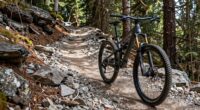
To save your legs late in a climb, focus on controlling your breathing, maintaining a steady pace, and staying relaxed. Deep, consistent breaths supply your muscles with oxygen and prevent exhaustion. Break the climb into manageable segments to keep effort steady and avoid burnout. Stay relaxed in your shoulders and grip to reduce tension and conserve energy. Mastering these habits helps keep fatigue at bay, so if you keep practicing, you’ll discover more tips to climb stronger longer.
Key Takeaways
- Maintain consistent, deep breathing to ensure efficient oxygen delivery and delay muscle fatigue late in the climb.
- Pace yourself steadily from the start to prevent early exhaustion and conserve energy for the final stretch.
- Break the climb into segments mentally to stay focused and avoid feeling overwhelmed near the top.
- Keep body tension minimal, especially in shoulders and grip, to reduce muscle strain and conserve energy late in the ride.
- Cultivate mental resilience and relaxation techniques to manage effort and prevent late-stage fatigue.
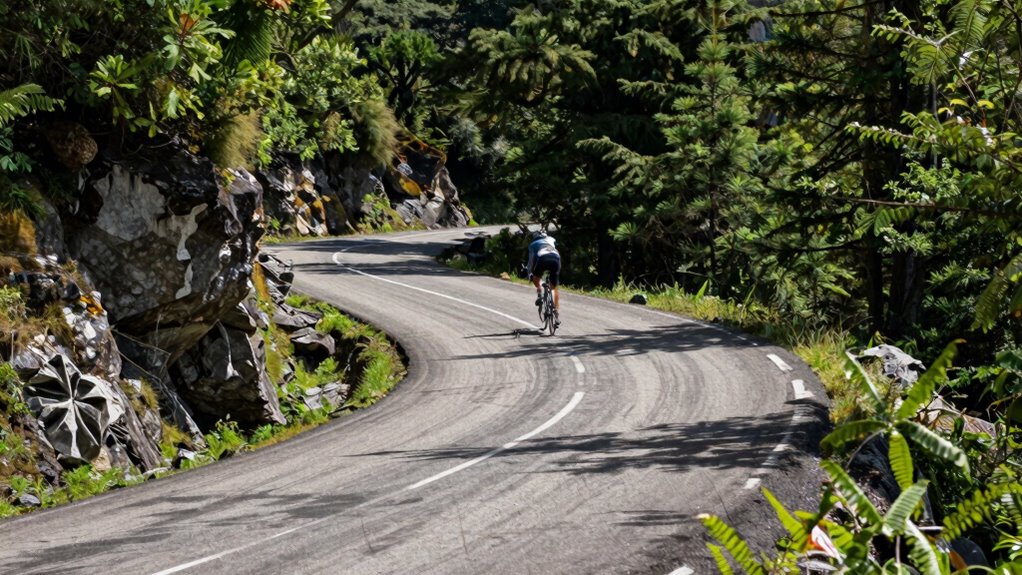
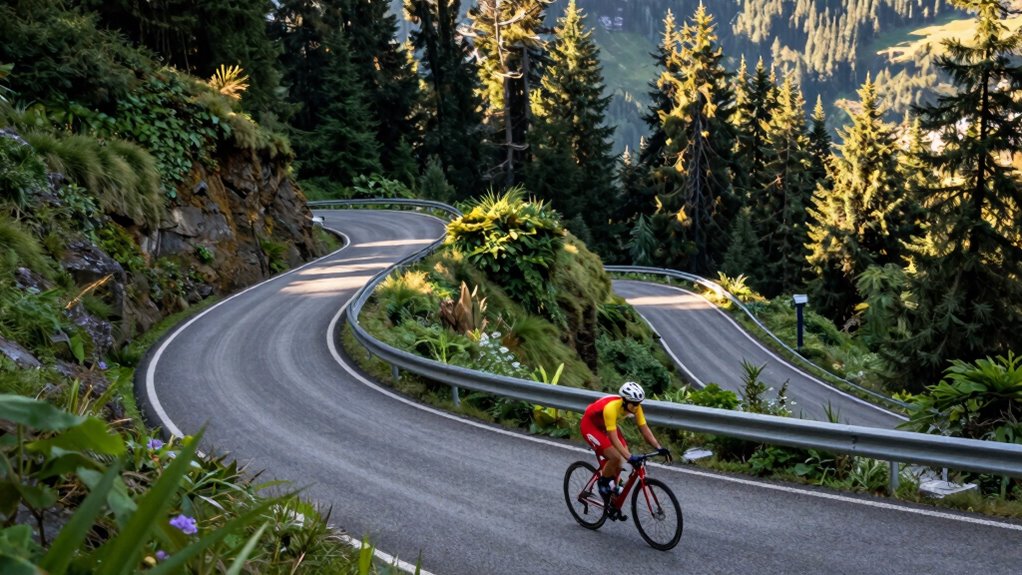
When tackling long climbs on the road, developing a simple habit can make a big difference in how your legs feel late in the ride. If you’re into mountain biking or regular road cycling, you’ve probably experienced that familiar fatigue setting in just when you need to push through the toughest part of the climb. The key to avoiding that late-race burnout lies in your approach to endurance training and your mental and physical prep during the ascent.
One effective habit is to focus on consistent, controlled breathing throughout the climb. When you breathe steadily, you supply your muscles with oxygen more efficiently, helping to delay fatigue. It’s easy to get caught up in the effort and start holding your breath or breathing shallowly, especially when the incline steepens. But if you make a conscious effort to maintain deep, rhythmic breaths, you’ll conserve energy and keep your legs feeling fresher longer. This habit not only benefits mountain biking but also translates well to road cycling, where sustained effort over long climbs is often required. Incorporating proper breathing techniques into your training can further enhance your endurance.
Maintain steady, deep breaths during climbs to conserve energy and delay fatigue.
Another essential habit involves pacing yourself deliberately. Many cyclists tend to start climbs too aggressively, only to burn out halfway up. Instead, adopt a steady, moderate pace from the outset. This isn’t about going slow but maintaining a power output that feels sustainable. During endurance training, you learn to listen to your body and avoid the temptation to surge. Applying that mindset on the climb ensures your muscles aren’t overloaded early on, which helps your legs stay strong toward the summit. Over time, this approach enhances your endurance and prevents those dreaded late-ride legs. Incorporating proper training techniques can further improve your climbing efficiency and stamina.
Additionally, it’s helpful to break the climb into manageable segments in your mind. Instead of obsessing over the entire hill, focus on reaching the next landmark or conserving energy for the next minute. This mental habit reduces feelings of being overwhelmed and keeps your effort consistent. It’s a trick you develop through disciplined endurance training, where pacing and mental resilience are key. Developing mental toughness can significantly improve your ability to push through challenging climbs. Paying attention to your body’s signals and adjusting your effort accordingly can make the difference between fatigue and finishing strong. Recognizing the importance of muscle relaxation can further help in conserving energy and maintaining a smooth rhythm throughout the climb.
Finally, during the climb, stay relaxed. Tension in your shoulders, grip, or lower back wastes energy and can fatigue your muscles faster. Relaxed muscles work more efficiently, making your climbing effort smoother and less draining. Mountain biking often teaches this instinctively—so incorporate that sense of fluid, relaxed movement into your road climbs. Understanding the importance of controlled breathing and proper pacing can significantly improve your climbing experience and help prevent fatigue late in the ride. Focusing on relaxation also helps maintain a steady rhythm and keeps your mind calm under pressure.
cycling breathing mask
As an affiliate, we earn on qualifying purchases.
As an affiliate, we earn on qualifying purchases.
Frequently Asked Questions
What Is the Best Time of Day to Practice Road Climbing?
You should practice road climbing in the morning, as it fits well into your morning routines and helps you reach peak performance early in the day. Training during this time boosts your energy levels and prepares you mentally for the challenge ahead. Plus, the cooler temperatures make climbing easier on your legs, helping you conserve energy and build endurance for later rides. Morning sessions set a strong tone for your cycling goals.
How Can I Prevent Leg Fatigue During Long Climbs?
To prevent leg fatigue during long climbs, focus on hydration strategies and proper breathing techniques. Drink water regularly to stay hydrated, which helps maintain muscle function. Practice deep, steady breathing to improve oxygen intake and reduce muscle fatigue. Keep a consistent pace to avoid overexertion, and consider using cadence to distribute effort evenly. These habits help you conserve energy and keep your legs fresh throughout the climb.
Are There Specific Warm-Up Exercises for Climbing?
You should do dynamic stretches and core activation exercises before climbing to warm up effectively. Dynamic stretches loosen your muscles and improve blood flow, while core activation prepares your stabilizers for the strain of climbing. Some simple moves include leg swings, arm circles, and planks. Even if you’re pressed for time, a quick five-minute warm-up targeting these areas can markedly reduce fatigue and boost your climbing performance.
What Gear Is Essential for Effective Road Climbing?
You need cycling shoes for better power transfer and control, making your climbs more efficient. Make certain your tire pressure is optimized—neither too high nor too low—to reduce rolling resistance and improve grip on steep gradients. Additionally, lightweight clothing, a reliable helmet, and a hydration system are essential. These gear choices help you conserve energy, maintain momentum, and stay comfortable during intense road climbs, ultimately enhancing your performance.
How Does Nutrition Impact Climbing Performance?
Nutrition plays a essential role in your climbing performance. Hydration strategies keep your muscles functioning and prevent fatigue, so drink regularly. Carbohydrate intake supplies quick energy, helping you sustain effort during tough climbs. Make sure to eat before and during your ride to maintain glycogen levels. Proper nutrition keeps your legs fresh and your mind sharp, so you can climb efficiently and recover faster after each ascent.
road cycling performance monitor
As an affiliate, we earn on qualifying purchases.
As an affiliate, we earn on qualifying purchases.
Conclusion
By embracing the road climbing habit, you build strength, boost endurance, and protect your legs late into your ride. You push your limits, challenge your muscles, and develop resilience—step by step, climb by climb, mile by mile. With each ascent, you become tougher, smarter, and more prepared. Keep climbing, keep conquering, and let each hill remind you that persistence pays off—because the longer you climb, the stronger you become, and the further you go.

HTZPLOO Bike Gloves – Cycling & Biking Gloves for Men & Women with Anti-Slip, Shock-Absorbing Pad, Light Weight, Nice Fit, Half Finger (Black, Large)
These Bike gloves with effective shock-absorbing padding protection ,relieve hand fatigue and reduce road vibration
As an affiliate, we earn on qualifying purchases.
As an affiliate, we earn on qualifying purchases.

Honey Stinger Organic Fruit Smoothie Energy Gel, Gluten Free & Caffeine Free, for Exercise, Running and Performance, Sports Nutrition for Home & Gym, Pre and Mid Workout, 12 Pack, 13.2 Ounce
DELICIOUS A classic fruit blend in a 12ct box. These grab-and-go energy gels are made for quick, sustained…
As an affiliate, we earn on qualifying purchases.
As an affiliate, we earn on qualifying purchases.