

Crosswinds teach you to anticipate external forces and adjust your steering and body position to stay balanced. You learn to lean into gusts and make small, deliberate corrections, which improves your overall control. Handling wind effectively boosts your confidence and awareness on the road. As you become more sensitive to changing conditions, you’ll develop smoother skills and better reaction times. Keep exploring, and you’ll discover even more ways to master challenging riding scenarios.

Get sports gear delivered free — and shop member deals
- Fast, free delivery on millions of items
- Access to Prime Big Deal Days deals on October 6–7
- Prime Video, Amazon Music and more included
Key Takeaways
- Crosswinds teach the importance of subtle steering adjustments for maintaining stability.
- They highlight the need to lean into gusts for better control and balance.
- Riding in crosswinds enhances awareness of external forces and improves anticipation skills.
- Handling crosswinds develops smoother, more confident riding techniques.
- External forces in crosswinds help riders master nuanced bike responses and overall control.
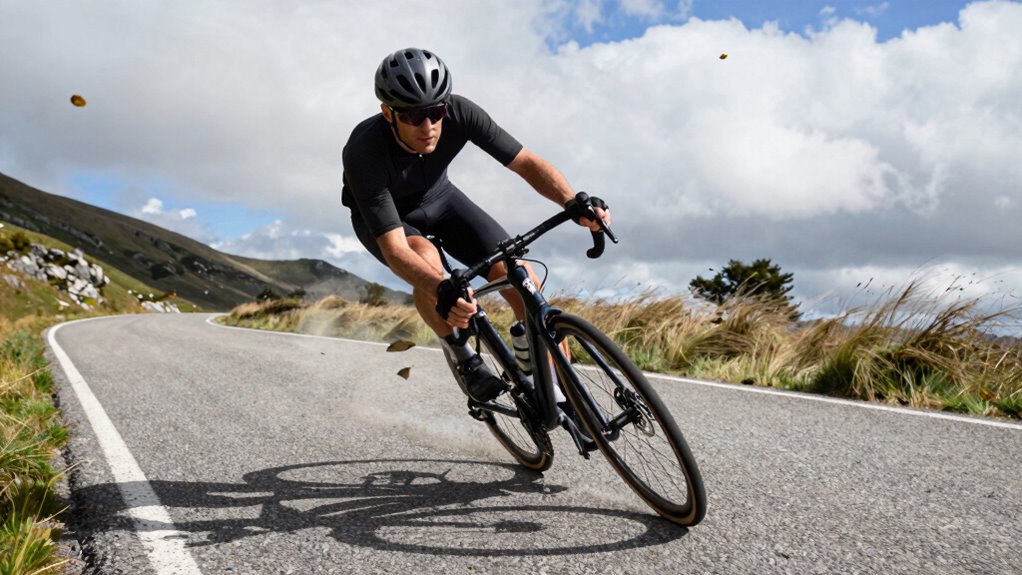
Have you ever felt your bike sway unexpectedly when a strong crosswind hits? It’s a surprising moment that forces you to react quickly. Crosswinds create wind resistance that pushes against your bike from the side, making it harder to stay on course. This experience reveals just how much external forces can influence your ride and teaches you invaluable lessons about bike handling. When the wind pushes against you, your instinct might be to grip the handlebars tighter or try to resist the push. But the key to maintaining control isn’t fighting the wind; it’s adjusting your steering techniques. Instead of resisting, you learn to lean into the wind slightly, allowing your bike to move with the gusts rather than against them. This subtle shift in steering helps you keep your balance and prevents sudden, jerky movements that could send you off course.
As you ride through crosswinds, you quickly realize that effective steering techniques are essential. You start to anticipate how the wind will influence your bike’s movement, often making small, deliberate adjustments rather than reacting impulsively. The ability to smoothly steer into the gusts keeps your bike aligned with your intended path, reducing the risk of wobbling or losing control. You also learn to relax your grip on the handlebars, which might seem counterintuitive at first, but actually gives your bike more freedom to respond naturally to the wind. Over time, you develop a feel for how much pressure to apply and release, sharpening your overall bike handling skills. Recognizing how external forces like wind can impact your ride helps you develop better control, and improved confidence on the road. Additionally, understanding external forces such as wind allows you to better predict and adapt to changing riding conditions.
Crosswinds reveal the importance of awareness and adaptability. You become more attentive to your surroundings, noticing changes in wind direction and strength, and adjusting your riding accordingly. This heightened sensitivity enhances your overall riding confidence. By practicing these steering techniques, you learn to manage wind resistance more effectively, turning what initially feels like a challenge into an opportunity to refine your skills. Moreover, understanding how external forces interact with your bike can help you develop more precise handling. Ultimately, riding in crosswinds isn’t just about staying upright; it’s about understanding how external forces interact with your bike and harnessing that understanding to become a more skilled and confident rider. With each gust, you develop better control, smoother handling, and a deeper connection to your bike’s dynamics, making you better prepared for all kinds of riding conditions.
bike handlebar grips for wind control
As an affiliate, we earn on qualifying purchases.
As an affiliate, we earn on qualifying purchases.
Frequently Asked Questions
How Do Crosswinds Affect Different Bike Types Differently?
Crosswinds affect different bike types differently by impacting wind resistance and bike stability. For lightweight bikes, you’ll notice more sway and difficulty maintaining control, especially in gusts. Heavier bikes resist wind better but can still be pushed off course. Racing bikes with thin tires are more sensitive to crosswinds, while mountain bikes are more stable due to their wider tires and lower center of gravity. Adjust your riding to stay balanced in varying wind conditions.
What Safety Gear Is Recommended in Strong Crosswinds?
In strong crosswinds, you should wear a helmet, gloves, and reflective clothing for safety. Wind resistance can make riding more challenging, so gear selection becomes essential. Consider lightweight, aerodynamic clothing to reduce drag and improve stability. Use sunglasses to shield your eyes from debris and wind. Proper gear helps you stay comfortable and alert, allowing you to respond quickly to changing conditions and maintain control during gusts.
Can Crosswinds Improve Overall Bike Handling Skills?
Yes, crosswinds can improve your overall bike handling skills. Facing wind resistance pushes you to stay alert, adjust your body position, and maintain control, which boosts your rider confidence. As you learn to stabilize your bike against gusts, you develop better balance and steering skills. Over time, this experience makes you more adept at handling various terrains and conditions, making you a more confident and skilled cyclist.
How Should Beginners Practice Riding in Crosswinds?
To practice riding in crosswinds, start on calm days and gradually increase wind exposure. Focus on managing wind resistance by keeping a relaxed grip on your handlebars, which allows for better balance adjustment. Shift your body slightly into the wind to counteract pushes and maintain stability. Over time, this practice helps you become more confident and improves your overall bike handling skills in challenging conditions.
What Are Common Mistakes When Riding in Crosswinds?
A common mistake when riding in crosswinds is underestimating wind resistance, which can cause you to overcorrect and lose bike stability. You might lean too much into the wind or ignore your body position, making handling more difficult. Instead, stay relaxed, keep a steady grip on the handlebars, and use smooth, controlled movements. Recognizing how wind impacts your bike helps maintain balance and improves overall safety in challenging conditions.
Conclusion
Facing crosswinds on your bike isn’t just a challenge; it’s a masterclass in control and resilience. Every gust teaches you to stay steady, adapt quickly, and trust your skills. Remember, smooth seas never made a skilled sailor—so embrace the wind as your teacher. The next time it blows, see it as an opportunity to grow stronger and wiser on your ride. Keep your grip firm, and let the wind sharpen your handling skills.
NFL season / tailgating Picks
team gear
As an affiliate, we earn on qualifying purchases.