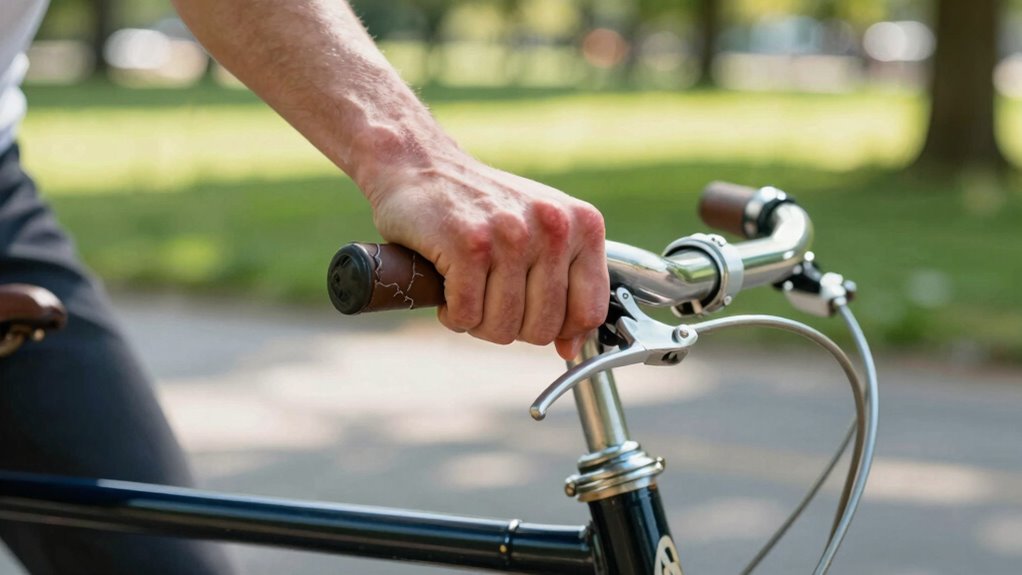

Coaster brakes feel different because they engage through backward pedaling, unlike hand brakes you might be used to. When you pedal backward, an internal mechanism activates and presses brake shoes against the hub, providing resistance. The feel and response can vary based on adjustments and gear ratio, making it less immediate than hand brakes. As you become more familiar, you’ll notice how these systems work and develop better control—if you keep exploring, you’ll understand them even more.
Key Takeaways
- Coaster brakes activate through backward pedaling, creating a different feel compared to hand-operated brakes.
- Their internal mechanism causes a gradual, rather than immediate, resistance when braking.
- Proper adjustment of brake tension and shoe position significantly influences brake feel and responsiveness.
- Gear ratio impacts how much backward effort is needed to engage the brake, affecting initial feel.
- Regular maintenance and familiarity improve understanding of brake response and riding confidence.
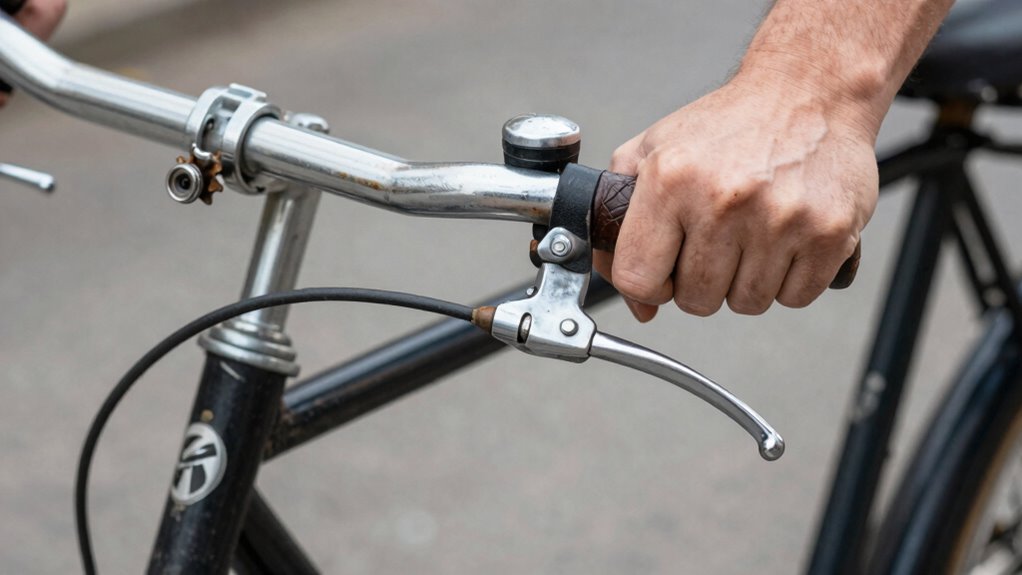
If you’re new to riding bikes with coaster brakes, you might notice they feel surprisingly different from other braking systems. Unlike hand brakes that respond immediately when you squeeze the lever, coaster brakes are operated by pedaling backward, which can feel unfamiliar at first. This difference stems from the way the bike’s gear ratio interacts with the brake system, affecting how smoothly or abruptly you can slow down or stop. When you pedal backward to brake, the internal mechanism engages the brake shoes against the hub, creating resistance. The feel of this resistance varies depending on how well the brake is adjusted and the bike’s gear ratio, which can influence stopping power and smoothness.
Coaster brakes feel different from hand brakes, engaging through backward pedaling affected by gear ratio and adjustment.
You might also find that the brake’s responsiveness isn’t always consistent, especially if the brake adjustment isn’t perfect. Brake adjustment involves setting the right tension in the brake arm and ensuring the brake shoes sit properly against the hub. If the brake is too loose, you’ll notice that you have to pedal backward further or with more force to engage the brake. Conversely, if it’s too tight, you might experience drag or difficulty pedaling forward comfortably. Proper brake adjustment is essential because it not only guarantees effective stopping but also helps you develop confidence in controlling your bike. When the brake is correctly adjusted, pedaling backward engages the brake quickly and smoothly, giving you a more predictable feel.
The gear ratio plays a subtle but important role in how coaster brakes feel because it determines how much effort you need to apply to pedal backward to engage the brake effectively. Bikes with higher gear ratios may require a more noticeable backward pedal movement to activate the brake, which can feel awkward until you get used to it. Lower gear ratios, on the other hand, often make the brake engage more easily, providing a more immediate response. As a rider, you’ll learn to adjust your pedaling effort based on the gear ratio to brake efficiently. Additionally, understanding the gear ratio’s influence can help you optimize your riding technique and braking comfort. Recognizing how the gear ratio interacts with the brake system can also aid in diagnosing potential issues and maintaining your bike properly. Being aware of the gear ratio’s impact on braking can help you develop better control and smoother stops over time.
Furthermore, regular maintenance of the brake system ensures consistent feel and responsiveness, helping you adapt more easily to the braking method. In the end, understanding the relationship between gear ratio and brake adjustment helps you get the most out of your coaster brake. With practice, you’ll notice that the initial unfamiliarity fades, and braking with a coaster becomes a smooth, intuitive part of riding. Proper maintenance and adjustment are key to making your coaster brakes feel reliable and responsive, making your riding experience safer and more enjoyable.

DONSP1986 Bicycle Coaster Brake Hub/Bike Brake Rear Hub 36 Hole Stainless Steel
- Type: Bicycle Coaster Brake Hub
- Compatibility: Rear Hub, 36 Hole
- Material: Stainless Steel
As an affiliate, we earn on qualifying purchases.
As an affiliate, we earn on qualifying purchases.
Frequently Asked Questions
How Do Coaster Brakes Compare to Handbrakes in Safety?
Coaster brakes are generally safe, but they offer different rider control dynamics compared to handbrakes. With coaster brakes, you rely on pedal pressure, which can be less precise than brake lever ergonomics, making it harder to modulate speed quickly. Handbrakes give you more immediate control and feedback, especially in emergencies. For safety, choose the brake system that best suits your riding style and practice using it to enhance your control.
Can Coaster Brakes Be Adjusted or Repaired Easily?
Think of coaster brakes as a mystery waiting to be solved—you can often adjust or repair them yourself. To do so, start with brake pad replacement if they’re worn out. Then, check cable tension adjustment; tightening or loosening the cable can restore proper braking. While some repairs may require basic tools, most coaster brake issues are straightforward, making maintenance accessible for riders enthusiastic to keep their bike in top shape.
Are Coaster Brakes Suitable for Mountain Biking?
Coaster brakes aren’t ideal for mountain biking because they lack the power and responsiveness you need on rugged terrain. They’re more suitable for vintage aesthetics and beginner-friendly design on city bikes or cruisers. You might find them easy to use and maintain, but for mountain biking, disc brakes or hand brakes provide better control and safety. Stick with those options for challenging trails and technical descents.
What Maintenance Do Coaster Brakes Require Over Time?
You’ll need to regularly check your coaster brake’s condition. For example, if the brake feels less effective, it might need brake fluid or cable replacement. Over time, brake fluid can degrade, reducing braking power, so topping it up is essential. Additionally, inspect the cable for fraying or rust, replacing it if necessary. Proper maintenance keeps your coaster brake functioning smoothly and prolongs its lifespan.
Why Do Coaster Brakes Sometimes Squeal or Squeak?
You might notice your coaster brake squealing or making brake noise because of dirt, grime, or rust buildup on the brake components. Over time, these squeaking issues develop when the brake pads and drum aren’t properly cleaned or lubricated. Additionally, worn brake pads or misalignment can cause inconsistent contact, leading to noise. Regular maintenance, like cleaning and inspecting your coaster brake, helps reduce squeaking and guarantees smooth, quiet braking.
Conclusion
So, next time you hop on your bike and notice that familiar resistance, remember—your coaster brake is more than just a simple stop. It’s a mystery waiting to be unraveled, a feeling that’s both familiar and strange at first. With a little practice, you’ll start to understand its quirks, and soon, it won’t feel so different anymore. But until then, keep riding—there’s more to discover beneath that quiet, spinning brake.