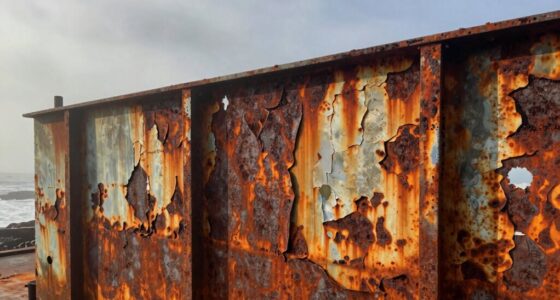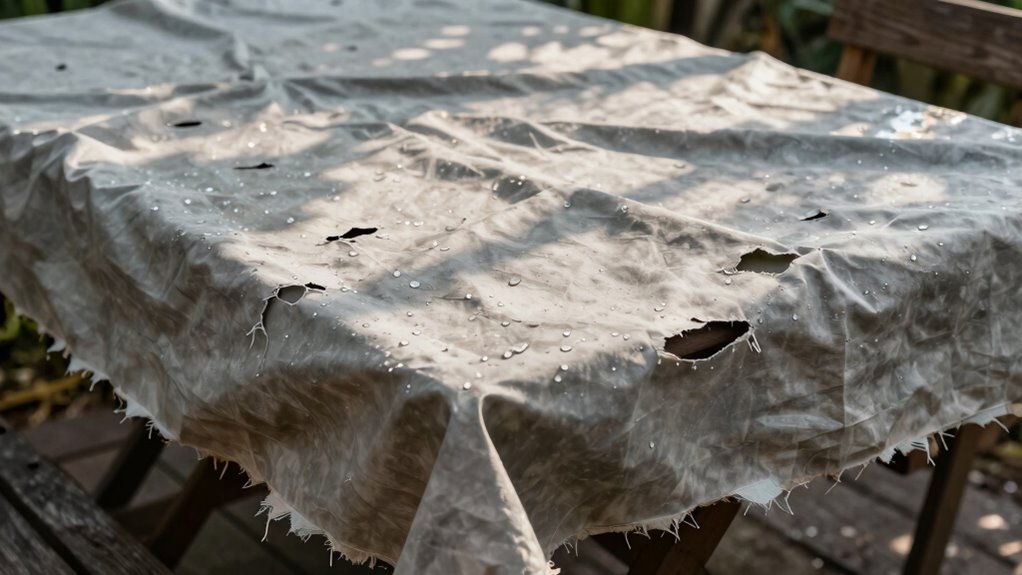

One common outdoor cover mistake that traps damage is choosing non-weatherproof or poorly fitting covers that create pockets of trapped moisture. When covers are too tight or don’t allow proper water runoff, moisture can collect and promote mold, rust, or rot, instead of protecting your items. To prevent this, make sure covers fit snugly but allow drainage. Keep these key tips in mind, and you’ll learn more about how to avoid hidden pitfalls that cause damage.
Key Takeaways
- Using covers that are too tight can trap moisture and promote mold, leading to hidden damage.
- Failing to ensure proper water runoff causes pooling, which can seep under the cover and damage items.
- Covering items directly on the ground without elevation allows water wicking and promotes deterioration.
- Neglecting to secure covers properly can result in movement, tears, and water ingress during storms.
- Choosing non-weatherproof or degraded materials can trap moisture and accelerate damage over time.
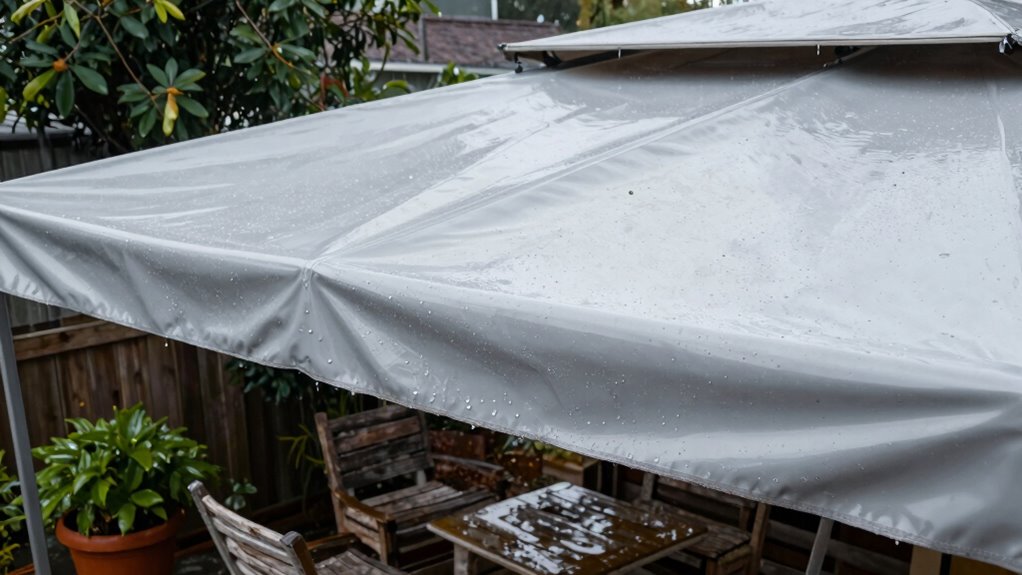
Many outdoor cover mistakes happen because people overlook the importance of proper installation and maintenance. You might think that simply throwing a cover over your outdoor furniture or equipment is enough, but without the right approach, that cover could do more harm than good. One of the most common errors is choosing the wrong materials or neglecting to secure the cover properly. If you don’t use weatherproof materials designed for outdoor use, your cover can trap moisture, leading to mold, rust, and rot. Instead, look for covers made from durable, weatherproof fabrics that resist water, UV rays, and temperature fluctuations. These materials are specifically designed to withstand the elements, so they don’t trap moisture or degrade quickly. Proper installation is equally essential. A cover that isn’t fitted correctly can create gaps or sagging areas where water collects. When water pools on top of the cover, it seeps through or causes the cover to sag, exposing your belongings to rain, snow, or humidity. To avoid this, you need to guarantee your cover fits snugly but isn’t overly tight, allowing for proper drainage. Many covers come with adjustable straps, elastic hems, or drawstrings that help secure them firmly in place. Using these features assures a tight fit, preventing water from seeping underneath and reducing the risk of damage from trapped moisture. Another aspect of proper installation is paying attention to the shape and placement of the cover. You should position it in a way that promotes runoff rather than pooling. For example, if you’re covering a patio table, make sure the cover slopes slightly for water to slide off. Additionally, avoid covering items directly on the ground—use pallets or blocks to elevate them slightly. This prevents water from wicking up and keeps your furniture dry and protected even during heavy rain or snow. Regular inspection and maintenance are crucial—look for tears, holes, or signs of wear, and clean the cover periodically with mild soap and water. Let it dry thoroughly before storing it away for the season, and consider protective storage methods to extend its lifespan. Ensuring your cover has proper ventilation can also help reduce moisture buildup inside, further preventing mold and mildew. Using appropriate cleaning techniques ensures your cover remains in good condition and retains its protective qualities over time. Proper storage when not in use also extends the lifespan of your cover. By taking these steps, you secure your outdoor equipment remains protected and in good condition over the long term.
weatherproof outdoor furniture cover
As an affiliate, we earn on qualifying purchases.
As an affiliate, we earn on qualifying purchases.
Frequently Asked Questions
How Often Should Outdoor Covers Be Cleaned and Maintained?
You should clean and maintain your outdoor covers at least once a month, especially during seasons with frequent weather changes. Regular cleaning helps preserve cover durability by removing dirt, debris, and moisture that can cause damage over time. If your cover experiences heavy rain or snow, increase cleaning frequency to prevent trapping moisture. Proper upkeep ensures your cover remains effective, prolongs its lifespan, and keeps your outdoor items protected from potential damage.
Are There Specific Materials Better for Outdoor Covers in Different Climates?
Some outdoor cover materials excel in durability and climate suitability, while others fall short. For hot, sunny climates, opt for UV-resistant fabrics like polyester or vinyl that withstand sun damage. In colder, wetter areas, waterproof and breathable materials like heavy-duty canvas or polyethylene offer better protection. Choosing the right material based on climate guarantees your cover remains effective, preventing damage rather than trapping it. Always consider durability and climate compatibility for long-lasting coverage.
Can Outdoor Covers Cause Mold or Mildew Buildup?
Outdoor covers can cause mold or mildew buildup if you don’t prioritize mold prevention and cover ventilation. When covers trap moisture and limit airflow, mold spores thrive. To prevent this, choose covers with good ventilation and regularly check for trapped moisture. Ensuring proper airflow and moisture control helps keep your outdoor items dry and mold-free, protecting them from damage and prolonging their lifespan.
What Signs Indicate an Outdoor Cover Is Trapping Damage?
Think of your outdoor cover like a greenhouse—if moisture gets trapped inside, plants rot. Signs your cover traps damage include persistent dampness, mold, or peeling paint underneath. If the cover material isn’t breathable or lacks UV protection, it can trap heat and moisture, causing damage instead of preventing it. Regularly inspecting for condensation or discoloration helps you spot issues early and avoid costly repairs.
How Do I Properly Remove and Store Outdoor Covers in Winter?
To properly remove and store outdoor covers in winter, start by carefully taking off the covers to avoid tearing. Use gentle storage techniques, like folding the covers neatly. Consider cover materials—canvas, vinyl, or polyester—since each requires different care. Clean the covers thoroughly and let them dry completely before storing in a cool, dry place. This prevents mold and extends their lifespan, ensuring they’re ready for use when warmer weather returns.
water-resistant patio table cover with drainage
As an affiliate, we earn on qualifying purchases.
As an affiliate, we earn on qualifying purchases.
Conclusion
So, next time you choose an outdoor cover, remember that even the best intentions can sometimes hide little surprises. By being mindful, you’ll avoid unintentionally inviting trouble, letting your belongings enjoy true protection instead of feeling a bit overlooked. Think of it as giving your outdoor treasures a gentle hug, rather than a too-tight embrace. With a little care, your outdoor setup will stay happy and well-cared-for, avoiding the not-so-welcome surprises that come with the wrong cover.
adjustable outdoor equipment cover
As an affiliate, we earn on qualifying purchases.
As an affiliate, we earn on qualifying purchases.
ventilated outdoor storage cover
As an affiliate, we earn on qualifying purchases.
As an affiliate, we earn on qualifying purchases.