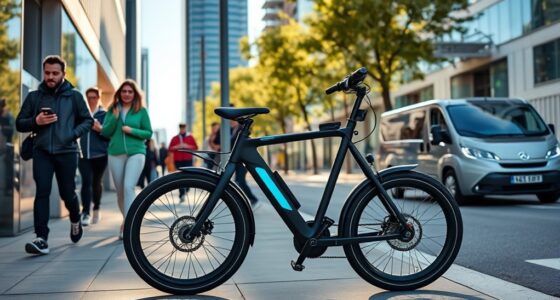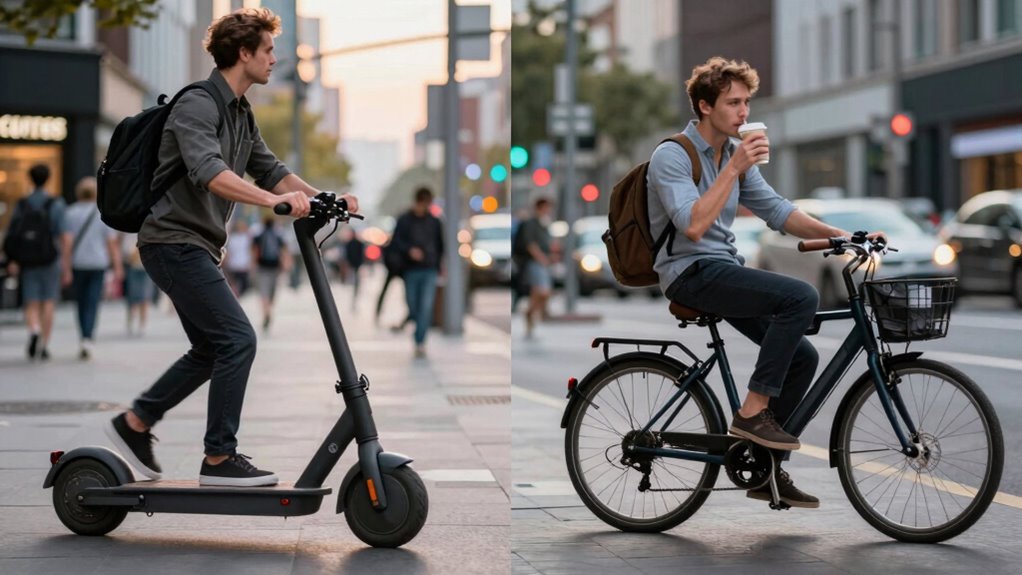

If you choose standing electric travel, you’ll experience increased maneuverability and quick responses, ideal for crowded urban areas, but it can cause faster fatigue and drain your battery quicker. Sitting offers more comfort and stability, conserving energy and extending your range, especially on longer commutes or rough terrain. Your choice depends on whether you prioritize agility or relaxation. To discover how ergonomic features and terrain influence your ride, keep exploring further.
Key Takeaways
- Standing travel increases alertness and maneuverability but can lead to faster fatigue on longer rides.
- Seated travel offers greater comfort and energy efficiency, extending battery life during extended commutes.
- Standing positions require more muscle effort, draining battery faster, especially on hills or windy conditions.
- Standing is advantageous in crowded urban settings for quick adjustments and agility.
- Proper ergonomic setup enhances safety, reduces fatigue, and improves overall comfort in both standing and seated riding.
When it comes to electric commuting, the choice between standing and seated travel considerably impacts your comfort, safety, and energy levels throughout the journey. If you prefer standing, you might find yourself more alert and engaged, but that can also mean your legs tire faster, especially on longer rides. Conversely, seated travel offers a higher level of user comfort, allowing you to relax and conserve energy, which can be crucial if you have a busy schedule or need to arrive at your destination feeling fresh. Your decision can also influence your bike’s battery life; standing positions often require more effort from your muscles, leading to quicker battery drain, whereas seated positions typically enable a smoother ride that conserves power. Additionally, the ergonomic support of your seat plays a critical role in long-term comfort and safety during extended commutes. In terms of user comfort, seated electric travel generally provides a more relaxing experience, especially during extended commutes. The seat cushions your body against vibrations and bumps, reducing fatigue and discomfort. This setup is ideal if you’re carrying a backpack or briefcase, as it leaves your hands free and your posture more natural. On the other hand, standing travel can be advantageous in crowded urban environments where maneuverability is key. Standing allows you to quickly hop off or adjust your position, which can be beneficial in traffic jams or when navigating through tight spaces. Your choice also impacts safety. Standing riders need to maintain better balance and be more alert to sudden stops or obstacles, which can be stressful during high-traffic commutes. Sitting, on the other hand, often provides a more stable posture, helping you stay focused on the road while reducing the risk of losing balance. However, if your electric bike or scooter is not properly equipped with good suspension or ergonomic support, seated riders may experience discomfort or even back pain over time, affecting overall safety and user comfort. Proper bike setup and ergonomic features are essential to maximize comfort and safety during your rides. Battery life plays a significant role in your commuting experience. Standing riders tend to exert more energy, which can quickly deplete the battery, especially if you’re climbing hills or riding against the wind. Sitting, with its more relaxed posture, typically allows for a more efficient use of battery power, extending your range and reducing the frequency of recharges. Your personal comfort preferences, combined with your typical commute length and terrain, should guide your choice. Whether you prioritize quick, agile movements or a relaxed, energy-efficient ride, understanding how standing versus seated travel affects these factors will help you choose the best electric commuting method suited to your needs. Additionally, considering ergonomic design can greatly enhance comfort and reduce fatigue over longer distances. Recognizing how ergonomic features influence rider health can further help in selecting a model that supports your safety and comfort during daily commutes.
As an affiliate, we earn on qualifying purchases.
Frequently Asked Questions
How Do Standing and Seated Electric Travel Options Compare in Cost?
Standing electric travel options generally cost less upfront compared to seated options because they often have simpler designs and fewer features. The cost comparison mainly depends on expense factors like battery size, vehicle type, and additional amenities. If you’re on a tight budget, standing models usually save you money, but seated options might add comfort and convenience at a higher price point. Consider your priorities to choose the best fit financially.
Are There Safety Concerns Unique to Standing Electric Travel?
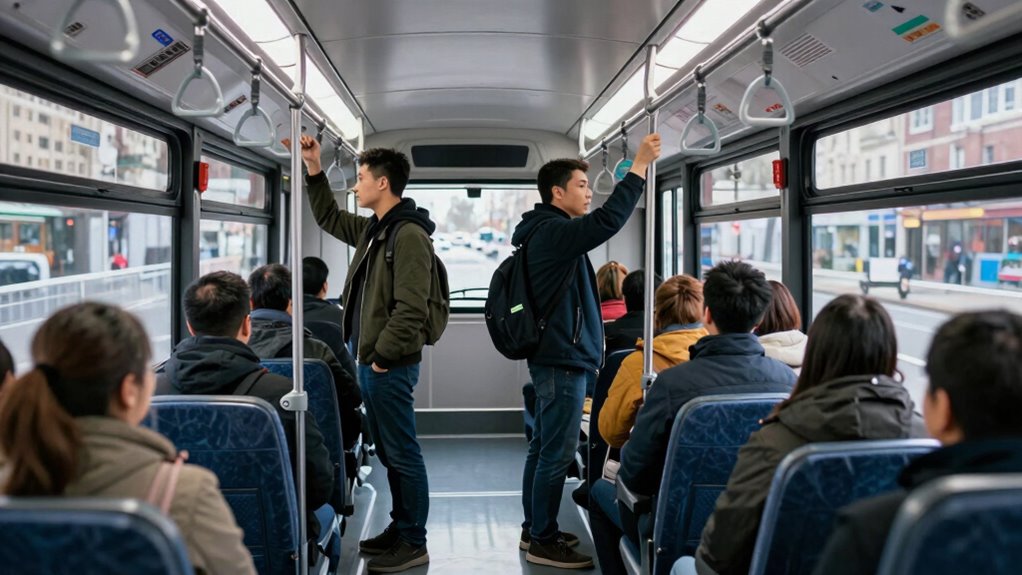
Are there safety concerns unique to standing electric travel? Absolutely. Standing riders face a higher risk of falls or injury during sudden stops or sharp turns. To minimize these risks, follow safety protocols like holding onto handrails and maintaining balance. Accident prevention relies on rider awareness and proper equipment maintenance. Do you stay alert and prepared? Staying cautious guarantees your safety, whether standing or seated, on electric travel modes.
What Maintenance Is Required for Standing Versus Seated Electric Vehicles?
You need to regularly check your electric vehicle’s battery lifespan and tire maintenance, regardless of whether you’re standing or seated. For both, guarantee the battery stays charged and avoid deep discharges to prolong its life. Keep tires properly inflated and inspect them for wear and tear. Consistent maintenance helps prevent breakdowns and extends the vehicle’s longevity, making your commute safer and more reliable whether you’re standing or seated.
How Do Weather Conditions Affect Standing and Seated Electric Commuting?
Like a sailor facing stormy seas, your electric commute’s weather resilience depends on conditions. Rain and snow can impact both standing and seated vehicles, making traction and stability vital. Seated models might offer better protection against wind and rain, but storage considerations become essential for safe, dry storage during bad weather. To stay safe, you need to take into account how weather affects your vehicle’s performance and storage, regardless of your riding style.
Which Option Offers Better Accessibility for Disabled Commuters?
Seated electric travel generally offers better accessibility for disabled commuters. You can easily access accessible seating designed for comfort and safety, and there’s usually space for mobility aids like wheelchairs or walkers. Standing options may not accommodate your needs as comfortably, especially if you rely on mobility aids. Opting for seated electric travel guarantees you have a safer, more comfortable commute with the necessary accommodations for your mobility.
Conclusion
Whether you prefer standing or seated electric travel, your choice impacts comfort and safety. Curiously, studies show that standing commuters experience a 25% higher risk of falls during sudden stops. So, next time you hop on an electric vehicle, consider your comfort and safety—sometimes, sitting might just be the smarter choice. Embrace the ride that keeps you balanced and secure, making your daily commute smoother and safer.