
Among these 14 electric mountain bikes, the Jasion EB5 MAX is my best overall pick because its 2000W peak motor, 48V 15Ah battery, and 26-inch fat tires offer the strongest balance of power, range, and all-terrain versatility. The Funhang 1000W fat-tire model is the better value for mixed commuting and recreational trails, while the Jasion Thunder/PRO/ST stands out as the premium choice for riders who prioritize longer advertised range and a higher load rating. Buyers must choose between manageable power and extreme speed, front and full suspension, conventional and fat tires, and realistic battery capacity versus ambitious range claims. Some high-output models suit private land or specialist riding better than ordinary bike paths. Continue reading for the full breakdown of which model fits each rider type.
Complete the kit


Key Takeaways
- I ranked the Jasion EB5 MAX first because its 2000W peak output, 720Wh battery, and 26-inch fat tires form a more balanced package than the faster but heavier 6000W models.
- The two 6000W dual-motor bikes lead on advertised speed, but their 45 mph capability, added weight, and likely legal restrictions make them specialist choices rather than broad recommendations.
- The Funhang 1000W fat-tire model offers the strongest value mix: a rear rack, 60-mile advertised pedal-assist range, front suspension, and moderate 20 mph speed.
- The standard Jasion EB5 models, the Qlife Racer, and the M200 favor familiar bicycle handling and wider gearing over the flotation and bulk of fat-tire designs.
- Only one listing explicitly identifies UL 2849 certification, making the UL-certified 26-inch 1000W model especially compelling for safety-focused beginners despite its modest performance figures.
| 20-Inch Fat Tire 1500W Peak Electric Mountain Bike |  | Best Compact Trail Bike | Motor: 500W rated, 1500W peak brushless | Battery: 48V 15Ah removable lithium | Assisted Range: 40–60 miles | VIEW LATEST PRICE | See Our Full Breakdown |
| Funhang 26-Inch Fat Tire Electric Mountain Bike |  | Best Value Pick | Motor: 1000W peak | Top Speed: 20 mph | Battery: 48V 13Ah lithium-ion | VIEW LATEST PRICE | See Our Full Breakdown |
| 6000W Dual-Motor 24-Inch Fat Tire Electric Bike |  | Best for Extreme Power | Motor: Dual-motor system, 6000W peak | Battery: 60V, 1200Wh removable | Claimed Top Speed: 45 mph | VIEW LATEST PRICE | See Our Full Breakdown |
| Jasion EB5 MAX Electric Mountain Bike |  | Best Overall | Motor: 2000W peak | Battery: 48V 15Ah, 720Wh removable | Top Speed: 28+ mph | VIEW LATEST PRICE | See Our Full Breakdown |
| ASKGO 1500W Peak Electric Mountain Bike |  | Best for Commuting and Light Trails | Motor: 750W rated, 1500W peak | Top Speed: 25 mph | Battery: 48V 10.4Ah removable | VIEW LATEST PRICE | See Our Full Breakdown |
| 6000W Dual Motor 24-Inch Fat-Tire Electric Mountain Bike |  | Best for Maximum Power and Range | Motor: Dual-motor system, 6000W peak | Battery: 60V 20Ah lithium-ion | Stated Range: Up to 110 miles | VIEW LATEST PRICE | See Our Full Breakdown |
| 26-Inch 1000W Peak Electric Mountain Bike |  | Best Entry-Level Trail-Commuter | Motor: 500W nominal, 1000W peak | Battery: 48V 374.4Wh removable, waterproof | Stated Range: Up to 50 miles | VIEW LATEST PRICE | See Our Full Breakdown |
| Funhang 1000W Peak 26-Inch Electric Mountain Bike |  | Best for Riders Up to 300 Pounds | Motor: 1000W peak | Battery: 48V 374.4Wh removable lithium-ion | Electric Range: 25–30 miles | VIEW LATEST PRICE | See Our Full Breakdown |
| Jasion EB5 1000W Peak 26-Inch Electric Bike |  | Best Lightweight Commuter Crossover | Motor: 1000W peak | Battery: 360Wh removable | Stated Range: 25–40 miles | VIEW LATEST PRICE | See Our Full Breakdown |
| TST 1500W Peak Full-Suspension Fat-Tire Electric Bike |  | Best High-Capacity Compact Pick | Motor: 1500W peak | Battery: 48V 15Ah removable | Stated Range: Up to 60 miles in pedal-assist mode | VIEW LATEST PRICE | See Our Full Breakdown |
| Qlife Racer Electric Bike for Adults | 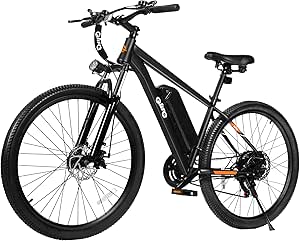 | Best for Gear Control | Motor: 1000W brushless | Battery: 375Wh removable | Range: Up to 40 miles | VIEW LATEST PRICE | See Our Full Breakdown |
| Jasion EB5 Electric Bike for Adults |  | Best Beginner Pick | Motor: 1000W peak | Battery: 500Wh removable | Range: 25–40 miles | VIEW LATEST PRICE | See Our Full Breakdown |
| M200 Electric Bike for Adults |  | Best Trail-Commuter Balance | Motor: 1200W peak brushless | Battery: 48V 10.4Ah removable | Range: Up to 55 miles | VIEW LATEST PRICE | See Our Full Breakdown |
| Jasion Thunder/PRO/ST Electric Bike |  | Best High-Power All-Terrain Hauler | Motor: 1800W peak | Battery: 48V 18Ah | Range: Up to 80 miles | VIEW LATEST PRICE | See Our Full Breakdown |
| electric mountain bike | Motor | Battery | Suspension | Tires |
|---|---|---|---|---|
| 20-Inch Fat Tire 1500W Peak El | 500W rated, 1500W peak brushless | 48V 15Ah removable lithium | Full suspension | 20×4-inch fat tires |
| Funhang 26-Inch Fat Tire Elect | 1000W peak | 48V 13Ah lithium-ion | Front fork | 26-inch fat tires |
| 6000W Dual-Motor 24-Inch Fat T | Dual-motor system, 6000W peak | 60V, 1200Wh removable | Full suspension with seat springs | 24-inch fat tires |
| Jasion EB5 MAX Electric Mounta | 2000W peak | 48V 15Ah, 720Wh removable | Lockable front fork | 26×4-inch fat tires |
| ASKGO 1500W Peak Electric Moun | 750W rated, 1500W peak | 48V 10.4Ah removable | Front fork and suspension seat post | 26 inches |
| 6000W Dual Motor 24-Inch Fat-T | Dual-motor system, 6000W peak | 60V 20Ah lithium-ion | Full suspension with shock absorbers | 24 × 4.0 in fat tires |
| 26-Inch 1000W Peak Electric Mo | 500W nominal, 1000W peak | 48V 374.4Wh removable, waterproof | Front suspension | — |
| Funhang 1000W Peak 26-Inch Ele | 1000W peak | 48V 374.4Wh removable lithium-ion | — | — |
| Jasion EB5 1000W Peak 26-Inch | 1000W peak | 360Wh removable | — | — |
| TST 1500W Peak Full-Suspension | 1500W peak | 48V 15Ah removable | Full suspension | 20 × 4 in fat tires |
| Qlife Racer Electric Bike for | 1000W brushless | 375Wh removable | Front suspension | 26 x 2.1 inches |
| Jasion EB5 Electric Bike for A | 1000W peak | 500Wh removable | Front fork suspension | — |
| M200 Electric Bike for Adults | 1200W peak brushless | 48V 10.4Ah removable | Dual front suspension | — |
| Jasion Thunder/PRO/ST Electric | 1800W peak | 48V 18Ah | — | 26 x 4 inches |
More Details on Our Top Picks
20-Inch Fat Tire 1500W Peak Electric Mountain Bike
I rank this as the Best Compact Trail Bike because its 20×4-inch tires combine a smaller footprint with the traction needed for loose dirt and uneven paths. The full-suspension design offers more cushioning than the front-suspension Funhang, while the 1500W peak motor provides extra reserve for climbs. Its compact wheels should also feel more agile at lower speeds, though they will not roll over large rocks and ruts as smoothly as the 26-inch tires on the Jasion EB5 MAX. A 48V 15Ah battery supports longer outings, and the three riding modes make it useful beyond trails. I would rank it higher if portability matched its size: fat tires, suspension, and the battery add considerable weight. The mechanical disc brakes are also less compelling for hard descents than the hydraulic setup on the 6000W model.
Pros:- Compact 20-inch wheels make low-speed handling more manageable
- Full suspension softens rough surfaces better than front suspension alone
- 1500W peak output provides useful climbing reserve
- Removable 48V 15Ah battery supports both trail rides and commuting
Cons:- Heavy construction undermines the portability suggested by its compact wheels
- 20-inch wheels carry less smoothly across large rocks and deep ruts
- Mechanical disc brakes are a compromise for demanding downhill use
Best for: Shorter riders and space-conscious buyers who want fat-tire traction and full suspension for recreational trails
Not ideal for: Riders tackling rock-strewn routes or repeated steep descents, where larger wheels and hydraulic brakes offer better control
- Motor:500W rated, 1500W peak brushless
- Battery:48V 15Ah removable lithium
- Assisted Range:40–60 miles
- Electric Range:25–28 miles
- Tires:20×4-inch fat tires
- Suspension:Full suspension
- Drivetrain:7-speed
- Charging Time:5–6 hours
Our verdict“This is my compact pick for riders who value traction and cushioning more than easy lifting or big-wheel rollover.”
Funhang 26-Inch Fat Tire Electric Mountain Bike
I give the Funhang the value role because it covers the practical mountain-bike basics without chasing the extreme speed of the Jasion EB5 MAX or the 6000W dual-motor model. Its 26-inch fat tires provide steadier rollover than the compact 20-inch bike, and the 1000W peak motor is a sensible match for moderate hills, gravel, and mixed commuting. A rear rack, fenders, turn signals, and a 330-pound load rating broaden its everyday usefulness. The limits become clear on rougher trails: front suspension only cannot isolate the rear wheel like a full-suspension frame, and the 20 mph ceiling favors control over excitement. At 70 pounds, it is also difficult to carry upstairs or load alone. I see the claimed 60-mile assisted range as a best-case figure, especially with fat tires and heavier riders.
Pros:- 26-inch fat tires balance traction with smoother obstacle rollover
- Rear rack, fenders, and signal lighting add commuter utility
- 330-pound load capacity accommodates larger riders and cargo
- IPX5 rating adds reassurance for changeable weather
Cons:- Front suspension alone limits comfort and control on rough trails
- 70-pound weight makes transport and storage difficult
- 6.5-hour charging time is the longest among these five picks
Best for: Budget-focused riders who split their time between gravel paths, mild trails, and utility commuting
Not ideal for: Apartment dwellers who must carry the bike or aggressive trail riders who need rear suspension and higher-speed braking hardware
- Motor:1000W peak
- Top Speed:20 mph
- Battery:48V 13Ah lithium-ion
- Assisted Range:Up to 60 miles
- Tires:26-inch fat tires
- Weight:70 pounds
- Load Capacity:330 pounds
- Suspension:Front fork
- Charging Time:6.5 hours
Our verdict“I recommend the Funhang to practical buyers who want trail-capable tires and commuter equipment without paying for extreme performance.”
6000W Dual-Motor 24-Inch Fat Tire Electric Bike
This model earns my Best for Extreme Power position because its 6000W peak dual-motor system and claimed 45 mph capability sit far beyond the Funhang and ASKGO. That output can maintain momentum on steep grades where lower-powered bikes may slow sharply, while the 1200Wh battery provides the capacity needed to feed both motors. Full suspension, 24-inch fat tires, and hydraulic disc brakes form the most serious off-road package in this group. Those strengths also create its biggest compromises. It will be heavy, more complicated to master, and harder to transport than the 20-inch compact pick. The claimed 110-mile range will depend heavily on mode, terrain, speed, and motor use. I would reserve it for experienced riders with suitable private riding space, secure storage, and a clear understanding of local e-bike rules.
Pros:- Dual-motor system offers the strongest climbing reserve in this group
- 1200Wh removable battery supports long off-road outings
- Full suspension provides better wheel control over rough ground
- Hydraulic disc brakes suit the bike’s higher speed and mass
Cons:- High weight and bulk make transport, storage, and handling more demanding
- Extreme speed may fall outside e-bike rules on public roads and trails
- Six riding modes and dual motors add complexity for inexperienced riders
Best for: Experienced off-road riders seeking very high climbing power, full suspension, and long-range battery capacity
Not ideal for: Casual commuters, new riders, or anyone needing a lightweight bike that readily fits standard e-bike rules
- Motor:Dual-motor system, 6000W peak
- Battery:60V, 1200Wh removable
- Claimed Top Speed:45 mph
- Claimed Range:Up to 110 miles
- Tires:24-inch fat tires
- Suspension:Full suspension with seat springs
- Brakes:Dual hydraulic disc
- Riding Modes:6
- Assembly:90% pre-assembled
Our verdict“I would choose this only for experienced riders who can make practical and lawful use of its unusually high power.”
Jasion EB5 MAX Electric Mountain Bike
I place the Jasion EB5 MAX first because it offers the strongest balance of trail ability, speed, range, and everyday equipment. Its 2000W peak motor is markedly stronger than the Funhang’s 1000W peak unit without reaching the excess, weight, and regulatory complications of the 6000W dual-motor bike. The 26×4-inch tires supply confident grip and better obstacle rollover than the 20-inch compact model, while the 720Wh battery carries a claimed 65-mile assisted range. A rear rack, fenders, bright lights, and a color display make it more useful between trail rides. My main reservation is the front-only suspension: the compact model and 6000W pick provide fuller isolation on broken ground. Mechanical 180mm disc brakes also demand more rider judgment at 28-plus mph than hydraulic brakes would, and the fat-tire build will be cumbersome to lift.
Pros:- 2000W peak motor balances strong climbing performance with broader usability
- 26×4-inch fat tires provide traction and confident obstacle rollover
- 720Wh removable battery supports extended assisted rides
- Rack, fenders, lights, and color display improve everyday practicality
Cons:- Front suspension cannot match full-suspension bikes on rough descents
- Mechanical disc brakes are less confidence-inspiring than hydraulic brakes at high speed
- Fat tires and a large battery make the bike difficult to carry
Best for: Riders wanting one powerful fat-tire bike for forest roads, moderate trails, and longer mixed-surface commutes
Not ideal for: Technical downhill riders who need full suspension and hydraulic braking, or commuters who regularly carry a bike upstairs
- Motor:2000W peak
- Battery:48V 15Ah, 720Wh removable
- Top Speed:28+ mph
- Assisted Range:Up to 65 miles
- Throttle Range:Up to 35 miles
- Tires:26×4-inch fat tires
- Suspension:Lockable front fork
- Brakes:180mm dual disc
- Included Equipment:Rear rack, fenders, front and rear lights
Our verdict“The EB5 MAX is my best all-round choice for buyers who want meaningful trail power without moving into extreme dual-motor territory.”
ASKGO 1500W Peak Electric Mountain Bike
The ASKGO takes my commuting-and-light-trails role because its 26-inch wheels, 25 mph speed, and 4–5-hour charge time create a more approachable daily package than the 6000W model. Its 750W rated motor, with 1500W peak output, supplies more hill reserve than the Funhang while stopping short of the Jasion EB5 MAX’s higher-speed focus. The suspension fork and sprung seat post can soften potholes and mild trail chatter, but this is not true frame-level full suspension; riders should not expect the rear-wheel control offered by the compact full-suspension bike. A claimed 65-mile range sounds attractive, though the smaller 48V 10.4Ah battery means that figure likely depends on light assistance and favorable conditions. I value the 36-month warranty and short recharge window, yet the unspecified weight and basic disc brakes leave questions for buyers planning frequent transport or steep descents.
Pros:- 750W rated motor provides useful power for hills and mixed-surface riding
- Four-to-five-hour charging is quicker than the other listed options
- Suspension fork and sprung seat post reduce everyday road vibration
- 36-month warranty is longer than the warranty stated for the 6000W model
Cons:- Sprung seat post does not provide the control of true rear suspension
- 65-mile claim may be difficult to reach from a 48V 10.4Ah battery under demanding use
- Unspecified weight makes transport suitability hard to judge
Best for: Daily commuters who want extra hill power and enough comfort for gravel paths or nontechnical weekend trails
Not ideal for: Aggressive mountain bikers who need rear-wheel suspension control, hydraulic brakes, and dependable range under high-power use
- Motor:750W rated, 1500W peak
- Top Speed:25 mph
- Battery:48V 10.4Ah removable
- Claimed Range:Up to 65 miles
- Charging Time:4–5 hours
- Tires:26 inches
- Drivetrain:7-speed
- Suspension:Front fork and suspension seat post
- Warranty:36 months
Our verdict“I favor the ASKGO for commuters who want stronger hill support and occasional trail access without the bulk and complexity of an extreme-power bike.”
6000W Dual Motor 24-Inch Fat-Tire Electric Mountain Bike
I rank this model as the lineup’s power-and-distance specialist. Its dual-motor system reaches a stated 6000W peak and 45 mph, giving it far more climbing force than the 1500W TST Electric Bike. The 60V 20Ah battery also carries an ambitious 110-mile range claim, making this the stronger choice for long off-road routes where charging access is scarce. Full suspension and 24-inch fat tires add grip and soften rocky ground. That performance comes with real compromises: weight and slower handling are likely concerns, while the speed may exceed local e-bike or trail limits. I would also treat the maximum range as a best-case figure because dual-motor riding, hills, and loose surfaces can drain the battery much faster.
Pros:- Dual-motor 6000W peak system offers exceptional climbing and acceleration potential
- 60V 20Ah battery carries the longest stated range in this batch
- Full suspension and 24-inch fat tires suit snow, sand, and rough tracks
- Hydraulic brakes, turn signals, and lighting support control at higher speeds
Cons:- Heavy dual-motor construction may feel cumbersome on tight trails or stairs
- 45 mph capability demands experienced handling and may breach local e-bike rules
- Charging time is not provided for the large 1200Wh battery
Best for: Experienced off-road riders who prioritize steep-climb power, high speed, and long stated range over portability
Not ideal for: Casual riders, apartment residents, and anyone using trails or roads with strict e-bike power and speed limits
- Motor:Dual-motor system, 6000W peak
- Battery:60V 20Ah lithium-ion
- Stated Range:Up to 110 miles
- Maximum Speed:45 mph
- Tires:24 × 4.0 in fat tires
- Suspension:Full suspension with shock absorbers
- Brakes:Dual hydraulic brakes
- Frame:6061 aluminum
- Drivetrain:7-speed
Our verdict“I would choose this for maximum off-road output and distance, but only if its bulk, speed, and legal classification fit the intended routes.”
26-Inch 1000W Peak Electric Mountain Bike
I place this 26-inch model in the entry-level trail-commuter role because its 20 mph ceiling, conventional frame, and front suspension are less intimidating than the dual-motor 6000W bike. The 500W motor, which reaches 1000W at peak, supplies useful help on moderate hills without turning every ride into a high-speed exercise. Compared with the Jasion EB5, it offers a longer 50-mile assisted-range claim, a slightly shorter listed charging window, and UL 2849 certification. It is not built for aggressive mountain descents: front-only suspension and unspecified weight leave gaps for buyers judging control and portability. I also see little hardware separation from the Funhang 1000W model, so price and seller support should break a close tie between them.
Pros:- Manageable 20 mph speed suits newer riders and mixed urban use
- Removable waterproof battery can be charged away from the bike
- UL 2849 and UL 2271 certifications provide documented electrical-system credentials
- Front suspension and seven gears broaden its use beyond smooth pavement
Cons:- Front-only suspension limits comfort and control on rough mountain trails
- Bike weight and brake type are not specified
- Final assembly is required because the bike arrives 85% assembled
Best for: New e-bike riders splitting their time between paved commuting, gravel paths, and mild recreational trails
Not ideal for: Aggressive trail riders who need full suspension, fat-tire traction, or stronger braking details
- Motor:500W nominal, 1000W peak
- Battery:48V 374.4Wh removable, waterproof
- Stated Range:Up to 50 miles
- Top Speed:20 mph
- Wheel Size:26 in
- Suspension:Front suspension
- Drivetrain:7-speed
- Charging Time:4–5 hours
- Rider Height:5 ft 3 in–6 ft 1 in
Our verdict“I see this as a sensible first electric mountain bike for moderate trails and commuting, provided the buyer does not need hard-trail capability.”
Funhang 1000W Peak 26-Inch Electric Mountain Bike
The documented 300-pound capacity gives the Funhang a clearer buyer fit than several similarly powered bikes with no published limit. I rank it for larger riders seeking a conventional 26-inch frame, moderate trail ability, and a removable battery. Performance closely mirrors the 26-Inch 1000W Peak Electric Mountain Bike: both reach 20 mph, claim 40–50 assisted miles, and use front suspension. Funhang separates its range estimates more clearly, listing 25–30 miles under electric power and 40–50 with pedaling, which helps set realistic expectations. It still falls short of the TST’s full suspension and 450-pound capacity, and it lacks the grip of that model’s fat tires. Assembly is another hurdle, while range will shrink under heavier loads, on climbs, or with frequent throttle use.
Pros:- Published 300-pound rider limit removes uncertainty for larger buyers
- Separate electric-only and pedal-assist range figures support clearer trip planning
- Removable, lockable battery simplifies indoor charging and security
- Multiple assist levels allow riders to balance effort against battery use
Cons:- Front suspension is less capable than the TST model’s full-suspension setup
- Electric-only range drops to a stated 25–30 miles
- User assembly may be difficult for buyers unfamiliar with bicycle setup
Best for: Riders within the stated 300-pound limit who want a standard-size e-bike for commuting and moderate dirt paths
Not ideal for: Riders above 300 pounds or those tackling rocky descents that call for full suspension and fat tires
- Motor:1000W peak
- Battery:48V 374.4Wh removable lithium-ion
- Electric Range:25–30 miles
- Pedal-Assist Range:40–50 miles
- Top Speed:20 mph
- Wheel Size:26 in
- Maximum Rider Weight:300 lb
- Charging Time:4–5 hours
- Certification:UL 2849 and UL 2271
Our verdict“I would pick the Funhang for its clearly stated rider capacity and practical range guidance, not for demanding mountain terrain.”
Jasion EB5 1000W Peak 26-Inch Electric Bike
At a listed 49.6 pounds, the Jasion EB5 is the portability pick among these trail-styled e-bikes. It is 16.4 pounds lighter than the TST, which matters when lifting a bike onto a rack or moving it through a building. The 1000W peak motor, 20 mph maximum, and 26-inch tires suit commuting and maintained paths, while the suspension fork takes some sting out of broken pavement. I rank it below the 50-mile 26-Inch 1000W model for longer outings because its 360Wh battery supports only 25–40 miles and takes five to six hours to charge. Mechanical disc brakes also demand more hand effort and maintenance than hydraulic units. Its high-carbon steel frame is durable, though calling a nearly 50-pound bike lightweight only makes sense beside heavier electric alternatives.
Pros:- 49.6-pound listed weight is easier to manage than the 66-pound TST
- Removable 360Wh battery supports off-bike charging
- Pedal assist and throttle modes fit both exercise and low-effort commuting
- 26-inch puncture-resistant tires suit paved and maintained unpaved routes
Cons:- 25–40-mile range trails the 50- and 60-mile claims of nearby alternatives
- Mechanical disc brakes offer less refined modulation than hydraulic brakes
- Front-only suspension is poorly matched to rough or technical descents
Best for: Urban riders who occasionally use maintained trails and need a relatively manageable e-bike for racks, storage, or stairs
Not ideal for: Long-distance explorers and technical mountain riders who need a larger battery, hydraulic brakes, or rear suspension
- Motor:1000W peak
- Battery:360Wh removable
- Stated Range:25–40 miles
- Top Speed:20 mph
- Weight:49.6 lb
- Tire Size:26 in
- Frame:High-carbon steel
- Brakes:Mechanical disc
- Charging Time:5–6 hours
Our verdict“I favor the Jasion EB5 for easier handling and mixed commuting, while range-focused and serious trail buyers should move higher in power and battery capacity.”
TST 1500W Peak Full-Suspension Fat-Tire Electric Bike
I give the TST the high-capacity compact role because it combines a 450-pound load rating with 20-inch fat tires, full suspension, and a 1500W peak motor. Compared with the Funhang 1000W bike, it supports 150 pounds more and offers rear suspension, making it better suited to larger riders and rougher surfaces. Its 48V 15Ah removable battery also carries a 60-mile pedal-assist claim. The compact wheels can feel stable and approachable, but they roll over rocks and ruts less smoothly than the 24-inch tires on the dual-motor 6000W model. At 66 pounds, this is still difficult to carry or load, and the six-to-seven-hour charge is the longest specified here. I would treat it as an adaptable utility and leisure bike rather than a nimble technical-trail machine.
Pros:- 450-pound maximum load is the highest documented capacity in this batch
- 1500W peak motor provides more climbing reserve than the 1000W models
- Full suspension and four-inch fat tires add stability on loose or uneven ground
- Removable 48V 15Ah battery carries a 60-mile pedal-assist claim
Cons:- 66-pound weight makes carrying and transport difficult
- 20-inch wheels do not roll across large trail obstacles as smoothly as bigger wheels
- Six-to-seven-hour charging time requires advance planning
Best for: Larger riders and utility-focused buyers who want a compact fat-tire bike with full suspension and a high published load limit
Not ideal for: Apartment dwellers, frequent bike-rack users, and technical riders who prefer lighter weight and larger wheels
- Motor:1500W peak
- Battery:48V 15Ah removable
- Stated Range:Up to 60 miles in pedal-assist mode
- Tires:20 × 4 in fat tires
- Suspension:Full suspension
- Weight:66 lb
- Maximum Load:450 lb
- Charging Time:6–7 hours
- Drivetrain:7-speed
Our verdict“I recommend the TST to buyers who value load capacity, fat-tire stability, and full suspension more than low weight or agile trail handling.”
Qlife Racer Electric Bike for Adults
I rank the Qlife Racer as the Best for Gear Control because its 21-speed drivetrain gives riders more ways to manage cadence when battery assistance fades or a climb changes pitch. That is a genuine mountain-bike advantage over the seven-speed Jasion EB5, and the 1000W motor adds useful push on fire roads and rolling trails. The compromise is energy storage: its 375Wh removable battery is smaller than the EB5’s 500Wh pack, so the quoted 40-mile ceiling is less reassuring for sustained climbing. At 48.1 pounds, it is not easy to carry, while 26 x 2.1-inch tires and front-only suspension point toward gravel, forest roads, and mild singletrack rather than rough descents. I place it below stronger trail machines because it favors drivetrain choice over range, braking detail, and full-suspension control.
Pros:- 21-speed drivetrain offers more cadence control than seven-speed alternatives
- 1000W brushless motor provides strong assistance on climbs and mixed terrain
- Removable waterproof battery supports indoor charging
- Four-hour charging time limits downtime
Cons:- 375Wh battery is smaller than the Jasion EB5 and M200 batteries
- 48.1-pound weight makes carrying and transport difficult
- Front-only suspension and narrow tires limit rough-trail capability
Best for: Riders tackling rolling forest roads and mild trails who want broad gearing for pedaling with or without motor assistance
Not ideal for: Backcountry riders who need a large battery or aggressive suspension for long, rough, and steep routes
- Motor:1000W brushless
- Battery:375Wh removable
- Range:Up to 40 miles
- Drivetrain:21-speed
- Tires:26 x 2.1 inches
- Suspension:Front suspension
- Weight:48.1 pounds
- Charging Time:About 4 hours
Our verdict“I recommend the Qlife Racer to riders who value gearing flexibility more than maximum battery range or technical-trail hardware.”
Jasion EB5 Electric Bike for Adults
I see the Jasion EB5 as the Best Beginner Pick: a 20 MPH ceiling, multiple riding modes, front suspension, and 26-inch tires create a less intimidating package than the 28 MPH M200 or 35+ MPH Jasion Thunder. Its 500Wh removable battery also gives it more capacity than the Qlife Racer’s 375Wh pack, which can reduce charging anxiety on mixed commutes and easy trail loops. Yet the EB5 is not the stronger climbing choice on paper: its 1000W figure is a peak rating, and the seven-speed drivetrain offers far fewer cadence choices than either 21-speed rival. The high-carbon-steel frame contributes to a 49.6-pound build, making stairs and vehicle loading awkward. I favor it for riders learning pedal assist on smoother terrain, not experienced mountain bikers seeking high-speed descending hardware or long backcountry range.
Pros:- 20 MPH top speed is approachable for riders new to electric assistance
- 500Wh removable battery exceeds the Qlife Racer’s battery capacity
- Front suspension and puncture-resistant tires suit mixed paved and dirt routes
- Disc brakes provide dependable stopping hardware for entry-level riding
Cons:- Seven-speed drivetrain provides limited cadence choices on varied gradients
- 49.6-pound steel construction is cumbersome on stairs and vehicle racks
- Published charging-time information is unavailable
Best for: New e-bike riders combining weekday commuting with easy dirt paths and recreational trail loops
Not ideal for: Experienced trail riders who need broad gearing, rear suspension, or enough range for extended backcountry climbing
- Motor:1000W peak
- Battery:500Wh removable
- Range:25–40 miles
- Top Speed:20 MPH
- Drivetrain:7-speed
- Tire Size:26 inches
- Frame:High-carbon steel
- Suspension:Front fork suspension
- Weight:49.6 pounds
Our verdict“I would choose the Jasion EB5 for an approachable first e-bike that favors easy trails and commuting over aggressive mountain riding.”
M200 Electric Bike for Adults
I give the M200 the Best Trail-Commuter Balance role because it pairs a 1200W peak motor and 28 MPH speed with 21 gears, 27.5-inch wheels, and a claimed 55-mile range. Compared with the Jasion EB5, it offers more speed, more gearing, and extra distance, making paved travel to a trailhead less of a chore. Compared with the Jasion Thunder, its narrower 2.1-inch tires should feel less cumbersome on ordinary roads, though they give up the flotation and planted feel of 4-inch fat tires. The NFC keyless access is useful for frequent stops, while the four-hour charge keeps turnaround manageable. My reservation is that the 48V 10.4Ah battery’s range will shrink under fast, hilly riding. Assembly is also required, and the supplied suspension description lacks the clarity serious technical-trail buyers may want.
Pros:- 1200W peak motor and 28 MPH speed support quicker commutes and strong climbing assistance
- 21-speed drivetrain provides finer control across changing terrain
- Claimed 55-mile range surpasses both Qlife Racer and Jasion EB5
- NFC keyless access adds convenient security for frequent stops
Cons:- Real range will fall below the maximum during fast or climb-heavy riding
- Suspension specification is not described clearly enough for demanding trail buyers
- Some assembly and tool use are required
Best for: Mixed-use riders who commute at higher speeds and spend weekends on moderate trails with varied gradients
Not ideal for: Technical singletrack riders who want clearly documented suspension hardware and fat-tire grip on sand or deep loose ground
- Motor:1200W peak brushless
- Battery:48V 10.4Ah removable
- Range:Up to 55 miles
- Top Speed:28 MPH
- Drivetrain:21-speed
- Wheel Size:27.5 inches
- Tire Size:27.5 x 2.1 inches
- Suspension:Dual front suspension
- Charging Time:4 hours
Our verdict“I favor the M200 for riders seeking a faster road-to-trail compromise without the bulk of the Jasion Thunder.”
Jasion Thunder/PRO/ST Electric Bike
I rank the Jasion Thunder/PRO/ST as the Best High-Power All-Terrain Hauler. Its 48V 18Ah battery, 26 x 4-inch tires, 400-pound capacity, and hydraulic disc brakes suit heavier riders, cargo, loose surfaces, and long outings better than the lighter-duty Qlife Racer. The claimed 80-mile range also exceeds the M200’s 55-mile figure, while 35+ MPH performance places it in a different speed class. That capability brings real costs: fat tires and a robust frame make portability poor, and high-speed handling demands confidence, protective gear, and awareness of local e-bike rules. I would not choose it for tight, natural-feeling singletrack or apartment stairs. Buyers should verify the exact configuration because the supplied title says 2000W peak while the detailed data lists 1800W peak, and separately shipped accessories can complicate setup.
Pros:- 48V 18Ah battery supports the longest claimed range in this group
- Four-inch fat tires provide flotation on sand, snow, and loose surfaces
- 400-pound load rating accommodates larger riders and cargo
- Dual hydraulic disc brakes match its higher speed and mass
Cons:- Bulky fat-tire construction makes lifting, storage, and transport difficult
- 35+ MPH capability requires skilled handling and may face local use restrictions
- Conflicting 1800W and 2000W peak-power figures make configuration verification necessary
Best for: Larger riders and long-distance adventurers who need high load capacity, fat-tire traction, and strong hydraulic braking
Not ideal for: Apartment dwellers, novice riders, and traditional mountain bikers who prioritize low weight and agile singletrack handling
- Motor:1800W peak
- Battery:48V 18Ah
- Range:Up to 80 miles
- Maximum Speed:35+ MPH
- Tires:26 x 4 inches
- Load Capacity:400 pounds
- Brakes:Dual hydraulic disc brakes
- Warranty:24 months on motor, battery, and controller
Our verdict“I recommend the Jasion Thunder/PRO/ST when range, traction, and carrying capacity matter more than portability or nimble trail manners.”
How We Picked
I ranked these bikes by how well their advertised specifications support actual mountain-bike use, giving the most weight to controllable motor assistance, battery capacity, wheel suitability, suspension, gearing, and rider fit. I treated peak wattage and maximum range as claims rather than direct proof of climbing ability or endurance. A balanced bike scored higher than a model built around one headline number, which is why the Jasion EB5 MAX leads the list ahead of the more extreme 6000W machines. Removable batteries, practical speed limits, useful accessories, and clearly stated certification also improved a model’s position.
I separated the lineup by buyer role instead of ranking every bike on raw power. Moderate 1000W options received credit for approachable control and everyday usability, while fat-tire and full-suspension models gained ground where loose surfaces and rough routes were the priority. I also compared battery energy where the supplied voltage and amp-hour figures allowed it: a 48V 15Ah pack provides about 720Wh, while a 60V 20Ah pack provides about 1200Wh. Models with vague battery details, duplicated names, or unusually ambitious speed and range claims ranked lower unless another clear advantage justified their place. My final order favors fit-for-purpose performance, credible value, and manageable ownership over the largest advertised number.
Factors to Consider When Choosing Electric Mountain Bikes
I would choose an electric mountain bike by matching its power delivery, battery, chassis, and support needs to the routes I expect to ride. The biggest motor is rarely the automatic winner: weight, control, and legality can matter more than peak speed. I would also separate genuine trail priorities from features aimed at road commuting or motorcycle-style riding. The sections below explain the tradeoffs that most often change the final choice.
Match Motor Power to the Terrain
Peak wattage describes a short burst, so I would not treat it as a complete measure of climbing performance. Nominal power and torque, when disclosed, offer a better view of what the motor can sustain on a long incline. A 1000W peak bike can be easier to control on shared paths and winding trails than a dual-motor model advertising 6000W. Extreme output also brings more battery drain, extra drivetrain stress, and a higher chance that the bike falls outside local e-bike rules. For steep private-land riding, sand, or loose climbs, dual-motor traction may justify those penalties. For mixed use, I favor smooth assistance and predictable low-speed response over a 45 mph headline.
Read Battery Capacity Before Range Claims
I compare batteries in watt-hours by multiplying voltage by amp-hours, which gives a more useful baseline than advertised mileage alone. The 48V 15Ah packs in this roundup hold about 720Wh of stated capacity, while a 60V 20Ah pack reaches roughly 1200Wh. Rider weight, hills, tire pressure, temperature, assistance level, and repeated acceleration can cut range sharply. A claimed 60 miles may reflect light pedal assistance on flat ground rather than throttle-heavy trail riding. I would plan around roughly half to two-thirds of the headline range until real route data proves otherwise. A removable pack helps with indoor charging, but I would check its weight, replacement price, lock quality, and availability before buying.
Choose Wheels and Suspension for Your Actual Routes
Fat tires add grip and flotation on sand, snow, and loose ground, yet they also increase rolling resistance and steering weight. A 26-inch or 27.5-inch conventional tire usually gives more natural bicycle handling on packed trails and pavement. The compact 20-inch fat-tire model is easier to store and can feel planted at lower speeds, though smaller wheels roll less smoothly across roots and holes. Front suspension is enough for gravel, fire roads, and mild trails when paired with sensible speed. Full suspension adds comfort and rear-wheel control on broken surfaces, but cheap or poorly tuned components can introduce flex and maintenance work. I would pay for full suspension only when rough terrain is routine, not merely because it sounds more capable.
Prioritize Fit, Weight, and Braking
A powerful bike that does not fit is harder to control when climbing slowly or descending on loose ground. I would check the rider-height range, standover clearance, reach, and whether the saddle can drop far enough for technical sections. Fat tires, large batteries, racks, and dual motors can push weight well beyond that of a conventional mountain bike, affecting stairs, car racks, and trailside repairs. A 400-pound load rating helps larger riders or cargo users, but it does not guarantee agile handling. Brake type and rotor size deserve close attention because higher weight and speed create more heat on descents. If a listing promotes 35 to 45 mph yet gives little brake detail, I treat that as a reason to pause.
Judge Value by Safety and Long-Term Support
I would budget for ownership rather than comparing purchase prices alone. Replacement batteries, brake pads, tires, chain wear, professional assembly, and suspension service can erase a low upfront price. UL 2849 certification covers the electrical system and carries more weight than a vague claim that individual parts are safe. Only one supplied listing states that certification directly, which gives it a meaningful advantage for home charging and beginner use. I would also verify battery availability, warranty contacts, return shipping terms, and access to compatible controllers or displays. Paying more makes sense when it buys documented certification, dependable parts support, and better brakes, rather than speed that the rider cannot legally or comfortably use.
Frequently Asked Questions
Is a 1000W electric mountain bike powerful enough for steep hills?
A 1000W peak motor can handle many moderate hills when the rider pedals and selects an appropriate gear. I would want to know the nominal wattage and torque before judging a long, steep climb, since peak output may last only briefly. Rider weight, wheel diameter, surface grip, and controller tuning also affect climbing more than the headline wattage suggests. Dual-motor models offer more traction on loose slopes but add weight and consume energy faster. For recreational trails and mixed commuting, controlled 1000W assistance is often more useful than extreme output.
Can I expect the advertised 60- to 110-mile range on mountain trails?
I would not plan a trail ride around the maximum claim without a large reserve. Those figures commonly rely on low assistance, steady pedaling, light loads, and favorable terrain, while climbing and soft tires demand much more energy. Battery watt-hours provide a better comparison point between models, though they still cannot predict exact mileage. Cold weather, throttle use, and repeated starts can reduce distance further. For an unfamiliar bike, I would initially plan for half to two-thirds of the advertised range and adjust after tracking several rides.
Are fat tires better than standard mountain-bike tires?
Fat tires are better suited to sand, snow, loose gravel, and riders who value a cushioned, stable feel. They are not automatically better on every trail because their extra mass can make steering slower and pedaling without assistance harder. Conventional 26-inch or 27.5-inch wheels usually feel quicker and more precise on packed singletrack. Tire quality and pressure also matter; an oversized low-grade tire may grip less predictably than a well-made standard trail tire. I would choose fat tires for flotation and mixed-surface comfort, not for the appearance alone.
Can I legally ride a 35- or 45-mph e-bike on public trails?
Many jurisdictions limit street-legal e-bikes by assisted speed, motor rating, throttle operation, or class, so a 35- or 45-mph model may be treated differently from a bicycle. Public mountain-bike trails can impose tighter rules than nearby roads. I would check local and trail-specific regulations before choosing one of the 6000W dual-motor models. A software speed setting does not always change the vehicle’s legal classification, especially when its hardware exceeds local limits. These machines make the most sense for private property or permitted off-road areas unless local rules clearly allow them.
Which features matter most for a first electric mountain bike?
I would prioritize manageable acceleration, reliable braking, correct frame fit, a removable battery, and clear safety documentation. A moderate 20 mph limit gives a new rider more time to learn how motor assistance changes cornering and stopping. Simple front suspension and seven-speed gearing are usually enough for gravel roads and easy trails, keeping service needs lower than a heavy dual-motor setup. In this lineup, the UL 2849-certified 26-inch 1000W model fits that brief better than the high-speed options. Beginners should favor predictability and support over maximum wattage.
Conclusion
For most buyers, I recommend the Jasion EB5 MAX as the best overall choice because it balances a 2000W peak motor, 720Wh battery, fat tires, and useful speed without reaching the excess of the dual-motor machines. The Funhang 1000W fat-tire bike is my best-value pick for riders who want trail versatility, a rear rack, and everyday practicality at a more moderate 20 mph. Beginners should start with the UL 2849-certified 26-inch 1000W model, whose lower speed and stated system certification make it the more reassuring entry point. For a premium combination of range, load capacity, and power, I would choose the Jasion Thunder/PRO/ST. Riders needing compact storage should favor the 20-inch fat-tire model, while experienced riders using permitted off-road areas can examine the 6000W dual-motor options for specialist terrain. The Qlife Racer or M200 makes more sense for buyers who prefer broad gearing and familiar mountain-bike proportions over fat-tire bulk.