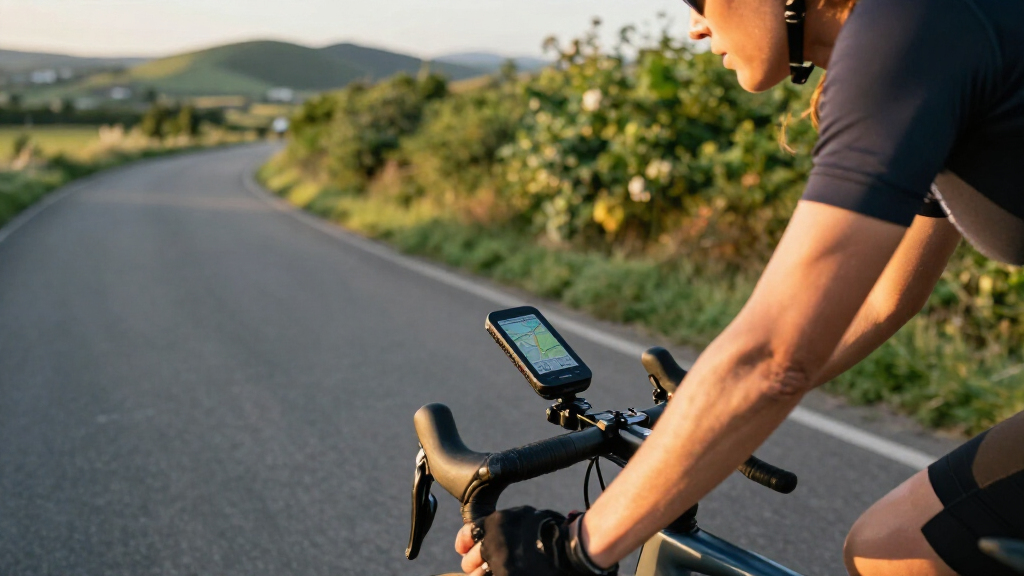
The Garmin Edge 840 is my best overall pick among the best cycling computers because it pairs broad training and navigation features with a manageable format. The Wahoo ELEMNT BOLT V3 is a strong choice for riders who want a compact, streamlined unit, while the Garmin Edge 1050 suits those who put a large display and premium features first. The main tradeoffs are screen size versus cockpit space, advanced tools versus simple operation, and navigation depth versus a lower-complexity setup. Budget-friendly models can cover everyday ride tracking, but may offer fewer refinements for route planning or training. Read on for how all 15 options compare and which one fits your rides.

Get sports gear delivered free with Prime
- Fast, free delivery on millions of items
- Prime Video, Amazon Music and more included
- Member-only deals all year
Complete the kit



Key Takeaways
- The Edge 840 is the most balanced pick: it offers a broad feature set without the larger format of Garmin’s premium computers.
- Screen size separates the premium choices: the Edge 1050 and Edge 1060 prioritize a larger viewing area, while compact models suit crowded or minimalist cockpits.
- Navigation needs shape value: the Edge Explore 2 is aimed at route guidance, while training-focused riders may get more from the Edge 540 or 840.
- There are meaningful choices beyond Garmin: the Wahoo BOLT V3 and ROAM V3 offer distinct compact and larger-format alternatives, and the Hammerhead Karoo emphasizes a different interface experience.
- Several lower-cost models focus on accessible essentials: iGPSPORT, GEOID, and CYCPLUS options may suit riders who need core GPS functions more than an extensive training ecosystem.
| Garmin Edge 840 Bundle GPS Cycling Computer |  | Best for Long, Data-Rich Rides | Screen: 2.6-inch transflective TFT, 246 × 322 resolution | Controls: Capacitive touchscreen and physical buttons | Battery life: Up to 26 hours standard; up to 60 hours in solar/battery saver mode | VIEW LATEST PRICE | See Our Full Breakdown |
| Garmin Edge 540 GPS Cycling Computer |  | Best for Button-First Training | Screen: 2.6-inch LCD, 246 × 322 resolution | Controls: Physical buttons | Battery life: Up to 26 hours; up to 42 hours in battery saver mode | VIEW LATEST PRICE | See Our Full Breakdown |
| iGPSPORT BSC200S GPS Bike Computer |  | Best Value for Connected Navigation | Screen: 2.4-inch semi-transparent color display, 320 × 240 resolution | Battery life: Up to 25 hours | Charging: USB Type-C | VIEW LATEST PRICE | See Our Full Breakdown |
| Wahoo ELEMNT BOLT V3 Aero GPS Bike Computer |  | Best for Streamlined Route Following | Display: 2.3-inch LCD, 64-color | Controls: Buttons | Battery life: Up to 20 hours | VIEW LATEST PRICE | See Our Full Breakdown |
| Garmin Edge 850 Compact GPS Cycling Computer |  | Best Compact Garmin with a Color Touchscreen | Screen: 2.7-inch LCD | Controls: Capacitive touchscreen and buttons | Battery life: Up to 12 hours; up to 36 hours in battery saver mode | VIEW LATEST PRICE | See Our Full Breakdown |
| Garmin Edge 840 GPS Cycling Computer |  | Best for Mixed-Control Navigation | Screen: 2.6-inch capacitive LCD touchscreen | Resolution: 240 × 320 | Battery life: Up to 26 hours standard; up to 32 hours in battery-saver mode | VIEW LATEST PRICE | See Our Full Breakdown |
| iGPSPORT BSC500 GPS Bike Computer with 3.3-Inch Touchscreen and Voice Navigation |  | Best for Voice-Guided Rerouting | Display: 3.3-inch touchscreen | Controls: Touchscreen and buttons | Positioning: Dual-band L1/L5; GPS, BeiDou, GLONASS, Galileo, QZSS | VIEW LATEST PRICE | See Our Full Breakdown |
| GEOID CC700 Pro GPS Bike Computer with 2.8-Inch Color Touchscreen |  | Best for Offline Maps and Indoor Training | Display: 2.8-inch color TFT touchscreen | Storage: 4 GB | Connectivity: ANT+, Bluetooth, Wi-Fi | VIEW LATEST PRICE | See Our Full Breakdown |
| Garmin Edge 1050 Premium Cycling Computer |  | Best Premium Large-Screen Computer | Screen: 3.5-inch capacitive LCD touchscreen | Battery life: Up to 20 hours in demanding use; up to 60 hours in battery-saver mode | Storage: 64 GB | VIEW LATEST PRICE | See Our Full Breakdown |
| iGPSPORT BSC500 GPS Bike Computer with 3.3-Inch Touchscreen and Voice Navigation |  | Best Sensor-Inclusive Bundle | Display: 3.3-inch touchscreen | Positioning: Dual-band L1/L5; GPS, BeiDou, GLONASS, Galileo, QZSS | Connectivity: ANT, Bluetooth | VIEW LATEST PRICE | See Our Full Breakdown |
| Hammerhead Karoo Wireless GPS Bike Computer |  | Best for SRAM AXS Riders | Display: 3.2-inch LCD touchscreen | Battery life: 15 hours | Navigation technology: Multi-band GNSS | VIEW LATEST PRICE | See Our Full Breakdown |
| CYCPLUS G1 Wireless GPS Bike Computer | 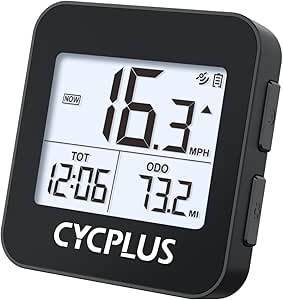 | Best for Long Battery Life | Display: 2.0-inch LED with FSTN technology | Battery life: More than 55 hours | Battery capacity: 1200mAh lithium polymer | VIEW LATEST PRICE | See Our Full Breakdown |
| Wahoo ELEMNT ROAM V3 GPS Bike Computer |  | Best for Exploring New Routes | Display: 2.8-inch LCD touchscreen, 480 × 800 resolution | Battery life: Up to 25 hours | GPS: Dual-band; GPS, GLONASS, BEIDOU, Galileo, QZSS, SBAS, and NavIC | VIEW LATEST PRICE | See Our Full Breakdown |
| Garmin Edge 1060 GPS Cycling Computer |  | Best Premium Training and Navigation Pick | Display: Vivid color touchscreen with physical buttons | Battery life: Up to 20 hours under demanding use; up to 60 hours in battery saver mode | Microphone and speaker: Built-in | VIEW LATEST PRICE | See Our Full Breakdown |
| Garmin Edge Explore 2 GPS Cycling Navigator |  | Best for Navigation-First Riders | Display: 3-inch capacitive touchscreen | Battery life: 16 hours | Satellite navigation: GPS | VIEW LATEST PRICE | See Our Full Breakdown |
| cycling computer | Connectivity | Battery life | Weight | Display |
|---|---|---|---|---|
| Garmin Edge 840 Bundle GPS Cyc | Bluetooth, Wi-Fi, USB | Up to 26 hours standard; up to 60 hours in solar/battery saver mode | — | — |
| Garmin Edge 540 GPS Cycling Co | Bluetooth, Wi-Fi, USB | Up to 26 hours; up to 42 hours in battery saver mode | 2.8 ounces | — |
| iGPSPORT BSC200S GPS Bike Comp | Bluetooth and ANT+ | Up to 25 hours | 66 g | — |
| Wahoo ELEMNT BOLT V3 Aero GPS | Bluetooth, ANT+, Wi-Fi, USB-C | Up to 20 hours | 84 g | 2.3-inch LCD, 64-color |
| Garmin Edge 850 Compact GPS Cy | Bluetooth, USB, Wi-Fi | Up to 12 hours; up to 36 hours in battery saver mode | 3.9 ounces | — |
| Garmin Edge 840 GPS Cycling Co | Bluetooth, Wi-Fi, USB | Up to 26 hours standard; up to 32 hours in battery-saver mode | — | — |
| iGPSPORT BSC500 GPS Bike Compu | — | — | 107 g | 3.3-inch touchscreen |
| GEOID CC700 Pro GPS Bike Compu | ANT+, Bluetooth, Wi-Fi | — | 0.22 kg | 2.8-inch color TFT touchscreen |
| Garmin Edge 1050 Premium Cycli | Bluetooth, USB, Wi-Fi | Up to 20 hours in demanding use; up to 60 hours in battery-saver mode | 5.7 ounces | — |
| iGPSPORT BSC500 GPS Bike Compu | ANT, Bluetooth | — | — | 3.3-inch touchscreen |
| Hammerhead Karoo Wireless GPS | ANT+, BLE, GPS, GNSS, USB | 15 hours | 0.41 kg | 3.2-inch LCD touchscreen |
| CYCPLUS G1 Wireless GPS Bike C | Wireless | More than 55 hours | 70 g | 2.0-inch LED with FSTN technology |
| Wahoo ELEMNT ROAM V3 GPS Bike | Bluetooth, USB, Wi-Fi | Up to 25 hours | 109 g | 2.8-inch LCD touchscreen, 480 × 800 resolution |
| Garmin Edge 1060 GPS Cycling C | Garmin Messenger app, compatible smartphone, and Garmin Connect | Up to 20 hours under demanding use; up to 60 hours in battery saver mode | — | Vivid color touchscreen with physical buttons |
| Garmin Edge Explore 2 GPS Cycl | Bluetooth and Wi-Fi | 16 hours | 4.1 oz | 3-inch capacitive touchscreen |
More Details on Our Top Picks
Garmin Edge 840 Bundle GPS Cycling Computer
The Edge 840 Bundle suits riders who want detailed navigation and training feedback without giving up dependable controls. Its touchscreen makes map interaction quicker than on the button-only Edge 540, while physical buttons remain useful in rain or with gloves. Multi-band GNSS can help maintain a more reliable position around tall buildings and dense tree cover, and solar charging can stretch battery life on long outings when sunlight is available. The tradeoff is that its richer coaching is most useful with compatible sensors, which are not included in every setup, and the preloaded map coverage is limited to North America. Compared with the Wahoo ELEMNT BOLT V3, this Garmin offers more extensive training tools and longer stated battery life, but its interface and features may be more than casual riders need.
Pros:- Solar charging can extend runtime to a stated maximum of 60 hours in battery saver mode under suitable conditions.
- Multi-band GNSS supports more dependable positioning in challenging environments.
- Touchscreen and physical buttons offer flexible control across weather and riding conditions.
- Stamina insights and power guidance add training context when compatible sensors are paired.
Cons:- Several coaching and power features depend on compatible sensors.
- Preloaded map coverage is limited to North America.
- Solar charging gains depend on sunlight and riding conditions.
Best for: Road, gravel, and trail riders who take long rides, want hybrid touchscreen and button controls, and plan to pair compatible sensors for training insights.
Not ideal for: Casual cyclists who mainly need basic ride recording, or international riders who need preloaded maps beyond North America.
- Screen:2.6-inch transflective TFT, 246 × 322 resolution
- Controls:Capacitive touchscreen and physical buttons
- Battery life:Up to 26 hours standard; up to 60 hours in solar/battery saver mode
- Storage:32 GB
- Navigation:GPS and multi-band GNSS
- Connectivity:Bluetooth, Wi-Fi, USB
- Map coverage:North America
- Mounting:Handlebar mount
Our verdict“Choose the Edge 840 Bundle for long rides and sensor-supported training; pick the simpler Edge 540 if touchscreen control and solar capability are not priorities.”
Garmin Edge 540 GPS Cycling Computer
The Edge 540 is a strong fit for riders who want Garmin’s navigation and training tools but prefer buttons over a touchscreen. That choice can make page changes more predictable with gloves or wet hands; the tradeoff is that map interaction is less direct than on the Edge 840 Bundle. Multi-band GNSS, climb guidance, stamina insights, and adaptive coaching make it more capable than a basic ride logger, though some training feedback depends on compatible sensors. Its stated battery life reaches 26 hours, or 42 hours in battery saver mode, giving it a practical advantage over the shorter-running Wahoo ELEMNT BOLT V3 on extended rides. The 2.6-inch screen and 16 GB of storage are more modest than the 840’s, so riders who rely on frequent map viewing may prefer the touchscreen model.
Pros:- Button controls remain practical in rain and when wearing gloves.
- Multi-band GNSS supports accurate positioning in difficult surroundings.
- ClimbPro, stamina insights, and adaptive coaching support structured ride planning.
- Battery life is rated up to 26 hours, with up to 42 hours in battery saver mode.
Cons:- The 2.6-inch screen can feel cramped when viewing maps and multiple data fields.
- Some training and power guidance requires compatible sensors.
- Its 16 GB storage is half the capacity listed for the Edge 840 Bundle.
Best for: Training-focused cyclists who prefer physical controls and want navigation, climb guidance, and ride insights without a touchscreen.
Not ideal for: Riders who want to pan and zoom maps by touch, or who need a larger display and more storage for frequent navigation.
- Screen:2.6-inch LCD, 246 × 322 resolution
- Controls:Physical buttons
- Battery life:Up to 26 hours; up to 42 hours in battery saver mode
- Storage:16 GB
- Navigation:GPS and multi-band GNSS
- Connectivity:Bluetooth, Wi-Fi, USB
- Weight:2.8 ounces
- Dimensions:2.3 × 0.8 × 3.4 inches
Our verdict“Pick the Edge 540 if you want Garmin training features with button-only operation, but choose the Edge 840 Bundle for touchscreen map control and more storage.”
iGPSPORT BSC200S GPS Bike Computer
The iGPSPORT BSC200S prioritizes useful navigation and ride data in a compact, lightweight unit. Its 2.4-inch semi-transparent color screen is designed for sunlight readability, and support for Strava and Komoot routes gives riders familiar ways to plan and follow rides. At a stated 25 hours, its battery life is close to the Garmin Edge 540’s standard figure, while IPX7 water resistance and ANT+ and Bluetooth connectivity suit varied weather and sensor setups. The compromise is a less polished control experience for complex settings: its physical buttons may send some tasks back to the app. It also lacks the Garmin models’ stated advanced coaching depth, and the charging cable is not included. This makes it a practical navigation-first alternative, not the strongest pick for structured training.
Pros:- Semi-transparent color display is designed to remain readable in bright sunlight.
- Strava and Komoot compatibility supports familiar route-planning workflows.
- Rated for 25 hours of battery life and charges through USB Type-C.
- IPX7 water resistance and ANT+ and Bluetooth connectivity support varied riding conditions.
Cons:- Complex settings may require interaction with the companion app.
- A USB Type-C charging cable is not included.
- It offers less emphasis on advanced coaching than the Garmin Edge 540 and Edge 840.
Best for: Commuters and recreational route riders who want sunlight-readable color navigation, app-based route integration, and long battery life in a light unit.
Not ideal for: Training-focused cyclists who want extensive built-in coaching, or riders who expect to configure every feature directly on the device.
- Screen:2.4-inch semi-transparent color display, 320 × 240 resolution
- Battery life:Up to 25 hours
- Charging:USB Type-C
- Weight:66 g
- Dimensions:82 × 53 × 14.1 mm
- Connectivity:Bluetooth and ANT+
- Data storage:400 hours
- Water resistance:IPX7
Our verdict“Choose the BSC200S for connected route following and a light, weather-resistant design; opt for the Edge 540 if training guidance matters more.”
Wahoo ELEMNT BOLT V3 Aero GPS Bike Computer
The Wahoo ELEMNT BOLT V3 is aimed at riders who want a compact, button-operated computer that keeps route following straightforward. Automatic downloads from platforms such as Strava and Komoot reduce the steps between planning a ride and loading it, while on-device turn-by-turn directions help keep attention on the road. Its 2.3-inch, 64-color display is smaller and less information-rich than the Garmin Edge 840’s 2.6-inch screen, but the BOLT’s simpler approach may suit riders who value a focused layout over deeper training tools. ANT+ radar support adds vehicle proximity alerts when paired with compatible equipment. The main tradeoffs are its stated 20-hour battery life, below the Garmin models’ standard figures, and reliance on a paired smartphone for smart notifications. Button input also means no touchscreen map interaction.
Pros:- Automatic route downloads from Strava and Komoot simplify route setup.
- On-device turn-by-turn navigation supports route following without relying solely on a phone screen.
- ANT+ radar integration can provide vehicle proximity alerts with compatible radar.
- IPX7 water resistance and USB-C connectivity suit regular outdoor riding.
Cons:- The 20-hour rated battery life is shorter than the Garmin Edge 540 and Edge 840.
- Smart notifications require a paired smartphone.
- Physical buttons do not offer touchscreen map interaction.
Best for: Road cyclists who regularly sync routes from Strava or Komoot, prefer physical controls, and want radar alerts in a compact unit.
Not ideal for: Riders who need longer battery life, touchscreen map control, or extensive built-in training guidance.
- Display:2.3-inch LCD, 64-color
- Controls:Buttons
- Battery life:Up to 20 hours
- Storage:16 GB
- Connectivity:Bluetooth, ANT+, Wi-Fi, USB-C
- Weight:84 g
- Water resistance:IPX7
- Mounting:Handlebar mount
Our verdict“Choose the BOLT V3 for streamlined route syncing and radar support; pick a Garmin Edge model for longer stated battery life or deeper training features.”
Garmin Edge 850 Compact GPS Cycling Computer
The Garmin Edge 850 pairs a compact body with a 2.7-inch color touchscreen and physical buttons, making it a better fit than the button-only Edge 540 for riders who want direct map interaction. Road, gravel, and trail maps broaden its appeal beyond road-focused navigation, while multi-band GPS and cycling awareness features add useful context on varied routes. The built-in speaker can provide prompts and a bike bell, and training and fueling tools suit riders who want more than basic ride recording. Its biggest tradeoff is endurance: the stated maximum is 12 hours, or 36 hours in battery saver mode, well below the Edge 840 Bundle’s standard battery figure. Some smartphone-linked and sensor-dependent features also need extra equipment or an app, so this is a compact feature-rich choice rather than a long-distance battery specialist.
Pros:- Touchscreen and physical buttons allow flexible interaction with maps and ride data.
- Preloaded maps cover road, gravel, and trail riding in North America.
- Multi-band GPS and automatic 5 Hz recording are listed for supported ride profiles.
- Built-in speaker provides prompts and a bike bell.
Cons:- Rated battery life of up to 12 hours in demanding use is shorter than the Edge 840 Bundle’s.
- Some features depend on a compatible smartphone and Garmin Connect app.
- Smart fueling features require compatible power and heart rate equipment.
Best for: Riders seeking a compact Garmin with touchscreen map control, road, gravel, and trail mapping, and training or fueling features.
Not ideal for: Cyclists planning very long rides between charges, or buyers who want all training and fueling tools without compatible sensors or a smartphone.
- Screen:2.7-inch LCD
- Controls:Capacitive touchscreen and buttons
- Battery life:Up to 12 hours; up to 36 hours in battery saver mode
- Satellite systems:GPS, GLONASS, Galileo
- Connectivity:Bluetooth, USB, Wi-Fi
- Weight:3.9 ounces
- Dimensions:0.7 × 2.1 × 3.6 inches
- Map coverage:North America; road, gravel, and trail maps
Our verdict“Choose the Edge 850 for a compact Garmin with touchscreen control and broad terrain maps, but favor the Edge 840 Bundle if longer battery life is the priority.”
Garmin Edge 840 GPS Cycling Computer
The Edge 840 balances detailed ride tools with a compact 2.6-inch screen. Its touchscreen makes map interaction direct, while physical buttons offer a practical backup when rain or gloves make tapping less reliable. Compared with the larger Garmin Edge 1050, it takes up less handlebar space but gives up the 1050’s broader, more prominent display and built-in speaker. Multi-band GNSS can help keep positioning more dependable among tall buildings or tree cover, and battery-saver mode suits longer outings.
ClimbPro and stamina insights add value for riders who track training, though some coaching features depend on separately purchased sensors. Standard maps cover North America, which limits its appeal for riders who need other regions out of the box. I’d choose it over a simpler computer for its control flexibility and training depth, but not if a large screen is the priority.
Pros:- Touchscreen and physical buttons suit changing weather and glove use
- Multi-band GNSS can improve positioning in challenging environments
- Battery-saver mode is rated for up to 32 hours
- ClimbPro and stamina insights support structured ride planning
Cons:- Standard map coverage is limited to North America
- Some coaching and stamina features require compatible sensors
- Software update support end date is not specified
Best for: Riders who want a compact Garmin with both touchscreen and button operation, detailed training tools, and reliable positioning on varied routes.
Not ideal for: Cyclists who need maps outside North America in the standard setup, or those seeking advanced power-based coaching without compatible sensors.
- Screen:2.6-inch capacitive LCD touchscreen
- Resolution:240 × 320
- Battery life:Up to 26 hours standard; up to 32 hours in battery-saver mode
- Storage:32 GB
- Connectivity:Bluetooth, Wi-Fi, USB
- Mounting:Handlebar mount
- Compatible devices:Android and iPhone
Our verdict“Choose the Edge 840 if you want a compact computer that pairs versatile controls with advanced navigation and training, and can work within its map and sensor requirements.”
The iGPSPORT BSC500 puts route guidance front and center: it supports imported routes, automatic rerouting, voice directions, and turn alerts that adapt to speed. Its 3.3-inch screen is larger than the Garmin Edge 840 display, giving route cues and up to 12 data fields per page more room, while button controls add an alternative to touch. Dual-band positioning and IPX7 water resistance make it a capable choice for varied rides and weather.
The tradeoff is a reliance on the iGPSPORT app or compatible third-party apps for route planning and imports. Riders who want a more self-contained training ecosystem may prefer the Edge 840’s Garmin features, while this model makes more sense for those who value voice guidance and a larger display. The listed package does not include sensors, so factor that in if you want extra ride data.
Pros:- 3.3-inch touchscreen provides more space for maps and ride data than the Edge 840
- Voice navigation and speed-adaptive turn reminders support hands-free route guidance
- Automatic rerouting helps recover when a ride leaves its planned course
- IPX7 water resistance and dual-band positioning suit varied conditions
Cons:- Route planning and imports require the iGPSPORT app or compatible third-party apps
- No cadence or speed sensors are listed as included
- Battery life is not specified in the provided product data
Best for: Route-focused riders who want a larger touchscreen, spoken directions, automatic rerouting, and flexible route imports.
Not ideal for: Cyclists who prefer to plan routes entirely on the device or want included cadence and speed sensors.
- Display:3.3-inch touchscreen
- Controls:Touchscreen and buttons
- Positioning:Dual-band L1/L5; GPS, BeiDou, GLONASS, Galileo, QZSS
- Data points:Up to 12 per page
- Weight:107 g
- Water resistance:IPX7
- Battery type:Lithium-ion
Our verdict“Pick the BSC500 if app-based route planning, voice directions, and a larger screen matter more than a self-contained route workflow or included sensors.”
GEOID CC700 Pro GPS Bike Computer with 2.8-Inch Color Touchscreen
The GEOID CC700 Pro brings offline maps, turn prompts, and route recalculation to a 2.8-inch color touchscreen, making it a versatile choice for riders who split time between road navigation and indoor sessions. Its five-satellite positioning and IPX7 rating add practical support for outdoor use, while ANT+, Bluetooth, and Wi-Fi cover sensor connections and syncing. Compared with the iGPSPORT BSC500, this model emphasizes offline maps and smart-trainer controls rather than a larger screen and voice navigation.
There are limits to that flexibility: route recalculation requires a connection to the designated app, so the offline maps do not make every navigation function independent of a phone. Indoor targets for power, resistance, and gradient are useful only with compatible equipment. Camera control is also restricted to DJI Action 4 and Action 5 Pro models, so it is a bonus for a narrow group rather than a general feature.
Pros:- Offline maps, turn prompts, and route recalculation support navigation
- ANT+, Bluetooth, and Wi-Fi support sensors and activity syncing
- Indoor training includes power, resistance, and gradient targets for compatible trainers
- IPX7 water resistance and a supplied screen protector add practical protection
Cons:- Route recalculation requires a connection to the designated app
- Camera control works only with DJI Action 4 and Action 5 Pro
- At 0.22 kg, it is heavier than the 107 g iGPSPORT BSC500
Best for: Riders who want offline map access, sensor connectivity, and smart-trainer targets in one computer, especially if they own a supported DJI camera.
Not ideal for: Cyclists who need app-independent route recalculation, a very lightweight computer, or camera controls for brands other than the listed DJI models.
- Display:2.8-inch color TFT touchscreen
- Storage:4 GB
- Connectivity:ANT+, Bluetooth, Wi-Fi
- Satellite systems:GPS, BeiDou, GLONASS, QZSS, Galileo
- Water resistance:IPX7
- Dimensions:2.24 × 0.76 × 3.78 inches
- Weight:0.22 kg
- Camera compatibility:DJI Action 4 and Action 5 Pro
Our verdict“Choose the CC700 Pro for offline maps and indoor-trainer functions in one device, provided its app-dependent rerouting and limited camera support fit your setup.”
Garmin Edge 1050 Premium Cycling Computer
The Garmin Edge 1050 is the premium choice here for riders who want maps and ride information on a generous 3.5-inch color touchscreen. Its built-in speaker adds audible navigation prompts and a bike bell, while Garmin Pay and group ride messaging bring phone-connected conveniences beyond core ride tracking. Compared with the smaller Edge 840, the 1050 makes route detail and on-screen stats easier to see, but its larger body is less suited to riders who favor a compact cockpit.
Battery life ranges from up to 20 hours in demanding use to 60 hours in saver mode, a broad span that depends on how the computer is configured. Many connected features rely on a compatible smartphone and Garmin Connect, and contactless payments only work with supported banks. Power-based training also needs separate compatible hardware, so its advanced features are most useful to riders already building a sensor-equipped setup.
Pros:- 3.5-inch color touchscreen gives maps and ride data more room than the Edge 840
- Built-in speaker provides navigation prompts and a bike bell
- Battery-saver mode is rated for up to 60 hours
- 64 GB storage and Garmin Pay add capacity and connected functions
Cons:- Many smart features require a compatible smartphone and Garmin Connect
- Garmin Pay depends on support from the rider’s bank
- Power-based training features require compatible additional hardware
Best for: Committed riders who want a large, vivid navigation display, audible prompts, and Garmin’s connected ride and training features.
Not ideal for: Cyclists who prioritize a compact handlebar setup, avoid phone-dependent features, or do not plan to use connected training tools.
- Screen:3.5-inch capacitive LCD touchscreen
- Battery life:Up to 20 hours in demanding use; up to 60 hours in battery-saver mode
- Storage:64 GB
- Navigation systems:GPS, GLONASS, Galileo
- Connectivity:Bluetooth, USB, Wi-Fi
- Dimensions:4.7 × 0.6 × 2.4 inches
- Weight:5.7 ounces
- Audio:Built-in speaker
Our verdict“The Edge 1050 suits riders who will use its large display and connected features, but the Edge 840 is a better fit for a more compact, simpler setup.”
iGPSPORT BSC500 GPS Bike Computer with 3.3-Inch Touchscreen and Voice Navigation
This iGPSPORT BSC500 bundle stands apart from the other BSC500 listing by including a cadence sensor and a speed sensor, plus a protective case. That makes it a more ready-to-ride pick for cyclists who want those measurements without sourcing the sensors separately. The 3.3-inch touchscreen, dual-band positioning, voice navigation, turn reminders, and automatic rerouting match the route-focused strengths of the other BSC500, while iClimb 2.0 adds support for managing climbs.
Compared with the GEOID CC700 Pro, this package includes two ride sensors and supports route integration with platforms such as Strava and Komoot, while the GEOID lists offline maps and smart-trainer targets. Route planning still depends on the iGPSPORT app or supported services, and battery life is not provided in the supplied data. Choose this bundle for its included sensors, not for a documented long-ride runtime.
Pros:- Includes CAD70 cadence and SPD70 speed sensors
- Dual-band positioning uses five satellite systems
- Voice navigation, turn reminders, and automatic rerouting aid route following
- iClimb 2.0 and training analysis add ride-planning tools
Cons:- Full route planning depends on app integration or compatible third-party platforms
- Battery life is not specified in the provided product data
- ANT and Bluetooth connectivity may not suit riders seeking Wi-Fi syncing
Best for: Cyclists who want a large-screen GPS computer with included cadence and speed sensors and plan to use app-connected routes.
Not ideal for: Riders who need a stated battery runtime, prefer to avoid smartphone-based route planning, or prioritize offline maps and indoor smart-trainer targets.
- Display:3.3-inch touchscreen
- Positioning:Dual-band L1/L5; GPS, BeiDou, GLONASS, Galileo, QZSS
- Connectivity:ANT, Bluetooth
- Included sensors:CAD70 cadence sensor and SPD70 speed sensor
- Mounting:Handlebar mount
- Battery type:Lithium-ion
- Package contents:BSC500 computer, cadence sensor, speed sensor, mount, case, charge cable
Our verdict“Choose this BSC500 package if included cadence and speed sensors are a priority; pick another option if you need documented battery life or offline map features.”
Hammerhead Karoo Wireless GPS Bike Computer
The Hammerhead Karoo is the strongest fit here for riders who want a large touchscreen and close integration with SRAM AXS components. Its 3.2-inch display gives maps and ride data room to breathe, while multi-band GNSS can help maintain accurate tracking around buildings and on rugged routes. Compared with the Wahoo ELEMNT ROAM V3, it offers a larger screen and AXS-focused customization, but the ROAM V3 has more stated offline-map storage and longer battery life. Karoo’s 15-hour runtime suits many day rides, though it leaves less reserve for very long events. The touchscreen and button combination adds flexibility, but wet-weather or gloved riders may find touch input less dependable. I’d pick it for connected SRAM setups, not for maximum endurance.
Pros:- Multi-band GNSS supports accurate tracking in urban streets and rugged terrain.
- 3.2-inch touchscreen provides generous space for maps and ride data.
- Integrates with SRAM AXS, e-bikes, and ANT+ accessories.
- Buttons offer an alternative to touch input while riding.
Cons:- 15-hour battery life is shorter than the Wahoo ELEMNT ROAM V3’s stated 25 hours.
- Touch controls can be difficult with thick gloves or in heavy rain.
Best for: Cyclists with SRAM AXS or compatible e-bike and ANT+ accessories who want a large, responsive map display.
Not ideal for: Ultra-distance riders needing more than 15 hours between charges, or riders who rely on touchscreen controls in heavy rain or thick gloves.
- Display:3.2-inch LCD touchscreen
- Battery life:15 hours
- Navigation technology:Multi-band GNSS
- Connectivity:ANT+, BLE, GPS, GNSS, USB
- Input methods:Buttons and touchscreen
- Mounting:Handlebar mount
- Weight:0.41 kg
- Model number:00.3018.396.001
Our verdict“Choose the Karoo for a large navigation screen and SRAM AXS integration, but look to the ROAM V3 if longer battery life matters more.”
CYCPLUS G1 Wireless GPS Bike Computer
The CYCPLUS G1 makes the most sense for riders who want basic GPS ride tracking without frequent charging. Its stated runtime of more than 55 hours far exceeds the 15 hours listed for the Hammerhead Karoo and the 25 hours listed for the Wahoo ELEMNT ROAM V3. At just 70 g, it also keeps handlebar weight and clutter low. The tradeoff is a simpler experience: the supplied details mention wireless tracking and performance data, but not built-in maps or turn-by-turn navigation. Its 2.0-inch button-operated screen is more limited for route decisions than the larger touch displays on the Garmin Edge Explore 2 and ROAM V3. I’d choose the G1 for long rides where battery endurance and straightforward data matter more than sophisticated navigation.
Pros:- More than 55 hours of stated battery life supports extended use between charges.
- 70 g weight keeps the computer light on the handlebar.
- Automatic backlighting helps keep the display visible as light changes.
- IPX6 water-resistance rating is suited to wet-weather riding.
Cons:- No built-in navigation or turn-by-turn directions are specified.
- Button-only input is less direct for interacting with data than the touchscreens on the Karoo and Garmin Edge Explore 2.
Best for: Touring and endurance cyclists who need long runtimes for ride tracking and do not depend on on-device maps.
Not ideal for: Riders exploring unfamiliar routes who want built-in maps or turn-by-turn directions, or those who prefer touchscreen controls.
- Display:2.0-inch LED with FSTN technology
- Battery life:More than 55 hours
- Battery capacity:1200mAh lithium polymer
- Weight:70 g
- Water resistance:IPX6
- Connectivity:Wireless
- Mounting:Handlebar mount
- Warranty:2 years
Our verdict“Pick the G1 for lightweight ride tracking and exceptional stated battery life, but choose a navigation-focused computer for route guidance.”
Wahoo ELEMNT ROAM V3 GPS Bike Computer
The Wahoo ELEMNT ROAM V3 is the clearest choice in this group for riders who regularly leave familiar roads and want navigation support with room to grow. Its 64GB of offline maps, dual-band GPS, voice turn-by-turn directions, and 2.8-inch touchscreen combine route clarity with tracking suited to dense forests and urban streets. Compared with the Hammerhead Karoo, the ROAM V3 has a longer stated battery life—25 hours versus 15—and more specified map storage, though Karoo’s larger screen and SRAM AXS integration may appeal more to riders in that ecosystem. The ROAM V3’s full route-generation features depend on the ELEMNT Companion App, adding a phone to the setup process. For route-focused riders, that tradeoff is easier to accept than giving up its map capacity and guidance.
Pros:- 64GB of storage supports extensive offline map use.
- Dual-band GPS supports location accuracy in challenging environments.
- Voice turn-by-turn directions make route following easier while riding.
- 25-hour stated battery life exceeds the Karoo’s 15 hours.
Cons:- Full route-generation features require the ELEMNT Companion App.
- IPX7 water resistance does not mean the unit is suitable for submersion.
Best for: Road and gravel cyclists who plan unfamiliar routes, want offline maps, and value voice turn-by-turn guidance.
Not ideal for: Riders who want route creation entirely on the computer, or those who prefer a larger display or SRAM AXS-focused integration.
- Display:2.8-inch LCD touchscreen, 480 × 800 resolution
- Battery life:Up to 25 hours
- GPS:Dual-band; GPS, GLONASS, BEIDOU, Galileo, QZSS, SBAS, and NavIC
- Storage:64GB
- Connectivity:Bluetooth, USB, Wi-Fi
- Water resistance:IPX7
- Weight:109 g
- Mounting:Handlebar mount
Our verdict“Choose the ROAM V3 if offline maps and confident route guidance outrank app independence or a larger screen.”
Garmin Edge 1060 GPS Cycling Computer
The Garmin Edge 1060 is the most feature-rich training choice in this set, pairing preloaded bike-specific maps with Garmin Coach, power guidance, and real-time stamina insights. A built-in microphone and speaker add hands-free control and messaging, while physical buttons complement the color touchscreen when touch input is inconvenient. Compared with the Garmin Edge Explore 2, the 1060 emphasizes training analysis and voice features rather than a simpler navigation-first setup; the Explore 2 still covers turn-by-turn guidance and e-bike information. The 1060’s battery is rated for up to 20 hours under demanding use, or up to 60 in battery saver mode. Some training functions depend on compatible sensors, and connected features may need a phone and Garmin Connect. It suits committed riders who will use its wider toolset, not casual route followers.
Pros:- Garmin Coach, power guidance, and real-time stamina insights support structured training.
- Preloaded bike-specific maps provide built-in route context.
- Microphone and speaker enable hands-free voice control and messaging.
- Battery life reaches up to 60 hours in battery saver mode.
Cons:- Some training features require a compatible power meter or heart rate monitor.
- Several connected features depend on a compatible smartphone and Garmin Connect.
- Voice command performance can vary, and voice support is limited to select languages.
Best for: Data-focused cyclists who want training guidance, stamina insights, bike-specific maps, and hands-free controls in one computer.
Not ideal for: Casual riders seeking simple navigation, or buyers without compatible sensors and a smartphone who would leave many connected and training features unused.
- Display:Vivid color touchscreen with physical buttons
- Battery life:Up to 20 hours under demanding use; up to 60 hours in battery saver mode
- Microphone and speaker:Built-in
- Navigation:Preloaded bike-specific maps
- Training features:Garmin Coach, power guide, and real-time stamina
- Connectivity:Garmin Messenger app, compatible smartphone, and Garmin Connect
Our verdict“Choose the Edge 1060 if you will use its training tools and voice features; the Edge Explore 2 is a better fit for navigation-first riding.”
Garmin Edge Explore 2 GPS Cycling Navigator
The Garmin Edge Explore 2 puts route guidance ahead of training analytics, making it a practical choice for recreational riders and e-bike users. Its 3-inch touchscreen is designed for glove and rain use, while preloaded maps offer turn-by-turn directions across road and off-road rides. E-bike guidance adds battery, assist-level, and range information when paired with a compatible system. Compared with the Garmin Edge 1060, the Explore 2 is less focused on structured training and stamina analysis, but its simpler feature mix may suit riders who mainly want to find their way. Battery life is listed at 16 hours, below the Wahoo ELEMNT ROAM V3’s 25 hours, and sensor-based heart rate, speed, and cadence data require separately purchased sensors. Connected functions also depend on a compatible smartphone and network coverage.
Pros:- Preloaded bike-specific maps provide turn-by-turn route guidance.
- 3-inch touchscreen is designed for use with gloves and in rain.
- Profiles support road, off-road, and indoor activities.
- Compatible e-bike integration can show battery, assist level, and range guidance.
Cons:- Heart rate, speed, and cadence sensors are sold separately.
- Some connected features require a compatible smartphone and network coverage.
- 16-hour battery life is shorter than the Wahoo ELEMNT ROAM V3’s stated 25 hours.
Best for: Recreational road, gravel, and e-bike riders who prioritize clear navigation over advanced training metrics.
Not ideal for: Training-focused cyclists who want built-in performance analysis, or riders seeking longer stated battery life than 16 hours.
- Display:3-inch capacitive touchscreen
- Battery life:16 hours
- Satellite navigation:GPS
- Storage:16GB
- Connectivity:Bluetooth and Wi-Fi
- Weight:4.1 oz
- Dimensions:3 × 5 × 1 in
- Compatible devices:Smartphone
Our verdict“Choose the Edge Explore 2 for straightforward maps and e-bike guidance, but opt for the Edge 1060 if training analysis is a priority.”
How We Picked
I ranked these cycling computers by how well they serve real riding needs: dependable ride recording, useful navigation, readable screens, straightforward controls, and compatibility with common sensors and accessories. I also weighed size and interface against the feature set, since a large touchscreen or deep training menu is only an advantage when it suits the rider’s routes and habits. Bundle contents matter too: the Edge 840 Bundle adds accessories, while the standard Edge 840 is a separate option for buyers who already own compatible gear.
The order favors balanced usefulness over sheer feature count. The Edge 840 leads because it sits between simpler computers and larger premium units; the BOLT V3 and Edge 540 rank well for riders who value a more focused setup. Large-screen models earn their place for riders who want more display space, while the Explore 2 and lower-cost GPS options serve narrower needs. The two listed BSC500 entries appear to describe the same model, so I treat them as one product rather than implying distinct performance.
Factors to Consider When Choosing Best Cycling Computers
Before choosing a model, I’d match the computer to the kind of decisions it needs to make easier on a ride. A device built around route guidance can be a better fit than a training-heavy model, even if the latter has more features on paper. These factors help narrow the field without paying for functions you will rarely use.
Choose Navigation Depth for Your Routes
Riders who follow planned routes need more than a line showing where they are; useful guidance can include clear turns, readable maps, and a practical way to get back on course. If your rides are familiar loops, basic GPS recording may be enough, and extra mapping tools may add complexity without improving the ride. Think about whether you create routes on a phone, import files, or prefer to choose a destination on the computer itself. Also check how the device behaves when a route changes, since rerouting can matter more than map detail on unfamiliar roads. A common mistake is buying a navigation-focused unit for simple tracking, or choosing a basic computer for regular touring. Match the route tools to how often you ride somewhere new.
Balance Screen Readability Against Cockpit Space
A larger screen can make maps and data fields easier to read at a glance, particularly in changing light or when several metrics are visible. It also takes up more handlebar space and can feel bulky on a compact cockpit. Smaller units are easier to position and may suit riders who mainly check speed, distance, and a simple route cue. Consider how many fields you actually read while moving; a crowded screen can be harder to use than a small, well-organized one. Touchscreen controls may feel natural for map interaction, while buttons can be easier to operate with wet hands or gloves. Prioritize legibility from your riding position, not screen size alone.
Buy Training Features Only If You Will Use Them
Training metrics and structured workout support are most useful when they connect to a regular plan, compatible sensors, or a coaching platform. If you mostly ride for transport or recreation, dependable recording and navigation may matter more than recovery insights or complex data pages. Before paying for advanced tools, identify which metrics you check now and which one would change a training decision. Sensor compatibility can also shape the total setup: heart-rate, cadence, and power data are useful only if you own or plan to add those devices. Avoid choosing by the longest feature list when your rides do not call for it. A simpler computer can be easier to configure and keep focused.
Check Controls and Setup Habits
Computer interfaces vary in how much they rely on buttons, touch controls, phone setup, and on-device menus. A rider who frequently edits routes or screens may prefer a system that makes those tasks clear, while someone who sets everything up once may care more about quick ride starts. Consider whether you want to make changes mid-ride, where gloves, rain, and road vibration can affect usability. App-based configuration can save time, but it also makes a phone part of the setup. Check how easy it is to pair sensors and manage data fields before assuming a feature-rich device will feel simple. The best interface is the one you can operate without taking attention from the road.
Account for Battery Needs and Ride Length
Battery life claims depend on settings, screen use, navigation, and connected sensors, so think about your longest typical ride rather than a short commute. Frequent map viewing, bright displays, and multiple connections can use power faster than basic recording. If you ride long days or multi-day routes, leave a practical reserve instead of planning to finish every ride near empty. A larger unit is not automatically the better choice for endurance, and a compact model is not automatically unsuitable; check manufacturer guidance for the exact model and use pattern. Also consider how you charge and store the device between rides. Matching battery expectations to your habits prevents a feature-rich computer from becoming a power-management chore.
Look Beyond the Computer to the Full Setup
The device is only part of the experience: mounting options, sensor standards, route services, and data-platform compatibility all affect how smoothly it fits into your routine. Bundles can make sense when you need the included accessories, but they are less compelling when you already own compatible sensors. Check whether your current mounts work and whether the computer supports the data you want to see. Riders using one brand’s training or navigation ecosystem may benefit from staying with it, while others may prefer a more independent setup. Consider replacement mounts and charging accessories as part of ownership, not afterthoughts. A well-matched system can be more useful than a computer with extra features that do not connect to your gear.
Frequently Asked Questions
Is the Garmin Edge 840 Bundle worth choosing over the standard Edge 840?
I’d choose the bundle when its included accessories fill gaps in your setup, such as compatible sensors or mounts you planned to buy anyway. If you already own the accessories you need, the standard Edge 840 avoids duplicating gear. Compare the bundle contents with your current kit before deciding, since included items can vary by package. Both versions center on the same computer, so the choice is about the accessories rather than a different core device. For a first cycling-computer setup, the bundle may make setup simpler if its contents match your needs.
Should I choose a compact computer or a larger-screen model?
I’d favor a compact computer if cockpit space, low visual bulk, or a simple data layout matters most. A larger screen is more useful when you regularly follow maps, read several fields, or want more room for route information. Screen size alone does not guarantee easier use; contrast, page layout, and control style matter too. If possible, compare the physical dimensions with your handlebar setup and how you read a screen while riding. Buyers who rarely use maps may be better served by a smaller, more focused device.
Can an entry-level GPS bike computer replace a premium Garmin or Wahoo?
It can replace one for riders who mainly need GPS ride recording, basic navigation, and common ride metrics. The gap becomes more relevant if you depend on advanced route tools, a polished training workflow, extensive sensor support, or a particular platform’s integrations. A lower-complexity model can be the better purchase when you will not use premium functions. Check the exact navigation and sensor capabilities rather than assuming all GPS computers behave alike. I’d spend more only when a specific feature solves a recurring problem in your riding.
Do I need touchscreen controls for cycling navigation?
No. Touchscreens can make map interaction and menu selection feel direct, but buttons remain useful when wearing gloves or riding in wet conditions. The right choice depends on how often you change screens or interact with maps while moving. If you mostly follow a route that was set before the ride, button controls may be entirely adequate. Also check whether the computer’s interface lets you make common changes safely and quickly. Do not pay extra for touch controls unless they improve tasks you actually perform.
How should I choose between a training computer and a navigation-focused model?
Start with the main reason you want a computer: improving structured workouts or finding your way on unfamiliar rides. Training-oriented models make more sense when you use workout plans, sensors, and performance data to guide decisions. A navigation-focused unit suits touring, exploring, or riding routes where clear guidance matters more than detailed training analysis. Some models cover both, but extra capabilities can add setup and interface complexity. Choose the stronger fit for your most frequent ride, then check whether the other function is available at a level you will actually use.
Conclusion
For the best all-around balance, I recommend the Garmin Edge 840; choose the Edge 840 Bundle instead if its included accessories suit your setup. The iGPSPORT BSC200S is my value-minded pick for riders who want core GPS functions without prioritizing an extensive premium feature set, while the Garmin Edge 1050 is the premium choice for buyers who want a larger display and a more feature-rich experience. Beginners should look closely at the Garmin Edge Explore 2 for a navigation-centered approach, especially if training analysis is not a priority. For compact setups, compare the Wahoo ELEMNT BOLT V3 with the Garmin Edge 540; for a larger Wahoo format, consider the ROAM V3. Choose by the screen, navigation, and training tools you will use on your rides, rather than by feature count alone.
Evergreen bestsellers Picks

TCL 55 T7 Series 4K 120Hz QLED Smart Google TV (55T7)

Vitamix VX1 Professional-Grade Blender, 64 oz, Black

Bose QuietComfort Wireless Noise-Cancelling Over-Ear Headphones, Twilight Blue
As an affiliate, we earn on qualifying purchases.