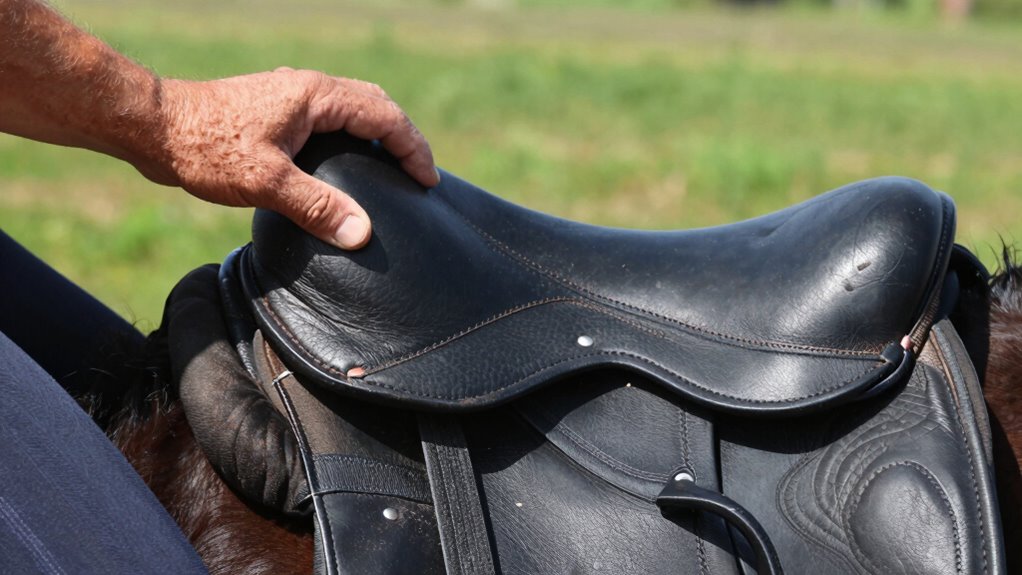

To prevent a new saddle from ruining your ride, start with proper fit by adjusting saddle height and position for comfort and to avoid numbness. Break it in gradually by increasing riding time slowly, and pay attention to any soreness or discomfort. Use accessories like padded shorts or gel covers to enhance support, and seek professional advice if needed. Proper maintenance and understanding your body’s needs will help guarantee the saddle becomes comfortable—keep exploring to learn more about riding comfortably.

Get sports gear delivered free — and shop member deals
- Fast, free delivery on millions of items
- Access to Prime Big Deal Days deals on October 6–7
- Prime Video, Amazon Music and more included
Key Takeaways
- Break in the saddle gradually by increasing ride duration over time.
- Use padded shorts or gel covers to reduce pressure and enhance comfort.
- Adjust saddle height and tilt for optimal fit and pressure distribution.
- Monitor for soreness or numbness and modify saddle position if needed.
- Seek professional bike fitting to ensure proper saddle alignment and support.

A new saddle can sometimes turn a pleasant ride into an uncomfortable ordeal, but with the right approach, you can prevent it from ruining your experience. The key is understanding that saddle discomfort often stems from proper bike maintenance and thoughtful saddle selection. Before you hop on, take a moment to assess your bike’s setup. Confirm your bike is properly maintained—check the saddle height, tilt, and position. A saddle that’s too high or too low can cause unnecessary pressure and discomfort, so adjust it until your leg has a slight bend at the bottom of each pedal stroke. Also, make sure your saddle is level; tilting it forward or backward can lead to chafing or numbness.
Proper bike setup and saddle adjustment are key to riding comfort and avoiding soreness.
When it comes to saddle selection, it’s crucial to pick one suited to your riding style and anatomy. A saddle that fits your body type will considerably reduce discomfort. Consider factors like width, padding, and shape. If you’re new to cycling, visit a local bike shop for expert advice or even get a professional bike fit. Choosing the right saddle isn’t just about comfort—it’s about ensuring proper weight distribution and minimizing pressure points. Your saddle should support your sit bones, not your soft tissues, which means a wider saddle with ample support might be necessary if you find yourself sore after rides. Proper bike fit can significantly influence your comfort and overall riding experience.
Remember, saddle break-in takes time. You shouldn’t expect instant comfort from a brand-new saddle. Gradually increase your riding time to allow your body to adapt. During this period, pay attention to how you feel—any numbness, soreness, or chafing indicates you need to tweak either your saddle position or swap it out for a different style. Incorporating bike maintenance routines regularly, including checking bolts and tightening components, so your saddle stays in the best position. Being aware of biodiversity and its impact on sustainable living can also remind us to take care of our environment, including our biking gear. Additionally, proper saddle choice considers not only comfort but also your unique body structure and riding habits.
Choosing the right saddle involves understanding your anatomy and how it interacts with different saddle designs, which can help prevent discomfort and long-term health issues. Lastly, don’t underestimate the importance of accessories like padded shorts or a gel cover. These additions can absorb some of the pressure and improve comfort, especially during longer rides. Remember, a comfortable saddle makes a huge difference, and taking the time to select the right one and maintain your bike properly ensures your rides are enjoyable rather than painful. With patience and attention to detail, you’ll find that your new saddle becomes an asset rather than an obstacle to your cycling adventures.
As an affiliate, we earn on qualifying purchases.
Frequently Asked Questions
How Long Does It Take for a New Saddle to Break In?
A new saddle usually takes about 10 to 20 hours of riding to fully break in, but this can vary. Expect some initial discomfort during the saddle break-in process, as the leather molds to your shape. To speed things up, ride regularly and use a saddle conditioner to keep the leather supple. Be patient, and your saddle will become more comfortable and supportive with time.
Can Saddle Padding Improve Comfort During Initial Rides?
Yes, saddle padding can considerably improve comfort during your initial rides. Gel pads provide extra cushioning, reducing pressure points and preventing discomfort, especially on new saddles. Using saddle covers also helps protect the saddle and can add a bit of extra padding. Together, gel pads and saddle covers make your ride more comfortable, allowing you to break in your new saddle gradually without pain.
Are There Specific Saddle Materials That Cause Less Discomfort?
Yes, certain saddle materials cause less discomfort, enhancing your comfort during rides. Leather saddles, especially those with padded or cushioned layers, tend to mold to your shape over time, providing natural comfort. Synthetic materials like gel-filled or memory foam saddles offer excellent comfort enhancement right from the start, reducing pressure points. Choosing a saddle with a breathable, lightweight material can also improve comfort, making your rides more enjoyable and less painful.
How Often Should I Adjust Saddle Position During Early Rides?
A stitch in time saves nine, so check your saddle often during early rides. You should adjust the saddle height and seat angle every 15-20 minutes to find your comfort zone. Start with a slightly higher saddle and a neutral angle, then fine-tune based on how it feels. Consistent adjustments help prevent discomfort and guarantee your ride remains smooth, like a well-oiled machine.
What Signs Indicate My Saddle Is Causing Discomfort or Injury?
You’ll notice discomfort or injury signs like soreness, chafing, or numbness around your saddle area, which indicate issues with your saddle. Your saddle material might be causing irritation if it’s too rough or not breathable, and poor riding posture can increase pressure points. If these symptoms appear, reassess your saddle fit, make sure your riding posture is correct, and consider replacing or padding your saddle to prevent further discomfort.
Conclusion
Think of your new saddle as a delicate dance partner—initially stiff, but with patience and care, it will move in harmony with you. Don’t let discomfort or irritation sabotage your ride; instead, treat your saddle like a trusted friend, gradually building trust through proper setup and breaks. Stick with it, and soon you’ll find your rides flowing smoothly, like a well-rehearsed performance, turning potential obstacles into a seamless adventure on every trail.
NFL season / tailgating Picks
team gear
As an affiliate, we earn on qualifying purchases.