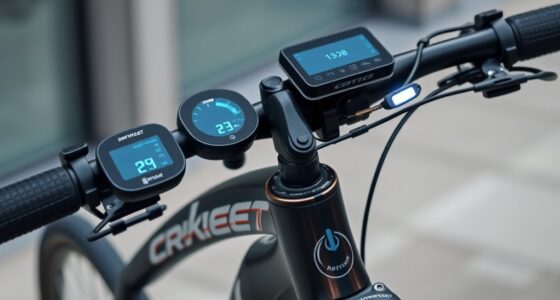
To care for your bike electronics’ battery, avoid letting it completely drain and keep it charged between 20% and 80%. Use the recommended charger and avoid overcharging or exposing the battery to extreme temperatures. Regularly inspect it for signs of damage, keep it clean, and store it in a cool, dry place with some charge if not in use for long periods. If you want to make sure your battery stays in top shape, there’s more to contemplate.

Get sports gear delivered free with Prime
- Fast, free delivery on millions of items
- Prime Video, Amazon Music and more included
- Member-only deals all year
Key Takeaways
- Keep lithium-ion batteries charged between 20% and 80% to prolong lifespan.
- Use the recommended charger and avoid overcharging or complete discharges.
- Store batteries in cool, dry places with a partial charge when not in use long-term.
- Regularly inspect for swelling, corrosion, or leaks and keep batteries clean.
- Charge in a cool environment, avoiding extreme temperatures to prevent damage.

To guarantee your bike electronics perform reliably and last longer, proper battery care is essential. Taking the time to understand effective battery maintenance can markedly extend the lifespan of your device’s power source and ensure consistent performance. One of the most important aspects of battery maintenance is adopting charging best practices. When you regularly follow proper charging routines, you reduce the risk of damaging the battery and improve its overall longevity. For instance, avoid letting your battery completely drain before recharging. Lithium-ion batteries, common in bike electronics, prefer partial discharges—keeping the charge between 20% and 80% helps preserve their health. Charging to 100% constantly or allowing the battery to sit at 0% can accelerate capacity loss over time.
Proper battery care extends your bike electronics’ lifespan and ensures reliable performance through smart charging practices and maintenance.
Another key part of battery maintenance is using the right charger. Always opt for chargers recommended by your device manufacturer or those with the correct voltage and current specifications. Using incompatible chargers can cause overcharging or overheating, which damages the battery and shortens its lifespan. When you connect your device, make sure the connection is secure and stable; a loose or faulty connection can lead to inconsistent charging and potential harm to the battery. Also, avoid charging your bike electronics in extreme temperatures. Heat accelerates battery degradation, so try to charge your device in a cool, dry place, especially if you plan to leave it plugged in for a while.
Maintaining proper battery maintenance includes regular checks on the battery’s physical condition. Look for swelling, corrosion, or leaks, and if you notice any issues, address them immediately. Keeping the battery clean and free of dirt or debris can also improve contact and prevent performance hiccups. If your device has a removable battery, it’s good practice to remove it if you won’t be using your bike electronics for an extended period. Store the battery in a cool, dry place, ideally with a partial charge, to prevent it from losing capacity while unused.
Additionally, understanding the performance of Porsche Tuning brands can help you choose the right upgrades that can optimize your vehicle’s power output and handling, which is especially useful if you’re seeking a more dynamic riding experience. Staying aware of your device’s usage patterns is also important. Heavy usage drains the battery faster and can lead to quicker wear if you aren’t mindful of charging intervals. By adopting consistent charging best practices and performing routine battery maintenance, you can maximize your bike electronics’ performance and lifespan. Proper care not only saves you money over time but also ensures your device remains dependable whenever you need it most.
bike electronics lithium-ion battery charger
As an affiliate, we earn on qualifying purchases.
As an affiliate, we earn on qualifying purchases.
Frequently Asked Questions
How Often Should I Replace My Bike’s Electronic Battery?
You should replace your bike’s electronic battery every 3 to 5 years, depending on its battery lifespan and usage. Keep an eye on performance; if you notice reduced range or longer charging times, it’s time for a replacement. Regularly maintaining your battery and following manufacturer recommendations can extend its life, but inevitable wear means replacement frequency is essential for peak bike performance.
Are There Specific Chargers Recommended for Bike Electronic Batteries?
Think of your charger as the key to your scooter’s future—using the right one is essential. You should always opt for chargers that match your bike’s electronic battery specifications. This guarantees charger compatibility and maximizes charging safety. Avoid generic or incompatible chargers, which can damage your battery or cause safety hazards. Always read the manufacturer’s recommendations to keep your bike’s electronics functioning smoothly and safely.
Can I Use a Power Bank to Charge Bike Electronics?
Yes, you can use a power bank to charge bike electronics if it’s compatible and provides the right voltage and current. Check the power bank’s compatibility to verify it matches your device’s charging requirements, and prioritize charging safety by avoiding overcharging or using cheap, unverified power banks. Always follow your bike manufacturer’s recommendations to prevent damage and ensure safe, efficient charging.
What Signs Indicate My Battery Is Failing Prematurely?
You’ll notice your battery’s failing prematurely if it shows reduced battery lifespan or if charging indicators stay on longer than usual. You might also experience shorter riding distances or difficulty holding a charge. If your battery drains quickly despite proper care, it’s a sign it’s aging or faulty. Regularly check the charging indicators and monitor performance; early signs help you replace or service the battery before complete failure.
Is It Safe to Leave the Battery Connected When Not in Use?
It’s generally safe to leave your battery connected when not in use if you follow proper battery storage and charging safety guidelines. Make sure to store it in a cool, dry place and disconnect it if you’ll be away for a long period. Regularly check for any signs of damage or swelling. Proper storage helps prevent issues and prolongs your battery’s lifespan, ensuring safe and reliable performance when you need it.
Conclusion
Taking good care of your bike’s electronic battery is like tending a delicate garden—you need to give it attention and the right conditions to thrive. Always avoid letting it fully drain, keep it charged regularly, and store it properly. With a little effort, your battery will perform like a well-oiled machine, ready to power your adventures. Remember, a happy battery means more reliable rides and fewer surprises along the way. Keep it cared for, and enjoy smooth cycling ahead!
Halloween Picks
halloween
As an affiliate, we earn on qualifying purchases.