
When it comes to recycling batteries for small EVs, you’ll find that innovative processes are designed to recover valuable materials like lithium, cobalt, and nickel, reducing environmental harm and conserving resources. Proper recycling creates a closed-loop system that minimizes waste and supports sustainability. Additionally, repurposing batteries for second-life uses delays disposal and maximizes their value. Exploring this topic further reveals how industry advancements can help protect our planet while keeping electric vehicles eco-friendly.
Key Takeaways
- Small EV batteries can be repurposed for stationary storage, extending their useful life before recycling.
- Advanced recycling methods recover nearly 100% of critical materials like lithium, cobalt, and nickel from small EV batteries.
- Direct recycling preserves original components, reducing waste and lowering environmental impact in small EV battery management.
- Implementing smart reuse and recycling strategies supports a circular economy and minimizes raw material extraction.
- Proper disposal and recycling policies are vital for sustainable growth of small EVs and environmental conservation.
Have you ever wondered what happens to the batteries in small electric vehicles once they reach the end of their lifespan? It’s a pivotal question, especially as EV adoption grows and more batteries need proper disposal or repurposing. The good news is that industries are developing innovative ways to handle these batteries through battery reuse and recycling innovations, ensuring fewer environmental impacts and more efficient resource use.
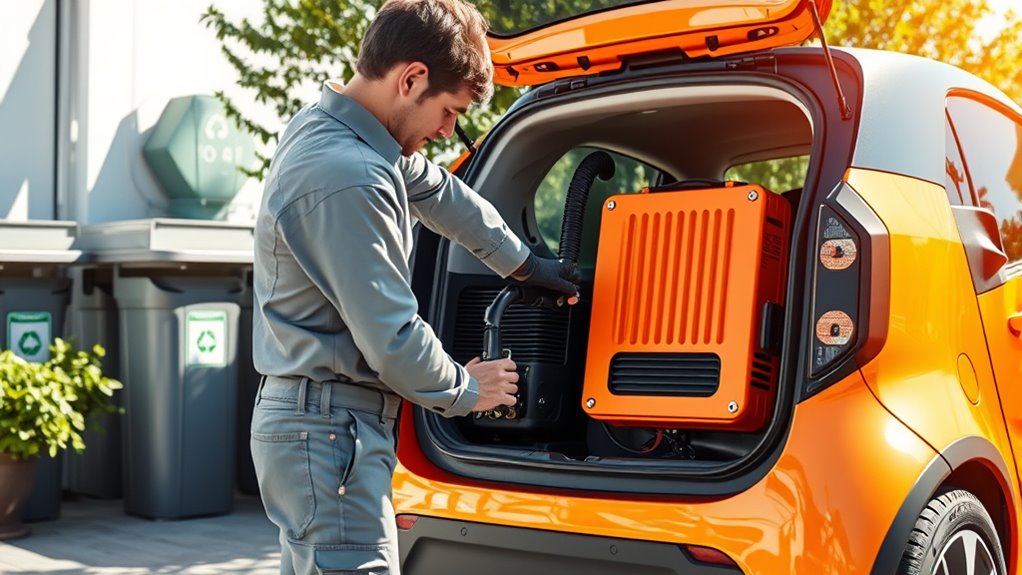
Battery reuse is gaining momentum as a sustainable solution. Instead of immediately scrapping old batteries, experts look for ways to repurpose them for less demanding applications. For example, a battery that no longer meets the range requirements for a small EV might still hold enough charge to power stationary energy storage systems. These second-life applications extend the battery’s usefulness, reducing waste and delaying the need for recycling. You might find that many retired EV batteries are repurposed for grid stabilization, backup power, or residential energy storage. This approach not only prevents premature disposal but also makes the most of the materials already embedded within the batteries. Incorporating cognitive science, researchers are exploring smart management systems that optimize the reuse process for greater efficiency.
Battery reuse extends EV battery life by powering energy storage and grid stabilization, reducing waste and environmental impact.
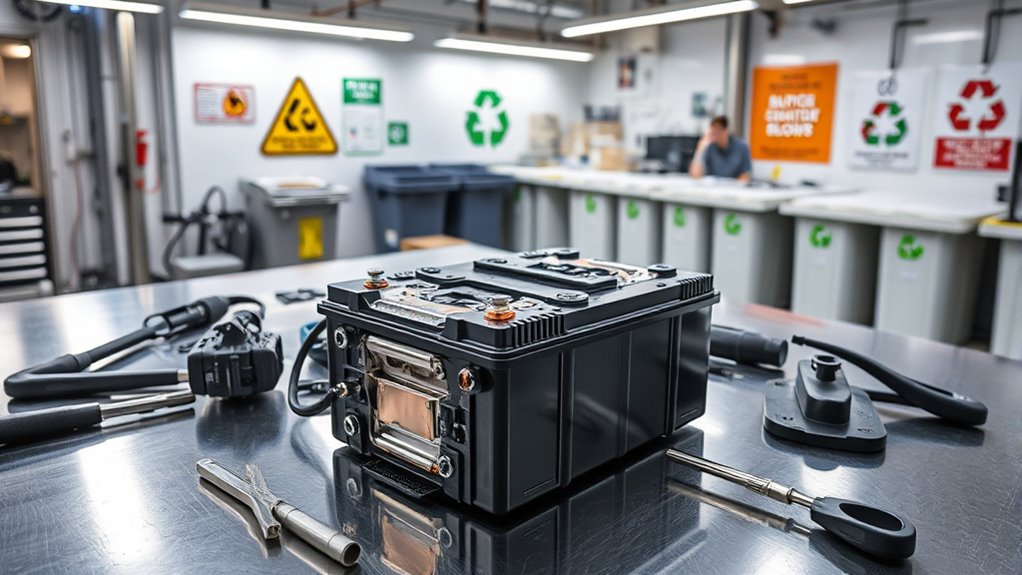
Recycling innovations are equally essential. Advanced processes now allow for the extraction of valuable materials like lithium, cobalt, nickel, and aluminum from spent batteries. These breakthroughs make recycling more efficient and environmentally friendly. For instance, researchers are developing methods to recover nearly 100% of these materials, which can then be reused to produce new batteries. This closed-loop system minimizes the need for mining new raw materials, saving resources, and reducing environmental degradation. Companies are also experimenting with direct recycling techniques that preserve more of the battery’s original components, cutting down on waste and processing costs.
Together, battery reuse and recycling innovations form a holistic approach to managing small EV batteries at their end of life. Instead of viewing old batteries as waste, industries see them as valuable resources that can be reintegrated into the supply chain. These efforts help reduce the environmental footprint of electric vehicles and make EV adoption even more sustainable. As a consumer or advocate, understanding these processes highlights the importance of supporting policies and technologies that promote responsible battery management. It’s clear that the future of small EVs isn’t just about driving clean but also about ensuring that their batteries are handled thoughtfully and efficiently once their primary purpose has been fulfilled.
Frequently Asked Questions
What Are the Environmental Impacts of Improper Small EV Battery Disposal?
If you improperly dispose of small EV batteries, you risk releasing toxic waste that harms the environment. These batteries can leak hazardous chemicals into the soil and water, leading to pollution. Landfill pollution worsens as toxic waste accumulates, threatening wildlife and human health. To prevent this, always recycle batteries responsibly, ensuring hazardous materials are safely managed and don’t end up causing long-term environmental damage.
How Can Consumers Identify Certified Small EV Battery Recycling Programs?
You can identify certified small EV battery recycling programs by looking for certification standards from reputable organizations like e-Stewards or R2. Check for clear recycling labels on the program’s website or packaging, which indicate compliance with these standards. These labels confirm the program follows environmentally responsible practices. Always verify the certification status directly through the certifying body’s website to confirm the program’s legitimacy before proceeding with recycling.
What Are the Costs Associated With Recycling Small EV Batteries?
Ever wonder if recycling your small EV battery costs more than it’s worth? The costs vary depending on the recycling program, but generally, you’ll encounter a cost analysis that includes recycling fees. These fees cover collection, processing, and materials recovery. While some programs absorb these costs, others pass them on to consumers. Remember, investing in proper recycling helps the environment and can sometimes save you money in the long run.
How Does Battery Recycling Differ Between Small and Large EVS?
You’ll find that battery recycling differs mainly in the amount of battery material and recycling processes involved. Small EV batteries typically have less material, making the recycling process quicker and less costly. Large EV batteries require more extensive recycling processes due to their size and complex materials. This means you’ll need specialized equipment and procedures for larger batteries, which can increase costs and complexity compared to smaller EV battery recycling.
Are There Upcoming Technological Advancements in Small EV Battery Recycling?
You’ll see upcoming advancements in small EV battery recycling that focus on improving battery chemistry, increasing efficiency, and reducing environmental impact. Recycling innovations now target better separation techniques, faster processes, and eco-friendly methods. These technological strides aim to make recycling more cost-effective, sustainable, and scalable, ensuring you benefit from safer, more efficient disposal and reuse of small EV batteries while supporting a greener future.
Conclusion
Recycling small EV batteries isn’t just good for the environment; it’s essential. Did you know that over 95% of lithium-ion batteries can be recycled? By properly recycling, you help reduce mining demand and decrease hazardous waste. Every time you choose recycling, you’re contributing to a cleaner planet and a more sustainable future. So, make sure to support responsible disposal—your actions can make a real difference in preserving natural resources for generations to come.