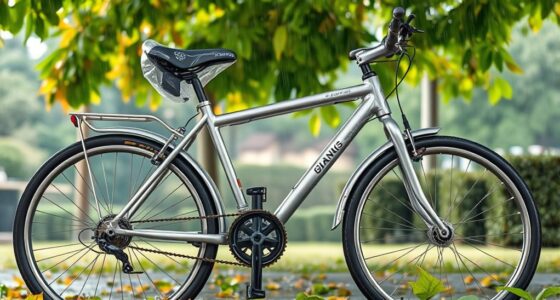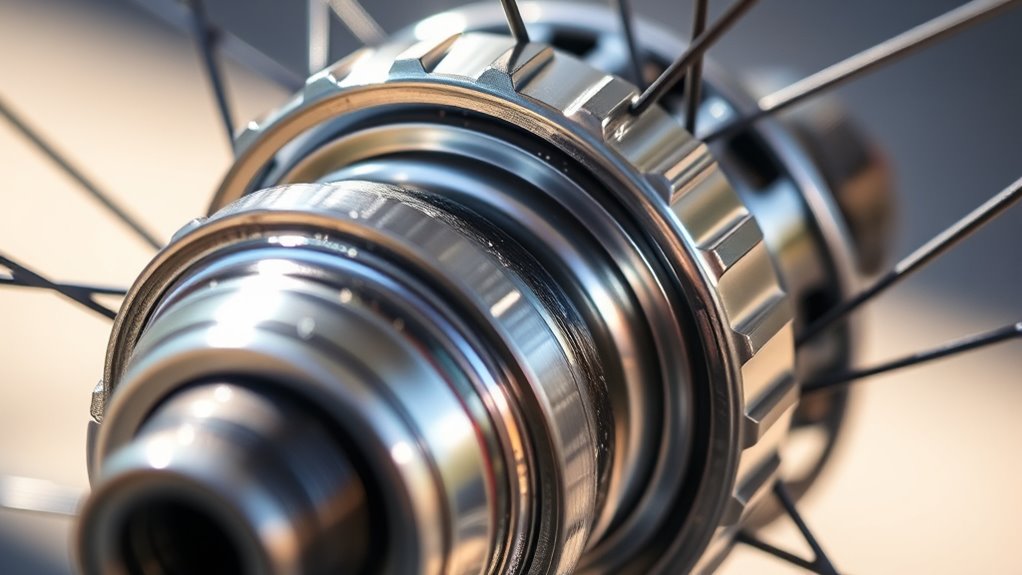

To keep your hubs and bottom brackets in top shape, regularly inspect and clean them, removing dirt and moisture. Use the right lubricant—grease or oil—that suits your riding conditions, and apply it carefully to avoid attracting debris or causing excess buildup. Prevent corrosion by keeping parts dry and protected, especially in wet or salty environments. Proper maintenance guarantees smooth operation and longer lifespan, and if you continue exploring, you’ll discover more tips to optimize your bearing care.
Key Takeaways
- Use proper lubrication with high-quality, water-resistant grease, avoiding over- or under-lubrication.
- Regularly inspect, clean, and re-lubricate bearings to prevent dirt build-up and corrosion.
- Keep bearings dry and protected from moisture, especially in humid or salty environments.
- Check for signs of wear or corrosion and address issues promptly to extend bearing life.
- Store bikes in dry, sheltered areas and use protective covers or sealed bearings for environmental protection.
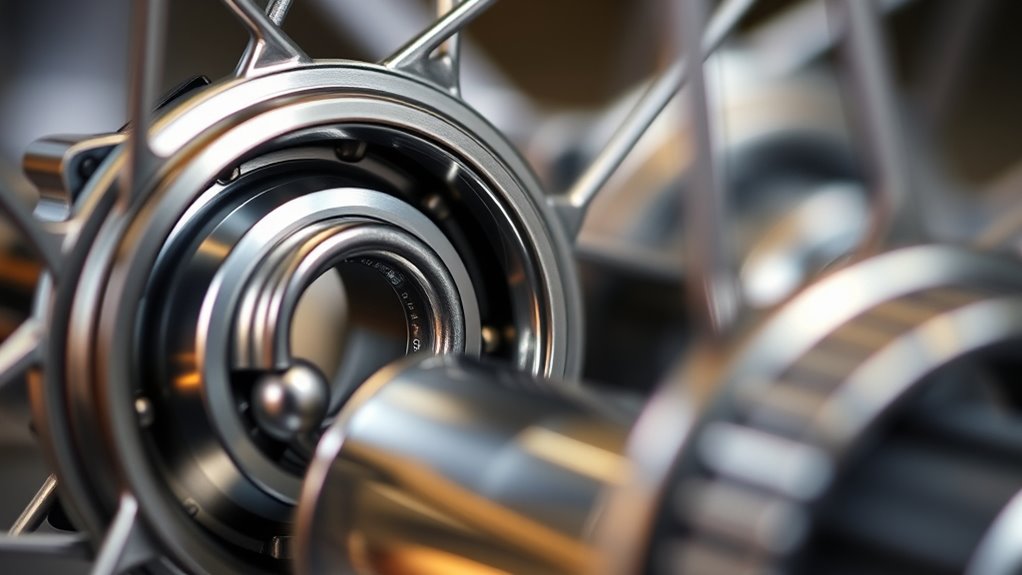
Proper bearing care is essential to guarantee your machinery runs smoothly and lasts longer. When it comes to maintaining hubs and bottom brackets (BB), paying attention to lubrication techniques and corrosion prevention is crucial. The right approach ensures minimal wear, reduces downtime, and extends the lifespan of your components.
First, focus on lubrication techniques. Proper lubrication isn’t just about adding grease or oil; it’s about applying the correct type and amount at the right intervals. Over-lubricating can trap dirt and debris, leading to increased wear, while under-lubricating causes increased friction and heat, accelerating component failure. You should regularly inspect your bearings and clean them thoroughly before re-lubricating. Use high-quality grease suitable for the specific bearing type and operating conditions. For hubs and BBs, a lightweight, water-resistant grease often works best, especially if you ride in wet or muddy environments. When applying lubricant, ensure it reaches all rolling elements and contact surfaces, but avoid excess, which can attract dirt. Precision in lubrication techniques keeps the bearings running smoothly, prevents unnecessary strain, and reduces the risk of corrosion that can compromise their function.
Corrosion prevention is equally critical, especially if you ride in humid or salty conditions. Corrosion can quickly deteriorate bearings, leading to rough operation or complete failure. To prevent this, always keep your bearings clean and dry after rides. After cleaning, inspect for signs of rust or corrosion. Applying a thin layer of anti-corrosion spray or grease can provide an additional barrier against moisture. When installing or reassembling bearings, ensure all parts are dry and free of contaminants. Using sealed bearings or those with protective covers can also markedly reduce exposure to corrosive elements. Proper storage plays a role too; keep your bike in a dry, sheltered place when not in use. Regular maintenance, including checking for corrosion and addressing it promptly, preserves bearing integrity and extends their service life.

monTEK Swivel Bike Wall Mount, Bike Hangers for Garage, Space-Saving Vertical Bike Rack, Sturdy Bike Storage Rack Holds Up to 66lbs, Easy to Install, 4 Pack
【Strong, Safe & Secure】 monTEK bike wall mount is made of heavy-duty solid steel are able to hang...
As an affiliate, we earn on qualifying purchases.
Frequently Asked Questions
How Often Should Hubs and BB Be Inspected for Wear?
You should inspect hubs and bottom brackets every 1,000 to 2,000 miles or at least once a season. During these inspections, check for bearing wear, smoothness of rotation, and bearing lubrication. If you notice any play or noise, it’s time for bearing replacement. Regular checks guarantee peak performance and extend bearing replacement intervals, preventing costly repairs and keeping your bike running smoothly.
What Are Signs of Bearing Failure in Hubs and BB?
Imagine a tiny orchestra gone rogue—your hub or bottom bracket emits bearing noise and feels rough when you spin it. These are clear signs of bearing failure. You might also notice play or wobbling, which signals worn-out bearings. If you ignore these cues, your ride could seize up unexpectedly. So, if your hub or bb starts making noise or rotates rough, it’s time to replace or service those bearings pronto.
Can Bearing Maintenance Be Performed at Home or Requires a Professional?
You can perform bearing maintenance at home if you’re comfortable with DIY tips and have the right tools. Regular cleaning, inspecting for wear, and re-greasing can extend bearing life. However, for complex issues or if you’re unsure, it’s best to seek professional service to guarantee proper handling and avoid damage. When in doubt, consulting a professional guarantees your bike remains safe and performs efficiently.
What Tools Are Necessary for Bearing Replacement in Hubs and BB?
Imagine you’re replacing a bike hub bearing at home. You’ll need a bearing puller for bearing removal, a socket set, and a calibration tool to guarantee proper fit. These tools help you remove old bearings safely and install new ones correctly. With the right equipment, you can perform bearing replacement confidently. Just remember, proper tool calibration is essential to avoid damaging components and ensure smooth operation.
Are There Specific Lubricants Recommended for Different Bearing Types?
You should use lubricants that are compatible with your bearing type to guarantee smooth operation and longevity. For sealed bearings, a light grease or specific bearing oil works best, while open bearings may need a high-quality lubricant for better protection. Always clean your bearings thoroughly using appropriate bearing cleaning techniques before applying new lubricant. This prevents dirt buildup and keeps your bearings functioning efficiently, reducing wear and potential damage.

PRO BIKE TOOL Bike Wall Mount - Horizontal Indoor Bike Rack for 1 Bicycle - Bike Rack for Garage - Safe and Secure Bike Hook for Road, Mountain or Hybrid Bikes - Bike Hanger, Bicycle Storage
Durable and Reliable: Sturdy steel wall mount bike rack with scratch-proof coating; ratchet gear system ensures dependable bike...
As an affiliate, we earn on qualifying purchases.
Conclusion
Just like a seasoned captain tending to their vessel, you must give your bearings the care they deserve. Regular maintenance keeps your ride smooth and reliable, much like how a well-kept ship stays afloat through stormy seas. Remember, neglect can lead to a breakdown, reminiscent of a lighthouse’s light dimming in the fog. Stay vigilant, care for your hubs and bottom brackets, and enjoy the journey ahead with confidence and ease.

monTEK Swivel Bike Wall Mount, Bike Hangers for Garage, Space-Saving Vertical Bike Rack, Sturdy Bike Storage Rack Holds Up to 66lbs, Easy to Install, Black
【Strong, Safe & Secure】 MONTEK bike wall mount is made of heavy-duty solid steel are able to hang...
As an affiliate, we earn on qualifying purchases.
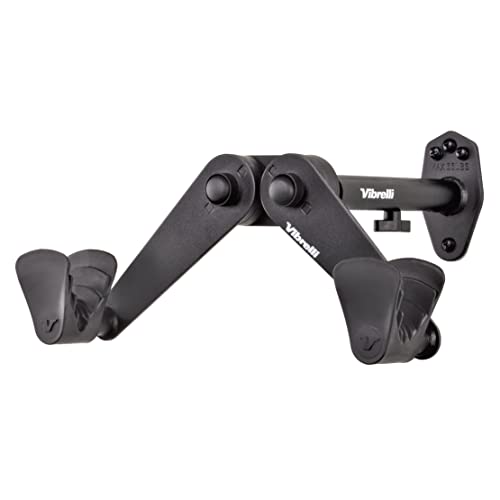
Vibrelli Bike Wall Mount - Horizontal Storage Rack for Hanging Bicycles in Garage - Adjustable Bike Hanger, Holder - Wall Bike Rack Hooks for Bicycle
BIKE COMPATIBLITY - Not suitable for step-through or ladies bikes (unless using a frame adaptor), or fat tire...
As an affiliate, we earn on qualifying purchases.