
Belt drives on e-bikes are low-maintenance because they don’t rust, stretch, or require lubrication like chains do. However, if you neglect proper tension, misalign the belt, or skip routine checks, it can cause slipping, noise, or premature wear. Regular inspections and adjustments are key to keeping your belt drive performing smoothly. If you want to avoid these common issues and maximize lifespan, stay tuned for more essential tips.
Key Takeaways
- Proper tension and alignment prevent belt slippage and uneven wear, maintaining low maintenance.
- Regular inspections catch small issues early, avoiding costly repairs and extending belt lifespan.
- Cleaning the belt and pulleys removes dirt and debris that can cause premature wear.
- Skipping tension checks or ignoring signs of wear can lead to belt failure and increased maintenance needs.
- Following manufacturer guidelines ensures the belt drive remains low-maintenance over the bike’s lifespan.
How Belt Drives Keep E-Bikes Low Maintenance
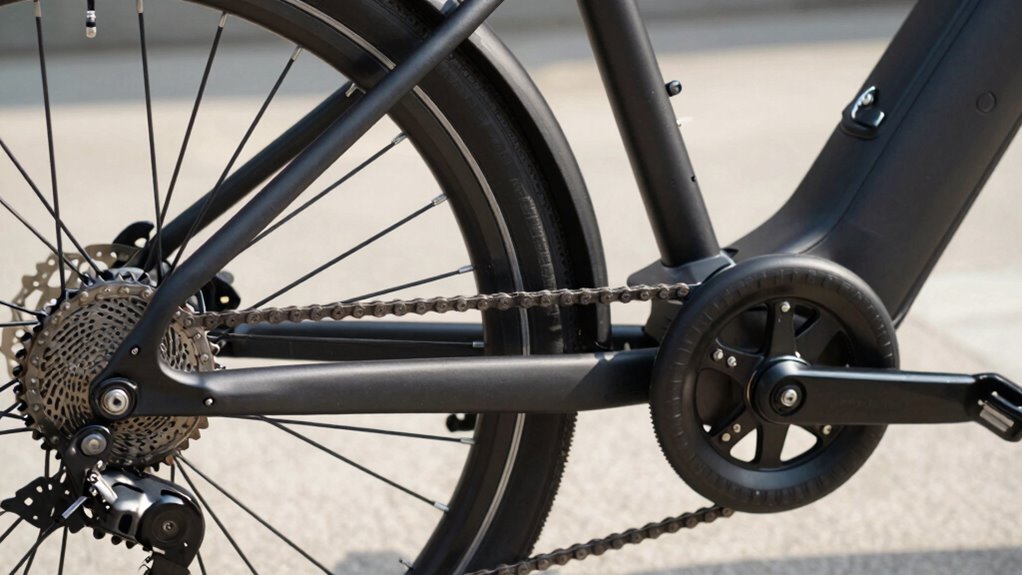
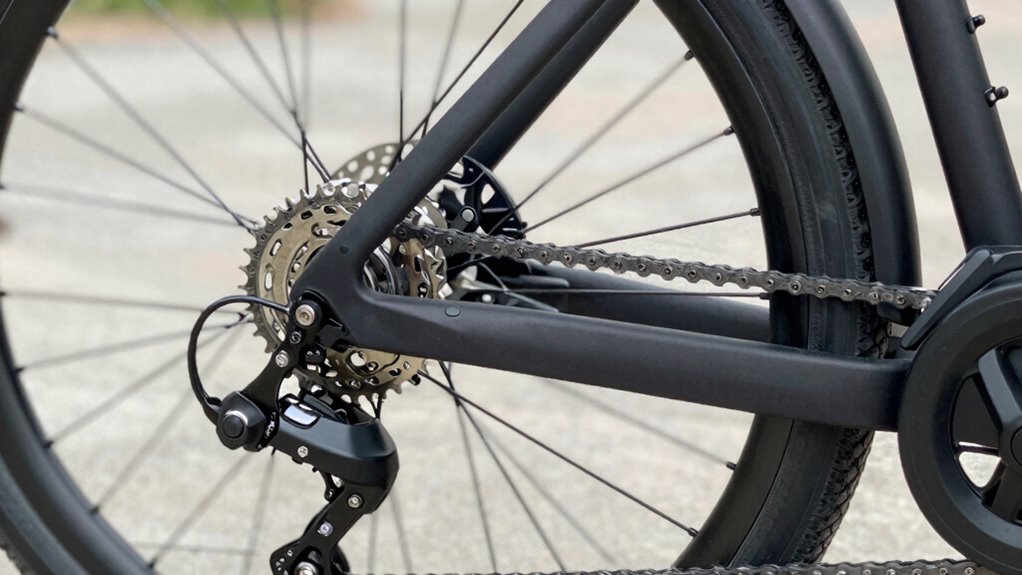
Belt drives on e-bikes are popular because they require less maintenance than traditional chain drives. One reason is that belt drives serve as excellent chain alternatives, eliminating the need for frequent lubrication and cleaning. Unlike chains, belts don’t rust or stretch over time, which means you spend less time on upkeep. Additionally, belt drives considerably reduce noise, providing quieter operation compared to metal chains. This noise reduction makes your ride more pleasant and less disruptive, especially on long commutes. Belt drives are also resistant to dirt and debris, so they stay cleaner longer and require fewer adjustments. Moreover, the durability of belt drives ensures they last longer under various riding conditions, further reducing maintenance needs. Proper tensioning and regular inspections help prevent unexpected issues and prolong the lifespan of your belt drive. Regularly inspecting and properly maintaining your belt drive can help extend its lifespan and keep it running smoothly. Incorporating home‑care techniques can help extend the lifespan of your bike components and ensure smooth operation over time. Understanding the importance of proper tensioning can also prevent premature wear and improve overall performance. Overall, choosing a belt drive minimizes the regular maintenance tasks, letting you enjoy your e-bike without constant worry about keeping the drive system in top shape.
Common Mistakes That Lead to Belt Drive Problems
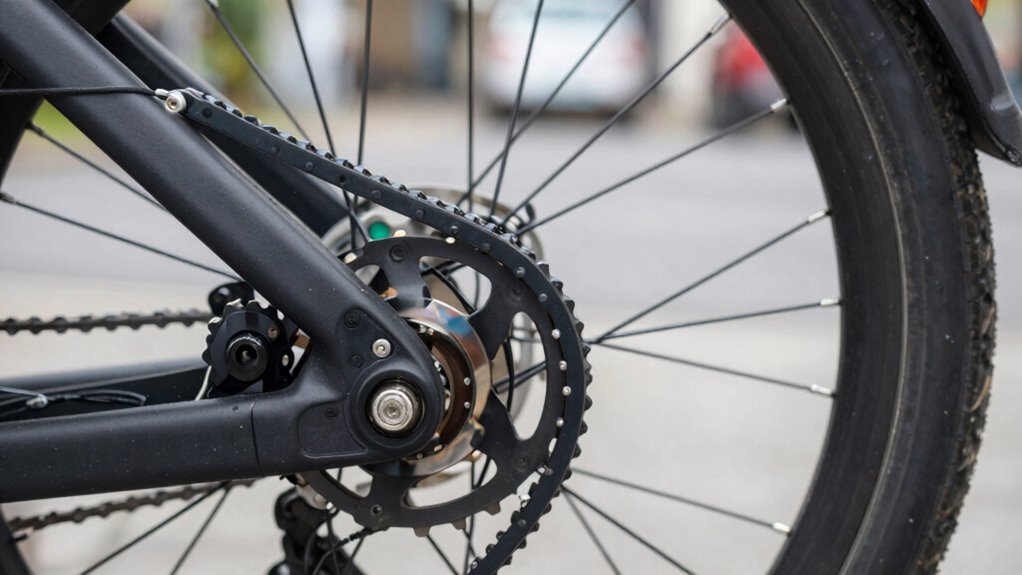
One common mistake that can lead to belt drive problems is failing to properly tension the belt. If it’s too loose, you risk slippage and uneven wear; too tight, and you can damage components. Another mistake is neglecting proper alignment, which causes uneven belt wear and noise. Additionally, ignoring chain lubrication practices can lead to dirt buildup that contaminates the belt. Here’s a quick overview:
| Mistake | Result |
|---|---|
| Improper tension | Belt slippage, premature wear |
| Improper alignment | Uneven wear, noise |
| Neglecting chain lubrication | Dirt and debris contamination, belt damage |
| Skipping tension checks | Belt loosening or overstressing components |
Avoid these pitfalls to keep your belt drive running smoothly and maintenance low.
The Importance of Regular Tension Checks for Belt Drives
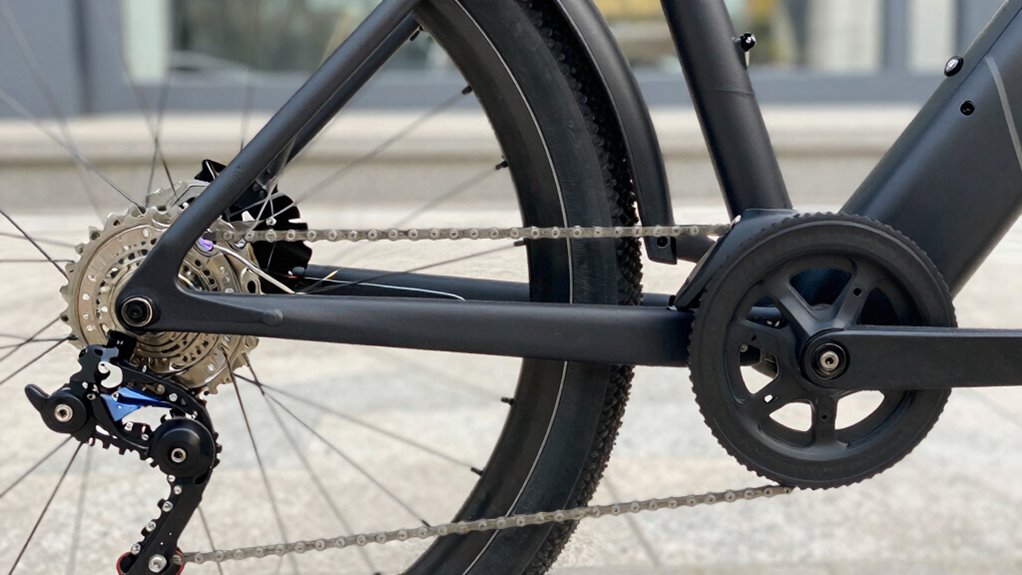
Regular tension checks are vital for maintaining the health of your belt drive system. Proper belt tension ensures smooth operation and prevents premature wear. If the belt is too loose, you risk slipping and increased wear; too tight, and you could cause unnecessary strain on components. Maintaining a simple, organized routine for tension checks can help you create calm and organized homes by preventing complex repairs later. To keep your belt drive in top shape, consider these key points:
- Check belt tension regularly, ideally every few rides.
- Adjust tension to manufacturer specifications to avoid slack or over-tightening.
- Inspect for alignment issues that could cause uneven wear or slipping.
- Look for signs of belt slack or tightness, which can lead to reduced efficiency or damage.
- Understanding the free floating nature of belt drives can help you better assess the tension and alignment needs.
Signs That Your Belt Drive Needs Attention or Replacement
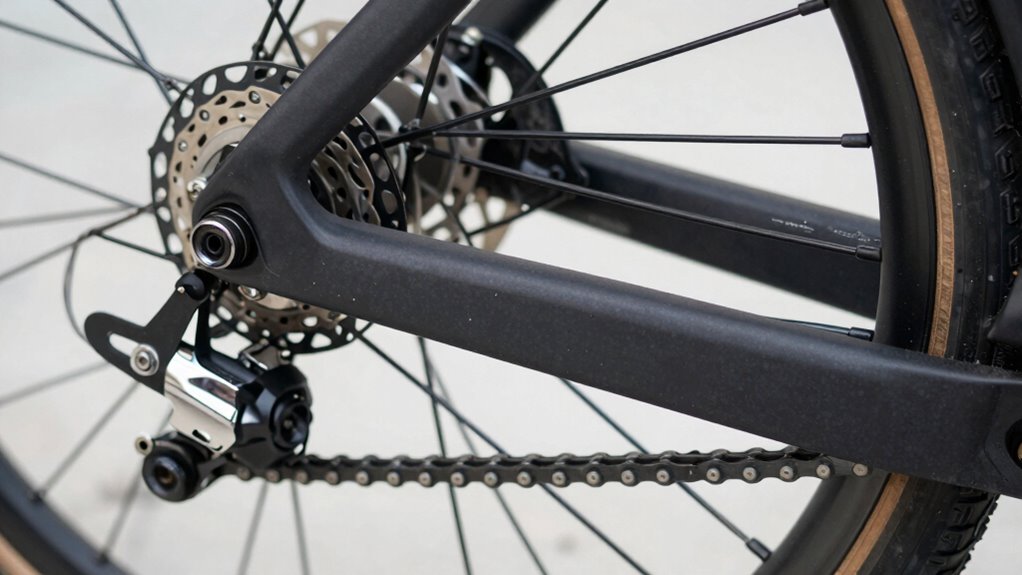
Ever wonder how to tell if your belt drive is nearing the end of its life? Look out for signs like unusual noises or visible wear. A change in belt material, such as cracks or fraying, indicates it’s time for a replacement. Noise detection is key—if your bike starts squeaking or whining, it’s a warning sign. Also, if the belt feels loose or slips during rides, it’s a red flag. Regularly inspecting these signs helps maintain ideal performance and prevents unexpected breakdowns. Here’s a quick guide:
| Sign | Cause | Action Needed |
|---|---|---|
| Squeaking or whining | Belt material wear | Replace belt |
| Visible cracks or fraying | Belt deterioration | Replace belt |
| Loose or slipping belt | Tension loss or damage | Adjust tension or replace |
| Unusual noise during ride | Belt or pulley issue | Inspect and repair |
| Increased vibration | Belt misalignment or wear | Realign or replace belt |
Pro Tips to Extend the Lifespan of Your E-Bike Belt Drive
To maximize the lifespan of your e-bike’s belt drive, you should prioritize proper maintenance and mindful riding habits. First, regularly inspect the belt material for signs of wear or cracking, replacing it when needed. Second, keep the belt properly tensioned; an overly tight or loose belt can cause premature wear. Third, perform alignment adjustment to ensure the belt runs straight and true, reducing uneven stress. Fourth, clean the belt and pulleys with a soft cloth and avoid harsh chemicals that could degrade the belt material. Proper alignment adjustment prevents unnecessary strain, while routine checks help catch issues early. Additionally, considering the use of connected fitness devices like massage guns can help keep your muscles relaxed and prevent unnecessary strain during rides. By following these tips, you’ll extend your belt drive’s longevity and enjoy smoother, more reliable rides.
Frequently Asked Questions
Can Belt Drives Be Used on All Types of E-Bikes?
Belt drives can be used on most e-bikes, but material compatibility and noise levels matter. You’ll want to verify the belt and pulleys are compatible with your bike’s frame and components. While belt drives are generally quiet, some materials may produce slightly more noise. Always check your e-bike’s specifications to confirm the belt drive system suits your model, ensuring smooth operation and minimal maintenance.
How Does Belt Drive Efficiency Compare to Chain Drives?
You’ll find that belt drives are generally less efficient than chain drives regarding power transfer. This efficiency comparison shows that chains typically deliver more consistent power, especially under heavy loads or steep inclines. However, belt drives excel in low-maintenance and durability, making them ideal for riders prioritizing reliability over maximum efficiency. If you want ideal power transfer, chains are better, but for ease and longevity, belts are a smart choice.
What Environmental Conditions Affect Belt Drive Longevity?
Environmental conditions like weather impact and dirt accumulation can shorten your belt drive’s lifespan. Rain and moisture cause wear if you don’t dry and lubricate it regularly, while dirt and debris can cause premature wear or slipping. To keep it running smoothly, avoid muddy trails, clean your belt often, and store your e-bike in a dry place. Proper maintenance helps extend its durability despite challenging environmental factors.
Are Belt Drives More Expensive to Repair Than Chains?
You’ll find belt drives are actually cheaper to repair than chains, right? Well, not quite. While they have fewer moving parts, if you skip regular maintenance, replacement costs can skyrocket, making costly repairs inevitable. Chains might need more frequent attention, but when they do break, repairs tend to be less expensive. So, think twice before assuming belt drives save you money—costly repairs can catch you off guard.
How Often Should I Replace My Belt Drive?
You should replace your belt drive roughly every 20,000 to 30,000 miles, but it depends on your maintenance tips and riding habits. Regularly inspect it for signs of wear or damage, such as cracks or fraying. Keep the belt clean and ensure proper tension to extend its lifespan. Following these replacement intervals and maintenance tips helps keep your e-bike running smoothly and avoids unexpected breakdowns.
Conclusion
Maintaining your e-bike’s belt drive is key to its longevity—you’ll be glad to know that, with proper care, belt drives can last up to 10,000 miles. Just remember to check tension regularly and watch for signs of wear. Skipping these steps could lead to costly repairs. By staying proactive, you keep your ride smooth and reliable while enjoying the low-maintenance benefits that make belt drives a smart choice for e-bike enthusiasts.