A bicycle navigation computer has to do two jobs at once: guide you along a route without draining its battery, and record ride data you can actually trust. After comparing 15 current models, the Garmin Edge 840 stands out as the best overall pick for its full-color mapping, multi-day battery, and compact bar-mounted footprint. If budget is the deciding factor, the CYCPLUS GPS Bike Computer and iGPSPORT BSC200S deliver real GPS route navigation at a fraction of the Garmin price, while the Garmin Edge 1050 sits at the other end as the premium choice with a large touchscreen and voice prompts. The core tradeoff in this category is straightforward: screen size and mapping depth versus battery life, weight, and cost. Keep reading for the full breakdown of all 15 models and which one fits your riding style.

Get sports gear delivered free with Prime
- Fast, free delivery on millions of items
- Prime Video, Amazon Music and more included
- Member-only deals all year
Complete the kit


Key Takeaways
- Garmin‘s Edge lineup (840, 1050, 540, Explore 2) still leads on full onboard mapping and route recalculation, but the gap with iGPSPORT and GEOID has narrowed to the point where casual riders rarely need the premium price.
- Touchscreens dominate this year’s lineup (COOSPO CS600, GEOID CC700 Pro, iGPSPORT BSC300T and BSC500), yet button-only models like the Garmin Edge 540 remain easier to operate with gloved or wet hands in winter.
- Offline navigation quality varied more than any other feature — the iGPSPORT BSC300T and Garmin units store usable basemaps, while some budget models only trace breadcrumb lines without turn detail.
- The GEOID family (CC600, CC700, CC700 Pro) shows how quickly screen size climbs as price increases, but their companion apps are less polished than Garmin Connect or iGPSPORT’s ecosystem.
- Sensor connectivity is now standard even at entry level — every model here supports ANT+ or Bluetooth — so the real differentiator has shifted to battery runtime, screen readability in sunlight, and route-building software.
| COOSPO CS600 Color Touchscreen GPS Bike Computer |  | Best Battery Life | Screen: 2.4-inch color touchscreen with auto-backlight | Connectivity: Bluetooth, ANT+ | Battery Life: 36 hours | VIEW ON AMAZON | See Our Full Breakdown |
| GEOID CC700 Pro 2.8″ Color Touchscreen GPS Bike Computer |  | Best for Offline Navigation | Screen: 2.8-inch color touchscreen with 3 physical buttons | Storage: 4GB for offline maps and routes | Satellite Systems: GPS, BEIDOU, GLONASS, QZSS, GALILEO (with AGNSS) | VIEW ON AMAZON | See Our Full Breakdown |
| Garmin Edge Explore 2 GPS Cycling Navigator |  | Best for Casual Riders and Tourers | Screen: 3-inch high-resolution touchscreen | Navigation: GPS with road, off-road, and indoor profiles | Maps: Ride-specific maps with popular roads, trails, POIs, and eBike routing | VIEW ON AMAZON | See Our Full Breakdown |
| Garmin Edge 1050 Premium Cycling Computer |  | Best Premium Pick | Display: Color touchscreen | Battery Life: Up to 20 hours demanding use; up to 60 hours battery saver | Navigation: On-device course creation, road surface display, ClimbPro | VIEW ON AMAZON | See Our Full Breakdown |
| GEOID CC700 2.8-inch Color Screen Wireless Bike Computer |  | Best Value for Map Navigation | Display: 2.8-inch color, Asahi glass | Interface: Three-button | Connectivity: ANT+, Bluetooth, Wi-Fi | VIEW ON AMAZON | See Our Full Breakdown |
| CYCPLUS GPS Bike Computer |  | Best Battery Life for the Money | GPS Positioning: High sensitivity, fast, accurate | Display Technology: FSTN | Backlight: Automatic, glare-free | VIEW ON AMAZON | See Our Full Breakdown |
| COOSPO BC107 Wireless GPS Bike Computer |  | Best Budget Pick | Display Size: 2.4 inches | GPS Modes: GPS / GPS & Beidou | Connectivity: ANT+ (Bluetooth not supported for sensors) | VIEW ON AMAZON | See Our Full Breakdown |
| GEOID CC600 Wireless Color-Screen GPS Bike Computer |  | Best Value Navigation | Screen: 2.4-inch color screen with Asahi glass | Navigation: Turn reminders, route zoom, and automatic rerouting | Satellite Systems: GPS, BeiDou, GLONASS, QZSS, and Galileo | VIEW ON AMAZON | See Our Full Breakdown |
| Magene C506SE Wireless GPS Bike Computer |  | Best for Connected Ecosystems | Screen Size: 2.4 inches | Weight: 74g | Connectivity: Bluetooth, WiFi, ANT+ | VIEW ON AMAZON | See Our Full Breakdown |
| iGPSPORT BSC200S GPS Bike Computer |  | Best Mid-Range All-Rounder | Display: 2.4-inch semi-transparent, semi-reflective color screen | Connectivity: Bluetooth, ANT+ | Water Resistance: IPX7 | VIEW ON AMAZON | See Our Full Breakdown |
| iGPSPORT BSC300T Wireless GPS Bike Computer with Touchscreen and Offline Navigation |  | Best for Offline Navigation on a Budget | Screen: 2.4-inch touchscreen | Controls: 6 buttons plus touch | Satellite systems: GPS, BeiDou, GLONASS, Galileo, QZSS | VIEW ON AMAZON | See Our Full Breakdown |
| iGPSPORT BSC500 GPS Bike Computer with 3.3” Touchscreen and Voice Navigation |  | Best Big-Screen Navigation Value | Screen size: 3.3 inches | Operation: Touchscreen and buttons | Data points per page: Up to 12 | VIEW ON AMAZON | See Our Full Breakdown |
| Magene C506 GPS Bike Computer with 2.4-Inch Color Touchscreen |  | Best Connected Ecosystem Pick | Screen size: 2.4-inch LCD touchscreen | Weight: 76 g | Battery life: Up to 24 hours | VIEW ON AMAZON | See Our Full Breakdown |
| Garmin Edge 840 Compact GPS Cycling Computer |  | Best Overall for Serious Riders | Display: Touchscreen with button controls | Battery life: Up to 26 hours demanding use; 32 hours battery saver | Navigation: Multi-band GNSS with ride type-specific maps | VIEW ON AMAZON | See Our Full Breakdown |
| Garmin Edge 540 Compact GPS Cycling Computer | 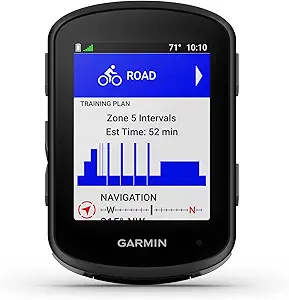 | Best Battery Life for Endurance Riders | Controls: Button controls | Battery life: Up to 26 hours demanding use; 42 hours battery saver | GNSS: Multi-band GNSS | VIEW ON AMAZON | See Our Full Breakdown |
| bicycle navigation computer | Connectivity | Navigation |
|---|---|---|
| COOSPO CS600 Color Touchscreen | Bluetooth, ANT+ | — |
| GEOID CC700 Pro 2.8" Color Tou | WiFi, ANT+, Bluetooth | — |
| Garmin Edge Explore 2 GPS Cycl | Smartphone pairing with LiveTrack, GroupTrack, notifications, rider messaging | GPS with road, off-road, and indoor profiles |
| Garmin Edge 1050 Premium Cycli | — | On-device course creation, road surface display, ClimbPro |
| GEOID CC700 2.8-inch Color Scr | ANT+, Bluetooth, Wi-Fi | — |
| CYCPLUS GPS Bike Computer | — | — |
| COOSPO BC107 Wireless GPS Bike | ANT+ (Bluetooth not supported for sensors) | — |
| GEOID CC600 Wireless Color-Scr | Wi-Fi, Bluetooth, and ANT+ | Turn reminders, route zoom, and automatic rerouting |
| Magene C506SE Wireless GPS Bik | Bluetooth, WiFi, ANT+ | — |
| iGPSPORT BSC200S GPS Bike Comp | Bluetooth, ANT+ | Route navigation, one-touch navigation, Back to Start, riding record navigation |
| iGPSPORT BSC300T Wireless GPS | ANT+ and Bluetooth 5.0 | Offline maps, route preview, turn prompts, off-course warnings |
| iGPSPORT BSC500 GPS Bike Compu | — | Map navigation with voice alerts and automatic rerouting |
| Magene C506 GPS Bike Computer | ANT+, Bluetooth, Wi-Fi | GPS, downloadable maps, turn-by-turn directions |
| Garmin Edge 840 Compact GPS Cy | Smart connectivity, Garmin Connect app | Multi-band GNSS with ride type-specific maps |
| Garmin Edge 540 Compact GPS Cy | Smart connectivity with Garmin Connect app | — |
More Details on Our Top Picks
COOSPO CS600 Color Touchscreen GPS Bike Computer
The COOSPO CS600 stands out primarily for endurance: 36 hours of runtime with a 2-hour Type-C charge means multi-day touring riders can leave the power bank at home. Compared with the Garmin Edge 1050, which manages up to 20 hours in demanding use, the CS600 roughly doubles runtime at a fraction of the complexity. Its breadcrumb-style route guidance is more basic than the offline full maps on the GEOID CC700 Pro, so riders who want color-coded street maps should look there instead. Where the CS600 earns its keep is breadth: it pairs with radar, smart lights, e-bikes, and trainers, and syncs automatically to Strava and TrainingPeaks. The tradeoff is that nothing comes in the box beyond the computer — cadence, heart rate, and power sensors, plus extension mounts, are all extra purchases.
Pros:- 36-hour battery life with fast 2-hour Type-C charging
- IPX7 waterproofing for reliable use in heavy rain
- Automatic Strava and TrainingPeaks syncing via the COOSPORIDE app
- Broad ecosystem support for radar, smart lights, e-bikes, and trainers
Cons:- Cadence, heart rate, and power sensors are sold separately
- Breadcrumb navigation lacks detailed offline maps
Best for: Long-distance riders and bikepackers who prioritize multi-day battery life and a broad sensor ecosystem on a budget
Not ideal for: Riders who want full offline street maps with turn-by-turn re-routing — this uses breadcrumb trails only
- Screen:2.4-inch color touchscreen with auto-backlight
- Connectivity:Bluetooth, ANT+
- Battery Life:36 hours
- Charging:Type-C, 2-hour charge time
- GPS:GPS + GLONASS
- Data Metrics:150+ insights
- App Compatibility:COOSPORIDE, Strava, TrainingPeaks
- Included Accessories:None (sensors and mounts sold separately)
Our verdict“Buy this if battery endurance and sensor flexibility matter more to you than full-color mapping.”
GEOID CC700 Pro 2.8″ Color Touchscreen GPS Bike Computer
For riders whose priority is genuine map-based turn-by-turn navigation, the GEOID CC700 Pro is the strongest mapping option outside Garmin’s lineup. Its offline global maps with automatic re-routing put it a clear step above the COOSPO CS600, which offers only breadcrumb trails, and its 2.8-inch display is easier to read at a glance than smaller 2.4-inch rivals. Positioning locks in roughly 5 seconds thanks to five satellite systems plus AGNSS — faster than most units in this roundup. The hybrid control scheme (touchscreen plus three physical buttons) also works better in rain and gloves than touch-only designs like the Garmin Edge Explore 2. The compromises: re-route planning needs a persistent app connection, DJI camera control covers only two models, and AGNSS data must be refreshed every 14 days for fastest fixes.
Pros:- Large, vivid 2.8-inch touchscreen with hybrid button controls
- Offline global maps with color-coded navigation and automatic re-routing
- Fast ~5-second positioning via five satellite systems and AGNSS
- Smart trainer control for power, resistance, and gradient indoors
Cons:- Re-route planning requires a persistent connection to the companion app
- AGNSS data must be re-synced every 14 days to maintain fast positioning
- DJI camera integration limited to Action 4 and Action 5 Pro
Best for: Explorers and commuters who need full offline maps and automatic re-routing without paying Garmin prices
Not ideal for: Riders who dislike app dependence — re-routing and camera features lean heavily on the companion app
- Screen:2.8-inch color touchscreen with 3 physical buttons
- Storage:4GB for offline maps and routes
- Satellite Systems:GPS, BEIDOU, GLONASS, QZSS, GALILEO (with AGNSS)
- Positioning Time:~5 seconds (with synced AGNSS)
- Connectivity:WiFi, ANT+, Bluetooth
- Languages:11 including English, Japanese, German, French, Spanish
- App Compatibility:STRAVA, TrainingPeaks
- Camera Compatibility:DJI Action 4 and Action 5 Pro
Our verdict“The pick for riders who want true offline mapping and re-routing at a mid-range price, provided they accept the app dependency.”
Garmin Edge Explore 2 GPS Cycling Navigator
The Garmin Edge Explore 2 is the easiest computer in this lineup to live with day to day. Its 3-inch touchscreen works with gloves and in rain — something the touch-only GEOID CC700 Pro partially addresses with physical buttons, but no one matches Garmin’s screen clarity in direct sunlight. Preloaded road, off-road, and eBike profiles mean it’s ready out of the box, with searchable points of interest that make it feel more like a dedicated navigator than a training tool. Compared with the Garmin Edge 1050, it strips away the advanced training analytics and connected extras, which is exactly why it suits riders who just want to follow a route. Safety features like incident detection and LiveTrack add genuine peace of mind for solo riders. The main gap is the training side: there’s no power-based coaching, and sensors are sold separately.
Pros:- Glove-friendly, rain-capable 3-inch touchscreen readable in direct sunlight
- Preloaded road, off-road, and eBike-specific routing profiles
- Connected safety features including incident detection and LiveTrack
- Compatible with Varia radar and cycling sensors
Cons:- Heart rate, speed, and cadence sensors sold separately
- Lacks advanced training and power-analysis features of pricier Garmins
Best for: Recreational riders, touring cyclists, and e-bike owners who want straightforward guided navigation and safety features
Not ideal for: Structured-training riders who need power guidance and adaptive workouts — the Edge 1050 covers that far better
- Screen:3-inch high-resolution touchscreen
- Navigation:GPS with road, off-road, and indoor profiles
- Maps:Ride-specific maps with popular roads, trails, POIs, and eBike routing
- Connectivity:Smartphone pairing with LiveTrack, GroupTrack, notifications, rider messaging
- Sensor Compatibility:Heart rate, speed, and cadence sensors (sold separately)
- Device Compatibility:Compatible eBikes and Varia awareness devices
Our verdict“The most approachable choice here for riders who navigate first and analyze later.”
Garmin Edge 1050 Premium Cycling Computer
Nothing else in this roundup matches the Garmin Edge 1050 for sheer capability. ClimbPro ascent planning, adaptive training, and a power guide with real-time stamina and wind adjustments make it a full coaching platform, while road hazard alerts, group messaging, leaderboards, and even Garmin Pay push it beyond anything from COOSPO or GEOID. Battery life spans 20 hours of demanding use up to 60 hours in saver mode — competitive with the COOSPO CS600‘s 36 hours, though saver mode trims functionality to get there. Compared with the Edge Explore 2, the 1050 is the choice for racers and data-driven athletes; casual riders would be paying for tools they’ll never open. Be aware that the richest features assume a paired smartphone, the Garmin Connect app, and in many cases additional sensors, so the true cost of a complete setup climbs well past the head unit itself.
Pros:- Up to 20 hours demanding use or 60 hours in battery saver mode
- On-device course creation, ClimbPro ascent planner, and surface-type display
- Event-adaptive training with power guide, stamina, and wind adjustments
- Connected extras: hazard alerts, live locations, leaderboards, Garmin Pay, built-in speaker
Cons:- Many connected features require a compatible smartphone and Garmin Connect app
- Advanced power and training features need separately purchased sensors
- Battery saver mode reduces functionality to extend runtime
Best for: Serious racers and data-driven athletes who want pro-level training analytics, navigation, and connected features in one device
Not ideal for: Casual riders or budget builders — many features need a smartphone, the Connect app, and separately purchased sensors to function fully
- Display:Color touchscreen
- Battery Life:Up to 20 hours demanding use; up to 60 hours battery saver
- Navigation:On-device course creation, road surface display, ClimbPro
- Training Features:Event-adaptive training, power guide with stamina and wind adjustments
- Connected Features:Hazard alerts, in-ride messaging, live locations, leaderboards
- Audio:Built-in speaker for prompts and bike bell
- Payments:Garmin Pay contactless
- Compatibility:Garmin Connect app, power meters, heart rate monitors
Our verdict“The no-compromise pick for riders who treat their computer as a training coach — overkill for everyone else.”
GEOID CC700 2.8-inch Color Screen Wireless Bike Computer
The GEOID CC700 (non-Pro) is the value play for riders who want a big 2.8-inch color screen and colorful route guidance without paying for the Pro’s full offline map library. It shares the same satellite hardware — five systems with ~5-second positioning — and the same smart trainer support as the GEOID CC700 Pro, but relies on a three-button interface instead of touch controls, which some riders will actually prefer in rain or with gloves on. Compared with the Magene C506 and other 2.4-inch rivals, the larger display and durable Asahi glass make navigation data far easier to scan mid-ride. Customization is generous: up to 10 data pages, 29 layouts, and 108 data items, plus FIT export to Strava and TrainingPeaks. The catches are the app-and-account dependency for route uploads, and indoor features that only work with a compatible smart trainer.
Pros:- Large 2.8-inch color display with durable Asahi glass
- Wi-Fi, Bluetooth, and ANT+ syncing with 5-satellite fast positioning
- Highly customizable: 10 data pages, 29 layouts, 108 data items
- Smart trainer support with power, resistance, and gradient targets
Cons:- Route uploads and syncing depend on the companion app and account setup
- Button-only interface is slower to operate than touchscreen rivals
- Indoor training requires a compatible smart trainer
Best for: Value-minded riders who want a large color display, route navigation, and deep data customization on a modest budget
Not ideal for: Riders who want touchscreen control or fully self-contained offline maps — the Pro version covers both
- Display:2.8-inch color, Asahi glass
- Interface:Three-button
- Connectivity:ANT+, Bluetooth, Wi-Fi
- Satellite Systems:GPS, BEIDOU, GLONASS, QZSS, GALILEO
- Positioning Time:5 seconds (AGNSS valid 14 days)
- Data Customization:Up to 10 pages, 10 items per page, 29 layouts, 108 data items
- App Compatibility:STRAVA, TrainingPeaks
- Weight:0.21 kg
- Sensor Compatibility:Speed, cadence, and heart rate sensors
Our verdict“A smart buy for big-screen navigation on a budget, as long as app-based route management doesn’t bother you.”
CYCPLUS GPS Bike Computer
Where most budget computers force you to choose between price and endurance, the CYCPLUS GPS Bike Computer refuses to compromise on runtime: over 55 hours per charge means multi-day touring without hunting for outlets. The FSTN display and automatic, glare-free backlight keep ride data readable in harsh sun and after dark, and the waterproof housing shrugs off rain that would sideline a smartphone running a mapping app. Compared with the COOSPO BC107, it trades sensor connectivity for sheer battery and simplicity — there’s no ANT+ here, so serious training data is off the table. The tradeoff is a quirkier data philosophy: manual power-offs wipe ride data, and the automatic sleep mode after 10 minutes can reset figures if you’re not paying attention during cafe stops.
Pros:- Over 55 hours of battery life supports multi-day tours between charges
- High-sensitivity GPS delivers accurate ride time, distance, and altitude data
- Automatic glare-free backlight stays readable in both bright sun and darkness
- Waterproof construction handles all-weather riding
Cons:- Ride data is cleared if the unit is manually powered off, forcing re-entry
- Automatic sleep mode after 10 minutes can reset data if not managed carefully
- No ANT+ or Bluetooth sensor compatibility for training metrics
Best for: Touring riders and bikepackers who need weeks of battery life and basic GPS tracking without paying for connectivity they won’t use
Not ideal for: Data-driven trainers — no ANT+ or Bluetooth sensor support means no heart rate, power meter, or cadence integration
- GPS Positioning:High sensitivity, fast, accurate
- Display Technology:FSTN
- Backlight:Automatic, glare-free
- Battery Capacity:1200mAh
- Battery Life:Over 55 hours
- Sleep Mode:Automatic after 10 minutes of inactivity
Our verdict“Buy this if battery endurance and weatherproof simplicity matter more than sensor connectivity; skip it if you train with power or heart rate.”
COOSPO BC107 Wireless GPS Bike Computer
The COOSPO BC107 is the entry point where ANT+ sensor support actually exists at a budget price — something the cheaper CYCPLUS simply can’t claim. Pair it with a heart rate strap or power meter and the little 2.4-inch unit tracks the numbers that make structured training possible, then syncs everything through the CoospoRide app to Strava. Dual GPS and Beidou positioning locks on quickly worldwide, and the glass-filled ABS and TPU build feels tougher than the price suggests. The compromises are real though: Bluetooth sensors aren’t supported, so only ANT+ devices will pair, and there’s no way to push .fit files to Strava over USB — everything flows through the app. Certain front-end setups also need an extension mount sold separately.
Pros:- ANT+ compatibility supports heart rate, speed, and power meters on a budget
- Compact and lightweight design mounts cleanly on any bar setup
- Dual GPS and Beidou positioning is accurate worldwide
- CoospoRide app integration handles activity tracking and Strava sync
Cons:- No Bluetooth sensor support limits accessory choices
- Cannot upload .fit files directly to Strava via USB
- Certain setups require a separately purchased extension mount
Best for: New road riders who want GPS accuracy plus heart rate and power tracking at the lowest possible price
Not ideal for: Riders who already own Bluetooth-only sensors — this unit pairs exclusively over ANT+
- Display Size:2.4 inches
- GPS Modes:GPS / GPS & Beidou
- Connectivity:ANT+ (Bluetooth not supported for sensors)
- Waterproof:Yes
- Compatibility:ANT+ sensors, CoospoRide app
- Material:Glass-filled ABS and TPU
- Auto Backlight:Yes
Our verdict“The smartest cheap way into sensor-based cycling data, provided your sensors speak ANT+ and you don’t mind app-based syncing.”
GEOID CC600 Wireless Color-Screen GPS Bike Computer
Turn-by-turn route guidance with automatic rerouting is usually the line where prices jump — the GEOID CC600 brings it under that line, along with a 2.4-inch Asahi-glass color screen that looks straight out of a flagship like the Garmin Edge 840, at a fraction of the cost. Five satellite systems, Wi-Fi, Bluetooth, and ANT+ mean it plays nice with nearly every sensor and smart trainer on the market, and the 100 hours of ride storage plus auto-sync to Strava and TrainingPeaks covers the analysis side. The catch is ecosystem friction: routes must be uploaded via the companion app rather than dropped on over USB, and the AGNSS assist data expires after 14 days — go two weeks without syncing and cold-start positioning slows noticeably. Compared with the Magene C506SE, the CC600 wins on navigation depth but demands more app involvement.
Pros:- Color route navigation with turn reminders and automatic rerouting
- Five satellite systems plus Wi-Fi, Bluetooth, and ANT+ connectivity
- Highly customizable data screens with 108 available data items
- Smart trainer support with automatic Strava and TrainingPeaks syncing
Cons:- AGNSS assist data expires after 14 days and must be re-synced for fast positioning
- GPX route uploads and ride data export require the companion app
Best for: Riders who want full turn-by-turn navigation with rerouting and smart trainer support without paying flagship Garmin prices
Not ideal for: Riders who prefer USB drag-and-drop workflows — all route uploads and data exports run through the companion app
- Screen:2.4-inch color screen with Asahi glass
- Navigation:Turn reminders, route zoom, and automatic rerouting
- Satellite Systems:GPS, BeiDou, GLONASS, QZSS, and Galileo
- Connectivity:Wi-Fi, Bluetooth, and ANT+
- Data Storage:Up to 100 hours of ride data
- Data Customization:Up to 10 pages, 10 items per page, 29 layouts, 108 data items
- Indoor Training:Smart trainer support with power, resistance, and gradient control
- Data Export:FIT file export; Strava and TrainingPeaks auto-sync
- Languages:11
Our verdict“The most capable navigation package at a mid-tier price, as long as you accept an app-centered workflow.”
Magene C506SE Wireless GPS Bike Computer
What separates the Magene C506SE from similarly priced rivals is breadth of device support: beyond the usual speed, cadence, heart rate, and power sensors, it talks to radar tail lights, smart tail lights, and electronic shifting systems — a level of integration the COOSPO BC107 can’t approach and that even the GEOID CC600 only partially matches. Positioning locks in within roughly 5 seconds, and the 2.4-inch color screen organizes 108 data items across 14 categories, which makes it a natural fit for riders building out a full smart-bike setup. At 74 grams it’s light enough to forget it’s there. The dependence on the OnelapFit app is the weak point: route re-planning only works when connected, the offline AGNSS data lasts just 14 days, and first-time setup involves a learning curve that casual riders may find tedious.
Pros:- Broad device support including radar tail lights and electronic shifting systems
- Fast satellite positioning within about 5 seconds
- Bright color display with 108 data items across 14 categories
- Wireless data transfer via Bluetooth and WiFi
Cons:- Route re-planning and several features require the OnelapFit app connection
- Offline AGNSS support expires after 14 days
- Advanced features demand app setup and some technical familiarity
Best for: Tech-forward riders running radar, smart lights, electronic shifting, and power meters who want one head unit to rule them all
Not ideal for: Set-and-forget riders who avoid companion apps — core features like route re-planning require the OnelapFit app
- Screen Size:2.4 inches
- Weight:74g
- Connectivity:Bluetooth, WiFi, ANT+
- Supported Devices:Speed, cadence, heart rate, power meters, smart trainers, radar and smart tail lights, electronic shifting
- Data Items:108 across 14 categories
- Positioning Speed:Approximately 5 seconds
- Offline AGNSS Duration:14 days
- App Support:OnelapFit
- Languages:11
Our verdict“The best choice for riders with a fully connected bike, provided they’re willing to live inside Magene’s app ecosystem.”
iGPSPORT BSC200S GPS Bike Computer
The iGPSPORT BSC200S lands in the sweet spot between the bare-bones COOSPO BC107 and pricier touchscreen units like the iGPSPORT BSC300T: you get route navigation with turn and yaw reminders, a sunlight-readable color display, and over 100 riding metrics including FTP, grade, and temperature. The Back to Start function is a genuinely useful safety net when unfamiliar roads go sideways, and 400 hours of ride storage plus USB-C charging in 1.5 hours keeps logistics painless. The 25-hour battery covers a full century with room to spare, though it’s less than half the endurance of the CYCPLUS. Drawbacks mirror its price bracket: route building lives entirely in the iGPSPORT app, radar and lighting features only work with iGPSPORT’s own accessories, and notifications assume a phone is connected.
Pros:- Full route navigation with Back to Start and one-touch route transfer
- 100+ riding metrics with up to 400 hours of ride data storage
- Sunlight-readable semi-reflective color screen with IPX7 waterproofing
- Fast 1.5-hour USB-C charging
Cons:- Route creation and customization depend entirely on the iGPSPORT app
- Radar and lighting features require iGPSPORT-branded accessories
- Smart notifications only work with a connected smartphone
Best for: Enthusiast road riders who want navigation, deep metrics, and smart notifications in one balanced, reasonably priced package
Not ideal for: Ultra-endurance riders — 25 hours of battery is ample for a century but falls well short of touring units
- Display:2.4-inch semi-transparent, semi-reflective color screen
- Connectivity:Bluetooth, ANT+
- Water Resistance:IPX7
- Battery:600mAh, up to 25 hours, USB-C charging in 1.5 hours
- Navigation:Route navigation, one-touch navigation, Back to Start, riding record navigation
- Notifications:Turn, yaw, incoming call, SMS, and app notifications
- Riding Data:100+ metrics including speed, distance, grade, cadence, calories, FTP
- Data Storage:Up to 400 hours
- Compatible Accessories:iGPSPORT front light and radar light
Our verdict“A well-rounded mid-tier pick that balances navigation, metrics, and battery for serious riders who don’t need flagship features.”
iGPSPORT BSC300T Wireless GPS Bike Computer with Touchscreen and Offline Navigation
The BSC300T stands out for packing full offline maps with turn prompts and off-course warnings into a price tier where many competitors, like the CYCPLUS GPS computer, stop at breadcrumb-style tracking. Its hybrid control scheme — a 2.4-inch touchscreen backed by six physical buttons — makes it usable with gloved or wet hands, something the Magene C506 can’t claim as confidently with its touch-first interface. With 130+ riding metrics and five satellite systems, the data depth rivals units costing far more. The real tradeoff is uncertainty: no published battery life or water-resistance rating, which matters if you ride long routes in unpredictable weather. Compared with its sibling, the BSC500, it trades the bigger screen and voice navigation for a lighter, cheaper package that still handles genuine route guidance.
Pros:- Offline maps with turn prompts and off-course warnings at a budget-friendly price point
- Hybrid touchscreen plus six-button control works in rain, cold, and gloves
- 130+ riding metrics and five-satellite positioning rival more expensive units
- ANT+ and Bluetooth 5.0 connect to sensors, plus Strava and Komoot data sharing
Cons:- No published battery life figure, making long-ride planning a gamble
- No stated water-resistance rating despite touchscreen use in bad weather
- 2.4-inch screen feels cramped for full-map viewing compared to the 3.3-inch BSC500
Best for: Budget-conscious road and gravel riders who want real offline map navigation without paying premium-brand prices
Not ideal for: All-weather commuters and bikepackers who need a verified waterproof rating and confirmed battery life for multi-hour days
- Screen:2.4-inch touchscreen
- Controls:6 buttons plus touch
- Satellite systems:GPS, BeiDou, GLONASS, Galileo, QZSS
- Riding data:130+ metrics
- Connectivity:ANT+ and Bluetooth 5.0
- Navigation:Offline maps, route preview, turn prompts, off-course warnings
- App integration:iGPSPORT app; Strava and Komoot sharing
Our verdict“This pick makes the most sense for riders who want dependable offline turn-by-turn guidance on a budget and can live with unverified battery and weather specs.”
iGPSPORT BSC500 GPS Bike Computer with 3.3” Touchscreen and Voice Navigation
Where the BSC300T keeps things compact, the BSC500 goes big: a 3.3-inch touchscreen showing up to 12 data points per page, approaching the display real estate of Garmin’s Edge 1050 at a fraction of the commitment. The headline feature is voice navigation through a built-in loudspeaker, letting you keep eyes on the road instead of glancing down — the smaller Magene C506 offers turn-by-turn visuals but no audible cues. Dual-band L1/L5 positioning across five satellite systems matches what Garmin’s Edge 840 uses for accuracy in cities and canyons. Add speed-adaptive turn reminders, automatic rerouting, and iClimb 2.0 hill planning, and it reads like a premium unit. The catch: battery life is unspecified, and unlocking the route-planning depth requires leaning on the companion app rather than doing everything on-device.
Pros:- Voice navigation and speed-adaptive turn reminders keep eyes on the road
- Dual-band L1/L5 five-satellite positioning for accuracy in tough environments
- Large 3.3-inch touchscreen fits up to 12 data fields per page
- Imports routes from Strava, Komoot, and third-party files with automatic rerouting
Cons:- Battery life is not specified, a real concern for all-day rides with the screen lit
- Route planning depth depends heavily on companion app setup rather than on-device workflow
- Large screen and speaker add bulk compared to compact units like the Edge 540
Best for: Riders who prioritize a large map display and spoken turn directions for unfamiliar routes without buying a flagship Garmin
Not ideal for: Weight-obsessed racers and minimalists who find a 3.3-inch unit bulky on the stem and don’t need voice prompts
- Screen size:3.3 inches
- Operation:Touchscreen and buttons
- Data points per page:Up to 12
- Positioning:Dual-band L1/L5; GPS, Beidou, GLONASS, Galileo, QZSS
- Navigation:Map navigation with voice alerts and automatic rerouting
- Route import:iGPSPORT app, Strava, Komoot, third-party files
- Climbing feature:iClimb 2.0 hill climb planning
Our verdict“This model is better suited to exploratory riders who want loud, clear, big-map guidance and are willing to accept an unverified battery figure in exchange.”
Magene C506 GPS Bike Computer with 2.4-Inch Color Touchscreen
The Magene C506 earns its spot through sheer connectivity breadth: ANT+, Bluetooth, and Wi-Fi linking to nine device types, including radar, smart tail lights, electronic shifting, and smart trainers — a sensor ecosystem wider than the iGPSPORT BSC300T covers. Unlike both iGPSPORT picks, it publishes a concrete 24-hour battery life, which makes ride-day planning less of a guess. Wi-Fi also means map and firmware downloads don’t require a cable. The tradeoff is app dependence: several features route through the OnelapFit app, so riders invested in Strava-and-Komoot-only workflows may find the extra layer annoying compared to Garmin’s mature Connect platform. At 76 g with a 2.4-inch screen, it splits the difference between the compact C506SE and the oversized BSC500 — a middle path for data-hungry riders rather than map-first explorers.
Pros:- Connects to nine device types including radar, tail lights, electronic shifting, and trainers
- Confirmed 24-hour battery life plus Wi-Fi for cable-free map and firmware updates
- Turn-by-turn navigation with downloadable maps and custom routes
- Indoor training support and call/message notifications round out daily usability
Cons:- Several features depend on the OnelapFit app, adding friction to setup and daily use
- 2.4-inch screen limits map readability compared to the 3.3-inch iGPSPORT BSC500
- No voice navigation, only visual turn prompts
Best for: Sensor-heavy riders running power meters, radar, electronic shifting, and smart trainers who want one hub for everything
Not ideal for: Riders who dislike app-dependent setups and prefer a self-contained device like the button-driven Garmin Edge 540
- Screen size:2.4-inch LCD touchscreen
- Weight:76 g
- Battery life:Up to 24 hours
- Connectivity:ANT+, Bluetooth, Wi-Fi
- Navigation:GPS, downloadable maps, turn-by-turn directions
- Compatible devices:Speed/cadence sensors, heart rate monitors, power meters, smart trainers, radar, smart tail lights, electronic shifting
- Mounting type:Handlebar mount
Our verdict“This option stands out for riders whose bikes bristle with sensors and who value verified battery life over the biggest screen or spoken directions.”
Garmin Edge 840 Compact GPS Cycling Computer
The Edge 840 is the benchmark this whole roundup measures against. Its multi-band GNSS holds a line under tree cover and between buildings where single-band units like the iGPSPORT BSC300T can drift, and its hybrid touchscreen-plus-button design works in rain and gloves — the exact weakness of touch-only rivals. Where it separates from the cheaper field is intelligence: paired with a power meter and heart rate monitor, it delivers adaptive coaching, stamina insights, Power Guide, and ClimbPro ascent planning, turning ride data into pacing decisions mid-ride. The honest tradeoff is cost of entry — the box is just the computer, and the training features that justify it need sensors sold separately. Compared with the Edge 540, you’re paying more mainly for the touchscreen; riders happy with buttons should look one entry down.
Pros:- Multi-band GNSS maintains accuracy under tree cover and in urban canyons
- Touchscreen plus physical buttons remain usable in rain, cold, and gloves
- Up to 26 hours of battery (32 in saver mode) covers full gran fondos
- Adaptive coaching, stamina insights, and ClimbPro translate data into real-time pacing decisions
Cons:- Signature training features require a compatible power meter and heart rate monitor sold separately
- Costs considerably more than capable alternatives like the iGPSPORT BSC500 for basic navigation needs
- Compact screen makes full-map viewing less comfortable than the BSC500’s 3.3-inch display
Best for: Structured-training road cyclists who already own or plan to buy a power meter and heart rate monitor and want race-day pacing tools
Not ideal for: Casual navigators and commuters who just want turn prompts — the advanced features would sit unused while the price sits unpaid
- Display:Touchscreen with button controls
- Battery life:Up to 26 hours demanding use; 32 hours battery saver
- Navigation:Multi-band GNSS with ride type-specific maps
- Connectivity:Smart connectivity, Garmin Connect app
- Training features:ClimbPro, Power Guide, stamina insights, adaptive coaching
- Compatible sensors:Power meter, heart rate monitor
Our verdict“If you train with power and want a computer that coaches you through rides while never losing satellites, this is the pick that justifies its price.”
Garmin Edge 540 Compact GPS Cycling Computer
The Edge 540 shares the 840’s multi-band GNSS accuracy, adaptive coaching, and ClimbPro ascent planning — including climb data on every ride without loading a course — but swaps the touchscreen for buttons and stretches endurance to 42 hours in battery saver mode, the longest confirmed runtime in this lineup. That makes it the stronger choice for bikepacking and multi-day events where the Magene C506’s 24-hour ceiling and the iGPSPORT units’ unspecified batteries become genuine limitations. Button-only operation is less a compromise than it sounds: it’s more reliable in downpours and with gloves than any touch panel here. What you give up versus the 840 is on-screen map interaction, and the same caveat applies — the coaching depth that defines this computer only unlocks with a power meter and heart rate monitor bought separately.
Pros:- Up to 42 hours in battery saver mode, the longest confirmed runtime in this lineup
- ClimbPro ascent planning works on every ride without preloading a course
- Multi-band GNSS holds accuracy in mountains, forests, and cities
- Button controls outperform touchscreens in rain, cold, and gloved hands
Cons:- No touchscreen, making map panning and zooming slower than the Edge 840
- Adaptive coaching requires a separate power meter and heart rate monitor purchase
- Premium price for riders whose needs stop at basic turn-by-turn navigation
Best for: Bikepackers, ultra-endurance riders, and multi-day tourists who need multi-day battery and rugged button control
Not ideal for: Riders who want to pinch-zoom maps on screen — the button-only interface makes map browsing slower than the Edge 840 or BSC500
- Controls:Button controls
- Battery life:Up to 26 hours demanding use; 42 hours battery saver
- GNSS:Multi-band GNSS
- Connectivity:Smart connectivity with Garmin Connect app
- Compatible sensors:Power meter, heart rate monitor
- Training features:Adaptive coaching, ClimbPro ascent planning
Our verdict“For riders whose rides are measured in days rather than hours, this button-driven unit delivers Garmin-grade accuracy and the best endurance in the roundup.”

How We Picked
Because a bicycle navigation computer lives or dies by its ability to keep you on route, I weighted navigation capability first: whether the device stores full maps or just breadcrumb traces, how routes are created and transferred, and whether it recalculates when you go off course. The second filter was everyday usability — screen brightness in direct sun, touchscreen versus button operation with gloves, menu logic, and how much setup the companion app demands before the first ride.
From there, I compared battery runtime at realistic GPS settings, build and waterproofing for year-round riding, sensor compatibility (ANT+, Bluetooth, radar support), and finally value for money within each tier. Models were then ranked by how cleanly they solve a specific rider’s problem: the Garmin Edge units earn the top spots for mapping depth and ecosystem maturity, iGPSPORT and GEOID occupy the value tier where features per dollar is highest, and the compact COOSPO, CYCPLUS, and Magene units round out the list for riders who want navigation without a large head unit.
Factors to Consider When Choosing Bicycle Navigation Computer
Choosing between these 15 models comes down to a handful of decisions that have nothing to do with spec sheets. Before you pick, work through the factors below — they explain most of the price differences and most of the buyer regret I see in this category.Breadcrumb Navigation Versus Full Mapping
The single biggest price divider in this roundup is what the device actually draws on screen when you ride. Breadcrumb navigation — a line to follow with no underlying map — is what most sub-$150 units offer, and it works fine on routes you roughly know. Full basemap navigation, found on the Garmin Edge units and the iGPSPORT BSC300T, shows roads, terrain, and points of interest, which matters enormously when you miss a turn in unfamiliar countryside. A common mistake is paying for full mapping when you always ride the same twelve routes, or worse, buying a breadcrumb unit for bikepacking in new regions. Match the mapping depth to how often you actually explore. Also check whether maps are preloaded or require a download through desktop software — that step trips up plenty of first-time buyers.
Screen Size, Touch, and Glove Weather
Screen size is marketed hard, but bigger is not automatically better on a bike. A 2.4- to 2.8-inch display like those on the Magene C506 or GEOID CC700 keeps the unit light and unobtrusive on slim handlebars, while 3.3-inch and larger panels (iGPSPORT BSC500, Garmin Edge 1050) make map detail readable at a glance — at the cost of weight, price, and battery drain. The touchscreen versus button question matters more than buyers expect: capacitive screens struggle with thick winter gloves and rain-covered fingers, which is why the button-only Garmin Edge 540 still sells alongside flashier touch models. Hybrid designs with both input methods are the safest compromise if you ride year-round. Sunlight readability is the spec most often fudged, so look for transflective or MIP-style panels over glossy LCDs if you ride in bright conditions.
Battery Runtime at Realistic Settings
Manufacturers quote battery life at low-brightness, no-sensor, minimal-recording settings that almost nobody uses. With the backlight on, a Bluetooth heart-rate strap connected, and one-second GPS recording, expect real-world runtime 30 to 40 percent below the headline figure. For anything under four hours in the saddle, every unit in this roundup is sufficient. The decision point is long endurance rides and multi-day touring, where the Garmin Edge 840 and Explore 2 pull clearly ahead with 20-plus hours of genuine runtime and battery-saver modes that extend it further. Another overlooked factor is charging behavior — some units lose GPS lock or stop recording while plugged into a power bank, which ruins century-ride data. Check whether the device supports charging while recording before committing if you ride long.
The Companion App and Ecosystem Lock-In
The computer on your bars is only half the product — the other half lives on your phone. Garmin Connect, with its route planning, segment data, and automatic sync to Strava and TrainingPeaks, is the most mature ecosystem and part of what you pay for at the premium tier. iGPSPORT and Magene have closed much of the gap with clean apps and free cloud route planning, while some budget brands bundle apps that feel like afterthoughts with clumsy file exports. Before buying, ask which platforms you’ll want your rides on and confirm the export path — a .fit file that syncs cleanly to Strava is the baseline requirement. Ecosystem lock-in also cuts the other way: once your routes, workouts, and history live in one platform, switching brands later means abandoning that history or manually migrating it.
Sensor Compatibility and Future Upgrades
Every model in this roundup connects to basic speed, cadence, and heart-rate sensors, but the details diverge quickly. Confirm support for both ANT+ and Bluetooth if you own mixed-brand sensors, since older sensors often speak only ANT+. Radar compatibility is the feature riders least expect to want and most often end up grateful for — Garmin’s units pair with rear-view radar to show approaching cars on the head unit, and Magene and iGPSPORT support their own radar units at lower cost. Electronic shifting display, trainer control, and power meter pedalling dynamics are tier-specific extras that only matter if the hardware is already in your garage. The smart approach is buying a computer for the sensors you plan to own in two years, not just the ones you own today.
Mounting, Build Quality, and Weatherproofing
Navigation computers live a hard life: vibration, hose-downs, crashes, and being tossed into jersey pockets. IPX7 waterproofing is the working standard across this list and handles rain and washing, but the quality of seals around charging ports and screen edges is where cheap units fail — look for rubber port covers that stay attached after a season. Mounting is another quiet differentiator: Garmin’s quarter-turn standard has an entire aftermarket of mounts (out-front, integrated, aero), while lesser-known brands may ship only a single plastic strap mount, limiting where you can position the unit. Check the out-front mount availability before buying if you have aero bars or a slammed stem. Finally, weight matters mainly on race bikes — the difference between a 55-gram compact unit and a 130-gram touchscreen model is noticeable on climbs but irrelevant on a commuter.
Frequently Asked Questions
Do I need a full-mapping computer or is breadcrumb navigation enough?
It depends entirely on where and how you ride. If you follow routes you built yourself through familiar terrain, breadcrumb navigation — the line-only guidance on units like the CYCPLUS or basic COOSPO models — keeps you on track for a fraction of the cost. Full mapping earns its price when you ride unfamiliar regions, need to deviate mid-ride, or want to find your way back after a wrong turn without stopping to check your phone. The Garmin Edge Explore 2, 840, and 1050, plus the iGPSPORT BSC300T, store real basemaps with road names and terrain. A useful rule: if you have ever stopped mid-ride to open Google Maps, you will benefit from full mapping.
Can a budget GPS computer replace a Garmin for training data?
For most riders, yes — the recording hardware in units from iGPSPORT, Magene, and GEOID captures GPS tracks, power, heart rate, and cadence accurately enough that your Strava files will look essentially identical. Where the gap shows up is in the software layer: Garmin offers structured workout execution, training-load analysis, climb planning, and segment awareness that budget brands match only partially. If you follow a coaching plan or race, those tools justify the premium. If you mainly want distance, speed, and a route to follow on weekend rides, the cheaper units do the same job, and the money saved buys a power meter or better tires instead.
Is a touchscreen or button-controlled computer better for cycling?
Touchscreens are faster for panning maps and zooming route previews, which is why the Garmin Edge 1050 and iGPSPORT BSC500 lean on them heavily. Buttons win when conditions turn bad — heavy rain, thick gloves, or sweaty fingers make capacitive screens unreliable, and fumbling a touch target at 30 km/h is a genuine safety issue. The Garmin Edge 540 and 840 use button-only control for exactly this reason, and many all-weather riders prefer them despite the older feel. The best compromise is a hybrid unit with both, though few models execute it well. If you ride mostly in fair weather, buy the touchscreen; if you commute through winter, buy buttons.
Will these computers work with my existing sensors and Strava?
Nearly all of them will. Every unit in this roundup supports at least one of ANT+ or Bluetooth Smart, which covers standard heart-rate straps, speed and cadence sensors, and power meters from brands like Wahoo, Stages, and 4iiii. The main compatibility question is radar: Garmin units work with Garmin Varia, while Magene and iGPSPORT computers pair with their own radar units, and cross-brand radar pairing is generally not supported. For Strava, confirm the companion app exports or auto-syncs .fit files — all the iGPSPORT, Magene, COOSPO, and Garmin apps do, but the smoothness of the sync varies. Check electronic shifting support separately if you ride Di2 or eTap, since display integration is limited to specific models.
How much battery do I realistically need for long rides?
Calculate from your longest typical ride plus a safety margin of about 30 percent, because real-world runtime with backlighting and sensors connected runs well below advertised figures. For rides under five hours, every computer here is fine. For century rides, sportives, or multi-day touring, you want genuinely 15-plus hours of runtime or reliable charging-while-recording behavior — the Garmin Edge 840, Explore 2, and 1050 are the strongest performers, and several iGPSPORT models hold up respectably. One thing to verify before a big event: some units pause recording when plugged into a power bank, which silently corrupts your ride file. Test the charging behavior on a short ride before you depend on it for a long one.
Conclusion
Matching these 15 models to rider types makes the decision much simpler. For best overall, the Garmin Edge 840 balances full mapping, long battery life, and compact size in a way no other unit here matches — it is the pick unless a specific need pulls you elsewhere. The Garmin Edge 1050 takes best premium for riders who want the largest screen, voice navigation, and the deepest feature set money buys in this category. For best value, the iGPSPORT BSC300T and GEOID CC700 Pro deliver offline navigation and big touchscreens at prices that make Garmin look expensive, while the CYCPLUS GPS Computer is the smartest choice for beginners who want to try GPS navigation without a big commitment. Riders with specific needs should look at the Garmin Edge Explore 2 for touring endurance, the Magene C506 or COOSPO CS600 for a compact touchscreen on a budget, and the button-controlled Garmin Edge 540 for winter and all-weather riders who distrust touchscreens. Whatever you choose, buy for the rides you actually plan to do — that single principle separates a computer you love from one that gathers dust in a drawer.
NFL season / tailgating Picks
team gear
As an affiliate, we earn on qualifying purchases.