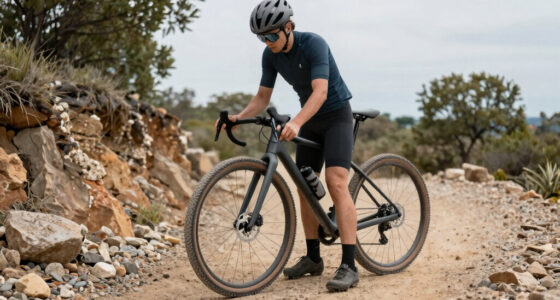
A bicycle odometer speedometer can be a simple wheel sensor for tracking speed and distance or a GPS computer that calculates both without a wheel magnet. My best overall pick is the Bikevee GPS Bike Computer with 2.4-Inch Display for riders who want GPS-based tracking and a larger screen; the CYCPLUS G1 stands out for a lighter, compact GPS setup, while the CATEYE Velo 9 suits riders who prefer straightforward wired tracking. The main tradeoff is between GPS convenience and sensor simplicity, with screen size, setup, and power needs also shaping the choice. I compare all 14 options below so you can match the computer to your bike, routes, and preferred level of detail.

Get sports gear delivered free with Prime
- Fast, free delivery on millions of items
- Prime Video, Amazon Music and more included
- Member-only deals all year
Complete the kit


Key Takeaways
GPS models lead this lineup for sensor-free setup: Bikevee, BKVTOP, and CYCPLUS options can track rides using satellite positioning, while the CATEYE and wired alternatives rely on a wheel sensor.
The Bikevee 2.4-inch GPS computer is the lead pick for screen-first riders: its larger display gives it a practical advantage over the more compact CYCPLUS G1, which has a 2.0-inch screen.
Wired CATEYE models make a case for simplicity: the Velo 9 and Velo 7 avoid GPS dependence, but a sensor and wire need to be mounted neatly and matched to the wheel.
Several entries are close variants rather than clearly distinct formats: compare the three Bikevee GPS listings and the two feature-rich generic GPS listings by exact screen and function details before choosing.
Waterproofing and display features do not replace fit checks: riders should still verify mount compatibility, visibility in their riding conditions, and whether the computer’s tracking method suits their routes.
| Bikevee GPS Bike Computer with 2.4-Inch Display |  | Best Overall GPS Pick | Display: 2.4-inch LCD | GPS: Built-in | Sensors: GPS sensor, motion sensor, barometric altimeter, speed sensor | VIEW ON AMAZON | See Our Full Breakdown |
| Bikevee Wireless GPS Bike Computer with 2.4-Inch Display |  | Best for Easy GPS Setup | Model: BKV350A-BL | Display: 2.4-inch LCD | GPS: Built-in | VIEW ON AMAZON | See Our Full Breakdown |
| BKVTOP Wireless GPS Bike Computer |  | Best for Standalone GPS Tracking | Display: 2.4-inch LCD | GPS: Built-in | Sensors: GPS, motion sensor, barometric altimeter, speed sensor | VIEW ON AMAZON | See Our Full Breakdown |
| CATEYE Velo 9 Wired Bike Computer |  | Best Wired Feature Set | Display: LCD | Connectivity: Wired | Sensor: Speed sensor | VIEW ON AMAZON | See Our Full Breakdown |
| CATEYE Velo 7 Wired Bike Computer |  | Best for Basic Speed and Distance | Display: 2.17-inch LCD | Connectivity: Wired | Sensor: Speed sensor | VIEW ON AMAZON | See Our Full Breakdown |
| CATEYE Velo Wireless Bike Computer |  | Best Overall for Straightforward Odometer Tracking | Brand: CATEYE | Model: CC-VT230W | Display: LCD, listed as 10 cm | VIEW ON AMAZON | See Our Full Breakdown |
| SY Wireless Bicycle Speedometer and Odometer | 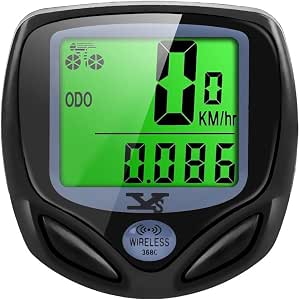 | Best for Simple Nighttime Readability | Display: 1.2-inch LCD | Measurements: Speed, distance, and riding time | Sensor: Speed sensor | VIEW ON AMAZON | See Our Full Breakdown |
| CATEYE Urban Wireless Bike Computer |  | Best for More Ride Metrics Without GPS | Model: CC-VT240W | Display: LCD | Measurements: Current, maximum and average speed; distance; elapsed time; calories; pace; time | VIEW ON AMAZON | See Our Full Breakdown |
| GPS Bike Computer Wireless Bicycle Speedometer Odometer with Auto Backlight and Waterproof |  | Best for GPS-Based Ride Recording | Display: 2.4-inch LCD | Sensors: GPS and cycling sensor | Connectivity: Wireless | VIEW ON AMAZON | See Our Full Breakdown |
| Bikevee Wireless GPS Bike Computer with 2.4-Inch Screen |  | Best GPS Pick for Climbing Data | Model: BKV310A-BL | Display: 2.4-inch LCD | GPS and sensors: Built-in GPS, motion sensor, barometric altimeter, and speed sensor | VIEW ON AMAZON | See Our Full Breakdown |
| GPS Bike Computer Wireless Bicycle Speedometer Odometer with 9 Languages, Auto Backlight, Waterproof, 2.4 Inch LCD |  | Best for Multilingual GPS Ride Data | Display: 2.4-inch LCD | Battery life: Up to 28 hours | Battery type: Lithium-ion | VIEW ON AMAZON | See Our Full Breakdown |
| Hicvers Waterproof Bike Computer with LCD Display |  | Best for Simple Sensor-Based Tracking | Display: LCD | Sensor: Speed sensor | Measurements: Current, maximum, and average speed; mileage; travel time | VIEW ON AMAZON | See Our Full Breakdown |
| Hilceriy Wired Bike Computer and Odometer with LCD Display |  | Best for Wet-Weather Wired Riding | Display: LCD | Sensor and connection: Speed sensor; wired | Water resistance: IPX6 | VIEW ON AMAZON | See Our Full Breakdown |
| CYCPLUS Wireless GPS Bike Computer G1 – 70 g, 2.0″ Screen, IPX6, 1200 mAh | 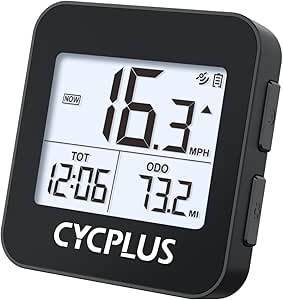 | Best for Long GPS Rides | Display: 2-inch FSTN backlit screen | Battery: 1200 mAh lithium-polymer | Battery life: Over 55 hours stated; listed average life is 50 hours | VIEW ON AMAZON | See Our Full Breakdown |
| bicycle odometer speedometer | Display | Weight | Mounting | Battery life |
|---|---|---|---|---|
| Bikevee GPS Bike Computer with | 2.4-inch LCD | 50 g | Handlebar mount | — |
| Bikevee Wireless GPS Bike Comp | 2.4-inch LCD | 50 g | Handlebar mount | Up to 28 hours |
| BKVTOP Wireless GPS Bike Compu | 2.4-inch LCD | 50 g | — | Up to 28 hours |
| CATEYE Velo 9 Wired Bike Compu | LCD | 1.12 ounces | — | Up to 3 years |
| CATEYE Velo 7 Wired Bike Compu | 2.17-inch LCD | 1.12 ounces | — | Up to 3 years |
| CATEYE Velo Wireless Bike Comp | LCD, listed as 10 cm | 1.12 oz | Handlebar mount | — |
| SY Wireless Bicycle Speedomete | 1.2-inch LCD | 90 g | Handlebar mount | — |
| CATEYE Urban Wireless Bike Com | LCD | 1.12 oz | Handlebar mount with FlexTight bracket | 1 year |
| GPS Bike Computer Wireless Bic | 2.4-inch LCD | 50 g | Handlebar mount | Up to 28 hours |
| Bikevee Wireless GPS Bike Comp | 2.4-inch LCD | 50 g | Handlebar mount | Up to 28 hours |
| GPS Bike Computer Wireless Bic | 2.4-inch LCD | 50 g | Handlebar mount | Up to 28 hours |
| Hicvers Waterproof Bike Comput | LCD | 0.06 kg | Handlebar mount | — |
| Hilceriy Wired Bike Computer a | LCD | 0.08 kg | Handlebar mount | — |
| CYCPLUS Wireless GPS Bike Comp | 2-inch FSTN backlit screen | 70 g | Handlebar mount | Over 55 hours stated; listed average life is 50 hours |
More Details on Our Top Picks
Bikevee GPS Bike Computer with 2.4-Inch Display
I’d put this Bikevee first for riders who want a standalone GPS odometer and speedometer with more than basic ride totals. Built-in GPS tracks speed and distance without a wheel magnet, while the barometric altimeter adds altitude, gradient, and accumulated ascent for riders who want a fuller picture of a route. Its up to 28-hour battery and IPX7 water protection make it better suited to long rides and wet-weather use than the wired CATEYE Velo 9, which trades GPS and elevation data for simpler speed tracking and long battery life. The tradeoff is a small 2.4-inch display, so multiple metrics may take a close glance, and sleep mode starts after seven minutes of inactivity. I’d choose it for GPS-led ride tracking, not app syncing or a large screen.
Pros:- Built-in GPS tracks speed and distance without a wheel sensor or spoke magnet.
- Altitude, gradient, and accumulated ascent add useful route context.
- Up to 28 hours of runtime supports extended rides between charges.
- IPX7 protection, automatic backlighting, and auto start/stop suit changing ride conditions.
Cons:- The 2.4-inch LCD may feel cramped when viewing several metrics.
- Sleep mode activates after seven minutes of inactivity.
- No app or external-sensor connectivity is specified.
Best for: Riders who want GPS speed, distance, and elevation tracking for long rides without fitting a wheel sensor or spoke magnet.
Not ideal for: Cyclists who need a large, glanceable display, app connectivity, or continuous operation without an inactivity sleep mode.
- Display:2.4-inch LCD
- GPS:Built-in
- Sensors:GPS sensor, motion sensor, barometric altimeter, speed sensor
- Battery capacity:650mAh
- Battery runtime:Up to 28 hours
- Water resistance:IPX7
- Weight:50 g
- Mounting:Handlebar mount
- Warranty:2 years
Our verdict“Choose this Bikevee for long, GPS-tracked rides with elevation data, but skip it if a larger screen or app connections matter more.”
Bikevee Wireless GPS Bike Computer with 2.4-Inch Display
This Bikevee is a good fit for riders who want GPS speed and distance without a wheel sensor, along with automatic start/stop and a green auto backlight for everyday rides. Its listed metrics also include temperature, altitude, gradient, and accumulated ascent, giving it more route detail than the entry-level CATEYE Velo 7. Compared with the other Bikevee GPS computer in this group, the core package is very similar: a 2.4-inch LCD, up to 28 hours of battery life, and IPX7 protection. That makes this model a sensible alternative rather than a clear step up. I’d weigh the small screen against the convenience of magnet-free setup; button controls are straightforward but less direct than touch input, and no app connection is listed. It suits riders who want a self-contained GPS unit, not a connected training system.
Pros:- Built-in GPS tracks speed and distance without a spoke magnet.
- Elevation-related metrics include altitude, gradient, and accumulated ascent.
- Up to 28 hours of battery life and IPX7 water protection suit outdoor riding.
- Automatic backlight and auto start/stop reduce routine button adjustments.
Cons:- The 2.4-inch LCD limits room for multiple ride metrics.
- Button controls may feel less convenient than a touchscreen.
- No app or external-sensor support is specified.
Best for: Commuters and recreational riders who want GPS-based speed and distance with no wheel magnet to install.
Not ideal for: Riders who prefer touchscreen controls, a larger display, or phone-app and external-sensor connections.
- Model:BKV350A-BL
- Display:2.4-inch LCD
- GPS:Built-in
- Sensors:GPS, motion sensor, barometric altimeter, speed sensor
- Battery life:Up to 28 hours
- Water resistance:IPX7
- Weight:50 g
- Mounting:Handlebar mount
- Warranty:2 years
Our verdict“Pick this model for straightforward, magnet-free GPS tracking, but compare it with the similar Bikevee GPS unit if the small display is a concern.”
BKVTOP Wireless GPS Bike Computer
The BKVTOP makes sense for riders who want GPS-based speed, distance, and elevation data without adding a wheel sensor or pairing a phone. Its 2.4-inch LCD, automatic backlight, MPH/KMH options, and up to 28 hours of battery life put it close to the two Bikevee GPS models in this roundup. The key distinction is its stated lack of app connectivity and external-sensor support: that keeps the setup focused on standalone tracking, but rules out building a connected data setup around it. By contrast, the wired CATEYE Velo 9 is less capable for route elevation but does track calories and estimated carbon offset. I’d choose the BKVTOP for GPS and elevation basics, while riders who expect to expand their setup should look elsewhere. Its small screen remains a limit when checking several fields at once.
Pros:- Built-in GPS tracks ride speed, distance, and elevation without a spoke magnet.
- Displays both MPH and KMH.
- Up to 28 hours of battery life and IPX7 water resistance support outdoor use.
- At 50 g, it adds little weight to the handlebar setup.
Cons:- Does not connect to apps or external sensors.
- The 2.4-inch display may be cramped for riders monitoring several metrics.
- A standalone design offers fewer options for extending ride data.
Best for: Riders who want a lightweight, standalone GPS computer for speed, distance, and elevation without phone or sensor pairing.
Not ideal for: Cyclists who want app-based ride records, external sensor support, or a larger display for multiple data fields.
- Display:2.4-inch LCD
- GPS:Built-in
- Sensors:GPS, motion sensor, barometric altimeter, speed sensor
- Units:MPH and KMH
- Battery life:Up to 28 hours
- Water resistance:IPX7
- Weight:50 g
- Connectivity:No app connection or external sensor support
Our verdict“Choose the BKVTOP for simple standalone GPS and elevation tracking, but avoid it if you want app syncing or external sensors.”
CATEYE Velo 9 Wired Bike Computer
I’d choose the CATEYE Velo 9 for riders who want a straightforward speedometer and odometer with useful ride summaries, rather than GPS route data. It records current, maximum, and average speed, distance, elapsed time, pace, and time, plus calories and estimated carbon offset. Its automatic stop feature pauses time and average-speed tracking at a standstill, while a battery life of up to three years means far less charging attention than the GPS Bikevee models. The tradeoff is its wired sensor connection, which requires more care during installation and leaves it less convenient to fit than a wireless GPS unit. It also lacks GPS and elevation metrics. Compared with the simpler CATEYE Velo 7, the Velo 9 offers a broader set of ride data, making it the better pick for riders who prefer a traditional, sensor-based computer.
Pros:- Tracks current, maximum, and average speed alongside distance and elapsed time.
- Adds pace, calories, and estimated carbon-offset data.
- Automatic stop pauses time and average-speed tracking when stationary.
- Battery life is listed at up to three years.
Cons:- The wired sensor connection is less convenient to install than wireless GPS computers.
- No GPS or elevation tracking is listed.
- The LCD may be harder to read than a larger modern display.
Best for: Riders who want detailed basic ride statistics, automatic stop, and long battery life without GPS features.
Not ideal for: Cyclists who want GPS-based distance, elevation data, or a quick wireless installation.
- Display:LCD
- Connectivity:Wired
- Sensor:Speed sensor
- Tracked data:Current, maximum and average speed; distance; elapsed time; pace; time; calories; estimated carbon offset
- Automatic stop:Pauses time and average-speed tracking when stopped
- Battery life:Up to 3 years
- Water resistance:IP54
- Weight:1.12 ounces
- Warranty:2 years
Our verdict“Pick the Velo 9 for long-running, sensor-based ride statistics, but choose a Bikevee GPS model for magnet-free tracking and elevation data.”
CATEYE Velo 7 Wired Bike Computer
The CATEYE Velo 7 is the simplest fit here for new cyclists who want speed, distance, and ride-time basics without paying attention to GPS features or frequent charging. It tracks current, maximum, and average speed, distance, elapsed time, pace, and the clock, and automatically pauses time and average-speed calculations when the bike stops. Its battery is listed for up to three years, a clear contrast with the rechargeable Bikevee GPS computers, which offer route and elevation information but need charging. The Velo 7’s wired speed sensor adds installation work and cannot provide GPS-derived route data. It also has a more limited feature set than the CATEYE Velo 9, which adds calories and estimated carbon offset. I’d pick this for uncomplicated ride monitoring, not for riders who want elevation metrics or wireless setup.
Pros:- Tracks current, maximum, and average speed, distance, and elapsed time.
- Automatic stop pauses time and average-speed calculations when stationary.
- Battery life is listed at up to three years.
- Includes the bracket, sensor, magnet, and zip ties for installation.
Cons:- Wired sensor setup is less convenient than a wireless GPS computer.
- Does not provide GPS or elevation tracking.
- Offers fewer ride metrics than the CATEYE Velo 9.
Best for: New cyclists and commuters who want a basic speed-and-distance readout with automatic stop and infrequent battery changes.
Not ideal for: Riders who want GPS tracking, elevation data, wireless installation, or the wider data set of the CATEYE Velo 9.
- Display:2.17-inch LCD
- Connectivity:Wired
- Sensor:Speed sensor
- Tracked data:Current, maximum and average speed; distance; elapsed time; pace; clock
- Automatic stop:Pauses time and average-speed calculations when stopped
- Battery type:Alkaline
- Battery life:Up to 3 years
- Weight:1.12 ounces
- Warranty:2 years
Our verdict“Choose the Velo 7 for basic, low-maintenance ride tracking, but step up to the Velo 9 for more metrics or a Bikevee for GPS data.”
CATEYE Velo Wireless Bike Computer
The CATEYE Velo Wireless is a strong pick for riders who want an easy-to-read odometer and dependable ride basics without relying on GPS. It tracks speed, distance, and ride time, adds calorie estimates, and pauses timing and speed averaging when you stop—useful for commutes with frequent lights. Its programmable odometer can retain mileage through a battery change, a practical advantage over computers that may require mileage to be re-entered. Compared with the CATEYE Urban Wireless, it offers a similar core approach but its listed data is less extensive. The tradeoff is its proprietary wireless connection and reliance on a wheel speed sensor, so it cannot provide GPS-based tracking or sensor-free setup. I’d choose it for uncomplicated, sensor-based riding rather than route recording.
Pros:- Tracks speed, distance, ride time, calories, and other ride data
- Automatically stops timing and speed averaging when the bike stops
- Programmable odometer preserves accumulated mileage when the battery is changed
- Includes a handlebar mount and speed sensor
Cons:- Requires the included wheel speed sensor rather than GPS
- Uses proprietary wireless connectivity
- Waterproof ratings in the supplied product information are inconsistent
Best for: Commuters and recreational riders who want a legible, sensor-based speedometer with basic trip tracking and mileage retention.
Not ideal for: Riders who want GPS ride data, route guidance, or a setup without a wheel sensor.
- Brand:CATEYE
- Model:CC-VT230W
- Display:LCD, listed as 10 cm
- Sensor:Speed sensor
- Connectivity:Proprietary wireless
- Mounting:Handlebar mount
- Dimensions:2.19 x 1.48 x 0.73 in
- Weight:1.12 oz
- Warranty:2 years
Our verdict“Choose the CATEYE Velo Wireless for clear, practical ride tracking with mileage retention, but pick a GPS computer if you want sensor-free recording.”
SY Wireless Bicycle Speedometer and Odometer
The SY Wireless Bicycle Speedometer and Odometer suits riders who want basic speed, distance, and ride-time readings with a few convenience touches. Its vibration-activated wake-up can save button presses at the start of a ride, while the automatic backlight helps with quick checks after dark. Compared with the CATEYE Velo Wireless, this model emphasizes nighttime visibility and a simple two-button interface, but its listed measurements are narrower and it does not list calorie or pace data. The IP54 rating indicates limited protection against dust and splashing, not a GPS device built for route tracking. It also uses a wheel sensor, and the product information warns that compatibility may vary with electric-assist bikes. I’d favor it for casual, short rides where a backlit display matters more than richer metrics.
Pros:- Displays speed, distance, and riding time
- Vibration-activated wake-up reduces manual operation
- Automatic nighttime backlight improves visibility
- Wireless design with a handlebar mount and two-button controls
Cons:- May not work with some electric-assist bicycles
- IP54 protection is limited compared with higher-rated waterproof devices
- A slight rattle during use is described as normal
Best for: Casual road, mountain, or folding-bike riders who want a basic backlit display and vibration wake-up for evening rides.
Not ideal for: E-bike owners who have not confirmed compatibility, or riders seeking GPS tracking, advanced metrics, or stronger stated water protection.
- Display:1.2-inch LCD
- Measurements:Speed, distance, and riding time
- Sensor:Speed sensor
- Connectivity:Bluetooth
- Water resistance:IP54
- Mounting:Handlebar mount
- Weight:90 g
- Compatibility:Road, mountain, and folding bicycles; some electric-assist bicycles may not work
- Warranty:1 year
Our verdict“Pick the SY for basic ride readings and a backlight on compatible bikes, but choose a GPS computer for route-based data or an e-bike-specific option if fit is uncertain.”
CATEYE Urban Wireless Bike Computer
The CATEYE Urban Wireless gives riders more to check than a basic odometer: current, maximum, and average speed sit alongside distance, elapsed time, calories, pace, and clock time. Its automatic stop function prevents traffic pauses from inflating ride time or lowering average speed, and the programmable odometer retains mileage when the battery is replaced. Compared with the CATEYE Velo Wireless, the Urban lists a broader set of speed and ride metrics while keeping the familiar wheel-sensor format. That makes it a better fit for riders who like reviewing pace and speed variation, but it still does not provide GPS tracking or sensor-free setup. The analog wireless connection and replaceable battery are practical limits; I’d choose it for richer local ride data, not navigation or recorded routes.
Pros:- Shows current, maximum, and average speed plus distance and elapsed time
- Adds pace, calorie consumption, and clock time
- Automatically pauses timing and speed averages at stops
- Programmable odometer retains mileage after battery replacement
Cons:- Requires a wheel speed sensor rather than GPS tracking
- Analog wireless connectivity offers no listed route-recording features
- Battery replacement is needed; listed battery life is one year
Best for: Fitness-minded commuters and recreational riders who want pace and multiple speed readings from a handlebar computer.
Not ideal for: Riders who want GPS routes, navigation, or a computer that avoids a wheel sensor and battery replacement.
- Model:CC-VT240W
- Display:LCD
- Measurements:Current, maximum and average speed; distance; elapsed time; calories; pace; time
- Sensor:Speed sensor
- Connectivity:Analog wireless
- Battery life:1 year
- Mounting:Handlebar mount with FlexTight bracket
- Weight:1.12 oz
- Warranty:2-year manufacturer warranty
Our verdict“Choose the Urban over the CATEYE Velo Wireless if you want more pace and speed statistics, but look to a GPS model for routes and sensor-free setup.”
GPS Bike Computer Wireless Bicycle Speedometer Odometer with Auto Backlight and Waterproof
For riders who want speed and distance recorded by satellite rather than a spoke magnet, this GPS Bike Computer is the clearest fit in this group. It pairs GPS ride data with a 2.4-inch LCD and automatic backlight, giving it a larger viewing area than the 1.2-inch SY Wireless display. The listed battery life of up to 28 hours supports longer outings, though actual runtime may vary. Compared with the Bikevee Wireless GPS Bike Computer, this model shares the large-screen, GPS-first format but provides fewer specified ride fields: Bikevee lists altitude, gradient, and accumulated ascent. Neither description promises detailed route navigation, so I would treat this as a ride-data computer, not a turn-by-turn guide. Its stated suitability is for outdoor cycling, making it less appealing for indoor training.
Pros:- Uses GPS for ride metrics without wiring or a spoke magnet
- Large 2.4-inch LCD with automatic backlight
- Listed battery life of up to 28 hours
- Wireless setup for outdoor cycling activities
Cons:- Product information limits its suitability to outdoor cycling
- No detailed route navigation features are listed
- Battery runtime may vary with usage
Best for: Outdoor cyclists who want GPS-based speed and distance tracking, a large display, and long stated runtime without installing a wheel magnet.
Not ideal for: Indoor cyclists or riders who need detailed route navigation, listed altitude data, or a wheel-sensor-based computer.
- Display:2.4-inch LCD
- Sensors:GPS and cycling sensor
- Connectivity:Wireless
- Battery life:Up to 28 hours
- Battery type:Lithium-ion
- Mounting:Handlebar mount
- Dimensions:1.77 x 0.63 x 2.76 in
- Weight:50 g
Our verdict“Choose this GPS model for outdoor speed and distance recording with a large screen, but prefer the Bikevee if altitude and gradient readings matter.”
Bikevee Wireless GPS Bike Computer with 2.4-Inch Screen
The Bikevee Wireless GPS Bike Computer goes beyond basic speed and mileage by adding temperature, altitude, gradient, and accumulated ascent. Built-in GPS means riders can record rides without setting a wheel magnet, while the barometric altimeter gives climbing-focused riders more context than the simpler GPS Bike Computer in this roundup. Its 2.4-inch screen, automatic backlight, and stated runtime of up to 28 hours also suit longer outdoor rides. The tradeoff is a button interface rather than a touchscreen, which may feel less direct when changing screens. It is still a data display, not a dedicated navigation unit with detailed route guidance. I’d choose it over the more basic GPS model when elevation information matters; riders who only need speed and distance can save complexity with a simpler computer.
Pros:- Built-in GPS tracks rides without a wheel sensor or spoke magnet
- Displays altitude, gradient, and accumulated ascent
- Up to 28 hours of stated battery life
- IPX7 water resistance and automatic backlighting
Cons:- Button controls instead of a touchscreen
- No detailed route navigation features are listed
- Additional elevation data may be unnecessary for riders who only want basic speed and distance
Best for: Outdoor cyclists and hill-focused riders who want GPS speed and distance plus altitude, gradient, and ascent data.
Not ideal for: Riders who want touchscreen controls, detailed route navigation, or only need a minimal speed-and-odometer display.
- Model:BKV310A-BL
- Display:2.4-inch LCD
- GPS and sensors:Built-in GPS, motion sensor, barometric altimeter, and speed sensor
- Battery:Rechargeable 650mAh lithium-ion
- Battery life:Up to 28 hours
- Water resistance:IPX7
- Mounting:Handlebar mount
- Weight:50 g
- Warranty:2 years
Our verdict“Choose the Bikevee over the simpler GPS Bike Computer if climbing data matters, and skip it if you want touchscreen navigation or only basic odometer readings.”
GPS Bike Computer Wireless Bicycle Speedometer Odometer with 9 Languages, Auto Backlight, Waterproof, 2.4 Inch LCD
This model suits riders who want a GPS-based speedometer and odometer with more ride context than speed and mileage alone: it records time, temperature, altitude, and other ride data. Its 28-hour rechargeable battery and wireless setup avoid frequent charging and sensor wiring, while the 2.4-inch LCD gives more viewing area than the 2-inch CYCPLUS G1. Nine language options also make the interface more accommodating for multilingual households or travel.
The tradeoff is that GPS reception is needed for accurate data, so this is less dependable where signal is obstructed than a wheel-sensor computer such as the Hicvers. Its display remains modest in size, and the handlebar-only mount may not suit every cockpit. Choose it for flexible GPS tracking and a larger screen; pick the CYCPLUS G1 instead if longer stated battery life and IPX6 protection matter more.
Pros:- GPS tracks speed, distance, time, altitude, and temperature without wiring
- Rechargeable battery supports up to 28 hours of use
- 2.4-inch LCD is larger than the CYCPLUS G1’s 2-inch screen
- Nine language options suit multilingual riders
Cons:- Accurate ride data depends on receiving a GPS signal
- Handlebar mounting may not fit every bicycle setup
- The LCD may still feel small to riders who prefer a large display
Best for: Riders who want GPS speed, distance, altitude, and temperature data, plus multilingual menus for shared or travel use.
Not ideal for: Cyclists who ride in GPS-obstructed areas or need a wheel-sensor-based computer that does not depend on satellite reception.
- Display:2.4-inch LCD
- Battery life:Up to 28 hours
- Battery type:Lithium-ion
- Sensors:GPS and cycling sensor
- Connectivity:Bluetooth
- Mounting:Handlebar mount
- Weight:50 g
- Dimensions:1.77 × 0.63 × 2.76 in
Our verdict“Choose this for multilingual GPS ride data and a 2.4-inch screen, but opt for the CYCPLUS G1 if its longer stated battery life is the priority.”
Hicvers Waterproof Bike Computer with LCD Display
The Hicvers is a straightforward choice for riders who want speed, mileage, and ride time without GPS features or a complicated interface. Its speed sensor measures current, average, and maximum speed, and automatic wake-up means the unit resumes when the bike moves after standby. Two-button controls keep basic operation simple. Compared with the GPS-focused CYCPLUS G1, this computer relies on a wheel sensor rather than satellite reception, making it a more direct fit for riders who only need core ride figures.
That simplicity brings setup work: the magnet and sensor must stay 3–5 mm apart for readings to register, and the IP54 rating means water resistance, not permission to submerge it. It also lacks the altitude and broader GPS data offered by the Hilceriy and GPS models. Pick Hicvers for routine rides and basic metrics; skip it if you want GPS tracking or stronger stated water protection.
Pros:- Tracks current, average, and maximum speed, mileage, and ride time
- Automatic wake-up resumes tracking after standby
- Two-button controls keep day-to-day use uncomplicated
- Fits road, mountain, and folding bikes
Cons:- Sensor and magnet spacing must be set to 3–5 mm for accurate readings
- IP54 protection does not allow immersion
- Does not provide the GPS and altitude data available from the CYCPLUS G1
Best for: Commuters and recreational cyclists who want a basic wheel-sensor speedometer with speed, distance, and ride-time tracking.
Not ideal for: Riders seeking GPS location-based data, altitude readings, or a computer rated for immersion in water.
- Display:LCD
- Sensor:Speed sensor
- Measurements:Current, maximum, and average speed; mileage; travel time
- Water protection:IP54
- Controls:Buttons
- Mounting:Handlebar mount
- Weight:0.06 kg
- Compatibility:Road, mountain, folding, and other common bicycles
Our verdict“Choose Hicvers for uncomplicated sensor-based speed and mileage tracking, but pick a GPS model if you need location-derived ride data.”
Hilceriy Wired Bike Computer and Odometer with LCD Display
Hilceriy is the wired option for riders who value IPX6 water resistance and a wide spread of ride statistics over wireless convenience. Along with speed, average and maximum speed, time, and distance, it lists calories and temperature, while manual backlighting helps when riding in low light. The wired speed sensor does not depend on GPS reception, unlike the CYCPLUS G1, and automatic wake-up can resume or record data after inactivity.
The cable is the main compromise: setup is less tidy than the wireless GPS Bike Computer with 9 Languages, and the product may not work with some electric-assist bicycles. Its backlight is manually activated rather than described as automatic, so riders who want hands-off visibility may prefer a GPS model with automatic backlighting. Temperature readings can also become inaccurate in heavy rain. Choose Hilceriy for sensor-based tracking and stronger stated water protection, not for a cable-free cockpit.
Pros:- IPX6 water resistance suits rainy rides
- Tracks speed, average and maximum speed, distance, and ride time
- Adds calories and temperature data
- Automatic wake-up and manually activated backlight support practical riding
Cons:- Wired installation is less tidy than the wireless GPS Bike Computer with 9 Languages
- May not work with some electric-assist bicycles
- Temperature readings may be inaccurate in heavy rain
Best for: Road, mountain, and folding-bike riders who want a wired speed sensor, multiple ride metrics, and IPX6 water resistance.
Not ideal for: E-bike owners whose model may be incompatible, or riders who want wireless setup and GPS-derived data.
- Display:LCD
- Sensor and connection:Speed sensor; wired
- Water resistance:IPX6
- Measurements:Speed, average and maximum speed, riding time, distance, calories, and temperature
- Mounting:Handlebar mount
- Dimensions:0.82 × 2.35 × 1.76 in
- Weight:0.08 kg
- Compatibility:Road, mountain, folding, and other common bicycles; may not work with some e-bikes
Our verdict“Choose Hilceriy for wired, sensor-based tracking and IPX6 protection, but check e-bike compatibility before buying.”
CYCPLUS Wireless GPS Bike Computer G1 – 70 g, 2.0″ Screen, IPX6, 1200 mAh
The CYCPLUS G1 is the strongest fit here for riders prioritizing GPS tracking over a long stretch between charges. Its high-sensitivity GPS records ride time, distance, altitude, and more, while the stated battery life exceeds 55 hours—well beyond the 28 hours listed for the GPS Bike Computer with 9 Languages. The glare-free FSTN backlit screen is designed to remain readable in bright sunlight, and IPX6 housing adds reassurance for wet-weather rides.
The compromise is its 2-inch display, which is smaller than that other GPS model’s 2.4-inch LCD and may make figures harder to read at a glance. It also weighs 70 g, more than the 50 g GPS option. Riders who prefer a larger screen or language selection may favor the 9-language computer; choose the G1 when extended GPS use, sunlight readability, and water protection matter more than display size.
Pros:- High-sensitivity GPS records distance, ride time, altitude, and more
- Stated battery life exceeds 55 hours
- FSTN backlit screen is designed for visibility in bright sunlight
- IPX6 waterproof housing suits wet-weather riding
Cons:- The 2-inch screen is smaller than the 2.4-inch GPS Bike Computer with 9 Languages
- At 70 g, it is heavier than that 50 g GPS alternative
Best for: Touring and endurance riders who want GPS ride data, long stated battery life, and a screen designed for bright conditions.
Not ideal for: Riders who need a larger display, multilingual menus, or a lighter computer than the 50 g GPS Bike Computer with 9 Languages.
- Display:2-inch FSTN backlit screen
- Battery:1200 mAh lithium-polymer
- Battery life:Over 55 hours stated; listed average life is 50 hours
- Connectivity:Wireless
- GPS:High-sensitivity positioning
- Water resistance:IPX6
- Mounting:Handlebar mount
- Weight:70 g
- Dimensions:2.36 × 0.98 × 2.24 in
Our verdict“Pick the CYCPLUS G1 for long GPS rides and bright-sun readability, but choose the 2.4-inch GPS alternative if screen size matters more.”

How We Picked
I ranked these bicycle odometer speedometers by how well their stated tracking method fits everyday riding, how manageable the setup is, and whether the display and listed features support quick, useful ride readings. GPS capability received extra weight for riders who want to avoid aligning a wheel sensor, while wired and wireless sensor models remained relevant for buyers who want direct wheel-based speed measurement. I also weighed stated display size, waterproofing, and practical form factor when those details were supplied.
The order reflects use-case fit, not a claim that every feature has been independently verified. Products with specific, decision-useful information—such as the Bikevee’s 2.4-inch display or the CYCPLUS G1’s 2.0-inch screen, IPX6 rating, and 70 g weight—are easier to compare than listings with fewer distinguishing details. Similar model names are treated as separate options, but their close overlap means buyers should verify the exact version and included accessories before purchase. I favored products that have a clear role and called out the tradeoffs between GPS convenience, wired simplicity, and compactness.
| bicycle odometer speedometer | Water resistance | Mounting | Connectivity |
|---|---|---|---|
| Bikevee GPS Bike Computer with | IPX7 | Handlebar mount | — |
| Bikevee Wireless GPS Bike Comp | IPX7 | Handlebar mount | — |
| BKVTOP Wireless GPS Bike Compu | IPX7 | — | No app connection or external sensor support |
| CATEYE Velo 9 Wired Bike Compu | IP54 | — | Wired |
| CATEYE Velo 7 Wired Bike Compu | — | — | Wired |
| CATEYE Velo Wireless Bike Comp | — | Handlebar mount | Proprietary wireless |
| SY Wireless Bicycle Speedomete | IP54 | Handlebar mount | Bluetooth |
| CATEYE Urban Wireless Bike Com | — | Handlebar mount with FlexTight bracket | Analog wireless |
| GPS Bike Computer Wireless Bic | — | Handlebar mount | Wireless |
| Bikevee Wireless GPS Bike Comp | IPX7 | Handlebar mount | — |
| GPS Bike Computer Wireless Bic | — | Handlebar mount | Bluetooth |
| Hicvers Waterproof Bike Comput | — | Handlebar mount | — |
| Hilceriy Wired Bike Computer a | IPX6 | Handlebar mount | — |
| CYCPLUS Wireless GPS Bike Comp | IPX6 | Handlebar mount | Wireless |
Factors to Consider When Choosing Bicycle Odometer Speedometer
Choosing a bicycle odometer speedometer starts with how you want it to measure a ride, not with the longest feature list. These broader checks can help prevent a mismatch between the computer, your bike, and the routes you ride.
Choose GPS or a Wheel Sensor Based on Your Routes
GPS avoids a wheel-mounted sensor, which can make installation cleaner and easier if you move the computer between bikes. Its readings rely on satellite reception, so dense buildings, tree cover, or tunnels can affect tracking. A wheel sensor measures rotation directly and can suit regular routes where dependable speed readings matter more than a minimal setup. Wired sensors need a physical connection between the sensor and display; wireless sensors remove that wire but still need correct placement and pairing. A common mistake is buying GPS only because it sounds more advanced without considering where the bike is ridden. Match the method to your routes and your tolerance for mounting and setup.
Treat Screen Size as a Readability Choice
A larger screen can make speed and distance easier to glance at, especially for riders who prefer fewer, larger readouts. It may also take up more handlebar space, so check the available mounting area before choosing a bigger unit. Compact computers are less visually prominent but can make small digits harder to read while moving. Think about whether you want one clear speed display or several ride metrics visible together. Do not assume a larger display automatically means better sunlight visibility; screen type and contrast matter too. If possible, confirm which fields can appear at once and how the display is laid out.
Check Wheel Setup and Bike Compatibility
Wheel-based computers need the correct wheel-size setting to calculate speed and distance accurately. Tire size printed on the sidewall can help, but actual circumference may differ with tire pressure, load, and tire model. Before buying a sensor unit, check that its mounting arrangement works with your fork, wheel, and spokes. Bikes with unusual frames, suspension components, or limited clearance may make sensor placement awkward. For a multi-bike household, consider whether you want separate computers or are willing to move and reconfigure one unit. GPS can reduce wheel-measurement setup, though it does not remove the need to mount the display securely.
Match Weather Protection to Real Riding Conditions
Water resistance is useful for commuting and changing weather, but labels and ratings are not interchangeable. A stated rating such as IPX6 gives more specific information than a general waterproof claim, yet it does not mean the unit is suitable for every kind of water exposure. Think about rain, road spray, and how the device will be stored between rides. Buttons and charging ports can also affect long-term convenience, so check how the unit is operated and charged. Avoid assuming that a waterproof label covers every component in the package, particularly mounts or external sensors. Riders who rarely leave in poor weather may value simpler operation more than a higher protection claim.
Decide Which Readouts You Will Actually Use
For basic fitness or commuting, current speed and trip distance may be enough; a longer list of metrics can add clutter rather than useful information. Decide whether you need ride totals, average speed, elapsed time, or other fields before paying extra for a more feature-heavy computer. GPS may suit riders who want location-based tracking, while a simple odometer can be more direct for tracking distance on familiar routes. Check whether the listed functions are shown on the screen or require a companion device or app. A frequent buying mistake is choosing by the number of advertised modes without checking how easily the key readings can be viewed. Prioritize the two or three numbers you will check during a ride.
Pay More for a Clear Benefit, Not Just More Features
A more advanced computer makes sense when its GPS, display, weather protection, or portability solves a real problem for your riding. If you mainly want speed and distance on predictable routes, a simpler wired model may be a better fit than a GPS device with a larger screen. Riders who switch between bikes or want to avoid a sensor may value GPS enough to accept its power and reception tradeoffs. A compact model can be the right choice when handlebar space and low weight matter more than screen size. Compare close product variants carefully, since similar names do not by themselves confirm identical specifications or included parts. Spend extra only when the difference improves setup, readability, or ride tracking for your use.
Frequently Asked Questions
Is a GPS bicycle speedometer more accurate than a wheel-sensor model?
Neither method is automatically more accurate in every riding situation. A wheel sensor calculates speed from wheel rotation, so correct wheel-size setup and secure sensor placement matter. GPS estimates movement from satellite data, which can be convenient but may lose precision where reception is obstructed. For regular routes with tunnels or heavy tree cover, a wheel-based unit may provide more consistent readings. For an easy, sensor-free setup, GPS can be the more convenient choice.
Can I move one bicycle odometer between two bikes?
That depends on the tracking method and how much setup you are willing to repeat. GPS models can be easier to move because they do not need a wheel sensor on each bike, though the mount still needs to fit both handlebars. A sensor-based computer may need a sensor and mount for each bike or require you to move and realign the parts. Wheel-size settings can also differ between bikes, so check whether the computer lets you adjust them easily. If you switch often, prioritize simple mounting and quick configuration over a feature list.
Will a bicycle speedometer work on an indoor trainer?
A wheel-sensor model can often register wheel rotation on a trainer if the sensor is mounted correctly and the wheel turns freely. GPS models generally need satellite movement to calculate distance, so they may not provide useful indoor tracking. Trainer speed also does not necessarily equal outdoor speed because resistance and equipment vary. If indoor distance matters, check whether the computer supports an indoor sensor or trainer connection rather than relying on GPS alone. For a basic indoor session, elapsed time or cadence readings may be more useful than GPS distance.
How do I choose between a wired computer and a wireless one?
A wired computer connects the wheel sensor to the display with a cable, which keeps the system direct but requires careful cable routing around the fork and handlebars. Wireless sensor models avoid that wire and can look tidier, but they still need sensor alignment and may require pairing or battery maintenance. GPS removes the wheel sensor altogether, though satellite reception and device power become more relevant. Consider how much time you want to spend installing and troubleshooting the setup. Riders who want the fewest components may prefer GPS, while those who want wheel-based readings can choose between wired simplicity and wireless tidiness.
What should I verify before buying one of the similar GPS listings?
Compare the exact model name and stated screen size, then check which features are included on that specific listing. Similar product titles can describe different versions, and a shared brand name does not confirm that mounts, cables, or other accessories are the same. Look for clear information about waterproofing, charging, display functions, and the computer’s mounting system. If a specification is missing, avoid assuming that a neighboring version has it. This is especially useful for the repeated Bikevee and generic GPS listings in this roundup, where the exact variant matters more than a small wording difference.
Conclusion
For most riders who want GPS-based tracking and a larger display, I would start with the Bikevee GPS Bike Computer with 2.4-Inch Display. The Bikevee Wireless GPS Bike Computer with 2.4-Inch Display is a close alternative, but check the exact version details before choosing between similar listings. For a best value in straightforward ride tracking, the CATEYE Velo 9 is the sensible pick for riders who are comfortable with a wired sensor and do not need GPS. Beginners who want a simple speed-and-distance setup can also start with the Velo 7 or Velo 9; the Velo 9 is the more feature-forward of the pair based on its model positioning in this lineup. For a best premium-style compact GPS option, consider the CYCPLUS G1 if its 2.0-inch display, 70 g weight, and IPX6 rating suit your priorities. Riders who want GPS with a larger screen should favor Bikevee, while those who prefer direct wheel sensing should choose a CATEYE wired model; check the stated specs and bike fit before ordering.
Evergreen bestsellers Picks

Bose QuietComfort Headphones (2nd Gen), Wireless Noise-Cancelling Over-Ear Headphones, White Smoke

Sony BRAVIA 5 85-Inch Mini LED 4K HDR Smart Google TV (K-85XR50)

Bose QuietComfort Ultra Wireless Noise Cancelling Earbuds, 2nd Gen, with 20W 2-Port Wall Charger
As an affiliate, we earn on qualifying purchases.