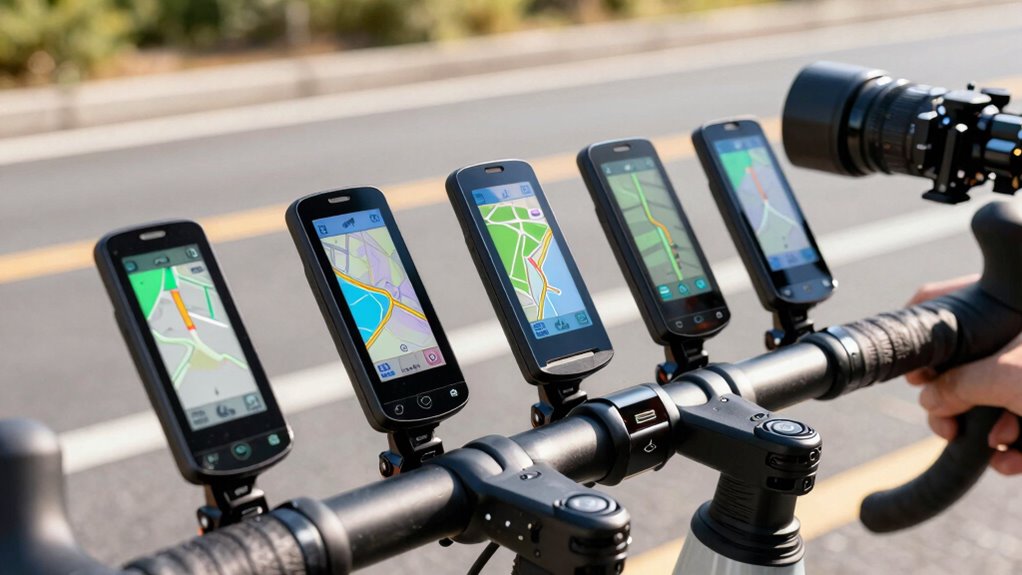
Finding the right bike computer with GPS and maps can significantly improve your cycling experience. The best models, like the Garmin Edge 1050, excel in navigation and durability, while others such as the COOSPO CS600 offer solid features at a lower price. You’ll need to weigh factors like screen size, usability, battery life, and navigation accuracy. Many options provide advanced features, but tradeoffs often include higher costs or complexity. Continue reading as I break down the standout options and help you find the perfect fit for your riding style.

Get sports gear delivered free — and shop member deals
- Fast, free delivery on millions of items
- Access to Prime Big Deal Days deals on October 6–7
- Prime Video, Amazon Music and more included
Complete the kit


Key Takeaways
- The Garmin Edge 1050 stands out for its comprehensive navigation and premium build quality, justifying its higher price.
- The Bryton Rider 650 offers excellent value with a color touchscreen and preloaded maps, ideal for serious cyclists on a budget.
- Touchscreen interfaces generally improve ease of use, but can drain batteries faster than button-controlled models.
- Navigation accuracy varies; models with preloaded maps and routing features tend to provide smoother experiences.
- Choosing a bike computer depends heavily on your riding style—whether casual, competitive, or touring—and the importance of features like offline maps and connectivity.
| COOSPO CS600 Color Touchscreen GPS Bike Computer |  | Best Overall | Display: 2.4-inch high-resolution color touchscreen | Waterproof: IPX7 | Battery Life: 36 hours | VIEW ON AMAZON | See Our Full Breakdown |
| GEOID CC700 Pro 2.8″ Color Touchscreen GPS Bike Computer with Navigation and Indoor Training |  | Best for Indoor and Outdoor Versatility | Display Size: 2.8 inches | Display Type: TFT | Protection Rating: IPX7 | VIEW ON AMAZON | See Our Full Breakdown |
| iGPSPORT BSC500 GPS Bike Computer with 3.3” Touch Screen and Voice Navigation |  | Best for Advanced Navigation and Voice Alerts | Screen Size: 3.3 inches | Operation: Touch and button | Satellite Support: GPS, Beidou, GLONASS, Galileo, QZSS | VIEW ON AMAZON | See Our Full Breakdown |
| Bryton Rider 650 GPS Bike Cycling Computer with 2.8-Inch Color Touchscreen | 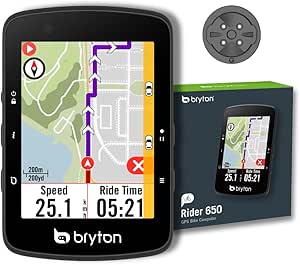 | Best for Long Rides and Detailed Mapping | Display Size: 2.8 inches | Display: LCD | Battery Life: 33 hours | VIEW ON AMAZON | See Our Full Breakdown |
| Garmin Edge 850 GPS Cycling Computer |  | Best for Serious Cyclists with Advanced Features | Display: Vivid color touchscreen | Battery life: Up to 12 hours (standard), up to 36 hours (battery saver mode) | Maps: Preloaded for road, gravel, and trails including Trailforks | VIEW ON AMAZON | See Our Full Breakdown |
| iGPSPORT BSC500 GPS Bike Computer with 3.3” Touch Screen and Voice Navigation |  | Best Overall for User-Friendly Navigation and Customization | Screen Size: 3.3 inches | Operation: Touchscreen and button | Satellite Compatibility: GPS, Beidou, GLONASS, Galileo, QZSS | VIEW ON AMAZON | See Our Full Breakdown |
| GEOID CC600 Color Screen Bike/Cycling Computer Wireless with Route Navigation, WiFi & Bluetooth |  | Best for Colorful Display and Indoor Training Integration | Screen Size: 2.4 inches | Battery Life: 24 hours | Connectivity: Bluetooth, Wi-Fi, ANT+ | VIEW ON AMAZON | See Our Full Breakdown |
| iGPSPORT BSC200S GPS Bike Computer, Wireless Route Navigation, 2.4” Screen, Bluetooth, ANT+, IPX7 Waterproof |  | Best for Long Battery Life and Data Metrics | Display: 2.4 inches | Battery Life: up to 25 hours | Battery Capacity: 600mAh | VIEW ON AMAZON | See Our Full Breakdown |
| iGPSPORT BSC300T Wireless Bike Computer GPS with Touchscreen and Offline Map Navigation |  | Best for Offline Navigation and Multi-Bike Compatibility | Screen Size: 2.4 inches | Supported Satellites: GPS, Beidou, GLONASS, GALILEO, QZSS | Navigation: Offline map download, turn prompts | VIEW ON AMAZON | See Our Full Breakdown |
| GEOID CC700 2.8″ Color Screen Bike/Cycling Computer Wireless with Route Navigation and GPS |  | Best for Indoor and Outdoor Versatility | Display Size: 2.8 inches | Screen Material: Asahi glass | Navigation: Colorful route navigation with turn reminders | VIEW ON AMAZON | See Our Full Breakdown |
| Garmin Edge Explore 2 GPS Cycling Computer |  | Best for Ease of Use and Off-Road Navigation | Display: 3-inch high-resolution touchscreen | Maps: High-contrast, bike-specific, turn-by-turn navigation | Connectivity: Smartphone pairing for notifications, LiveTrack, incident detection | VIEW ON AMAZON | See Our Full Breakdown |
| Garmin Edge 1050 Premium Cycling Computer |  | Best for Advanced Training and Long Rides | Battery Life: Up to 20 hours; up to 60 hours in battery saver mode | Display: Vivid color touchscreen | Connectivity: Smartphone, Garmin Connect | VIEW ON AMAZON | See Our Full Breakdown |
| bike computers with gps and map | Connectivity | Battery Life | Display |
|---|---|---|---|
| COOSPO CS600 Color Touchscreen | Bluetooth, ANT+ | 36 hours | 2.4-inch high-resolution color touchscreen |
| GEOID CC700 Pro 2.8" Color Tou | ANT, Bluetooth, Wi-Fi | — | — |
| iGPSPORT BSC500 GPS Bike Compu | Supports route import from Strava, Komoot | — | — |
| Bryton Rider 650 GPS Bike Cycl | ANT, Bluetooth | 33 hours | LCD |
| Garmin Edge 850 GPS Cycling Co | Smart notifications, Garmin Pay, incident detection | Up to 12 hours (standard), up to 36 hours (battery saver mode) | Vivid color touchscreen |
| iGPSPORT BSC500 GPS Bike Compu | — | — | — |
| GEOID CC600 Color Screen Bike/ | Bluetooth, Wi-Fi, ANT+ | 24 hours | — |
| iGPSPORT BSC200S GPS Bike Comp | Bluetooth, ANT+ | up to 25 hours | 2.4 inches |
| iGPSPORT BSC300T Wireless Bike | ANT+, Bluetooth 5.0 | — | — |
| GEOID CC700 2.8" Color Screen | WiFi, Bluetooth, ANT+ | — | — |
| Garmin Edge Explore 2 GPS Cycl | Smartphone pairing for notifications, LiveTrack, incident detection | Not specified | 3-inch high-resolution touchscreen |
| Garmin Edge 1050 Premium Cycli | Smartphone, Garmin Connect | Up to 20 hours; up to 60 hours in battery saver mode | Vivid color touchscreen |
More Details on Our Top Picks
COOSPO CS600 Color Touchscreen GPS Bike Computer
The COOSPO CS600 stands out for its high-resolution 2.4-inch color touchscreen that offers clear visibility even in bright sunlight, making it easier to navigate on the go. Compared with the Garmin Edge 850, it provides comparable route tracking and seamless app sync but at a more approachable price point and with a simpler interface. Its long 36-hour battery life surpasses many competitors, perfect for multi-day adventures. However, it lacks built-in sensors for heart rate or cadence, requiring additional purchases, and does not include mounting accessories, which could be inconvenient for some riders. This device makes the most sense for riders seeking professional-level navigation and tracking without a premium price.
Pros:- High-resolution color touchscreen with auto-backlight
- Accurate GPS with route navigation
- Long-lasting 36-hour battery
Cons:- No included sensors for heart rate or cadence
- Requires separate purchase for mounting accessories
Best for: Cyclists who prioritize a vibrant display and long battery life for multi-day rides.
Not ideal for: Riders who want an all-in-one device with integrated sensors for heart rate and cadence without extra purchases.
- Display:2.4-inch high-resolution color touchscreen
- Waterproof:IPX7
- Battery Life:36 hours
- Connectivity:Bluetooth, ANT+
- Navigation:Built-in route mapping and breadcrumb trail
- Charging:Type-C, 2 hours
Our verdict“A versatile choice for riders needing a bright display and extended battery life, but with some sensor limitations.”
GEOID CC700 Pro 2.8″ Color Touchscreen GPS Bike Computer with Navigation and Indoor Training
The GEOID CC700 Pro offers a large 2.8-inch TFT touchscreen with vivid visuals, making it ideal for users who want detailed navigation both inside and outside. It supports multiple satellite systems for quick and precise positioning, similar to the Garmin Edge 850, but with the added benefit of WiFi for effortless data synchronization. Its waterproof rating (IPX7) ensures durability during all weather conditions. However, it is somewhat limited by its compatibility, only working with specific DJI action cameras for certain features, and lacks detailed battery life information, which could be a concern for long rides. This device is best suited for cyclists who value an expansive display and seamless indoor-outdoor transition.
Pros:- Vivid 2.8-inch display with clear navigation
- Supports multiple satellite systems for accuracy
- WiFi, Bluetooth, and ANT+ for easy data sync
Cons:- Limited compatibility with certain action cameras
- Battery life details are not specified
Best for: Cyclists who want a large, vivid display with versatile indoor and outdoor capabilities.
Not ideal for: Riders who need highly detailed battery life data or compatibility with a broad range of sensors without extra setup.
- Display Size:2.8 inches
- Display Type:TFT
- Protection Rating:IPX7
- Connectivity:ANT, Bluetooth, Wi-Fi
- Mounting Type:Handlebar Mount
- Weight:0.22 kg
Our verdict“Perfect for riders seeking a large, colorful display with flexible indoor and outdoor training options.”
The iGPSPORT BSC500 features a sizable 3.3-inch touchscreen that supports both touch and button operation, making it easier to use in various riding conditions. Its support for multiple satellite systems—including GPS, Beidou, GLONASS, Galileo, and QZSS—ensures high accuracy, comparable to the Garmin Edge 850. The addition of voice prompts improves safety by allowing riders to keep their focus on the road. Its advanced route planning and import options from apps like Strava and Komoot make it highly flexible. The main tradeoff is the potential learning curve due to its complex feature set, and it lacks explicit weather resistance details, which might be a concern for some riders. This device is suited for tech-savvy cyclists who want detailed navigation with voice alerts.
Pros:- Large 3.3-inch touchscreen with clear display
- Supports multiple satellite systems for precise navigation
- Voice prompts for safer, hands-free navigation
Cons:- Learning curve due to complex features
- Lack of weather resistance info
Best for: Advanced cyclists who value detailed navigation, multi-satellite support, and voice guidance.
Not ideal for: Beginners or casual riders who prefer simple interfaces and straightforward operation.
- Screen Size:3.3 inches
- Operation:Touch and button
- Satellite Support:GPS, Beidou, GLONASS, Galileo, QZSS
- Navigation:Voice prompts, route planning
- Connectivity:Supports route import from Strava, Komoot
- Additional Features:Continue last ride, training analysis
Our verdict“Ideal for tech-savvy riders seeking detailed, multi-satellite navigation with voice alerts.”
Bryton Rider 650 GPS Bike Cycling Computer with 2.8-Inch Color Touchscreen
The Bryton Rider 650 combines a vibrant 2.8-inch color touchscreen with preloaded detailed USA maps, making it an excellent choice for long-distance explorers. Its impressive 33-hour battery life outperforms many competitors, enabling extended rides without concern for power drop-off. It offers turn-by-turn navigation, safety tracking, and seamless data sharing via Bluetooth and ANT+, similar to the Garmin Edge 850, but with a focus on affordability for dedicated riders. Its main limitation is the absence of backup touchscreen buttons, which could complicate operation if the screen is wet or dirty. Also, its higher price might deter casual cyclists. This is best suited for serious riders who need reliable maps and long endurance.
Pros:- Bright 2.8-inch color touchscreen
- Long-lasting 33-hour battery
- Preloaded detailed USA maps
Cons:- No backup buttons for operation in wet conditions
- Price is relatively high for basic features
Best for: Long-distance cyclists and explorers who need detailed maps and extended battery life.
Not ideal for: Casual riders or beginners who prefer simple, budget-friendly options with fewer features.
- Display Size:2.8 inches
- Display:LCD
- Battery Life:33 hours
- Sensor Type:GPS, Barometric Altimeter, Accelerometer
- Connectivity:ANT, Bluetooth
- Protection Rating:IPX7
Our verdict“Great for long rides requiring detailed maps and extended endurance, ideal for serious cycling enthusiasts.”
Garmin Edge 850 GPS Cycling Computer
The Garmin Edge 850 offers a vivid color touchscreen combined with advanced navigation and performance tracking, making it the preferred choice for competitive and serious cyclists. Its preloaded maps cover multiple terrains, including trails and gravel, with integration of Trailforks data. It supports multi-band GPS, which improves accuracy in challenging environments, and features a long-lasting battery of up to 36 hours in power saver mode—outperforming many others. Its smart connectivity delivers notifications, Garmin Pay, and incident detection, adding safety and convenience. The main consideration is its steep price and complex interface, which may require a learning curve for new users. For cyclists who want top-tier features and durability, this device justifies its premium.
Pros:- Vivid color display with touchscreen and button controls
- Preloaded maps and advanced navigation
- Up to 36 hours of battery life in power saver mode
Cons:- Premium price point
- Features may be complex for new users
Best for: Advanced cyclists who need comprehensive navigation, performance metrics, and smart connectivity in a durable device.
Not ideal for: Casual riders or beginners who prefer simpler, more affordable options without extensive features.
- Display:Vivid color touchscreen
- Battery life:Up to 12 hours (standard), up to 36 hours (battery saver mode)
- Maps:Preloaded for road, gravel, and trails including Trailforks
- GPS:Multi-band GPS with 5 Hz recording
- Connectivity:Smart notifications, Garmin Pay, incident detection
- Additional features:Weather overlays, hazard alerts
Our verdict“The best choice for serious cyclists demanding high accuracy, extensive mapping, and smart features at a premium price.”
iGPSPORT BSC500 GPS Bike Computer with 3.3” Touch Screen and Voice Navigation
The iGPSPORT BSC500 stands out for its large 3.3-inch touchscreen, making it easier to operate than smaller screens like the GEOID CC700. Its support for multiple satellite systems ensures more accurate positioning, especially in challenging environments, and route import from apps like Strava and Komoot offers flexibility. The addition of voice navigation enhances safety by reducing the need to glance at the screen. Compared with the GEOID CC600, which has a smaller display and fewer navigation features, the BSC500 offers a more intuitive experience. However, its battery life isn’t specified, which could be a concern on longer rides, and there’s limited info on weather resistance.
Pros:- Large 3.3-inch touchscreen simplifies operation
- Supports multiple satellite systems for accurate navigation
- Route import from popular third-party apps
Cons:- Battery life details are unavailable, risking long ride support
- Lacks specific waterproof or durability ratings
Best for: Cyclists who prioritize easy-to-use navigation with a large touchscreen and route customization.
Not ideal for: Riders seeking a lightweight, compact device or those needing detailed waterproof specs for harsh weather conditions.
- Screen Size:3.3 inches
- Operation:Touchscreen and button
- Satellite Compatibility:GPS, Beidou, GLONASS, Galileo, QZSS
- Route Import:iGPSPORT App, Strava, Komoot
- Turn Reminder:Yes, speed-adaptive
- Voice Navigation:Yes
Our verdict“This is ideal for cyclists who want straightforward, visual navigation without sacrificing performance features.”
GEOID CC600 Color Screen Bike/Cycling Computer Wireless with Route Navigation, WiFi & Bluetooth
The GEOID CC600 offers a vibrant 2.4-inch color display that makes data visualization engaging, especially for riders who track multiple metrics during indoor sessions. Its quick 5-second GPS positioning with multi-satellite support ensures rapid start-up and reliable outdoor navigation. Unlike the iGPSPORT BSC500, which emphasizes route import and voice alerts, the CC600 emphasizes visual customization and seamless device connectivity, including Bluetooth and Wi-Fi for effortless data transfer. Its support for indoor training with resistance control is a plus for dedicated gym riders. However, its setup can seem complex for new users, and battery life might fall short for multi-day adventures.
Pros:- Vibrant color display enhances data readability
- Fast 5-second GPS fix with multi-satellite support
- Supports indoor training with resistance and device integration
Cons:- Setup may be complicated for newcomers
- Battery life may not sustain extended multi-day rides
Best for: Serious cyclists who value detailed data display and indoor training features with vibrant visuals.
Not ideal for: Beginners or casual riders who prefer simple, plug-and-play devices without extensive setup.
- Screen Size:2.4 inches
- Battery Life:24 hours
- Connectivity:Bluetooth, Wi-Fi, ANT+
- Supported Satellites:GPS, BEIDOU, GLONASS, QZSS, GALILEO
- Memory Storage:up to 100 hours
- Waterproof:Yes
Our verdict“Perfect for dedicated cyclists who want a colorful, customizable display with indoor compatibility and quick GPS fix.”
iGPSPORT BSC200S GPS Bike Computer, Wireless Route Navigation, 2.4” Screen, Bluetooth, ANT+, IPX7 Waterproof
The iGPSPORT BSC200S excels with its impressive 25-hour battery life, making it a strong choice for long-distance rides compared to the shorter endurance of the GEOID CC600. Its 2.4-inch display offers clear visibility, especially in sunlight, and supports route import from apps like Strava and Komoot. Integration with iGPSPORT lights and radar enhances safety, a feature not always present in similar models. While its setup requires app configuration, it offers extensive data metrics—over 100—that appeal to performance-focused riders. Its smaller screen might be limiting for those who prefer detailed maps directly on their device.
Pros:- Battery life extends up to 25 hours for extended rides
- Supports route import from multiple apps
- Compatible with safety accessories like radar and lights
Cons:- Requires app setup for route customization
- Limited to 2.4-inch screen size, which might be small for some
Best for: Long-distance riders who need reliable battery life and comprehensive data tracking without fuss.
Not ideal for: Casual cyclists or those wanting a larger display for quick glance navigation.
- Display:2.4 inches
- Battery Life:up to 25 hours
- Battery Capacity:600mAh
- Connectivity:Bluetooth, ANT+
- Supported Data:100+ metrics
- Waterproof:IPX7
Our verdict“This device suits riders prioritizing endurance and extensive data metrics over larger screens or advanced mapping features.”
iGPSPORT BSC300T Wireless Bike Computer GPS with Touchscreen and Offline Map Navigation
The BSC300T offers a notable advantage with its support for offline maps, making it ideal for riders in areas with poor connectivity or those who prefer preloaded routes. Its 2.4-inch touchscreen allows easy operation, and compatibility with multiple bike types, including e-bikes, broadens its appeal. Compared with the BSC200S, which emphasizes battery life and data metrics, the BSC300T focuses on navigation flexibility, even offline. However, setting up all features can be daunting for newcomers, and limited info on durability might concern those riding in diverse weather conditions. Its battery life, not specified, could be a limiting factor for longer adventures.
Pros:- Large touchscreen with easy operation
- Supports global offline maps and route previews
- Compatible with various sensors and apps for detailed analysis
Cons:- Setup complexity for full feature use
- Battery life details are not specified
Best for: Cyclists who need reliable offline maps and multi-bike support, especially in areas with unreliable connectivity.
Not ideal for: Beginners or casual riders seeking a straightforward device with minimal setup and no offline map needs.
- Screen Size:2.4 inches
- Supported Satellites:GPS, Beidou, GLONASS, GALILEO, QZSS
- Navigation:Offline map download, turn prompts
- Connectivity:ANT+, Bluetooth 5.0
- Supported Bike Types:Road, Mountain, E-bike
- Additional Features:Off course warning, real-time tracking
Our verdict“Ideal for riders who prioritize offline navigation and multi-bike versatility over simplicity or extended battery life.”
GEOID CC700 2.8″ Color Screen Bike/Cycling Computer Wireless with Route Navigation and GPS
The GEOID CC700 combines a 2.8-inch color display with rapid 5-second GPS positioning, making it versatile for both outdoor and indoor riding. Its support for route navigation with turn reminders and re-routing helps keep riders on track, while its compatibility with indoor training features adds value for gym cyclists. Compared to the BSC300T, which emphasizes offline maps, the CC700 leans toward seamless indoor-outdoor transition with a durable glass display. It supports multiple device connections, but its battery capacity and weather resistance details are not specified, which could impact durability in demanding conditions.
Pros:- Vibrant 2.8-inch color display with durable glass
- Fast GPS fix with multi-satellite support
- Supports indoor training with power and resistance metrics
Cons:- Battery capacity and weather resistance are not detailed
- Some features might need firmware updates for full functionality
Best for: Indoor and outdoor cyclists who want a colorful display and integrated routing features for varied training environments.
Not ideal for: Riders seeking detailed offline maps or extensive data metrics in a single device.
- Display Size:2.8 inches
- Screen Material:Asahi glass
- Navigation:Colorful route navigation with turn reminders
- GPS Support:GPS, Beidou, GLONASS, QZSS, GALILEO
- Positioning Time:5 seconds
- Connectivity:WiFi, Bluetooth, ANT+
Our verdict“Suitable for riders looking for a versatile, colorful device that handles both indoor and outdoor cycling with ease.”
Garmin Edge Explore 2 GPS Cycling Computer
The Garmin Edge Explore 2 stands out for its user-friendly 3-inch high-resolution touchscreen that’s designed to be glove- and rain-compatible, making it accessible in all weather conditions. Compared to the Garmin Edge 1050, it offers simpler, more straightforward navigation suited for casual riders or those new to GPS cycling computers. Its preloaded, high-contrast maps highlight popular roads and trails, while safety features like incident detection and smart notifications add peace of mind. However, some features like incident detection depend on smartphone pairing, and additional sensors or Varia devices are sold separately, which can add to the overall cost. The battery life details are not specified, which could be a concern for longer rides. This pick makes the most sense for riders seeking a dependable, easy-to-use device for both on-road and off-road use without the complexity of advanced training features.
Pros:- Intuitive, glove- and rain-friendly touchscreen interface
- Preloaded maps with detailed turn-by-turn navigation
- Built-in safety features like incident detection and notifications
- Compatible with sensors and accessories for enhanced tracking
Cons:- Requires smartphone connection for some safety features
- Additional sensors and Varia devices are sold separately
- Battery life details are not provided, limiting ride planning
Best for: Cyclists who value simplicity and reliable navigation in varied conditions, especially casual riders or mountain bikers
Not ideal for: Power users wanting extensive training analytics or riders who prefer integrated safety features without extra accessories
- Display:3-inch high-resolution touchscreen
- Maps:High-contrast, bike-specific, turn-by-turn navigation
- Connectivity:Smartphone pairing for notifications, LiveTrack, incident detection
- Compatibility:eBike, sensors (heart rate, speed, cadence), Varia devices
- Indoor Use:Pair with smartphone, control music
- Battery Life:Not specified
Our verdict“This device suits riders seeking an easy, reliable GPS with good off-road navigation and safety features, without the complexity of advanced training tools.”
Garmin Edge 1050 Premium Cycling Computer
The Garmin Edge 1050 Premium makes an excellent choice for serious cyclists who want detailed performance metrics and extensive navigation options. Its vivid color touchscreen enhances visibility, especially during complex route planning, surpassing the simpler display of the Explore 2. With a remarkable battery life of up to 20 hours (or 60 in battery saver mode), it’s tailored for long-distance rides and multi-day tours. The device offers advanced features like hazard alerts, course creation, and personalized coaching, although these may require some time to master due to its extensive feature set. It depends heavily on a smartphone and compatible sensors for full functionality, which could complicate setup. This model is ideal for experienced cyclists who prioritize performance analytics, custom training plans, and detailed route management over basic navigation.
Pros:- Vivid color touchscreen for clear navigation and data display
- Up to 60 hours of battery life in battery saver mode
- Advanced features like hazard alerts, course creation, and coaching
- Deep integration with Garmin Connect and customizable data screens
Cons:- Complex feature set may require a learning curve
- Higher price aligns with its advanced capabilities
- Full functionality depends on compatible sensors and smartphone pairing
Best for: Dedicated cyclists who want detailed performance data, coaching, and long-lasting battery life for extended rides
Not ideal for: Casual riders or beginners who prefer a straightforward, simple-to-operate device
- Battery Life:Up to 20 hours; up to 60 hours in battery saver mode
- Display:Vivid color touchscreen
- Connectivity:Smartphone, Garmin Connect
- Features:Navigation, hazard alerts, course creation, coaching, incident detection, Garmin Pay
- Special Tools:ClimbPro ascent planner, Power Guide
- Compatibility:Sensors, smartphone apps
Our verdict“This device is best for experienced cyclists seeking detailed analytics, customization, and long endurance for serious training and adventure rides.”

How We Picked
These products were selected based on their GPS and mapping capabilities, build quality, ease of use, and value for money. I prioritized models that offer reliable navigation features, intuitive interfaces, and good battery life, as these are crucial for a seamless riding experience. Performance in real-world conditions, user feedback, and feature sets like offline maps or voice navigation also played roles in the rankings. The list balances premium options with more affordable choices, ensuring a range of budgets and cycling needs are addressed.Factors to Consider When Choosing Bike Computers With Gps And Maps
Choosing the right bike computer with GPS and maps involves understanding several key factors beyond just features. The right device should match your riding style, whether you need detailed navigation for touring or simple tracking for fitness rides. Considering ease of use, display quality, and battery life can prevent frustration during long rides. Additionally, compatibility with your existing devices and software, as well as durability and waterproofing, can influence long-term satisfaction. This guide highlights the main considerations to help you avoid common pitfalls and select a model that truly fits your cycling needs.Navigation and Map Features
Look for devices with detailed, preloaded maps and reliable routing options. Some models support offline maps, which are invaluable for remote rides without cell service. The accuracy of GPS and the ease of route planning directly impact your riding experience. Beware of models that require constant internet connectivity or have limited map coverage, which can lead to frustration or missed turns. A good navigation system should be intuitive and offer real-time guidance to keep you on track effortlessly.
Display Quality and Interface
Screen size, resolution, and touch responsiveness matter greatly. Larger, high-resolution screens make it easier to read data at a glance, especially in bright sunlight. Touchscreens can simplify navigation through menus, but may require more power and be less responsive when wearing gloves. Button controls tend to be more durable and conserve battery, but can be less intuitive. Consider your riding environment and preferences when choosing between these interface types.
Battery Life and Power Management
Longer battery life is essential for extended rides or touring. Many GPS bike computers operate between 10-20 hours, but some premium models can last even longer. Features like screen brightness and GPS update frequency influence power consumption, so look for adjustable settings. Charging options and battery replacement policies also matter for practical maintenance. A device with poor battery life can cut trips short or require cumbersome recharging routines.
Connectivity and Compatibility
Most modern bike computers support Bluetooth and ANT+ for connecting sensors like heart rate monitors and power meters. Compatibility with popular cycling apps can enhance data analysis and sharing. Ensure the device integrates smoothly with your smartphone or computer ecosystem, avoiding compatibility headaches. Some models also support live tracking and social sharing, which can add safety and community features to your rides.
Durability and Waterproofing
Riding often exposes devices to rain, mud, and vibrations. Look for models with an IPX7 or higher waterproof rating to withstand the elements. Durability extends to the mounting system and screen protection, preventing damage during rough rides. Investing in a rugged, weatherproof device reduces the risk of failures and extends the lifespan of your investment, especially if cycling in diverse conditions.
Frequently Asked Questions
Can I use these bike computers with maps for mountain biking or off-road trails?
Many of these devices support detailed topographic maps and off-road routing, making them suitable for mountain biking. However, their accuracy and map depth vary; models with preloaded topographic or trail maps provide better off-road guidance. Check if the device supports offline maps, which are crucial when riding in areas with no cell service. Additionally, ruggedness and screen visibility in bright sunlight are important for off-road conditions, so choose accordingly.
Do I need internet access on my ride to use these GPS bike computers?
Most models do not require internet access during rides, thanks to preloaded maps and offline navigation features. However, internet connection is needed for initial map downloads, updates, and syncing data with apps. Devices with live tracking or real-time traffic updates do need connectivity, but for basic navigation and tracking, offline capabilities suffice. Confirm the device’s offline map support if you plan to ride in remote areas.
How do touchscreen and button controls compare for usability during cycling?
Touchscreens offer intuitive navigation and easier menu access, which many riders find convenient. Still, they can be less responsive in cold weather or when wearing gloves, and may drain batteries faster. Button controls are more durable and function well in all conditions, though they may require more clicks to navigate menus. Your riding environment and personal preference should guide your choice—consider trying both if possible before buying.
Are there any models suitable for multi-sport or indoor training use?
Yes, some bike computers like the GEOID CC700 Pro and iGPSPORT BSC300T support indoor training modes or multi-sport tracking, making them versatile for different workouts. These models often include features like virtual ride compatibility, cadence, and power data. If you train indoors or switch between cycling disciplines, look for a device that offers multi-sport profiles and compatibility with indoor training apps.
Is it worth paying extra for premium models like the Garmin Edge 1050?
Premium models provide advanced features like comprehensive mapping, navigation, and larger, high-resolution displays, which benefit serious cyclists or those who rely heavily on navigation. They also tend to have longer-lasting batteries and more durable construction. However, for casual riders or those primarily tracking ride data, lower-cost options with basic GPS and mapping may offer the best value. Consider your riding frequency and needs before investing in a top-tier device.
Conclusion
For most cyclists, the Garmin Edge 850 strikes a balance between advanced navigation and user-friendly design, making it the best overall pick. The Bryton Rider 650 offers excellent value for riders who want reliable maps without paying a premium. If you’re willing to invest more, the Garmin Edge 1050 delivers top-tier features for touring and serious training. Beginners or casual riders should look at simpler, more affordable options with basic GPS and maps, while adventurers needing rugged, offline-capable devices should prioritize durability and battery life. Assess your riding style, budget, and feature priorities to choose the best model for your cycling adventures in 2026.
Fall Picks
fall essentials
As an affiliate, we earn on qualifying purchases.