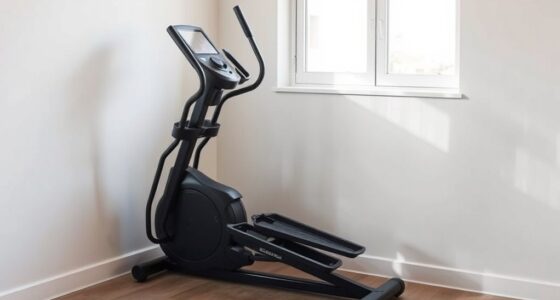
A budget ERG mode trainer should hold target power steadily during structured workouts without making setup or compatibility a headache. I’d put the Wahoo KICKR CORE 2 first for its established ecosystem and bundled Zwift controls, while the CYCPLUS T2H stands out on stated power and gradient capacity and the Saris M2 suits riders who need a wheel-on design. The main tradeoffs are direct-drive stability versus lower setup demands, plus connectivity, cassette needs, and how much resistance range you actually use. Read on for the full breakdown of all six options and how I’d match each one to a rider.

Get sports gear delivered free with Prime
- Fast, free delivery on millions of items
- Prime Video, Amazon Music and more included
- Member-only deals all year
Complete the kit


Key Takeaways
- The Wahoo KICKR CORE 2 is the most balanced pick: its bundled Cog and Click controls give it a clearer ready-to-ride appeal than trainers that may need extra setup or accessories.
- CYCPLUS T2H leads on stated capacity: its 2200W and 20% gradient figures exceed the ThinkRider X2Max’s 2000W and 18%, but those figures alone do not prove smoother ERG control.
- The Saris M2 trades direct-drive simplicity for wheel-on convenience: it can suit riders avoiding cassette installation, while tire pressure and roller setup become part of repeatable workout performance.
- ThinkRider’s two models serve different comparison needs: the X2Max has clear published power and gradient figures, while the XXPRO needs closer spec and compatibility checking before a buyer can rank its fit.
- The COOSPO T10’s belt-driven direct-drive design highlights a practical priority: drivetrain layout and noise expectations can matter more to home riders than headline slope simulation.
| ThinkRider X2Max Smart Bike Trainer, 2000W, Simulates 18% Slope |  | Best Budget ERG-Mode Pick | Maximum power: 2000W | Power accuracy: ±2% | Maximum simulated slope: 18% | VIEW ON AMAZON | See Our Full Breakdown |
| ThinkRider XXPRO Smart Bike Trainer |  | Best for Steep Virtual Climbs | Maximum power: 2500 W | Maximum simulated gradient: 25% | Data accuracy: ±1% claimed | VIEW ON AMAZON | See Our Full Breakdown |
| Saris M2 Smart Indoor Electromagnetic Bike Trainer |  | Best Wheel-On Option | Resistance mechanism: Electromagnetic | Accuracy: ±5% | Connectivity: ANT+ FE-C and Bluetooth | VIEW ON AMAZON | See Our Full Breakdown |
| CYCPLUS T2H Smart Bike Trainer, 2200W, 20% Gradient Simulation |  | Best for Quieter Structured Training | Peak power: 2,200 W | Power accuracy: ±1% | Gradient simulation: Up to 20% | VIEW ON AMAZON | See Our Full Breakdown |
| Wahoo Fitness KICKR CORE 2 ZWIFT COG and Click – Orange Cog 3rd Generation |  | Best Zwift-Ready Setup | Included shifting system: Zwift Cog and Click, 3rd generation | Connectivity: Integrated Wi-Fi | Number of settings: 20 | VIEW ON AMAZON | See Our Full Breakdown |
| COOSPO T10 Belt-Driven Direct Drive Indoor Bike Trainer |  | Best for Quiet, Structured ERG Training | Maximum power: 2200W | Power accuracy: ±2% | Maximum simulated grade: 15% | VIEW ON AMAZON | See Our Full Breakdown |
| budget erg mode trainer | Connectivity | Resistance mechanism | Load capacity | Maximum power |
|---|---|---|---|---|
| ThinkRider X2Max Smart Bike Tr | ANT+ and BLE | Electromagnetic | 240 pounds | 2000W |
| ThinkRider XXPRO Smart Bike Tr | Bluetooth and ANT+ | Electromagnetic | 242 pounds | 2500 W |
| Saris M2 Smart Indoor Electrom | ANT+ FE-C and Bluetooth | Electromagnetic | 300 lbs | — |
| CYCPLUS T2H Smart Bike Trainer | BLE and ANT+ | — | — | — |
| Wahoo Fitness KICKR CORE 2 ZWI | Integrated Wi-Fi | Electronic | 200 pounds | — |
| COOSPO T10 Belt-Driven Direct | Bluetooth FTMS and ANT+ FE-C | — | — | 2200W |
More Details on Our Top Picks
ThinkRider X2Max Smart Bike Trainer, 2000W, Simulates 18% Slope
The X2Max is the most balanced fit here for riders who want a direct-drive trainer for structured indoor sessions without stepping up to the XXPRO’s higher power and gradient claims. Its stated ±2% power accuracy and ANT+ and BLE support suit app-based training, while the 2000W ceiling covers demanding efforts for most riders. The iron frame and 35.2-pound weight point to a stable setup, though that heft makes it less convenient to move than the Saris M2.
There are clear compromises: the cassette is not included, adding a setup purchase, and the listed noise level is about 58 dB at 30 km/h. Unlike the CYCPLUS T2H, the product data does not say that ERG mode is unsupported, but it also does not explicitly confirm ERG compatibility. I’d verify app and firmware support before buying specifically for ERG workouts.
Pros:- ANT+ and BLE connectivity supports a range of cycling apps and devices
- Stated ±2% power accuracy suits structured training better than the Saris M2’s listed ±5%
- Up to 2000W power and 18% slope simulation cover hard efforts and virtual climbs
- Iron frame is designed to provide a stable riding platform
Cons:- Cassette is not included, so setup requires a compatible cassette
- Listed noise level is about 58 dB at 30 km/h
- ERG-mode compatibility is not specified in the supplied product details
Best for: Riders seeking a direct-drive smart trainer for app-based workouts who want stated power accuracy and broad ANT+ and BLE connectivity.
Not ideal for: Buyers who need confirmed ERG-mode support without checking with the manufacturer, or who want a complete setup with a cassette included.
- Maximum power:2000W
- Power accuracy:±2%
- Maximum simulated slope:18%
- Connectivity:ANT+ and BLE
- Resistance mechanism:Electromagnetic
- Noise level:About 58 dB at 30 km/h
- Weight:35.2 pounds
- Load capacity:240 pounds
- Cassette:Not included
Our verdict“Choose the X2Max for a feature-balanced smart-trainer setup, but confirm ERG support and budget for a separate cassette.”
ThinkRider XXPRO Smart Bike Trainer
The XXPRO is the power-and-gradient specialist in this group: its stated 2500W capacity and 25% gradient simulation exceed the X2Max’s 2000W and 18%, giving riders more headroom for steep virtual routes and hard sprints. ThinkRider also claims ±1% data accuracy and no calibration requirement, which could make setup simpler than a trainer that calls for regular calibration. Bluetooth and ANT+ connect it to Zwift, bike computers, and PCs.
Those headline figures do not make it an automatic pick for budget ERG training. The listing does not explicitly confirm ERG mode, and its 26-inch wheel specification plus road-bike compatibility details deserve a fit check before purchase. Compared with the CYCPLUS T2H, the XXPRO offers a higher claimed gradient and self-powered operation, but the CYCPLUS lists a two-year warranty while this model lists one year. I’d choose it for terrain simulation, not on power figures alone.
Pros:- Up to 2500W power and 25% gradient simulation lead the listed ThinkRider X2Max figures
- Manufacturer claims ±1% data accuracy with no calibration requirement
- Bluetooth and ANT+ support connections to cycling apps, computers, and PCs
- Self-powered operation and downhill simulation are listed features
Cons:- ERG-mode compatibility is not specified in the supplied product details
- Listed 26-inch wheel size and road-bike compatibility may not suit every bike
- One-year warranty is shorter than the CYCPLUS T2H’s stated two years
Best for: Road cyclists prioritizing steep virtual climbs, high power headroom, and ANT+ or Bluetooth links to training devices.
Not ideal for: Riders who need explicit confirmation of ERG-mode support, have a bike that does not match the listed compatibility, or want a longer stated warranty.
- Maximum power:2500 W
- Maximum simulated gradient:25%
- Data accuracy:±1% claimed
- Connectivity:Bluetooth and ANT+
- Resistance mechanism:Electromagnetic
- Operation:Self-powered operation available
- Load capacity:242 pounds
- Warranty:1 year
Our verdict“Pick the XXPRO if steep-gradient simulation matters more than confirmed ERG support or a longer warranty.”
Saris M2 Smart Indoor Electromagnetic Bike Trainer
The Saris M2 takes a different route from the direct-drive ThinkRider X2Max and CYCPLUS T2H: it is a wheel-on trainer, so you can leave the rear wheel on the bike. That makes it a practical choice for riders who want less drivetrain setup or share a bike between indoor and outdoor use. ANT+ FE-C and Bluetooth connect it to apps such as Zwift, and the included quick-release skewer helps with compatible setups. Its 300-pound load capacity is also the highest among the products here with a stated limit.
The tradeoff is a less compelling fit for precision-focused ERG sessions: listed accuracy is ±5%, compared with the X2Max’s ±2% and CYCPLUS T2H’s ±1%. It is also listed at 69 dB at 20 mph, so I would not choose it for a noise-sensitive room. The wheel-on convenience is real, but buyers should weigh it against the greater stated accuracy of the direct-drive alternatives.
Pros:- Wheel-on design avoids removing the bike’s rear wheel for indoor sessions
- ANT+ FE-C and Bluetooth connect to indoor cycling apps
- Listed compatibility includes road and mountain bikes with 29-inch wheels
- 300-pound load capacity and limited lifetime warranty are stated
Cons:- Listed ±5% accuracy is less precise than the X2Max and CYCPLUS T2H specifications
- Listed noise level is 69 dB at 20 mph
- Wheel-on setup may require attention to tire and roller contact for consistent use
Best for: Riders who want app-connected indoor training without removing the rear wheel, especially those using a compatible road or mountain bike.
Not ideal for: ERG-focused riders who prioritize tighter stated power accuracy, or people training in a shared or noise-sensitive living space.
- Resistance mechanism:Electromagnetic
- Accuracy:±5%
- Connectivity:ANT+ FE-C and Bluetooth
- Noise level:69 dB at 20 mph
- Bike compatibility:Road and mountain bikes; 29-inch wheel size
- Weight:20 pounds
- Load capacity:300 lbs
- Warranty:Limited lifetime
Our verdict“Choose the Saris M2 for simpler wheel-on setup, not for the tighter stated power accuracy of the direct-drive options.”
CYCPLUS T2H Smart Bike Trainer, 2200W, 20% Gradient Simulation
The T2H pairs ±1% stated power accuracy with noise below 55 dB, making it a strong spec-sheet match for riders who want controlled indoor sessions without the Saris M2’s higher listed noise or wider ±5% accuracy. It supports BLE and ANT+ and simulates gradients up to 20%, placing it between the ThinkRider X2Max and XXPRO for climbing range. A two-year warranty also outlasts the one-year coverage listed for both ThinkRider models.
There is a major caveat for this roundup: the product data explicitly says ERG mode is not compatible. That makes the T2H a poor choice if ERG workouts are the main reason for buying a smart trainer, regardless of its accuracy claim. The cassette is also not included, and virtual shifting requires a separate BC2 Shifter. I’d consider it for quiet app-based riding outside ERG mode, but not as a budget ERG trainer.
Pros:- Listed power accuracy of ±1% is tighter than the X2Max and Saris M2 specifications
- Noise is stated as under 55 dB
- BLE and ANT+ support connections to popular cycling apps
- Two-year warranty is longer than the one-year coverage listed for the ThinkRider trainers
Cons:- Not compatible with ERG mode, which disqualifies it for many structured ERG workouts
- Cassette is not included
- Virtual shifting requires a separately sold CYCPLUS BC2 Shifter
Best for: Indoor cyclists who value quieter operation, app connectivity, and stated power accuracy for non-ERG virtual riding.
Not ideal for: Anyone buying specifically for ERG workouts, or riders who want cassette and virtual-shifting hardware included.
- Peak power:2,200 W
- Power accuracy:±1%
- Gradient simulation:Up to 20%
- Noise level:Under 55 dB
- Connectivity:BLE and ANT+
- Maximum torque:85 N·m
- ERG mode:Not compatible
- Warranty:2 years
- Cassette:Not included
Our verdict“Consider the T2H for quieter, accurate app-based riding, but skip it if ERG mode is a requirement.”
Wahoo Fitness KICKR CORE 2 ZWIFT COG and Click – Orange Cog 3rd Generation
The KICKR CORE 2 bundle stands apart from the ThinkRider X2Max and XXPRO by centering its setup on Zwift Cog and Click, rather than listing headline power and gradient figures. The supplied product details describe easier setup, integrated Wi-Fi for pairing and updates, and a stable platform aimed at structured training. That can suit a new indoor rider who wants a Zwift-focused route into virtual riding without choosing a separate shifting system.
For a budget ERG-mode comparison, the missing technical data is a real limitation: the listing gives no power accuracy, maximum power, gradient simulation, or explicit ERG-mode specification. I can’t rank it above the X2Max for power-based training on the supplied evidence. The Zwift-specific Cog and Click also makes this a less straightforward fit for riders centered on other apps. Its appeal is setup and ecosystem integration, not a verifiable advantage in ERG performance.
Pros:- Includes Zwift Cog and Click, 3rd generation
- Integrated Wi-Fi supports pairing and automatic updates when connected to an active network
- Product details highlight faster setup and a stable ride
- Designed for hard efforts and structured training
Cons:- Supplied product data does not state power accuracy or maximum power
- ERG-mode compatibility and gradient limit are not specified
- Zwift-focused Cog and Click setup may be less suited to riders using other ecosystems
Best for: New indoor cyclists planning to ride primarily on Zwift who value an integrated Cog and Click setup and Wi-Fi connectivity.
Not ideal for: Buyers comparing trainers by confirmed ERG support, power accuracy, or gradient and power limits, since those figures are not provided here.
- Included shifting system:Zwift Cog and Click, 3rd generation
- Connectivity:Integrated Wi-Fi
- Number of settings:20
- Resistance mechanism:Electronic
- Frame material:Alloy steel
- Dimensions:20.4 × 23 × 18.5 inches
- Load capacity:200 pounds
Our verdict“Choose the KICKR CORE 2 bundle for a Zwift-centered setup, but verify ERG support and performance specifications before buying for structured training.”
COOSPO T10 Belt-Driven Direct Drive Indoor Bike Trainer
The COOSPO T10 suits riders whose priority is steady, app-controlled workouts rather than chasing the steepest simulated climbs. Its automatic ERG mode adjusts resistance to hold a power target as cadence changes, making interval sessions easier to follow. The belt-driven direct-drive design is presented as a way to reduce operating noise and routine maintenance, a practical advantage for home training. Its 2200W capacity and ±2% stated accuracy also give it room for hard efforts and power-based plans.
Compared with the CYCPLUS T2H, which simulates a steeper 20% gradient, the T10 tops out at 15%. That makes it less suited to riders who prize virtual climbing, but it still offers broad app compatibility and both Bluetooth FTMS and ANT+ FE-C. The tradeoffs are a cassette sold separately and limited SRAM XDR and Micro Spline compatibility, so check your drivetrain before buying.
Pros:- ERG mode automatically adjusts resistance to hold a selected power target.
- Belt-driven direct-drive system is designed to reduce operating noise and routine maintenance.
- Bluetooth FTMS and ANT+ FE-C support compatible training apps and devices.
- 2200W maximum power and ±2% stated accuracy support demanding workouts and power-based plans.
Cons:- 15% grade simulation is lower than the CYCPLUS T2H’s stated 20% maximum.
- Cassette is not included, adding a separate setup requirement.
- SRAM XDR 12-speed requires a separately sold freehub body, and Micro Spline is not directly compatible.
Best for: Home cyclists who want automatic ERG control for structured intervals, broad app connectivity, and a belt-driven direct-drive setup.
Not ideal for: Riders focused on steep virtual climbs or those with a Micro Spline drivetrain; the simulated grade is 15%, and Micro Spline is not directly compatible.
- Maximum power:2200W
- Power accuracy:±2%
- Maximum simulated grade:15%
- Resistance control:Automatic ERG mode
- Connectivity:Bluetooth FTMS and ANT+ FE-C
- Frame compatibility:5 × 130/135 mm quick-release; 12 × 142/148 mm thru-axle
- Cassette compatibility:Shimano 8–12-speed; SRAM 8–11-speed
- Cassette:Not included
Our verdict“Choose the COOSPO T10 if quiet-leaning, app-controlled ERG workouts matter more than maximum climbing simulation.”

How We Picked
I compared these six trainers through the needs of a budget ERG buyer: whether the design supports controlled indoor workouts, how much setup the format asks of the rider, what the listed resistance and gradient figures suggest about workout range, and how clearly each model fits common home-bike setups. I also weighed practical ownership questions such as cassette or wheel compatibility, app and control needs, and the likelihood of extra accessories affecting the total setup.
The ranking favors a useful balance over the largest specification number. The KICKR CORE 2 leads for its bundled controls and established workout-oriented positioning; the CYCPLUS T2H follows for its stated capacity, with the caveat that peak watts do not establish ERG smoothness. The ThinkRider X2Max and XXPRO, and the COOSPO T10, remain alternatives whose appeal depends on the buyer’s setup and verified compatibility. The Saris M2 ranks as a distinct wheel-on option rather than a direct-drive performance match, since its convenience comes with different setup and tire-related tradeoffs.
| budget erg mode trainer | Power accuracy | Connectivity | Resistance mechanism |
|---|---|---|---|
| ThinkRider X2Max Smart Bike Tr | ±2% | ANT+ and BLE | Electromagnetic |
| ThinkRider XXPRO Smart Bike Tr | — | Bluetooth and ANT+ | Electromagnetic |
| Saris M2 Smart Indoor Electrom | — | ANT+ FE-C and Bluetooth | Electromagnetic |
| CYCPLUS T2H Smart Bike Trainer | ±1% | BLE and ANT+ | — |
| Wahoo Fitness KICKR CORE 2 ZWI | — | Integrated Wi-Fi | Electronic |
| COOSPO T10 Belt-Driven Direct | ±2% | Bluetooth FTMS and ANT+ FE-C | — |
Factors to Consider When Choosing Budget Erg Mode Trainer
Before choosing a trainer, I’d work backward from the workouts and bike you already have. ERG performance matters, but a mismatch in drivetrain, connectivity, or room setup can turn an otherwise capable trainer into a frustrating purchase.
ERG Control Matters More Than Peak Wattage
Peak power and simulated gradient describe the trainer’s ceiling, not how well it holds a steady interval. For ERG workouts, the useful question is whether the trainer and training app can communicate reliably and adjust resistance smoothly as your cadence changes. A high wattage figure may matter for powerful sprint efforts, but it does not by itself promise precise control during threshold blocks. Check whether the apps you plan to use support the trainer’s control protocol, not just basic speed or cadence transmission. Riders focused on structured workouts should favor dependable control and clear compatibility over a bigger headline number.
Choose Direct Drive or Wheel-On Around Your Setup
Direct-drive trainers remove the rear wheel, which avoids tire-to-roller contact and can make workout setup more consistent. They usually require checking cassette compatibility and may call for a suitable freehub body, spacer, or cassette before the bike fits. A wheel-on trainer such as the Saris M2 can reduce drivetrain installation work, but tire type, pressure, and roller tension affect repeatability and may require regular attention. A common mistake is to compare only purchase-day convenience while ignoring the small setup routine before each ride. Pick the format that fits how often you’ll mount the bike and how much maintenance you’re willing to handle.
Check Your Drivetrain Before Ordering
Count the cassette speeds on your bike and check the trainer’s included freehub and cassette details before buying. A trainer that is mechanically compatible may still need a separate cassette, spacers, or a different freehub body, adding setup steps and expense. Also check axle standards, including whether your bike uses a quick-release skewer or a thru-axle, and confirm the required adapters are included. Do not assume a bundled control accessory replaces a compatible bike setup. If you have multiple bikes, list each drivetrain and axle standard first; shared use can change which trainer makes practical sense.
Treat Connectivity as Part of the Trainer
ERG mode depends on more than resistance hardware: the trainer, app, and device must all exchange control data. Check support for the specific protocol your phone, tablet, bike computer, or computer uses, and confirm whether the training platform can set resistance rather than only record it. If your riding space has weak wireless coverage, test the planned device location or consider a connection method supported by both sides. Bundled controls can simplify in-ride changes, but they do not guarantee that every app or workout feature will work. Verify the exact combination you plan to use before relying on a feature listed in general marketing material.
Budget for the Whole Setup, Not Just the Trainer
The trainer is only one part of an indoor setup: a cassette, adapters, mat, fan, and compatible device can affect what you need to get started. Some extras are optional, while drivetrain parts and fit adapters can be required for the first ride. Buyers often focus on maximum resistance and overlook noise, floor vibration, storage space, and the effort of moving a heavy unit. If you ride in a shared home, a stable mat and ventilation may improve daily usability more than a larger gradient figure. Compare the complete setup you need, then decide whether a more convenient bundle or a simpler trainer better fits your routine.
Frequently Asked Questions
Will any of these trainers work with ERG mode in my training app?
Not automatically: the trainer and app need compatible control support, not only a connection that sends ride data. Check the app’s supported-trainer list and confirm that it can control resistance for the exact trainer model. Also check which device will run the app and whether it supports the connection method you plan to use. If you rely on a particular workout platform, verify that pairing before choosing based on power or gradient figures.
Is a wheel-on trainer a better budget choice if I only ride indoors occasionally?
It can be, especially if you value quick bike mounting and want to avoid removing the rear wheel or fitting a cassette. The Saris M2 offers that format in this group, but wheel-on use brings tire pressure and roller tension into the setup routine. Those variables can affect consistency between sessions, which matters for tracking structured workouts. If repeatable ERG sessions are your main goal, weigh that maintenance against the convenience of keeping your drivetrain assembled.
Should I choose the CYCPLUS T2H because it lists the highest power and gradient figures?
Those specifications suggest a wide resistance range, but they do not show how smoothly the trainer responds during ERG intervals. For most structured workouts, reliable app control, compatibility, and steady resistance are more relevant than a maximum figure you may rarely reach. Compare the T2H’s bike fit, included parts, and software support with the alternatives before treating its capacity as decisive. Choose it for the stated headroom if that matters to your riding, not as proof that it is automatically the best ERG trainer.
What should I check before buying a direct-drive trainer for my bike?
Start with cassette speed, freehub compatibility, and axle type, then confirm which cassette, spacers, or adapters come in the box. A direct-drive trainer may fit your frame but still need a different freehub body or additional parts for your drivetrain. Check the manufacturer’s compatibility information for the exact bike rather than assuming that a common axle standard settles the question. If more than one bike will share the trainer, check each one separately before ordering.
Is the Wahoo KICKR CORE 2 a good first ERG trainer, or should a beginner choose a simpler model?
The KICKR CORE 2 is a strong first choice for someone who wants a direct-drive setup and values its bundled Cog and Click controls. A simpler wheel-on design may feel easier to mount, but it comes with tire and roller adjustments that can affect repeatability. Beginners should prioritize a clear path from bike fit to app pairing rather than chasing maximum wattage. If you are uncertain about cassette installation, confirm whether the bundled parts suit your bike or plan for help with setup.
Conclusion
For most riders seeking one capable ERG setup, I’d choose the Wahoo KICKR CORE 2 as best overall, especially if its bundled controls and ecosystem match your devices. The CYCPLUS T2H is my best value-oriented alternative for buyers drawn to its stated power and gradient range, while the Wahoo is the best premium pick in this lineup for a more packaged, workout-ready experience. Beginners who want controls included can start with the KICKR CORE 2; riders who would rather avoid removing the rear wheel should look at the Saris M2. For specific needs, compare the CYCPLUS and ThinkRider X2Max on stated resistance capacity, consider the COOSPO T10 for its belt-driven layout, and verify the ThinkRider XXPRO’s compatibility and specifications before choosing it. The best fit is the one that works with your bike and app without adding setup friction to every ride.
Halloween Picks
halloween
As an affiliate, we earn on qualifying purchases.