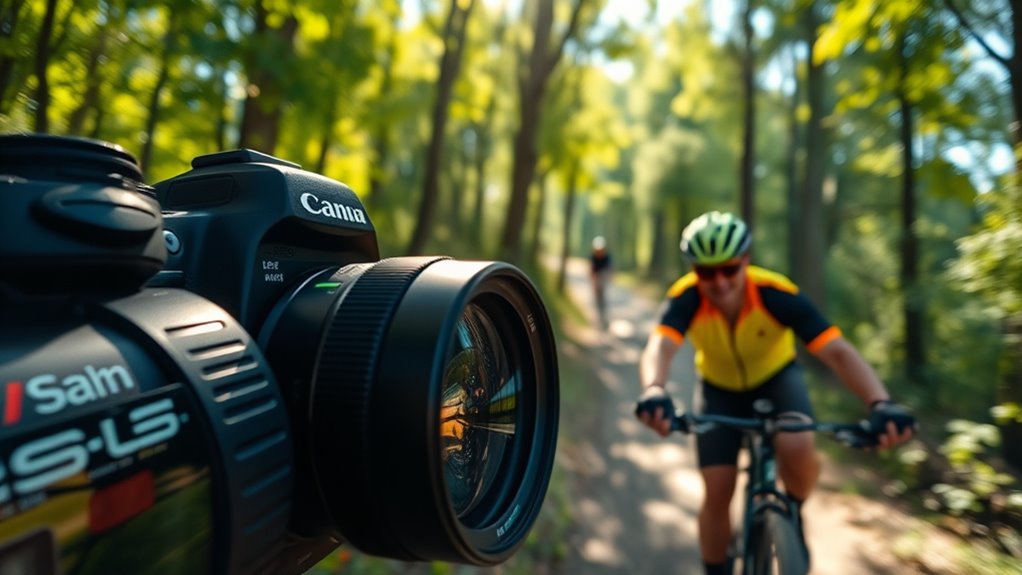

Cycling cameras for safety do two jobs at once: they record what happens behind you and, in many cases, show it live so you can react before a car gets too close. After comparing ten popular options, the Garmin Varia RCT715 stands out as the best overall pick because it combines radar, a tail light, and incident-triggered recording in one integrated unit. The Spedal S1 makes sense for riders who want front-facing 4K footage plus GPS data, while the FEISIKE is the strongest budget choice for a live rear-view monitor. The main tradeoff in this category is between integrated radar systems that cost more and simple camera-and-monitor setups that record well but warn you about nothing. Battery life, mount security, and whether footage is clear enough to identify a license plate also separate the winners from the rest. Keep reading for the full breakdown of each pick and who it suits best.

Get sports gear delivered free with Prime
- Fast, free delivery on millions of items
- Prime Video, Amazon Music and more included
- Member-only deals all year
Complete the kit


Key Takeaways
- Only the Garmin Varia RCT715 pairs a camera with radar detection, which is why it ranks first — recording an incident matters less than knowing a fast-approaching car is behind you before it arrives.
- Live rear-view monitors (FEISIKE, PARKVISION) protect you proactively, while pure recorders (DM01, TIROL) only help after an incident — the roundup showed these are fundamentally different safety tools despite similar price tags.
- Battery capacity claims varied wildly, from the LKT‘s modest 1920mAh to the Asixxsix‘s 5000mAh, but loop recording meant only the radar and monitor units drained noticeably mid-ride.
- Integrated products force compromises: the EKUZO helmet camera is convenient but ties your camera to a single helmet, whereas modular units like the Spedal S1 transfer between bikes.
- Night vision quality was the biggest differentiator among budget picks — several 1080p cameras produce footage fine for daylight claims but too grainy to read plates after dark, which is when many close passes happen.
| PARKVISION Bicycle Rear View Camera Recorder with Loop Recording |  | Best for Long-Distance Riders | Camera angle: 110° | Recording: Loop recording; video only, no audio | Included storage: 32GB Micro SD card (up to 128GB) | VIEW ON AMAZON | See Our Full Breakdown |
| LKT 2K Motorcycle Helmet Camera with 1080P Rear, 64GB Card, WiFi Night Vision |  | Best for Detail Capture | Camera resolution: 2K front, 1080P rear | Battery: 1920mAh, up to 6 hours | Memory card: 64GB included | VIEW ON AMAZON | See Our Full Breakdown |
| FEISIKE Bike Rear View Camera with 4.3″ Monitor, 3X Zoom, 145° Wide Angle, Night Vision |  | Best Rear Visibility System | Display: 4.3-inch IPS | Viewing angle: 145° wide angle | Zoom: 1X, 2X, 3X | VIEW ON AMAZON | See Our Full Breakdown |
| Spedal S1 4K Bike Camera with GPS Tracking, Cycling Computer & Headlight |  | Best Multi-Function Pick | Video resolution: 4K (also 2.7K/1080P) at 30fps | Field of view: 132 degrees | Stabilization: 6-axis EIS | VIEW ON AMAZON | See Our Full Breakdown |
| EKUZO Smart Bike Helmet with Dual Front and Rear Cameras, Bluetooth |  | Best Integrated Design | Front camera: 2K | Rear camera: 1080p | Battery life: Up to 4 hours | VIEW ON AMAZON | See Our Full Breakdown |
| Garmin Varia RCT715 Rearview Radar with Camera & Tail Light |  | Best Premium Safety Ecosystem | Video Resolution: 1080p at 30 fps (720p option) | Radar Range: 153 yards (140 meters) | Included Storage: 16 GB SD card | VIEW ON AMAZON | See Our Full Breakdown |
| Portable Mini Bike Camera Front/Rear with Gravity Anti-Shake, 7H Loop Recording |  | Best Budget All-Rounder | Battery Capacity: 2000mAh | Loop Recording Duration: Up to 7 hours | Storage Support: 8GB–256GB microSD (U3/Class 10 recommended) | VIEW ON AMAZON | See Our Full Breakdown |
| DM01 1080p Motorcycle and Bicycle Dash Cam with WiFi |  | Best for Night Riding | Video Resolution: 1080p | Lens: Front-facing only | Night Vision: Starlight | VIEW ON AMAZON | See Our Full Breakdown |
| TIROL SUPPLIES Ultra-Light 1080p Bike Action Camera with 170° Wide Angle |  | Best Lightweight Pick | Video Resolution: Full HD 1080p | Field of View: 170° | Weight: 41g | VIEW ON AMAZON | See Our Full Breakdown |
| Asixxsix Bike Camera with Tail Light, 1080p Rear-View Video |  | Best Battery Endurance | Video Resolution: 1080p (4K still capture advertised) | Field of View: 140° | Water Resistance: IPX6 | VIEW ON AMAZON | See Our Full Breakdown |
| cycling cameras for safety | Connectivity | Video resolution |
|---|---|---|
| PARKVISION Bicycle Rear View C | — | — |
| LKT 2K Motorcycle Helmet Camer | WiFi, Type-C charging | — |
| FEISIKE Bike Rear View Camera | — | — |
| Spedal S1 4K Bike Camera with | — | 4K (also 2.7K/1080P) at 30fps |
| EKUZO Smart Bike Helmet with D | Bluetooth | — |
| Garmin Varia RCT715 Rearview R | Edge bike computers, select Garmin wearables, Varia app | 1080p at 30 fps (720p option) |
| Portable Mini Bike Camera Fron | WiFi 2.4GHz | — |
| DM01 1080p Motorcycle and Bicy | WiFi via Viidure app | 1080p |
| TIROL SUPPLIES Ultra-Light 108 | Wi-Fi (Sports-Camera app) | Full HD 1080p |
| Asixxsix Bike Camera with Tail | — | 1080p (4K still capture advertised) |
More Details on Our Top Picks
PARKVISION Bicycle Rear View Camera Recorder with Loop Recording
Endurance is the PARKVISION’s defining trait. With an 8000mAh battery rated for up to nine hours, this option outlasts most camera systems in this roundup, including the FEISIKE rear view setup and its 10-hour-but-wired design — here you get nearly a full day of riding without a cable running along your frame. The IP68 rating is also a step above the IP65 Spedal S1, meaning sustained heavy rain is less of a worry. Loop recording keeps evidence of an incident rolling without filling the card, and the 32GB card in the box is enough to start riding the same day. The tradeoff: no audio recording, so if a verbal altercation matters to your evidence, this pick falls short. It also skips cargo bike compatibility, limiting its fit range compared with handlebar-mounted rivals.
Pros:- Up to 9 hours of runtime from the 8000mAh battery
- IP68 housing handles sustained wet-weather riding
- Loop recording continuously preserves the latest footage as evidence
- Detachable 4.3-inch display with tool-free mounting
Cons:- Records video only — no audio capture
- Not compatible with cargo bikes
Best for: Commuters and touring riders who need all-day battery and genuinely waterproof hardware
Not ideal for: Cargo bike owners and riders who want audio evidence captured alongside video
- Camera angle:110°
- Recording:Loop recording; video only, no audio
- Included storage:32GB Micro SD card (up to 128GB)
- Battery:8000mAh, up to 9 hours per charge
- Water resistance:IP68
- Display:4.3 inches, FHD, detachable
- Mount compatibility:17–38mm seatposts; 18–42mm handlebars
- Weight:0.68 kg
Our verdict“Choose this if long rides in unpredictable weather demand a camera that simply never quits — skip it if audio recording or cargo bike fit matters to you.”
LKT 2K Motorcycle Helmet Camera with 1080P Rear, 64GB Card, WiFi Night Vision
When the question is how sharp your evidence footage looks, the LKT makes a strong case. Its Sony-sensor 2K front recording captures plate numbers and faces more reliably than the 1080p-only options elsewhere in this roundup, like the DM01 or the Asixxsix tail-light camera. Pairing it with a 1080P rear channel means both directions of an incident get documented, and the five-to-six hour battery comfortably covers a touring day — though not the nine-hour endurance of the PARKVISION. WiFi app control makes pulling clips off the device far less painful than fumbling with card readers on the roadside. The downsides are procedural rather than fundamental: it wants a full charge before first use, the card may need manual formatting, and mounting options are narrower than bar-mounted competitors.
Pros:- 2K front recording with Sony sensor for identifying detail
- Dual front and rear coverage in one system
- 5–6 hours of recording per charge
- WiFi app control and 64GB card included
Cons:- Requires a full charge and possible card formatting before first ride
- Limited mounting options compared with handlebar systems
Best for: Riders who need high-resolution footage sharp enough to identify plates and faces after an incident
Not ideal for: Casual commuters who want a plug-and-play display, since setup involves charging, formatting, and app pairing before riding
- Camera resolution:2K front, 1080P rear
- Battery:1920mAh, up to 6 hours
- Memory card:64GB included
- Lens angle:15° rear lens
- Connectivity:WiFi, Type-C charging
Our verdict“This pick makes the most sense for riders whose priority is forensic-grade footage quality over convenience.”
FEISIKE Bike Rear View Camera with 4.3″ Monitor, 3X Zoom, 145° Wide Angle, Night Vision
The FEISIKE behaves like a digital mirror, not a dash cam. Its 145° wide-angle lens with 3X zoom feeds a bright 4.3-inch IPS display, letting you check approaching traffic without the shoulder check — something the footage-focused Spedal S1, with its 0.96-inch screen, can’t offer in any practical way. Six infrared lights extend that awareness into night riding, and the 10-hour battery edges out even the PARKVISION’s nine. The catch is architecture: a 2-meter cable connects camera to monitor, so you’ll spend time routing and securing wiring along the frame, and the whole assembly is bulkier than a simple bar-end mirror. IP64 water resistance also sits below the PARKVISION’s IP68, making it less confident in a downpour.
Pros:- Real-time 145° rear view with 3X zoom on a 4.3-inch display
- Six infrared lights for genuine night vision
- Up to 10 hours of battery life
- Fits handlebars and seat tubes on e-bikes, mountain, and road bikes
Cons:- Wired camera-to-display connection requires cable management
- Bulkier than a traditional mirror; IP64 is only splash-ready
Best for: Road commuters who want live rear traffic awareness on a screen instead of constant shoulder checks
Not ideal for: Riders who hate cable clutter or ride in heavy rain regularly — the wired design and IP64 rating work against both
- Display:4.3-inch IPS
- Viewing angle:145° wide angle
- Zoom:1X, 2X, 3X
- Night vision:6 infrared lights
- Battery:6000mAh rechargeable, up to 10 hours
- Cable length:2 meters
- Mount compatibility:Handlebars or seat tubes 18–30 mm
Our verdict“Buy this if seeing traffic behind you in real time matters more than recording it; look elsewhere if weatherproofing and cable-free setups rank higher.”
Spedal S1 4K Bike Camera with GPS Tracking, Cycling Computer & Headlight
The Spedal S1 replaces a drawer full of gadgets. Camera, GPS cycling computer, speedometer, headlight, and incident recorder live in one bar-mounted unit, which no other product here can claim — the LKT records sharper story-telling footage, but it won’t light your path or log your speed. 4K resolution with 6-axis EIS stabilization produces smooth, detailed evidence clips, and 5.5 hours of recording stretches to 11 in light-only mode. Tradeoffs are real: 30fps caps slow-motion playback, GPS takes about a minute to lock, and the 0.96-inch screen is for settings, not reviewing footage — you’ll lean on the WiFi app for that. Compared with the FEISIKE, it prioritizes recording and data over live rear visibility.
Pros:- Five functions in one device cuts handlebar clutter
- 4K recording with 6-axis EIS stabilization
- Up to 5.5 hours recording or 11 hours light-only
- 64GB card included with support up to 512GB
Cons:- Maximum 30fps frame rate limits slow-motion capture
- GPS lock takes about a minute at ride start
- 0.96-inch screen is too small for practical in-ride viewing
Best for: Data-minded commuters and gravel riders who want camera, GPS, and lighting consolidated into one handlebar device
Not ideal for: Riders who want a live rear-view display or slow-motion incident analysis — the tiny screen and 30fps cap rule both out
- Video resolution:4K (also 2.7K/1080P) at 30fps
- Field of view:132 degrees
- Stabilization:6-axis EIS
- Sensor:IMX335, 1/2.8″, night vision
- Battery:USB-C, up to 5.5 hours recording / 11 hours light-only
- Water resistance:IP65
- Storage:64GB SD card included, up to 512GB
- Headlight:3-mode adaptive (Strong/Low/Flash)
Our verdict“This model is better suited to riders who value an all-in-one cockpit over specialist performance in any single category.”
EKUZO Smart Bike Helmet with Dual Front and Rear Cameras, Bluetooth
Mounting the cameras on your helmet removes theft from the equation entirely. The EKUZO records 2K front and 1080p rear footage from wherever your head points, and there’s nothing to detach and pocket when you lock up — a genuine advantage over bar-mounted units like the PARKVISION or Spedal S1, which invite opportunistic theft in the same situation. Automatic recording on power-up means you can’t forget to hit record, and Bluetooth adds calls, navigation prompts, and music. The compromises: four hours of battery is the shortest runtime in this batch, so full-day riders will run dry, the front camera must be manually set to 2K in the app, and opening the app kills the Bluetooth connection. IP5 water resistance is also the weakest rating here.
Pros:- Helmet-mounted cameras are inherently theft-proof at stops
- Dual 2K front and 1080p rear recording starts automatically
- Bluetooth for calls, navigation audio, and music
- Adjustable fit with a 2-year warranty
Cons:- Only 4 hours of battery life — shortest in the lineup
- Front camera must be set to 2K manually in the app
- Opening the app disconnects Bluetooth; IP5 rating is minimal
Best for: Urban commuters who lock their bikes in public and want theft-proof, always-ready dual-camera coverage
Not ideal for: Long-distance riders — the 4-hour battery and IP5 water resistance won’t survive an all-day tour or a proper soak
- Front camera:2K
- Rear camera:1080p
- Battery life:Up to 4 hours
- Water resistance:IP5
- Connectivity:Bluetooth
- Fit range:21–24.8 inches
- Warranty:2 years
Our verdict“Choose this if you already need a new helmet and want built-in recording that can’t be stolen; skip it for long rides or wet climates.”
Garmin Varia RCT715 Rearview Radar with Camera & Tail Light
This model stands out for doing three jobs at once: it warns you about approaching vehicles up to 153 yards behind you, functions as a tail light, and records 1080p incident footage that is automatically saved before, during, and after a detected event. Compared with the Asixxsix camera-and-tail-light combo, the RCT715 adds genuine threat detection rather than passive recording, which is what makes it a true safety device rather than just a witness. The tradeoff is runtime — roughly 4 hours in high-power modes — so all-day riders will need to drop to radar-only or day flash settings. It also leans on the Garmin ecosystem; without an Edge computer or compatible wearable, the radar alerts lose much of their value. This pick makes the most sense for commuters who already ride with Garmin gear.
Pros:- Radar, tail light, and camera integrated into one device
- Incident detection automatically preserves footage before, during, and after events
- 153-yard vehicle detection range gives early warning of fast-approaching traffic
- Ships ready to use with an included 16 GB SD card
Cons:- Battery life caps around 4 hours with radar, light, and 1080p recording running together
- Camera use may be restricted or prohibited in some jurisdictions
Best for: Garmin ecosystem users and commuters who want radar warnings, a tail light, and automatic incident footage in a single seat-post device
Not ideal for: Riders without a Garmin Edge computer or compatible wearable, since radar alerts are largely dependent on a paired display
- Video Resolution:1080p at 30 fps (720p option)
- Radar Range:153 yards (140 meters)
- Included Storage:16 GB SD card
- Battery Life:Up to 4–6 hours depending on mode (with 1080p recording)
- Operating Modes:Always-on, lights and radar only, radar-activated camera
- Connectivity:Edge bike computers, select Garmin wearables, Varia app
Our verdict“If you already own a Garmin Edge and want the closest thing to a complete rear-safety system, this is the one to buy.”
Portable Mini Bike Camera Front/Rear with Gravity Anti-Shake, 7H Loop Recording
For riders who want long recording sessions without a premium price, this mini camera covers the basics well: up to 7 hours of loop recording, anti-shake footage with G-sensor event locking, and an IPX6 waterproof housing. Compared with the TIROL SUPPLIES camera, it trades a slightly heavier 70 g build for far longer runtime and better weather sealing, which matters more for evidence capture on wet commutes than shaving grams. The mounting flexibility — handlebar, helmet, chest strap, or tripod — also makes it double as a travel or security camera. Drawbacks are real: 2.4GHz-only WiFi can struggle with newer phones, and there is no GPS data or advanced electronic stabilization, so license plates in shaky footage may not always be legible. Still, this option offers the best endurance-per-dollar in the lineup.
Pros:- Up to 7 hours of continuous loop recording on a 2000mAh battery
- Anti-shake and G-sensor detection keep footage usable and lock incident clips
- IPX6 waterproofing handles rain and spray without extra housing
- Supports microSD cards up to 256GB for days of storage
Cons:- 2.4GHz-only WiFi may not connect reliably to all current smartphones
- No GPS logging or advanced electronic stabilization
Best for: Budget-minded commuters and touring riders who need all-day loop recording and versatile mounting in one cheap device
Not ideal for: Riders who need GPS-tagged footage or rock-steady 4K clarity for identifying plates, since stabilization and resolution are basic
- Battery Capacity:2000mAh
- Loop Recording Duration:Up to 7 hours
- Storage Support:8GB–256GB microSD (U3/Class 10 recommended)
- Weight:70g
- Connectivity:WiFi 2.4GHz
- Extras:100-lumen flashlight with 3 modes
- Mounting Options:Handlebars, helmet, chest strap, tripod
Our verdict“A sensible pick for anyone whose priority is recording every ride for hours on end without spending much.”
DM01 1080p Motorcycle and Bicycle Dash Cam with WiFi
What separates the DM01 from everything else here is starlight night vision — a genuine advantage for winter commuters or anyone riding after dark, where most budget cameras produce unusable dark smears. Its IP66 rating also beats the IPX6 ratings of the Portable Mini and Asixxsix models, adding dust resistance for gravel and dry-season riding. Compared with those two, however, it records from a front lens only, so it cannot document the rear-end collisions that make up a large share of cycling incidents — a meaningful gap for a safety camera. It also requires a 5V USB power source rather than running on internal battery alone, which suits bikes with a dynamo or power bank but complicates clean cable routing. Riders who prioritize seeing and being recorded at night will accept those limits.
Pros:- Starlight night vision captures usable footage in very low light
- IP66 rating resists both water and dust
- Viidure app supports live preview and file downloads over WiFi
- Includes a 64GB memory card and three mounting options
Cons:- Front-facing lens only, with no rear camera
- Requires a 5V USB power source rather than self-contained battery power
Best for: Night commuters and motorcycle-adjacent riders who need low-light footage and can wire up continuous USB power
Not ideal for: Riders seeking rear-coverage evidence, since the single forward lens leaves the most common collision zone unrecorded
- Video Resolution:1080p
- Lens:Front-facing only
- Night Vision:Starlight
- Water and Dust Resistance:IP66
- Power:5V USB
- Connectivity:WiFi via Viidure app
- Included Storage:64GB TF card
- Mounts:Handlebar, rearview mirror, front hood patch
Our verdict“The clear choice if low-light recording is your priority, provided you accept front-only coverage and external power.”
TIROL SUPPLIES Ultra-Light 1080p Bike Action Camera with 170° Wide Angle
At 41 grams, this is the featherweight of the roundup — light enough for a helmet mount that won’t bob or strain your neck on long rides, and its 170° field of view is the widest here, capturing more of the road context around an incident than the 140° Asixxsix or the front-only DM01. The quick-release mount makes swapping between helmet, handlebar, and seat post fast, and a 32 GB card comes in the box. The compromises are honest ones: resolution tops out at 1080p with no night-vision assist, so it lags the DM01 after dark, and the unstated battery life means buyers should assume frequent recharges rather than all-day recording. This model is better suited to weight-conscious riders and helmet-mount users than to commuters who need hours of uninterrupted evidence footage.
Pros:- Ultra-light 41g build suits helmet mounting without fatigue
- 170° wide-angle view captures maximum road context
- 32 GB SD card included so it works out of the box
- Wi-Fi transfer and app control for quick clip sharing
Cons:- Battery life is not specified, making all-day recording a gamble
- 1080p-only resolution with no night-vision support limits low-light evidence quality
Best for: Weight-obsessed riders and helmet-mount users who want maximum field of view with minimal grams
Not ideal for: All-day commuters who need guaranteed long battery runtime, since no recording-duration figure is provided
- Video Resolution:Full HD 1080p
- Field of View:170°
- Weight:41g
- Included Storage:32 GB SD card
- Connectivity:Wi-Fi (Sports-Camera app)
- Mounting Locations:Helmet, handlebar, or seat post
- Charging:USB rechargeable
Our verdict“Pick this if grams matter more to you than runtime — it is the lightest and widest-view option in the group.”
Asixxsix Bike Camera with Tail Light, 1080p Rear-View Video
If runtime is your deciding factor, this rear-view camera’s 5000mAh battery delivering 8–10 hours of recording beats everything else in this roundup, including the 7-hour Portable Mini. Pairing a rear camera with a six-mode tail light that flashes automatically in low light makes it a legitimate visibility-plus-evidence device, and vibration-triggered emergency locking protects incident clips from loop overwrite — a feature shared with Garmin’s RCT715 at a much lower complexity level. The honest tradeoffs: no memory card ships in the box, so budget for one, and the listing’s mixed messaging between 1080p video and ‘4K’ capture should be treated skeptically — plan on Full HD evidence quality. Compared with the Garmin, you lose radar warning entirely, but gain double-plus the recording time for long-distance and multi-day riders.
Pros:- 5000mAh battery delivers 8–10 hours of recording, the longest in the roundup
- Rear-view camera paired with a six-mode tail light that auto-flashes in low light
- Vibration-triggered emergency video locking protects incident footage
- Supports memory cards up to 512GB with USB-C charging
Cons:- No memory card included, adding to the real cost
- Confusing mix of 1080p video and 4K image-capture claims
Best for: Long-distance and endurance riders who need 8–10 hours of rear coverage plus a working tail light on a single charge
Not ideal for: Buyers wanting plug-and-play simplicity, since a memory card must be purchased separately and spec claims are ambiguously worded
- Video Resolution:1080p (4K still capture advertised)
- Field of View:140°
- Water Resistance:IPX6
- Battery Capacity:5000mAh
- Recording Time:8–10 hours
- Storage Support:Up to 512GB (card not included)
- Charging:USB Type-C
- Tail Light Modes:6, with automatic low-light flashing
- Mount Adjustment:180°
Our verdict“The endurance champion for rear-facing evidence — choose it when recording time matters more than radar or resolution clarity.”

How We Picked
I evaluated every option against one question: does this make a cyclist safer, or just more documented? That split shaped the entire ranking. Products with live monitoring, radar alerts, or visibility features (tail lights, headlight integration) scored higher than pure recorders at the same price, because a camera that warns you of a car 140 meters back prevents the incident the footage would otherwise capture. I then weighed video quality against practicality — resolution and night performance matter, but only if the battery lasts the ride, the mount survives rough roads, and the weatherproofing holds up in rain.
Usability was the third filter: a safety camera you fiddle with at every stoplight is one you’ll stop using, so one-touch operation, reliable loop recording, and easy footage retrieval via WiFi or app counted heavily. Finally, I considered value across the whole lineup — a premium unit like the Varia has to justify its cost with features nothing else offers, while budget picks were judged on whether they deliver dependable daylight footage without gimmicks. Products that hid weak batteries or fragile mounts behind big spec numbers were ranked accordingly.
| cycling cameras for safety | Connectivity |
|---|---|
| PARKVISION Bicycle Rear View C | — |
| LKT 2K Motorcycle Helmet Camer | WiFi, Type-C charging |
| FEISIKE Bike Rear View Camera | — |
| Spedal S1 4K Bike Camera with | — |
| EKUZO Smart Bike Helmet with D | Bluetooth |
| Garmin Varia RCT715 Rearview R | Edge bike computers, select Garmin wearables, Varia app |
| Portable Mini Bike Camera Fron | WiFi 2.4GHz |
| DM01 1080p Motorcycle and Bicy | WiFi via Viidure app |
| TIROL SUPPLIES Ultra-Light 108 | Wi-Fi (Sports-Camera app) |
| Asixxsix Bike Camera with Tail | — |
Factors to Consider When Choosing Cycling Cameras For Safety
Choosing a cycling camera for safety involves more than comparing resolution numbers. The differences between these ten products reveal some bigger patterns worth understanding before you spend anything.
Prevention Versus Evidence
The single biggest decision is whether you want a camera that helps you avoid a collision or one that documents it afterward. Live rear-view monitors and radar units change how you ride in the moment — you can hold your line confidently because you know what’s approaching. Pure recorders, however sharp, only become useful after something has already gone wrong, usually through an insurance claim or police report. Many riders assume a camera is a safety device by default, but a recording alone has never prevented a close pass. If your budget forces a choice, think about whether near-misses or post-incident disputes are your bigger problem, because the answer points to completely different products.
Battery Life Versus Ride Length
Manufacturers quote recording times under ideal conditions — moderate temperatures, screen off, no radar running. Real-world battery life often comes in well below the claimed figure, especially in cold weather or when WiFi and night vision are active. A common mistake is buying a camera rated for your average ride rather than your longest one, then discovering it dies 40 minutes from home. Loop recording softens this for evidence purposes, since footage is preserved continuously, but a dead battery still means zero protection for the return leg. Match the claimed runtime to your longest realistic ride plus a 30 percent margin, and remember that radar and display features draw power the spec sheet may not account for.
Mount Security and Vibration
A safety camera is only as good as its footage, and shaky or stolen footage is worthless. Saddle-rail and seatpost mounts rattle loose over rough roads far faster than handlebar mounts, and plastic quick-release mechanisms are a common failure point after a few months of daily use. Vibration also degrades video enough to make license plates unreadable, which is why electronic stabilization — like the gravity anti-shake in some compact models — matters more than raw resolution. Think about where you park, too: a camera visible on your seatpost is a theft target, so quick-release mounts that let you pocket the unit are a genuine safety feature, not a convenience.
Weatherproofing Ratings in Practice
IPX6, the rating on several picks here, means the camera withstands heavy rain and water jets — fine for commuting. But ratings apply to the unit itself, not its ports, mounts, or cable connections, and water ingress at a USB flap is the most common cause of failure. If you ride through winter or coastal conditions regularly, look at how the charging port is sealed, not just the headline rating. Also consider condensation: sealed units moved between cold outdoors and warm indoors can fog internally, which no IP rating addresses. For fair-weather riders, almost any rating works; for year-round commuters, the enclosure design deserves as much attention as the sensor.
Footage Retrieval and Legal Usefulness
Recording an incident is step one; getting usable footage to police or an insurer is step two, and it’s where cheap cameras often fail. Check whether the device records in a standard format, how easily files transfer (WiFi, app, or card reader), and whether timestamps and GPS coordinates are embedded — location data can matter enormously in a dispute. Some app-based systems require account registration or only export compressed footage, which can blur a plate number that the original file showed clearly. Before buying, read how footage gets off the device, not just how it gets recorded. The best safety camera is one whose evidence you can actually produce the day you need it.
Integrated Versus Modular Setups
Integrated products — helmet cams, camera-plus-light combos — trade flexibility for convenience. The EKUZO helmet, for instance, guarantees you always have a camera because it’s part of your helmet, but you can’t move it to a second helmet, and if the electronics fail you’re replacing head protection too. Modular systems cost more upfront once you add mounts and lights separately, but they transfer between bikes and can be upgraded piece by piece. Riders who use one bike and one helmet tend to be happy with integration; anyone with multiple setups or a growing family of gear should stay modular. This choice also affects crash replacement: a crashed helmet with a built-in camera is a more expensive loss.
Frequently Asked Questions
Is a radar unit like the Garmin Varia RCT715 worth it over a cheaper camera-only option?
That depends on what scares you most on the road. Radar alerts you to vehicles approaching from behind up to 140 meters out, which genuinely changes your riding decisions — moving left early, holding a line, or preparing for a close pass. A camera-only unit at a third of the price records that close pass beautifully but does nothing to help you handle it. If you commute on fast rural or suburban roads where cars appear from distance at speed, radar delivers safety value every single ride. If your routes are slow urban streets where the threat is dooring and junctions rather than rear impacts, a good camera plus awareness of your surroundings covers most of the risk for far less money.
What resolution do I actually need to capture license plates?
Resolution matters less than you’d think — motion blur, vibration, and lighting matter more. A stable 1080p camera at 30fps will usually read a plate in daylight if the vehicle passes within a few meters, while a shaky 4K camera at speed may not. Look for electronic stabilization, a high frame rate for fast passes, and strong low-light performance, since many close passes happen at dusk. Night footage is the real bottleneck: most 1080p units without dedicated night modes produce grain that makes plates unreadable. If plate capture at night is your priority, the LKT with its night vision mode or the radar-assisted Varia, which flags approaching cars so footage is saved and tagged, serve you better than a higher-resolution daylight camera.
Should I record front, rear, or both?
Rear-facing coverage delivers most of the safety value for most riders, because rear-end and close-pass incidents are both common and hard to explain without footage — the driver behind you is the one whose behavior you can’t see. Front footage matters for junction collisions, left hooks, and disputes over who did what, which is why dual-channel units like the LKT and the EKUZO helmet exist. The honest answer is that two cheap cameras (one each direction) often outperform one expensive dual system in reliability. If you can only run one, point it backward unless your local collision statistics or your own near-misses say otherwise. Riders who regularly deal with aggressive drivers at intersections should prioritize front coverage despite this general rule.
Do helmet cameras or bike-mounted cameras protect better?
Bike-mounted rear cameras see what’s actually behind you at a consistent angle, which is what evidence and live monitoring require — that’s why every monitor-and-radar product in this roundup is bike-mounted. Helmet cameras like the EKUZO look where you look, which is great for capturing incidents at junctions and during head checks, but useless as a continuous rear-view. There’s also a durability argument: a camera mounted on your helmet is one more thing to replace after any crash that damages the helmet, and some manufacturers advise replacing the whole unit after impact. Helmet integration wins on convenience — you can never forget it — while bike mounting wins on coverage quality and long-term cost. Choose based on whether you’d rather never forget the camera or never miss what’s behind you.
How long should the battery last, and what happens when it runs out?
Match the claimed runtime to your longest realistic ride plus a buffer, because real-world performance drops in cold weather and when WiFi, radar, or screens run continuously. When a loop-recording camera’s battery dies, nothing dramatic happens — it simply stops recording, and your last few minutes of footage are already saved. That’s acceptable for commuting but a real gap on all-day rides, which is why the Asixxsix with its 5000mAh battery exists, and why some riders carry a small power bank and a short cable. Be aware that charging while recording isn’t supported on every model, and running a cable to a seatpost camera is awkward and can compromise weatherproofing. If you regularly ride beyond four hours, battery capacity should be a primary filter, not an afterthought.
Conclusion
For most riders serious about safety, the Garmin Varia RCT715 is the best overall choice — it’s the only pick that warns you before a car reaches you while also capturing incident footage, which is worth the premium if you ride fast roads regularly. The FEISIKE earns best value: a live 4.3-inch rear view with night vision at a budget price delivers genuine preventive safety that recorders twice the cost can’t match. For premium buyers who want front evidence and ride data too, the Spedal S1 bundles 4K recording, GPS, and a headlight into a single cockpit-worthy unit.
Beginners should start with the PARKVISION — loop recording and simple setup mean you install it once and forget it, which is exactly what a first safety camera should demand. For specific needs: commuters riding after dark get the most from the LKT’s night vision, long-distance riders should look at the Asixxsix’s 5000mAh battery, minimalists will appreciate the TIROL’s ultra-light simplicity, the DM01 suits riders who want WiFi footage retrieval on a tight budget, and the EKUZO helmet fits those who want coverage they can never forget to bring. Whichever you choose, remember the pattern this comparison revealed: a camera that warns you beats a camera that only remembers.