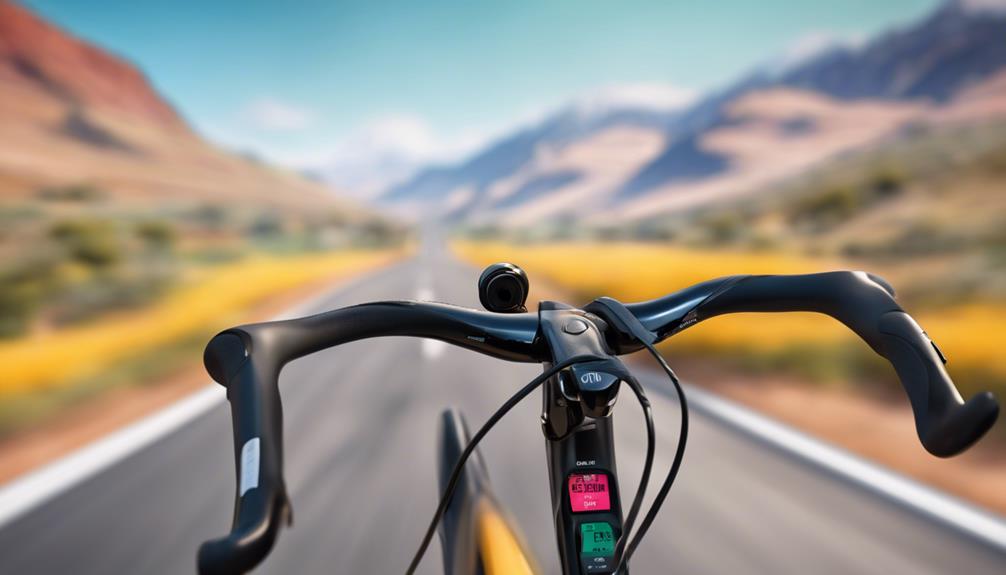
Choosing the right cycling computer for your road bike can significantly enhance your riding experience, providing accurate metrics, navigation, and connectivity. The Garmin Edge 1050 Premium stands out as the best overall due to its advanced features and reliable performance. For those seeking a compact yet powerful option, the Garmin Edge 850 offers a great balance of size and functionality. Budget-conscious riders might prefer the iGPSPORT BSC100S for its affordability and waterproof design. However, tradeoffs in display size, battery life, and feature sets mean you should consider your specific riding needs carefully. Keep reading for a detailed breakdown of each model to find the best fit for your cycling style.

Get sports gear delivered free — and shop member deals
- Fast, free delivery on millions of items
- Access to Prime Big Deal Days deals on October 6–7
- Prime Video, Amazon Music and more included
Complete the kit


Key Takeaways
- Top models like the Garmin Edge 1050 excel in navigation and feature set, justifying their higher price points.
- Display size and readability vary; larger screens like the BSC500 make it easier to view data at a glance, especially on fast descents.
- Waterproofing and durability are essential for outdoor use; models like the COOSPO CS600 and BSC100S excel here.
- Battery life ranges significantly—compact units may need frequent charging, while premium models offer longer endurance.
- Connectivity options such as Bluetooth and ANT+ are standard now, but compatibility with your sensors and apps varies; choose accordingly.
| Garmin Edge 1050 Premium Cycling Computer |  | Best Overall for Serious Cyclists | Display: Color touchscreen | Battery Life: Up to 20 hours (standard), up to 60 hours (battery saver mode) | Connectivity: Smartphone, Garmin Connect, Garmin Pay | VIEW ON AMAZON | See Our Full Breakdown |
| iGPSPORT BSC200S GPS Bike Computer, Wireless Route Navigation, 2.4” Screen, Bluetooth, ANT+, IPX7 Waterproof |  | Best Value for Versatile Riders | Display: 2.4 inches | Battery Life: Up to 25 hours | Waterproof: IPX7 | VIEW ON AMAZON | See Our Full Breakdown |
| iGPSPORT BSC100S GPS Bike Computer Wireless, 2.6” LCD Display, Waterproof, Bluetooth & ANT+ |  | Best for Extended, Weather-Resistant Tracking | Screen Size: 2.6 inches | Battery Life: 40 hours | Waterproof Grade: IPX7 | VIEW ON AMAZON | See Our Full Breakdown |
| Garmin Edge 850 Compact GPS Cycling Computer |  | Best Compact Device with Advanced Navigation | Display: Vivid color touchscreen | Battery Life: Up to 36 hours in battery saver | Maps: Preloaded for road, gravel, trail | VIEW ON AMAZON | See Our Full Breakdown |
| iGPSPORT BSC500 GPS Bike Computer, 3.3” Touch Screen with Voice Navigation |  | Best Large Screen with Voice Guidance | Screen Size: 3.3 inches | Satellite Support: GPS, Beidou, GLONASS, Galileo, QZSS | Navigation: Voice prompts, route planning | VIEW ON AMAZON | See Our Full Breakdown |
| Garmin Edge 550 GPS Cycling Computer |  | Best Overall for Versatile Road Cycling | Display: Vivid color display | Battery life: Up to 36 hours in battery saver mode | Navigation: Preloaded maps for road, gravel, and trails | VIEW ON AMAZON | See Our Full Breakdown |
| COOSPO Bike Computer GPS Wireless with ANT+ and Bluetooth, 2.4-inch LCD Screen, IP67 Waterproof |  | Best Value for All-Weather Outdoor Riding | Display Size: 5.84 centimeters | Display: LCD | Battery Life: 80 hours | VIEW ON AMAZON | See Our Full Breakdown |
| Garmin Edge 540, Compact GPS Cycling Computer | 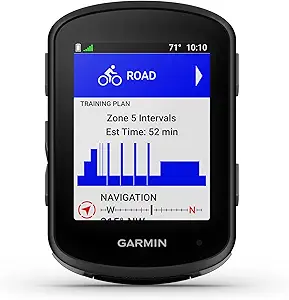 | Best for Challenging Terrain and Advanced Training | Battery Life: Up to 26 hours, 42 hours in battery saver | Navigation: Multi-band GNSS technology | Display: Button controls suitable for all conditions | VIEW ON AMAZON | See Our Full Breakdown |
| Wahoo ELEMNT Bolt V3 GPS Cycling/Bike Computer, Black |  | Best for Performance-Oriented Riders Who Value Simplicity | Screen Size: 2.2 inches | Display: Color with ambient light sensor | Battery Life: 15 hours | VIEW ON AMAZON | See Our Full Breakdown |
| CYCPLUS Wireless GPS Bike Computer G1 | 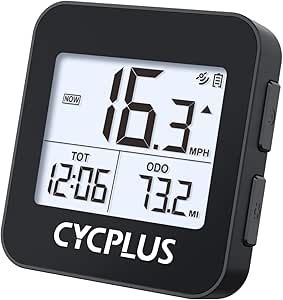 | Best for Long Battery Life and Simplicity | Weight: 70g | Screen Size: 2.0 inches | Waterproof Rating: IPX6 | VIEW ON AMAZON | See Our Full Breakdown |
| COOSPO Color Touchscreen GPS Bike Computer CS600 |  | Best for Professional-Grade Customization and Multi-Day Rides | Display: 2.4-inch high-resolution color touchscreen | Waterproof: IPX7 | Battery Life: 36 hours | VIEW ON AMAZON | See Our Full Breakdown |
| Garmin Edge Explore 2 GPS Cycling Computer |  | Best for Ease of Use and Safety Features | Display: 3-inch high-resolution touchscreen | Navigation: Turn-by-turn, bike-specific maps | Connectivity: Smartphone pairing, LiveTrack, GroupTrack, notifications | VIEW ON AMAZON | See Our Full Breakdown |
| cycling computers for road bike | Battery Life | Display | Connectivity | Navigation |
|---|---|---|---|---|
| Garmin Edge 1050 Premium Cycli | Up to 20 hours (standard), up to 60 hours (battery saver mode) | Color touchscreen | Smartphone, Garmin Connect, Garmin Pay | — |
| iGPSPORT BSC200S GPS Bike Comp | Up to 25 hours | 2.4 inches | — | — |
| iGPSPORT BSC100S GPS Bike Comp | 40 hours | — | — | — |
| Garmin Edge 850 Compact GPS Cy | Up to 36 hours in battery saver | Vivid color touchscreen | Smartphone alerts, Garmin Pay | — |
| iGPSPORT BSC500 GPS Bike Compu | — | — | Supports route imports from apps | Voice prompts, route planning |
| Garmin Edge 550 GPS Cycling Co | Up to 36 hours in battery saver mode | Vivid color display | Smart alerts, incident detection, LiveTrack, in-ride messaging | Preloaded maps for road, gravel, and trails |
| COOSPO Bike Computer GPS Wirel | 80 hours | LCD | ANT+ and Bluetooth | — |
| Garmin Edge 540 | Up to 26 hours, 42 hours in battery saver | Button controls suitable for all conditions | — | Multi-band GNSS technology |
| Wahoo ELEMNT Bolt V3 GPS Cycli | 15 hours | Color with ambient light sensor | Bluetooth Smart, ANT+, WiFi | Turn-by-turn, route generation |
| CYCPLUS Wireless GPS Bike Comp | Over 55 hours | — | — | — |
| COOSPO Color Touchscreen GPS B | 36 hours | 2.4-inch high-resolution color touchscreen | Bluetooth, ANT+ | Built-in route navigation |
| Garmin Edge Explore 2 GPS Cycl | — | 3-inch high-resolution touchscreen | Smartphone pairing, LiveTrack, GroupTrack, notifications | Turn-by-turn, bike-specific maps |
More Details on Our Top Picks
Garmin Edge 1050 Premium Cycling Computer
The Garmin Edge 1050 stands out for its vivid color touchscreen, making navigation and data access straightforward for riders who want comprehensive information at a glance. Its long battery life—up to 20 hours standard, with an extended 60-hour battery saver mode—supports long-distance rides without worry. Compared with the Garmin Edge 850, it offers more advanced smart features like contactless payments and hazard alerts, but this comes with a higher price tag and increased complexity. Its reliance on compatible sensors and smartphone connectivity means it’s ideal for dedicated cyclists who prioritize performance metrics and integrated features, rather than casual riders seeking simplicity.
Pros:- Vivid color touchscreen for easy, intuitive navigation
- Exceptional battery life for long rides
- Advanced features like hazard alerts and live tracking
- Customizable workouts and coaching options
Cons:- Premium price may be prohibitive for casual users
- Features can be complex, requiring time to learn
- Heavy reliance on smartphone and sensor compatibility
Best for: Serious road cyclists who want a feature-rich, durable device with extensive navigation and training tools.
Not ideal for: Casual riders or beginners who prefer a straightforward device without steep learning curves or premium costs.
- Display:Color touchscreen
- Battery Life:Up to 20 hours (standard), up to 60 hours (battery saver mode)
- Connectivity:Smartphone, Garmin Connect, Garmin Pay
- Features:Navigation, course creation, hazard alerts, incident detection, live tracking, in-ride messaging, leaderboards, personalized coaching, ClimbPro, power guide
Our verdict“This device is best suited for dedicated cyclists who want top-tier features and are comfortable with its complexity.”
iGPSPORT BSC200S GPS Bike Computer, Wireless Route Navigation, 2.4” Screen, Bluetooth, ANT+, IPX7 Waterproof
The iGPSPORT BSC200S provides a balanced mix of core navigation and data features with a straightforward 2.4-inch display, making it a practical choice for riders seeking reliability without the premium price of Garmin’s high-end models like the Edge 1050. Its long battery life of up to 25 hours and support for third-party app integration—such as Strava and Komoot—add to its versatility, especially for riders who prefer customizing routes from multiple sources. While the smaller screen may be a drawback compared to larger displays like the BSC500, it still delivers clear sunlight readability and supports connecting with lights and radar for safety. Setup, however, requires a smartphone app, which could be a barrier for some users.
Pros:- Long battery life of up to 25 hours
- Supports route import and customization from multiple apps
- Clear sunlight-readable display
- Supports connection with lights and radar for safety
Cons:- Requires smartphone app for full setup
- Limited to a 2.4-inch screen, which might be small for some users
- Less advanced features than premium models like Garmin Edge 1050
Best for: Budget-conscious cyclists who want reliable navigation and data tracking with extended battery life.
Not ideal for: Riders who prefer large, touchscreen displays or those who dislike smartphone-dependent setup and interface.
- Display:2.4 inches
- Battery Life:Up to 25 hours
- Waterproof:IPX7
- Supported Apps:iGPSPORT, Strava, Ride with GPS, Komoot
Our verdict“This pick offers excellent value for riders wanting dependable navigation and connectivity without extra bells and whistles.”
iGPSPORT BSC100S GPS Bike Computer Wireless, 2.6” LCD Display, Waterproof, Bluetooth & ANT+
The iGPSPORT BSC100S combines a larger 2.6-inch LCD with support for over 40 riding data metrics, making it ideal for riders who want detailed insights without the complexity of premium devices like the Garmin Edge 850. Its long battery life of up to 40 hours allows for multi-day rides or extended training sessions. Its waterproof IPX7 rating ensures reliable use in harsh weather, and the physical buttons provide an easy interface for quick data checks. Compared to the BSC200S, it offers a bigger screen and longer endurance, but it lacks a touchscreen, which may be less intuitive for some users. The interface is limited to English, and it requires compatible sensors for full functionality.
Pros:- Supports over 40 data metrics for detailed analysis
- Long battery life of 40 hours for extended rides
- Waterproof design for all-weather riding
- Supports multiple satellite systems for accurate positioning
Cons:- No touchscreen, only physical buttons
- Limited to English interface
- Requires compatible sensors for full data collection
Best for: Riders seeking comprehensive data with durability and long battery life, especially in variable weather conditions.
Not ideal for: Those who prefer touchscreens or multilingual interfaces, or casual cyclists who don’t need extensive data metrics.
- Screen Size:2.6 inches
- Battery Life:40 hours
- Waterproof Grade:IPX7
- Supported Sensors:speed, cadence, heart rate, power meter (BLE/ANT+)
Our verdict“Best suited for serious riders needing durability, extended tracking, and extensive data metrics in all weather conditions.”
Garmin Edge 850 Compact GPS Cycling Computer
The Garmin Edge 850 delivers a smaller footprint without sacrificing key features like a vivid color touchscreen, preloaded multi-terrain maps, and multi-band GPS with 5 Hz recording. Its 36-hour battery life in battery saver mode makes it suitable for long rides, and its smart features—alerts, weather, payments—are comparable to the Edge 1050 but in a more portable form. The extensive map coverage makes it a strong choice for riders exploring varied terrains, yet its complexity and premium price might deter casual users. Its heavy reliance on the Garmin app ecosystem means some users could find it less intuitive than simpler models like the BSC200S.
Pros:- Vivid color touchscreen for easy navigation
- Preloaded maps for multiple terrains
- Long battery life in battery saver mode
- Smart alerts and contactless payments
Cons:- Complex feature set may require some learning
- Premium price point for casual users
- Heavy reliance on the smartphone app ecosystem
Best for: Riders wanting a compact, feature-rich device capable of detailed navigation across different terrains.
Not ideal for: Beginners or riders seeking a simple, no-frills device or those on a tight budget.
- Display:Vivid color touchscreen
- Battery Life:Up to 36 hours in battery saver
- Maps:Preloaded for road, gravel, trail
- Connectivity:Smartphone alerts, Garmin Pay
Our verdict“This device fits cyclists who prioritize compact size and advanced navigation features over simplicity and cost.”
iGPSPORT BSC500 GPS Bike Computer, 3.3” Touch Screen with Voice Navigation
The iGPSPORT BSC500 offers a sizable 3.3-inch touchscreen, making it easy to view maps and data during rides. Its support for multiple satellite systems, including GPS, Beidou, GLONASS, and Galileo, ensures accurate positioning even in challenging environments. Voice navigation adds a layer of safety by reducing the need to look at the screen, which is especially useful for complex routes. Its route import capabilities from third-party apps like Strava and Komoot make it flexible for different training plans. However, the device’s complexity might intimidate less tech-savvy riders, and the absence of waterproof specifications or detailed battery life info could be a concern for outdoor use.
Pros:- Large 3.3-inch touchscreen with clear visuals
- Supports multiple satellite systems for optimal accuracy
- Voice prompts enhance safety and convenience
- Supports route import from popular third-party apps
Cons:- Features may require a learning curve
- No waterproof rating mentioned
- Battery life details are not specified
Best for: Cyclists who prefer a large, easy-to-read display and voice-guided navigation for complex routes and training.
Not ideal for: Riders seeking a simple device or those who ride in heavy rain without confirmation of weather resistance.
- Screen Size:3.3 inches
- Satellite Support:GPS, Beidou, GLONASS, Galileo, QZSS
- Navigation:Voice prompts, route planning
- Connectivity:Supports route imports from apps
Our verdict“Ideal for tech-savvy riders who want a large display with voice navigation for complex or extended rides.”
Garmin Edge 550 GPS Cycling Computer
The Garmin Edge 550 stands out as the most well-rounded option in this lineup, combining advanced navigation with performance tracking in a compact design. Its vivid color display and easy-to-use buttons make it accessible for riders who want quick access to data, while the preloaded maps support a variety of terrains from road to gravel. Compared with the Edge 540, it offers longer battery life—up to 36 hours in saver mode—and comprehensive smart connectivity, including hazard alerts and LiveTrack. However, its setup can be daunting for newcomers, and it relies heavily on a smartphone app for full functionality. This device is ideal for serious cyclists who want reliable navigation and performance metrics without sacrificing portability, but it might be overkill for casual riders or those new to cycling computers.
Pros:- Vivid color display with intuitive button controls
- Preloaded maps for multiple terrains
- Long battery life up to 36 hours
- Smart connectivity with hazard alerts and LiveTrack
Cons:- Complex setup process for first-time users
- Requires a compatible smartphone for full features
- Limited detailed metrics without additional sensors
Best for: Experienced road cyclists seeking a reliable, feature-rich navigation device with long battery life.
Not ideal for: Beginners or casual riders who prefer a simpler, plug-and-play device without complex setup or extensive features.
- Display:Vivid color display
- Battery life:Up to 36 hours in battery saver mode
- Navigation:Preloaded maps for road, gravel, and trails
- GPS accuracy:Multi-band GPS with automatic 5 Hz recording
- Connectivity:Smart alerts, incident detection, LiveTrack, in-ride messaging
- Compatibility:Requires compatible smartphone and Garmin Connect app
Our verdict“This pick suits experienced cyclists who want a versatile, long-lasting GPS with comprehensive navigation and connectivity features.”
COOSPO Bike Computer GPS Wireless with ANT+ and Bluetooth, 2.4-inch LCD Screen, IP67 Waterproof
The COOSPO GPS bike computer offers a compelling balance of accuracy and durability, making it ideal for riders who want reliable data without the higher price tag of premium models like the Garmin Edge 550 or Edge 540. Its dual-mode GPS ensures precise positioning across various environments, and support for ANT+ and Bluetooth sensors expands its versatility. The sunlight-readable 2.4-inch LCD and automatic backlight improve visibility during daytime rides, even in challenging weather. While setup is straightforward, the device doesn’t come with sensors or out-front mounts, which means additional purchases are necessary. This model is best suited for riders who value extensive battery life—up to 80 hours—and waterproofing, but it may feel limiting for those who want detailed metrics or integrated training features out of the box.
Pros:- Accurate dual-mode GPS positioning
- Supports multiple sensors via ANT+ and Bluetooth
- Large, sunlight-readable LCD display
- Waterproof IP67 rating for all weather conditions
Cons:- Initial GPS fix can take 3-5 minutes
- No sensors or accessories included; additional purchases needed
- Limited advanced training features
Best for: Budget-conscious cyclists who need a durable, high-capacity GPS computer for long outdoor adventures.
Not ideal for: Casual or beginner riders who want a simple, all-in-one device with preloaded training plans and detailed metrics.
- Display Size:5.84 centimeters
- Display:LCD
- Battery Life:80 hours
- Waterproof Rating:IP67
- Sensor Type:Cadence, GPS, Heart Rate, Speed
- Connectivity:ANT+ and Bluetooth
Our verdict“This device is perfect for riders seeking a rugged, long-lasting GPS with broad sensor support at a budget-friendly price point.”
Garmin Edge 540, Compact GPS Cycling Computer
The Garmin Edge 540 combines advanced multi-band GNSS technology with a compact form factor, making it a favorite for riders tackling demanding routes or seeking detailed performance data. Its multi-band GNSS ensures precise positioning even in challenging environments like dense forests or urban canyons, outperforming the Edge 550 in accuracy. The device’s personalized coaching and ride-specific maps make it suitable for riders who want to improve their skills, while the longer 42-hour battery in battery saver mode supports extended outings. However, its setup can be intimidating due to the numerous features, and the small display size might not suit all users. This model appeals to serious cyclists who need high accuracy and training tools but may be too complex or expensive for casual riders.
Pros:- Multi-band GNSS for superior accuracy
- Extended battery life up to 42 hours in battery saver mode
- Personalized coaching and detailed ride metrics
- Ride-specific maps for varied terrains
Cons:- Complex setup with many features to learn
- Small screen size may limit visibility
- Premium price may be prohibitive for some
Best for: Advanced cyclists engaging in challenging terrains or seeking detailed performance analytics and coaching.
Not ideal for: Beginners or casual riders who prefer a straightforward device with minimal setup and basic features.
- Battery Life:Up to 26 hours, 42 hours in battery saver
- Navigation:Multi-band GNSS technology
- Display:Button controls suitable for all conditions
- Features:Personalized coaching, climb and grade info, stamina insights
Our verdict“This device targets experienced riders who need precise navigation and coaching in demanding environments, accepting the complexity for added accuracy.”
Wahoo ELEMNT Bolt V3 GPS Cycling/Bike Computer, Black
The Wahoo ELEMNT Bolt V3 stands out for its sleek, minimalistic design and user-friendly interface, making it ideal for cyclists who prioritize ease of use over extensive features. Its bright 2.2-inch color screen with ambient light sensor ensures good visibility without complexity, while on-device turn-by-turn navigation and automatic route downloads streamline the riding experience. Compared with Garmin’s models, it offers seamless integration with popular apps like Strava and Ride With GPS, plus ANT+ radar support for safety. The 15-hour battery is suitable for most rides but falls behind the longer-lasting options. This device is best for performance riders who want straightforward, reliable navigation with minimal fuss, but it may not satisfy those looking for in-depth metrics or multi-day rides without charging.
Pros:- Bright, ambient light sensor for easy visibility
- Advanced turn-by-turn navigation and route creation
- Wireless route downloads and workout uploads
- Supports ANT+ radar for safety
Cons:- Limited to cycling; not suitable for other outdoor activities
- Complex setup may challenge beginners
- Price may be high for casual users
Best for: Performance-focused cyclists who want simple, effective navigation and connectivity in a lightweight package.
Not ideal for: Casual riders or multi-day tourers who need extended battery life or comprehensive training features.
- Screen Size:2.2 inches
- Display:Color with ambient light sensor
- Battery Life:15 hours
- Connectivity:Bluetooth Smart, ANT+, WiFi
- Navigation:Turn-by-turn, route generation
- Compatibility:Strava, Ride With GPS, Komoot
Our verdict“This device is well-suited for competitive or performance cyclists seeking reliable navigation with a sleek, simple interface.”
CYCPLUS Wireless GPS Bike Computer G1
The CYCPLUS G1 distinguishes itself through its impressive battery capacity, offering over 55 hours of continuous use, making it ideal for long-distance riders or multi-day cyclists. Its straightforward 2.0-inch screen provides essential cycling data without the distraction of complex menus, and its IPX6 waterproof rating ensures durability in various weather conditions. Compared with more feature-rich options like the Garmin Edge 550, it lacks advanced navigation or training metrics, focusing instead on core GPS tracking. The absence of a touchscreen and reliance on physical buttons might be less appealing to tech-savvy users, but the device’s simplicity benefits those who want a reliable, no-fuss device. This is best for riders who prioritize battery longevity and basic data over extensive features or detailed analytics.
Pros:- Over 55 hours of battery life
- High-accuracy GPS tracking
- IPX6 waterproof for all weather riding
- Automatic backlight and sleep mode
Cons:- Limited to basic cycling data; no advanced metrics
- No touchscreen; less intuitive for some users
- Requires familiarity with GPS devices
Best for: Long-distance or multi-day cyclists needing a lightweight, durable GPS with exceptional battery life.
Not ideal for: Casual riders or those seeking detailed training metrics and interactive features.
- Weight:70g
- Screen Size:2.0 inches
- Waterproof Rating:IPX6
- Battery Capacity:1200mAh
- Battery Life:Over 55 hours
Our verdict“This device excels for long-distance cyclists who want reliable GPS tracking with minimal fuss and maximum endurance, but it offers fewer training tools than premium models.”
COOSPO Color Touchscreen GPS Bike Computer CS600
The COOSPO CS600 stands out for its vibrant 2.4-inch high-resolution color touchscreen, making it easy to customize data displays and monitor ride performance in real time. Compared with the Garmin Edge Explore 2, which offers a more user-friendly interface and preloaded bike-specific maps, the CS600 excels in long battery life and seamless app syncing, ideal for multi-day rides or extended training sessions. However, it lacks built-in sensors, requiring separate purchases for cadence, heart rate, or power, which could complicate setup for some riders. Its waterproof IPX7 rating ensures durability in all weather conditions, but the absence of included mounting accessories means additional gear is needed to mount it securely. This option is best suited for riders who prioritize detailed data customization and long endurance rides with a flexible, app-connected device.
Pros:- Vivid, high-resolution color touchscreen with auto-backlight for easy reading
- Long-lasting 36-hour battery suitable for multi-day events
- Seamless wireless sync with popular cycling apps for detailed analysis
- Built-in route navigation for complex or unfamiliar trails
Cons:- Requires separate purchase for sensors like cadence or heart rate
- No included mounting accessories, adding to initial setup cost
- No preloaded maps or trail points of interest
Best for: Professional cyclists or serious enthusiasts who want customizable data displays and extended ride tracking capabilities
Not ideal for: Casual riders or beginners who prefer an all-in-one device with pre-installed maps and simpler setup
- Display:2.4-inch high-resolution color touchscreen
- Waterproof:IPX7
- Battery Life:36 hours
- Charging:2-hour Type-C
- Connectivity:Bluetooth, ANT+
- Navigation:Built-in route navigation
- Compatibility:Pair with smart bike lights, radar tail lights, e-bikes, electronic shifters, indoor trainers
Our verdict“This pick is ideal for experienced cyclists seeking detailed customization and long-term ride data, but less so for those wanting all-in-one simplicity.”
Garmin Edge Explore 2 GPS Cycling Computer
The Garmin Edge Explore 2 shines with its straightforward 3-inch high-resolution touchscreen that is glove- and rain-friendly, making it especially accessible for riders who want quick, reliable navigation. Unlike the COOSPO CS600, which emphasizes customization and long battery life, the Explore 2 offers preloaded bike-specific maps, points of interest, and safety features like incident detection and assistance alerts—crucial for solo or adventure riders. Its seamless smartphone connectivity allows for live tracking and smart notifications, but full safety features depend on initial setup and pairing, which can be a hassle for some users. Compatibility with sensors and Varia devices is sold separately, adding to the overall cost if advanced monitoring is desired. This device best serves riders who prioritize user-friendly navigation and safety without complex customization.
Pros:- Bright, glove- and rain-friendly 3-inch touchscreen for quick interaction
- Preloaded with detailed bike maps and points of interest for easy navigation
- Safety features like incident detection and assistance alerts for peace of mind
- Seamless smartphone pairing for live tracking and notifications
Cons:- Requires setup and smartphone connection for full safety features
- Compatibility with sensors and Varia devices is sold separately
- Less customizable data fields compared to some competitors
Best for: Casual riders, commuters, or adventure cyclists who want reliable, easy-to-use navigation with safety alerts
Not ideal for: Advanced racers or tech-savvy cyclists seeking detailed data customization and integration with multiple sensors
- Display:3-inch high-resolution touchscreen
- Navigation:Turn-by-turn, bike-specific maps
- Connectivity:Smartphone pairing, LiveTrack, GroupTrack, notifications
- Safety Features:Incident detection, assistance alerts
- Compatibility:Sensors and Varia devices sold separately
- Indoor Use:Pair with smartphone, control music
Our verdict“This device is perfect for riders who want simple, safe navigation with minimal fuss, but may lack advanced data options for performance-focused cyclists.”

How We Picked
Our evaluation focused on key factors that matter most to road cyclists: performance accuracy, ease of use, build quality, display readability, and feature set. We prioritized models that offer reliable GPS tracking, intuitive interfaces, and durable construction for outdoor conditions. Cost was also a consideration, balancing affordability with value. We ranked products higher if they provided a good mix of advanced features without overwhelming beginners or adding unnecessary complexity. Ultimately, our goal was to identify options that suit different riding styles and budgets while maintaining high quality and usability.
| cycling computers for road bike | Navigation |
|---|---|
| Garmin Edge 1050 Premium Cycli | — |
| iGPSPORT BSC200S GPS Bike Comp | — |
| iGPSPORT BSC100S GPS Bike Comp | — |
| Garmin Edge 850 Compact GPS Cy | — |
| iGPSPORT BSC500 GPS Bike Compu | Voice prompts, route planning |
| Garmin Edge 550 GPS Cycling Co | Preloaded maps for road, gravel, and trails |
| COOSPO Bike Computer GPS Wirel | — |
| Garmin Edge 540 | Multi-band GNSS technology |
| Wahoo ELEMNT Bolt V3 GPS Cycli | Turn-by-turn, route generation |
| CYCPLUS Wireless GPS Bike Comp | — |
| COOSPO Color Touchscreen GPS B | Built-in route navigation |
| Garmin Edge Explore 2 GPS Cycl | Turn-by-turn, bike-specific maps |
Factors to Consider When Choosing Cycling Computers For Road Bikes
When selecting a cycling computer for road biking, it’s important to consider several factors beyond just the features listed on the box. Your riding style, budget, and technical comfort level influence what will work best. Here are key considerations to guide your decision:
Display Size and Readability
Large, high-contrast screens make it easier to view stats on the move, especially during fast descents or bright sunlight. Smaller screens save weight and battery but can be harder to read at a glance. Think about your typical riding conditions and how much data you want visible without distraction.
Battery Life
Longer battery life is crucial if you plan to ride for several hours or multi-day tours. Many models offer anywhere from 12 hours to 24 hours or more, but some compact units may need frequent recharging. Evaluate your typical ride duration and choose accordingly to avoid unexpected shutdowns.
Navigation and Connectivity
Built-in GPS and turn-by-turn navigation can elevate your riding experience, especially in unfamiliar areas. Connectivity options such as Bluetooth and ANT+ are essential for pairing sensors and syncing data with apps. Consider whether you need advanced navigation features or if simple tracking suffices.
Durability and Waterproofing
Road cycling often exposes units to rain, mud, and vibrations. Look for waterproof ratings like IPX7 or higher to ensure your device withstands the elements. Durability also includes shock resistance and secure mounting to prevent damage during rough rides.
Ease of Use and Interface
A user-friendly interface with simple controls and clear menus makes a big difference during rides. Touchscreens can be convenient but may be less responsive in wet conditions. Consider your comfort with technology and how much customization you want in your data display.
Frequently Asked Questions
Does a cycling computer need to be waterproof?
Yes, waterproofing is essential for cycling computers used outdoors, especially in variable weather conditions. Even light rain or splashes can damage non-waterproof devices, leading to malfunction or reduced lifespan. Look for models with an IPX7 rating or higher for reliable protection against water ingress, ensuring your device stays operational through all your rides.
Is a larger screen always better for road cycling?
Not necessarily. While larger screens improve visibility and ease of reading data at a glance, they also add weight and can be more cumbersome to mount. Smaller screens tend to be lighter and more aerodynamic but require more focus to interpret data quickly. Your choice should balance readability with weight and handling preferences, especially for fast-paced or competitive riding.
Do I need navigation features on my cycling computer?
Navigation features are highly beneficial if you frequently ride in unfamiliar areas or want to follow specific routes. They provide turn-by-turn directions and help prevent you from getting lost. However, if you mostly ride familiar roads or prefer using your phone for navigation, a simpler device without advanced navigation may suffice and save cost and battery life.
How important is battery life for my cycling computer?
Battery life directly impacts how long you can ride without worrying about recharging. For long-distance or multi-day rides, a device with extended battery life is essential to avoid interruptions. Shorter rides or casual users might find smaller batteries adequate, but always check the estimated runtime to match your typical riding sessions.
Can I connect my cycling computer to heart rate monitors and power meters?
Most modern cycling computers support Bluetooth and ANT+ connections to sensors like heart rate monitors, cadence sensors, and power meters. This connectivity enhances your training data and provides a comprehensive view of your performance. Verify compatibility before purchasing, especially if you use specific sensor brands or models, to ensure seamless pairing and data integration.
Conclusion
For general road cyclists seeking an all-around reliable device, the Garmin Edge 1050 offers the best combination of features and durability. Riders on a budget or new to cycling computers should consider the iGPSPORT BSC100S for affordability and waterproof design. For those prioritizing compactness and ease of use, the Garmin Edge 850 provides a balanced experience. Advanced users or competitive riders needing detailed navigation and training metrics might prefer the Garmin Edge Explore 2 or the Wahoo ELEMNT Bolt V3. Ultimately, your choice depends on your riding style, technical comfort, and how much you’re willing to invest in your cycling setup.
Evergreen bestsellers Picks
bestsellers
As an affiliate, we earn on qualifying purchases.