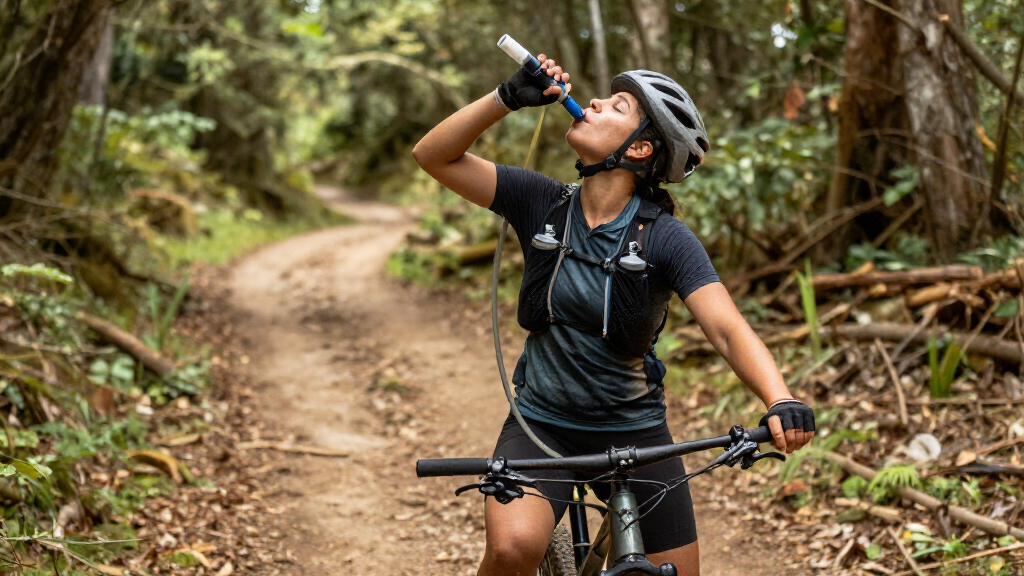

Cyclists comparing a hydration pack with bike-mounted bottles are choosing more than a way to carry water: they are deciding whether convenience and extra capacity justify wearing gear on their back. A pack keeps water available through a hose and can carry tools, food, or spare layers, while bottles keep weight on the bike and are easier to refill and clean. The pack is usually the stronger fit for long, rough, remote, or bottle-cage-limited rides. Bottles make more sense for shorter rides, road cycling, and riders who value a light, simple setup. The right choice depends on how much you drink, how often you can refill, and whether you want to carry gear on your body.

Get sports gear delivered free with Prime
- Fast, free delivery on millions of items
- Prime Video, Amazon Music and more included
- Member-only deals all year

CamelBak M.U.L.E. 12 Mountain Bike Hydration Pack
- ✔ Reservoir capacity: 3 liters (100 fluid ounces)
- ✔ Cargo capacity: 9 liters
- ✔ Weight: 1.3 pounds

MSR Hydration Pack
- ✔ Reservoir capacity: 2 liters
- ✔ Weight: 1.4 pounds
- ✔ Pockets: 1

Lightweight Hydration Backpack with 2L Water Bladder
- ✔ Reservoir capacity: 2 liters
- ✔ Pack capacity: 12 liters
- ✔ Weight: 8.5 ounces
At a Glance
| Criteria | Cycling hydration pack | Bike-mounted water bottles | Winner |
|---|---|---|---|
| Water capacity | Often holds more water than a basic one- or two-bottle setup; capacity varies by reservoir and pack. | Limited by bottle size and available cage mounts; extra capacity may require additional cages. | A |
| Drinking access | Hose allows frequent sips without reaching down, though the bite valve may need upkeep. | Simple to grab and replace, but drinking usually means reaching down and returning the bottle. | A |
| Weight and bike handling | Adds carried weight to the rider and can feel bulky, especially when full. | Keeps water weight on the bike and avoids a pack on the rider. | B |
| Comfort and heat | Shoulder straps and a back panel can trap heat or bounce if the fit is poor. | No pack against the back; bottle access and frame fit can still be awkward. | B |
| Refilling and cleaning | Reservoir and hose take more effort to dry and clean than a bottle. | Easy to rinse, refill, and inspect. | B |
| Extra gear storage | Many packs include pockets for tools, food, or a light layer. | Usually little or no carrying space beyond the bike’s existing storage. | A |
| Cost and value | Higher upfront cost; worthwhile when capacity, access, or storage solves a recurring problem. | Low-cost starting point and strong value when the bike has room for enough bottles. | Depends |
CamelBak M.U.L.E. 12 Mountain Bike Hydration Pack
The CamelBak M.U.L.E. 12 earns our top spot by balancing hydration with the things we actually need to carry on a mountain-bike ride. Its 3-liter Crux reservoir holds a liter more than either alternative here, which can mean fewer refill interruptions on longer outings. A quick-connect system is intended to make refilling easier, and magnetic tube management keeps the hose positioned for convenient sipping rather than loose across the pack.Its advantage is not water capacity alone. The M.U.L.E. includes tool pockets, an overflow pocket, and helmet carry, giving it a more deliberate ride-day setup than the MSR’s single pocket or the Lightweight pack’s general-purpose collection of pockets. Air Support ventilation and a removable waist strap add flexibility for riders who want more stability or airflow. Compared with the MSR, it is substantially more capable for gear; compared with the Lightweight pack, it offers more reservoir capacity and a more explicitly mountain-bike-oriented feature set.That capability has a cost in bulk: at 1.3 pounds before accounting for a full reservoir, it is heavier than the 8.5-ounce Lightweight pack, and its 9-liter cargo capacity is paired with a 3-liter water load that can feel substantial. We would choose it for longer off-road rides, not for the most minimalist setup. Casual cyclists who only need water and a small essential may find the MSR simpler and less encumbered.
Pros:
- 3-liter Crux reservoir provides the largest water capacity in this comparison.
- Tool pockets, overflow storage, and helmet carry suit mountain-bike ride essentials.
- Air Support back panel and magnetic tube management address ventilation and hose handling.
- Removable waist strap gives riders another way to stabilize the pack.
Cons:
- The pack is heavier than the 8.5-ounce Lightweight Hydration Backpack.
- A full 3-liter reservoir can make the setup feel bulky for some riders.
- Its mountain-bike-focused design may be more pack than casual cyclists need.
Best for: Mountain bikers who want a 3-liter reservoir, organized tool storage, and helmet-carry options for longer rides.
Not ideal for: Casual or short-distance cyclists who want the lightest, least bulky pack and do not need dedicated gear storage.
Bottom line: We recommend the M.U.L.E. 12 as the most complete cycling choice when longer-range hydration and purpose-built mountain-bike storage outweigh a lighter, simpler feel.
“We recommend the M.U.L.E. 12 as the most complete cycling choice when longer-range hydration and purpose-built mountain-bike storage outweigh a lighter, simpler feel.”
MSR Hydration Pack
The MSR Hydration Pack is the clearest pick for riders who want a pack to stay close and uncomplicated. Its slim, low-profile silhouette is designed to minimize bounce and movement, while adjustable chest and shoulder straps let us tune the fit. That focus on stability separates it from the 12-liter Lightweight Hydration Backpack, which provides more pockets and cargo capacity but is described in broader terms rather than around a low-bounce cycling profile.Hydration is straightforward: the pack includes a 2-liter high-flow bladder with a self-sealing bite valve. The valve’s stated self-sealing design addresses leakage after a sip, while a breathable back panel is intended to make the pack more comfortable in warm conditions. At 1.4 pounds, however, it is not the lightest option in this lineup; the Lightweight pack is far lighter by its stated weight, and the CamelBak gives us a larger reservoir and more organized storage.The main compromise is the single pocket. This is a focused hydration carrier, not a practical choice for anyone who needs to organize tools, food, or extra layers. We would choose the MSR over the CamelBak for riders who value a simpler, closer-fitting profile over cargo capacity, but skip it if a ride demands more than water and a small item or two.
Pros:
- Low-profile silhouette is designed to reduce bounce and movement while riding.
- Self-sealing, high-flow bite valve supports convenient drinking and leak control.
- Breathable back panel is intended to improve comfort in hot conditions.
- Adjustable chest and shoulder straps allow a more customized fit.
Cons:
- One pocket limits space and organization for cycling gear.
- Its 2-liter reservoir holds less than the CamelBak’s 3-liter reservoir.
- At 1.4 pounds, it is heavier than the Lightweight Hydration Backpack.
Best for: Riders who prioritize a slim, stable fit and straightforward 2-liter hydration for cycling or off-road routes.
Not ideal for: Cyclists who need several organized pockets, a larger reservoir, or space for tools and extra ride layers.
Bottom line: We recommend the MSR when a close, low-profile fit matters more than extra storage, but its single pocket makes it a poor substitute for a gear-carrying mountain-bike pack.
“We recommend the MSR when a close, low-profile fit matters more than extra storage, but its single pocket makes it a poor substitute for a gear-carrying mountain-bike pack.”
Lightweight Hydration Backpack with 2L Water Bladder
At a stated 8.5 ounces, this 12-liter pack is the lightest option in our comparison by a wide margin. That makes it a compelling choice when we want to carry water and a few extras without starting with a heavier pack. Its four pockets and 12-liter capacity offer more places to separate small essentials than the MSR, whose one-pocket layout is deliberately simpler.The 2-liter BPA-free bladder has a fast-flow hose and a leakproof design, while fully adjustable shoulder and chest straps help accommodate different fits. The breathable mesh back is another useful feature for warm rides. Its PU-coated nylon shell is described as waterproof and tear-resistant, with a stated carrying capacity of up to 25 pounds. Those specifications make it a versatile light pack, though they do not change its main hydration limit: its reservoir matches the MSR and is a liter smaller than the CamelBak’s.Compared with the CamelBak, this pack is much lighter and offers more stated pocket count than the MSR, but it lacks the M.U.L.E.’s named mountain-bike features such as a tool-pocket system, helmet carry, magnetic tube management, and larger reservoir. Its 12-liter overall capacity may also be restrictive for riders carrying bulky layers or extensive kit. We see it as the practical middle ground for lighter rides and modest gear, rather than the best choice for long stretches without refills.
Pros:
- Stated 8.5-ounce weight is the lowest in this lineup.
- Four pockets provide more organization than the MSR’s single pocket.
- Adjustable shoulder and chest straps and a breathable mesh back support fit and ventilation.
- PU-coated nylon shell is described as waterproof and tear-resistant.
Cons:
- The 2-liter reservoir offers less capacity than the CamelBak’s 3-liter bladder.
- The stated 12-liter pack capacity may not suit bulky or extensive ride gear.
- Its feature set is less specifically oriented to mountain-bike storage than the CamelBak’s.
Best for: Weight-conscious cyclists who want multiple pockets and a 2-liter bladder for shorter rides or routes with refill access.
Not ideal for: Riders planning long rides without refill points or carrying larger tools, layers, and other bulky equipment.
Bottom line: We recommend this pack when low weight and pocket flexibility take priority, provided a 2-liter reservoir and modest cargo capacity fit the planned ride.
“We recommend this pack when low weight and pocket flexibility take priority, provided a 2-liter reservoir and modest cargo capacity fit the planned ride.”
As an Amazon Associate we earn from qualifying purchases.
Key Differences
The defining tradeoff is where the water goes and how you reach it. A pack puts a larger supply on the rider, with a hose that supports quick sips on trails or long stretches without a convenient stop. Bottles shift that weight to the bike and offer a familiar, low-maintenance system, but available capacity depends on cage mounts and bottle size. For a short ride with frequent refill points, the pack’s extra supply may be unnecessary. For a long route with limited water access, the additional capacity can be more than a convenience.
There is also a difference in daily friction. Bottles are typically simpler to refill, wash, and dry; a reservoir and hose need more attention to prevent stale taste and lingering moisture. A pack can offset that inconvenience by providing room for essentials and freeing a cramped frame from extra bottle cages. But it adds heat and weight against the back. The best setup is the one that matches the route: bottles for simplicity and airflow, a pack for capacity, hands-free access, and extra carrying space.
Detailed Comparison
Water capacity (Cycling hydration pack wins — major)
A hydration pack usually wins when a rider needs more than the bike’s available cages can hold. Reservoir sizes vary, and some bikes can carry several bottles, so the advantage is not automatic. Still, on a long ride with few refill points, a pack can provide a larger single supply without adding cages. This is a moderate-to-major practical difference depending on route length and water access. For a short loop with taps or shops along the way, bottle capacity is often enough.
Drinking access (Cycling hydration pack wins — moderate)
The pack wins for staying hydrated without taking a hand off the bars to reach down: the hose stays close to the rider’s mouth. That can be useful on technical singletrack, rough surfaces, or a group ride where stopping or fumbling is inconvenient. Bottles are not difficult to use on smooth roads, but retrieving and replacing one takes attention and may be awkward for some frame sizes. The gap is moderate overall and major when a rider needs frequent sips on demanding terrain.
Weight and bike handling (Bike-mounted water bottles wins — moderate)
Bottles win because they avoid carrying a pack and keep water weight attached to the bike. A full reservoir can feel noticeable on the rider, particularly when climbing or riding for hours. The effect varies with pack fit and riding style, and bottle setups also add weight, but bottles generally distribute it in a way many cyclists prefer. This is a moderate advantage for riders who prioritize a light feel or dislike carrying gear on their shoulders.
Comfort and heat (Bike-mounted water bottles wins — moderate)
Bottles usually win for airflow because they do not cover the rider’s back. A well-fitted, stable pack can be comfortable, but its straps and back panel may trap heat, and a loose pack can bounce over rough ground. On cool days or short rides, this may be a minor concern; in hot weather or during long efforts, it can become a moderate drawback. Riders sensitive to back heat should favor bottles unless a pack’s capacity is necessary.
Refilling and cleaning (Bike-mounted water bottles wins — moderate)
Bottles win clearly on upkeep. They are quick to remove, refill, rinse, and dry, while reservoirs have a wider opening and a longer hose that require careful cleaning and drying. Neglecting a reservoir can lead to unpleasant taste or residue. This is a moderate difference for regular use, especially for riders who want minimal post-ride chores. A pack’s convenience during the ride does not remove the extra maintenance afterward.
Extra gear storage (Cycling hydration pack wins — moderate)
A pack wins when the rider needs water plus tools, snacks, a phone, or a light layer. Many cycling packs include organized pockets, although their storage varies and a full bag can feel bulky. Bottles provide almost no extra carrying space by themselves, leaving the rider to add a saddle bag, frame bag, or jersey pockets. This is a moderate advantage for remote rides and minimalist bikes, but a minor one when the rider already has suitable storage.
Cost and value (moderate difference)
Bottles are usually the better value for riders whose bike can carry enough water and whose route offers refills. A hydration pack costs more, but the added expense can be justified if it replaces several separate storage solutions or makes long, rough rides easier to manage. The winner depends on use: paying extra for a pack makes sense when its capacity and hose solve a regular problem, not simply because it offers more features.
Cycling hydration pack: Pros and Cons
Pros:
- Higher carrying capacity for routes with limited refill points
- Hose makes frequent drinking easier without reaching for a bottle
- Can add useful storage for tools, food, and small layers
- Works well when the bike has few or no convenient bottle mounts
Cons:
- Adds weight and bulk to the rider
- Can trap heat or bounce if the fit is poor
- Reservoir and hose require more cleaning and drying
- Costs more than a basic bottle setup
Bike-mounted water bottles: Pros and Cons
Pros:
- Low-cost, familiar, and easy to use
- Quick to refill, rinse, and dry
- Keeps water weight on the bike rather than the rider
- Leaves the rider’s back uncovered for better airflow
Cons:
- Capacity is limited by bottle size and cage mounts
- Drinking requires reaching for and replacing a bottle
- May not suit rough terrain or frequent sipping as well as a hose
- Provides little storage for ride essentials
Who Should Choose What
Choose Cycling hydration pack if:
- You ride long routes with few reliable refill points.
- You ride technical or rough trails and want water within easy reach.
- Your bike has limited bottle-cage mounts.
- You want one wearable setup to carry water and small essentials.
Choose Bike-mounted water bottles if:
- Most rides are short enough that one or two bottles meet your needs.
- You can refill during the ride and prefer a simple system.
- You dislike carrying weight on your back or tend to overheat.
- Fast cleaning and low upfront cost matter more than extra capacity.
Skip both if: If your ride needs more water than bottles can hold but you dislike a pack, consider a combination of bottles and a small frame or saddle bag, or plan reliable refill stops.
Value for Money
Bottles are the better value for most riders who already have enough cage space: they cost less, require little upkeep, and handle routine rides well. A pack’s higher price is worth paying when you repeatedly need more water than the bike can carry, want to sip on rough terrain, or need its storage for essentials. If those needs occur only occasionally, paying for a pack may bring more bulk and cleaning than benefit. Judge the extra cost by how often it solves a real ride problem, not by capacity alone.
Final Verdict
Choose bottles as the default for short-to-moderate rides, road cycling, and anyone who values low cost, easy cleaning, and an uncovered back. Choose a hydration pack for long or remote rides, technical trails, frequent sipping, or a bike with limited cage space. The biggest deciding factor is whether your normal ride requires more water or easier access than bottles can provide. If it does, the pack earns its extra cost; if it does not, bottles are the simpler and better-value choice.
Frequently Asked Questions
Are hydration packs better than bottles for mountain biking?
They are often more convenient on technical trails because the hose stays accessible while both hands remain on the bars. Bottles can still work well on smoother trails or shorter rides, particularly if the frame holds enough water.
Is a cycling hydration pack worth the extra cost?
It is worth paying more if you regularly need extra capacity, ride far from refill points, or want water access without reaching down. For routine rides where bottles cover your needs, the pack’s added expense and cleaning are hard to justify.
Are bottles or a hydration pack easier to clean?
Bottles are easier: they are quick to rinse and dry. A reservoir and hose need more careful cleaning and thorough drying, especially if you use anything beyond plain water.
Can I use bottles and a hydration pack together?
Yes. A mixed setup can work for especially long rides: bottles provide easy refills, while a pack adds reserve capacity. It also means carrying more total weight, so use the combination when the route’s water needs justify it.