The best power meter for mountain bikes is the Favero Assioma PRO MX-2, a dual-sensing pedal system built specifically for SPD cleats and rough terrain, with accuracy and easy transfer between bikes that crank-based rivals struggle to match. If your budget is tighter, the GEOID PM500 crankset delivers solid ±1.5% accuracy and a 300-hour battery at a fraction of the price, while the Garmin Rally XC110 suits riders already living in the Garmin ecosystem. The core tradeoff in this category is convenience versus durability: pedals swap between bikes in minutes but take rock strikes, while cranksets are more protected but lock you into one drivetrain setup. Single-sided pedals cost less but assume your legs are balanced, which matters for structured training. Keep reading for the full breakdown of all twelve options.
Complete the kit


Key Takeaways
- True mountain-bike power meters are rare — only the Favero Assioma PRO MX line and the Garmin Rally XC series are purpose-built for SPD cleats and trail abuse, which is why they dominate the top of this ranking.
- Road-focused cranksets like the GEOID PM500 and Magene P515 appear three and one times respectively in this lineup; they work for hardtail riders on smooth trails but are a poor fit for aggressive terrain and frequent crankarm replacement.
- Dual-sensing versions (MX-2, Rally RS210 dual, P515) measure left/right balance and stay accurate even if one leg fatigues unevenly — worth the premium for anyone following a structured training plan.
- Single-sided pedals like the MX-1 and Magene P715 cut cost dramatically by doubling one leg’s reading, a reasonable shortcut for beginners but a real limitation for sprint and interval work.
- Battery life ranged from roughly 20 hours (some pedal options) to 300 hours (GEOID cranksets) in this comparison — a bigger practical difference on multi-day bikepacking trips than any accuracy spec.
| GEOID PM500 Bike Power Meter Crankset, 165mm |  | Best Value Crankset for Smaller Riders | Accuracy: ±1.5% | Weight: 680g | Crank Length: 165mm | VIEW ON AMAZON | See Our Full Breakdown |
| Favero Assioma Duo Power Meter Pedal |  | Best for Multi-Bike Households | Power Sensor: Dual (DUO) or Single (UNO) | Battery Life: 50+ hours (rechargeable) | Connectivity: Bluetooth & ANT+ | VIEW ON AMAZON | See Our Full Breakdown |
| GEOID PM500 Bike Power Meter Crankset, 170mm |  | Best Battery Life for Trail Riders | Accuracy: ±1.5% | Weight: 680g | Crank Length: 170mm | VIEW ON AMAZON | See Our Full Breakdown |
| Garmin Rally RS210 Dual-Sensing Power Meter |  | Best Data Depth (Premium Pick) | Accuracy: ±1% | Power Measurement: Dual-sensing (left/right balance, power phase) | Cleat Compatibility: Shimano SPD-SL | VIEW ON AMAZON | See Our Full Breakdown |
| Garmin Rally XC110 Single-Sensing Power Meter | | Best Overall for Mountain Bikes | Accuracy: ±1% | Sensing Type: Single-sensing | Cleat Compatibility: Shimano SPD | VIEW ON AMAZON | See Our Full Breakdown |
| CooSpo Power Meter Crankset S10, 160-172.5MM, BLE/ANT+ Cycling Power Meter for Easton 110 BCD 4-Bolt |  | Best for Easton Crankset Owners | Compatibility: Easton 110 BCD four-bolt cranksets | Crank arm length: 160–172.5 mm | Measurement: Dual-sided power and cadence | VIEW ON AMAZON | See Our Full Breakdown |
| Favero Assioma PRO MX-2 Dual-Sensing Pedal-Based MTB Power Meter |  | Best for Moving Between Bikes | Power measurement: Dual-sensing | Accuracy: ±1% | Cleat compatibility: SPD; included cleats or Shimano SM-SH51 | VIEW ON AMAZON | See Our Full Breakdown |
| Favero Assioma PRO MX-1 Single-Sided Power Meter Pedals |  | Best for Simple Single-Sided Training | Power measurement: Single-sided | Connectivity: Compatible with cycling computers and training apps | Compatibility: Standard pedal systems | VIEW ON AMAZON | See Our Full Breakdown |
| Magene P515 PES Power Meter Crankset |  | Best for Long Battery Life and Metrics | Power accuracy: ±1% | Weight: 625 g | Battery life: Up to 380 hours | VIEW ON AMAZON | See Our Full Breakdown |
| GEOID PM500 Bike Power Meter Crankset, ±1.5% Accuracy, Lightweight 680g, 300h Battery Life, 110BCD, Bluetooth & ANT+ Waterproof for Road Bikes | | Best for Shimano 12-Speed Setups | Accuracy: ±1.5% | Weight: 680 g | Battery life: 300 hours | VIEW ON AMAZON | See Our Full Breakdown |
| Favero Assioma PRO MX-1 Single-Sided Mountain Bike Power Meter Pedals |  | Best Rugged Pick for Trail Riders | Power measurement: Single-sided, measured at left pedal and doubled | Accuracy: ±1% | Cleat compatibility: Shimano SPD-compatible | VIEW ON AMAZON | See Our Full Breakdown |
| Magene P715 Power Meter Pedals |  | Best Budget Dual-Sided Pedals | Power measurement: Dual-sided | Accuracy: ±1% | Battery life: 120 hours per charge | VIEW ON AMAZON | See Our Full Breakdown |
| power meters for mountain bike | Battery Life | Connectivity | Accuracy |
|---|---|---|---|
| GEOID PM500 Bike Power Meter C | 300 hours | Bluetooth & ANT+ | ±1.5% |
| Favero Assioma Duo Power Meter | 50+ hours (rechargeable) | Bluetooth & ANT+ | — |
| GEOID PM500 Bike Power Meter C | 300 hours | Bluetooth & ANT+ | ±1.5% |
| Garmin Rally RS210 Dual-Sensin | Up to 90 hours (rechargeable) | — | ±1% |
| Garmin Rally XC110 Single-Sens | Up to 90 hours (rechargeable) | — | ±1% |
| CooSpo Power Meter Crankset S1 | Up to 300 hours | BLE and ANT+ | ±1% |
| Favero Assioma PRO MX-2 Dual-S | At least 160 hours per charge | Bluetooth and ANT+ | ±1% |
| Favero Assioma PRO MX-1 Single | — | Compatible with cycling computers and training apps | — |
| Magene P515 PES Power Meter Cr | Up to 380 hours | Bluetooth and ANT+ | — |
| GEOID PM500 Bike Power Meter C | 300 hours | Bluetooth and ANT+ | ±1.5% |
| Favero Assioma PRO MX-1 Single | Over 60 hours, rechargeable | Bluetooth and ANT+ | ±1% |
| Magene P715 Power Meter Pedals | 120 hours per charge | Dual Bluetooth & ANT+ | ±1% |
More Details on Our Top Picks
GEOID PM500 Bike Power Meter Crankset, 165mm
The 165mm version of the GEOID PM500 stands out as an affordable entry point into crank-based power, and the shorter length makes it a rare find for smaller mountain bikers who struggle to get proper fit with standard 170mm cranks. Compared with the Garmin Rally XC110, you trade away the convenience of clipless pedals and quick bike-to-bike transfers, but you gain a coin-cell battery rated at 300 hours — no charging cables, no USB port to fail in the wet. The ±1.5% accuracy lags slightly behind Garmin’s ±1%, though most riders training on singletrack will never notice the gap. The real tradeoff is installation: this replaces your entire crankset, so it requires a compatible 110BCD chainring setup and some mechanical confidence that pedal-based options simply don’t demand.
Pros:- 300-hour battery life means season-long riding without charging or coin swaps
- 165mm length suits shorter riders who rarely get crank-based options
- Lightweight 680g aluminum build keeps trail handling unaffected
- Dual Bluetooth and ANT+ connectivity pairs with nearly any head unit
Cons:- Full crankset replacement demands mechanical skill and compatible chainrings
- ±1.5% accuracy trails the ±1% offered by Garmin Rally pedals
Best for: Smaller riders (needing 165mm cranks) who want long-battery crank-based training data on a budget
Not ideal for: Riders who share power data across multiple bikes — a crankset has to be mechanically swapped, unlike pedals
- Accuracy:±1.5%
- Weight:680g
- Crank Length:165mm
- BCD:110 (4-bolt)
- Battery Life:300 hours
- Connectivity:Bluetooth & ANT+
- Waterproofing:IPX7
- Compatibility:Shimano 12-speed, 110BCD chainrings
Our verdict“A sensible budget crank-based pick for smaller riders who prioritize battery life over plug-and-play convenience.”
Favero Assioma Duo Power Meter Pedal
The Favero Assioma Duo remains the benchmark for pedal-based power because it solves the problem cranksets like the GEOID PM500 can’t: moving your power data between bikes in minutes with a pedal wrench. Dual-sided measurement gives you true left/right balance, which the single-sensing Garmin Rally XC110 can’t match at its base price point. The rechargeable batteries deliver 50+ hours per charge — respectable, though Garmin’s Rally line doubles that at up to 90 hours, so riders who log long weeks between charges may favor the Rally RS210 instead. One honest limitation for this roundup: the standard Assioma uses a road-style cleat, so true mountain bikers running flat or SPD pedals should look at the Assioma PRO MX variants rather than this model.
Pros:- Dual-sensing design provides genuine left/right power balance
- Transfers between bikes in minutes without tools beyond a pedal wrench
- Rechargeable batteries eliminate coin-cell waste
- Proven accuracy that rival pedals are measured against
Cons:- 50+ hour battery life is half of what Garmin Rally pedals offer
- Road cleat system limits appeal for off-road riders
Best for: Road-leaning riders and commuters with multiple bikes who want dual-sided data that swaps between frames instantly
Not ideal for: Dedicated mountain bikers on SPD pedals — the road cleat system doesn’t fit trail riding, so the PRO MX line is the better fit
- Power Sensor:Dual (DUO) or Single (UNO)
- Battery Life:50+ hours (rechargeable)
- Connectivity:Bluetooth & ANT+
- Installation:Pedal-based, tool transfer between bikes
- Warranty:Limited warranty
- User Range:Adult
Our verdict“The easiest way to bring dual-sided power to every bike you own — as long as your riding happens on pavement.”
GEOID PM500 Bike Power Meter Crankset, 170mm
Think of this as the standard-length sibling of the 165mm GEOID PM500 — same 680g weight, same ±1.5% accuracy, but in the 170mm length that fits most adult mountain bikes out of the box. Where the Garmin Rally XC110 asks you to charge every 90 hours and commit to Shimano SPD cleats, this crankset runs a full 300 hours on a replaceable battery and works with whatever flat pedal and shoe combo you already ride. The mix of 6061 and 7075 aluminum is a nice touch for durability on rocky terrain where a pedal strike would end a carbon-bodied competitor’s day. The cost of that resilience and battery life is permanence: this is a fit-and-forget upgrade for one bike only, and initial setup with chainring spacing and torque specs takes real patience compared with threading on pedals.
Pros:- 300-hour battery is the longest runtime in this lineup by a wide margin
- Aluminum alloy construction shrugs off rock strikes that threaten carbon pedals
- Works with your existing flat pedals — no cleat system required
- IPX7 waterproofing handles creek crossings and pressure washing
Cons:- Bolted to a single bike, unlike transferable pedal-based options
- Setup involving chainring compatibility and torque is genuinely fiddly
Best for: Trail and enduro riders who want set-and-forget power on their main bike without changing pedals or cleats
Not ideal for: Beginners intimidated by crankset installation, or anyone wanting power on more than one bike
- Accuracy:±1.5%
- Weight:680g
- Crank Length:170mm
- BCD:110
- Battery Life:300 hours
- Material:6061 and 7075 aluminum alloy
- Connectivity:Bluetooth & ANT+
- Waterproofing:IPX7
Our verdict“The pick for riders who want maximum battery life and rugged simplicity on one dedicated mountain bike.”
Garmin Rally RS210 Dual-Sensing Power Meter
The Garmin Rally RS210 is the analytics machine of this batch. Beyond left/right balance, it delivers power phase and cycling dynamics data that no crankset here — not the GEOID PM500, not the CooSpo S10 — can approach, which matters if you’re working with a coach on pedal stroke efficiency. The 90-hour battery doubles the Favero Assioma Duo’s runtime, and a 15-minute quick charge buys 12 hours of riding when you forget to plug in. Compared with the Rally XC110, you get dual-sensing for true balance data, but the catch for this roundup is the SPD-SL road cleat: it’s built for tarmac, not trail. Mountain bikers should note the XC version exists precisely because this pedal’s cleat system and carbon body aren’t meant for muddy, rocky terrain.
Pros:- Dual-sensing with power phase and cycling dynamics goes beyond basic wattage
- 90-hour battery life with 15-minute fast charging to 12 hours of ride time
- Removable power sensor lets you swap pedal bodies between bikes cheaply
- ±1% accuracy matches the best in this roundup
Cons:- Premium pricing puts it out of reach for casual riders
- SPD-SL cleat requirement excludes flat-pedal and SPD mountain bikers
Best for: Data-driven riders and coached athletes who want power phase and left/right analytics on road and gravel training rides
Not ideal for: Mountain bikers on technical trails — the SPD-SL cleat and carbon body belong on pavement, not rock gardens
- Accuracy:±1%
- Power Measurement:Dual-sensing (left/right balance, power phase)
- Cleat Compatibility:Shimano SPD-SL
- Battery Life:Up to 90 hours (rechargeable)
- Quick Charge:15 minutes for 12 hours ride time
- Pedal Body:Carbon
- Calibration:Smart calibration alerts
- Chainrings:Oval chain ring compatible
Our verdict“The deepest data package available here — for road-focused riders who treat watts as a training currency.”
Garmin Rally XC110 Single-Sensing Power Meter
When the question is specifically about mountain bikes, the Rally XC110 is my top pick because it’s one of the few power meters here actually built for the job: an all-metal pedal body, Shimano SPD cleat compatibility, and improved ground clearance for technical trails. Compared with the GEOID PM500 crankset, you give up some battery life (90 hours versus 300) but gain the ability to move power between bikes in minutes and a tighter ±1% accuracy. It’s single-sensing, so it estimates total power by doubling one leg — a fair tradeoff against the dual-sensing Rally RS210 if you don’t need balance data, and the RS210’s road cleats rule it out for trail use anyway. The Pedal IQ smart calibration quietly keeps readings honest through mud and temperature swings, though the richest force metrics require a compatible Garmin head unit.
Pros:- Purpose-built for off-road: SPD cleats, metal body, and extra ground clearance
- 90-hour battery with 15-minute quick charging for 12 hours of riding
- Moves between bikes in minutes unlike crank-based alternatives
- ±1% accuracy with automatic Pedal IQ calibration in changing conditions
Cons:- Single-sensing design doubles one leg’s power, missing imbalances
- Advanced force data features lock you into the Garmin ecosystem
Best for: Mountain bikers who want accurate, transferable power data across their trail bikes without fragile components
Not ideal for: Riders without Garmin devices who want advanced force analytics, and anyone needing true dual-sided balance data
- Accuracy:±1%
- Sensing Type:Single-sensing
- Cleat Compatibility:Shimano SPD
- Battery Life:Up to 90 hours (rechargeable)
- Quick Charge:15 minutes for up to 12 hours ride time
- Pedal Body:All-metal
- Metrics:Total power, cadence, force data
- Calibration:Pedal IQ smart calibration
Our verdict“The best purpose-built power meter for mountain bikers — accurate, trail-tough, and bike-to-bike portable in a way cranksets can’t match.”
CooSpo Power Meter Crankset S10, 160-172.5MM, BLE/ANT+ Cycling Power Meter for Easton 110 BCD 4-Bolt
The CooSpo S10 makes the most sense for mountain bikers who already have a compatible Easton 110 BCD four-bolt crankset and want power data without switching to pedal-based measurement. Its stated ±1% accuracy, dual-sided measurement, and BLE/ANT+ support give it a useful training feature set, while the rechargeable battery is rated for up to 300 hours. Compared with the Magene P515 PES, the S10 offers a broader crank length range, but the Magene lists additional metrics, including left-right balance and torque effectiveness. The main limitation is fit: this is a targeted upgrade, not a universal crankset choice. App calibration may also add setup work, and riders who move the meter between bikes may find pedals such as the Favero Assioma PRO MX-2 more convenient.
Pros:- Dual-sided power measurement
- BLE and ANT+ connectivity for compatible cycling devices and apps
- Up to 300 hours of battery life
- IPX7 water resistance
Cons:- Compatibility is limited to Easton 110 BCD four-bolt cranksets
- App calibration may complicate setup
- Crankset installation is less transferable between bikes than a pedal-based meter
Best for: Mountain bikers with an Easton 110 BCD four-bolt crankset who want dual-sided power data and a wide choice of crank lengths.
Not ideal for: Riders without the specified Easton crank interface, or those who want a power meter they can quickly move between bikes.
- Compatibility:Easton 110 BCD four-bolt cranksets
- Crank arm length:160–172.5 mm
- Measurement:Dual-sided power and cadence
- Accuracy:±1%
- Connectivity:BLE and ANT+
- Battery life:Up to 300 hours
- Water resistance:IPX7
- Material:Aluminum alloy
Our verdict“Choose the S10 if your Easton crankset fits and you want dual-sided measurement; skip it if you need broad compatibility or easy bike-to-bike transfers.”
Favero Assioma PRO MX-2 Dual-Sensing Pedal-Based MTB Power Meter
The Assioma PRO MX-2 is the most flexible pick here for riders who want to carry their power meter across bikes. Because the sensors sit in the SPD-compatible pedals, transferring them is simpler than changing a crankset such as the Magene P515 PES or CooSpo S10. Its dual-sensing measurement, stated ±1% accuracy, temperature compensation, and gyroscope-based IAV Power aim to keep readings consistent as trail conditions change. The modular design also allows a switch to road pedal bodies. That flexibility comes with limits: it requires clipless SPD shoes, so flat-pedal riders should rule it out, and its rechargeable battery is rated for at least 160 hours—less than the crankset options listed here. Magnetic charging is convenient, but means keeping the charging cable available.
Pros:- Dual-sensing measurement with stated ±1% accuracy
- SPD compatibility and quick transfer between bikes
- Modular design supports swapping to road pedal bodies
- Rechargeable battery with magnetic charging connectors
Cons:- Requires an SPD clipless pedal system
- At least 160 hours per charge is less than the stated battery life of the Magene P515 PES and CooSpo S10
- Magnetic charging requires the supplied cable
Best for: Clipless MTB or gravel riders who train on multiple bikes and want dual-sided power without replacing each bike’s crankset.
Not ideal for: Flat-pedal riders, or riders prioritizing longer stated battery life over a transferable pedal-based setup.
- Power measurement:Dual-sensing
- Accuracy:±1%
- Cleat compatibility:SPD; included cleats or Shimano SM-SH51
- Connectivity:Bluetooth and ANT+
- Pedal body material:Aluminum 6061-T6
- Battery life:At least 160 hours per charge
- Charging:Magnetic connectors; USB Type-C 2-way cable
- Operating temperature:−10°C to 55°C
Our verdict“Pick the PRO MX-2 if you ride clipless across multiple bikes and value transferable dual-sided measurement.”
Favero Assioma PRO MX-1 Single-Sided Power Meter Pedals
The Assioma PRO MX-1 suits riders who want to add power-based training through a pedal setup and can work with single-sided measurement. Its stated strengths are straightforward setup, compatibility with cycling computers and training apps, and a durable design for varied riding conditions. Compared with the dual-sensing Favero Assioma PRO MX-2, the MX-1 gives up measurement on the second side, so it may not represent total output as well for riders with a left-right imbalance. The supplied data also gives fewer hard details than the MX-2, including no stated accuracy figure, battery life, or specific MTB cleat system. I would treat it as the simpler training option only after confirming pedal and cleat fit for your bike; riders seeking more complete measurement should look to the MX-2.
Pros:- Single-sided power measurement for power-based training
- Designed for straightforward setup
- Works with cycling computers and training apps
- Durable design for varied riding conditions
Cons:- Single-sided readings may be less representative for riders with a power imbalance
- Available product details do not state accuracy or battery life
- Specific MTB cleat compatibility is not provided
Best for: Mountain bikers who want a simpler single-sided power setup and whose pedal and cleat requirements match the product.
Not ideal for: Riders who need dual-sided readings, have a known left-right power imbalance, or require detailed battery and compatibility specifications before buying.
- Power measurement:Single-sided
- Connectivity:Compatible with cycling computers and training apps
- Compatibility:Standard pedal systems
- Intended use:Cycling power measurement
- Power data:Single-sided measurement
- Setup:Described as easy to set up
Our verdict“Consider the MX-1 if single-sided training data meets your needs and you can confirm its pedal fit; choose the MX-2 for dual-sided readings.”
Magene P515 PES Power Meter Crankset
The Magene P515 PES is a strong fit for riders who prefer a crankset-based meter and want more than a basic power number. It reports power, cadence, left-right balance, and torque effectiveness, with Bluetooth and ANT+ for pairing to compatible devices. Its stated battery life of up to 380 hours is the longest among these crankset options, and IPX7 water resistance suits wet trail use. Compared with the CooSpo S10, the Magene lists a narrower 165 mm crank length and a 24 mm steel spindle, so fit and frame compatibility need checking before purchase. Its 110 BCD four-bolt pattern also makes chainring compatibility part of the decision. Riders wanting easy transfers between bikes may find the pedal-based Favero Assioma PRO MX-2 more convenient.
Pros:- Reports power, cadence, left-right balance, and torque effectiveness
- Up to 380 hours of stated battery life
- Bluetooth and ANT+ connectivity
- IPX7 water resistance
Cons:- Only the 165 mm crank length is listed
- 110 BCD four-bolt and 24 mm spindle fit must match the bike
- Crankset-based installation is less convenient to transfer than the Favero Assioma PRO MX-2 pedals
Best for: Mountain bikers who want multiple training metrics, long stated battery life, and a compatible 165 mm crankset setup.
Not ideal for: Riders needing a different crank length, uncertain 110 BCD or 24 mm spindle compatibility, or frequent transfers between bikes.
- Power accuracy:±1%
- Weight:625 g
- Battery life:Up to 380 hours
- Material:7075 aluminum
- Chainring bolt pattern:110 BCD, four-bolt
- Connectivity:Bluetooth and ANT+
- Water resistance:IPX7
- Spindle and crank length:24 mm steel spindle; 165 mm crank
- Metrics:Power, cadence, left-right balance, torque effectiveness
Our verdict“Choose the P515 PES if its 165 mm crank and spindle fit your bike and you want long battery life with several training metrics.”
GEOID PM500 Bike Power Meter Crankset, ±1.5% Accuracy, Lightweight 680g, 300h Battery Life, 110BCD, Bluetooth & ANT+ Waterproof for Road Bikes
The GEOID PM500 has a clear niche for riders whose bike matches its 110 BCD four-bolt and Shimano 12-speed compatibility. Its dual-sensor data collection, Bluetooth and ANT+ connectivity, and stated ±1.5% accuracy support training with common cycling devices, while a 300-hour battery rating limits charging interruptions. Compared with the Magene P515 PES, the GEOID lists a longer 172.5 mm crank and slightly lower stated accuracy; the Magene instead offers additional named metrics and a longer stated battery life. The PM500 is described for road bikes, so its fit for a mountain bike should be checked carefully rather than assumed. Installation may also take technical know-how, and chainring and crankset compatibility narrow its appeal compared with the transferable Favero Assioma PRO MX-2 pedals.
Pros:- Dual-sensor data collection
- Bluetooth and ANT+ connectivity
- Up to 300 hours of stated battery life
- IPX7 water resistance
Cons:- Product is described for road bikes, so MTB fit needs confirmation
- Requires compatible crankset and chainrings
- Installation may require technical knowledge
Best for: Riders with a compatible Shimano 12-speed, 110 BCD four-bolt setup who specifically need a 172.5 mm crank length.
Not ideal for: Mountain bikers without confirmed Shimano 12-speed and 110 BCD compatibility, or riders who want a quick pedal-based transfer between bikes.
- Accuracy:±1.5%
- Weight:680 g
- Battery life:300 hours
- Crank length:172.5 mm
- BCD:110 mm
- Connectivity:Bluetooth and ANT+
- Water resistance:IPX7
- Compatibility:110 BCD four-bolt; Shimano 12-speed
Our verdict“Choose the PM500 only if its Shimano 12-speed fit and 172.5 mm crank match your bike and setup needs.”
Favero Assioma PRO MX-1 Single-Sided Mountain Bike Power Meter Pedals
For mountain bikers who ride through mud, creek crossings, and rock gardens, the pod-free spindle design and IP67 rating of the Assioma PRO MX-1 matter more than raw specs — there’s simply less to smash on a rock or clog with grit compared with crank-based units like the GEOID PM500 crankset. The IAV accuracy system with an integrated gyroscope keeps readings steady through the choppy pedal strokes typical of technical climbing, and 60-plus hours of rechargeable battery means you can ride for weeks between charges. The tradeoff is structural: single-sided measurement doubles left-leg power to estimate total output, so riders with a natural leg imbalance will see skewed numbers compared with the dual-sensing Favero Assioma PRO MX-2. Compared with the Garmin Rally XC110, the Favero’s advantage is its rechargeable battery and cleaner spindle; Garmin wins on upgrade flexibility. Note the cleat situation before ordering — verify what’s in the box.
Pros:- IP67 waterproofing and pod-free spindle built for harsh trail conditions
- ±1% accuracy with IAV gyroscope-based smoothing on rough terrain
- Over 60 hours of rechargeable battery life, no coin cells to swap
- Complete package includes pedals, cleats, charging gear, and tools
Cons:- Left-only measurement doubles power, hiding leg imbalances
- Cleat inclusion is inconsistent — confirm kit contents before buying
- Higher cost per data point than crank-based alternatives like the GEOID PM500
Best for: Trail and enduro riders who want durable, accurate power data that survives abusive conditions and frequent bike washes
Not ideal for: Riders with significant left/right leg imbalance who need true dual-sided data — the MX-2 or Garmin Rally RS are better fits
- Power measurement:Single-sided, measured at left pedal and doubled
- Accuracy:±1%
- Cleat compatibility:Shimano SPD-compatible
- Pedal body:6061-T6 aluminum
- Battery life:Over 60 hours, rechargeable
- Connectivity:Bluetooth and ANT+
- Warranty:2 years
Our verdict“This is the pick for mountain bikers who prioritize durability and convenience over dual-sided data completeness.”
Magene P715 Power Meter Pedals
Dual-sided power at this price point is rare, and that’s the core appeal of the Magene P715: unlike the single-sided Favero Assioma PRO MX-1, it measures each leg independently, which surfaces imbalances you’d never see with doubled left-leg data. The 120-hour battery life outlasts the Favero MX series by a wide margin, and at 157g per pedal it’s lighter than most competitors. The quick-install design also makes swapping between bikes easier than a fixed crankset like the CooSpo S10, which stays bolted to one frame. The honest tradeoff is pedigree: Magene doesn’t have Favero’s or Garmin’s long track record in the power meter space, so long-term calibration stability and support are less proven. A few buyers may also find the app ecosystem less polished than Garmin Connect. Still, for riders who want dual-leg data without premium pricing, the value case here is hard to argue against.
Pros:- Dual-sided measurement reveals left/right leg imbalances
- Excellent 120-hour battery life per charge
- Lightweight at 157g per pedal
- Easy transfer between road, TT, and triathlon bikes
Cons:- Newer product with a shorter track record than Favero or Garmin
- App and firmware ecosystem less refined than established competitors
Best for: Data-driven riders who want dual-sided measurement and multi-bike convenience without paying Favero or Garmin prices
Not ideal for: Riders who prioritize brand-proven calibration stability and mature app support over savings
- Power measurement:Dual-sided
- Accuracy:±1%
- Battery life:120 hours per charge
- Weight:157g per pedal
- Connectivity:Dual Bluetooth & ANT+
- Quantity:2 pedals
- Warranty:2 years
Our verdict“A smart buy for riders who want true dual-leg power data on a budget, provided they accept a less proven brand.”
How We Picked
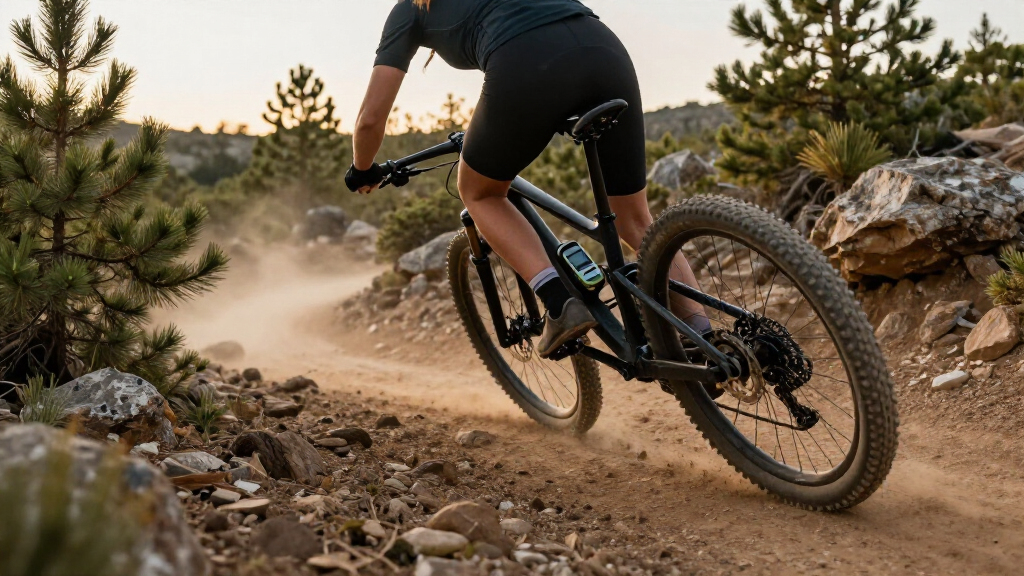
My ranking logic starts with one question: will this power meter survive and stay accurate on actual mountain bike terrain? That filters the field quickly. Pedals built for SPD cleats and rock strikes rank above road pedals and road cranksets, because a power meter that only works clipped in on smooth gravel isn’t really a mountain bike product. From there, I weighed accuracy claims and whether they’re dual- or single-sensing, since a ±1.0–1.5% dual-sensing system gives data you can actually train with, while single-sided units introduce assumptions about leg balance.
Next came practical ownership factors: battery life, how easily the unit moves between bikes, spindle and axle compatibility with modern MTB standards, and what happens after a crash or pedal strike. Value played a role too — a cheaper crankset that requires professional installation and a specific bottom bracket can end up costing more than pricier pedals. Finally, I penalized duplicate listings and road-only marketing that doesn’t match how mountain bikers actually ride, which is why identical GEOID PM500 entries sit lower than purpose-built MTB options despite respectable specs.
| power meters for mountain bike | Accuracy | Connectivity |
|---|---|---|
| GEOID PM500 Bike Power Meter C | ±1.5% | Bluetooth & ANT+ |
| Favero Assioma Duo Power Meter | — | Bluetooth & ANT+ |
| GEOID PM500 Bike Power Meter C | ±1.5% | Bluetooth & ANT+ |
| Garmin Rally RS210 Dual-Sensin | ±1% | — |
| Garmin Rally XC110 Single-Sens | ±1% | — |
| CooSpo Power Meter Crankset S1 | ±1% | BLE and ANT+ |
| Favero Assioma PRO MX-2 Dual-S | ±1% | Bluetooth and ANT+ |
| Favero Assioma PRO MX-1 Single | — | Compatible with cycling computers and training apps |
| Magene P515 PES Power Meter Cr | — | Bluetooth and ANT+ |
| GEOID PM500 Bike Power Meter C | ±1.5% | Bluetooth and ANT+ |
| Favero Assioma PRO MX-1 Single | ±1% | Bluetooth and ANT+ |
| Magene P715 Power Meter Pedals | ±1% | Dual Bluetooth & ANT+ |
Factors to Consider When Choosing Power Meters For Mountain Bikes
Choosing a power meter for a mountain bike involves tradeoffs that road cyclists never face. Before you pick from the twelve options above, here are the broader factors that tend to decide whether a purchase ends up loved or gathering dust.Pedals, Cranks, or Spindles — Where the Meter Lives Matters Most
The mounting location determines almost everything else about your experience. Pedal-based systems like the Assioma PRO MX line transfer between bikes in minutes, which is huge if you own a trail bike and a hardtail, but they sit directly in the line of fire on technical terrain. Crank-based systems like the GEOID PM500 and Magene P515 are better protected and often cheaper per watt of data, but installing one usually means a crank puller, possibly a new bottom bracket, and a commitment to one chainring standard. A common mistake is buying a road crankset because it’s discounted, only to discover its 110 BCD spider and q-factor feel wrong on a wide-boost mountain bike frame. Ask yourself honestly how often you swap bikes versus how often you smash pedals on rocks — the answer points to your format.
Single-Sided Versus Dual-Sensing: The Hidden Cost Cut
Nearly every model in this roundup comes in single- and dual-sensing versions, and the price gap is substantial. A single-sided meter like the MX-1 or Garmin Rally XC110 measures one leg and simply doubles the reading, which works fine for steady endurance riding — most people have roughly a 48/52 split. The problem appears during hard intervals, fatigue, or post-injury riding, when leg imbalance shifts and your total power numbers drift by 5% or more. If you’re paying for a coaching plan or chasing structured FTP improvements, that error compounds over a season. Casual riders and beginners can save meaningfully with single-sided; anyone training seriously should treat dual-sensing as non-negotiable.
Cleat System Lock-In
This is the trap that catches the most first-time buyers. Mountain bikers overwhelmingly ride SPD (2-bolt) cleats, while many popular power pedals — including the standard Favero Assioma Duo and Garmin Rally RS — are built for road 3-bolt systems. The Garmin Rally platform at least lets you swap spindle kits to convert between RS and XC versions, though the conversion kit costs extra. Favero keeps road (Assioma Duo) and MTB (PRO MX) as separate product lines, so there’s no converting after purchase. Before ordering anything, check your current shoes: if they’re SPD, a road pedal power meter either forces new shoes or an awkward adapter, and neither is a good outcome.
Battery Life and Charging Habits
Battery specs in this category range from around 20 hours to 300 hours, and the difference shapes your routine more than you’d expect. Cranksets with coin-cell batteries, like the GEOID units, run for a full season on one charge but require pulling the crank to replace the cell — annoying if it dies mid-block. Rechargeable pedals like the Favero line top up on a magnetic charger in a few hours, which is convenient, but forgetting to charge before a big ride means riding power-blind. Bikepackers and multi-day adventurers should prioritize long battery life or carry the charger. One often-missed detail: lithium batteries drain faster in cold weather, so winter riders should build in a buffer.
Accuracy Claims in the Real World
Every manufacturer quotes a static accuracy figure — typically ±1.0% to ±2.0% — but static accuracy and trail accuracy aren’t the same thing. Sustained vibration, water crossings, temperature swings, and rapid torque changes from technical climbing all push real-world error beyond the spec sheet. Dual-sensing systems handle these conditions better because they’re not extrapolating half your output. What matters for most riders isn’t absolute accuracy anyway; it’s consistency across weeks and months, because training progress is measured against your own baseline. A meter that reads 3% low every ride is fine; one that drifts week to week will quietly wreck your training data. Look for brands with a track record of firmware updates and calibration stability.
Crash survivability and Warranty Reality
Mountain bikes fall over, land on pedals, and scrape crankarms through rock gardens. Before buying, check what the warranty actually covers — most brands exclude crash damage, and a shattered pedal body on a dual-sensing system means replacing the most expensive component. Garmin’s Rally line sells replaceable pedal bodies and spindle parts, which softens the blow considerably. Cranksets can often survive crashes better but may bend in a bad impact, and a bent crank means recalibrating or replacing the whole unit. Budget-minded riders should factor a realistic damage reserve into the purchase: the true cost of a power meter on a mountain bike includes what you’ll eventually break.
Frequently Asked Questions
Can I use a road power meter like the Favero Assioma Duo on my mountain bike?
Physically you can mount it, but you’d need road shoes with 3-bolt cleats, which perform poorly for hike-a-bike sections and muddy terrain where SPD shines. The Assioma Duo also sits lower to the ground with a road pedal body that isn’t shaped for rock strikes, so it will take damage faster on technical trails. Favero makes the Assioma PRO MX line specifically for SPD cleats and mountain biking, and that’s the correct choice if you ride off-road. The Duo makes sense only if your ‘mountain bike’ is really a gravel or smooth-fire-road machine ridden with road-style shoes.
Is a single-sided power meter good enough for mountain bike training?
For general fitness and steady endurance riding, yes — single-sided units like the Garmin Rally XC110 or Assioma PRO MX-1 double one leg’s reading, and most riders have a near-even split. The limitation shows up during short violent efforts, when leg imbalance can be 10% or more, and your sprint numbers become unreliable. Technical mountain biking adds another wrinkle: frequent standing and body English create more left-right variation than steady road riding does. If you follow a structured plan with sprint intervals or you’re returning from a leg injury, spend the extra on dual-sensing. Otherwise, single-sided captures 90% of the training value at a much lower cost.
Why do crank-based power meters cost less than pedals, and is the saving worth it?
Cranksets like the GEOID PM500 and Magene P515 often undercut pedal systems because the electronics are simpler to protect inside a crank spider, and there’s no machining for a pedal axle and bearing assembly. The tradeoffs are installation and inflexibility: you’ll need a compatible bottom bracket, a crank puller or torque wrench, and possibly a bike shop visit, which eats into the savings. You also can’t move the meter to another bike quickly, and you’re locked to the crank’s chainring standard. If you own one bike, keep it for years, and do your own maintenance, a crankset is the value play. Riders with multiple bikes or those who crash pedals often will get more from pedals despite the higher price.
Will a power meter even give useful data on technical singletrack?
It will, but you have to read it differently than road data. On rough descents your power drops to near zero while your effort stays high, so average power for a trail ride looks deceptively low compared with a road ride. The most useful mountain bike metrics come from climbing segments and structured intervals on steady terrain, where power output is smooth enough to be meaningful. Many riders do their key power workouts on fireroads or the trainer, then use the meter on trail days mainly for load tracking. So yes, buy the meter — just don’t judge your fitness by the normalized power of a rowdy enduro loop.
Do I need to calibrate a mountain bike power meter, and how often?
All quality meters support a zero-offset calibration, and doing it before each ride takes about ten seconds from your head unit — you’ll find it in the sensor menu. Full factory calibration is handled by the manufacturer and shouldn’t be needed during normal ownership. Big temperature swings are the main reason to re-zero mid-ride; strain gauges drift as metals expand and contract, and mountain bikers see this on alpine descents where you climb in heat and drop into cold air. If your readings ever jump suddenly after a crash or rock strike, that’s a sign the strain gauge was loaded past its limit, and repeated drift means it’s time to contact the manufacturer rather than keep re-zeroing.
Conclusion
For most mountain bikers, the Favero Assioma PRO MX-2 is the best overall choice: it’s the rare power meter built for SPD cleats and trail abuse, with dual-sensing accuracy and painless bike-to-bike transfer. Best value goes to the Garmin Rally XC110 if you want Garmin’s support and conversion options on a budget, with the Magene P715 as an even cheaper pedal entry point for beginners who just want power data without a big commitment. Best premium pick is the Garmin Rally RS210 dual-sensing paired with the XC conversion spindle, giving serious trainers ecosystem integration and full left/right analysis. Riders who want maximum value per watt and own a single bike should look at the GEOID PM500 or Magene P515 cranksets — just confirm your bottom bracket and chainring compatibility first. Beginners should start single-sided and upgrade later only if their training demands it; the data matters more than the hardware tier, and every option above will teach you more about your riding than any heart rate strap ever did.