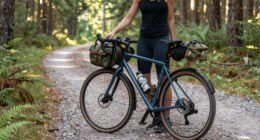
For bikepacking, I’d choose the BLAVOR 10,000mAh as the best overall solar power bank here: its smaller capacity is easier to carry, while USB-C fast charging and wireless charging cover common phone needs. The BigBlue 35W panel is a stronger choice when you can strap a separate panel to your bike and want more useful solar input, while the 20,000mAh four-panel bank suits riders who prefer an all-in-one unit. The main tradeoff is between carry weight and stored capacity; a built-in solar panel may add convenience, but it should not be treated as a dependable way to refill a large battery during a short ride. I’d also weigh charging ports, weather exposure, and how much navigation or camera use your trip requires. Read on for the full comparison and a pick matched to your riding style.

Get sports gear delivered free with Prime
- Fast, free delivery on millions of items
- Prime Video, Amazon Music and more included
- Member-only deals all year
Complete the kit


Key Takeaways
- The BLAVOR 10,000mAh is the most bikepacking-friendly bank by capacity and feature balance; the higher-capacity models may store more power but are likely bulkier.
- The BigBlue 35W is a separate panel, not a power bank, so it makes most sense paired with a battery you already own.
- Built-in solar panels appear across many of the banks, but panel count alone does not establish real-world charging speed; treat solar as supplemental unless output data supports your plan.
- Large advertised capacities and built-in cables simplify some charging setups, though they can add bulk and leave fewer choices if a cable fails.
- Hand cranks, compasses, lamps, and wireless charging add functions rather than guaranteed ride-day energy; prioritize the features you will actually use.


| solar power bank for bikepacking | Battery capacity | Ports | Built-in cables |
|---|---|---|---|
| 38,800mAh Solar Charger Power | 38,800mAh | 4 | — |
| BLAVOR Solar Power Bank 10,000 | 10,000mAh | — | — |
| Solar Charger Power Bank 49800 | 49,800mAh | — | 4 |
| DJKK Solar Power Bank Portable | 66,800mAh | — | — |
| BigBlue 35W Portable Solar Pan | — | 2 Type-C, 1 USB-A | — |
| Solar Power Bank | — | — | 3 outputs: iOS, Type-C, Micro; 1 USB-A input |
| SOARAISE 48,000mAh Solar Power | — | 2 USB-A outputs; 1 USB-C input/output | USB-C, Phone, USB-A, Micro |
| FEELLE 50000mAh Solar Power Ba | 50,000mAh | 3 | 4: USB-C, Lightning, Micro, USB-A |
| Solar Power Bank 20000mAh with | — | 2 USB-A outputs; 1 USB-C input/output | USB-C output, Lightning output, USB-A input |
| 40000mAh Solar Power Bank with | 40,000mAh | USB-C output/input, USB-A output, Micro USB input | Type-C, iOS, Micro USB; USB-A input |
| Mregb Solar Charger Power Bank | — | — | — |
More Details on Our Top Picks
38,800mAh Solar Charger Power Bank with 22.5W USB-C Fast Charging, 4 Built-in Cables, and Dual LED Flashlights
For bikepackers who want one battery to cover several devices, this model pairs a 38,800mAh capacity with four built-in cable types, reducing the cords needed in a handlebar bag or pannier. Its IP65 housing adds protection against dust, water, and knocks, while the dual flashlight can serve as a backup light or signal. Compared with the lighter BLAVOR 10,000mAh Solar Power Bank, it offers far more stated capacity and broader cable coverage, but takes up more space and weight. The headline capacity should not be confused with solar output: the listing says solar charging depends on sunlight and is slower than charging from a wall outlet. I’d choose it for carrying backup power between camps, with the solar panel treated as a supplemental input rather than a reliable daily refill.
Pros:- 38,800mAh stated capacity provides a substantial backup reserve.
- Four built-in cable types reduce the number of separate leads to pack.
- IP65 protection is suited to dusty, wet, and bumpy outdoor trips.
- Dual flashlights include steady, SOS, and strobe modes.
Cons:- Its large capacity and built-in accessories make it less suited to weight-conscious packing.
- Solar charging is described as slower than wall charging and depends on panel exposure.
- Charging several devices at once can divide available output.
Best for: Bikepackers carrying several device types who value fewer loose cables and a large backup reserve.
Not ideal for: Minimalist riders prioritizing low weight, or anyone expecting the small solar panel to refill the battery quickly while riding.
- Battery capacity:38,800mAh
- USB-C output:22.5W
- Built-in connector types:USB-A, USB-C, Lightning, Micro USB
- Ports:4
- Simultaneous device support:Up to 6 devices (as listed)
- Durability:IP65 waterproof, dustproof, and shockproof
- Flashlight:Dual lights with steady, SOS, and strobe modes
- Power sources:Solar and corded electric
Our verdict“Choose this if you want a high-capacity backup with common cables built in and can accept the added bulk.”
BLAVOR Solar Power Bank 10,000mAh, Portable Wireless Charger, 20W Fast Charging External Battery Pack with USB C for Cell Phones, Solar Panel Charging with Dual Flashlight for Camping
When pack space and carrying weight matter more than a long reserve, the BLAVOR 10,000mAh is the more bikepacking-friendly size in this group. Its 20W USB-C output and wireless charging give a phone more than one way to top up, and the listing says it can charge three devices simultaneously. A compass carabiner and dual flashlight add small trail conveniences. Compared with the 38,800mAh model, BLAVOR gives up substantial capacity and the other model’s four built-in cables, but its smaller stated battery makes more sense for a short trip or a rider whose main load is one phone. Its solar panel is still best treated as a backup input: the product data gives no solar wattage or recharge time. Skip it if you need to power several devices for days.
Pros:- Smaller 10,000mAh capacity favors a lighter, simpler electronics kit.
- 20W USB-C output supports fast phone charging.
- Wireless charging offers a cable-free option for compatible phones.
- Includes dual flashlights and a compass carabiner.
Cons:- Its capacity is much lower than the 38,800mAh and 49,800mAh options in the roundup.
- The listing gives no solar wattage or recharge time, making solar replenishment hard to plan around.
- The product data does not specify weight or dimensions.
Best for: Riders on short trips who mainly need a compact phone backup with wireless charging and USB-C fast charging.
Not ideal for: Multi-day riders relying on one power bank for a phone, GPS, lights, and other electronics, since the listed capacity is 10,000mAh.
- Battery capacity:10,000mAh
- USB-C output:20W
- Wireless charging:Supported
- Simultaneous device support:Up to 3 devices (as listed)
- Battery chemistry:Lithium-cobalt
- Protection:IPX5 waterproof, dustproof, and shockproof (as listed)
- Flashlight:Dual flashlights
- Additional accessory:Compass carabiner
Our verdict“Pick BLAVOR for a compact phone-focused setup, and look to a higher-capacity bank for longer trips or more devices.”
Solar Charger Power Bank 49800mAh Wireless Portable Phone Charger with Fast Charging and Multiple Outputs
This model’s strongest bikepacking case is its combination of a 49,800mAh stated capacity, six outputs, four built-in cables, and wireless charging. That broad setup can help a group or a rider with several electronics share one battery, with fewer loose cables than the BigBlue 35W Portable Solar Panel requires. The tradeoff is portability: this is a large reserve to carry, while the BigBlue panel is a separate charging source that stores no power but avoids adding another big battery. The listing describes IP65 protection and a flashlight for outdoor use, but gives no weight or dimensions, so fit in a packed bike bag is difficult to judge. Solar input is weather dependent and may be slow; I’d treat it as backup rather than the main way to recharge between riding days.
Pros:- 49,800mAh stated capacity offers a large reserve for multiple devices.
- Six outputs and four built-in cables support a flexible charging setup.
- Wireless charging can reduce cable handling for compatible phones.
- IP65 protection and a built-in flashlight suit outdoor use.
Cons:- The listing flags its large size, which can be awkward in a tightly packed bike setup.
- Solar charging speed depends on sunlight and may be slow.
- Charging several devices simultaneously may reduce charging speed.
Best for: Bikepackers sharing power across several phones or accessories who can accommodate a bulky high-capacity battery.
Not ideal for: Solo riders packing light or anyone needing predictable solar charging during a short stop.
- Battery capacity:49,800mAh
- Fast charging:22.5W QC3.0
- Outputs:6
- Output connector types:USB-A, Type-C, Micro-USB
- Wireless charging:Supported
- Built-in cables:4
- Materials:ABS and PC
Our verdict“Choose this for a shared, multi-device power reserve if its size fits your bikepacking load.”
DJKK Solar Power Bank Portable Charger:66800mAh Built in Hand Crank and 3 Cables 22.5W Fast Charging Phone External Battery Pack(5 Outputs & 5 Inputs) with Camping Flashlights/Table Lamp/Compass
At 66,800mAh, the DJKK is aimed at riders who put reserve capacity and emergency functions ahead of a light kit. Its hand crank and solar input offer backup ways to generate a small amount of electricity, while the built-in lamp, flashlight, and compass carabiner add campsite and contingency uses. The listing recommends corded charging for everyday use and describes crank and solar power as emergency sources, a more realistic bikepacking expectation than treating either as a dependable full recharge. Compared with the 38,800mAh model, DJKK claims greater capacity and adds a hand crank, but it also has more equipment to carry. The description mentions five-device charging and five inputs/outputs, while its port details list four ports, so I would verify the exact connection layout before relying on it for a particular device mix.
Pros:- Highest stated capacity in this batch at 66,800mAh.
- Hand crank and solar input provide emergency charging options.
- Built-in lamp and flashlight can serve campsite and backup-light needs.
- Two built-in charging cables and a compass carabiner are included.
Cons:- The description explicitly says the unit is heavier, which works against a lean bikepacking load.
- Hand-crank and solar charging are framed as emergency sources; corded charging is recommended for routine use.
- Port-count details are inconsistent between the headline and description.
Best for: Self-supported riders who want a large emergency reserve and value a built-in lamp and manual backup input.
Not ideal for: Weight-conscious bikepackers or riders who need clear, verified port details before planning a multi-device charging setup.
- Battery capacity:66,800mAh
- Maximum USB-A output:22.5W
- USB-C output:Up to 20W PD (as listed)
- Listed port details:Micro input, USB-A 1 and 2 outputs, USB-C input/output
- Built-in charging cables:2
- Charging inputs:Corded, solar, and hand crank
- Lighting:Flashlight and camping table lamp
- Other included accessory:Compass carabiner
Our verdict“Take the DJKK when emergency features and a large reserve outweigh weight and the need to confirm its ports.”
BigBlue 35W Portable Solar Panel Charger with Fast Charging USB-A and PD 25W USB-C for Camping and Outdoors
Unlike the power banks above, the BigBlue is a 35W foldable panel that generates power but does not store it. That makes it a useful companion for a separate battery on a sunny, slower day, while the BLAVOR 10,000mAh remains the simpler all-in-one choice for a quick phone backup. At 1.54 pounds, BigBlue adds real weight, yet its stated output and IP68 panel protection give riders a more capable solar source than the small integrated panels described elsewhere. The dual-circuit design is intended to maintain charging in shade, though direct sunlight is still needed for useful output. There is also a compatibility caveat: the data says the Type-C port does not support Apple devices, and the USB junction box is not waterproof. I’d pack it when solar generation matters enough to justify setup and space.
Pros:- 35W panel output provides a dedicated solar source rather than relying on a small integrated panel.
- Foldable design is intended for portable outdoor use.
- IP68 waterproof rating applies to the panel.
- Dual-circuit design is intended to maintain charging in shade.
Cons:- It stores no electricity, so it cannot provide power after the panel is packed away or sunlight ends.
- At 1.54 pounds, it adds meaningful weight to a bikepacking setup.
- The USB junction box is not waterproof, and Type-C does not support Apple devices according to the listing.
Best for: Bikepackers carrying a separate power bank who can stop in sun and want a dedicated panel for replenishment.
Not ideal for: Riders who need an all-in-one stored-power device, travel mostly in shade, or require waterproof protection for every connector.
- Ports:2 Type-C, 1 USB-A
- Weight:1.54 lb
- Dimensions:8.29 × 4.84 × 1.89 in
- Conversion efficiency:25.4%
- USB-C output:PD 25W
- USB-A output:QC 18W
Our verdict“Choose BigBlue as a dedicated solar source when you already carry a battery and can make time for sunny charging stops.”
Solar Power Bank, 49800mAh Wireless Portable Phone Charger with Built-in Cables and 22.5W Fast Charging
22.5W fast charging gives this bank an edge for riders who want to top up a phone quickly during a short stop. Its 49,800mAh capacity, three built-in output cables, and wireless charging also reduce the extra gear needed for a mixed-device group. Compared with the SOARAISE 48,000mAh model, this one lists a specific 22.5W charging rate and an IP65 rating; SOARAISE instead offers four solar panels and a stated seven-device maximum. For bikepacking, the large reserve is useful across several days, but it is also likely to take up meaningful bag space. The solar input is a backup rather than a dependable way to refill that capacity on the move, especially in poor sun. I’d choose it for wired charging speed and convenience, not minimal weight.
Pros:- 22.5W fast charging supports quicker wired top-ups
- 49,800mAh capacity can cover multiple device charges
- Three built-in output cables reduce loose cable clutter
- IP65 rating and LED flashlight suit outdoor use
Cons:- Large capacity is likely to be bulky in a bikepacking setup
- Solar recharging may be slow, particularly in weak sunlight
- Wireless charging and multiple cable options may add little value to a solo rider
Best for: Bikepackers carrying several phones or accessories who value quick wired top-ups and built-in cable options.
Not ideal for: Ultralight riders or anyone relying on sunlight to replenish a large battery each day; its capacity adds bulk and solar charging can be slow.
- Capacity:49,800mAh
- Fast charging:22.5W; PD 3.0 and QC 3.0
- Wireless charging:15W
- Built-in cables:3 outputs: iOS, Type-C, Micro; 1 USB-A input
- Water and dust resistance:IP65
- Solar charging:Supported
- Additional feature:LED flashlight
Our verdict“Choose this for a group or gear-heavy ride where fast wired charging and a large reserve matter more than compact packing.”
SOARAISE 48,000mAh Solar Power Bank with Wireless Charging and 4 Built-In Cables
The SOARAISE is aimed at riders who share a charging stop: it claims support for up to seven devices at once, with four built-in cables, two USB-A outputs, USB-C, and wireless charging. That breadth is more useful to a small group with mixed connectors than to a solo rider carrying one phone. Against the 49,800mAh Solar Power Bank with 22.5W Fast Charging, its listed USB-C output is 5V/3A and no faster charging standard is specified, while its four solar panels are a stated advantage. The sizable 48,000mAh battery brings a substantial reserve, but also makes this a less appealing choice when every bit of pack space matters. I’d treat its solar panels as supplemental charging; sunlight conditions still govern how much they contribute on a ride.
Pros:- 48,000mAh capacity offers a large shared reserve
- Four built-in cables cover several connector types
- Four solar panels provide more integrated collection area than a single panel
- Wireless charging and multiple outputs offer flexible ways to share power
Cons:- Solar charging speed depends heavily on available sunlight
- USB-C output is listed as 5V/3A, with no higher-watt fast-charge standard specified
- Large capacity can be cumbersome for a compact bikepacking load
Best for: Bikepacking pairs or small groups with a mix of USB-C, Lightning-style phone, USB-A, and Micro devices to keep charged.
Not ideal for: Solo minimalist riders or anyone choosing primarily for documented fast charging; the device count and large battery may be unnecessary.
- Capacity:48,000mAh
- Battery type:Lithium-polymer
- Solar panels:4
- Ports:2 USB-A outputs; 1 USB-C input/output
- Built-in cables:USB-C, Phone, USB-A, Micro
- USB-C output:5V/3A
- Wireless charging:Supported
- Maximum simultaneous devices:7
Our verdict“Pick the SOARAISE when several riders need to share one bank and its many connection options outweigh bulk and uncertain solar replenishment.”
FEELLE 50000mAh Solar Power Bank with Magnetic Wireless Charging, Hand Crank, and Compass
Hand-crank backup, SOS lighting, and a compass give the FEELLE a survival-oriented role that the SOARAISE and the 49,800mAh 22.5W bank do not share. Its 50,000mAh capacity and four built-in cables also suit a group carrying varied devices, while 15W magnetic wireless charging offers a cable-free option for compatible phones. Those extras come with a clear bikepacking cost: the unit is described as thick and bulky, and hand-crank or solar charging is likely to provide only slow trickle power. The listing’s rapid phone-charge claim should not be treated as a guarantee for every device or setup. I’d favor this for remote routes where emergency signaling and backup options matter more than a compact, efficient everyday battery.
Pros:- 50,000mAh capacity can serve several devices
- Hand-crank, solar, and USB charging provide multiple input options
- Four built-in cables and magnetic wireless charging reduce accessory needs
- SOS and strobe flashlight modes plus a compass add emergency utility
Cons:- Solar and hand-crank inputs are likely to recharge slowly
- Large, thick construction can consume valuable bikepacking space
- Magnetic charging strength may drop with phone cases thicker than 3mm
Best for: Remote-route bikepackers who want an emergency light, compass, and alternate charging inputs alongside a high-capacity bank.
Not ideal for: Riders prioritizing low weight, fast solar replenishment, or magnetic charging through a thick phone case.
- Battery capacity:50,000mAh
- Battery type:Lithium polymer
- Charging inputs:Solar, hand crank, USB
- Ports:3
- Built-in cables:4: USB-C, Lightning, Micro, USB-A
- Magnetic wireless charging:15W max
- Flashlight modes:Steady, SOS, strobe
- Other feature:Built-in compass
Our verdict“Choose the FEELLE for remote trips where emergency tools justify its added bulk and slow backup charging methods.”
Solar Power Bank 20000mAh with 4 Panels, Portable Solar Charger with Build-in 3 Cables for iPhone, USB C in/Output 15W Fast Charging External Battery Pack with Flashlight & Camping Light
At 20,000mAh, this model gives up capacity compared with the 40,000mAh Solar Power Bank with 20W PD, but its smaller reserve is a more sensible match for riders trying to limit carried battery weight. It still includes four solar panels, three built-in cables, two USB-A outputs, USB-C input/output, and support for charging up to five devices. The dual lighting setup adds camp utility, with the useful limitation that the flashlight and camping light cannot run together. Its IP67 protection is a strong fit for wet, dusty routes, though the listing’s claims about device charge counts and solar performance are not substantiated by the provided specs. I’d choose it for a solo rider or pair with moderate charging needs, while riders with power-hungry gear may prefer the larger banks.
Pros:- 20,000mAh capacity is a more restrained option than the lineup’s 40,000–50,000mAh banks
- Four solar panels offer integrated supplemental charging
- IP67 rating suits wet and dusty outdoor conditions
- Three built-in cables and dual lighting add practical camp utility
Cons:- Smaller capacity provides less reserve for groups or long stretches without charging
- Flashlight and camping light cannot be used at the same time
- Solar charging rate and claimed device charge counts are not specified in the supplied data
Best for: Solo bikepackers or pairs carrying phones and small electronics who want weather protection without a 40,000mAh-plus battery.
Not ideal for: Groups, multi-day riders with power-hungry devices, or anyone expecting integrated panels to quickly refill the bank.
- Capacity:20,000mAh
- Battery type:Lithium-polymer
- Solar panels:4
- Built-in cables:USB-C output, Lightning output, USB-A input
- Ports:2 USB-A outputs; 1 USB-C input/output
- Maximum simultaneous devices:5
- Weather protection:IP67
- Lighting:Flashlight with steady, SOS, and strobe modes; camping light with 3 brightness levels
Our verdict“Pick this for a compactly planned solo or two-person ride where weather resistance and moderate capacity matter more than a huge reserve.”
40000mAh Solar Power Bank with 20W PD Fast Charging
The strongest case for this model is a combination of 40,000mAh capacity and an IP67-rated body, useful for riders carrying several devices through rain or dusty sections. It also lists 20W PD charging, built-in cables, and support for up to five devices. Compared with the 20,000mAh four-panel bank, it offers twice the stated battery capacity and a tougher listed ingress rating, but adds bulk; compared with the FEELLE, it skips the hand crank, compass, and magnetic wireless charging. That simpler feature set may suit riders who want reserve power and lighting without emergency extras. Solar charging is described as slow backup, so I’d plan to recharge it from USB before a trip rather than count on the panel during daily riding.
Pros:- 40,000mAh capacity provides a substantial reserve for multiple devices
- 20W PD supports faster wired charging than basic USB output
- IP67-rated body is suited to wet and dusty conditions
- Built-in cables and dual flashlights reduce extra gear
Cons:- Solar charging is intended for emergency backup and may be slow
- Large capacity adds bulk compared with the 20,000mAh four-panel option
- No hand-crank input or wireless charging is listed
Best for: Bikepackers who need a large device reserve and a weather-resistant bank for trips with wet or dusty conditions.
Not ideal for: Ultralight riders or cyclists who need solar input to serve as their primary daily recharging method.
- Battery capacity:40,000mAh
- Fast charging:20W PD
- Built-in cables:Type-C, iOS, Micro USB; USB-A input
- Ports:USB-C output/input, USB-A output, Micro USB input
- Simultaneous device charging:Up to 5 devices
- Flashlights:Dual LED, 4 modes
- Flashlight runtime:Up to 30 hours
- Body material:Industrial-grade ABS
- Water, dust, and shock resistance:IP67
Our verdict“Choose this when weather protection and a large wired-charging reserve take priority over a light pack or meaningful solar recharging.”
Mregb Solar Charger Power Bank 42800mAh, Portable Solar Power Bank with Flashlight and Fast Charging
The Mregb’s 42,800mAh capacity is its main bikepacking draw: it offers substantial reserve for riders charging a phone and other USB devices over several days. Compared with the BLAVOR 10,000mAh Solar Power Bank, it favors capacity over a smaller, easier-to-pack battery; the tradeoff is a larger-capacity unit that may take longer to recharge. Its QC 3.0 charging can help compatible devices top up faster, while the USB-C port handles both input and output. The rugged, waterproof, drop-proof, and dust-proof construction suits exposed outdoor use, and the long-running flashlight adds a practical backup light. Solar charging is best treated as supplemental: sunlight and panel efficiency can limit how much charge it restores during a ride.
Pros:- Large 42,800mAh capacity provides a substantial reserve for multi-day trips.
- Waterproof, drop-proof, and dust-proof construction is suited to rough outdoor conditions.
- QC 3.0 fast charging supports compatible devices.
- Built-in flashlight is rated for up to 100 hours.
Cons:- High capacity can mean slow recharging, particularly between rides.
- Solar charging depends on sunlight and may restore charge inefficiently.
- Daily charging calls for a high-power charger above 5V/2A.
Best for: Bikepackers carrying several USB devices who want a large reserve battery and a built-in emergency flashlight.
Not ideal for: Ultralight riders or anyone relying on solar alone to recharge quickly during short stops, since capacity brings longer charging times and solar input depends on conditions.
- Capacity:42,800mAh
- USB-C:Input and output
- USB ports:2
- Fast charging:QC 3.0
- Material:ABS plastic
- Flashlight:Up to 100 hours
- Device charging:Up to 3 devices simultaneously
- Outdoor protection:Waterproof, drop-proof, and dust-proof
Our verdict“Choose the Mregb if you prioritize a large device-charging reserve and a durable backup light over compact packing and quick solar replenishment.”

How We Picked
I ranked these options for bikepacking around the factors that affect a loaded ride: packability, charging flexibility, useful capacity, and solar practicality. A compact bank with clear USB-C fast charging can be a better fit than a much larger unit if it meets a rider’s daily needs and is easier to carry. I also considered whether each product is an all-in-one bank or a separate panel, and how its ports, cables, lighting, and wireless charging might reduce or add hassle on the road.
The BLAVOR 10,000mAh leads for its comparatively compact capacity and useful charging features. The BigBlue 35W earns a distinct role as the panel pick because its listed USB-A and PD 25W USB-C outputs make it a more direct solar-charging option, though it still needs a separate battery for stored energy. The remaining banks offer larger stated capacities or extra functions, but their product descriptions do not provide enough comparable information on weight, dimensions, weather resistance, or solar input to rank them as stronger bikepacking choices. I’ve treated those gaps as decision limits rather than assuming advertised capacity or added features guarantee better trail performance.
Factors to Consider When Choosing Solar Power Bank For Bikepacking
Choosing a bikepacking power setup starts with how you ride and recharge, not the largest capacity printed on a package. I’d plan around daily device use, the length of gaps between outlets, and where a panel can sit while you travel or stop. These factors help distinguish a practical backup from a solar setup that asks you to carry more than your route requires.
Match Capacity to Your Daily Load
List what you will charge each day: a phone used for navigation, lights, a camera, or a GPS unit can create very different demands. A 10,000mAh bank such as the BLAVOR may suit a phone-focused overnight plan, while a larger-capacity bank is more relevant if you need multiple charges or several devices. Capacity labels are not the same as energy delivered to your devices, since conversion losses and charging conditions affect usable output. Avoid buying extra capacity solely because a trip is long; a large bank only helps if its added carry burden is worth the reserve. If your route passes through towns, plan where a wall outlet can reset your kit.
Treat Built-In Solar as a Top-Up
A small panel attached to a power bank is convenient because it travels as one unit, but the product descriptions here do not give enough solar input detail to predict how quickly these banks recharge outdoors. Shade, cloud, panel angle, and time spent off the bike all affect collection. Do not assume that a large battery can be replenished in a day just because a solar panel is present. For a route with extended sun exposure, a separate panel such as the BigBlue may offer a more purposeful charging surface, though it adds setup and still needs a bank to store power. Build your plan around stored energy first, with solar as a bonus unless the panel’s measured output matches your needs.
Check Weight and Mounting Before Capacity
Bikepacking rewards gear that fits securely and does not create awkward weight in a handlebar bag or frame pack. Product names in this roundup emphasize capacities and features, but most do not list dimensions or weight, so look those up before choosing. A compact bank may be easier to reach at a stop, while a panel needs a safe place to ride or deploy without interfering with steering or getting snagged. Consider where you will carry the unit and whether you can remove it quickly at camp. If a seller does not provide measurements, that missing information makes pack fit harder to judge.
Choose Ports and Cables for Your Devices
Make a short inventory of the connectors your devices use and whether you need to charge more than one at once. Built-in cables on several listed banks can reduce loose accessories, but an integrated cable that wears out may be harder to replace than a standard cable. USB-C input and output are useful for charging the bank from modern wall chargers and powering compatible devices; confirm the actual port ratings before relying on fast charging. Wireless charging can save cable setup for compatible phones, but it may be less convenient while riding and still requires careful placement. Carrying one spare cable is a small safeguard against a single point of failure.
Prioritize Weather Protection and Repairability
Rain, dust, vibration, and repeated packing put more stress on electronics than a short walk from a car. The supplied product descriptions do not establish waterproof ratings or impact protection for most entries, so check the manufacturer’s specifications instead of inferring ruggedness from camping lights or a compass. A dry bag can help protect a bank, but ports should be accessible without leaving the device exposed. Standard ports and replaceable cables can be easier to manage on a long route than unusual built-in accessories. Also check the warranty and charging instructions before departure, when it is easier to resolve a mismatch.
Pay for Features You Will Use
Hand cranks, lamps, compasses, and wireless pads can be useful in particular situations, but every added feature can make a unit more complicated to pack and operate. A hand crank should not be treated as a primary charging plan without credible output information; it is better viewed as an emergency feature. Extra cables can simplify a group setup if they match your devices, while unused leads become clutter. Spend more carry weight on dependable capacity or a suitable panel when those solve a clear route need. For a short trip with regular resupply, a basic bank and a wall-charge stop may beat a feature-heavy solar unit.
Frequently Asked Questions
Can a built-in solar panel keep my phone charged while I ride?
I would not plan on a built-in panel keeping a phone charged continuously while riding. The listings do not state enough comparable solar input data to estimate output, and sunlight, angle, motion, and shade can all reduce collection. Treat the bank as stored power and the panel as a possible top-up during sunny stops. If solar generation is central to your route plan, check measured panel output and recharge time from the manufacturer before relying on it.
Should I choose the 10,000mAh BLAVOR or one of the larger banks?
Choose the BLAVOR if your main goal is a more compact bank for a phone-focused setup and you can recharge periodically. A larger model makes sense when you need more stored energy for multiple devices or longer gaps between outlets, provided its weight and dimensions fit your bags. The product names advertise capacities, but comparable weight, usable capacity, and solar input figures are not supplied here. I’d compare those details against your daily device load before choosing by capacity label alone.
Is the BigBlue 35W panel a complete power solution?
No: the BigBlue listing describes a portable solar panel with USB outputs, not a battery bank. It can supply power to compatible devices in suitable conditions, but it does not store energy for later use unless paired with a power bank. That makes it a better fit for riders who can deploy a panel and already have, or plan to carry, a battery. Account for the added space and setup when comparing it with an all-in-one bank.
Are hand-crank solar banks a good choice for remote bikepacking?
A hand crank can provide another emergency option, but the listing alone does not show how much energy it can generate or how long cranking would take to charge a phone. I would not count it as the main source for navigation or communication power. The models with cranks also advertise substantial capacities and extra accessories, so check their size and weight carefully. For remote routes, dependable stored capacity and a charging plan matter more than assuming the crank can replace them.
Which features matter most if I ride in wet or rough conditions?
Start by confirming a published water-resistance rating, impact protection, and operating guidance for the exact model; the product names here do not establish those protections. A sealed pouch can reduce exposure, but it does not make uncovered ports safe during charging. Secure the bank so it cannot bounce around, and choose a cable setup that stays connected without strain. If protection details are absent, I would favor a bank that can be packed away dry and charged under shelter.
Conclusion
For most riders who want one compact bank for phone charging, I’d choose the BLAVOR 10,000mAh as best overall; its listed capacity and charging features make a more restrained bikepacking package than the many high-capacity alternatives appear to offer. The best value for a simple setup is the 20,000mAh four-panel bank if its size, weight, and solar input suit your route, though those details need checking. For a best premium solar setup, pair the BigBlue 35W panel with a compatible bank when you can carry and deploy the separate panel. Beginners should start with the BLAVOR and a spare cable, then add solar gear only if their route demands it. Riders who need many built-in leads or emergency extras can compare the high-capacity cable and crank models, while anyone who values compactness should skip feature-heavy banks until their actual device load calls for more.
Halloween Picks
halloween
As an affiliate, we earn on qualifying purchases.