
Bike share programs are transforming your city into a more sustainable, accessible place. They offer a convenient, eco-friendly alternative to driving, helping reduce traffic congestion and pollution. By expanding bike lanes and promoting active transportation, cities become more connected and lively. These programs encourage healthier lifestyles and foster community engagement. As bike sharing grows, cities are becoming cleaner, more vibrant environments. Discover how this mobility shift is reshaping urban life and what it means for you.

Get sports gear delivered free with Prime
- Fast, free delivery on millions of items
- Prime Video, Amazon Music and more included
- Member-only deals all year
Key Takeaways
- Bike share programs promote sustainable urban mobility by reducing reliance on cars and lowering greenhouse gas emissions.
- They enhance city connectivity through expanded cycling infrastructure and access to transit hubs.
- Bike sharing encourages healthier lifestyles and increased physical activity among residents.
- The presence of bike stations fosters urban space repurposing, increasing city vibrancy and community engagement.
- Overall, bike share systems serve as catalysts for creating cleaner, more livable, and environmentally friendly cities.
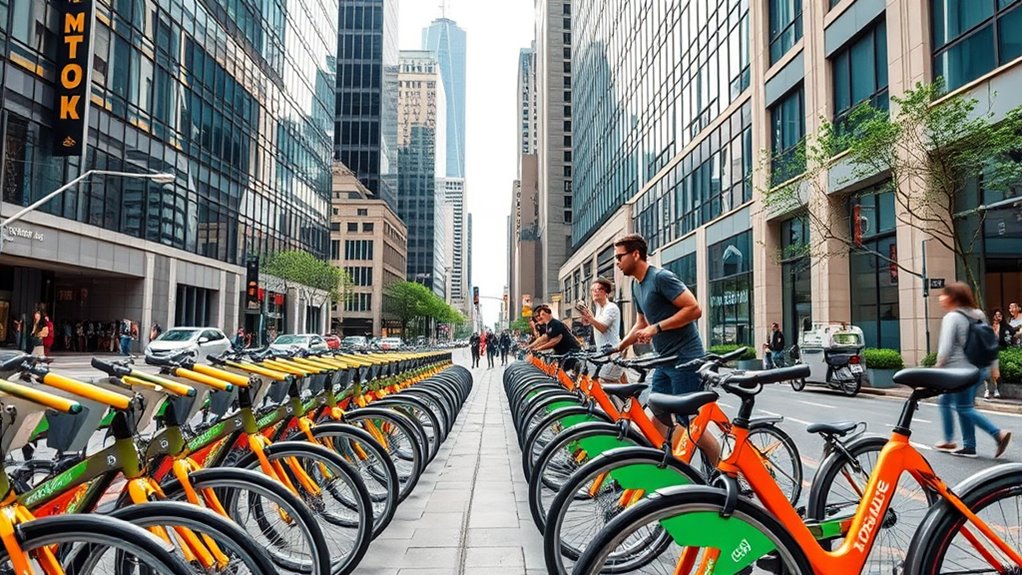
Bike share programs have rapidly transformed urban landscapes, offering a convenient and eco-friendly way for residents and visitors to navigate the city. These systems have become integral to urban mobility, providing an alternative to car travel that reduces congestion and shortens commute times. As you hop onto a bike, you’re part of a broader movement to make city transportation more accessible and sustainable. With bike shares, you no longer need to rely solely on public transit or personal vehicles; instead, you can choose a flexible, active mode of transportation that fits your schedule and route. This shift encourages more people to opt for bikes over cars, easing traffic and making urban travel smoother.
Bike share programs transform cities by offering eco-friendly, flexible travel options that reduce traffic and promote sustainable urban living.
One of the most significant impacts of bike share programs is their positive environmental impact. By replacing short car trips with bike rides, you help cut down on greenhouse gas emissions and air pollution. Bikes produce no emissions during operation, making them a clean alternative that supports city efforts to combat climate change. As more people embrace bike sharing, cities notice a tangible reduction in car emissions. This change not only benefits the environment but also improves air quality for everyone living or working nearby. Additionally, bike share stations are often placed near transit hubs and commercial areas, encouraging multimodal travel that further reduces dependence on fossil fuels.
Beyond environmental benefits, bike share programs reshape how urban spaces are used and experienced. You’ll find bike lanes and dedicated paths becoming more prevalent, designed to keep you safe and comfortable. As cities invest in cycling infrastructure, your ability to move freely across neighborhoods improves, making the city feel more connected and accessible. These programs also promote healthier lifestyles, as cycling is a form of exercise that can be easily integrated into daily routines. It’s not just about getting from point A to B; it’s about actively engaging with the environment around you, experiencing the city from a different perspective. Moreover, the rise of bike share programs has been facilitated by the increasing availability of diverse transportation options, making urban mobility more versatile and adaptable to individual needs.
In essence, bike share programs are catalysts for change, making urban mobility more sustainable, efficient, and enjoyable. They challenge traditional transportation norms and encourage a shift towards greener, more active ways of traveling. As you use a bike share, you’re participating in a movement that’s helping cities become cleaner, healthier, and more livable. The environmental impact is undeniable, but so is the way these systems foster community, promote health, and transform urban spaces into more vibrant, connected places.
As an affiliate, we earn on qualifying purchases.
Frequently Asked Questions
How Does Bike Share Impact Local Traffic Congestion?
Bike share helps reduce local traffic congestion by encouraging more people to choose bikes over cars. When you use bike lanes, it eases traffic flow and supports congestion reduction strategies. Expanding bike lanes makes biking safer and more appealing, further decreasing car trips. As you adopt bike share, you contribute to less traffic, shorter commute times, and a cleaner city, making urban transportation more efficient for everyone.
What Are the Environmental Benefits of Bike Share Programs?
You might think bike share programs do little for the environment, but they actually boost climate action by reducing car emissions. With better bike infrastructure, you can pedal your way to cleaner air and lower carbon footprints. It’s ironic how a simple ride can save the planet, turning urban streets into greener, healthier spaces. Embracing bike share isn’t just about convenience, it’s about making a tangible impact on our environment.
How Do Bike Share Systems Influence Urban Real Estate Prices?
Bike share systems tend to boost real estate trends by making neighborhoods more accessible and attractive. When you use bike shares, you help foster neighborhood development, encouraging more people to live and work nearby. This increased demand can drive up property values, especially in areas with improved connectivity. As a result, neighborhoods with bike share programs often see a positive influence on real estate prices, making them more desirable places to invest and settle.
What Safety Measures Are in Place for Bike Share Users?
You’re protected by safety measures like bike helmet laws and rider safety education programs. Always wear a helmet to reduce injury risk, and many cities encourage or require helmet use. Additionally, bike share programs often provide safety tips through apps or signage, helping you ride confidently. These measures promote rider safety, making your cycling experience safer and more enjoyable while reducing accident risks on busy urban streets.
How Do Bike Share Programs Affect Public Transportation Usage?
They say, “A journey of a thousand miles begins with a single step.” Bike share programs boost public transportation use by encouraging bike share adoption, reducing reliance on cars, and bridging gaps in urban mobility trends. You might find yourself using bikes for short trips, easing congestion, and promoting eco-friendly transit options. This shift transforms city travel, making it more flexible, accessible, and sustainable for everyone.
Conclusion
You might think bike share programs are just a small fix, but they truly transform cities. They reduce traffic, cut pollution, and promote healthier lifestyles. Some worry about safety or maintenance, but with proper planning and investment, these issues become manageable. Embracing bike share isn’t just about bikes—it’s about reshaping urban life for the better. So, don’t dismiss the idea; you’ll help create a cleaner, more connected city for everyone.
Fall Picks
fall essentials
As an affiliate, we earn on qualifying purchases.