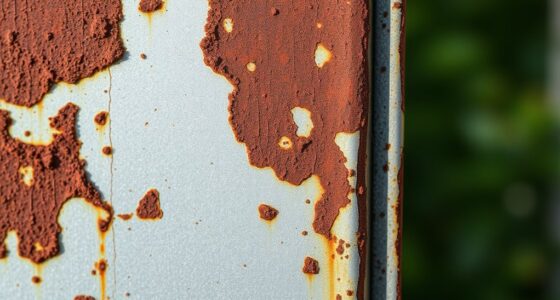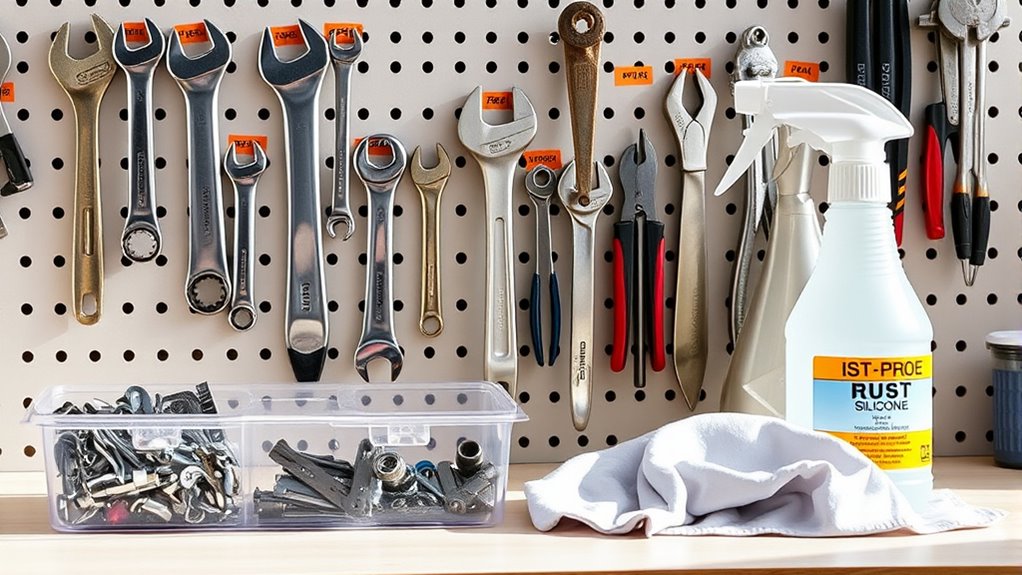

To stop rust, keep your storage area dry, well-ventilated, and free from dampness. Use dehumidifiers, silica gel packs, or elevation to reduce moisture around your tools. Protect metal surfaces with light oils or rust inhibitors, and store items in rust-resistant containers or wrapped in rust-inhibiting materials. Regularly clean, dry, and inspect your tools, reapplying coatings as needed. If you continue exploring, you’ll discover more simple yet effective ways to prevent rust.
Key Takeaways
- Keep storage areas dry, well-ventilated, and use dehumidifiers or silica gel packs to reduce moisture.
- Store tools off the ground and away from walls to prevent condensation and dampness.
- Apply light oil or rust inhibitors to tools before storing to create a protective barrier.
- Organize tools properly, avoiding overcrowding to promote airflow and prevent moisture buildup.
- Regularly inspect, clean, dry, and reapply protective coatings to maintain rust-free conditions.

Have you ever wondered why metal tools or outdoor equipment quickly develop rust even when stored properly? It’s frustrating to invest in quality tools only to see them corrode over time. The key lies in understanding rust prevention and how storage organization plays a crucial role in keeping your equipment in top shape. Proper storage isn’t just about placing everything in a box; it’s about creating an environment that discourages moisture and oxidation, the main culprits behind rust.
Proper storage creates an environment that discourages moisture and oxidation, preventing rust on your tools and equipment.
To start, make sure your storage space is dry and well-ventilated. Moisture is the enemy when it comes to rust, so avoid damp basements, garages, or sheds with poor airflow. Installing dehumidifiers or silica gel packs can help absorb excess moisture from the air, creating a less hospitable environment for rust. When organizing your tools, keep metal items off the ground and away from walls where condensation tends to collect. Using shelves or hanging racks keeps your tools elevated and minimizes contact with damp surfaces.
Next, consider how you arrange your tools and equipment. Group similar items together and designate specific spots for each piece. This not only makes finding what you need easier but also reduces the chance of scratching or damaging surfaces, which can expose metal to the elements. Also, avoid overcrowding your storage space; crowded areas trap moisture and limit airflow, increasing rust risk. Good storage organization involves not just placement but also ensuring each item is properly protected.
Applying protective coatings is another essential aspect of rust prevention. Before storing, wipe down metal tools with a light coating of oil or rust inhibitor. This creates a barrier against moisture and oxygen, which are responsible for oxidation. Use rust-resistant containers or cases for small tools, and consider wrapping delicate or valuable items in rust-inhibiting paper or cloth. Regularly inspect your stored tools and reapply protective coatings as needed, especially before long-term storage.
Finally, remember that consistent maintenance is key. Even with ideal storage organization, rust can still find its way in if you neglect your tools. Clean and dry them after use, and periodically check your storage area for signs of moisture or corrosion. By combining rust prevention techniques with smart storage organization, you’ll considerably extend the life of your tools and outdoor equipment. It’s a simple yet effective way to preserve your investments and keep everything in prime condition for when you need it most.
Frequently Asked Questions
How Often Should I Check for Rust in Storage Areas?
You should check for rust in storage areas at least once every three to six months. Regular inspection frequency helps you catch rust early through rust monitoring, preventing damage. During each inspection, look for signs of corrosion or discoloration, especially on metal surfaces. Staying consistent with these checks allows you to address rust issues promptly, ensuring your items stay protected and in good condition over time.
Can Natural Remedies Prevent Rust Effectively?
Yes, natural remedies can effectively prevent rust if you act quickly. Home remedies like applying baking soda, vinegar, or lemon juice create a barrier that slows oxidation. Imagine catching rust before it takes hold—these simple, everyday solutions can stop rust in its tracks. Regularly using these rust prevention methods keeps your tools and metals protected, prolonging their life and maintaining their shine. Don’t wait—start your natural rust prevention today!
Are There Specific Storage Materials That Resist Rust Better?
Yes, you should choose rust-resistant storage containers like those made from plastic, stainless steel, or coated metals. These materials withstand rust better and help protect your items. Additionally, applying coating materials such as paint, epoxy, or rust inhibitors to storage surfaces creates a barrier against moisture, preventing rust formation. Using these rust-resistant options ensures your stored items stay dry and rust-free over time.
How Does Climate Impact Rust Prevention Strategies?
Imagine your tools as brave explorers venturing into different climates. In humid environments, you need to control humidity and keep temperatures steady to prevent rust from forming. Fluctuating temperatures cause condensation, like tiny tears on metal surfaces, inviting rust. By maintaining consistent temperature regulation and humidity control, you create a protective barrier, ensuring your belongings stay corrosion-free, no matter if it’s sweltering or freezing outside.
Is It Necessary to Oil Tools Before Storing Long-Term?
Yes, you should oil your tools before long-term storage. Proper tool maintenance involves applying a light coat of oil to create a barrier against moisture, which helps prevent rust. Using rust inhibitors enhances this protection, especially in humid environments. Make sure to clean your tools thoroughly first, then oil all metal surfaces evenly. This simple step markedly extends their lifespan and keeps them in good condition for future use.
Conclusion
To keep rust at bay, follow these storage tips and stay vigilant. Remember, even the most modern gadgets can fall prey to corrosion if not stored properly—think of it like a knight’s armor in the age of chivalry, always needing care. By applying simple measures like keeping items dry and using rust inhibitors, you’ll protect your belongings for years to come. Don’t let rust turn your treasures into relics—stay proactive and keep rust in the history books!