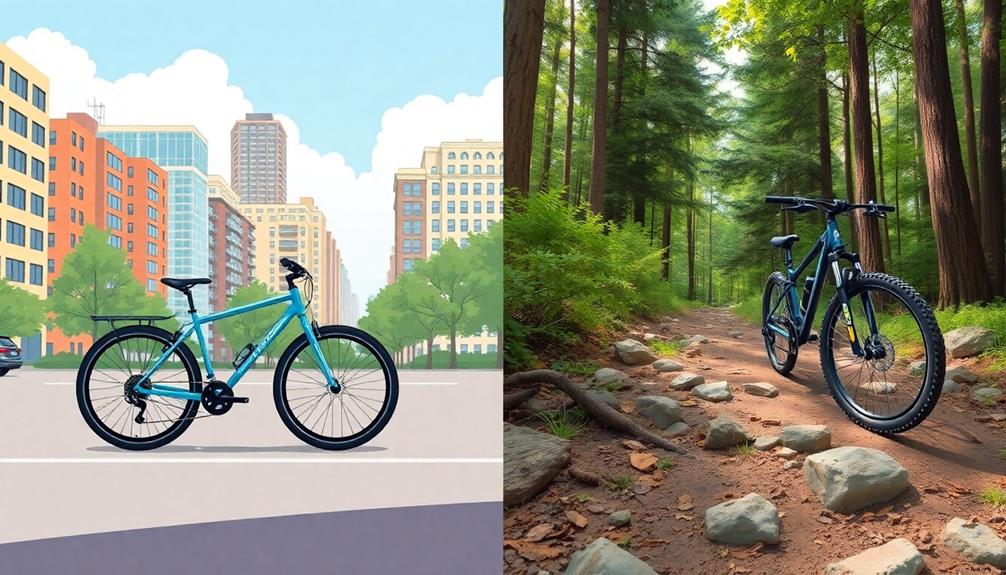

To bikepack light on a hybrid, focus on versatile, lightweight gear that serves multiple purposes, such as compact tents, multi-use clothing, and small tools. Plan routes that hit resupply points and avoid rough terrain to reduce your load and effort. Use efficient navigation tools like GPS apps, and carry only essentials to maximize comfort without overburdening your bike. Stick with well-maintained trails and think strategically about your gear and route for a smoother adventure—there’s more to discover if you keep exploring.
Key Takeaways
- Opt for lightweight, multi-purpose gear like compact tents, multi-tools, and moisture-wicking clothing to minimize load.
- Plan routes on well-maintained, bike-friendly trails with access points for resupply and emergencies.
- Use GPS or smartphone apps for navigation to reduce gear complexity and ensure route accuracy.
- Focus on essential gear that can be carried on racks, handlebar bags, or strapped to the frame for efficiency.
- Balance adventure with practicality by selecting scenic routes that also offer convenient resupply and safety options.

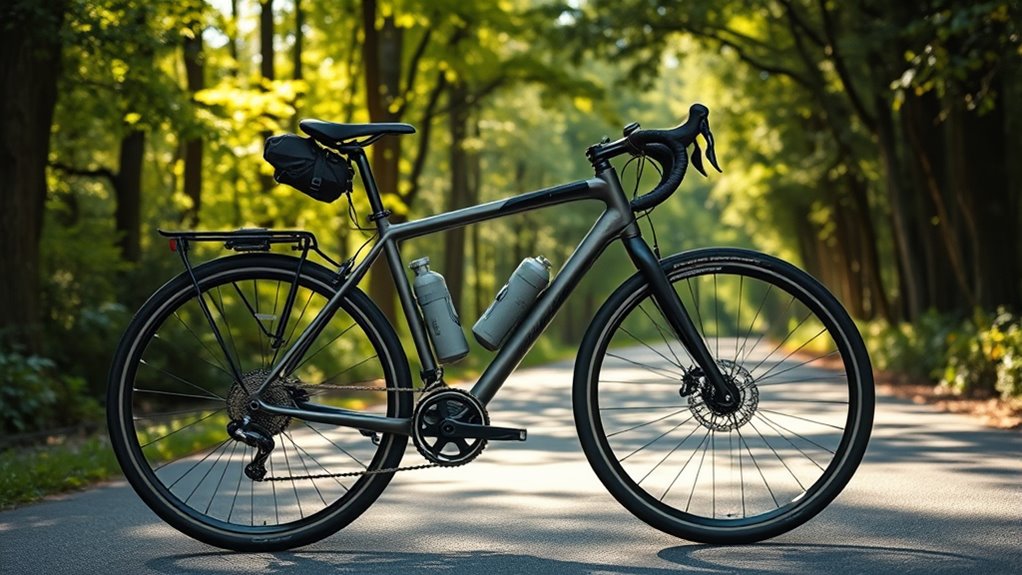
Bikepacking on a hybrid bike offers a practical and flexible way to explore the outdoors without lugging around heavy gear. The key to a successful lightweight adventure lies in thoughtful gear selection and meticulous route planning. When choosing your gear, focus on essentials that serve multiple purposes. Opt for compact, lightweight items like a multi-tool, a small first aid kit, and a minimalist sleeping system. Avoid bulky gear that adds unnecessary weight, and prioritize items that can be easily carried on racks, in handlebar bags, or strapped securely to your frame. Remember, every ounce counts when bikepacking light, so be selective and strategic with your equipment.
Choose lightweight, multi-purpose gear and plan routes carefully for a streamlined bikepacking adventure.
Route planning plays an equally vital role in light bikepacking. Before you hit the trails, research your route thoroughly. Look for well-maintained paths, gravel roads, or bike-friendly trails that don’t require excessive carrying or technical skill. Planning your route with potential resupply points in mind can help you carry less food and water, reducing weight. Consider your daily distance goals and terrain difficulty to avoid overpacking or choosing challenging routes that demand more gear. Use navigation tools like GPS devices or smartphone apps to stay on track, ensuring you don’t waste time or energy retracing steps. Setting realistic daily mileage allows you to carry lighter loads and enjoy a more relaxed experience. Incorporating specialized navigation tools can significantly improve your route accuracy and safety.
When it comes to gear selection, think about versatility. For instance, a lightweight tent or bivvy can serve as both shelter and windbreak, saving space. Multi-use clothing, such as moisture-wicking layers and a compact rain jacket, keeps you prepared for changing weather without overloading your pack. Additionally, choose durable but lightweight footwear suitable for varied terrain, reducing the need for multiple pairs. Investing in high-quality, multi-purpose gear means you can scale down what you carry while staying comfortable and prepared.
In terms of route planning, aim for a balance between adventure and practicality. While exploring remote areas can be rewarding, it’s wise to avoid overly isolated routes that might complicate resupply or emergency assistance. Opt for routes that offer scenic views but also have access points where you can restock supplies or seek help if needed. Planning your itinerary carefully lets you carry less gear and focus on the journey rather than managing unnecessary weight. Remember, a well-thought-out plan combined with smart gear choices will make your lightweight bikepacking experience more enjoyable and sustainable.
Frequently Asked Questions
What Are the Best Hybrid Bikes for Bikepacking?
You should consider hybrid bikes like the Trek FX Sport, Specialized Sirrus X, or Cannondale Quick, which are great for bikepacking light. Make sure your bike fit is comfortable for long rides, and adjust tire pressure based on terrain—higher for pavement, lower for rougher surfaces. These bikes offer versatile handling, durability, and enough space for carrying gear, making them ideal for light bikepacking adventures.
How Do I Choose Lightweight Gear for a Hybrid Bike?
Did you know that lightweight gear can reduce your bike’s total weight by up to 20%? To choose the best, focus on gear weight by prioritizing items made from lightweight materials like carbon fiber, aluminum, or nylon. Opt for compact, multi-use gear that’s designed for minimal weight without sacrificing durability. Always check product specs for weight details, and choose gear tailored to your riding needs to keep your load light and manageable.
Can I Install Bikepacking Racks on Any Hybrid Bike?
You can install bikepacking racks on many hybrid bikes, but it depends on bike rack compatibility and frame mounting options. Check if your bike has eyelets or mounting points for racks. If not, consider adapters or racks designed for quick-release or no-mount systems. Always verify weight limits and compatibility with your bike’s frame to guarantee safe, secure installation. This way, you’ll enjoy bikepacking comfortably on your hybrid.
What Safety Precautions Should I Take When Bikepacking Light?
A stitch in time saves nine, so prioritize safety on your light bikepacking trip. Always wear a helmet to protect your head and make sure it fits snugly. Use reflective gear on your bike and clothing to stay visible, especially in low light. Check your brakes, lights, and tires before heading out. Stay alert, follow traffic laws, and carry a basic first aid kit—safety isn’t an afterthought; it’s a must.
How Do I Balance Load Distribution on a Hybrid Bike?
To balance load distribution on your hybrid bike, focus on even weight distribution between the front and rear racks. Keep heavier items low and centered to improve stability and control. Use load balancing by adjusting straps and position to prevent steering issues. Regularly check your weight distribution during the ride, ensuring that your bike remains responsive and comfortable. Proper load balancing enhances safety and makes your bikepacking experience smoother.
Conclusion
As you pack light on your hybrid, it’s funny how the simplest gear often turns out to be your most trusted. That lightweight tent or compact stove, quietly waiting in your bag, becomes your unexpected companion on the trail. Sometimes, the best adventures come from just the right balance of planning and spontaneity. So, embrace the coincidence—your minimal setup might just lead to the most memorable ride of your life.