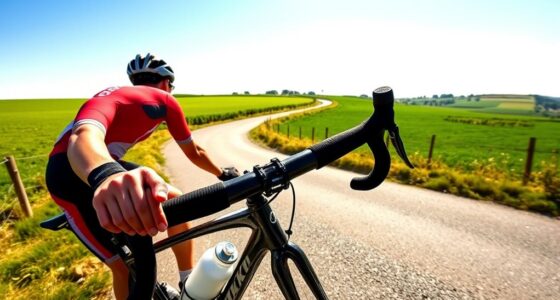
To save your long rides, plan a routine that includes regular hydration and snacks every 15-20 minutes or during breaks. Use accessible bottles or hydration bladders and sip small amounts often to stay hydrated and prevent cramps. Pack lightweight, nutrient-rich snacks like energy bars, trail mix, or dried fruit for quick energy boosts. Adjust your intake based on weather and exertion. Keep experimenting to find what keeps you energized, comfortable, and focused throughout your ride.

Get sports gear delivered free — and shop member deals
- Fast, free delivery on millions of items
- Access to Prime Big Deal Days deals on October 6–7
- Prime Video, Amazon Music and more included
Key Takeaways
- Establish a consistent hydration and snack schedule, such as every 15-20 minutes or during planned breaks.
- Use easily accessible bottles and snack pockets for quick, regular refueling without disrupting ride flow.
- Prioritize lightweight, nutrient-dense foods that balance carbs, fats, and proteins for sustained energy.
- Incorporate electrolyte drinks and monitor body signals to adjust intake based on weather and exertion.
- Reassess and adapt your routine based on ride conditions and personal energy levels for optimal endurance.
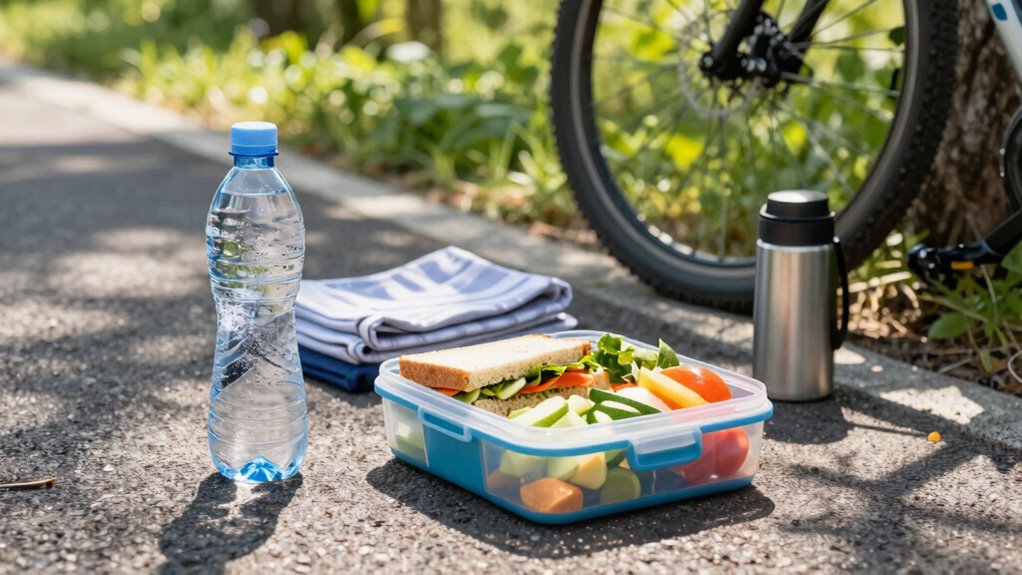
When planning a long ride, establishing a reliable bottle and food routine guarantees you stay energized and hydrated throughout the journey. Hydration planning is essential; you want to ensure you drink enough water without overloading your system. Before you set off, figure out how much water you’ll need based on the distance, weather, and your exertion level. Carry bottles that are easy to access while riding, like those mounted on your bike or in a backpack hydration bladder. Make sure to sip regularly—don’t wait until you’re thirsty, as thirst is a sign you’re already dehydrated. Consistent hydration helps maintain your stamina and prevents cramps or fatigue, so plan to drink small amounts frequently rather than gulping large quantities infrequently. Paying attention to hydration strategy can greatly improve your endurance and comfort during long rides. Snack selection plays a crucial role in maintaining your energy levels. Opt for lightweight, nutrient-dense foods that are easy to carry and quick to digest. Good choices include energy bars, trail mix, dried fruits, and small sandwiches. These provide a balance of carbs, fats, and proteins to keep your muscles fueled and your blood sugar stable. Avoid overly greasy or heavy snacks that can weigh you down or cause stomach discomfort. When packing snacks, consider your pace and how often you plan to stop—having a variety of options allows you to adapt to your changing energy needs. Keep some snacks in accessible pockets for quick grabs, especially during breaks, and save others for longer stretches between stops. Creating a routine around hydration planning and snack selection helps you stay on top of your needs without second-guessing. Establish specific times to hydrate and snack, such as every 15-20 minutes or during designated breaks. This consistency prevents dehydration and energy dips, keeping your ride smooth and enjoyable. Additionally, being mindful of electrolyte balance can help prevent cramping and fatigue, especially in hot weather. Recognizing the importance of proper nutrition can further enhance your endurance and recovery. Incorporating electrolyte drinks into your hydration routine can be especially beneficial when sweating heavily. Paying attention to your body’s signals can help you customize your routine for optimal performance. Remember, everyone’s needs differ, so pay attention to how your body responds and adjust your routine accordingly. If it’s hot, increase your water intake and add electrolyte drinks to replenish lost salts. If you find yourself feeling sluggish, it might be time to reassess your snack choices or hydration frequency. Over time, you’ll develop a sense of what works best for you, making long rides more manageable and even more enjoyable.
As an affiliate, we earn on qualifying purchases.
Frequently Asked Questions
How Do I Prevent Spills During Long Rides?
To prevent spills during long rides, you should focus on spill prevention by choosing containers with secure sealing mechanisms. Make sure the lids are tightly screwed on and check for any damage before packing. Using leak-proof bottles or containers designed for travel helps keep food and liquids contained. Additionally, store these containers upright in a stable part of your vehicle to minimize movement and reduce the risk of accidental spills.
What Are the Best Foods for Quick Energy?
You should pack healthy snacks like nuts, dried fruits, and granola bars for quick energy. These energy boosters provide a fast, sustained boost without a sugar crash later. Fruits like bananas or apples are also great because they’re portable and rich in natural sugars and fiber. Avoid heavy or greasy foods that can cause discomfort. With these options, you’ll stay energized and alert during your long ride.
How Often Should I Hydrate on a Long Trip?
Think of your body as a well-tuned engine—keeping it fueled and cooled is key. You should hydrate regularly, roughly every 15-20 minutes, especially during hot weather or intense activity. Use hydration techniques that include water and electrolyte drinks to maintain electrolyte balance. This prevents dehydration and keeps your energy steady. Don’t wait until you’re thirsty; proactive sipping guarantees your body stays in perfect harmony on long trips.
Can I Pack Perishable Foods Safely?
Yes, you can pack perishable foods safely if you use proper food preservation techniques. Keep foods in a cooler with plenty of ice or ice packs, and maintain a temperature below 40°F. Follow safety tips like packing perishable items last, keeping raw and cooked foods separate, and consuming perishables early in your trip. Regularly check the cooler to confirm it stays cold, reducing the risk of foodborne illnesses.
What Are Eco-Friendly Bottle Options?
You don’t need to sacrifice convenience for eco-friendliness. Reusable containers and biodegradable bottles are excellent options for reducing waste. Reusable containers are durable and can be used repeatedly, cutting down on single-use plastics. Biodegradable bottles break down naturally over time, minimizing environmental impact. Switching to these options helps you stay eco-conscious during long rides, ensuring you’re doing your part to protect the planet while enjoying your journey.
Conclusion
Stick to your bottle and food routine like a trusted melody, and your long rides will become smooth sailing. Each sip and bite fuels your journey, turning fatigue into fleeting shadows behind you. Think of it as a well-rehearsed song that keeps your rhythm steady, guiding you through every mile with grace. When you nurture your body this way, the road transforms into a dance — endless, exhilarating, and yours to conquer.
Fall Picks
fall essentials
As an affiliate, we earn on qualifying purchases.