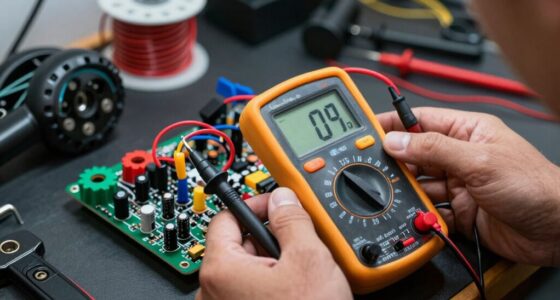
To calibrate your power meter, make certain your bike is on a stable surface and you are not applying force to the pedals. Use the dedicated button or app option to perform a zero-offset calibration, ideally before each ride or after any adjustments. Make sure environmental conditions are stable, and consider verifying your data against a known reference. If you want to master the process and keep your readings accurate, keep going for more detailed tips.
Key Takeaways
- Perform a zero-offset calibration before each ride to ensure the power meter reads zero without force.
- Follow the manufacturer’s instructions for setup and calibration procedures, including using dedicated buttons or app options.
- Conduct calibration on a flat, stationary surface, ensuring the bike is still and environmental conditions are consistent.
- Use auto-calibration features if available, or perform manual calibration after hardware adjustments or environmental changes.
- Verify calibration accuracy by comparing data against a known reference or performing test rides on consistent terrain.
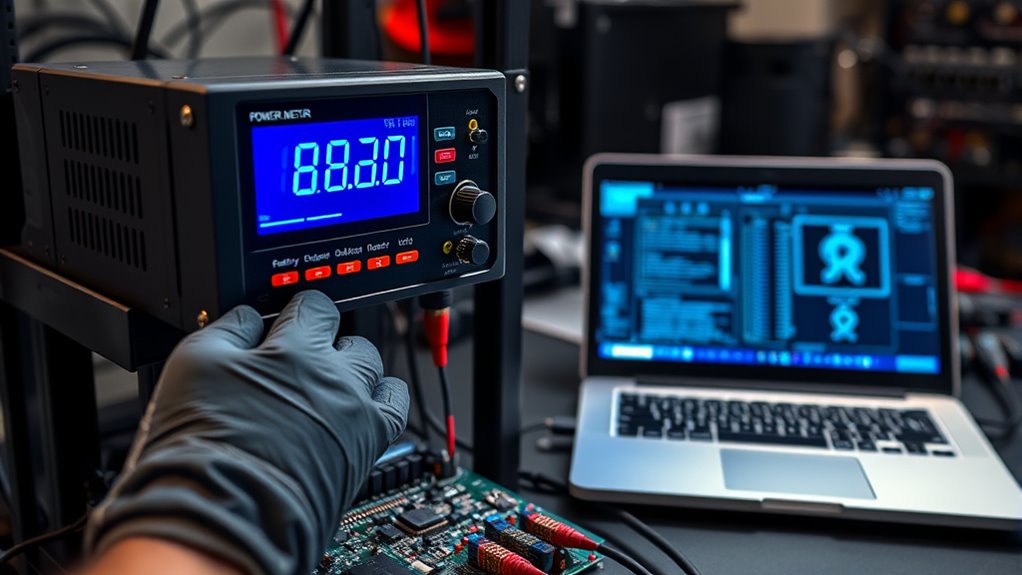
Calibrating your power meter is essential to guarantee accurate readings and reliable data during your workouts or training sessions. When it comes to power measurement, precision is key to tracking your progress and making informed training decisions. If your power meter isn’t properly calibrated, you risk basing your training on faulty data, which can hamper your performance improvements and lead to inconsistent results. That’s why understanding calibration procedures is so important — they ensure your device provides trustworthy readings every time you ride.
The first step in calibration procedures involves checking for any obvious inconsistencies or irregularities in your power data. Before starting, make sure your power meter is properly installed and connected to your bike and head unit, following the manufacturer’s instructions. Once set up, you’ll want to perform a zero-offset calibration, which is a common calibration procedure. This step involves ensuring the power meter reads zero when you’re not applying any force. Typically, this means stopping your bike and placing it on a stationary surface or holding the pedals still. Many power meters have a dedicated button or option within their app to perform this zero-offset adjustment. Doing this regularly — especially before each ride — guarantees that your device accounts for any environmental changes or drift that might affect power measurement accuracy.
Additionally, some advanced power meters feature auto-calibration functions, which simplify the process. These systems automatically perform calibration procedures during specific conditions, such as when you’re riding at a steady state or during warm-up. However, manual calibration remains a reliable method if your device lacks this feature or if you suspect inaccuracies. It’s also a good practice to calibrate after any maintenance or adjustments to your bike, as changes in tire pressure, chain tension, or crank installation can influence power readings. Moreover, regularly checking the calibration using a known reference can help identify if further adjustments are needed to maintain accuracy.
To further ensure accuracy, consider comparing your power meter data against a known reference, such as a calibrated trainer or another trusted device. Performing a short test ride on a flat, consistent course allows you to verify the readings and identify any discrepancies. If you notice significant deviations, repeat the calibration procedures or consult the manufacturer’s guidelines. Keep in mind that environmental factors like temperature and humidity can affect calibration, so try to perform calibration procedures under similar conditions to your usual riding environment.

Bike Tracker for Android, Android Airtag Compatible with Google Find My Device App, Replaceable Battery Item Finder, Tracker Tag for Keys, Suitcase, Backpack, Wallet, Luggage (for Bike)
【Easy to locate】Air tag Tracker is designed for Android devices and seamlessly integrates with Google's "Find My Device"...
As an affiliate, we earn on qualifying purchases.
Frequently Asked Questions
How Often Should I Recalibrate My Power Meter?
You should recalibrate your power meter every 3 to 6 months to maintain accuracy, considering its lifespan and usage. Regular calibration ensures your data stays reliable, especially if you notice inconsistencies or after hitting a major milestone or crash. Keep in mind that a power meter’s lifespan can vary, so sticking to the recommended calibration frequency helps prolong its effectiveness and guarantees your training metrics remain precise over time.
Can I Calibrate My Power Meter at Home?
Imagine your power meter as a trusted compass guiding your ride. Yes, you can perform DIY calibration at home using calibration software and a known power source, like a trainer or treadmill. Carefully follow the instructions, guarantee your equipment is stable, and use the software to compare readings. This process helps keep your compass true, ensuring your training data is accurate and reliable every time you ride.
What Tools Are Needed for Power Meter Calibration?
To calibrate your power meter, you’ll need calibration equipment like a precision crank or a dedicated calibration device, along with measurement standards such as certified weights or known power sources. These tools help verify accurate readings. Make sure your calibration equipment is compatible with your power meter model and meets industry standards. Proper calibration guarantees your power data remains reliable, so invest in quality tools and follow manufacturer guidelines carefully.
How Do Environmental Factors Affect Calibration Accuracy?
Environmental interference, such as temperature fluctuations, humidity, and electromagnetic interference, can substantially affect calibration stability. These factors cause the power meter’s components to drift, leading to inaccurate readings. To maintain calibration accuracy, you should perform regular checks in controlled environments, minimize exposure to interference, and account for environmental conditions during calibration. Properly managing these factors ensures your power meter remains precise and reliable over time.
Is Professional Calibration Necessary for High-Precision Measurements?
Absolutely, professional calibration is essential for high-precision measurements because it guarantees you meet calibration standards and maintain measurement accuracy. Without expert calibration, you risk flying blind, as even small deviations can lead to significant errors. Investing in certified calibration services keeps your power meter reliable, giving you confidence that your measurements are spot on and your results are trustworthy. Remember, precision isn’t something you can leave to chance.

PerfiPro Airtag Bike Mount - Hidden GPS Tracker Case for Apple Airtag, Anti-Theft Holder for Electric Bicycle and Scooter
【HIDDEN DESIGN】Airtag bike mount looks like a normal reflector, so that thieves won't know Airtag is hidden inside!...
As an affiliate, we earn on qualifying purchases.
Conclusion
By calibrating your power meter accurately, you guarantee precise measurements, helping you optimize your workouts and track progress effectively. Did you know that improperly calibrated meters can be off by up to 5-10%, skewing your data? Taking the time to calibrate now can prevent costly errors later. Remember, consistent calibration not only boosts your training accuracy but also extends your equipment’s lifespan, making every ride or session more rewarding and reliable.

Orbit Velo - Advanced Bike Tracker with Apple Find My, Global GPS Location on iPhone, iPad, Mac & Apple Watch, Waterproof with 3 Year Battery Life, Secure Mount for Bottle Holder
✔ [Apple Find My Integration]: Seamlessly connect to Apple’s Find My network to locate your bicycle anytime, anywhere....
As an affiliate, we earn on qualifying purchases.

Eelexa Apple Find My Bike Tracker 2024 | Hidden GPS Tracker for Bicycle & Motorcycle | Anti-Theft Waterproof Tag with Bottle Holder Design | iOS Only, No Monthly Fee
✅【Seamless Apple Find My Integration】 Track bikes/motorcycles in real-time via iPhone & iPad (iOS 17+). No extra app...
As an affiliate, we earn on qualifying purchases.