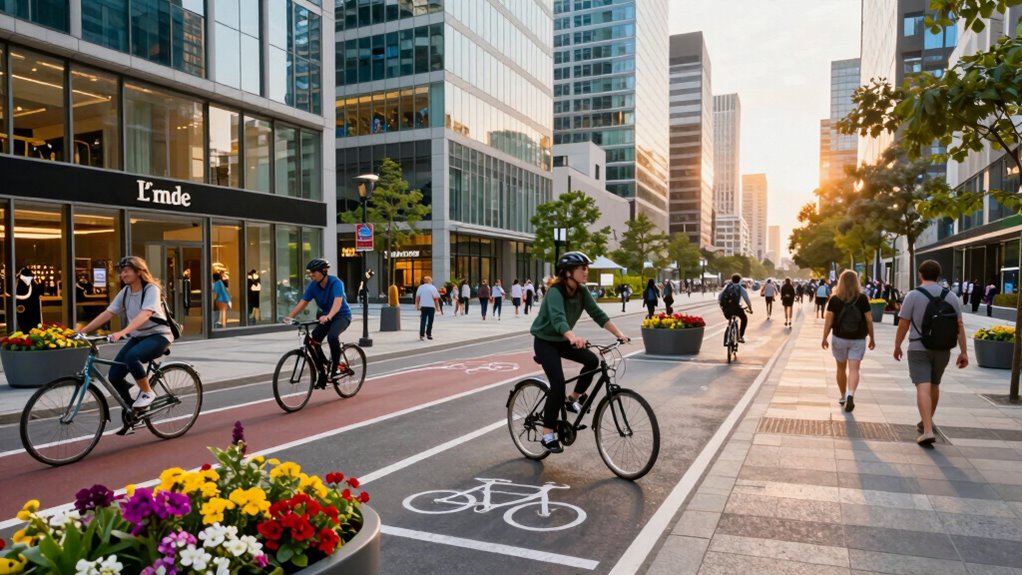

As a cyclist, the rise of car-free city centers offers you safer streets, fewer traffic risks, and smoother, scenic routes. You’ll find more accessible parks and pedestrian zones to explore, along with dedicated cycling lanes that make riding easier. Public transit connections improve, helping you reach destinations effortlessly and reduce your carbon footprint. If you want to discover how these changes foster vibrant communities and healthier environments, there’s much more to uncover.

Get sports gear delivered free with Prime
- Fast, free delivery on millions of items
- Prime Video, Amazon Music and more included
- Member-only deals all year
Key Takeaways
- Cyclists benefit from safer, dedicated lanes and scenic routes in car-free city centers.
- Reduced traffic congestion improves cycling safety and ease of access.
- Improved connectivity with public transit enhances multimodal travel options for cyclists.
- Enhanced public spaces encourage recreational cycling and community engagement.
- Lower pollution and noise levels create healthier environments for cycling.

Many cities are transforming their centers into car-free zones, creating safer and more inviting spaces for cyclists. This shift in urban planning not only reduces traffic congestion but also encourages more sustainable transportation options. When city planners prioritize pedestrian-friendly streets and dedicated cycling lanes, they reshape the way residents and visitors move through urban areas. As a cyclist, you’ll notice how these changes make your rides smoother, safer, and more enjoyable, with less risk from cars and more room to breathe.
Cities are creating safer, bike-friendly zones that improve rides and reduce car-related risks.
One of the biggest benefits of car-free city centers is the enhanced integration of public transit. Cities that reduce car access often invest heavily in robust public transit networks—buses, trams, and trains—that connect neighborhoods efficiently. This synergy makes it easier for you to combine cycling with other modes of transportation. For example, you can ride your bike to a nearby transit station, hop on a train or bus, and then continue your journey in a car-free zone. This seamless connectivity not only saves you time but also minimizes your reliance on personal vehicles, saving you money and reducing your carbon footprint.
Urban planning plays a pivotal role in creating these car-free zones, carefully designing spaces that prioritize cyclists and pedestrians over cars. Traffic is rerouted around the core, and streets are redesigned to be more accessible and welcoming. As a cyclist, you gain from this thoughtful planning through wider bike lanes, clearer signage, and fewer obstructions. The result is a more predictable and comfortable environment for riding, with fewer conflicts with motor vehicles. These changes often lead to lower speeds for vehicles that are still allowed in surrounding areas, which further improves safety for cyclists and pedestrians alike. Additionally, incorporating sustainable urban design helps ensure these areas remain environmentally friendly and resilient over time. Emphasizing urban resilience can help cities better adapt to climate impacts and maintain the benefits of these car-free zones for future generations.
By removing cars from city centers, urban planners also foster vibrant public spaces where people gather, socialize, and enjoy the environment. Parks, plazas, and pedestrian-only streets become natural extensions of your cycling routes, making your rides more scenic and less stressful. The reduction in pollution and noise creates a healthier atmosphere, encouraging more frequent cycling. Additionally, a focus on urban sustainability and eco-friendly design further enhances these benefits by promoting cleaner, greener cities. As a cyclist, you’ll appreciate the increased sense of community and the opportunity to explore the city at a leisurely pace without the constant threat of traffic.
Ultimately, the rise of car-free city centers transforms urban living into a more sustainable, accessible, and enjoyable experience. For you, as a cyclist, it means safer streets, more efficient connections through public transit, and a city that’s more conducive to active, healthy lifestyles. Urban planning that emphasizes these principles ensures that cycling remains a crucial part of city life, making every ride safer, easier, and more pleasurable.
dedicated cycling lanes for city bikes
As an affiliate, we earn on qualifying purchases.
As an affiliate, we earn on qualifying purchases.
Frequently Asked Questions
How Do Car-Free Zones Impact Emergency Vehicle Access?
Car-free zones can challenge emergency vehicle access, but cities often implement vehicle rerouting plans to address this. You might notice designated pathways or restricted areas that prioritize emergency services, ensuring quick response times. These rerouting strategies help maintain emergency access while reducing congestion and pollution. As a cyclist or resident, you benefit from safer, more navigable streets, supporting overall city safety without hindering essential emergency operations.
Are Public Transportation Options Improved in Car-Free City Centers?
Yes, public transportation options often improve in car-free city centers. You’ll notice enhanced pedestrian comfort as streets become safer and more inviting, encouraging more foot traffic. Additionally, retail vibrancy tends to increase because easier access attracts shoppers via buses, trams, or other transit modes. This shift creates a more lively, accessible environment for everyone, making public transportation a more appealing and practical choice for getting around.
How Do the Local Businesses Adapt to Fewer Cars?
You’ll notice local businesses adapt by embracing business innovation, such as creating outdoor seating and pop-up shops in pedestrian zones. With fewer cars, foot traffic increases, encouraging shops to redesign their spaces for pedestrians. Some even host events or markets to attract visitors. This shift boosts community engagement and sales, making the area more vibrant. Overall, businesses thrive by capitalizing on the pedestrian-friendly environment created by the car-free initiative.
What Safety Measures Are in Place for Cyclists?
You’ll find that cyclist safety has become a priority with new infrastructure improvements like dedicated bike lanes, clear signage, and traffic calming measures. These enhancements create a safer environment by reducing conflicts with vehicles and encouraging careful driving. You can ride more confidently knowing that city planners are actively working to protect cyclists, making the city safer and more accessible for everyone who chooses to pedal instead of drive.
Do Car-Free Zones Affect City Pollution Levels?
Car-free zones improve city pollution levels by boosting air quality and reducing noise. As a cyclist, you’ll notice cleaner air and quieter streets, making your rides more enjoyable and healthier. Without cars, emissions drop markedly, leading to clearer skies and fewer pollutants. Additionally, noise pollution diminishes, creating a calmer environment. These zones encourage sustainable transport, benefiting your health and the overall urban atmosphere.
Conclusion
As city centers embrace cars’ absence, you gain more than just open streets—you gain freedom, safety, and vibrant spaces to explore. While drivers face detours and congestion, cyclists glide effortlessly through clean, lively streets. This contrast highlights how a car-free zone isn’t just about banning vehicles; it’s about reclaiming your mobility and reconnecting with your city. In this new landscape, your ride becomes a symbol of progress—where less noise and more life lead the way.
NFL season / tailgating Picks
team gear
As an affiliate, we earn on qualifying purchases.