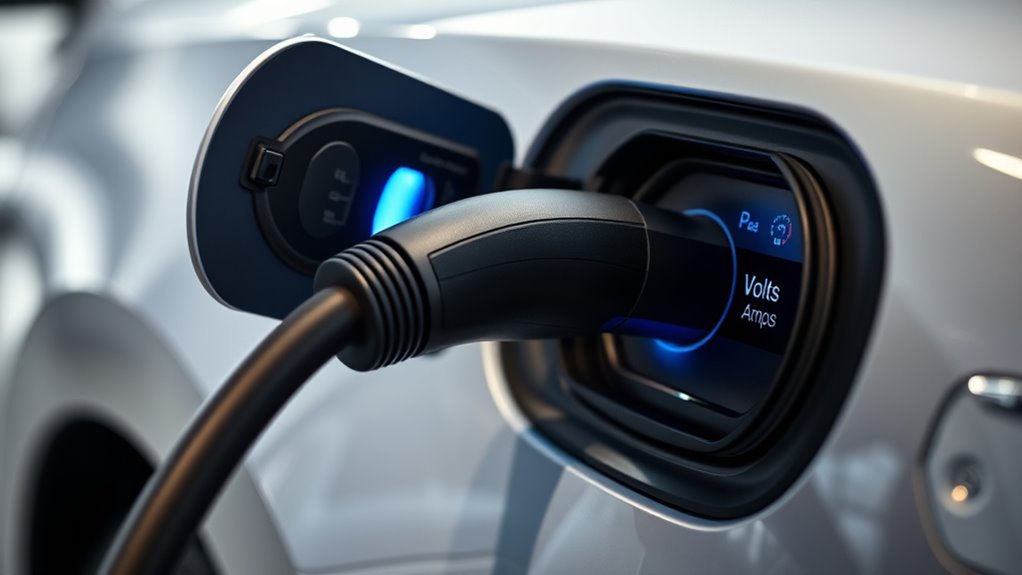

When charging your device, understanding volts and amps helps guarantee safety and efficiency. Volts measure the electrical pressure pushing current into your device, while amps indicate the flow rate of that current. Using the correct voltage prevents damage, and matching the amperage ensures a fast yet safe charge. If you stick with compatible chargers and know what these numbers mean, you’ll charge smarter and keep your device healthy. Keep exploring to learn more about staying safe while charging.

Get sports gear delivered free — and shop member deals
- Fast, free delivery on millions of items
- Access to Prime Big Deal Days deals on October 6–7
- Prime Video, Amazon Music and more included
Key Takeaways
- Volts measure the electrical pressure pushing current into your device; correct voltage prevents battery stress.
- Amps indicate the flow rate of current; matching device capacity ensures safe and efficient charging.
- Using a charger with higher amps than your device supports won’t speed up charging but may risk overheating.
- Always use chargers with the recommended voltage and amperage to protect battery health and prolong lifespan.
- Built-in safety features in modern chargers help prevent damage from incorrect voltage or overcurrent.

Have you ever wondered how your devices stay powered throughout the day? It all comes down to the fundamentals of charging, specifically volts and amps, which work together to keep your gadgets running smoothly. Understanding these concepts helps you make better choices about chargers and how you use them, ensuring your devices stay safe and functional.
At the core of battery technology is battery chemistry, which influences how a battery accepts and stores energy. Different batteries, like lithium-ion or nickel-metal hydride, have unique characteristics that affect charging speeds and safety protocols. Lithium-ion batteries, for example, are common in smartphones and laptops because they offer a high energy density and longer life. Knowing your device’s battery chemistry helps you select compatible chargers and avoid damaging overcharging or overheating. It also emphasizes the importance of charging safety—using the right charger, avoiding cheap or counterfeit cables, and never leaving devices unattended while charging. When you follow proper safety practices, you reduce the risk of thermal runaway, fires, or damage to your device.
Volts and amps are the electrical parameters you should pay attention to when charging. Volts measure the voltage, or the electrical pressure pushing current into your device, while amps measure the current or the flow rate of electricity. Your device’s manufacturer specifies the ideal voltage and current for safe charging. Using a charger with the correct voltage ensures your device receives the proper power without stress, which can harm the battery or reduce its lifespan. The current, or amps, determines how quickly your device charges. A charger with higher amps can charge faster, but only if your device can handle the increased current safely. Overloading your device with too much current can generate excess heat and pose safety risks, so always choose chargers with compatible amperage ratings.
Ensuring charging safety involves more than just matching volts and amps. It’s also about understanding how to use chargers properly and recognizing potential hazards. Keep your charging area clear of flammable materials, avoid cheap or damaged cables, and don’t overcharge your device—unplug it once it’s full. Many modern devices have built-in protections, but being vigilant can prevent accidents. Also, be mindful of battery chemistry; some batteries require specific charging conditions to prevent degradation over time. Additionally, understanding AI-powered safety features in modern chargers can help you maintain safer charging practices and prevent electrical mishaps. Following these safety measures not only prolongs your device’s lifespan but also keeps you safe from electrical mishaps.
As an affiliate, we earn on qualifying purchases.
Frequently Asked Questions
How Do Volts and Amps Affect Charging Speed?
Higher volts and amps speed up charging because they deliver more energy quickly, reducing charging time. If your charger has a higher current (amps), it can charge your battery faster, especially if your battery capacity is large. Keep in mind, charging efficiency matters too; if the voltage or current isn’t compatible, it can slow down charging or damage the battery. Always use the right charger for maximum speed and safety.
Can I Overcharge My Device With High Voltage?
You can’t overcharge your device with high voltage if it has proper battery safety features and voltage regulation. Modern devices are designed to handle specific voltage levels, preventing damage from excessive voltage. Always use chargers recommended by the manufacturer, and avoid third-party chargers without proper safety certifications. This guarantees your device’s battery stays safe, and charging remains efficient without risking overvoltage issues.
What’s the Difference Between AC and DC Charging?
Imagine AC and DC as two rivers feeding your battery’s journey. AC, like a steady stream, alternates direction, ideal for household outlets, while DC flows straight, perfect for charging devices efficiently. Your battery chemistry determines how many charging cycles it can handle before wearing out. Knowing the difference helps you optimize charging, ensuring your device stays healthy longer and avoids unnecessary wear from improper currents.
How Do I Choose the Right Charger for My Device?
To select the appropriate charger, begin by verifying your device’s battery capacity and look for a charger that matches its power requirements. Make sure the charger is compatible with your device’s connector type and voltage specifications. Using an incompatible charger can damage your battery or reduce its lifespan. Always opt for reputable brands and, if possible, use the original charger to guarantee maximum performance and safety.
Do Higher Amps Mean Faster Charging Times?
Think of amps like a rushing river—higher amps can push more current into your device, but they don’t always mean faster charging. If your device has a large battery capacity, it might benefit from higher amps, but it could also affect charging cycles over time. Always match your charger to your device’s specifications; more amps won’t necessarily speed up charging and could impact battery health.
Conclusion
Now that you understand volts and amps, think of your charger as a team of explorers guiding power safely into your device’s heart. Just as a skilled captain steers a ship through calm and storm, knowing these basics keeps your tech sailing smoothly. Remember, handling electricity with care is like tending a delicate garden—nurture it properly, and your device will flourish. Stay informed, stay safe, and enjoy the smooth journey of your charging adventures.
Fall Picks
fall essentials
As an affiliate, we earn on qualifying purchases.